Posted on

Pu Luong, Thanh Hoa: A Hidden Gem

If you’re looking to escape the city’s heat and stress without venturing too far, consider Pu Luong in Thanh Hoa Province. Here, you can immerse yourself in the stunning natural beauty of mountains and forests, enjoy fresh breezes, and take in the picturesque scenery. Located about 160 km southwest of Hanoi, Pu Luong is a popular weekend retreat, known for its lush rice fields, palm groves, traditional waterwheels, and cascading waterfalls.

When is the Best Time to Visit Pu Luong

The ideal time to visit Pu Luong is from late May to early June, when the young rice fields are lush and vibrant, offering a serene experience for both mind and soul. Even during the hot summer months, Pu Luong enjoys a comfortable climate due to its location in a low limestone mountain area, surrounded by tropical rainforests and a sparse population. September and October mark the harvest season, transforming the terraced fields into a stunning golden landscape that feels both opulent and dreamlike. However, any time of year is perfect for a visit, allowing you to relax and immerse yourself in the beauty of nature.

How to get to Pu Luong

The most common way to reach Pu Luong in Thanh Hoa is by motorbike or car, both of which can be easily rented in Hanoi. Alternatively, you can take a limousine from Giap Bat or My Dinh stations, with the journey taking approximately 4.5 hours. It’s highly recommended to stop in Ninh Binh or Mai Chau along the way to fully appreciate the stunning landscapes of Northern Vietnam.

Things to do in Pu Luong

Hiking

In Pu Luong, you’ll find picturesque country roads leading up to hilltops. Along the journey, you can explore quaint villages and stroll through local plantations. The panoramic views of the mountains and valleys are truly stunning. Early risers will be rewarded with a spectacular sunrise atop the hills, where they can witness the sun dispelling the thick mist enveloping the mountains—a breathtaking experience that makes the hike worthwhile.

Biking

In contrast to the busy streets of the city center, visitors to Pu Luong may spot a local on a motorbike now and then. Here, bicycles are the primary mode of transportation. Riding along the scenic roads of Pu Luong allows for fresh air and a sense of tranquility. Some mountain trails present a challenge for adventurous cyclists. Many homestays in Pu Luong offer free bicycle rentals to their guests.

Explore the ethnic villages within the Pu Luong Nature Reserve.

Pu Luong Nature Reserve, one of Vietnam’s hidden gems for ecotourism and trekking, was established in 1999 to safeguard its rich biodiversity. Spanning over 17,600 hectares, this area boasts a stunning blend of untouched forests, terraced rice fields, and charming ethnic villages. It is home to the Thai and Muong communities, where visitors can admire traditional stilt houses, witness local harvests, and savor authentic regional cuisine. Notable attractions within the reserve include Pu Luong Peak, Don Village, and the villages of Son, Ba, and Muoi, each offering unique experiences for explorers.

Discover the Pho Doan market.

Visitors can explore Pho Doan Market to immerse themselves in the local culture of ethnic communities. Situated in Lung Niem Commune, Ba Thuoc District, Thanh Hoa Province, the market features vibrant trading activities where you can find local products from the Kinh, Muong, and Thai minorities, sourced from nearby areas like Tan Lac and Lac Son Districts in Hoa Binh Province. The offerings are simple yet diverse, including traditional silk garments, tube wine, mountain vegetables, and fresh fruits.

Take in the breathtaking views from the peak of Pu Luong Mountain.

Adventure seekers will delight in conquering the 1,700-meter peak. At the summit, clouds drift lazily among stilt houses and terraced fields below, creating a picturesque scene that feels almost dreamlike. Everything seems to pause—time stands still, leaving only the tranquil beauty of the landscape.

Discover the beauty of Hieu Waterfall.

Hieu Waterfall, located in Hieu Village within Co Long Commune, is a charming community-based ecotourism spot. This picturesque waterfall features five smaller cascades, with crystal-clear blue-green waters that can be enjoyed throughout the year, making it a lovely place for occasional swimming.

In addition to the waterfall, you’ll find bamboo water wheels scattered throughout Pu Luong. These iconic structures are emblematic of the region and its Thai ethnic community. They play a vital role in agriculture by drawing water from nearby streams and rivers to irrigate the lush terraced rice fields that surround the area.

Start planning your trip to Vietnam today by getting your visa at vietnamvisapro.net. As a trusted and reliable visa service, we’re here to help you turn your travel dreams into reality from the very first step.

Posted on

7 Essential Dishes to Experience in Nha Trang

Nha Trang draws visitors not just for its stunning beaches, but also for its delicious cuisine. Here are the top seven must-try street foods recommended by travelers to Nha Trang.

Bun Cha Ca

Bun Cha Ca is indeed a beloved dish in Nha Trang, showcasing the region’s unique flavors. The combination of the rich fish broth, rice vermicelli, and the fresh toppings like onions and chili creates a delightful balance of sweet and savory.

The recommended spots like Nam Beo, Nguyen Loan, and the stall on Yet Kieu Street are great places to experience this dish authentically. Each location has its own twist, making it fun to try them all. Have you had a chance to enjoy Bun Cha Ca?

Bun Sua

Bun Sua features the same ingredients as bun cha ca, with the key difference being the inclusion of jellied fish and ground fish patties, which can be prepared in three distinct ways: steamed, deep-fried, or barbecued. It is typically served with chopped herbs, red pepper, and a squeeze of lemon. For a delicious bowl of bun sua, you can visit stalls at 87 Yersin, Nam Beo on Phan Boi Chau Street, or Nguyen Loan on Ngo Gia Tu Street.

Nem Nuong

Ninh Hoa, located 34 km from Nha Trang, is famous for its nem chua (fermented pork rolls). In Nha Trang, this delicacy is prepared differently—grilled over a coal brazier and then wrapped in rice paper with fresh herbs, perfect for dipping in a sauce with pickled green papaya.

For a taste of nem nuong, a popular street food in Nha Trang, visit local stalls like Dang Van Quyen (4 Phan Boi Chau & 16A Lan Ong), Ngoc Tien (59 Le Thanh Phuong), Nha Trang (39 Nguyen Thi Minh Khai), or Vu Thanh An (15 Le Loi), each offering their unique twist on this dish.

Banh Can

Banh can is akin to banh khot found in the south. These small rice cakes are cooked in clay dishes placed over hot coals. The outer layer is crafted from rice flour, while the fillings can include pork, mushrooms, shrimp, or cuttlefish. Banh can is typically enjoyed with a unique dipping sauce made from fish sauce, chopped green onions, ground red chili, and bits of meat, accompanied by some diced sour mango.

The most popular stalls are on Ly Thanh Ton (open in the evening only); 151 Hoang Van Thu; 51 To Hien Thanh; 47 Yersin; 3A Thap Ba.

Banh uot

Banh uot are akin to banh cuon (steamed rolled rice pancakes) found in Hanoi. These delicious treats are made from steamed rice flour, rolled with ground pork, mushrooms, and dried onions, then served with fish sauce. For a taste of hot banh uot, visit Ninh Hoa restaurant at 9 Le Loi, 43 Truong Dinh, Ha restaurant at 23/10 street, 16A Hong Linh, or 1 Cao Ba Quat.

Seafood

Seafood in Nha Trang is truly exceptional. In addition to well-loved options like lobster, the area boasts unique specialties such as cow fish, prepared in various delicious ways.

In the evenings, the seafood stalls near Tran Phu Bridge and along Thap Ba Street come alive with crowds. Chieu Anh 2 and Bien Hong are particularly popular spots.

For a memorable dining experience, try Viet Pho at 18 Le Dai Hanh or Hai Dang at the end of Pham Van Dong Street, where you can savor both delectable seafood and stunning nighttime views of Nha Trang.

Grilled Beef

Founded 55 years ago, Lac Canh’s Grilled Beef is among the oldest eateries in Nha Trang. Rather than sourcing beef from America or Australia, its unique flavor comes from a secret blend of honey and more than ten spices, a recipe passed down through generations. Diners can cube the beef and grill it themselves on small charcoal stoves, allowing for a personalized cooking experience. This beloved Nha Trang establishment is located at 44 Nguyen Binh Khiem.

Start planning your trip to Vietnam today by getting your visa at vietnamvisapro.net. As a trusted and reliable visa service, we’re here to help you turn your travel dreams into reality from the very first step.

Posted on

Overview of Ho Chi Minh Mausoleum Complex

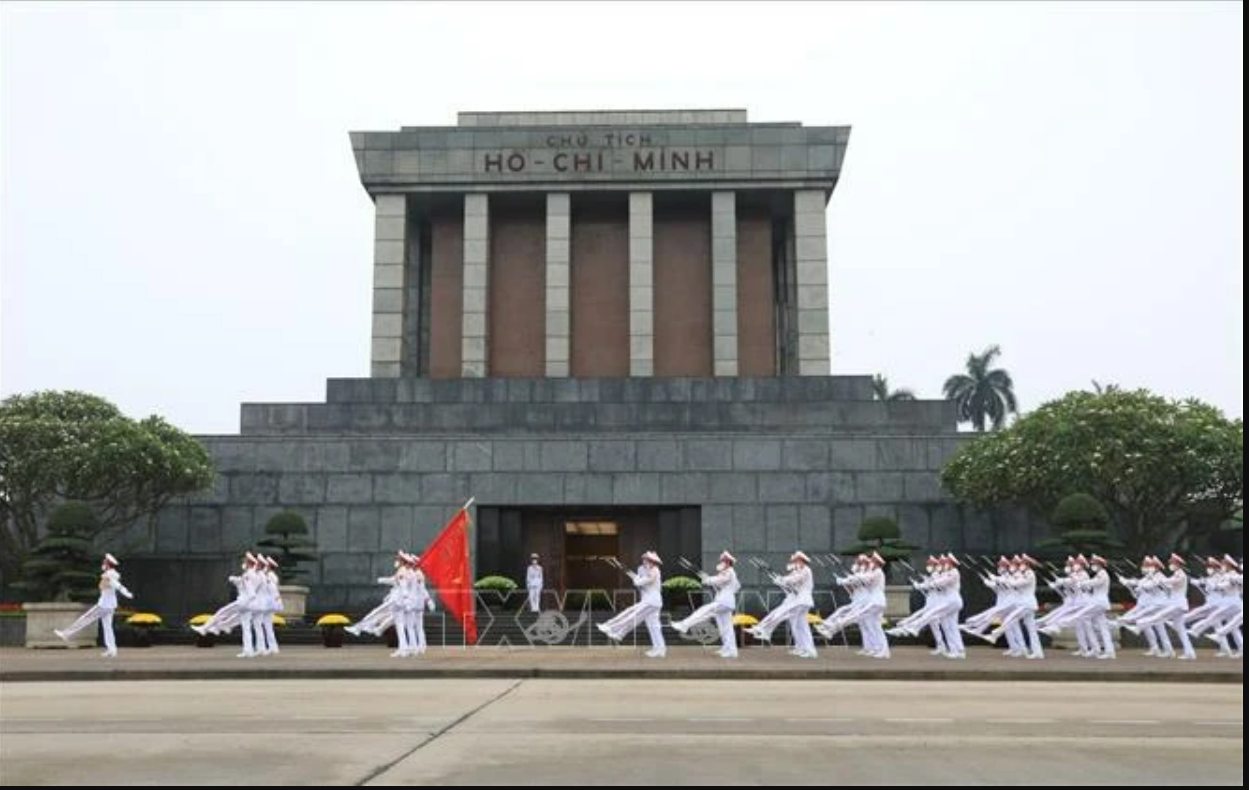
The Ho Chi Minh Mausoleum Complex is indeed one of Hanoi’s most significant historical sites, offering insight into Vietnam’s journey to independence and reunification. The complex serves as the final resting place of Ho Chi Minh, affectionately known as “Bác Hồ,” the revered leader who guided Vietnam through its revolutionary period.

The various landmarks within the complex each hold their own significance:

  1. Ho Chi Minh’s Mausoleum: The centerpiece of the complex, where Ho Chi Minh’s embalmed body is preserved. Visitors can pay their respects in a quiet, solemn atmosphere.
  2. Ba Dinh Square: The location where Ho Chi Minh read the Declaration of Independence of Vietnam in 1945, marking the birth of the Democratic Republic of Vietnam.
  3. Presidential Palace: Originally built for the French Governor-General of Indochina, this building now serves ceremonial purposes, although it is not open to the public.
  4. Ho Chi Minh’s Stilt House: A modest home where Ho Chi Minh lived during the later years of his life. It reflects his simple lifestyle and deep connection with nature.
  5. Ho Chi Minh Museum: Dedicated to the life and work of Ho Chi Minh, the museum displays artifacts, documents, and exhibitions that offer an in-depth look at his role in Vietnamese history.
  6. One Pillar Pagoda: A small but iconic Buddhist pagoda that dates to the 11th century, it is built in the shape of a lotus blossom, symbolizing purity.

Spending around three hours here allows visitors to appreciate the cultural and historical depth of Vietnam’s struggle for independence, and it’s a great addition to any itinerary in Hanoi.

>>> Apply Visa to Vietnam <<<

>>> Order Fast Track Service <<<

  1. President Ho Chi Minh

President Ho Chi Minh holds a deeply revered place in the hearts of the Vietnamese people as a symbol of selflessness, revolutionary integrity, and unyielding devotion to the nation’s cause. He is often referred to as “Bác Hồ” (Uncle Ho), a term that reflects the deep affection and respect the Vietnamese have for him. His life story is intertwined with Vietnam’s fight for independence, and his multiple aliases—Nguyen Sinh Cung (his birth name), Nguyen Tat Thanh, and Nguyen Ai Quoc (the name he used during his international revolutionary activities)—are symbolic of his long journey and tireless efforts to liberate the country from colonial rule.

As the founder of the Indochina Communist Party and later the Viet-Minh, Ho Chi Minh’s leadership was pivotal in leading Vietnam through the resistance against French colonialism and establishing the Democratic Republic of Vietnam in 1945. He served as President of this republic until his passing in 1969, playing a crucial role in shaping modern Vietnam.

Though Ho Chi Minh expressed a desire in his will to be cremated, with his ashes scattered in the North, Central, and South of Vietnam, the Vietnamese government chose to honor him differently. To give the people of Vietnam, particularly those from the South, an opportunity to pay their respects to him, the decision was made to build the Ho Chi Minh Mausoleum Complex in Hanoi. This decision reflected both the government’s recognition of his unparalleled contribution to the country’s independence and the immense love the people had for him.

The Mausoleum has since become a powerful national symbol, where millions of people, both Vietnamese and international visitors, come to pay their respects to one of the most influential figures in Vietnam’s modern history.

  1. Ho Chi Minh’s Mausoleum

The Ho Chi Minh Mausoleum, constructed between 1973 and 1975, stands as a powerful tribute to Vietnam’s beloved leader. The project was a joint effort between Vietnamese and Soviet engineers, symbolizing the close relationship between the two nations during that era. The structure is divided into three floors, with the second being the focal point, housing the embalmed remains of President Ho Chi Minh. Visitors follow a solemn path through marble-lined corridors and stairs to reach this chamber, where they can pay their respects in silence.

On the exterior, engraved on the mausoleum is one of Ho Chi Minh’s most iconic quotes: “Không có gì quý hơn độc lập tự do”—”Nothing is more precious than independence and freedom.” This inscription reflects his lifelong dedication to the cause of national sovereignty and freedom for the Vietnamese people. The 79 cycad trees in front of the mausoleum represent his 79 years of life, and the bamboo groves on either side of the structure, gently swaying in the wind, create a sense of natural reverence, as if nature itself honors him.

While visiting the mausoleum is free, there are strict rules that must be observed to show respect for this solemn place. Visitors must dress modestly, avoiding short skirts, tank tops, or hats. Day packs, cameras, and mobile phones are typically required to be stored before entry. Once inside, photography, talking, or making gestures such as pointing or putting hands in pockets are strictly prohibited. The atmosphere within the mausoleum is one of deep respect, with visitors expected to walk slowly, silently, and in two lines.

These regulations help preserve the solemnity of the mausoleum, ensuring that everyone can properly reflect on the legacy of Ho Chi Minh, a leader whose ideals of independence and freedom continue to resonate deeply with the people of Vietnam.

Opening time: 7:30 AM – 10:30 AM on Tuesday, Wednesday, Thursday, Saturday and Sunday.
Closing time: Every Monday and Friday, from 15 June to 15 August for maintenance.
Location: 2 Hung Vuong, Dien Ban, Ba Dinh, Hanoi.
Entrance fee: Free.

  1. Ba Dinh Square

Ba Dinh Square, the location of Ho Chi Minh’s Mausoleum, holds immense historical significance as the site where, on September 2, 1945, President Ho Chi Minh proclaimed the Independence Declaration of Vietnam, officially marking the birth of the Socialist Republic of Vietnam. On that day, in front of thousands of citizens, Ho Chi Minh declared the end of colonial rule, a moment etched in the national memory of Vietnam.

The name “Ba Dinh” has its origins in a village in Thanh Hoa Province, where one of the first revolts against French colonialism occurred. After Vietnam gained independence, this square was named Ba Dinh to honor that revolutionary spirit and to remind future generations of the country’s long struggle for freedom.

As the largest square in Vietnam, Ba Dinh Square stretches 320 meters in length and 100 meters in width, with the capacity to hold around 20,000 people. At the center stands a 29-meter-high flag tower, a symbol of national pride. The square has borne witness to countless significant events throughout modern Vietnamese history and continues to serve as the venue for major national celebrations, meetings, and military parades, particularly on important anniversaries such as National Day.

One of the most solemn traditions held daily at Ba Dinh Square is the flag-raising and lowering ceremony, performed with strict adherence to national protocol. This ceremony, honoring the country’s heritage and sovereignty, draws both locals and visitors, providing a poignant moment of reflection on Vietnam’s enduring quest for independence and unity.

Opening time: 5:00 AM – 10:00 PM every day
Location: Hung Vuong Street, Dien Ban, Ba Dinh District, Hanoi.
Entrance fee: Free.

  1. The Presidential Palace

The Presidential Palace in Hanoi is a striking example of French colonial architecture and one of the most significant historical landmarks in Vietnam. Originally designed by a German architect for the French Governor-General of Indochina, it was built between 1900 and 1906, taking six years to complete. During that time, it was the most luxurious building in the region, boasting more than 30 rooms. The palace was initially named the Indochina Governor Palace and served as the residence for the French colonial governors.

After Vietnam declared independence in 1945, the building was renamed the Presidential Palace. Although it was intended to be the residence of President Ho Chi Minh, he famously declined to live there, deeming it inappropriate to reside in such opulence while many of his countrymen were living in poverty. Instead, Ho Chi Minh chose to live in a simple stilt house nearby, a decision that highlighted his modesty and commitment to the people.

The palace is easily recognizable by its French colonial architectural style, distinguished by its bright yellow color and green domes. Like other French-built structures in Hanoi, it was constructed with a mix of materials sourced both locally and from Europe. Elements like the rock, tile, and brick were produced in Vietnam, while finer materials such as fir wood, window bars, and glass were imported from France and other parts of Europe.

Today, the Presidential Palace is primarily used for ceremonial purposes. It serves as the official venue for welcoming foreign heads of state, high-ranking delegations, and government officials. Located in close proximity to the Ho Chi Minh Mausoleum and Ba Dinh Square, the palace is a prominent part of the historical and political landscape of Hanoi, although it is not open for public tours, preserving its formal and diplomatic function.

Location: No. 2 Hung Vuong, Dien Ban, Ba Dinh, Hanoi.
Not allowed to visit, just see outside.

  1. Ho Chi Minh’s Stilt House

Built in 1958, The Stilt house where President Ho Chi Minh lived and worked from 1958 to 1969 reflects his simple and humble lifestyle. This modest two-story structure, located in the Presidential Palace grounds, stands in contrast to the luxurious palace nearby. With a wooden tiled roof and minimalist furnishings, the house is a testament to Ho Chi Minh’s dedication to living in harmony with the everyday Vietnamese people, despite his position as the nation’s leader.

The ground floor of the house served as a living room where Ho Chi Minh would meet guests. In this space, a long table is surrounded by wooden and bamboo chairs, emphasizing the simplicity of the setting. At the back of the house, wooden stairs lead to the second floor, which is divided into two small rooms: one for resting and one for working. The interior is arranged with basic necessities, reflecting Ho Chi Minh’s focus on the essentials rather than luxury.

In front of the house is a fishpond, which adds to the tranquility of the environment. The pond is surrounded by a variety of blooming orchids, which flower year-round, as well as scented flowers such as jasmine and eglantine. Fruit trees also dot the landscape, creating a serene and natural atmosphere around the house. The fence and gate formed by hibiscus trees evoke the image of Ho Chi Minh’s childhood home in Nghe An Province, adding a personal touch to the residence.

This house has not only historical importance but also continues to serve as a place of cultural significance. Notably, during his visit to Vietnam in 2016, US President Barack Obama visited the stilt house and even fed the fish in the pond, a gesture that highlighted the connection between past and present leaders and symbolized the warm relations between Vietnam and the United States.

Today, the house remains carefully preserved with over 250 documents and objects on display, many of which date back to Ho Chi Minh’s final days. These items have been kept intact, offering visitors an authentic glimpse into the life and legacy of Vietnam’s most revered leader. The stilt house stands as a symbol of simplicity, humility, and dedication, values that continue to inspire generations of Vietnamese people.

Opening time: 7:30 – 11:00 AM and 13:30 – 16:00 PM every day.
Entrance fee: 50,000 VND/ visitor

  1. One Pillar Pagoda

The One Pillar Pagoda (also known as Chùa Một Cột, Diên Hựu, or Liên Hoa Đài) is an iconic and historically significant temple located near Ho Chi Minh’s Mausoleum in Hanoi. Recognized for its unique architectural design, the pagoda was officially named “The Pagoda with the Most Unique Architecture in Asia” by the Asia Record Organization in 2012, highlighting its cultural importance.

The pagoda dates back to the Ly Thai Tong dynasty in 1049 and is believed to have been constructed as a symbol of gratitude. According to legend, Emperor Ly Thai Tong, who had no heir, dreamed of the Bodhisattva Avalokiteshvara handing him a son while seated on a lotus. Soon after, the emperor married a young woman who bore him a son. In appreciation, the emperor ordered the pagoda to be built in the shape of a lotus, symbolizing purity and enlightenment.

Throughout its long history, the One Pillar Pagoda has undergone several repairs and restorations. It suffered significant damage in 1954 when the French colonists used explosives to destroy it during their withdrawal from Vietnam. However, in 1955, architect Nguyen Ba Lang led efforts to restore the pagoda, which has retained its current shape since then.

Architecturally, the One Pillar Pagoda is truly distinctive. The pagoda itself is a small wooden structure with a curved roof, built atop a single stone pillar in the middle of a lotus pond. This design represents a lotus blossom, which is a symbol of purity and spiritual enlightenment in Buddhism. The pagoda’s shape is a tribute to both Buddhist ideals and Vietnam’s rich cultural heritage, making it a symbol of Hanoi and a cherished national monument.

Despite its modest size, the One Pillar Pagoda is considered one of Vietnam’s most unique and sacred religious sites. It remains a popular destination for both local worshipers and international tourists, offering not only spiritual significance but also a window into Vietnam’s ancient architectural traditions.

Opening time: 6:00 AM – 18:00PM
Entrance fee: Free.

  1. Ho Chi Minh Museum

The Ho Chi Minh Museum, located in the historic Ba Dinh Square, is the final destination within the Ho Chi Minh Complex and serves as a monumental tribute to Vietnam’s beloved leader. The construction of the museum began in August 1985 and was completed on May 19, 1990, marking the 100th birth anniversary of President Ho Chi Minh.

Designed in the shape of a white lotus flower, a symbol of purity and enlightenment in Vietnamese and Buddhist culture, the museum stands nearly 20 meters high and has three floors. This architectural choice not only reflects Ho Chi Minh’s virtuous life but also represents the purity of his revolutionary ideals. The museum itself blends modern design with symbolic meaning, making it both a cultural and architectural landmark.

The ground floor is home to a large hall with 400 seats, which is frequently used for national and international conferences, meetings, and scientific seminars. This multifunctional space allows the museum to host events that continue Ho Chi Minh’s legacy of dialogue and learning.

The main exhibition area, located on the second floor, spans nearly 4,000 square meters and showcases over 2,000 documents and artifacts. These exhibits are organized to reflect key stages of Ho Chi Minh’s life and Vietnam’s revolutionary history from the late 19th century onward. Visitors can explore a variety of topics, from Ho Chi Minh’s early activism and travels abroad to his leadership in Vietnam’s struggle for independence.

Each section of the museum provides a systematic narrative of Vietnam’s revolutionary journey, intertwined with the life and philosophy of Ho Chi Minh. Through the museum’s vast collection, visitors gain a deeper understanding of the historical, political, and cultural context in which Ho Chi Minh lived and the indelible mark he left on Vietnam and the world.

The museum stands as an essential educational site for those looking to understand the profound impact of Ho Chi Minh’s leadership and the revolutionary efforts that shaped modern Vietnam.

Opening time: 08:00 AM – 12:00 PM and 14:00 PM – 16:30 PM on Tuesday, Wednesday, Thursday, Saturday and Sunday.
Closing time: Every Monday and Friday…
Location: No. 19 Ngoc Ha, Doi Can, Ba Dinh, Hanoi.
Entrance fee: 25,000 VND/ visitor

  1. How to get Ho Chi Minh Mausoleum Complex

The Ho Chi Minh Mausoleum Complex, centrally located in Ba Dinh District, Hanoi, is easily accessible through various modes of transportation. You can reach the site by motorbike, taxi, public bus, or even by foot if you are staying in a nearby hotel within Ba Dinh District.

For first-time visitors, it’s important to note that the drop-off point for vehicles is not the same as the pick-up point, which can be a bit confusing. For convenience and a more seamless experience, especially for those unfamiliar with the area, booking a private guided tour with a private car is often recommended. This option ensures you have transportation arranged both to and from the complex, while also providing valuable insights from a guide who can explain the significance of the various landmarks in the complex.

  1. Travel Tips

When visiting the Ho Chi Minh Mausoleum Complex, it’s essential to adhere to the following guidelines to ensure a respectful and smooth experience:

  • Dress code: Visitors must wear formal attire. Shorts, mini skirts, and tank tops are not permitted. If needed, appropriate clothing can be rented at the entrance, but this may take extra time.
  • Respectful silence: Visitors should remain quiet inside the mausoleum as a sign of respect to President Ho Chi Minh’s remains.
  • No personal belongings: Cameras, phones, backpacks, and other personal items are not allowed inside the mausoleum. You may leave these with your tour guide or at designated storage areas and retrieve them upon exit.
  • Photography regulations: Follow the strict rules regarding the use of cameras in restricted areas, especially around the mausoleum.
  • No food or electronic devices: Bringing food or any electronic device inside the mausoleum is strictly prohibited.
  • Children under 3 years: Children younger than 3 years old are not allowed to enter the mausoleum. Visitors with young children can opt to skip the mausoleum and explore the rest of the complex.

By following these rules, visitors help preserve the solemnity of the mausoleum and show proper respect to Vietnam’s most revered leader.

 Apply For Vietnam Visaapply Vietnam visaApply visa vietnamBook E-visa Vietnambook visa vietnamCheap Vietnam VisaE-visa Vietnamevisa VietnamEvisa Vietnam onlineexpedited e-visaexpedited E-visa to Vietnamexpedited Vietnam E-visaGet a Vietnam visaGet Vietnam Visaget vietnam visa onlineget visa to vietnamget visa Vietnammultiple entry visamy vietnam visaOrder Vietnam E-Visaquick vietnam evisarush vietnam visaUrgent Vietnam VisaVietnamVietnam E-visaVietnam EvisaVietnam touristVietnam travelVietnam vacationVietnam VisaVietnam visa costVietnam Visa ExemptionVietnam Visa for India citizensVietnam Visa For IndiansVietnam Visa for South Africa citizensVietnam Visa In IndiaVietnam visa in South AfricaVIetnam VIsa on arrivalVietnam VIsa onlineVietnam visa provisa for vietnam Visa On Arrivalvisa onlineVisa to VietnamVisa Vietnam
Posted on

Exploring Con Dao Island – A laid-back Beach Getaway

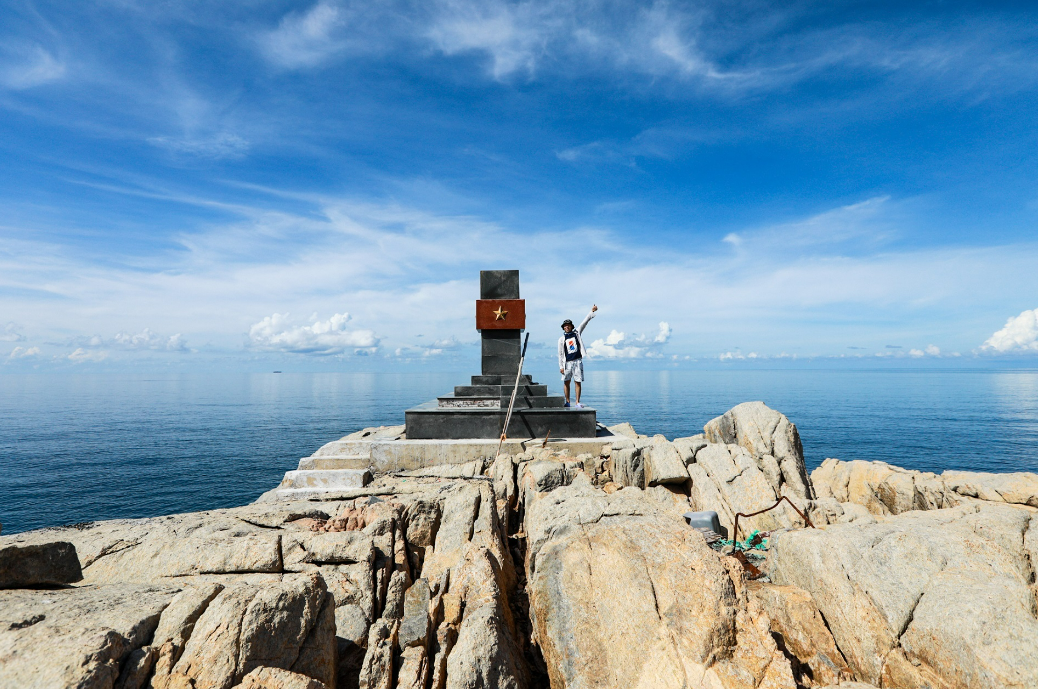
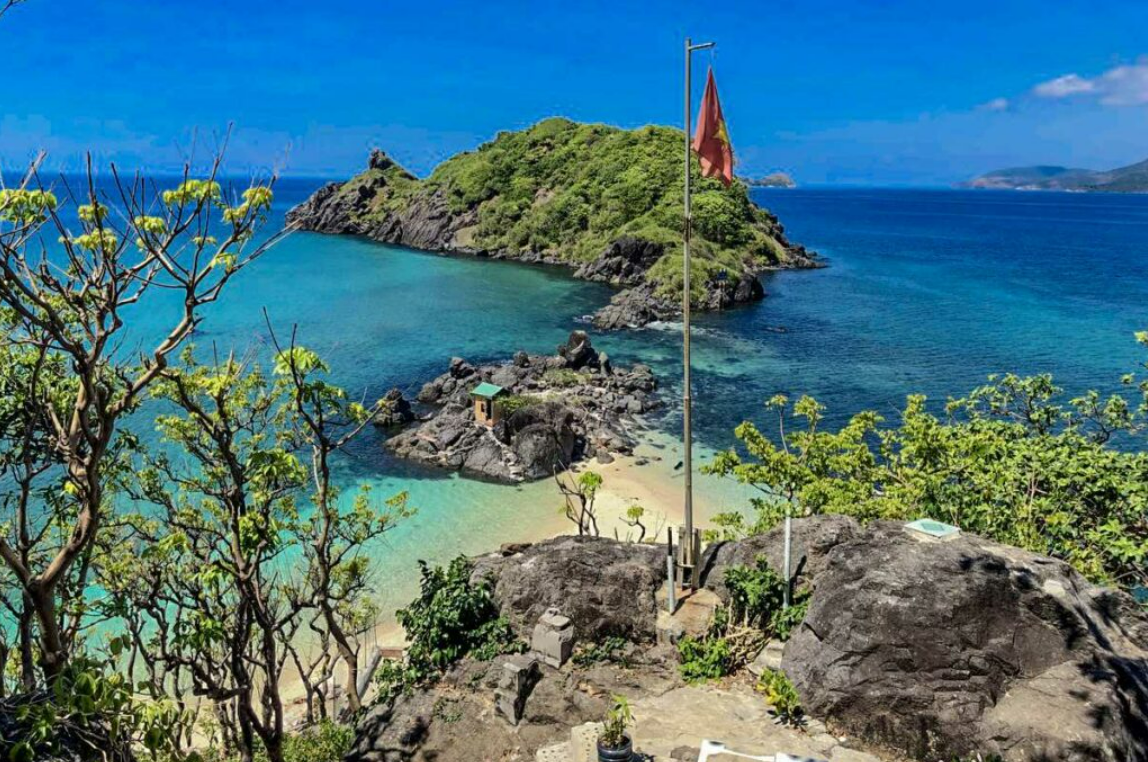
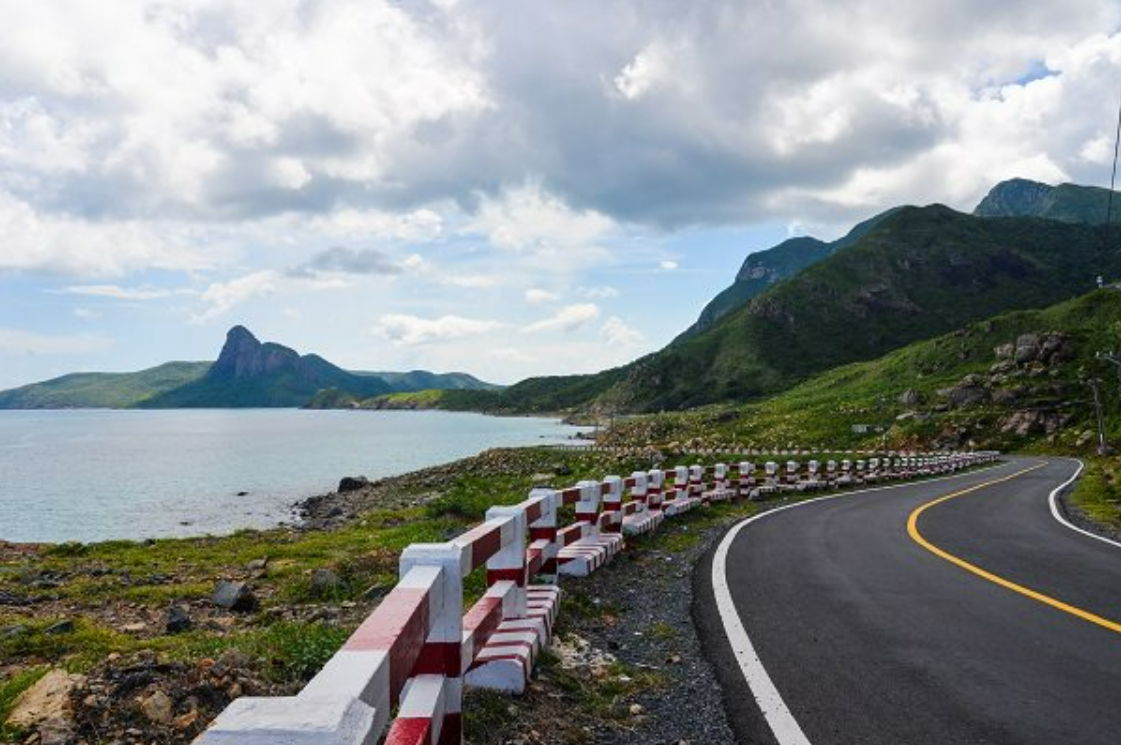
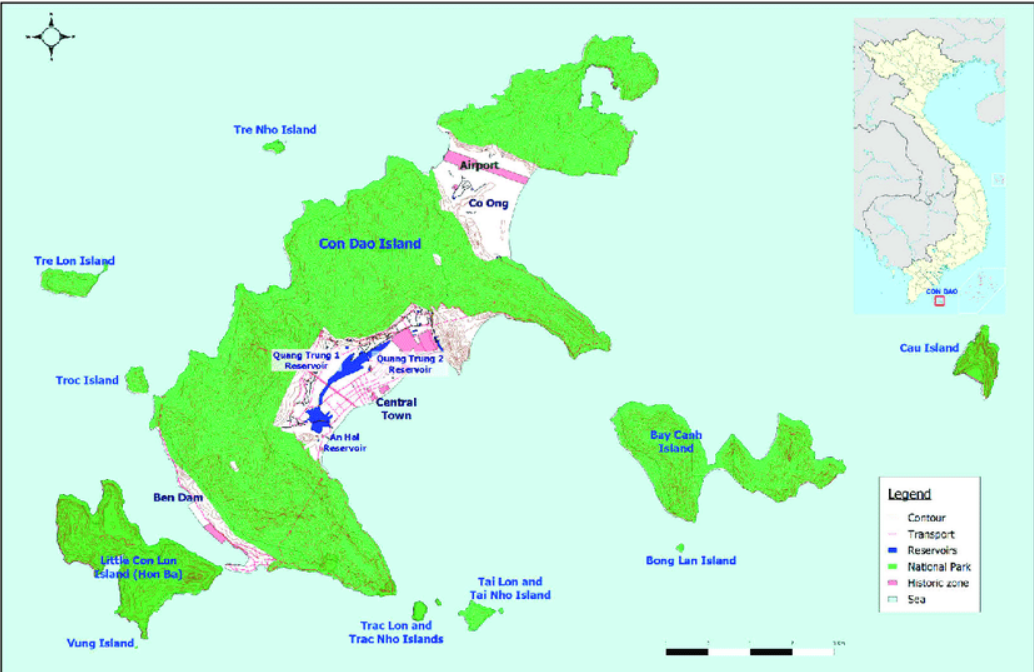
Con Dao is a name of an archipelago of Ba Ria – Vung Tau Province in the south of Vietnam. It is the largest island in the chain of 16 mountainous islands and islets, with a total area of 76km² and the local population is about 5,000 inhabitants. Con Dao Island is known for not only the prison system to detain and torture the political prisoners but also the lovely romantic beaches and the beauty of the wild nature. Ranked fourth in the top 10 must-see places in Asia in 2016 by Lonely Planet magazine, the island has now become an international charming tourism destination for tourists worldwide to explore

>>> Apply Visa to Vietnam <<<

>>> Order Fast Track Service <<<

  1. Mysterious and gruesome history of Con Dao Island

Con Dao Island has been referred asThe Hell on Earthwith the notorious prison built and ran by French colonist and American military during Vietnam War. This place is full of prisons, where many medieval punishments and tortures were carried out. Anyone arrested there would suffer the death slowly and painfully.

The most famous and terrible prison is “tiger cages” established in 1940 in order to incarcerate about 2,000 Vietnamese political prisoners. Containing 120 chambers having ceiling bars, where the jailers poked at the prisoners like tigers in the zoo. The prisoners were hit by the sticks from above and even sprinkled with water and lime. More horribly, jailers even invented “sunbathe room”, known as the “tiger cages” with no roof to force people inside to suffer from the sun heat for days. These “tiger cages” were constructed away from the major prisons and were not excavated until 1970 when Tom Harkin, a US congressional aide visited the town of Con Son and saw evidence of the brutal maltreatment of prisoners. Apart from “tiger cages”, Phu Hai Prison, Phu Binh camp or Hang Duong Cemetery are also the famous places which conjure up a dark memory in Con Dao that makes anyone trembling when reminding of the past.

  1. Sightseeing on Con Dao Island

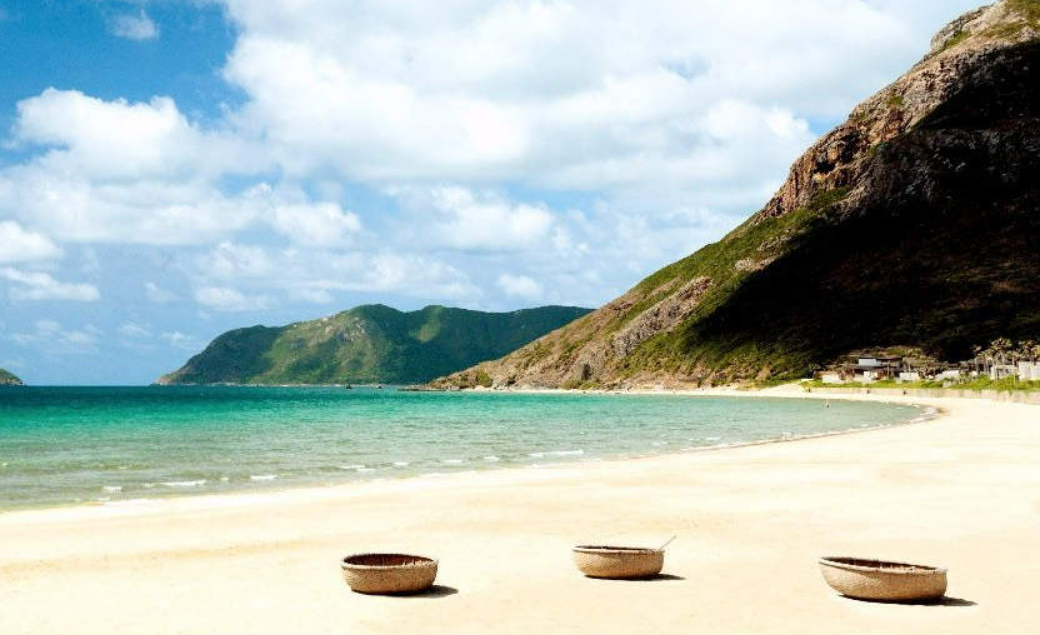
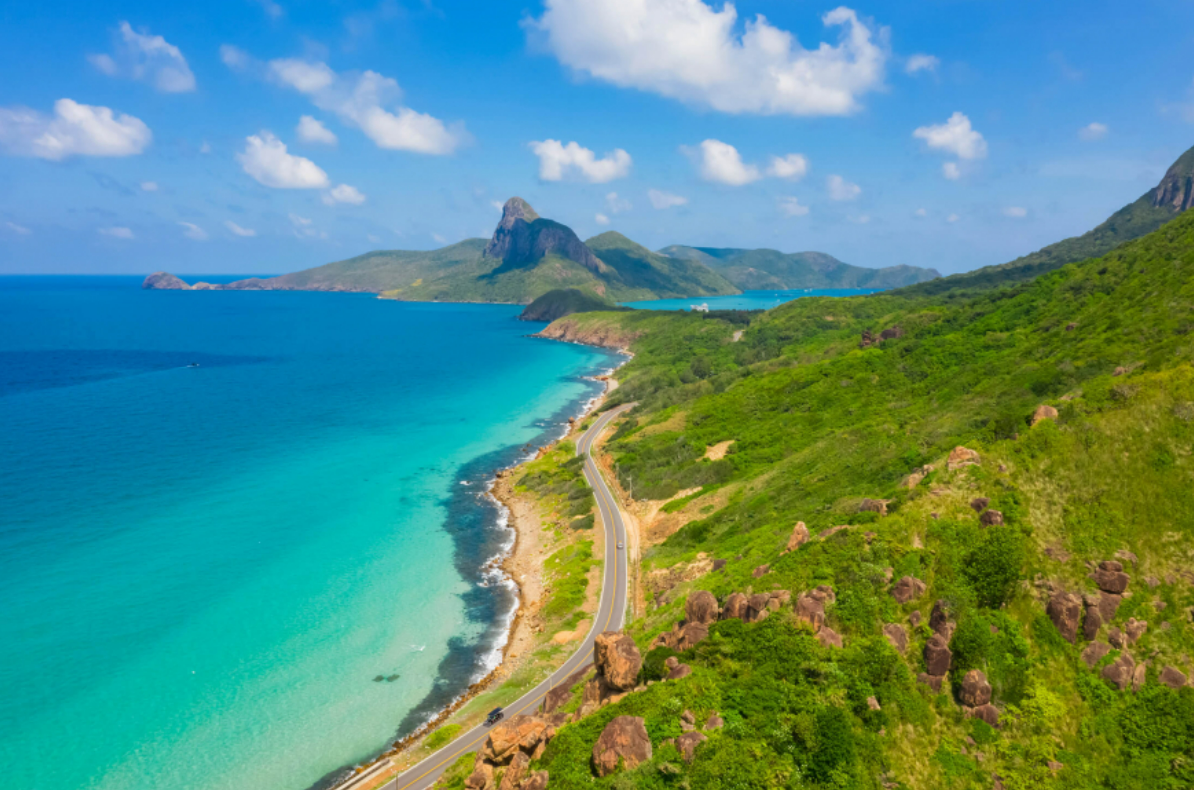
Con Dao Island nowadays is famous for the beautiful and untouched beaches in Vietnam. Travelers will be surprised at the splendid beauty of the island with lovely beaches, scenic bays, coral reefs, and partially covered in thick forests. As the largest one among 16 islands, Con Dao possesses 200km of ideal coast with crystal emerald sea and fine white sandy beaches. From a bird’s eye view, this island looks like a powerful hunting sea bear amidst the incredible blue of the sea.


Con Dao
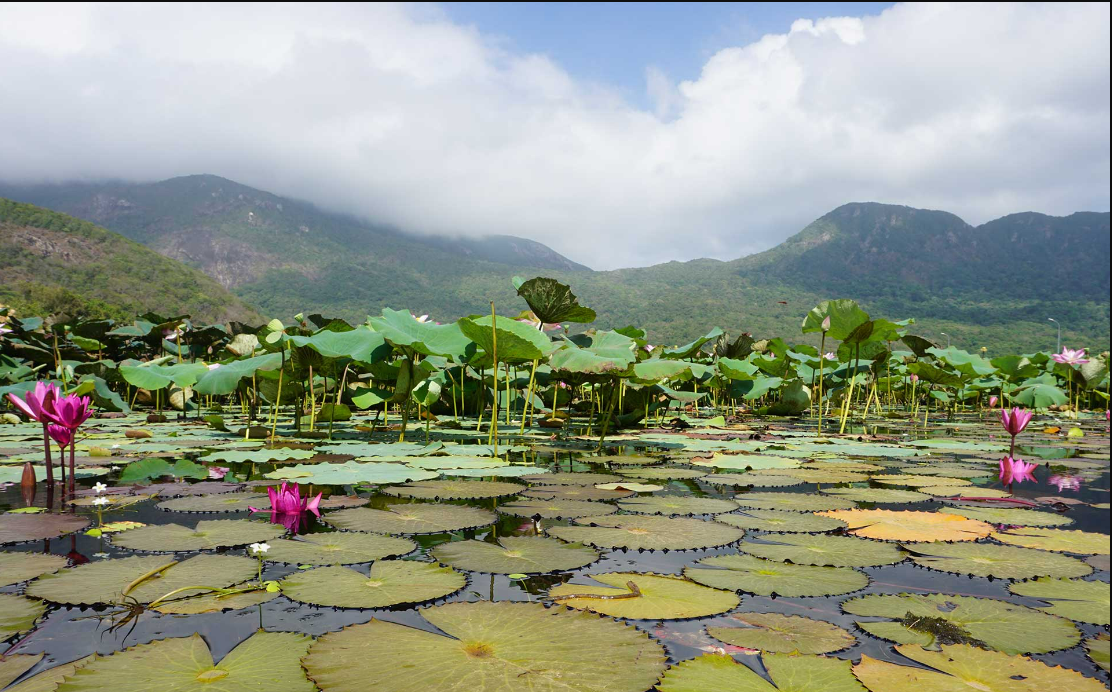
 is one of the few places in Vietnam that is home to rare dugong, sea turtles, and dolphins, and to varieties of orchids found nowhere else in this country. It is a shining example of good conservation. 80% of the land area of the archipelago is a National Park offering primary jungle teeming with interesting life such as the endemic black squirrel and the crab-eating macaque.

2.1. Dam Trau Beach

It is hard to ignore Dam Trau Beach which is considered as one of the most beautiful beaches on Con Dao Island. Located 15km to the north of Con Son town center, Dam Trau is home to stunning sceneries of smooth white sand that stretches along the bottom of all-shaped cliffs and has symbolized a yellow ribbon tied across the green carpet. Since the beach is surrounded by pockets of tropical jungle, old green pine trees and a prominent bamboo forest, the air is so fresh and the space is so quite. This is an ideal place for anyone to wind down.

2.2. An Hai Beach

An Hai Beach is the main beach of Con Dao Island, where most resorts and hotels are located. The beach stretches quite a long distance with white smooth sand, crystal waters and calm waves. It is relatively crowded, especially before sunset so if you want a quieter place, walk a bit far to the south, you could explore a new vision of peace and tranquility with your own patch of sand.

2.3. Lo Voi Beach

Lo Voi Beach is located in the northern of Con Son town center directly in front of some Con Dao’s famous prison complexes. There is no hotel built next to the beach, which makes it more unspoiled and cleaner than the other beaches. The sand here is quite dark and there is seaweed scattered on it, looking like as an isolated area. The ideal time to visit Lo Voi Beach is in the morning just after the sunrise when the tide recedes. You can see the very first light shining on this island while slowly walking around the wet, soft sand on the shore.

2.4. Bai Nhat Beach

Bai Nhat Beach is only exposed during low tide in the afternoon. You can visit the beach from 2PM to 7PM every day. Bai Nhat is a picturesque beach, with white sand, blue water, pleasant waters and wonderful natural scenery. It is also considered as the best place to watch the sunset in not only Con Son but also in Vietnam generally. Many couples come to this beach to take their wedding photoshoots because of the view and the stories about its backdrop mountains, which resembles two people embracing each other dearly.

2.5. Bay Canh Island

Bay Canh is the second largest island among 16 islands in Con Dao archipelago with the highest number of sea turtles in Vietnam. Each year there are hundreds of mother tortoises on the spawning grounds. The whole island is covered by primitive tropical forest, with rich composition and forest vegetation. Come to Bay Canh island, visitors will have the opportunity to explore the mangrove ecosystem and go snorkeling to view the coral. The coral reefs here are very diverse with species of plate coral, table type, branches, blocks which are in Vietnam’s Red Data Book.

2.6. Dat Doc beach

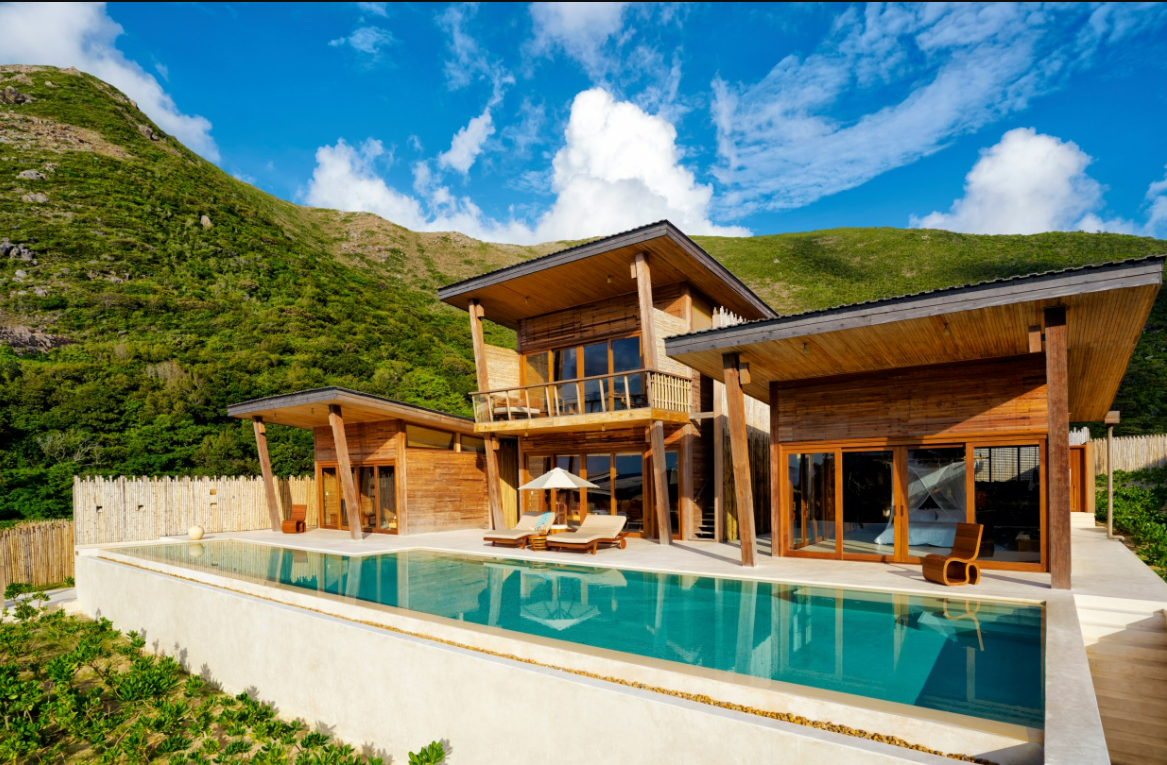
Dat Doc Beach has recently become famous as it is home to 5-star luxurious Six Senses Con Dao Resort – one of Vietnam’s best beach resorts. The beach attracts tourists with clear sea water, slight waves and long white sandbank. Passing through small trails deep in the forest, Dat Doc Beach appears with untouched image, covered by green forests and canyons reaching out to the coast made up the small beach that is romantic and privacy. Although the resort is restricted to public visitors, there is a small area that you can stop for a while and take some photos.

2.7. Con Dao National Park

Established in 1993, Con Dao National Park is the only place in the country where both forest and marine life are conserved. Famous for its wild beauty, the floral system in Con Dao National Park is extremely rich with over 882 species of plants and 150 species of animals. If you like to walk through the forest to breathe fresh air, hear the birds singing, or to watch colorful butterflies and many other animals, a trip to Con Dao National Park is recommended. Not only that, the beaches around the national park are also very beautiful and deserted so you can also participate in fishing services, snorkeling, or cycling here.

  1. Best time to visit Con Dao island

Since Con Dao is isolated from the mainland and located in the Asian monsoon climate and influenced by ocean climate, its weather is relatively cool and pleasant all year round. There are two seasons: rainy season and dry season. The rainy season runs from April to September with the highest rainfall in August and September. Meanwhile, in dry season, from October to March, it is cool with the annual average temperature of 27°C.

So depending on your travel purposes, you can consider and choose your best time to visit Con Dao Island:

  • For those who are adore diving and exploring the ocean, the period from February to July is a perfect choice when the beach is relatively calm with gentle waves and the waters around Con Dao have visibility averaging between 20 and 30m.
    • If you want to discover nature and wild life, you should consider visiting Con Dao during the dry season when you have chance to see turtles nesting on Hon Bay Canh Island.
    • If you are into history, you can visit Con Dao anytime except for the storm season, starting from September to October.
  1. How to get to Con Dao Island

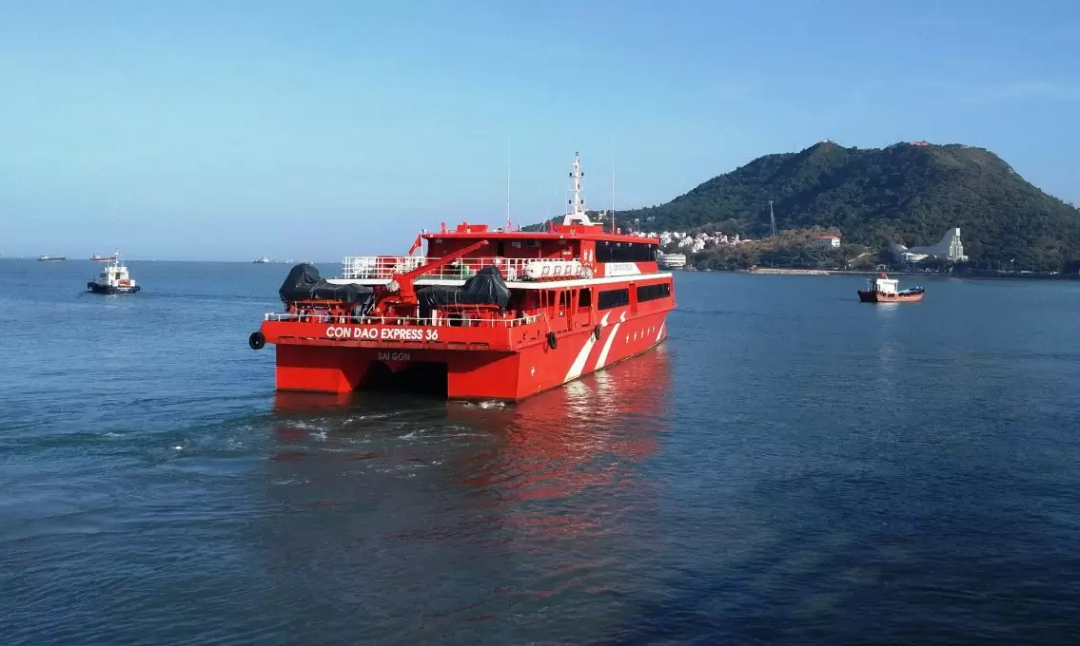
Situated at about 185km from Vung Tau City and 230km from Ho Chi Minh City, Con Dao can be reached by plane from Ho Chi Minh City and Can Tho or by speedboat from Soc Trang, Can Tho and Vung Tau.

4.1. By plane

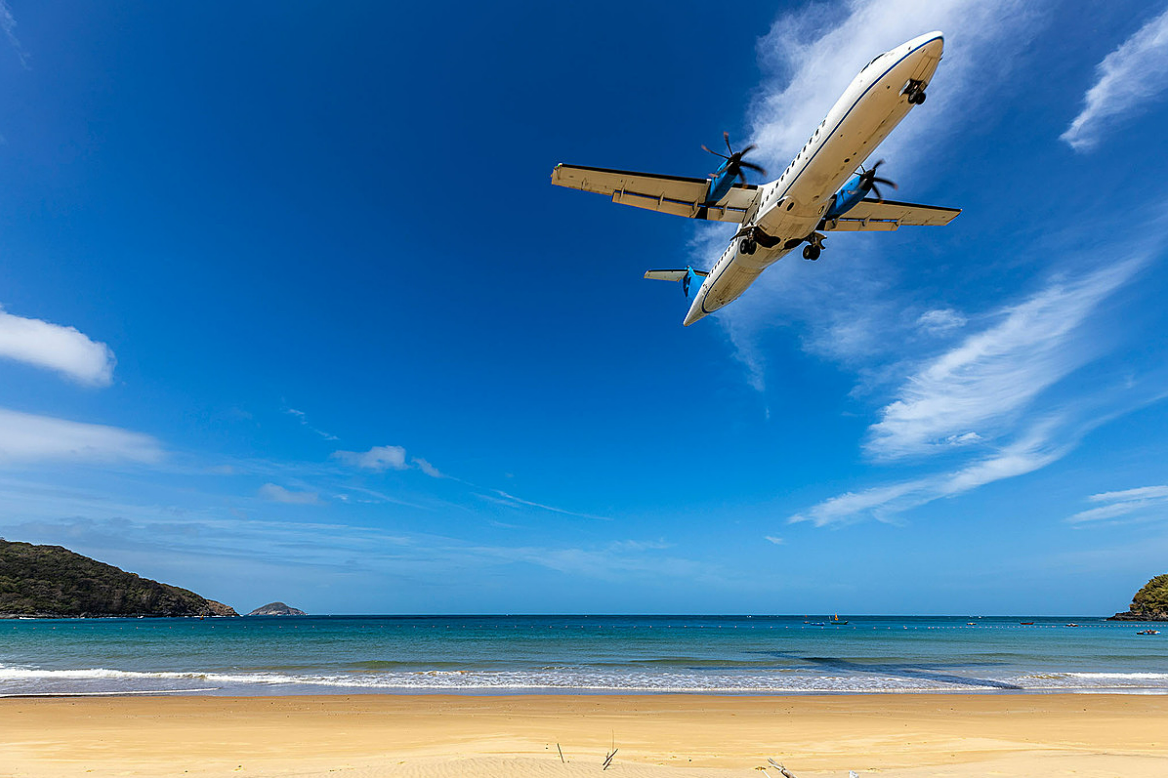
The fastest and most convenient way is to take a flight to Con Dao Airport. There are direct flights from Ho Chi Minh City or Can Tho to Cao Dao operated daily by VASCO collaborating with Vietnam Airlines – the best current airline of Vietnam. It usually takes about 65 minutes to fly from Tan Son Nhat Airport or 50 minutes from Can Tho Airport to Con Dao Airport. The price for round-trip ticket is about 150-200 USD.

4.2. By speedboat

If you would like to have a new experience, traveling to Con Dao by speedboat is another choice. You can depart from Can ThoVung Tau or Soc Trang and reach Ben Dam port in Cao Dao Island after 2,5 – 4-hours journey. Recently, there are two companies operating the trip to Con Dao Island. Check out the detailed schedule and ticket price as below tables:

* Con Dao Express

TimeRouteDeparture – Arrival TimeAdultChildren <11 years old
Senior > 60 years old
Mon – ThuCan Tho – Con Dao
Con Dao – Can Tho
7:00 – 11:00610,000VND520,000VND
Fri – Sun12:00 – 16:00660,000VND600,000VND
Mon – ThuVung Tau – Con Dao
Con Dao – Vung Tau
8:00 – 12:00660,000VND550,000VND
Fri – Sun13:30 – 17:30880,000VND700,000VND
Mon – ThuSoc Trang – Con Dao
Con Dao – Soc Trang
9:00 – 11:00320,000VND260,000VND
Fri – Sun13:30 – 15:30350,000VND290,000VND

* Superdong Speedboat

TimeRouteDeparture – Arrival TimeAdultChildren <11 years old
Mon – SunSoc Trang – Con Dao8:00 – 10:30
13:15 – 15:30
310,000VND230,000VND
Con Dao – Soc Trang8:00 – 10:30
13:00 – 14:45
  1. Accommodations on Con Dao Island

Almost all accommodation on Con Dao is in the small town of Con Son. You can find here budget local guest house, homestays, mid-range hotels to luxury resorts with price vary from 20 USD to 2,000 USD per night.

The most reputable and luxury resort on Con Dao Island is Six Senses Con Dao at Dat Doc Beach. It is designed in contemporary style, yet draws on the essence of a traditional fishing village. The resort is out of reach of the hustle and bustle of Con Dao Town with a long private beach, which give you a perfect space to chill out and enjoy your holiday. Poulo Condor Boutique Resort & Spa is another high-end accommodation you may consider. Inspired by a harmonious blend of Vietnamese traditional design and French colonial heritage dating from the early 20th century, the resort embodies the richness of Vietnamese culture with the vibrancy of the present.

For some mid-range hotels, it is suggested to choose Villa Maison Con Dao Boutique HotelCon Dao ResortSaigon Con Dao Resort or Former ATC Resort… The room rate varies from 50 USD to 100 USD per night. For those who are tight on budget, a mini hotel or local homestay is a good choice, namely, Lighthouse Boutique Hotel, Phi Yen Hotel, Uyen’s House Homestay, Red Hotel… with price from 20-40 USD.

  1. Conclusion

Overall, Con Dao Island is an extremely perfect destination for an authentic getaway you should not miss in your travel list. The island itself is a paradise off the beaten track and is recognized by the immense natural beauty with forested hills, untouched sandy beaches and extensive coral reefs perfect for diving. Let’s get rid of the hectic traffic and the thousands of noisy motorcycles and then immerse yourself in the tranquil and peaceful atmosphere on the pretty island.

 Apply For Vietnam Visaapply Vietnam visaApply visa vietnamBook E-visa Vietnambook visa vietnamCheap Vietnam VisaE-visa Vietnamevisa VietnamEvisa Vietnam onlineexpedited e-visaexpedited E-visa to Vietnamexpedited Vietnam E-visaGet a Vietnam visaGet Vietnam Visaget vietnam visa onlineget visa to vietnamget visa Vietnammultiple entry visamy vietnam visaOrder Vietnam E-Visaquick vietnam evisarush vietnam visaUrgent Vietnam VisaVietnamVietnam E-visaVietnam EvisaVietnam touristVietnam travelVietnam vacationVietnam VisaVietnam visa costVietnam Visa ExemptionVietnam Visa for India citizensVietnam Visa For IndiansVietnam Visa for South Africa citizensVietnam Visa In IndiaVietnam visa in South AfricaVIetnam VIsa on arrivalVietnam VIsa onlineVietnam visa provisa for vietnam Visa On Arrivalvisa onlineVisa to VietnamVisa Vietnam
Posted on

The Traditional culture – Vietnamese water puppets

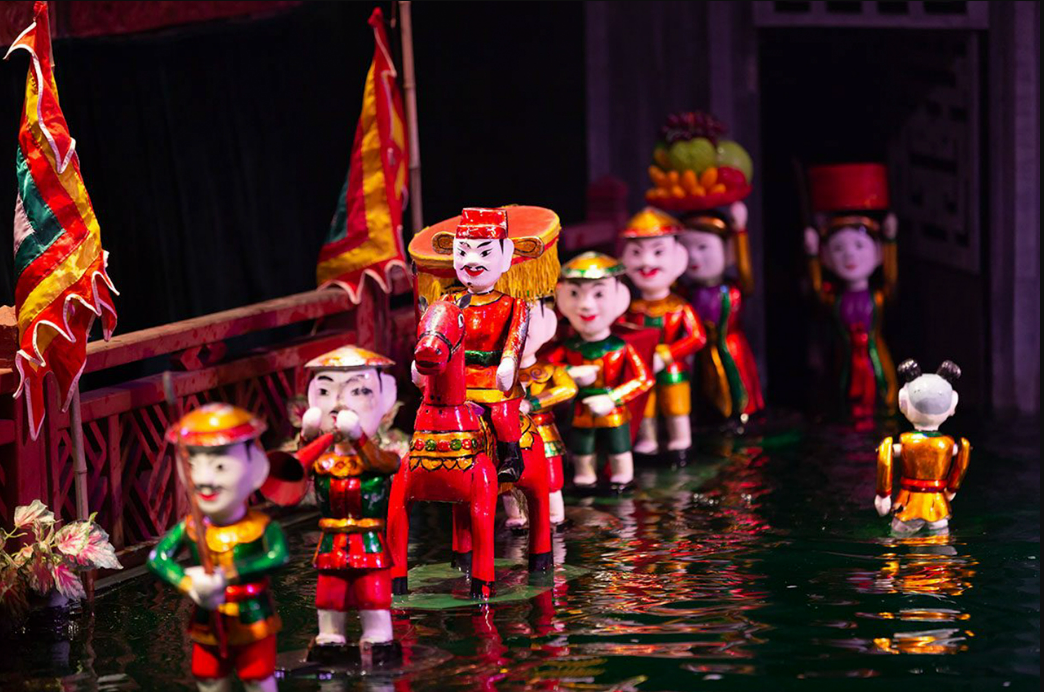
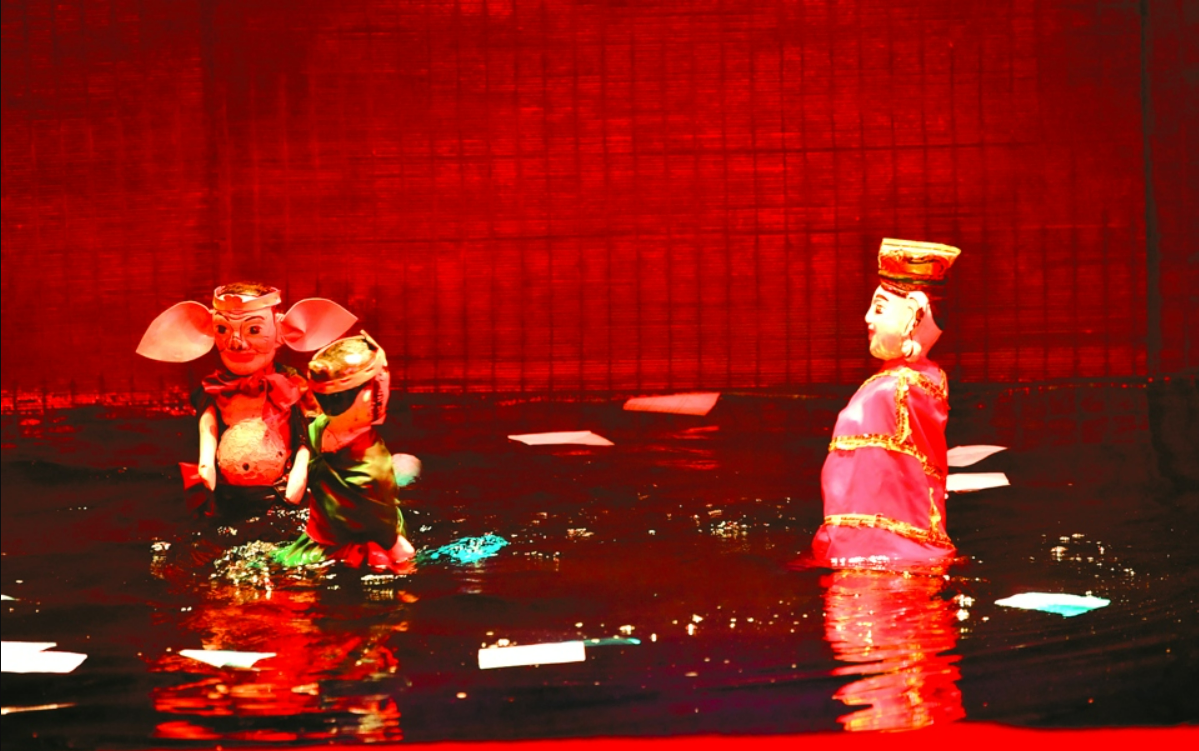
Vietnam Water Puppet goes along with history of over 4000 years. The traditional form of art was created when local working on the rice field, first it entertained the farmers then it was performed on the stages for guests during the festival. This performance was conserved through generations until today. Unlike the shadow puppetry found in other Asian countries such as Cambodia, Myanmar, Thailand, the puppet shows held throughout Vietnam take place over a waist-deep pool of water. A water puppet show will not only demonstrate for the outstanding performance but also the unique, long-established culture, customs of the S-shaped country. Considered as one of the most indigenous cultural traits of Vietnam, it would be a big miss if travellers do not watch the Vietnamese traditional puppet show in their Vietnam trip.

>>> Apply Visa to Vietnam <<<

>>> Order Fast Track Service <<<

  1. Overview of water puppetry & History

Water puppetry is a form of folk arts originating in the Red River Delta in the North of Vietnam, dating back in the 11th century. The wet rice civilization of Northern Vietnam was believed to be the cradle of nurturing this traditional art form. Being born as a communal entertainment performance during harvest time for farmers, the very first Vietnamese puppet shows weren’t just for the entertainment of villagers but were thought to keep the spirits amused enough to stay away from mischief.
Originally, simple stages were constructed around flooded rice paddies, which were available in most of ancient villages & towns. The easy formation enhanced the widespread development of the art form. The water puppet shows gradually progressed as an entertaining activity for the royals. That’s an intriguing adventure from the rice field to the citadel stages.
Until now, the water puppet shows haven’t changed significantly from the old days. Shows at this modern theatre are performed in a pool of water as the stage for the puppets.

  1. Characters:

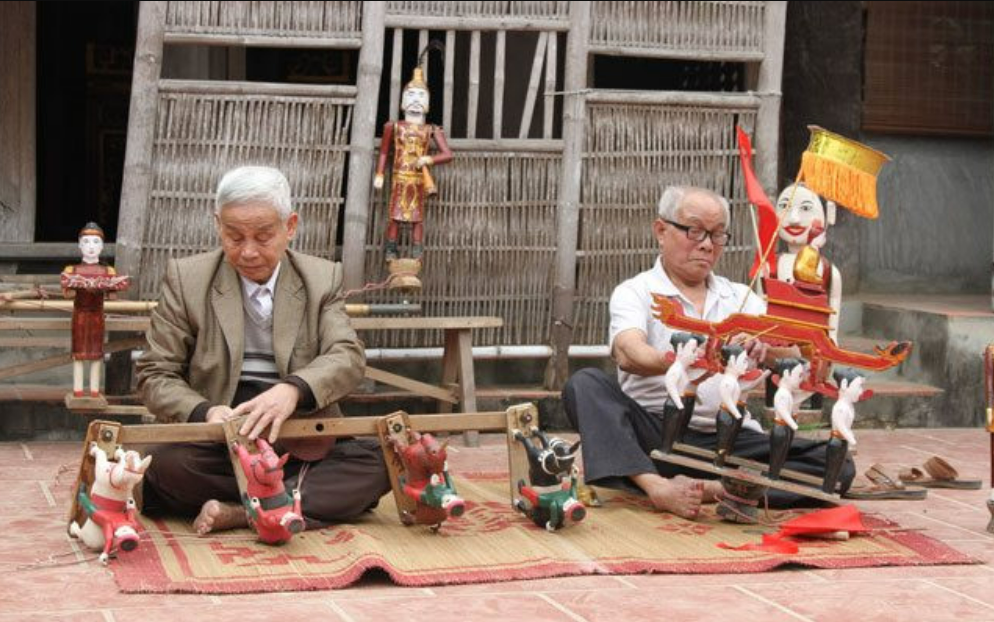
Please don’t expect realistic movements or intricate costumes found at puppet shows in other parts of Asia. The puppets are carved out of fig wood and then lacquered. Each puppet can weigh up to 15 kg. Most of the puppets look cheerful and awash in vivid colors to emphasize their own characters. For example, “Chú Tễu” is a recurrent and the most notable character in water puppetry. “Tễu” means “laugh” in ancient Vietnamese. His appearance is of a cheerful boy who often wears simple loincloth, sometimes accompanied by a simple open vest. He is very talkative and optimistic like any typical northern farmer. He sometimes acts as a narrator, sometimes as a commentator on social realities, politics, especially officials’ corruption.

  1. Performance & secrets of water puppetry

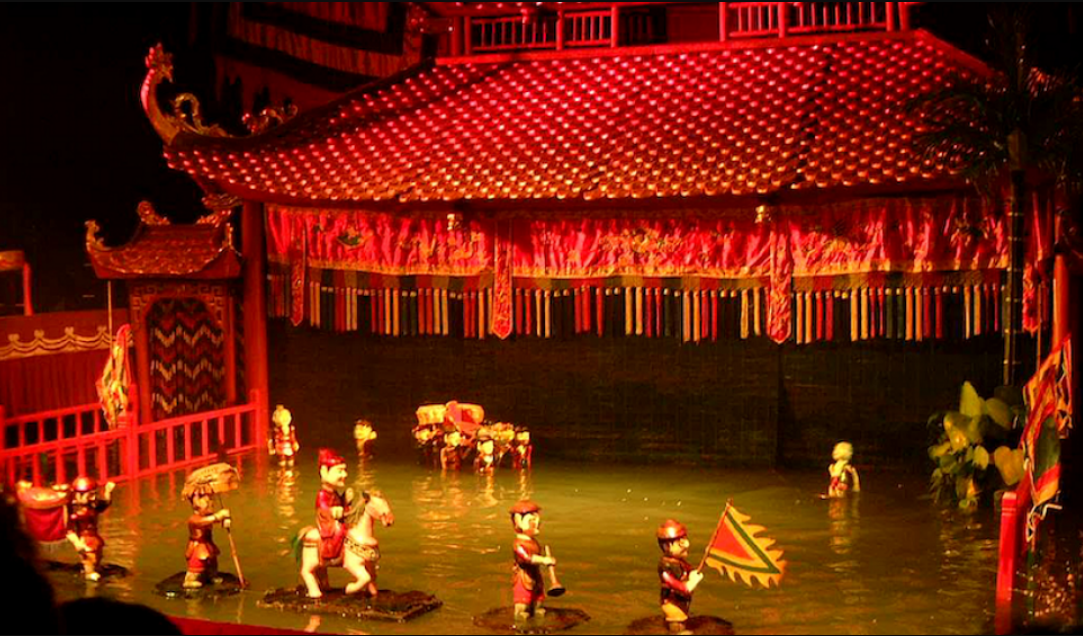
Performance today occurs on one of three venues: 1 – on traditional ponds in villages where a staging area can be set up, 2 – on portable tanks built for traveling performers, or 3 – in a specialized building where a pool stage can be constructed. This special stage requires a chest-deep pool of water. This water pavilion is called “Thủy đình” (“thủy” means nước, “đình” is a communal house) is where performance carries out. No more than eight puppeteers stand behind a split-bamboo screen decorated to resemble a temple facade, and control the puppets using long bamboo rods and string mechanism hidden beneath the water surface. Performances are accompanied by a Vietnamese orchestra playing traditional music using wooden bells, drums, bamboo flutes, horns, and cymbals.

Have you ever wondered how puppeteers can control the puppets behind the bamboo screen and still can coordinate smoothly to each other?
The secret of how water puppet shows work has been kept quiet for centuries. The puppeteers even forms their own dialect and codewords to prevent ones from overhearing talk of a particular technique.
Trying to figure out exactly how puppeteers can control the intricate movements blindly is part of the magic of each water puppet show. Great shows of skill include passing objects from puppet to puppet and other coordinated movements which have to be done by instinct rather than sight.
The musicians providing voices for the show – who, unlike the puppeteers, can see the puppets and their movements – sometimes shout codewords to warn the puppeteers when a puppet is not where it should be.
As tradition, it is adorable that Vietnamese water puppet shows are typically performed without English. The language makes little difference; the theatrics of the colorful puppets and the constant wonder of how the performers can hide beneath the water says everything best and keep puppet shows entertaining! At the end of each performance, the eight puppeteers typically come out of the water to take a dripping bow.
Some Typical Vietnamese Traditional Water Puppetry Scenes: Flag Raising, Dance of the Fairies, Water-spurting Dragon, Dance of the Four Sacred Creatures, Swinging, Thi Mau Returns her Baby, Wrestling, Planting & Pulling up Flags, Buffalo Fighting, Farming ect.

  1. Water Puppet Shows & Theaters

This tradition is unique to North Vietnam but has recently found fame on stages all over the world. It is not difficult to reserve a show ticket wherever tourists congregate in Vietnam. This popular culture show holds regular performances.

– In Saigon (Ho Chi Minh City)

The most popular water puppet venue is Golden Dragon Water Puppet Theatre, which is located inside of a giant sports complex between Tao Dan Park and the Reunification Palace.
The Golden Dragon Water Puppet Theatre in Saigon has three daily shows – 5pm, 6:30pm and 7:45pm. Tickets cost US$7.50/ show, lasting about 50 minutes each.
Address: 55B Nguyen Thi Minh Khai Street, Ben Thanh Ward, District 1, Ho Chi Minh City, Vietnam

– In Hanoi:

Thang Long Water Puppet Theatre: Conveniently located next to Hoan Kiem Lake and within walking distance of the Old Quarter, Thang Long Water Puppet Theatre is familiar place to enjoy for this traditional artform. This is only water puppet show running 365 days a year. You can’t miss it.
The Thang Long Water Puppet Theatre has four daily shows – 4:10pm, 5:20pm, 6:30pm, and 8pm, with the addition of a 3pm show during the busy winter season between October and April. Tickets cost VND 100,000 (about $4.40, read about money in Vietnam).
Address: 57B Dinh Tien Hoang, Hanoi, Vietnam
Site: thanglongwaterpuppet.org/en

Lotus Water Puppet Theater: located on the other side of Hoan Kiem Lake, this ancient theatre is a magnet for both locals and international tourists who want to see the legendary traditional Vietnamese form of art.

If you are looking for more exotic cultural spot, where you not only experience this comical water puppet performances but also meet the water puppetry’s professional craftsmen to hear their exceptional story,  Dao Thuc village is a perfect address. Nestled in Dong Anh district 20 km on the outskirts of Hanoi, the village is famous for its 300-year-old water puppetry. “Seeing is believing” is what people talk to each other when come to Dao Thuc and experience water puppetry that has been preserved down through many generations.

– Water Puppet Shows in Hue and Hoi An

The heritage town of Hoi An in Vietnam’s Central area – home to cuisine paradise, the Japanese bridge and a fantastic Old Town – has a water puppet show of its own.
The Hoi An Theater located a little outside of the Old Town operates on water puppet shows daily except Wednesdays and Sundays. The show begins at 6:30pm and at 7:15pm, lasting 45 minutes. Admission costs VND 80,000 (US$ 3.50) for adult viewers, VND 40,000 vnd (US$ 1.70) for children.
Address: Hoi An Theater, 548 Hai Ba Trung, Hoi An

In the ancient capital of Hue, the Co Do Hue Water Puppet Theatre occupies up to 160 seats, situated right in the heart of the city, and stages an impressive three shows per day, even during holidays. First show starts at the same time in any season, at 3:30pm. Summer evening shows take place at 7:30pm and 9pm, while winter evening shows take place at 6:30pm and 8:30pm.
Admission costs VND 50,000 (US$ 2.15) for adult viewers, VND 30,000 vnd (US$ 1.30) for children.
Address: 08 Le Loi, Hue, Vietnam

 Apply For Vietnam Visaapply Vietnam visaApply visa vietnamBook E-visa Vietnambook visa vietnamCheap Vietnam VisaE-visa Vietnamevisa VietnamEvisa Vietnam onlineexpedited e-visaexpedited E-visa to Vietnamexpedited Vietnam E-visaGet a Vietnam visaGet Vietnam Visaget vietnam visa onlineget visa to vietnamget visa Vietnammultiple entry visamy vietnam visaOrder Vietnam E-Visaquick vietnam evisarush vietnam visaUrgent Vietnam VisaVietnamVietnam E-visaVietnam EvisaVietnam touristVietnam travelVietnam vacationVietnam VisaVietnam visa costVietnam Visa ExemptionVietnam Visa for India citizensVietnam Visa For IndiansVietnam Visa for South Africa citizensVietnam Visa In IndiaVietnam visa in South AfricaVIetnam VIsa on arrivalVietnam VIsa onlineVietnam visa provisa for vietnam Visa On Arrivalvisa onlineVisa to VietnamVisa Vietnam
Posted on

Discovery Nam Du Island

Discovery Nam Du Island

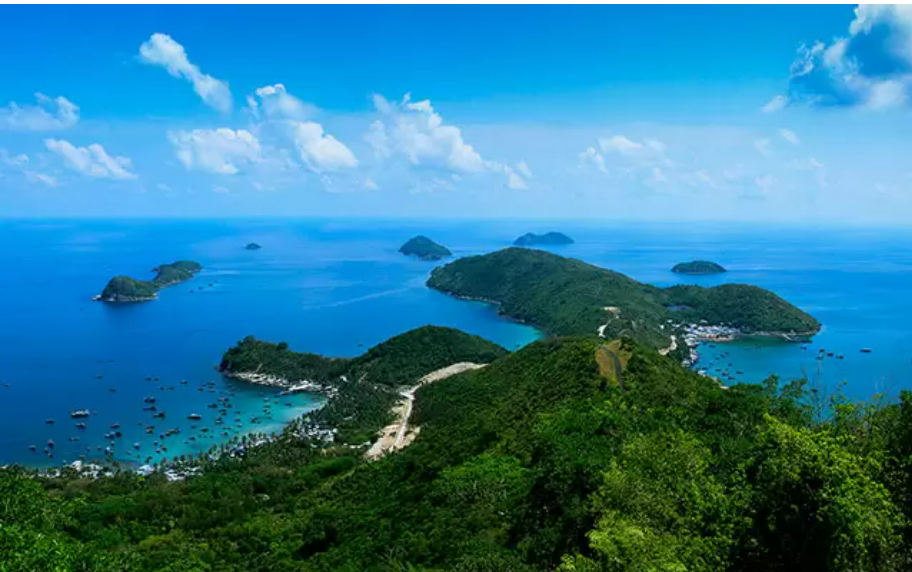
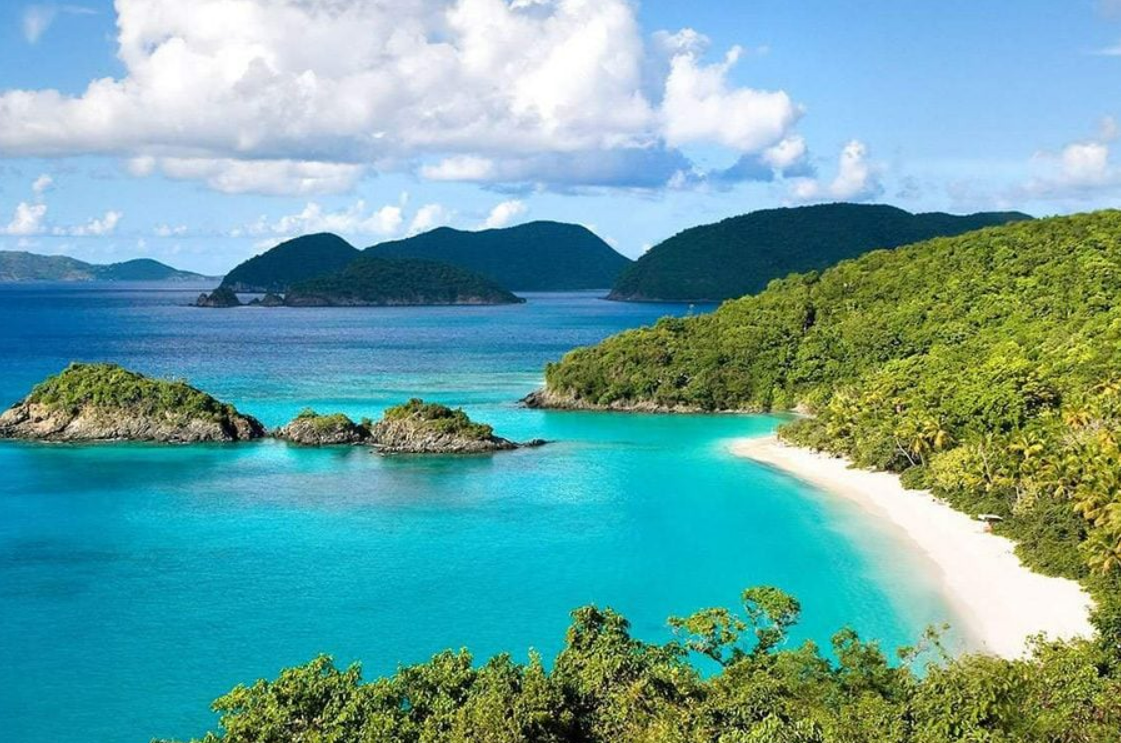
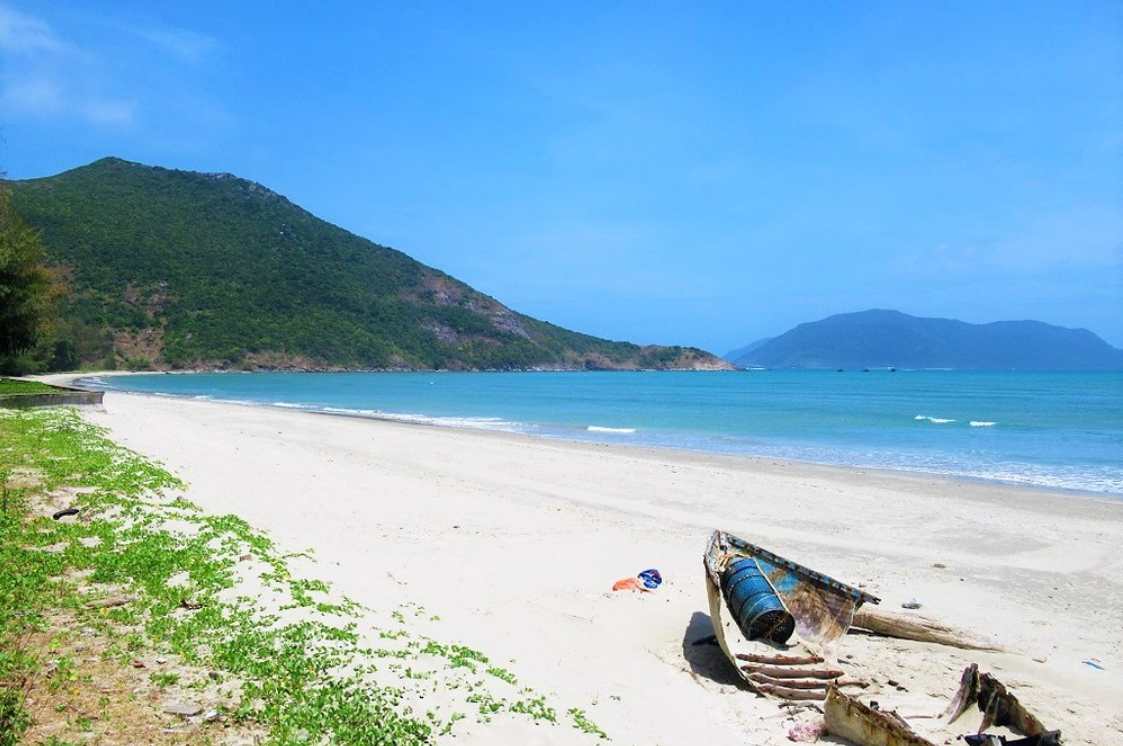
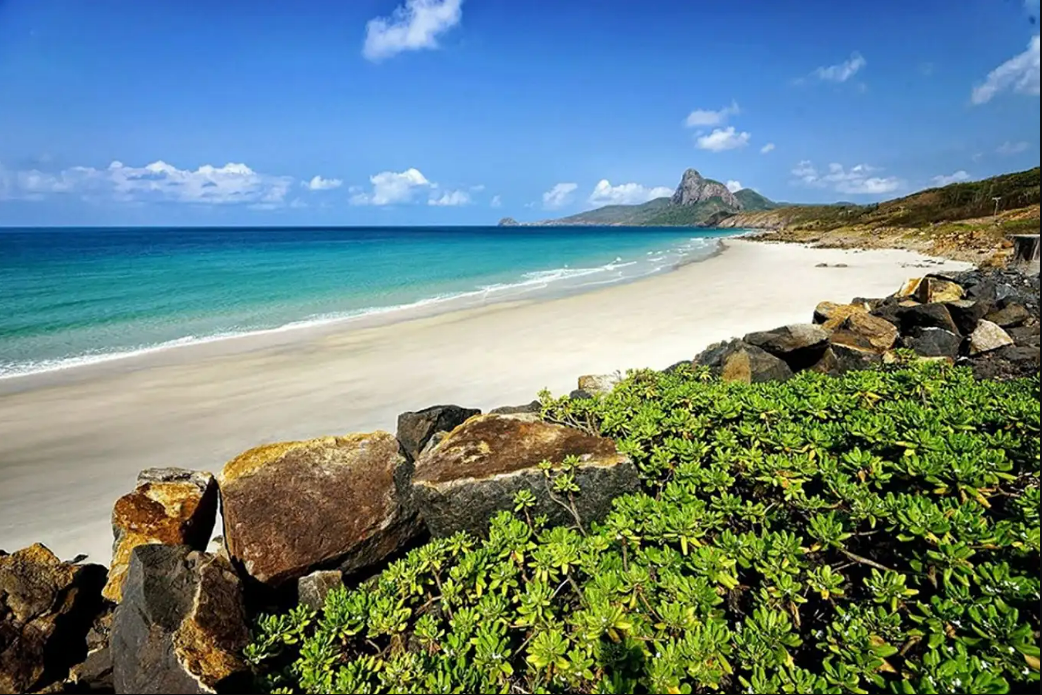
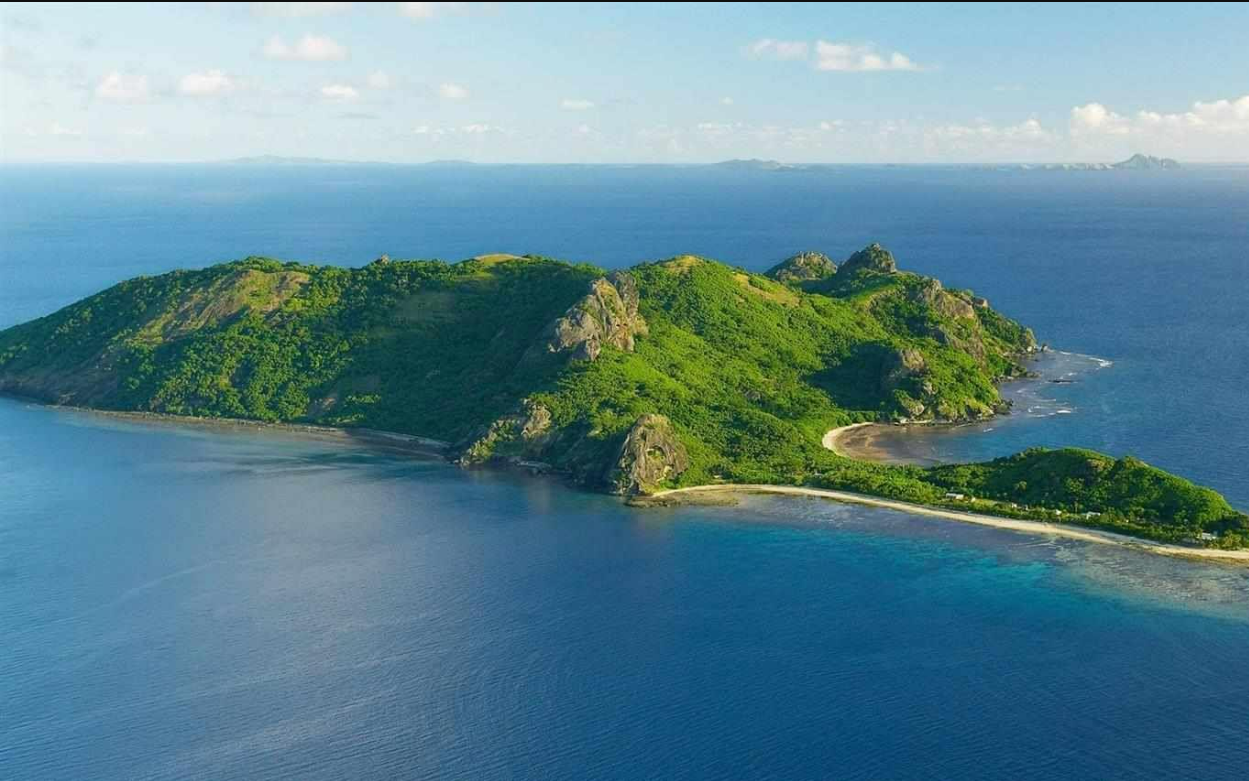
Nam Du Island, around 40 kilometers away from Phu Quoc, is becoming an attractive destination for backpackers heading to the Mekong Delta province of Kien Giang. This pristine island has 21 islets, 11 islets of which are inhabited, while the others remain completely untouched.

>>> Apply Visa to enter to Vietnam <<<

>>> Order Fast Track Service <<<

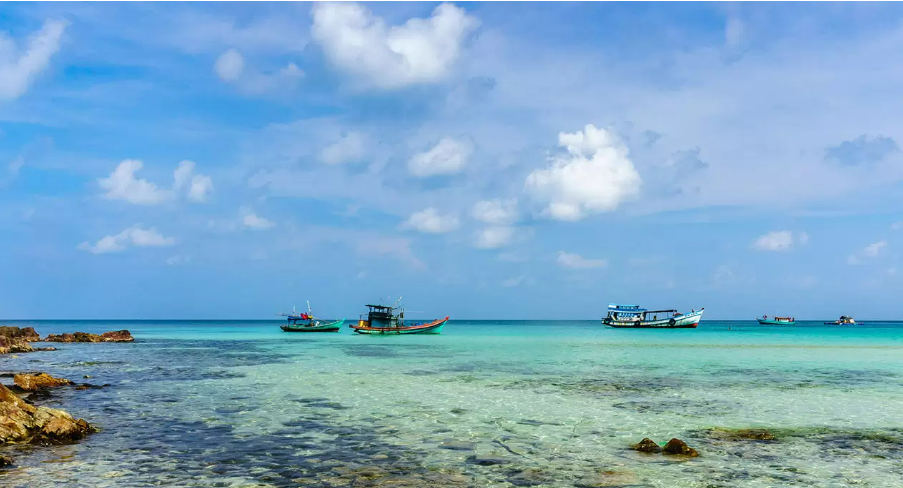
The immense blue sea and sky, imposing mountains erupting amidst the ocean, endless evergreen primeval forests, long stunning beaches and splendid rock cliffs of Nam Du Archipelago (Quan dao Nam Du – in Vietnamese) in Kien Giang Province have seen it compared to the “New Wonder of the World” – Halong Bay in Quang Ninh Province.

The archipelago stretches over two communes of An Son and Nam Du with a population of 10,000 people working in fishing and sea-related services. Formed from a volcano, it has numerous six-meter creeks which are advantageous for transportation. As it is endowed with high mountains, Nam Du also is suggested as a great spot for offshore fishermen to flee rough storms.

There are two main seasons in Nam Du: dry season (from November to May) and rainy season (from May to October). The rainy season is characterized by rain, and during the peak of this season from July to September, it may have a lot more rain and rough seas. Hence, the best time to visit Nam Du Island is from December to April when the sea is peaceful and turquoise, the temperature is comfortable, and the weather is consistent and sunny.

HOW TO GET TO NAM DU ISLAND

By Plane
You can take a flight from Ho Chi Minh City or Phu Quoc to Rach Gia Airport (Kien Giang Province) and then take a bus or taxi from the airport to Rach Gia wharf to catch a ferry to Nam Du.

Ferry to Nam Du Island from Rach Gia
At the Rach Gia ferry wharf, you can take Phu Quoc Express Boat, Superdong Speed-boat or Ngoc Thanh Ferry to Nam Du Island. The Phu Quoc Express Boat and Superdong Speed-boat are efficient, orderly, air-con and comfortable. Seating is assigned and you get a bottle of water, a refresher towel and entertainment on flat-screen TVs.

FerryRouteDepartureArrivalAdultChild
Phu Quoc Express
VIP Catamaran
Rach Gia – Nam Du6:30
——-
11:45
8:30
——-
13:45
250,000 VND200,000 VND
Nam Du – Rach Gia9:00
——-
14:30
11:00
——-
17:30
Ngoc ThanhRach Gia – Nam Du7:309:45205,000 VND145,000 VND
Nam Du – Rach Gia12:1514:30
SuperdongRach Gia – Nam Du7:209:50210,000 VND150,000 VND
8:4511:15
Nam Du – Rach Gia11:0013:30
11:5015:20

GETTING AROUND NAM DU ISLAND
By Boat
: To explore the surrounding islands like Hon Lon and visit some beautiful places, you can rent a private boat or join in a group. Find a boat of the local people at the main pier on Hon Lon Island.

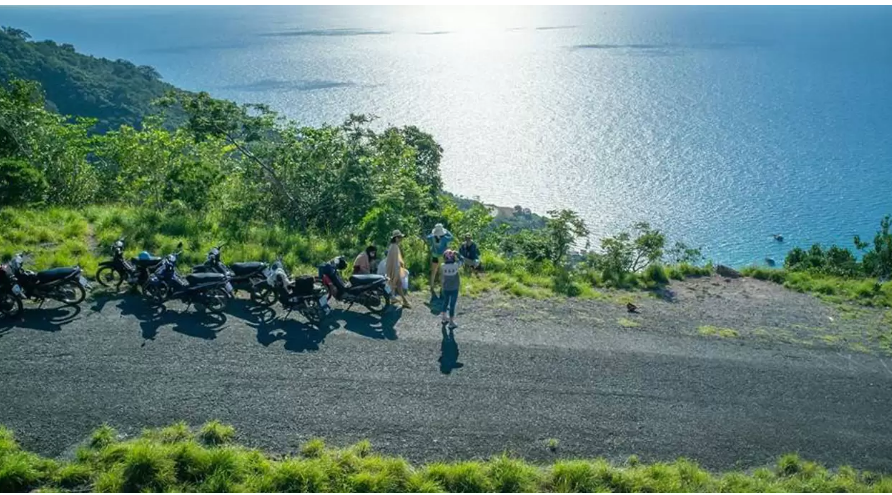
By Motorbike: The main road to Hon Lon Island is paved and you can rent a motorbike from your motel/guesthouse for about 150,000 VND – 200,000 VND per day. One of the most memorable things to do in Nam Du Island is to ride around the coast at sunset. The scenery is so stunning, and the ocean sunset is absolutely gorgeous.

By “Xe om”: You can also hire a motorbike taxi driver to visit some of the popular sites on Hon Lon. Sometimes, they will be a tour guide showing what and where you should visit on Nam Du Island.

ACCOMMODATIONS ON NAM DU
Almost hotels, guesthouses in Nam Du Island are motel and they are still basic. There are two ways to spend your night on Nam Du Island, rent a hotel’s room or choose homestay with the locals. For those who like experience, you can rent a tent in beach to spend your night.

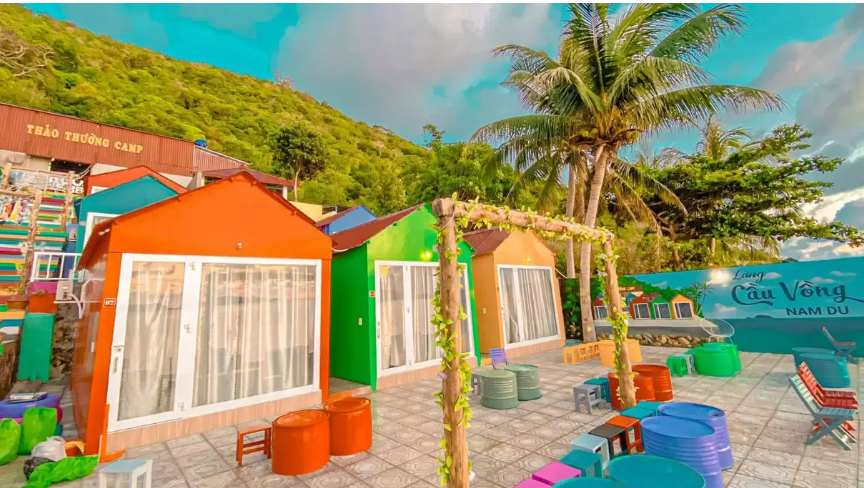
The majority of the accommodation options in Nam Du are available on Hon Lon Island. They range from simple guesthouse to motels and price vary from 100,000 VND to 500,000 VND per night. You should check and book a room in advance, especially on the weekends. To enjoy the sound of sea waves with an ocean view, you can book a room in Phuong Vu Hotel (outside of Cu Tron Town), Humiso Resort, Thao Thuong Camp, Kim Yen Motel, Thuy Diep Motel and Sau Co Motel in Hon Lon Island.

Camping on Nam Du Island is also popular for tourists who want to have a special experience. Hon Dau Island is the most suitable beach for overnight cause of coconuts and long sandy beach, price for rent beach is 30,000VND and 40,000VND per night for rent a tent.

KEY SITES
Hon Lon Island
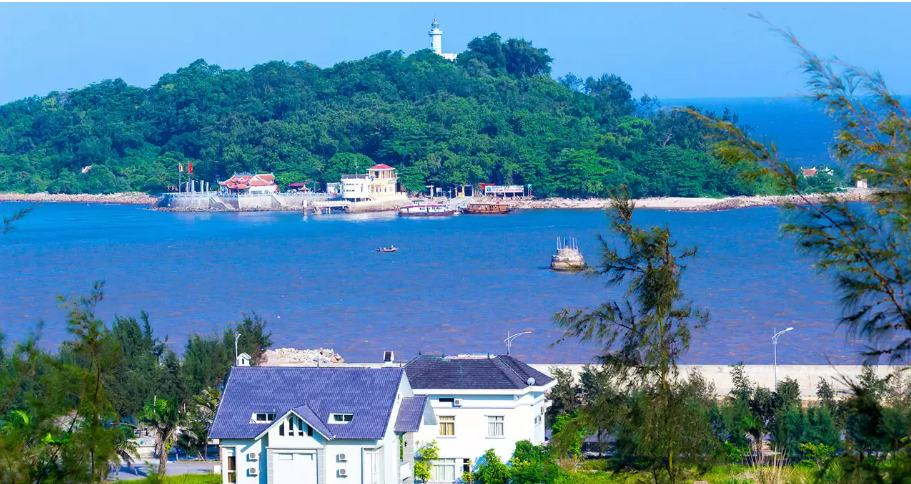
Hon Lon, also known as Big Island, locally called Cu Tron islet, is Nam Du’s largest island on Nam Du, where you can find most accommodations, restaurants and the ferry dock. Hon Lon Island is famous for its lighthouse, a restricted military zone and has some stunning beaches: Dat Do Beach, Nhun Beach, Men Beach and Mam Beach. And Men Beach is the most beautiful one of Nam Du Archipelago with green row of coconut, white sands and blue sea.

Hon Dau Island
A must-see location is Dau Islet, which is 95 percent forest and also boasts shady, picturesque coconut gardens, simple yellow sand beach. Tourists should take a boat trip around the whole archipelago, cruising along Nom Ngoai, Dam, Hang, Moc, and Tre islands’ beautiful rocky beaches.

Hon Ngang Island
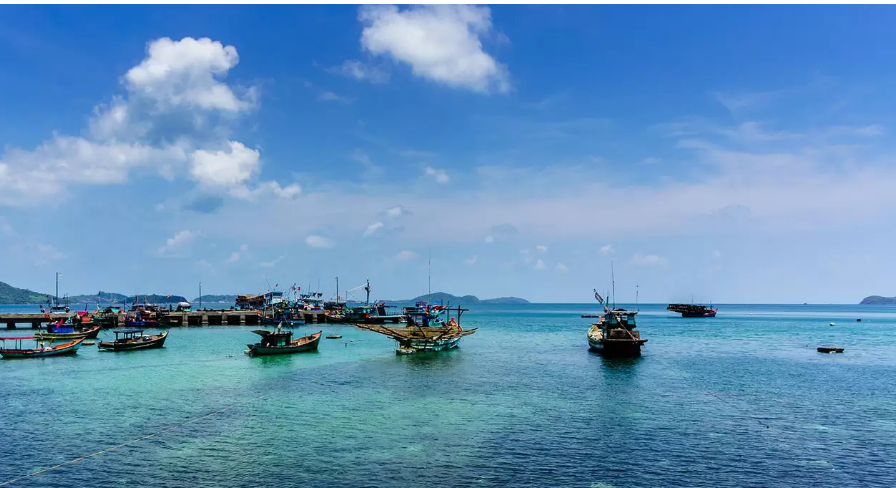
Hon Ngang is the center island of Nam Du, where most of the people live. It takes 30 minutes to get here from Hon Lon by boat. There is no means of transport on this island, you have to walk around to explore the island, visit the pier to see a sea inundated with fishing boats and fish farms for a photo opportunity. Tourists can also rent a room in the local’s guesthouse for an overnight stay.

Hon Mau Island
Mau Island is about 2 square kilometers and has a small fishing village with a hundred households. This is famous for beautiful beaches lined with coconut trees and Chuong beach is the best because it is the only real white sand beach. Other beaches are Nam beach, Nom beach, Da Den beach and Da Trang beach. Hon Mau is rapidly expanding to accommodate the tourist surge and there is now a sizable community found on the island that cater to the growing tourism sector.

Hai Bo Dap Island
Hai Bo Dap is an uninhabited island that is surrounded by coral. Most island hopping tours stop here for camping, swimming, snorkeling and fishing. One of the unique features of this island is its natural bridge that connects two islands together to form Hai Bo Dap. This natural sea bridge can only be seen at low tide.

WHAT TO EXPLORE ON NAM DU ISLAND ARCHIPELAGO
Trekking and Hiking

For people who love some sport activities, trekking to Nhum Beach is a great experience, you need to hike along a small trail, pass the towns fresh water supply source, and down through a densely forested area teeming with wildlife. The trail eventually leads to a rocky beach and the best time to hike this trail is before sunrise.

Snorkelling
Nam Du Archipelago is plentiful marine life and coral reefs, and Hon Dau Island is a perfect destination for diving, snorkelling that offers you a discovery of the colorful world of wonderful coral reefs. You can snorkel from shore, join a tour, or charter your own boat and don’t forget to bring your swimsuit and your swimming goggles.

Sunrises and sunsets
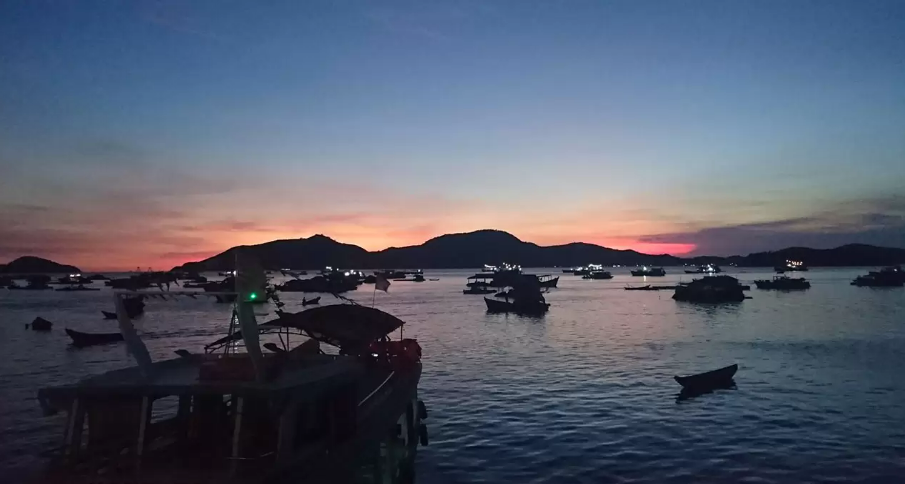
Nam Du’s Ocean sunrises and sunsets are some of the best you will ever see in Vietnam and since the island is so small you can actually watch from a single location. The pier at Hon Lon Island is a perfect spot to watch the sunrise right behind Hon Dau Island. Be sure to keep an eye out above to spot the few hawks in the area. Meanwhile, sunset along the coastal road on Hon Lon Island is breathtaking. Stop anywhere along this road and watch an amazing ocean sunset.

Fishing and foraging on Nam Du
You can either fish from the main pier, commission a small boat, or rent a boat. There are also night squid and baby octopus fishing excursions that may be of interest to you. You can also forage for your own food as all the Nam Du Island are blessed with many wild edibles and seafood such as sea snails, oysters, clams and sea urchins.

Nam Du Lighthouse
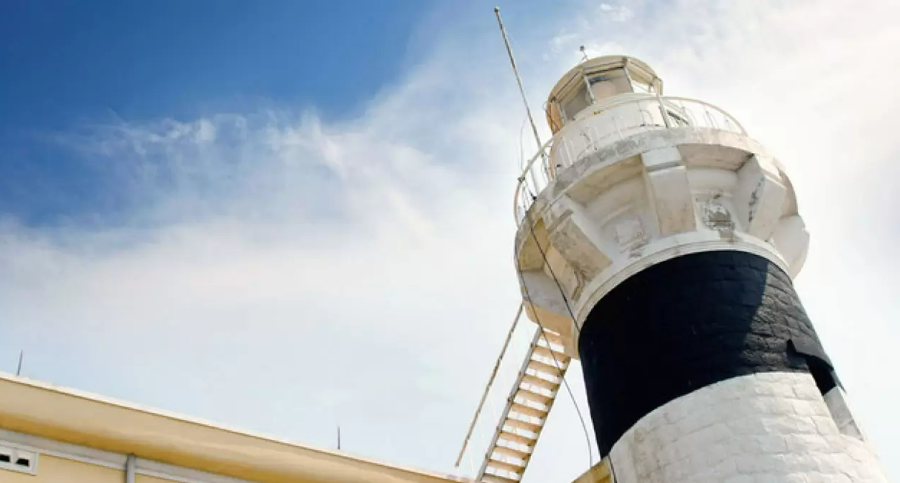
Nam Du Lighthouse is located on the top of Hon Lon Island, 300 meters above the sea level and it is considered to be the highest lighthouse in all of Vietnam. With this height, tourists can see the most beautiful panorama of Nam Du island. However, it is a restricted military zone and most visitors to Nam Du will not be able to visit it without “tipping” someone or being invited by the military.

Temples and pagodas
There are two colorful temples called Mieu Ba Chua Xu and Ngu Thanh Mieu. Mieu Ba Chua Xu is near Tret Beach having a beautiful statue of Ba. Ngu Thanh Mieu is near Bai Ngu, worships whales and you can see their bones on display.

Nam Du Island discovery tour
Discover the Nam Du Archipelago by joining a full or half day tour of the Nam Du Islands. The itinerary for these tours consists of visiting the popular islands, swimming at calm bays, snorkeling in areas that have good coral, and visiting Nam Du’s best beaches. There are 2 tours available, a full day tour or half day tour so you should consider with your schedule.

SPECIAL FOODS ON NAM DU ISLAND
Nam Du Island specialty dish is Blue bonefish or “Xuong Xanh”, as this green colored fish is quite abundant in and around the Gulf of Thailand. It is of served grilled or a dried version is fried.

Grilled scallop with fat and onion
Scallops are a popular seafood with delicious ivory flesh without toughness, suitable for both fried and roasted, and is one of the materials to be processed into a variety of delicious and nutritious dishes such as: fried scallop with salt and pepper, grilled scallop with fat and union.

Steamed squid with ginger
During the breeding season, squids contain many eggs, for more than 70% of a squid. With Squid eggs, you can make many a tasty dish like: fried squid eggs with chili fried ruffled squid, but the most striking is still steamed squid with ginger.

PERMITS FOR FOREIGNERS
Nam Du is a popular tourist attraction among Vietnamese people. Foreigners are only allowed on the island with a permit. Foreigners need a valid passport, visa, residence papers and “permits for entry into maritime boundary areas issued by provincial-level public security departments” to go to Nam Du Island. However, Nam Du is off limits to foreigners because Nam Du businesses cater to mainly “package tourists and tour group”, please check for foreigner’s permission information to travel to Nam Du, which is best worth to spend your beach holiday when you want to extend your trip.

 Apply For Vietnam Visaapply Vietnam visaApply visa vietnamBook E-visa Vietnambook visa vietnamCheap Vietnam VisaE-visa Vietnamevisa VietnamEvisa Vietnam onlineexpedited e-visaexpedited E-visa to Vietnamexpedited Vietnam E-visaGet a Vietnam visaGet Vietnam Visaget vietnam visa onlineget visa to vietnamget visa Vietnammultiple entry visamy vietnam visaOrder Vietnam E-Visaquick vietnam evisarush vietnam visaUrgent Vietnam VisaVietnamVietnam E-visaVietnam EvisaVietnam touristVietnam travelVietnam vacationVietnam VisaVietnam visa costVietnam Visa ExemptionVietnam Visa for India citizensVietnam Visa For IndiansVietnam Visa for South Africa citizensVietnam Visa In IndiaVietnam visa in South AfricaVIetnam VIsa on arrivalVietnam VIsa onlineVietnam visa provisa for vietnam Visa On Arrivalvisa onlineVisa to VietnamVisa Vietnam
Posted on

Da Nang best things to do & travel guide

Da Nang is halfway between the capital Hanoi in the north and Ho Chi Minh city in the south. It is the fourth largest city in Vietnam. Apart from some historical sites, the famous Hai Van Pass, the Son Tra peninsula and the beaches are the main reason for staying here.

5 reasons to visit Da Nang

  1. Drive motorbike over the Hai Van Pass
  2. Explore the Son Tra peninsula
  3. Rock climbing at the Marble Mountains
  4. Relax on the beach
  5. Watch the fire show of the dragon bridge

What is in this Da Nang travel guide

Practical information

Recommended days to stay

If you are in Da Nang in the right season, it is a great place to stay for a few days at the beach. If you are desire a bit more culture and things to do, it is recommended to skip this city and stay in the neighboring town of Hoi An.

ATM’s & money exchange

There are ATMs everywhere in the city, including a number at international banks.

Local events and holidays

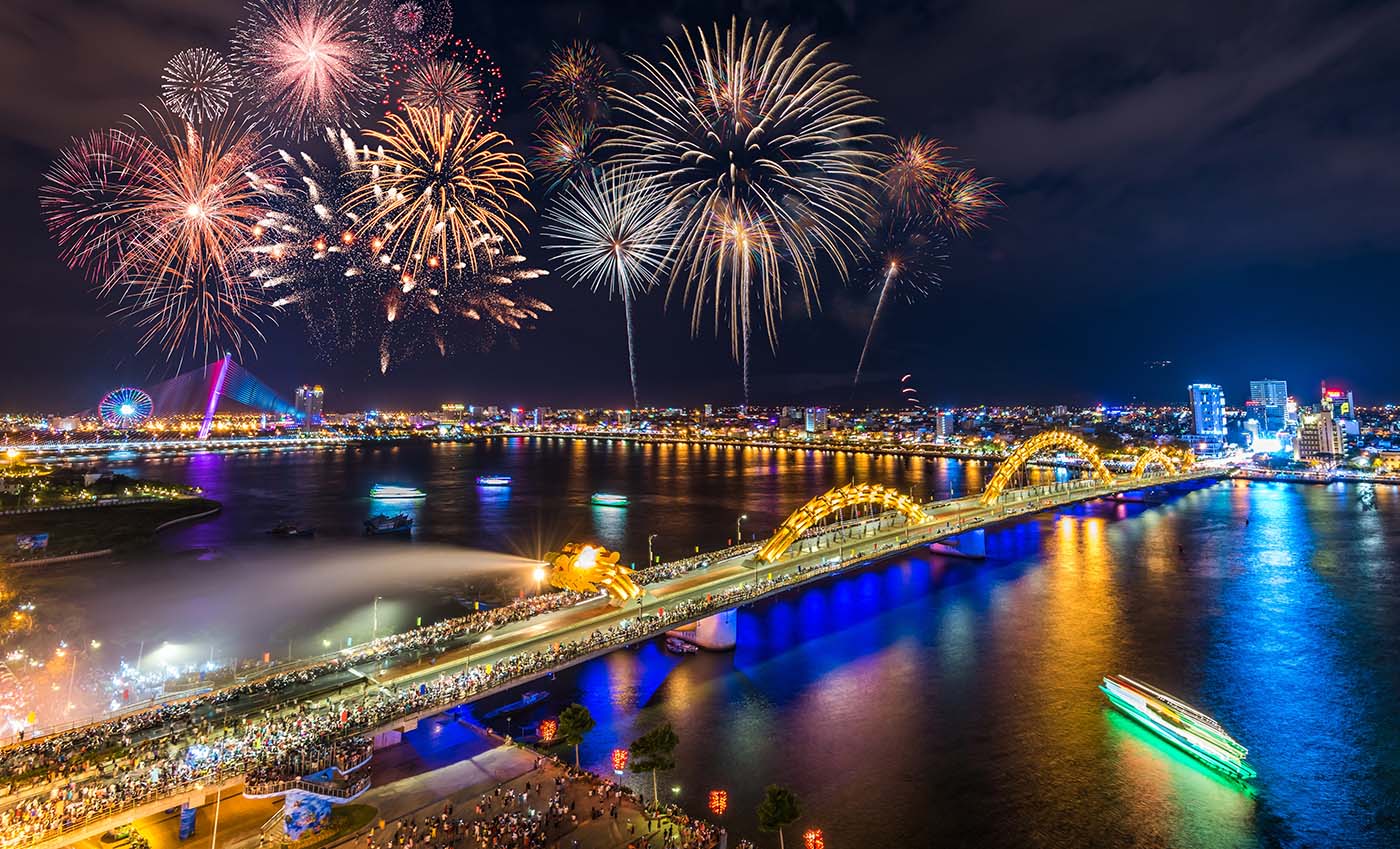
  • Danang International Fireworks Festival: Held in the months of May or June, with spectacular displays of international fireworks teams illuminating the river and bridges.
Best time to visit
  • Dry season: April – August
  • Monsoon season: September – March
  • Warmest months: June – August (with the highest average temperature of 35 ° C)
  • Coolest months: November – January (with lowest average temperature of 18 ° C)

10 best things to do in Da Nang

Not long ago, Da Nang was a port town like so many can be found in Vietnam. However, in a short time Da Nang has developed into one of the largest and most modern cities in Vietnam. The beautiful beaches of Da Nang and the surrounding area have made the city one of the best beach destination in Vietnam.

There are lots of things to do in Da Nang, but especially around it. It is located right between the two ancient cities of Hoi An and Hue and you can find impressive national parks and stunning coastal roads.

1. Hai Van Pass

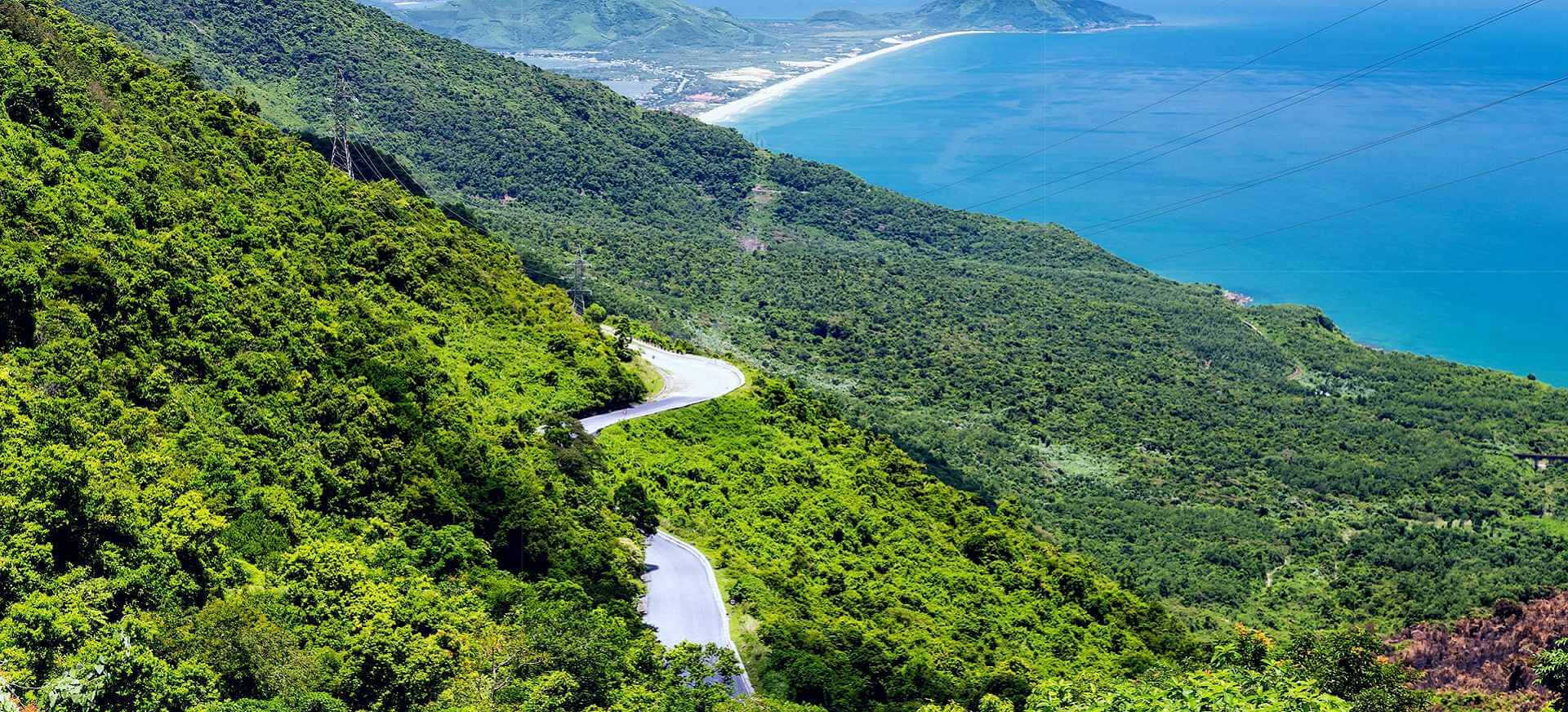
The Hai Van Pass is at number one of the top 10 things to do in Da Nang. Made famous in an episode of the Top Gear TV show, the Hai Van Pass is now a must-do for thousands of motorcycle enthusiasts and adventurers looking for alternative things to do in Da Nang. 

This 21 km long mountain pass between Da Nang and Hue offers some of the most incredible ocean views. A new highway tunnel that has been built ensures that the traffic over the mountain pass is minimal. Rent a scooter in the city and leave early in the morning if you plan to be back in Da Nang the same day. 

2. Son Tra

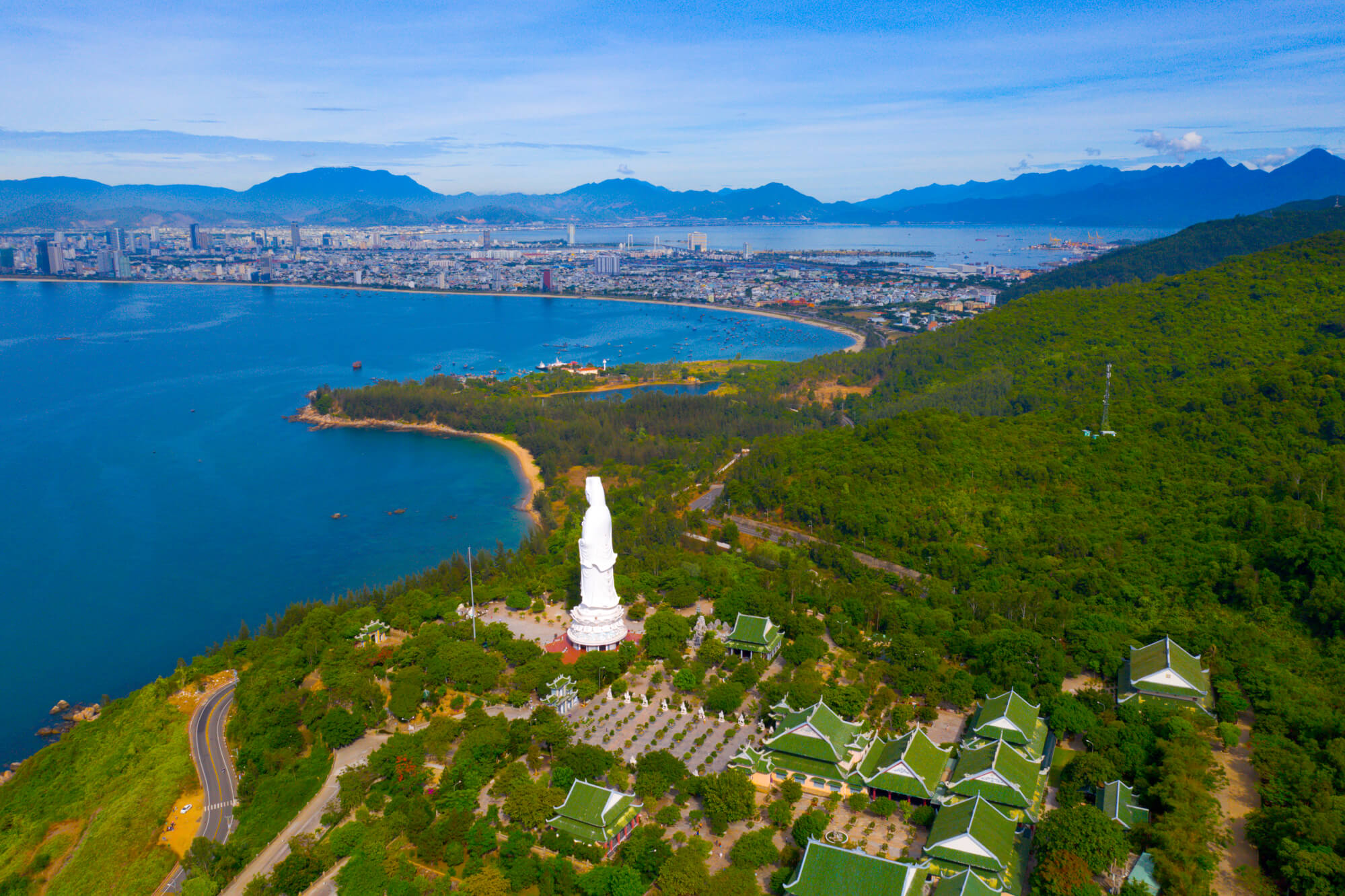
The beautiful rainforest that juts out into the sea from the city of Da Nang is called the Son Tra peninsula. Rent a scooter to ride the newly constructed road to the end of the peninsula and view the nature reserve and head to the top for a great view. If you are lucky you can see a very rare monkey, the red Duoc Langur. There are also a host of unspoilt beaches along the peninsula, making it one of the most beautiful and unspoilt sights in Da Nang.

3. Marble Mountains

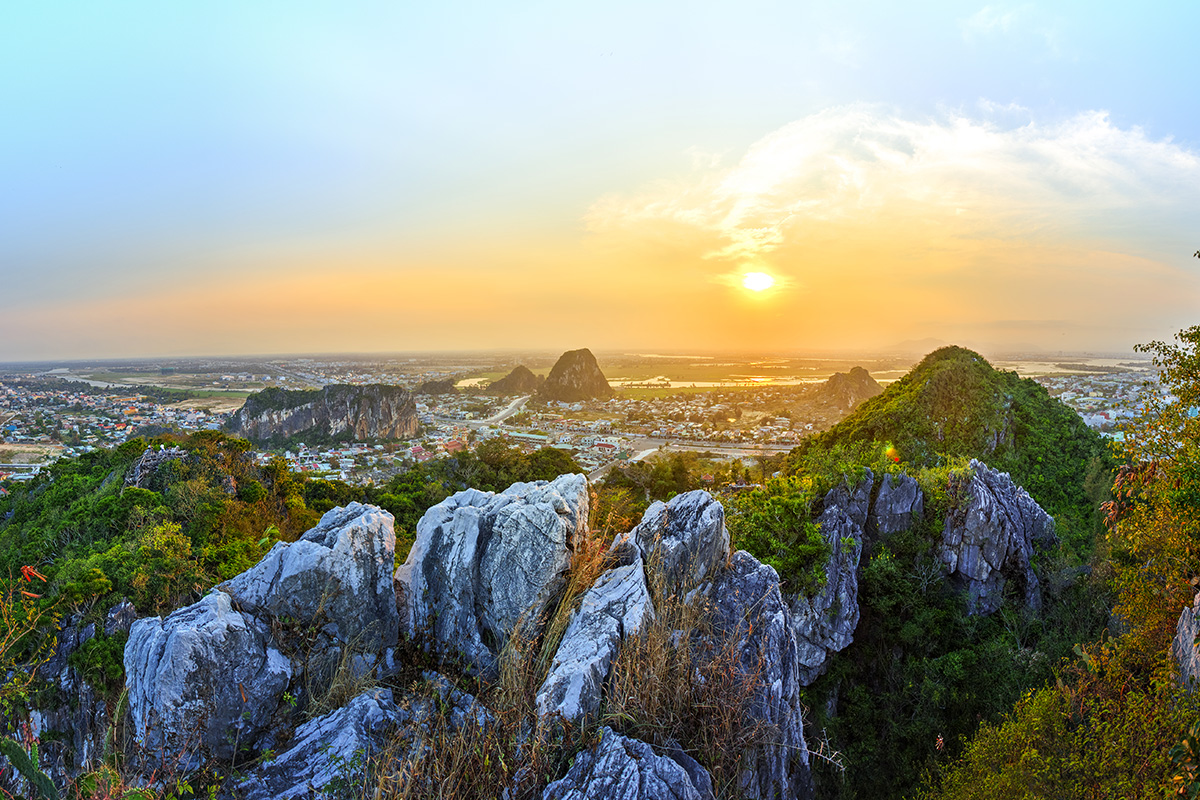
The Marble Mountains are a cluster of marble and limestone hills just 7 km from the city and one of the best sights in Da Nang. The mountains are full of caves, tunnels and Buddhist shrines that you can discover. You can climb to the top of the mountains for spectacular views of the entire area. If you are more adventurous, you can also rock climbing and abseiling in the Marble Mountains.

4. Ba Na Hills

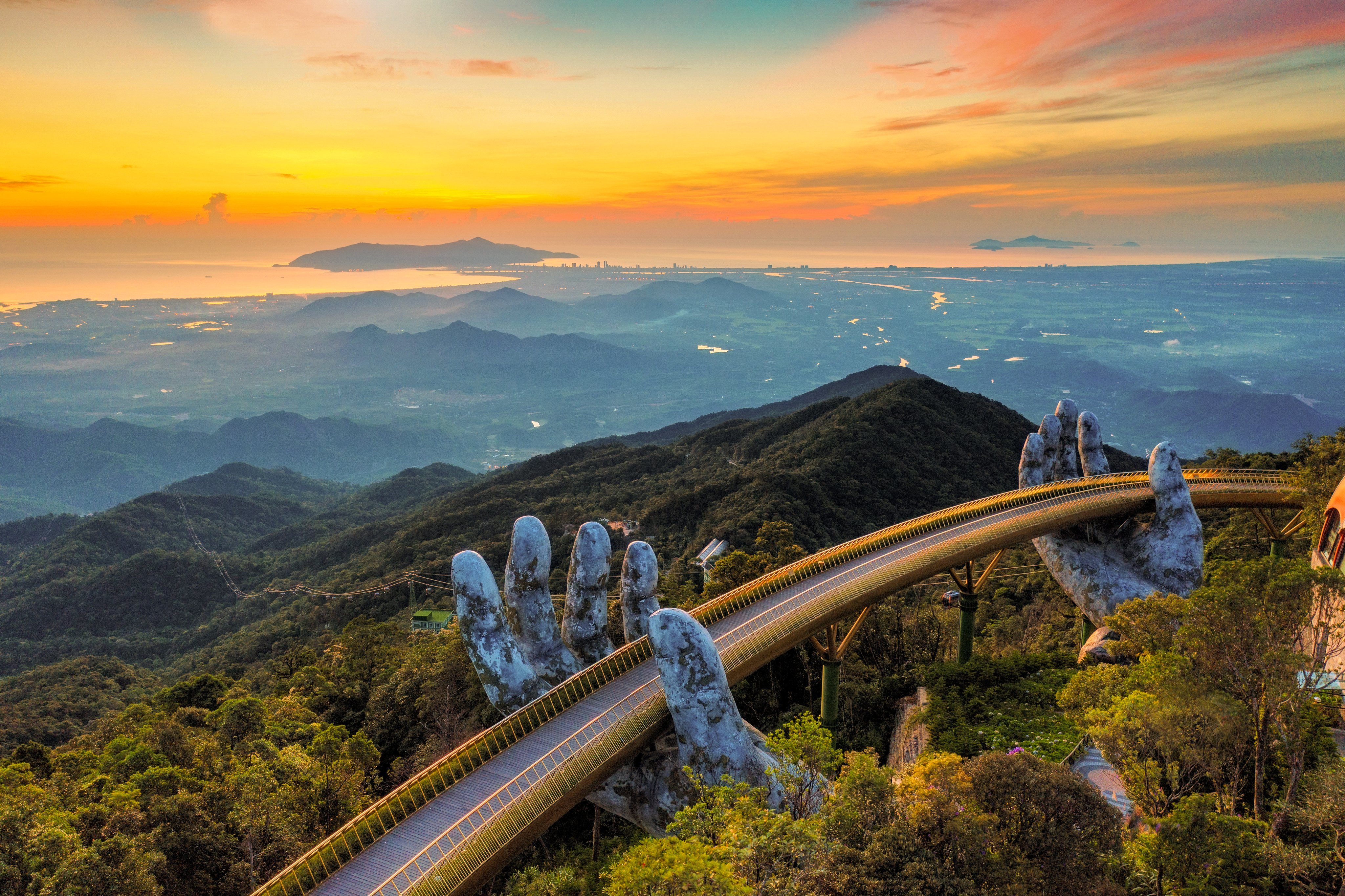
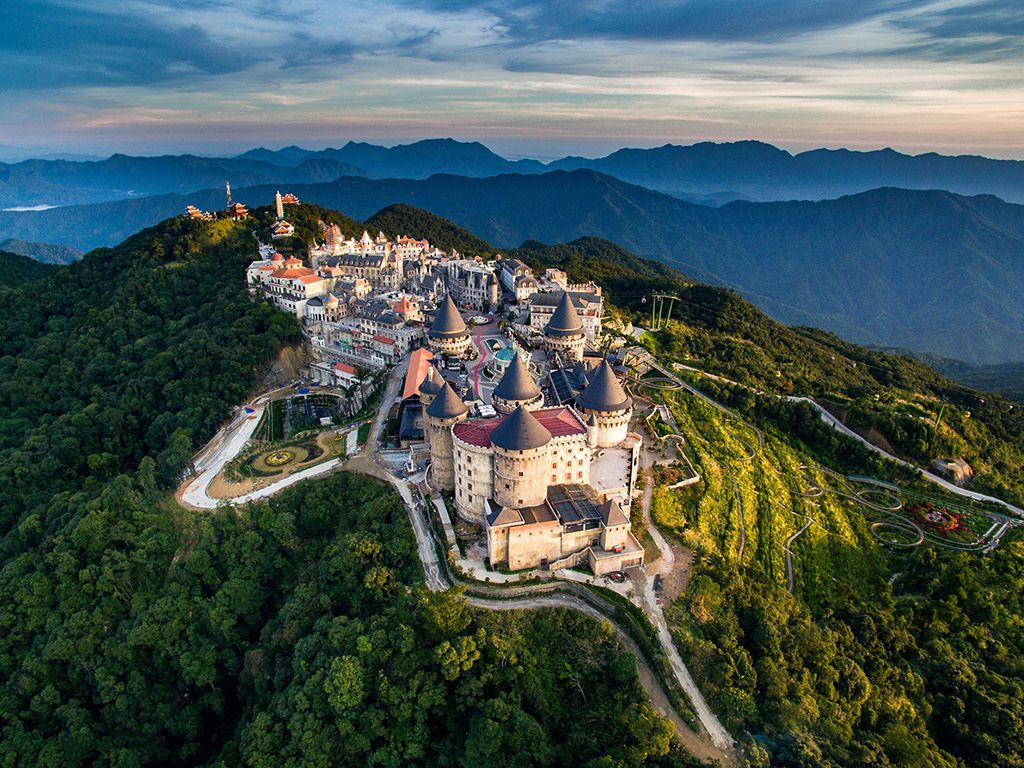
Ba Na Hills is one of the best known landmarks in Da Nang, particularly for Vietnamese tourists. It is one of the newest and most exciting projects in Vietnam. It is a mountain village on top of a mountain that looks like a medieval castle, but within these stone walls are modern accommodations, restaurants and a Fantasy Park full of exciting attractions. The newest addition is the golden bridge that is being held by two giant stone hands.

5. Relax on the beaches

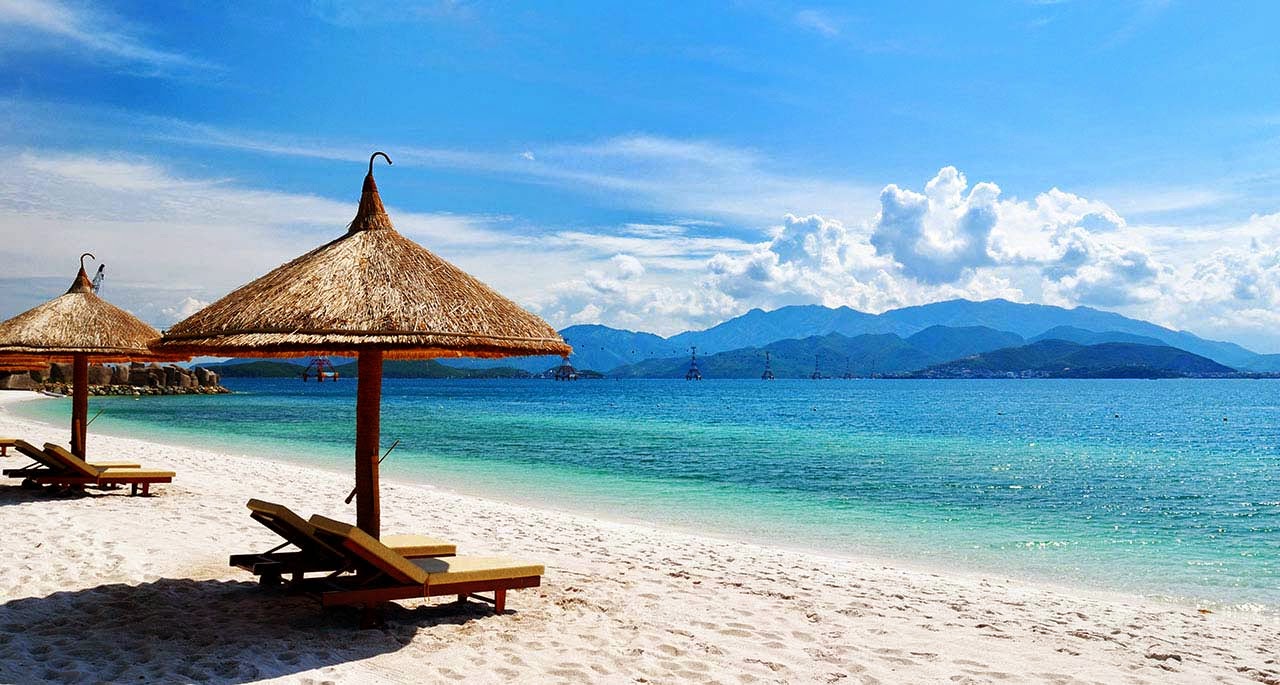
The best beaches in Da Nang are known for their clear water and fine sand. The more popular beaches, such as My Khe and Non Nuoc, are relatively close to the city center and are often full of locals during the weekend and on public holidays. You can also find plenty of local restaurants with fresh fish and Da Nang specialties at affordable prices. Beaches further from the city are often a lot quieter. View here the list of the most beautiful beaches in Da Nang.

6. Dragon Bridge

The Dragon Bridge is a long bridge with six lanes and a popular place among photographers. This unique bridge is built in the shape of a golden dragon. Although it is a beautiful sight at any time of the day, Dragon Bridge is special (and full of tourists) during the weekend because it is illuminated with colorful LEDs as the fire exhales and water spits out from 9 p.m.

7. Cham Island

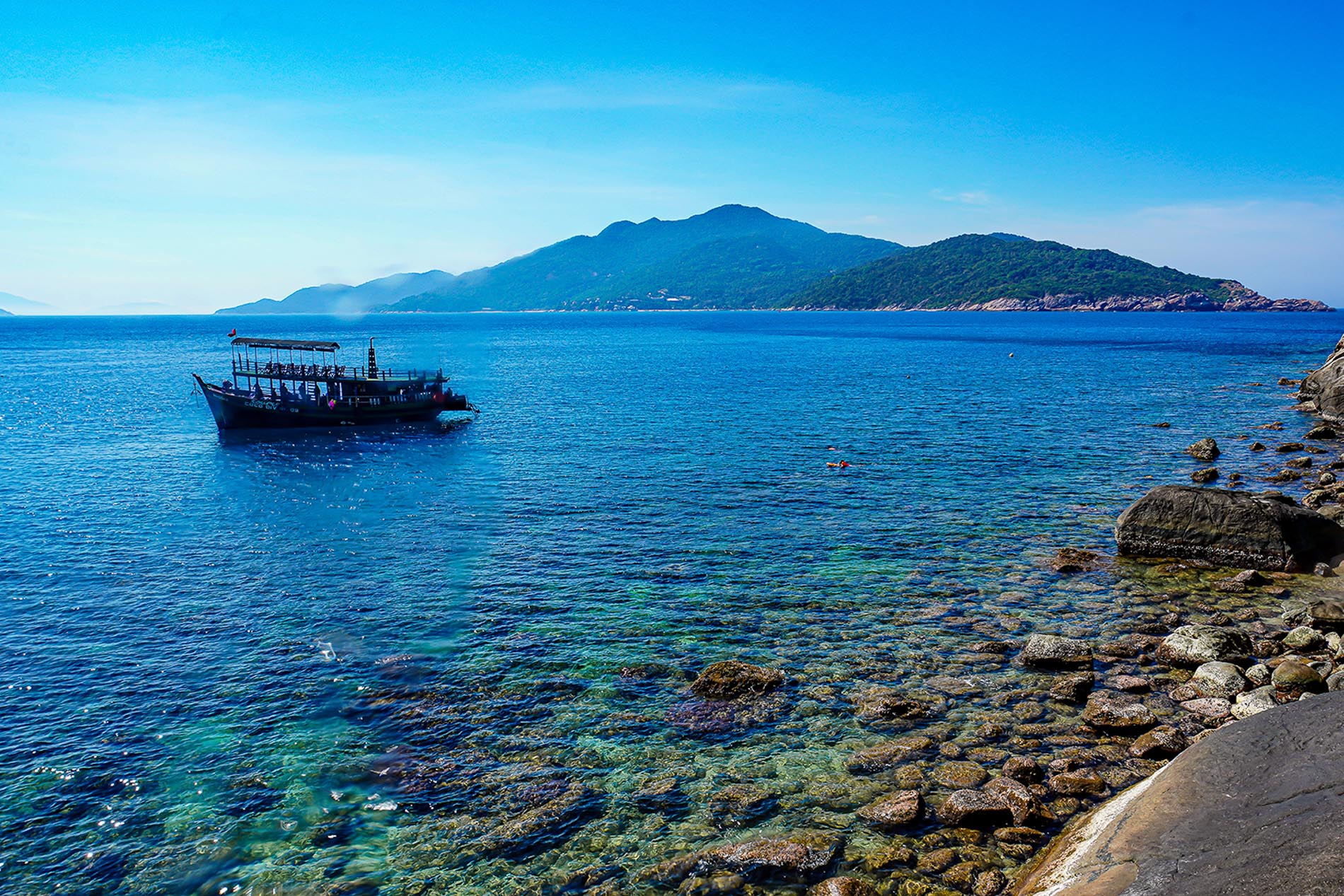
If you want to see coral reefs, colorful fish, tropical beaches and islets, then the best thing to do in Da Nang is taking a trip to Cham Island. It is actually a cluster of beautiful islands that are only an hour’s boat ride from Da Nang. It is a great day trip or you can spend the night there. In a day trip you visit a few islands, you go snorkeling and you can relax on the beach.

8. Cham Museum

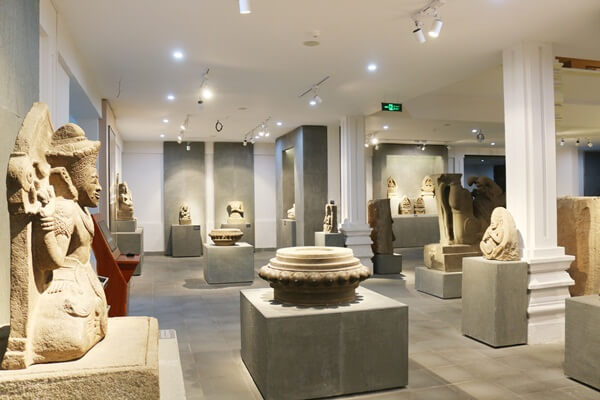
Cham Museum shows the age-old culture, lifestyle and customs of the indigenous Cham tribe in Vietnam, dating back to 192AD. Founded during colonial French rule in 1915, it is known as the only museum of its kind in the world. Cham Museum Da Nang is divided into ten rooms, where 300 terracotta and stone sculptures from the 7th to the 15th century are exhibited.

9. My Son

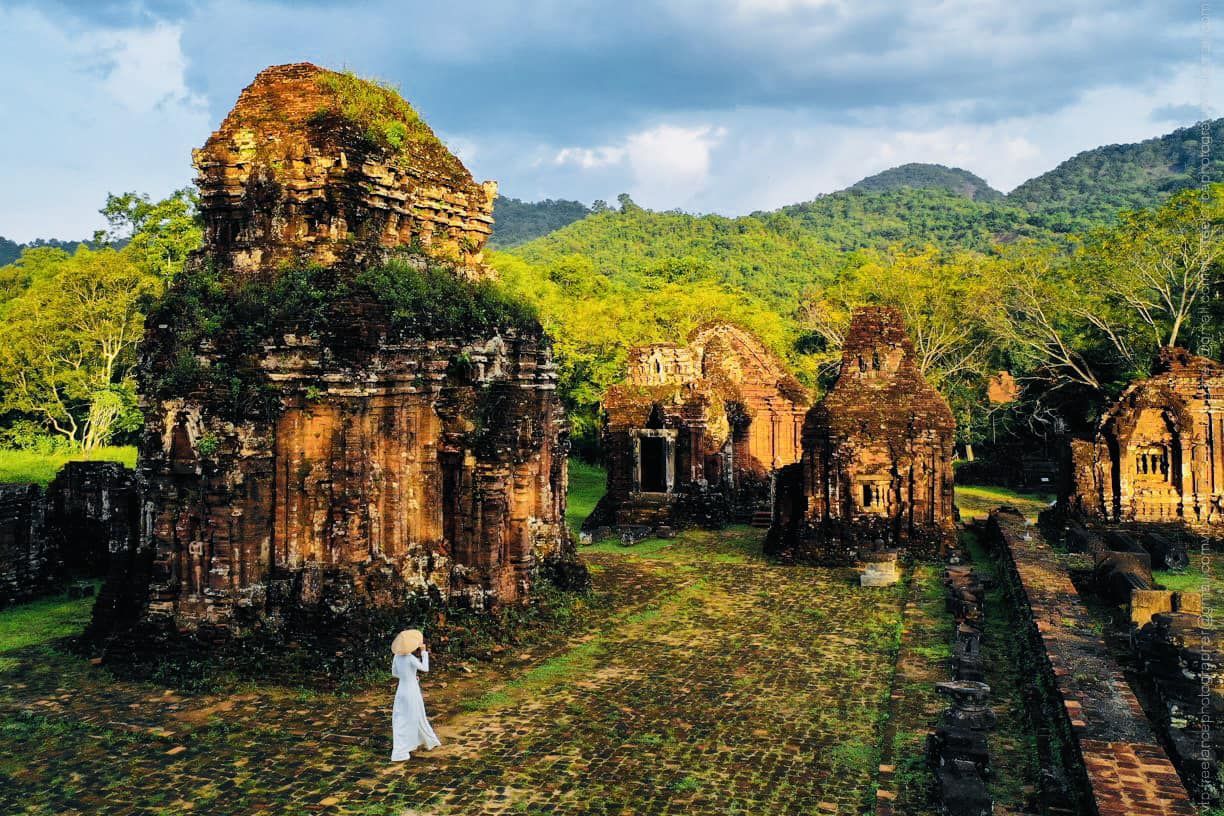
My Son is approximately a 40-minute drive from Da Nang. There are several companies that organize trips there, or you can drive there yourself with a scooter. This attraction is not as big as Angkor Wat in Cambodia, but it does offer a good insight into the past of the country. There is a small museum at the entrance and all the ruins have information boards.

10. Hoi An

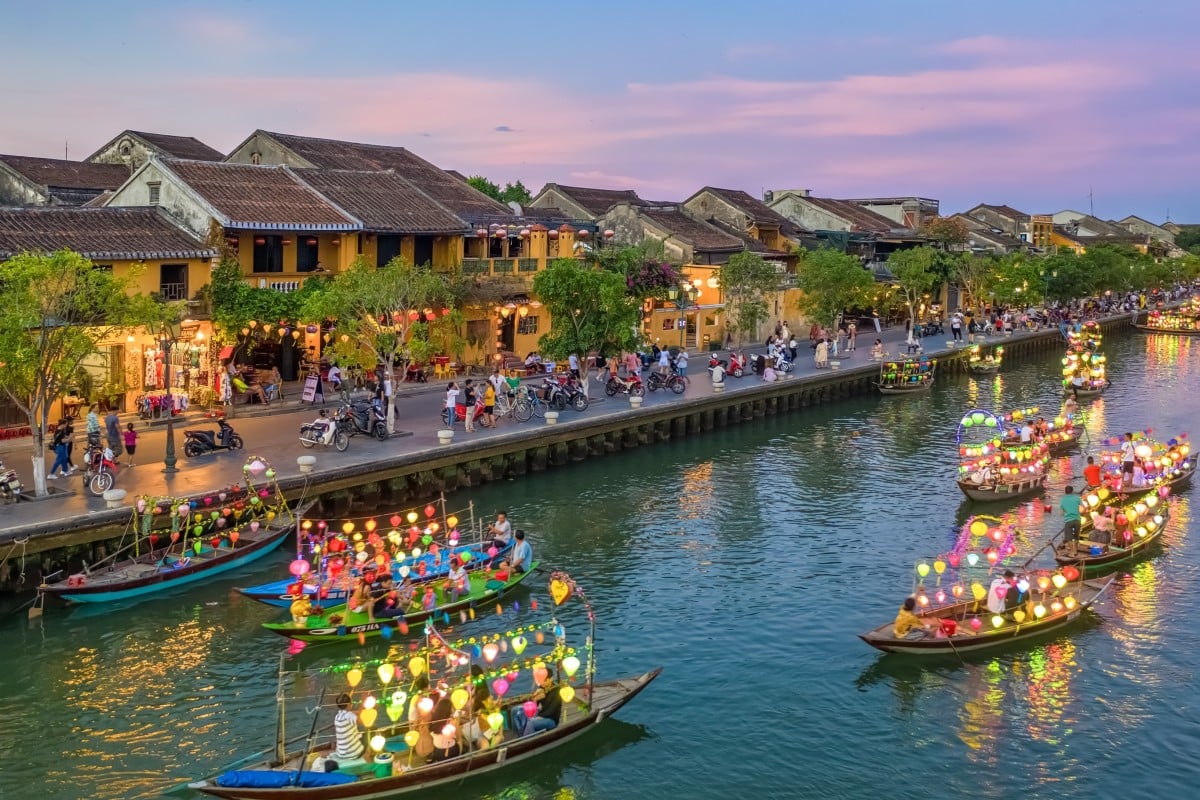
The most famous landmark in the region is the old town of Hoi An. If you do not plan to stay in Hoi An, this is the best thing you can do from Da Nang. Read here how to travel from Da Nang to Hoi An. In this well-preserved old trading city you can easily spend a whole day seeing and visiting old buildings, markets and the lanterns that give a nice atmosphere in the evening.

Best hotels & hostels in Da Nang

Where to stay

On the beach – One of the best things to do in Da Nang is enjoying it’s beautiful beaches. So for obvious reasons this is the best place to stay. There is a very long strip along the beach with different neighborhoods like Son Tra, An Thuong, My An and Khue My. This is also the place with the most hotels and (western) restaurants.

Near the river – The Han River is a very popular place to find a hotel in Da Nang with many restaurants, bars and good nightlife.

Staying in Hoi An – Most tourists choose to stay in Hoi An for a better atmosphere and take a day trip to Da Nang. It is only 45 minutes from Da Nang to Hoi An.

Best hostels & hotels in Da Nang

Budget hotels & hostels

  • Barney’S Danang Backpackers House
  • Travellers Nest Hostel
  • Danang Backpackers Hoste

Mid range hotel

  • Halina Hotel and Apartment
  • Mitisa Hotel Danang
  • John Boutique Villa Apartment
  • Frangipani Boutique Hotel Da Nang
  • Avora Hotel

High end hotel & resort

  • Monarque Hotel Danang
  • Grandvrio Ocean Resort Danang
  • InterContinental Danang Sun Peninsula Resort
Food & drinking

Restaurants

There are many places where you can eat well in the city of Danang. Due to its location, in the middle of Vietnam, you can find many types of food from the rest of the country. In addition to local dishes, there are also many international style restaurants, with dishes like pizza, pasta, hamburgers and Indian food .

  1. Thien Ly Danang-style
  2. Madame Hanh
  3. Market’s
  4. Tamarind Tree Restaurant Da Nang
  5. Sofia Restaurant
  6. Red Sky Bar & Restaurant
  7. Lam Vien Restaurant
  8. Madame Lân
  9. Ngon Villa Danang
  10. Burger Bros

Nightlife

The nightlife and nightlife in Da Nang consists of a collection of rooftop bars, sophisticated lounges, friendly expat bars and lively night clubs.

Rooftop bars

  • Sky 36
  • Brilliant Top Bar

Clubs

  • New Phuong Dong Nightclub
  • Golden Pine
  • OQ Bar

Bar & live music

  • The Daw
  • Seventeen Saloon
  • Bamboo Bar 2
  • 7 Bridges Brewery

How to get there

Lorem ipsum dolor sit amet, consectetur adipiscing elit. Ut elit tellus, luctus nec ullamcorper mattis, pulvinar dapibus leo.

Flights to Da Nang

The busy Danang airport has many domestic connections and popular international flights to Kuala Lumpur, Hong Kong and Singapore. There are also a growing number of connections with Laos, China, Taiwan and South Korea. Domestic flights to destinations such as Ho Chi Minh City, Hanoi, Dalat and Nha Trang are operated by regional airlines, including Vietnam Airlines, VietJet Air and Jetstar.

Busses to Hanoi

Buses run regularly between Da Nang, Hue and Hoi An. There is a large Danang bus station in Dien Bien Phu Street, 3 kilometers west of the city center. From there, there are buses to all major destinations in Vietnam, including Quy Nhon, Hue, Nha Trang and Hanoi.

Buses run regularly between Da Nang, Hue and Hoi An. There is a large Danang bus station in Dien Bien Phu Street, 3 kilometers west of the city center. From there, there are buses to all major destinations in Vietnam, including Quy Nhon, Hue, Nha Trang and Hanoi.

Trains to Da Nang

The Da Nang train station is just outside the city center and you will find a train connection that can take you anywhere in Vietnam. The train ride to Hue is one of the best in the country and is worth taking on itself as an excursion.

How to get around

Grab / Taxi: Getting a Grab taxi anywhere in Da Nang is pretty easy. This saves money compared to a normal taxi. You just have to download the app and have an internet or data connection. To avoid expensive taxis, you must choose a well-known taxi brand: Mai Linh Taxi, Vinasun Taxi, Tien Sa Taxi.

Motorbike rental: Traveling by motorbike is the most fun option of all. The average price for renting a motorcycle is 130,000 VND ($ 6) per day.

Private car: If you want to make a day trip to certain places of interest or a place outside Da Nang, you can rent a car with driver.

More tips for traveling in Da Nang

Where to go next?

It is very easy to travel from Da Nang to other cities in Vietnam due to its airport with very good domestic connections. You can fly to Phu Quoc, Ho Chi Minh City, Hanoi, Dalat or Nha Trang. In addition it is also located a 45 minute ride to Hoi An and a 1,5 hour ride to Hue.

Da Nang with kids

Da Nang is a great place to bring children. There is a huge beach where they can play, different attraction parks such as Ba Na Hills and Asia Park and plenty of day trips you can do from here.

Language

Da Nang is a very international city, so most people in hotels and restaurants speak a descent word of English.

Plan well before your cruise to make your every moment in Vietnam unforgettable.Make your plan to Vietnam right now by apply a Vietnam visa at vietnamvisapro.net. We, a reputable and reliable Visa service, will assist you turn your plan into reality at the very first step
Posted on

Dalat best things to do & travel guide

Dalat is clearly one of the highlights of Vietnam, especially if you like adrenaline. Dalat is completely different from any other place in Vietnam. The weather is spring-like cool instead of tropical hot, the city is littered with elegant French-colonial villas instead of a grim socialist architecture, and the farms around are littered with strawberries and flowers instead of rice.

5 reasons to visit Dalat

  1. Increase the adrenaline pace with mountain biking, white water rafting, canyoning or a climbing adventure in the hills around Dalat.
  2. Jump on a motorbike and explore the waterfalls, lakes and forests in the area.
  3. In the early morning, gibbons wanted to track down and then search for crocodiles in the Cat Tien National Park.
  4. Visit the local farms and plantations.
  5. Enjoy local food, which comes directly from the area.

What is in this Dalat travel guide

  • Practical information
  • Best time to visit
  • 10 best things to do
  • Best hotels & hostels
  • Food & drinking
  • How to get there
  • How to get around
  • Itinerary

Practical information

Recommended days to stay

If you like adventure it is recommended to stay around 3 days in Dalat, so you have time to do some activities as well as driving through the area and visiting the waterfalls, forests and lakes.

ATM’s & money exchange

Dalat is a relative big town with enough ATM’s.

Local events and holidays

Dalat Flower Festival – A cultural festival which takes place every other year between late December and early January, with the purpose of exhibiting flowers, vegetables and ornamental plants from the local as well as other regions within the country

Best time to visit

  • Spring (January-March) – Season of trees and flowers; between 20 and 28 degrees
  • Summer (April – June) – Season of fog and warm weather; between 24 and 31 degrees
  • Autumn (July – September) – Season of rain; between 24 and 31
  • Winter (October to December) – Season of flowers on the hills; between 20 and 26 degrees

10 best things to do in Dalat

Dalat is a cool mountain town for both Vietnamese and travelers who want to escape the heat and smog of the larger cities. Most people come here so that they can relax and enjoy the natural sights in Dalat, such as the lakes, forests, hills and plantations. But there is also a lot of action for those who want to make their heart beat in perhaps the adventure capital of Vietnam. These are the 10 best things to do in Dalat.

1. Canyoning in Dalat

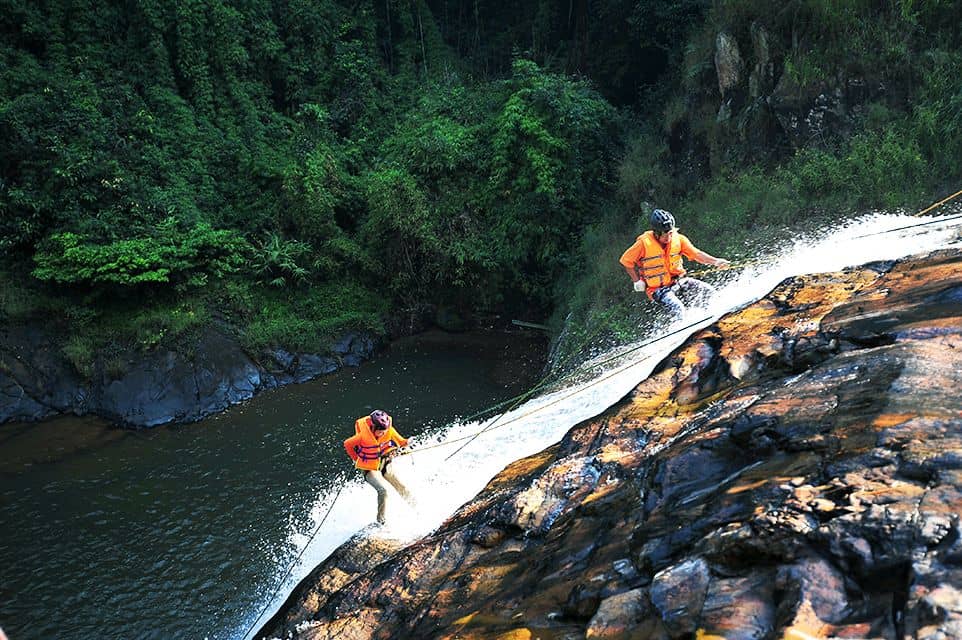
Without a doubt, canyoning is the best thing to do in Dalat. Especially for the real adventurous travelers it is one of the highlights in Vietnam. During canyoning in Dalat you abseil from waterfalls, jump from cliffs into the river, enjoy a zipline above the water, float in a river and slide down a natural water slide.

2. Explore waterfalls

There are many different waterfalls in Dalat. Some of these are not far from the city and are therefore easy to visit, but others require a long drive. The most famous is the Datanla waterfall. Here you will also find a mountain toboggan roller coaster, cable car and the place where you will find the popular canyoning.

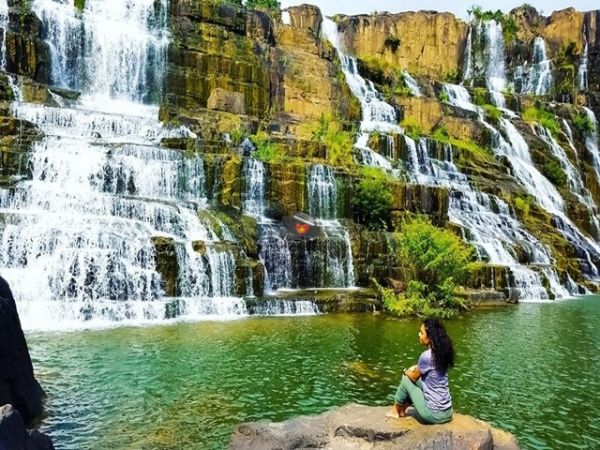
The Pongour waterfall is one of the most beautiful waterfalls, where the water flows down several steps. The forests around the waterfall give it an extra magical atmosphere.

The Elephant Waterfall is another impressive waterfall that is a little closer to the city. The path that leads to the waterfall is a bit tricky, but well worth a visit.

A number of other waterfalls around and in Dalat are Bao Dai waterfall, Prenn waterfall and Tiger waterfall.

3. Mountain biking

Dalat is a paradise for mountain bikers, with some great single-track, technical descents, mountain climbing and once on top, breathtaking views of fields, forests and mountains. Mountain biking is therefore one of the best things to do in Dalat and a great way to explore the region.

4. Trekking

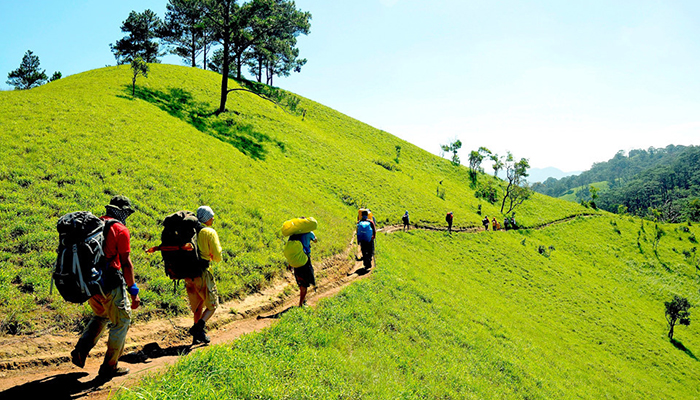
Relaxed walks or adventurous treks through nature and along forest paths are another way to discover the beauty of this area. It is full of many natural sights in Dalat where you can find interesting animals and birds. Some tours can lead you to caves, waterfalls, lakes, volcanic peaks, minority villages, suspension bridges and farmland. The best known treks are to the top of Lang Biang Mountain and treks through the Bidoup Nui Ba National Park.

5. Easy Rider Tour

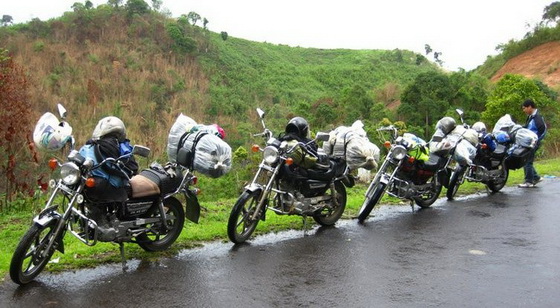
Would you like to explore the forests, lakes, waterfalls and plantations of Dalat, but would you rather not be in a car or would you rather not drive a motorcycle yourself? The Dalat easy riders are the perfect solution! Easy Riders are experienced guides who take behind travelers to popular sights, as well as places that all these local guides know where to find a more authentic experience. They can be found all over Vietnam today, but are originally from Dalat. This is therefore the best place to take an Easy Rider in Vietnam.
These motorcycle guides drive around the city, but you can also book them in advance. They often have a book with reviews and pre-made routes, but you can also indicate your wishes. It is possible to take a day tour to a waterfall, plantations and forests, but you can even take a multi-day easy rider tour, where you can choose to go through the central highlands or drive to the coast and continue along one of the most beautiful coastal roads in Vietnam.

6. Coffee shops

Vietnam is the second largest coffee exporter in the world, just after Brazil and most coffee comes from the central highlands, where Dalat is located. So what better place than to have a coffee in this region?

In addition to coffee in Vietnam, a whole culture has also developed around coffee shops, and Dalat is the capital of this. It is more than a place where you come to drink coffee, but also where you come for the environment. These small coffee bars are often uniquely decorated or have a special theme and others have are situated in a unique environment. For example, you will find coffee shops in Dalat on top of mountains with a beautiful view over the forests or greenhouses that are lid in the evening. Enjoy the view over a lake or the city. And coffee shops in less good locations are uniquely decorated or with a special theme, such as Harry Potter, fairy tales or a jungle theme.

7. Tuyen Lam lake

Tuyen Lam Lake is the most beautiful lake in the Dalat area and is also called Paradise Lake. The lake is surrounded by a green pine forest and gives a peaceful feeling in a beautiful landscape. In addition to enjoying the romantic scenery around the lake, you can go horse riding, climbing, fishing and kayaking. You can combine a visit to this lake with the cable car to Truc Lam Pagoda, which is right next to the lake.

8. Dalat night market

The best thing to do in Dalat at night is a visit to the Dalat night market. When the night market is open in the weekend, the central market area is pure madness, with thousands of people shopping and socializing. It is a lively scene apart from the usual relaxed pace of the city. Even on weekday evenings, the area is rich with inviting scents from all street vendors.

9. Coffee and tea plantations

Vietnam is one of the world’s largest coffee exporters and many of the highlands around Dalat are used for plantations. The central highlands of Vietnam offer the ideal climate for growing tea and coffee. When you drive through the Dalat region you will pass large plantations of both coffee and tea and depending on the season there will be countless tarps on the road where coffee beans dry in the sun.
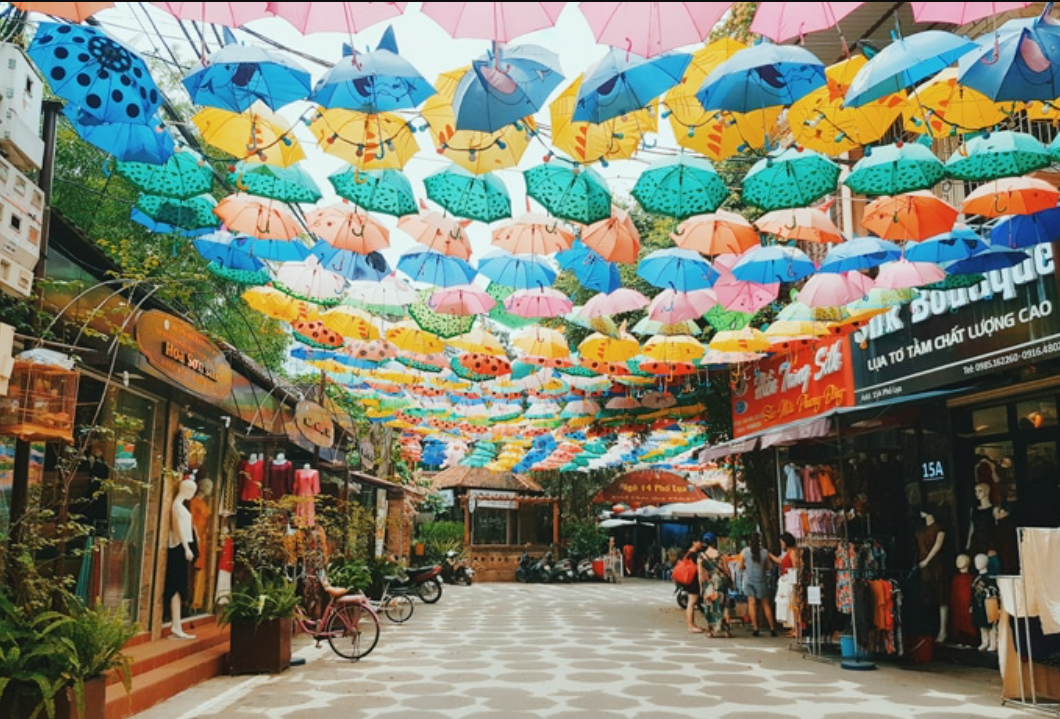
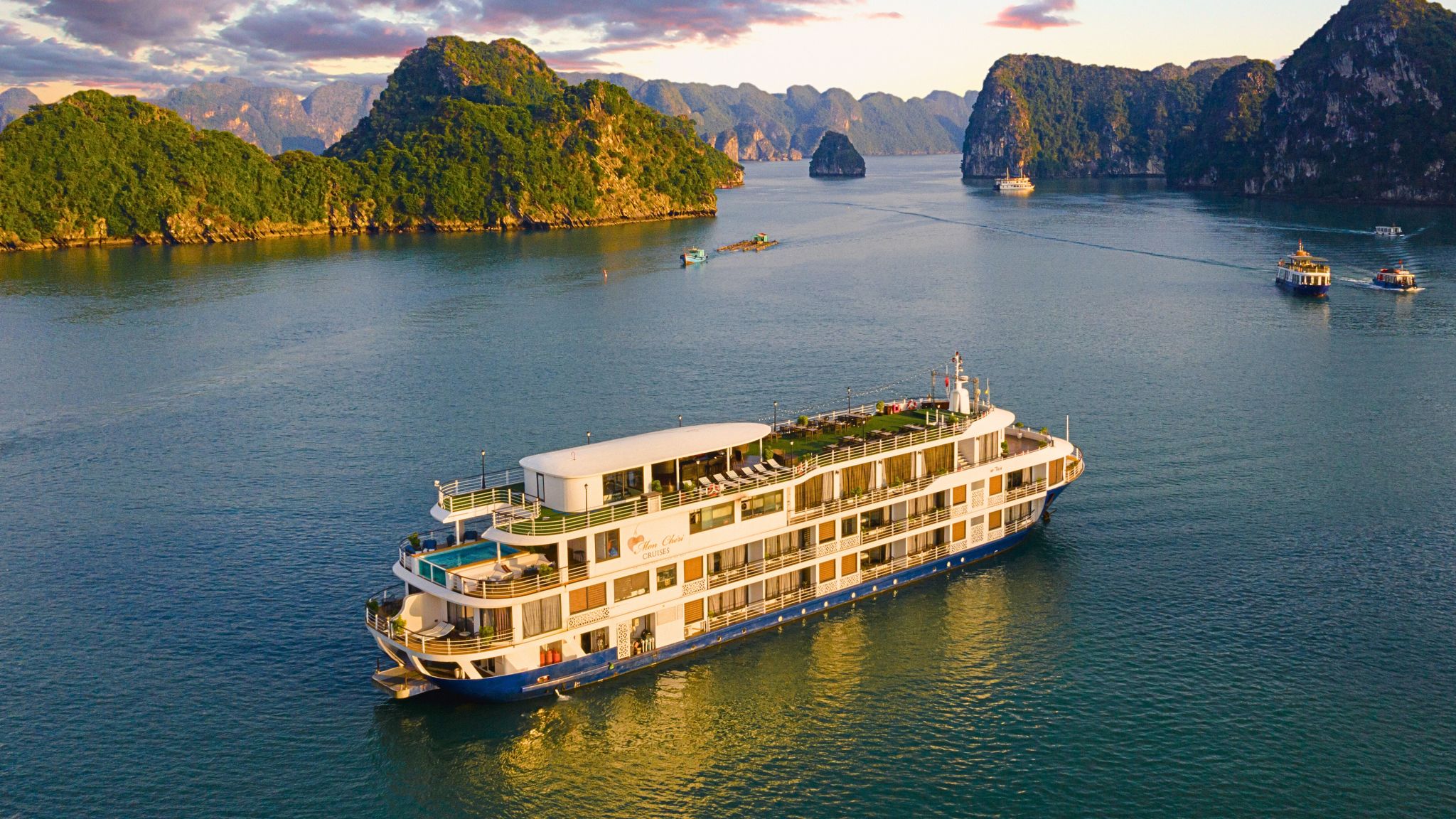
10. Crazy house

The Crazy House in Dalat offers a bizarre structure and completely unique experience. It is officially called the Hang Nga Guesthouse & Art Gallery, but is known as Crazy House for its bizarre and crazy design. With many revolving corridors and odd spaces, this is something completely different.

You can choose to stay here overnight, altough you have to keep in mind it is also a tourist attraction. A better option might be just visiting this place for an hour.

Best hotels & hostels in Dalat

Where to stay

Staying in the center – Located near the Dalat night market, suitable for shopping, eating and relaxing, most means of transport (taxi, motorcycle, bicycle) are available, with many beautiful views that are worth seeing, including Xuan Huong Lake, the flower garden of the city of Dalat.

Hotels outside the city of Dalat – Staying further away from the city center also has some unique advantages: a peaceful and quiet atmosphere, less touristy and a cheaper price. Although it takes you more time to travel to the market or other highlights of the city, in return you get a beautiful landscape to enjoy, as well as more private space to relax.

Best hotels & hostels in Dalat

Budget hotels & hostels

  • The Lake House
  • Gaia hostel
  • Magnolia
  • Cozy Nook Hostel
  • Mr.Peace Backpacker’s House

Mid range hotel

  • La Vie En Rose Villa
  • Tasme Hotel
  • Boutique Stop and Go
  • Tulip Hotel
  • Iris Dalat Hotel
  • Sam Tuyền Lâm Resort

High end hotel & resort

  • Zen Valley Dalat Resort
  • Swiss Belresort Tuyen Lam
  • Terracotta Hotel and Resort Dalat

Food & drinking

Restaurants

Dalat has numerous restaurants to serve varied visitors, of all shapes and sizes, ranging from local Dalat dishes to central and South Vietnamese dishes and a large number of Western and French-inspired eateries, bars and restaurants. The city has a reputation for high-quality fresh produce and is also the source of some of the best coffee in Vietnam.

Restaurants
1. Artist Alley Restaurant
2. Le Chalet Dalat
3. Goc Ha Thanh Restaurant
4. Da Quy Restaurant
5. Chu Quan Bbq Grill

Cafe / coffee shop
1. An cafe
2. Me Linh Coffee Garden
3. Wednesday’s Violet book cafe
4. Ma Rung Lu Quan (Ma Rung Inn)
5. Panorama Cafe Dalat
6. Cafe Nông Trại Vui Vẻ

Nightlife

The nightlife in Dalat is quiet compared to other cities in Vietnam because it is best known as a place for rest and relaxation. However, you can still find a handful of great bars and pubs until late in the evening:
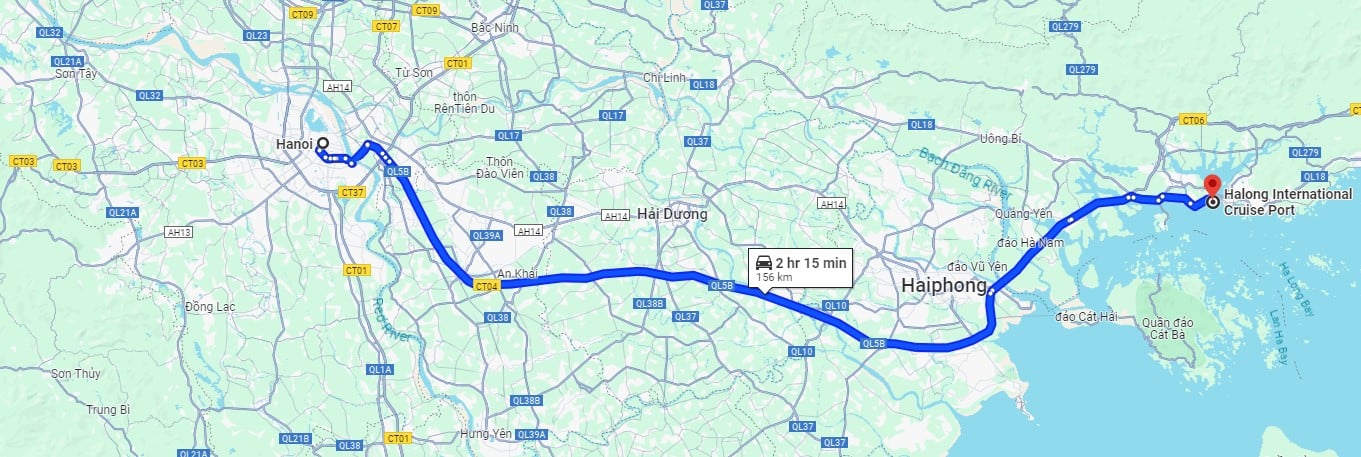
  1. Dalat Night Market
  2. Maze bar
  3. The Escape Bar
  4. Beepub Hostel & Bar
  5. Rain Nightclub
  6. V Club Da Lat

How to get there

Flights to Dalat

There are regular flights with Vietnam Airlines, VietJet Air and Jetstar, including a daily service to Danang (1¼ hour), four daily to Hanoi (1¾ hour) and HCMC (45 minutes), and twice a week to Can Tho (1¼ hour) ).
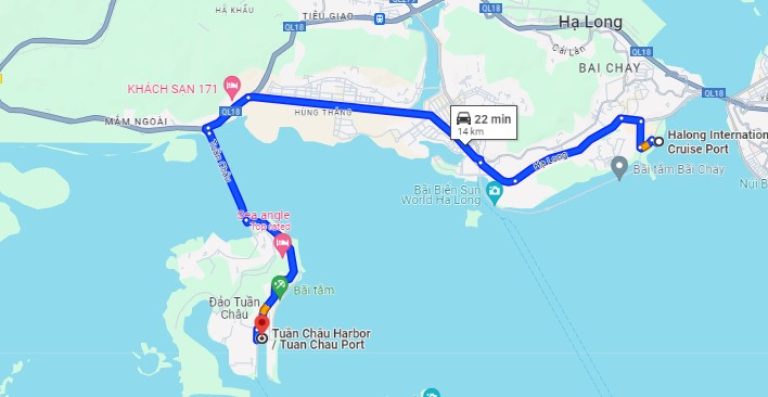
Busses to Dalat

Dalat is an important bus stop for open bus tickets. The Sinh Tourist has daily buses to Mui Ne, Nha Trang and HCMC.

Dalat’s long-distance bus station is 1.5 km south of Xuan Huong Lake and is dominated by Phuong Trang buses that offer free hotel pick-ups and drop-offs and buses to all major regional destinations.

How to get around

Motorbike: The bets way to get around is by motorbike/scooter. Rent is 150,000d to 200,000d per day. It is understandable if you don’t want to drive around yourself, as the roads in Vietnam as not very safe. In this case we highly recommend doing a Easy Rider tour.
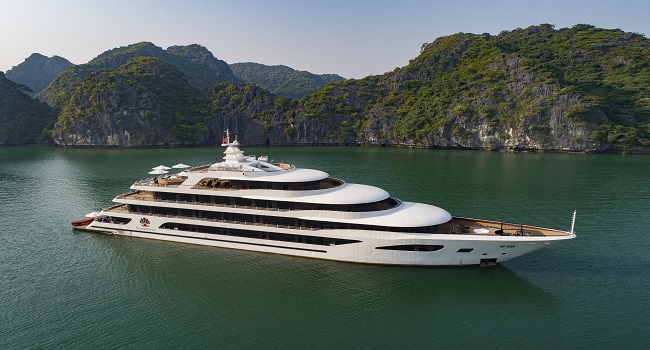
Car: Alternatively you can travel by comfortable car. Daily rental (with driver) starts at around $ 50.

Taxi: For within the city you can use taxis. Uses Mai Linh for reliable service.

More tips for traveling in Dalat

Where to go next?

From the city you can easily travel by bus or car to the coast cities of Nha Trang (if you are planning to go north) and Mui Ne (if you are planning to go south). You can also go by bus or flight to to Ho Chi Minh City. It is possible to go straight to Hoi An / Da Nang by bus, but it is not recommended to takes these long bus trips. There are flights available too from Dalat to Da Nang.

You can also choose to continue your journey through the central highlands and visit destinations such as Dak Lak, Kon Tum and Pleiku.

Dalat with kids

Dalat is a nice destination in Vietnam with kids, especially if they are a little older. You can take wonderful walks through the forest, mountain biking and kayaking. There are also plenty of sights that you can visit in the city and the surrounding area.

Plan well before your cruise to make your every moment in Vietnam unforgettable.Make your plan to Vietnam right now by apply a Vietnam visa at vietnamvisapro.net. We, a reputable and reliable Visa service, will assist you turn your plan into reality at the very first step

Posted on

Van Phuc Silk Village Hanoi

Listed as one of more than 1,000 traditional villages in Vietnam, Van Phuc is a silk weaving village with a long history of development. The village captivates visitors not only with its unique embroidery lines and patterns, but also with its most beautiful cultural and historical tradition of the country.

>>> Apply Visa to Vietnam <<<

  1. Overview

Vietnam has a long history of silk production and Hanoi is one of the best places in the country to discover the ancient handicraft. Van Phuc Village, located 10km far from the Hanoi Old Quarter, is renowned for its traditional weaving and premium quality silk products. Like other so called “craft villages”, there’s not a strong sense of tradition here and most of the village has been turned over to modern shops selling silk wares of varying quality and appeal. Shoppers or visitors just need to spend a half-day trip or less to Van Phuc Silk Village that reveals the secrets of traditional silk weaving and offers plenty of opportunities to purchase quality silk products.

  1. History

Some documents & relics say that the weaving of Van Phuc village originated in the 9th century. It was rumored that a local girl gave birth to the rough silk weave with simple, ordinary silk products and the tradition didn’t become flourished until the 16th century, when a lot of premium items had been created with vivid, subtle patterns.

Van Phuc Silk Village once used to select as the tailor taking responsibility for making royal outfit under Nguyen Dynasty in Hue. Between 1931 and 1932 during French colonial, Van Phuc Silk, for the first time, was introduced worldwide in international exhibitions in Marseille and Paris. Since then, French clients have paid special interest in Van Phuc Silk. From 1958 to 1988, Van Phuc Silk mostly was exported to Eastern European market, and it has been popular product worldwide since 1990.

  1. Special features of Van Phuc Village’s Silk

With long tradition and well conservation by the locals, weaving has been passed from generation to generation, contributing to create unique cultural features on costumes of Vietnamese people.

All the patterns are made elaborately and sophisticatedly, each sheet of silk is a masterpiece bearing the enthusiasm and soul of each artisan. Moreover, all the processes are done by the oldest techniques that can only be achieved by Van Phuc villagers. Each stage follows strict regulations.

Van Phuc Silk has been known for its smooth, soft, and elegant appearance. Especially, a traditional kind of silk called Van Silk made in Van Phuc make the wearers feel cool in summer and warm in winter. Today, to satisfy various demand for silk of the market, Van Phuc handicraftsmen have expanded their silk and garment goods like embroidered silk, wrinkled silk, double layers and more colors for silk products.

  1. What to explore at Van Phuc Silk Village?

Many families in Van Phuc open their own shops in a convenient location in the village; create a “town of silk” that sell eye-catching and high-quality silk products. You may buy items available in the shop, or favorite fabric to get customized products. Most of the sellers are very friendly and can speak a basic English and French to serve foreign tourists.

Silk products of Van Phuc could vary differently from clothes to accessories like handbags or purses. Price is incredibly reasonable (the price for the meter of silk usually depends on the material, about 10 USD in average), some of the models you could bargain for a lower price even. Additionally, you could also drop in spiritual spots like Van Phuc Pagoda, or Natural Silk Protected area to understand more about the tradition of Van Phuc Village.

A highlight of a visit to Van Phuc will be an opportunity to see the old looms in operation. While some basic technology has been introduced to the process in recent years, there is still plenty of manual labour in Van Phuc’s silk production processes.

Additionally, a 100 meter-street decorated with colorful umbrellas that look no less than the art of Agueda in Portugal. Don’t skip to wander along it and snap some photos!

  1. How to get there

In a short distance to Hanoi Old Quarter, it is very convenient to access Van Phuc Silk Village.

You can easily rent a motorbike, take a taxi or catch a local bus number 02 or 21 before going on foot 500m to reach the village gate. You should travel Southwest out of Hanoi center on Nguyen Trai Road until reach the border of Ha Dong District, then turn right and drive about 3km to reach the village.

Apply For Vietnam Visaapply Vietnam visaApply visa vietnamBook E-visa Vietnambook visa vietnamCheap Vietnam VisaE-visa Vietnamevisa VietnamEvisa Vietnam onlineexpedited e-visaexpedited E-visa to Vietnamexpedited Vietnam E-visaGet a Vietnam visaGet Vietnam Visaget vietnam visa onlineget visa to vietnamget visa Vietnammultiple entry visamy vietnam visaOrder Vietnam E-Visaquick vietnam evisarush vietnam visaUrgent Vietnam VisaVietnamVietnam E-visaVietnam EvisaVietnam touristVietnam travelVietnam vacationVietnam VisaVietnam visa costVietnam Visa ExemptionVietnam Visa for India citizensVietnam Visa For IndiansVietnam Visa for South Africa citizensVietnam Visa In IndiaVietnam visa in South AfricaVIetnam VIsa on arrivalVietnam VIsa onlineVietnam visa provisa for vietnam Visa On Arrivalvisa onlineVisa to VietnamVisa Vietnam

Posted on

Guide to Halong International Cruise Port for Tourists

Halong International Cruise Port is a premier cruise port located close to the stunning Halong Bay, a UNESCO World Heritage site in northern Vietnam. So exactly where it is located, how to reach it from the surrounding areas, as well as what to do to fill in your cruise experience to the port, check all here.

Halong International Cruise Port Overview – Location and facilities

Ha Long International Cruise Port is the first cruise port in Vietnam with a large capacity that can accommodate the largest and most modern cruise ships to Vietnam.

The port is located on Beach Road, New Beach, Bai Chay Ward, Halong City, Quang Ninh Province (or Đường Bao Biển Bãi Cháy  Mới, Phường Bãi Cháy, Thành phố Hạ Long, Tỉnh Quảng Ninh, in Vietnamese). Its strategic location on the shore of Ha Long Bay makes it convenient for visitors to explore the area. In addition, the port is approximately 500m away from the Sunworld Ha Long Complex, an amazing playground in the city.

The Ha Long International Cruise Port has 6 wharves, of which:

  • 4 wharves for receiving cruise ships & tourist boats
  • 1 pier with 2 wharves, dedicated for heavyweight international passenger vessels.

In addition, to serve the tourists’ demands, the cruise port is also well equipped with:

  • Passenger shuttle services:  The port provides shuttle buses to take you between your cruise ship and the terminal building, as well as to nearby attractions and hotels.
  • Support services: To ensure a stress-free experience, the port offers a variety of services including luggage handling, currency exchange, and assistance with booking tours.
  • Security and safety: The port prioritizes your safety and has comprehensive security measures in place. This includes CCTV cameras, security checkpoints, and a trained emergency response team.
How far is Hanoi from the cruise port?

The driving distance between Hanoi and the Ha Long International Cruise Port is approximately 150-180 km, depending on the specific route taken.

Given typical driving speeds in Vietnam, the travel time from Hanoi to the Ha Long International Cruise Port would likely be around 2.5 to 3 hours.

How to get to Hanoi from Halong International Cruise port?

There are a few options for getting from the Ha Long International Cruise Port to Hanoi:

  1. Private Transfer/Taxi:
    • This is likely the most convenient and direct option.
    • You can arrange a private transfer or taxi service from the cruise port directly to your destination in Hanoi.
    • Travel time would be approximately 2.5-3 hours depending on traffic conditions.
  2. Public Bus:
    • There are regular bus services that connect Ha Long City to Hanoi.
    • You can take a bus from the Ha Long bus station, which is likely in close proximity to the cruise port.
    • Bus travel time is around 2.5-3 hours.
    • This is a more budget-friendly option compared to a private transfer.
  3. Organized Tour/Shore Excursion:
    • Some cruise lines or local tour operators may offer organized day trips or shore excursions from the Ha Long port to Hanoi.
    • This can be a convenient option if available, as the transportation and logistics are handled by the tour provider.

Regardless of the method, it’s recommended to plan your transportation in advance, especially if you have a tight schedule or specific requirements.  

How far is Halong Bay from the cruise port?

The Halong international cruise port is located on the shore of Halong bay area, so it’s quite close to each other. As such, a Halong Bay cruise is an activity that is often included in the experience during the free time from the international cruise docking in Halong.

If you want to take a domestic Halong Cruise from Tuan Chau Harbor, it’s around 14km from the port, 20 minutes drive.

Cruise Lines Calling at Halong Bay International Cruise Port, Vietnam

Halong Bay is a popular destination for cruise lines, and several major players feature it in their itineraries. Here are some of the most common:

  • Regent Seven Seas Cruises:Known for their all-inclusive luxury experiences, Regent offers elegant voyages through Southeast Asia, frequently including Halong Bay as a port of call.
  • Silversea Cruises:Another luxurious option, Silversea emphasizes all-suite accommodations, personalized service, and a refined experience. Their itineraries often involve Halong Bay, providing guests with exquisite views and excursions.
  • Seabourn:Seabourn offers a similar luxury experience to Silversea, prioritizing small-ship intimacy, gourmet dining, and curated shore excursions. Halong Bay is a regular stop on their Asian voyages.
  • Holland America Line:Known for their classic elegance and relaxed atmosphere, HAL frequently features Halong Bay in their transpacific and Asia itineraries.
  • Princess Cruises:Considered a solid mid-range option, Princess Cruises offers a lively on-board experience with multiple dining options and entertainment. Their itineraries often include Halong Bay as part of their Asia sailings.
  • Royal Caribbean International:Offering a more contemporary cruise experience with innovative activities and entertainment, Royal Caribbean includes Halong Bay in their Asia itineraries, offering a range of shore excursions.
  • Viking Ocean Cruises:While their focus is on cultural immersion and exploring destinations in depth, Viking Ocean Cruises also includes voyages featuring Halong Bay.
  • Celebrity Cruises:Celebrity Cruises offers a modern, contemporary experience with a focus on stylish design and dining. They often bring their ships to Halong Bay as part of their Asia sailings.

Note: It’s important to check specific itineraries, as ports of call can vary greatly depending on the route and time of year.

Beyond the cruise lines listed, many smaller, more niche lines may also call at Halong Bay International Cruise Port. It is always best to consult the official website of your chosen cruise line to confirm port calls.

Suggested Things to Do from Halong International Cruise Port

Halong International Cruise Port serves as a gateway to a wealth of exciting shore excursion opportunities, enabling cruise passengers to explore the natural and cultural wonders around the region.

Halong Bay Cruises and Excursions

The most popular shore excursions from Halong International Cruise Port revolve around exploring the stunning Halong Bay. These excursions may include:

  • Day cruises or multi-day voyages through the bay’s limestone islands
  • Visits to the famous Sung Sot Cave and other cave systems
  • Kayaking and paddleboarding adventures
  • Excursions to floating fishing villages

These activities offer a chance to witness the breathtaking natural beauty of Halong Bay up close.

Conclusion

Halong International Cruise Port is a premier cruise destination that offers a truly exceptional experience for visitors exploring the wonders of Halong Bay and the surrounding region. With its strategic location, comprehensive facilities and services, and a diverse array of shore excursion options, the port serves as a gateway to one of Vietnam’s most captivating natural and cultural destinations.

Plan well before your cruise to make your every moment in Vietnam unforgettable.Make your plan to Vietnam right now by apply a Vietnam visa at vietnamvisapro.net. We, a reputable and reliable Visa service, will assist you turn your plan into reality at the very first step