Posted on

“Cai Rang Floating Market Culture” Tourism Festival In 2024

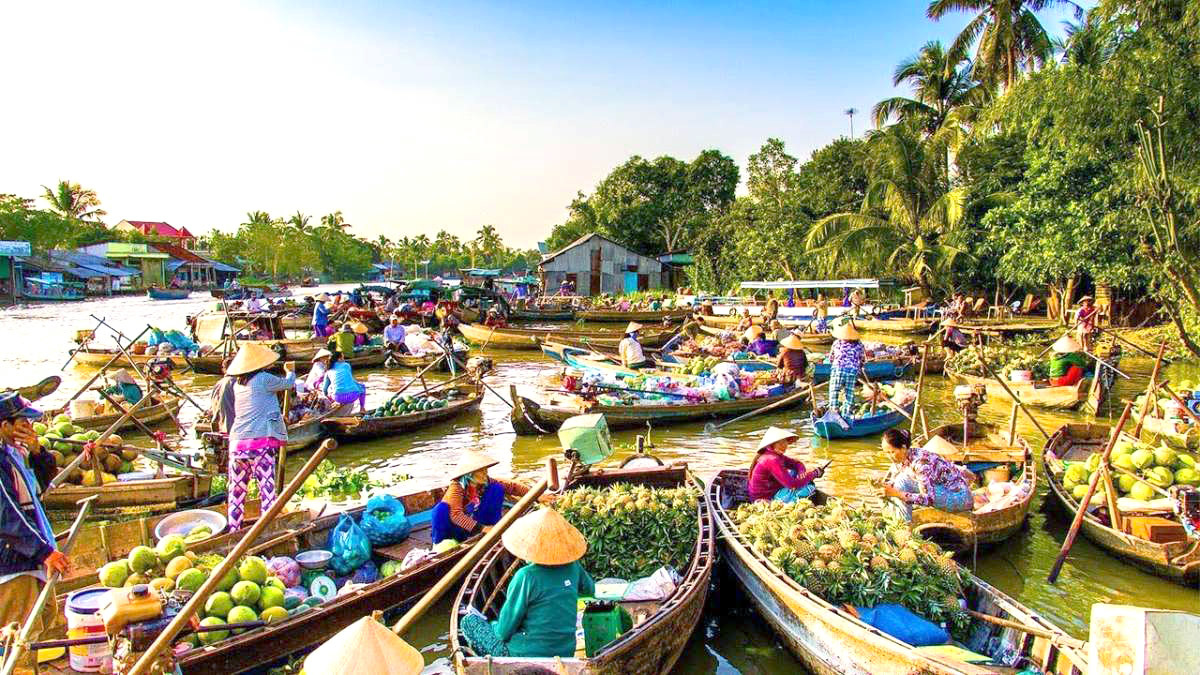
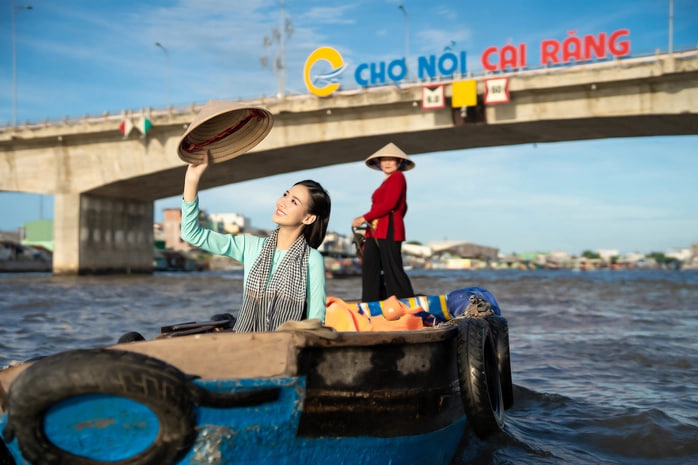
In response to World Tourism Day of September 27th, the 8th “Cai Rang Floating Market Culture” Tourism Festival in Can Tho city – 2024, will take place for 3 days, from August 30th to September 1st.

This year’s festival celebrates the theme: “Preserving and Promoting Cai Rang Floating Market Culture – A National Intangible Cultural Heritage, Associated with Tourism Development.” Visitors will have the chance to immerse themselves in the daily life of the locals and delve into the rich culture of the Mekong Delta.

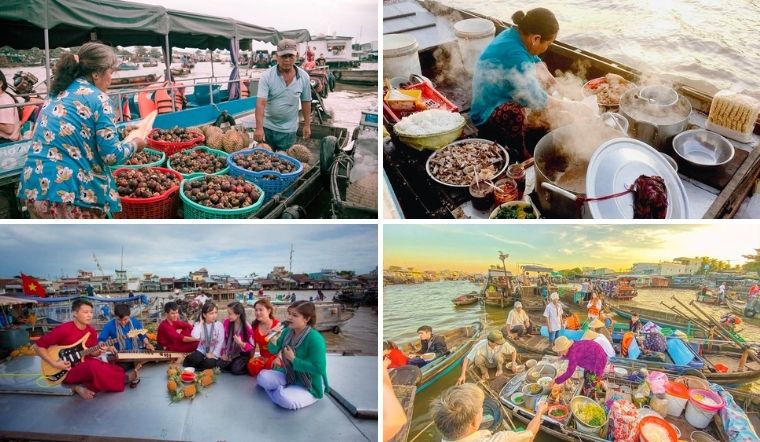
The festival features over 130 booths, showcasing businesses from both within and outside the city. The activities are centered around preserving the unique values of the “Cai Rang Floating Market Culture.” Additionally, there are numerous events dedicated to supporting merchants, trade services, and local cuisine.

Specifically, in addition to the opening and closing ceremonies, the festival has many activities such as boat parades on the river; booths to promote tourism and trade; seminars on developing the potential of river tourism from Ho Chi Minh City to Can Tho; surveying the river tourism route from Ho Chi Minh City to Can Tho… 

Sports enthusiasts can enjoy various competitions, including the National Motorcycle Racing Tournament, Can Tho City Football Championship, and the Can Tho City Open SUP Boat Racing Tournament.

The Cai Rang District People’s Committee oversees activities like the contest for decorating and displaying models of boats, ships, and poles for selling agricultural products at Cai Rang Floating Market. They also organize a culinary competition and a contest celebrating “The Beauty of Ao Ba Ba – Past and Present.”

Beyond cultural and artistic activities, the festival emphasizes social and welfare initiatives, such as repainting boats for merchants at Cai Rang Floating Market and boat parades to collect trash from the river.

Pack your bags, book your flight, and get ready to enjoy this interesting festival in Mekong Delta regions of Vietnam.

Make your plan to Vietnam right now by apply a Vietnam visa at vietnamvisapro.net. We, a reputable and reliable Visa service, will assist you turn your plan into reality at the very first step

Posted on

Hoi An,Cu Lao Cham Island & Nature Reserve

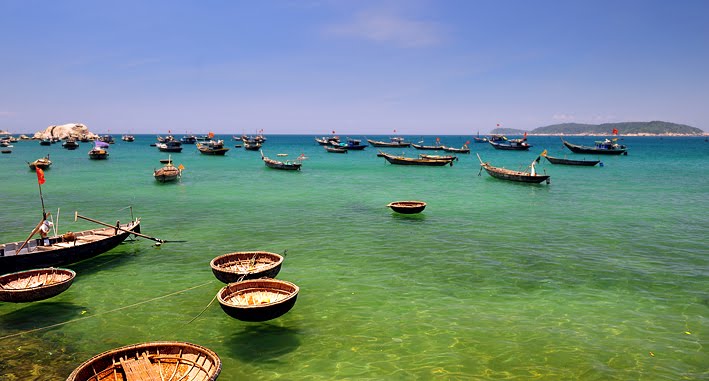
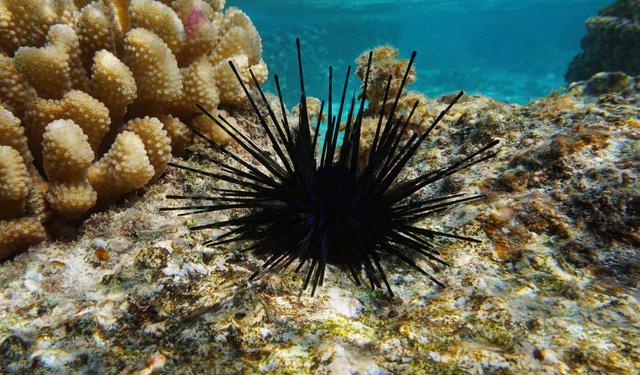
The large island consists of 8 islets, 20 km off the coast from Hoi An Ancient Town in Quang Binh Province. Cu Lao Cham Island has wonderful sand beaches, forested hills, a nature reserve and the sea. With primitive landscapes, the island is ideal for camping, swimming and scuba diving to enjoy the corals and beautiful marine life.

Location: Tan Hiep, Hoi An, Quang Nam Province

I. History of Cu Lao Cham Islands

Cham islands are supposed to be the first place where Cham people landed, coming to Quang Nam Province from Indonesia (small monuments, dikes, and basin to grow rice on terraces are hidden in the forest, the 17th-century pagodas and small temples in the two villages).

Therefore, being well-known since earlier Cham domination (from 4th to 14th century), the island became one of the main ports of Champa Kingdom. Situated some eight miles offshore Hoi An, it was also part of Hoi An historical international trading. From the 15th century till the beginning of 20th century, the old city was a meeting point for international vessels and junks.

According to archaeologists, Cu Lao Cham first settled there 3,000 years ago and established business contacts with external countries some 1,000 years ago. Up to now, Cu Lao Cham has preserved many architectural constructions which date back to the 18th and 20th century. They include the shrine dedicated to Than Yen Sao, built in 1843 at Bai Huong and Hai Tang Pagoda, built in 1753 on the western hillside of Hon Lao.

Still, Cu Lao Cham has more to offer. After a three-hour canoe trip, one may hop over to the famed Well of the Cham people.

II. Topography of Cu Lao Cham Nature Reserve

The topography of Cu Lao Cham Island is dominated by two peaks: a 517m peak in the centre of the island and a 326m peak at the western end. Natural forest here covers 532 ha of the nature reserve, equivalent to 35% of the total area, while plantation forest covers a further 30 ha.

Cham island comprises an archipelago of one large island and seven smaller islands: Hon Dai, Hon Lao, Hon Kho Me, Hon La, Hon Kho Con, Hon Ong, Hon Tai, Hon Mo. The largest island of them is Hon Lao, which covers 1,317 ha and has a circular shape at the height of 500m. There are nice beaches at Bim and Ong beach.

  • Bai Bim: Nice beaches and rock reefs, free swimming and taking photographs
  • Bai Ong: White sandy stretch, beautiful view, clear water, lots of restaurants serving specialties of Cu Lao Cham, many entertaining services for Cu Lao Cham tour
  • Bai Lang: High population with amazing tourist destinations like Champa Kingdom, suitable for understanding more about the locals’ life.
  • Bai Bac: The northern beach, peaceful and isolated place that is used to make way for exorbitant resorts and villas in the future.
  • Bai Xep: beautiful and pristine with colorful coral reefs, great place for swimming and snorkeling.
  • Bai Chong: longer than Bai Ong, beautiful rock reefs and bridge for taking photographs, tranquil water to swim.
  • Bai Huong: tasty seafood, lots of ships and boat docking, not for swimming

III. Biodiversity Values

The island is a place where shelter for value swallow birds. The natural vegetation of the islands is a lowland evergreen forest, that is natural with a lot of woods and rare animals.

Scientists report the occurrence of macaques Macaca sp., monitor lizards Varanus sp. and pythons Python sp. To date, 265 vascular plant species have been reported from Cu Lao Cham nature reserve. Furthermore, a species of swiftlet Collocalia sp. is reported to nest on Hon Kho within the nature reserve.

Cu Lao Cham is also home to salanganes, birds whose nests have long been considered a delicacy by aristocrats and the wealthy. The nests may cost as much as US $4,000 per kilogram. On a beautiful day, tourists are able to see cliffs where salanganes build their nests and talk with salangane-nest takers.

Around the island has a lot of color corals under the water. Situated in a salty-water area, this square-bottom well, amazingly, provides clear freshwater all year round. Visiting Cu Lao Cham, tourists have a chance to view the sea swallows’ nests clinging to the towering cliffs. Cu Lao Cham wins kudos for its seafood and delicacies (octopuses, lobsters, fish’s fin, abalone, kaki, hind, cholonia’s eggs, bird’s nests) and fascinating souvenirs (pearls, conchs, tortoise-shells).

IV. What to See in Cu Lao Cham Nature Reserve?

1. Hai Tang Pagoda

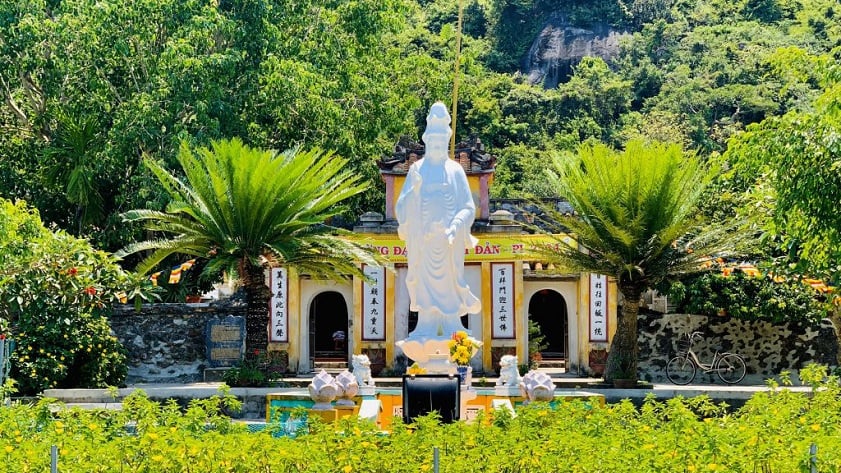
Built in 1758, this pagoda worshipped Bodhisattva, Buddha, sea god and local god. In the past, there was a storm attacking the pagoda so in 1848, local people decided to reconstruct and redecorate it. Now, it is 200 m away from its original location.

Hai Tang Pagoda lies on the foot of Hon Lao Island’s west mountain and is opposite a small valley in Cham Island. Hai means the sea and Tang means Tipitaka, which is a Buddhisst holy books containing Buddha’s words.

Location: Hon Lao Island, Cham Island

2. Cham people’s Ancient Well

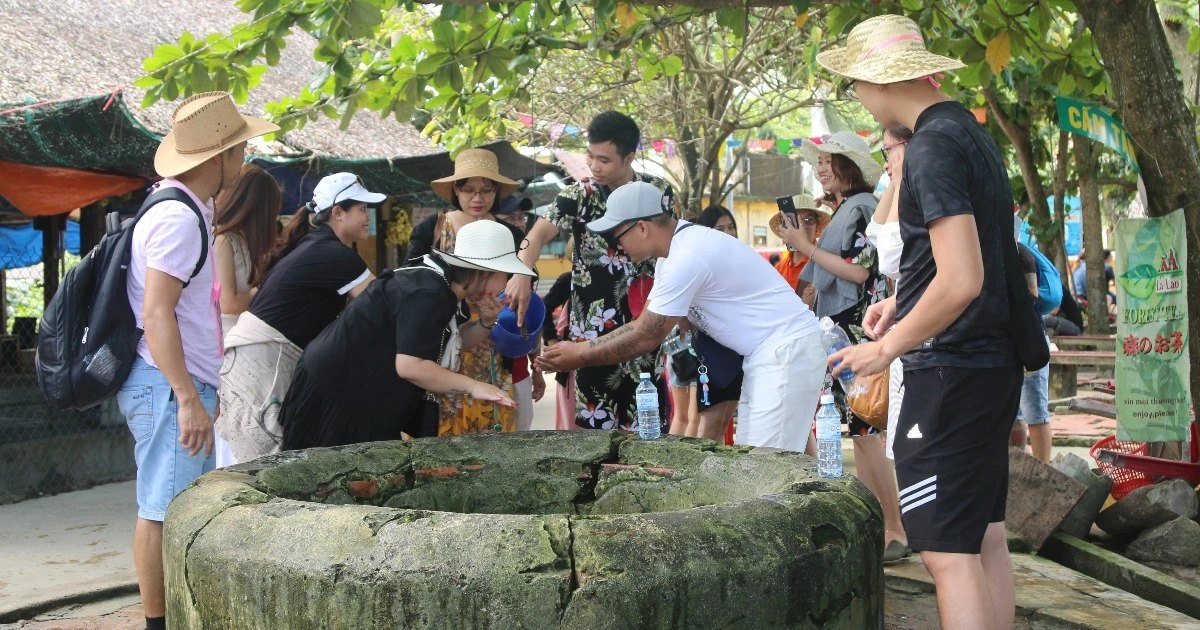
This well was dug 2 hundreds years ago by Cham people but until now, it still works well and the locals can use its fresh water. Its architecture is not different from other Cham wells with a pipe shape, annular bricks management, a square pillar, and a surrounding square base. Even during the dry season, people can still use water from this well for different purposes.

Location: Xom Cam Village, Cham Island

3. Temple of Bird’s Nest Business Founders

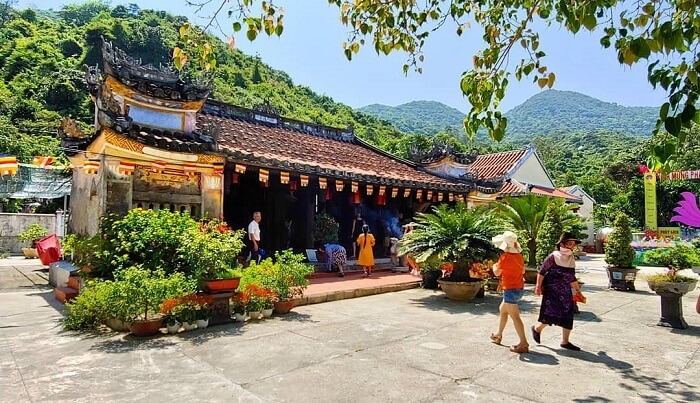
Erected in the early 19th century, this temple is used to worship the bird’s nest business’s founders. The gods of the sea are also worshipped here, which is similar to Hai Tang Pagoda. Each year, following the Chinese calendar, on the 9th and 10th of March, local people often come here to pray for a new year with better harvests.

Location: Huong Beach, Cham Island

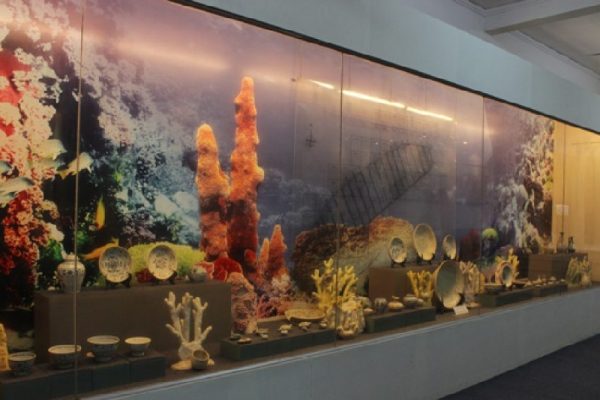
4. Cham Island Marine Museum

This museum gives you an insight of Cham’s history, traditions, customs, festivals as well as special sea creatures. In addition, you can also have a chance to know more about the lifestyle of people living on the island.

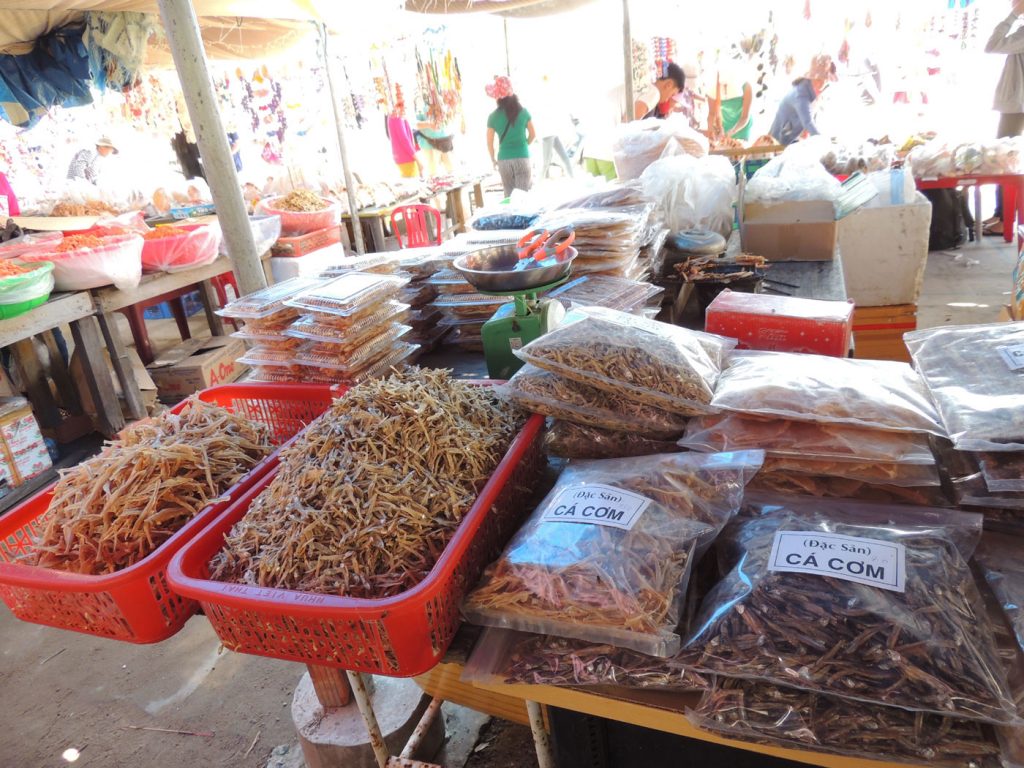
5. Tan Hiep Market

This local market is an ideal place for you to buy seafood and souvenirs. The most popular things that tourists often purchase is half-dried cuttlefish. It is because the seafood here is super cheap and fresh.

Location: Cham Island Pier

V. What to Do in Cu Lao Cham Island?

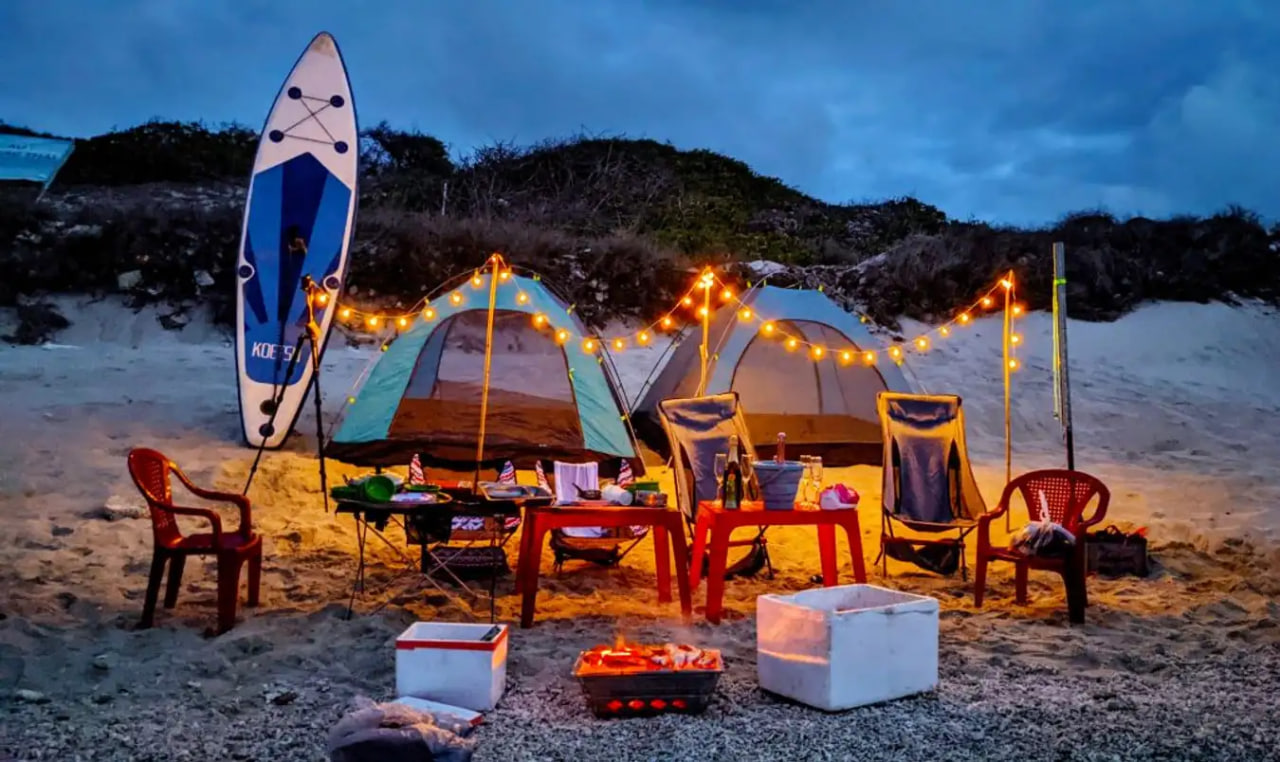
1. Camping 

With the variety of nature, Cham Island is a wonderful place to go camping. You just need to prepare everything well before going. The best choices for you are Bai Xep and Bai Bim where nature is wild and the spaces are open. Moreover, in Bai Huong and Bai Ong, you will be provided the necessary tools for an outside camp by local people.

2. Sea trekking

This is a new type of entertainment here. You just need a functional hat and you can walk under the sea by yourself. This service is an interesting experience for every person, even those are at the age of 80. Let’s imagine yourself walking into the sea seeing beautiful schools of fish as well as coral reefs, what is better than this?

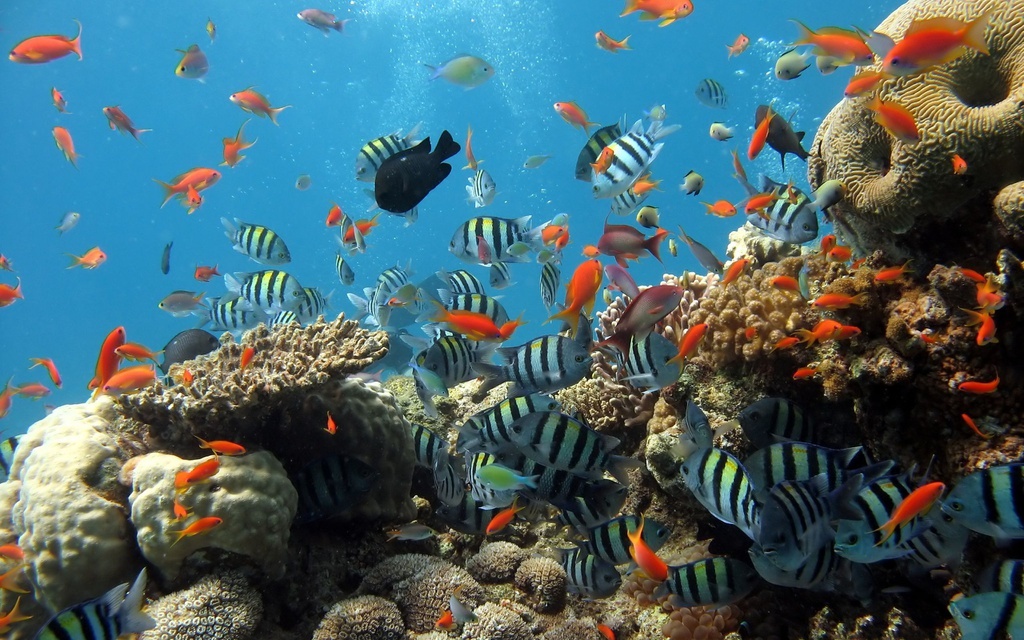
3. Snorkeling 

Another great activity that allows you to see the beauty of the sea is snorkeling. The price for a snorkeling ticket with a guide and full equipment is around 200,000 VND. But remember to protect the biodiversity of the sea when going snorkeling.

4. Swimming 

Cu Lao Cham has a lot of beautiful beaches that are suitable for swimming. Almost all of them are 20 m in width and 100 to 300 m in length. The waves are gentle and the water is clear and cool. So, you will definitely have a lot of fun here.

VI. Best Time to Visit Cu Lao Cham Archipelago

The tropical monsoon climate put a huge impact on Cu Lao Cham’s weather.

So, the best time for you to visit Cu Lao Cham is between March and August.

This is the time when the weather is sunny and the water condition is great. In the remaining months, there will be heavy rain and sometimes even big storms.

If you want to snorkel or dive, you should come in June, July and August. There are a wide range of tour companies and dive centers providing trips for you during this time.

Check out the seawater temperature in Cham Islands in months of the year in the table below:

MonthAvg. Temp.Warmest Temp.Coldest Temp.Ideal Activity?
January23.1°C/73.6°F26°C/78.8°F21°C/69.8°Fx
February22.8°C/73°F25.1°C/77.2°F20°C/68°Fx
March23.7°C/74.7°F26.4°C/79.5°F21°C/69.8°Fx
April24.8°C/76.6°F27.1°C/80.8°F22°C/71.6°Fx
May26.9°C/80.4°F29°C/84.2°F25°C/77°Fx
June28.4°C/83.1°F30°C/86°F26°C/78.8°Fx
July28.9°C/84°F31°C/87.8°F27°C/80.6°Fx
August29.4°C/84.9°F31°C/87.8°F28°C/82.4°Fx
September29.2°C/84.6°F30.9°C/87.6°F27°C/80.6°Fx
October27.8°C/82°F30°C/86°F26°C/78.8°Fx
November26.3°C/79.3°F28.3°C/82.9°F24.6°C/76.3°Fx
December24.6°C/76.3°F27°C/80.6°F22°C/71.6°Fx

VII. Where to Stay in Cham Islands?

On Cu Lao Cham, there aren’t any five-star hotels or resorts, you will only find homestays and hostels. But don’t worry, the service here is very good while the price is not expensive. Here are some suggested accommodations for you.

1. Tam Hien’s Homestay

Location: Bai Ong Beach, Cham Island

Tel: 0120 618 3516

2. Hiep’s Homestay

Location: Huong Beach, Cham Island

Tel: 0986 651 448

3. Thu Trang’s Homestay

Location: Lang Beach, Cham Island

Tel: 0985 237 941

VIII. How to Get to Cu Lao Cham Islands?

To get to Cu Lao Cham, you need to arrive in Hoi An, Da Nang first. There are numerous flights from big cities like Hanoi, Ho Chi Minh to Da Nang. When you are here, you will have to choose 1 kind of transportation to get to Cham Island.

1. Private canoe

This is the quickest and most expensive way to get to Cham Island. The trip takes about 15 to 20 minutes. A private canoe can hold up to 35 people and the price varies from the size of the canoe.

2. Standard canoe

This one is cheaper than the private canoe. The price is about 300,000 VND and you have to go with other strange people in the same canoe. You will not be able to travel freely because you need to follow the company’s route.

3. Wooden Boat

The wooden boat is the cheapest way of transportation but the time you have to wait is also the longest. Normally, the boat leaves at 8 am and you will reach Cham Island at around 10 am. And you are recommended to stay one night on Cu Lao Cham if you choose this kind of traveling.

Once arriving in Cham Island, you can rent a motorbike to go to discover every corner of this place. Almost all homestays, hotels and hostels provide motorcycles for rent with a reasonable price so you do not need to worry about transportation on the island.

Close to Hoi An town, Cu Lao Cham really cherishes high potential for tourism development. There is no reason for you to not experience the beauty of this beautiful offshore land.

Make your plan to Vietnam right now by apply a Vietnam visa at vietnamvisapro.net. We, a reputable and reliable Visa service, will assist you turn your plan into reality at the very first step

Posted on

Vietnam Architecture: Hanoi Opera House

Located in the heart of Hanoi, in a beautiful intersection downtown meets five main city roads, is a huge building called Hanoi Opera House, or the Grand Opera House (Vietnamese: Nhà Hát Lớn Hà Nội). Standing with times over 100 years, Hanoi Opera House has become a witness of Hanoi’s history. This historic building hosts to shows by many of cultural entertaining performances, contemporary dance, bamboo cirque, orchestra concerts and government events.

>>> Apply Visa to Vietnam <<<

>>> Order Fast Track Service <<<

The beautiful Hanoi Opera House was built from 1901 to 1911 by the French government, during the period French occupied Vietnam. Initially, Opera House’s position used to be a wetland area belonging to two villages, Thach Tan and Tay Luong. Thus, the construction is a strenuous work. It was designed by two French architects V. Harley and Broyer, inspired by ancient Greek architecture styles and the Opéra Garnier de Paris. The design was under much modification due to comments of many other architects and required a huge workforce and materials: 300 workers; 35,000 bamboo poles and concrete blocks of 0,9m thick; 12,000m3 of materials with 600 tons of iron and steel on the total area of 2600 square meters are amazing figures for any construction. It’s an outstanding piece of neo-classical French architecture featuring Gothic themes on the doors and domes with pillars, shuttered windows, balconies and a glass room. The interior design of Hanoi Opera surprises visitors with T-shape white marble staircase right in the center decorated with red carpet centered, crystal chandeliers, large wall mirrors, Corinthian columns and colorful dome by colorful murals and reliefs. The auditorium is 24 x 24 meters in size with three sitting floors including 589 velvet chairs. The second and third floors are reserved for separate box seats. The building also has a meeting room called “Mirror Room”, 18 dressing rooms, two rooms for voice training and a library at the back.

There are three grand opera theatres built by French in VietnamHanoi Opera HouseHai Phong Opera House and Saigon Opera House. Hanoi Opera House is the biggest one of three and speaks volumes as historical and cultural evidence of Vietnam under French rule. In 1899, the city council held a meeting chaired by Richard – envoy of Hanoi, and he proposed to build the Theater with the purpose of entertaining for French colonialists. Vietnamese elites were allowed to attend these performances but they had to be well-dressed and paid much money for tickets.

After the August Revolution in 1945, the Opera House was changed from entertaining the French elite to becoming the center of major historical events including the first session of the National Assembly of Vietnam Democratic Republic. In 1995, the building was restored to prepare for the La Francophonie summit in 1997, with nearly 14 million US dollars for renovation. Nowadays, conferences, seminars and press conferences under the plans of Ministry of Culture Sport and Tourism are taken place in the Opera House as well.

Not only it is a symbol of Hanoi in many aspects but Hanoi Opera House is also the stage of flourishing art. Invited to perform in the stage is the dream of all Vietnamese artists because it’s such a way to recognize their talent and contribution to art of Vietnam. The auditorium offers a superb setting in which to see any live show. The stage is three metres high and there are three storeys in total to guarantee wonderful experiences regardless of your seating arrangements. Musicians, actors and dancers play to a 600-strong audience delivering powerful operatic and classical performances, making it a very popular theatrical attraction.

Hanoi Opera House has the own significances that are worthy of standing in the list of the world’s classics. In terms of its values of architecture and landscape, the Opera House is still the most important artistic art form and most suitable for high-quality art programs and meets requirements of international performances.

Interesting facts and figures:
– The building took 10 years to be completed from 1901 to 1911.
– The building is 34 meters above the ground and carried out in a total area of 2600 square meters with the 87-meter length and 30-meter width.
– The auditorium is 24 x 24 meters with three seat floors that include 589 velvet seats.
– In 1995, the government spent nearly 14 million US dollars to restore the opera house.
– The building was acclaimed as Nation Relic, on its 100th birthday, December 9th 2011.

Hanoi Opera Hotel is just a few minutes walking from Hilton Hotel, Hotel de l’Opera Hanoi – Mgallery, Sofitel Legend Metropole Hotel, Conifer Boutique Hotel, The Lapis Hotel, Apricot Hotel and many others in the Old Quarter. Hoan Kiem Lake and Vietnam National History Museum are also nearby. Visitors can see the imposing colonial architecture of the Hanoi Opera House from the outside. Wander around the sprawling gardens and admire the huge building features many elements of Gothic and neoclassic architecture. To see the inside, visitors will need to book a seat for a performance. While it is interesting with the architecture, the true highlight is of course seeing a show in this grand setting. The Hanoi Opera House hosts both classic French and Italian opera and also traditional Vietnamese performances. This city landmark is also included in most of our Hanoi Tours. If you don’t find it in your city tour itinerary, please ask your travel consultant to fill in.

 Apply For Vietnam Visaapply Vietnam visaApply visa vietnambook visa vietnamCheap Vietnam VisaE-visa Vietnamevisa Vietnamexpedited e-visaexpedited Vietnam E-visaGet a Vietnam visaGet Vietnam Visaget vietnam visa onlineget visa to vietnamget visa Vietnammultiple entry visamy vietnam visaquick vietnam evisarush vietnam visatourist visaUrgent Vietnam VisaVietnamVietnam E-visaVietnam EmbassyVietnam touristVietnam travelVietnam vacationVietnam VisaVietnam visa costVietnam Visa ExemptionVietnam Visa FeeVietnam Visa for India citizensVietnam Visa For IndiansVietnam visa for IsraelisVietnam Visa for South Africa citizensVietnam Visa In IndiaVietnam visa in South AfricaVIetnam VIsa on arrivalVietnam VIsa onlineVietnam visa proVisa Approval Lettervisa for vietnamVisa On Arrivalvisa onlineVisa to VietnamVisa Vietnam

Posted on

Top 10 Famous Mountains In Vietnam

Whenever thinking of the first trip to Vietnam, the most popular places often come up in travelers’ minds are: Hanoi, Halong Bay, Sapa, Danang, Hoian, Nha Trang, Phu Quoc and Saigon. However, this beautiful country is not just all about bustling cities, Buddhist pagodas or untouched beaches, it’s also famous for spectacular mountain ranges. Mountains in Vietnam possess incredible landscape and unique features that differentiate them from the others. If you are climbing enthusiasts or you like spectacular and panorama views, don’t forget to check out the top 10 famous mountains in Vietnam.

>>> Apply Visa to Vietnam <<<

>>> Order Fast Track Service <<<

1. Fansipan Summit, Hoang Lien Mountain – Lao Cai Province.

Located about 9km west of Sapa Town, Fansipan Peak belonging to Hoang Lien Son Mountain Range, is the tallest mountain in Vietnam with an impressive height of 3,143m and was labelled as “the Rooftop of Indochina”. Fansipan means “Hua Si Pan” in local language (aka Huge Rock). Conquering the summit of Fansipan is a challenge itself as you have to be physically fit, have great experiences in hiking and trekking. It is highly recommended to hire a local guide or porter to escort your groups because he can lead you on the right and safest trekking path; help you carry some stuffs and prepare meals during the journey.

If you don’t want to take risks and can’t pass the physical tests, Fansipan Cable Car is available to meet your desire to visit the summit. The cable car was opened to public in 2016, got the Guinness World Records of the longest three – rope cable car in the world (6,292.5m) and the greatest elevation difference by a non-stop three – rope cable car (1,410m). Thanks to the massive cable car system, it takes only 15 minutes of riding and around 600 extra steps to reach the summit: instead of 2 – 3 hard trekking days. The cable cars operate from 7:30am to 5:30pm every day, with capacity of 35 passengers per car. Once you leave the station, you’ll immediately start to float high above the rice terraces and rocky cliffs below. Huge windows let you take in the sights all around, as you ascend gradually to this towering tip above the clouds.

The most suitable time for taking a visit to the mountain is from September to the next March. Especially, you can witness the magnificent landscape of Fansipan in February when various mountainous flowers in the valleys start to bloom, or breathtaking views of golden rice paddy fields in September. Despite modern commercialism with the appearance of cable car, Fansipan is still a favorite mountain destination in Vietnam and a true adventure experience – a must-do on any Sapa itinerary.

2. Yen Tu Mountain – Quang Ninh Province.

Yen Tu Mountain is located 40km away from Halong Bay in Quang Ninh Province. It belongs to the Dong Trieu Mountain Range in the north-eastern area of Vietnam. Previously, Mount Yen Tu was called as “Bach Van Son” (translated into English as” White Could Mountain”) because it is surrounded by white huge clouds around the year. Yen Tu is well known for the picturesque landscapes, ancient pagodas and especially the capital of Buddhism in Vietnam. King Tran Nhan Tong (1258-1308), the third emperor of Tran Dynasty, who guided Dai Viet army to defeat the Mongolian invaders in 1285 and 1287, decided to leave the palace and devoted his life to the Buddha. Then he established temples, meditation centers where he could perform his lectures to other monks and propagate Buddhist scriptures. Later, he co-established the Truc Lam Zen Sect, the first Vietnamese Buddhist Zen Institution. Up to now, a lot of Buddhists from around the country choose this sacred landmark to pray and pilgrimage, especially during the first three months of Lunar Calendar. That’s the time of spring festival in Yen Tu (from January to March) when the worshipers show their sincerity and wish for a new peaceful and prosper year.

In addition, Yen Tu has its own great natural diversity. There are thick bamboo and pine forests along the path to ancient pagodas and temples. In the dense forests, next to the pagodas and temples, or even at the peak of the mountain are architectural masterpieces. Dong Pagoda (Bronze Pagoda) lies in the highest peak, with the altitude of 1,068 meters above the sea.
To reach this peak, there are 2 options: on foot or by aerial tramway. The walking distance is around 6,000m with 6 hour hiking up thousands stone steps, passing through the dense green bamboo forests, stream. This option requires good physical conditions and many Buddhist pilgrims take this way because they believe that is a way of expressing their sincerity to Buddha. Another way to reach the mountain top is taking Yen Tu Aerial Tramway which was introduced in 2002. Travelling by this cable car, passengers will have an amazing experience to contemplate the whole fascinating view of the Yen Tu National Forest. From the top of Yen Tu Mount, visitors enjoy the poetic scenery of Halong Bay with thousands of limestone islands at the East or they can look to the South towards Hai Phong City with Bach Dang River flowing gently.

3. Ma Pi Leng Mountain Pass – Ha Giang Province.

Ma Pi Leng Pass is a high mountain pass at an elevation of 1.500m (4,921ft) above the sea level. It’s a part of the Dong Van Karst Plateau, lies on the Happiness Road, which connects Ha Giang City, Dong Van and Meo Vac. Happiness Road is about 200km long and was built by thousands of youth volunteers from 16 ethnic groups of 8 Vietnam Northern provinces. It took 6 years (1959-1965) to complete the construction and especially, the 20-km pass Ma Pi Leng was built by suicide troops volunteers who had to hang themselves on rock cliffs and move every centimeter to finish the dangerous 11-month building process.

The name Ma Pi Leng means literally “horse’s nose”, implying the dangerous of the topography here when mountains upstanding like horse’s bridge of the nose. It is considered as one of the “greatest four mountain passes” in the northern mountainous regions of Vietnam, together with Khau Pha in Yen Bai Province, O Quy Ho in Lao Cai Province and Pha Din in Lai Chau Province.
Conquering the legendary Ma Pi Leng Pass and stopping by the Ma Pi Leng viewpoint to look down to Nho Que River is the dream of many adventurous motorbike-riding lovers. One of the first turnout points on the road heading south is the Ma Pi Leng Skywalk, complete with a statue celebrating the construction of the Happiness Road. In addition, there’s a small museum known as the “Happiness Road Museum” which documents some of the history of the road. A bit further south, you’ll find the Ma Pi Leng Viewpoint, the best-known stop in the area because it offers a perfect view of the dramatic valley the river has carved into the mountains. Taking Ha Giang Tours with Vietnam Travel, tourists definitely will have chance to ride a bike along the Happiness Road and seeing the sunrise or sunset over Ma Pi Leng Pass. Neither words nor photos can beat the awesome experience of standing there physically among those awe-inspiring mountains.

4. Thung Khe Pass – Hoa Binh Province.

Thung Khe Pass (also known as the White Stone Pass) is located on Highway 6 connecting Mai Chau and Tan Lac Districts of Hoa Binh Province. It’s considered as the main gate to Mai Chau, Moc Chau and other beautiful destinations in the Northwest Vietnam. The pass is at an altitude of 1000m above sea level with spectacular scenery but dangerous due to steep and sharp curves. On the way to Mai Chau or Moc Chau, buses often stop at the peak of Thung Khe pass for short break. There are few local stalls setting aside to sell local specialties, such as wild herbs and vegetables, fresh corns, sticky rice. Visitors stop here to take photos, enjoy panorama view of greenery Mai Chau valley in the cool breeze.

Staying at the pass, tourists can enjoy four seasons in a day: spring in the morning, summer at noon, autumn in the afternoon and winter at nighttime. Thung Khe is really an attractive spot that you should not miss on the way to discover Northwestern regions in Vietnam.

5. Bach Ma Mountain – Thua Thien Hue Province.

Bach Ma or White Horse Mountain is a natural border between Thua Thien Hue province and Danang city. Bach Ma Mountain belongs to Bach Ma National Park, located at Phu Loc village, Nam Dong district, Hue Province. It is about 60 km to the south from Hue city centre and 90 km away from Danang city. Bach Ma is only 18km from the coast, also the only connection of Vietnam’s primeval forest between the sea and the Vietnam – Laos border. Located at an altitude of 1450 meters above sea level, Bach Ma Mountain range features typical weather of two sides of the Truong Son Mountain Range and recognized as one of the biodiversity centre in Indochina for ecological diversification.  If you are nature lovers, this region is truly a paradise with more than 1400 species of plants, including rare orchids, representing one fifth of the flora of Vietnam. In addition, the park is the home to 132 species of mammals, three of which were only discovered in the 1990s: the antelope-like saola, the Truong Son muntjac and the giant muntjac.

Not surprisingly, Bach Ma was selected to become a hill station for the colonial administration of Hue in the year of 1932. Over a hundred villas were built here to accommodate the colonial French officers and Hue’s upper-class families. When the French – Vietnam war ended in 1954, Bach Ma was soon forgotten and the villas abandoned. In the 60’s the Americans took over this region as a strategic base for their military actions controlling the stretch between Hue and Da Nang. After our independence in 1975, the Vietnamese Government stated the Bach Ma National Park at this mountain and extending the Park over the years to its current. Nowadays, this mountain is a popular summer retreat for locals and foreigners thanks to its legendary history, exotic nature with spectacular beauty, astoundingly pristine atmosphere and the cool climate all year round. The mountain trails are quite slippery during the rainy season (September – December) so tourists should avoid visiting Bach Ma Mountain in these months or should follow the instructions from experienced tour guides. The best time to visit Bach Ma National Park is from December to April, which is the dry season with low rainfall offering the perfect stretch of jungle walk.

6. Son Tra Mountain – Danang City.

Son Tra Mountain, known to American soldiers during the Vietnam War as Monkey Mountain, is located on Son Tra Peninsula, in Son Tra District, 35-minute drive from Danang City. Standing at the height of 693m above sea level, the mountain peak overlooks the Bay of Danang and the East Sea. Used to be a former U.S. military base during the Vietnam War, Monkey Mountain houses two radar domes that are now taken over by the Vietnamese military as well as a helicopter pad. The mountain is a favorite place of animal lovers and adventure seekers while traveling in Danang because it’s the rich diversified nature reserve, protected under the nationally prohibited forest regime with many rare wild animals, especially pygathrix (red-shanked douc) is on the IUCN Red List of endangered species. The lush mountain is also surrounded by unspoiled beaches such as Bai Bac, Bai Nam, Bai But and Tien Sa Beach. Thanks to its sea-oriented location, Son Tra acts as a giant screen protecting Danang City from storms and typhoons coming from the sea.

The prominent attraction set on this mountain is Linh Ung Pagoda. The stunning pagoda was built during the 18th century and houses a 67 metre-tall white statue of the Goddess of Mercy set atop a lotus-shaped platform. This is the largest pagoda by its scale and artistic architecture in Danang City. The statue of Lady Buddha facing to the sea is believed to protect the locals from strong storms. Entrance to Linh Ung Pagoda is free of charge, though it gets crowded with pilgrimages on special occasions. Additionally, Tien Sa Port at the base of the mountain’s western face, is one of the most important and largest deep-water seaports in central Vietnam. Tien Sa port welcomes thousands of international tourists from sea cruise ships visiting Vietnam annually. With its perfect location, Son Tra Mountain is a popular retreat for tourists and locals alike looking to day trip to stay away from the crazy noise of the big city.

7. Bana Hills – Danang City.

Bana Hill is a mountain top resort complex, located in the Truong Son Mountains at the west of Danang City. The station was founded and built in 1919 by French colonists to be used as a leisure destination for French tourists. Being located above 1500 metres above sea level, it offers stunning view over the East Sea and the surrounding mountains. Due to the elevation, the temperature here is significantly cooler (10 – 15 degrees) than the environment near the coast, you can revel yourselves in the typical rotation of four seasons in a single day. Bana Hills is most famous for its French village with buildings that look like medieval castles, but inside these stone walls are majestic Golden Bridge, popular hubs of endless entertainment and more.

To reach the hilltop, visitors get to take the picturesque cable car. The cable car system at Bana Hills was completed in 2013 and holds several Guinness World Records, including the widest gap between stations and the greatest change in elevation. During the cable car ride, you can enjoy the surrounding views of the lush forest leading up to your destination. In recent years, Bana Hills has get more and more attentions from tourists all over the world thanks to newly built Golden Bridge. Golden Bridge with the length of 150m and at the height of 1,414m above sea level, was officially inaugurated in June 2018 in Bana, was also voted by TIME magazine as one of the “Top 10 best destinations of the world 2018” and admired by The Guardian as “The world’s most impressive pedestrians’ bridge”.

Exploring Ba Na Hills, you will not only enjoy the spectacular views of mountains, greenery, and cities but also join a plethora of recreational activities in one of the most amazing amusement parks in Vietnam.

8. Lang Biang Mountain – Lam Dong Province.

Lang Biang Mountain is located in Lac Duong district which is 12km North of Dalat City, Lam Dong Province. Impressively standing at an altitude of 2,169 meters above sea level, Lang Biang Mountain is considered as the roof of Dalat. The mountain is the paradise for both nature lovers and adventure seekers. There are several options to reach the mountain top: by jeeps, by motorbike on a paved road. Or if you look for a physical challenge, it takes around two or three hours along a forested trail to hike to the peak. But you should be aware of four seasons within one day even Dalat’s temperatures are known as pleasant for hiking activity. Standing on the top of mountain, tourists can enjoy pleasant climate, bewitching nature and marvelous views of the whole city, forests, rivers and houses of tribal villages.


The name Lang Biang itself originated from a bittersweet love story. Long time ago, there was one couple who were deeply in love with each other. The boy was K’Lang from Lach minority and the girl was H’Biang from Chil minority. According to the long-standing feud between their tribes, they couldn’t get married so they left their hometown, got married and lived in the mountain top. When H’Biang was ill, K’Lang found many methods to help her get over the illness. He even came back to H’Biang’s village to ask for help but no one welcomed him. They even prepared poisoned arrow to kill him. Suddenly, H’Biang appeared to protect her husband from the arrow. After her death, K’Lang cried a lot and also died. His tear turned into a scream called Dankia (Golden Stream) nowadays. After their death, H’Biang’s farther realized his faults and tried to unify two tribes. To memorize the couple with profound love, the mountain range was renamed into what we call it today: Lang Biang.
Nowadays, Lang Biang is an ideal place for adventurous activities like mountain climbing, conquering high peaks, paragliding and trekking. Camping, exploring the natural flora, bird-watching and enjoying the unique culture of ethnic minority groups are recommended activities for tourists coming to Lang Biang.

9. Ba Den Mountain – Tay Ninh Province.

Located 11km in the northwest Tay Ninh, around 3-hour drive from Ho Chi Minh City, Ba Den Mountain (Black Virgin Mountain or Nui Ba Den in Vietnamese) is suitable for those who love outdoor activities and want to escape from the hustle and bustle of big cities. Together with Nui Heo (Pig Mountain), Nui Phung (Phoenix Mountain), Nui Ba Den (Black Virgin Mountain) are parts of Nui Ba Historical and Cultural Complex. At the height of 986m, this mountain is the highest mountain in the southeastern part of Vietnam because it was formed by the extinct volcano rising from the flat Mekong Delta jungle and farmland. It is also best known for pristine natural scenery and long-standing spiritual architectural complex.

The mountain name of Ba Den is translated into English as Black Virgin Mountain because it’s related to the myth about Ly Thi Thien Huong, the woman who is considered as the Black Virgin. At the end of the 18th century, there was one loving couple named Le Sy Triet and Ly Thi Thien Huong. Thien Huong was a beautiful girl with lovely tanned skin. Le Sy Triet is a young man with great intelligence and bravery. He enlisted in the army of Nguyen Hue – a general who later became King Quang Trung. When Triet was away from home, Thien Huong was forced to marry a rich man in the village. She committed suicide by jumping off the mountain edge to protect her virginity. After her death, villagers regretted her beauty and trait and built a temple on that mountain, which was changed as Ba Den Mountain (Black Virgin Mountain or Black Lady Mountain) in memory of this mysterious young lady.
Nowadays, the mountain is best known for its temples. Buddhists come to worship at Linh Sơn Thiên Thạch pagoda. There’s a large reclining Buddha statue, and many pleasant paths to explore.

The visit to Ba Den Mountain can be really dangerous and a reasonable level of fitness is required. It takes around 2.5 to 3 hours trekking on the foot path to the top of the mountain. The trail is well defined but steep, rocky and uneven in places but you can reward yourself with the stunning views along the way. However, it’s much easier to reach the mountain top thanks to newly built cable car system by Sun Group. Instead of the difficult journey as before, all visitors from the old to the young are able to move quickly and gently when visiting Ba Den Mountain. Not only helps to shorten the travel time to visit Ba Den Mountain, Ba Den cable car also helps visitors have unique and interesting experiences during the journey to conquer the roof of the South.

10. Sam Mountain – Chau Doc, An Giang Province.

Sam Mountain is often include in the Mekong Delta tours which suitable for a 3-4 day package or for a stopover between Cambodia and Vietnam by boat trip. Travelling about 6km to the west of Chau Doc Town, An Giang Province, visitors will have chance to view Sam Mountain at the height of 230m with beautiful landscapes and many historic remains. On the way to the foot of mountain, there are rice paddy fields stretching along the road’s two sides. The mountain is mainly well-known as a sacred place for Buddhists with dozens of pagodas and temples. A strong Chinese influence makes it particularly popular with ethnic Chinese. Moreover, temples at the base and surrounds can illustrate Islamic, Indian and Khmer influences.
While climbing up to the summit, don’t forget to visit temples and pagodas dotted around the foot of the mountain, such as Ba Chua Xu Temple, Tay An Pagoda, Thoai Ngoc Hau Tomb. Chua Xu Festival is annually held on the second half of the 4th lunar month and attracts lots of worshippers all over the country. If weather permits, the views from the top are spectacular and Cambodia can be easily looked out from there.

If you are planning for a truly breathtaking adventure, you definitely have to put one of the spectacular mountains of Vietnam on the bucket list of things to do while in Vietnam.

 Apply For Vietnam Visaapply Vietnam visaApply visa vietnambook visa vietnamCheap Vietnam VisaE-visa Vietnamevisa Vietnamexpedited e-visaexpedited Vietnam E-visaGet a Vietnam visaGet Vietnam Visaget vietnam visa onlineget visa to vietnamget visa Vietnammultiple entry visamy vietnam visaquick vietnam evisarush vietnam visatourist visaUrgent Vietnam VisaVietnamVietnam E-visaVietnam EmbassyVietnam touristVietnam travelVietnam vacationVietnam VisaVietnam visa costVietnam Visa ExemptionVietnam Visa FeeVietnam Visa for India citizensVietnam Visa For IndiansVietnam visa for IsraelisVietnam Visa for South Africa citizensVietnam Visa In IndiaVietnam visa in South AfricaVIetnam VIsa on arrivalVietnam VIsa onlineVietnam visa proVisa Approval Lettervisa for vietnamVisa On Arrivalvisa onlineVisa to VietnamVisa Vietnam

Posted on

Vietnam Flag: History, Meaning & Attractions

Each country has its own national flag, which represents and symbolizes that country. A national flag is typically designed with specific meanings for its colours and symbols. Visiting Vietnam, tourists can often see the national flag with the red background and yellow five-pointed star in the centre. The design and color of Vietnam national flag is very simple but has its own special meanings and has always been the national pride of all Vietnamese. This article will help you understand more about the history and meaning of Vietnamese flag.

>>> Apply Visa to Vietnam <<<

>>> Order Fast Track Service <<<

1. History of Vietnamese Flag.

The Vietnamese flag is identified by its people and the global community today predates a unified and independent Vietnam. It first appeared in the southern uprising (Nam Kỳ Khởi Nghĩa) on 23 November 1940, against French rule in Southern Vietnam. The Vietnamese flag was designed by Nguyen Huu Tien (Nguyễn Hữu Tiến), a leader of the uprising who was arrested by the French in advance of the failed uprising and executed 28 August 1941.

In 1941, the flag of Vietnam was displayed at a conference, at which the Viet Minh (a communist group) was founded by the leader Ho Chi Minh to support the locals in the war against the French colonial government. On 17 August 1945, the Viet Minh proclaimed it as the national flag of Vietnam at the meeting held in the village of Tan Trao in the North.

As World War II drew to a close, the Japanese surrendered, the Viet Minh entered Hanoi and Ho Chi Minh declared Vietnam independent and the flag became the official emblem of North Vietnam or the Democratic Republic of Vietnam on 02 September 1945. And later then, 2 September was chosen as Vietnam Independence Day, the day Vietnam was recognized as an independent nation in the world.

Meanwhile, French troops returned in October and restored colonial rules in the South. Under French sponsorship, the South of Vietnam was controlled by Southern government, officially called as the Republic of Vietnam and had its own flag with a yellow background and three horizontal red stripes in the middle.

On March 1946, the National Assembly voted to keep the Viet Minh flag and after the Geneva Accord between France and Vietnam in 1954, the Democratic Republic of Vietnam became the national government. The Vietnamese flag was modified in 1955, making the central star slightly smaller with straighter edges.

With the defeat of American and South Vietnamese forces in 1975, communists ruled the entire country and the government and flag of the South disappeared. The 1945 flag was adopted in the South when the two halves of the country were unified as the Socialist Republic of Vietnam on 02 July 1976. And today the red flag with a yellow star is used throughout Vietnam.

Vietnam is among 59 countries with star on national flags (Source: https://www.worldatlas.com/articles/country-flags-with-stars.html). Star’s meaning and symbolism on a flag is not worldwide because each country may have a specific reason for including star on flag.

2. What is Vietnam Flag Meaning?

The National Flag of the Socialist Republic of Vietnam is rectangular in shape, its width is equal to two thirds of its length (the proportion is 2:3), in the middle of red background is a bright five-pointed golden star.

Vietnam flag meaning and origins can be traced all the way back to the French Revolution of 1789 when a plain red flag became the symbol of left-wing politics. Overtime the symbolism evolved and the basic color scheme was adopted by socialist and then communist causes. Since then, that red core has become a foundation for a number of communist or democratic-socialist nations such as China, North Korea, Macedonia.

What originated as a symbol of left-wing politics in 18th-century France has morphed into something much different in Vietnam today. Vietnam flag colors include red and yellow with special meanings. According to the designer Nguyen Huu Tien, the red background represents blood – a symbol of bloodshed, struggle and the success of revolution, while the yellow foreground represents “the color of our race’s skin”. The five points of the central star stands for the five principal classes composing the political front – businessmen, farmers, workers, intellectuals and military.

On every special national holidays such as Reunification Day, Independence Day, Tet Holidays and traditional festivals, locals proudly hang their Vietnamese flags right at their houses’ entrances. That’s also a meaningful way to remember the Vietnamese soldiers who sacrificed themselves in the wars to protect our country’s peace and independence.

3. Vietnam’s Flag As Tourist Attractions.

Below is the list of Vietnam flag towers in some tourist attractions all over Vietnam. These Vietnamese symbols are very meaningful to all Vietnamese people.

3.1. Hanoi Flag Tower.

Hanoi Flag Tower was built in the early 19th century and is renowned as one of the few remaining pre-war relics of Hanoi. The tower was built from 1805 to 1812 during the reign of Emperor Gia Long as an observatory. In the past, most of the constructions in the inlying area of Hanoi were destroyed through the wars. However, Hanoi Flag Tower was one of rare architecture works which still remains today.

Moreover, the image of Flag Tower has been embedded in many remarkable historic events. After The August Revolution’s success in 1945, Vietnam’s flag flew on the top of the Hanoi Flag Tower for the first time, and on October 10th, 1954 – the capital liberation day. In 1989, this structure was recognized as a historical site and the image of the 200-year-old flagpole was printed on the first banknotes of the Democratic Republic of Vietnam.

The Vietnam flag with yellow star can be seen at the top of 33m tower. It has been hung on there since 1986 and each flag is used within two to three weeks on average. With original construction purpose as a watch tower; Hanoi Flag Tower offers a breathtaking view for the watchers standing on it. The top of the tower is an octagonal room with eight windows overlooking to eight directions, offering enough space for six people.

Located on Dien Bien Phu Street, Hanoi Flag Tower is a historic landmark that tourists who arrive in Hanoi should visit once. It is the most intact and the largest historical site in the complex of the Thang Long Imperial Citadel, located on the campus of the Military History Museum. After visiting the flagpole, tourists can pay a visit to the museum (closed on Mondays and Fridays).

3.2. The ceremony of Raising and Lowering the Vietnam National Flag at Ba Dinh Square (in front of Ho Chi Minh Mausoleum).

While traveling in Hanoi, you can experience impressive moments of flag raising and lowering ceremony at 6 A.M and 9 P.M everyday (whether it is sunny or rainy) at Ba Dinh Square with excited orchestra and national anthem performed by military solders in white uniforms. The delegation carrying out the Vietnamese flag consists of 34 soldiers, typically new soldiers of the Vietnam Armed Unit for National Liberation, the forerunner of the Vietnam People & Army. Interestingly, despite its solemnity during the moment of flag salutation rituals, the square is then back again a popular gathering place for the locals: families who want a walk, elderly who want to exercise and friends who want to hang out.

3.3. Hue Flag Tower.

Hue Flag Tower is located opposite the main entrance to Hue’s Imperial City, overlooking the river. It was officially built under the reign of Gia Long Emperor in 1807 then renovated and remodeled continuously in 1829, 1831 and 1840. Hue Flag Tower includes two main parts: tower and flagpole. The tower was constructed by brick and has the shape of the three tiered pyramid. Each cube platform was placed on the top of the next one in descending order from bottom to top. Through the ups and downs of history and natural disasters, the flagpole had been destroyed and rebuilt several times. The steel-core flagpole we can see today was constructed by the Contemporary Council of Central Vietnam in 1948. Hue Flag Tower, together with Ngo Mon Gate, witnessed the significant event to mark the end of the absolute monarchy on 30th August 1945. On this day, thousands of locals observed the abdication ceremony of Bao Dai Emperor. The transfer of king’s sword and seal represented the independence of Vietnam government under the leadership of Ho Chi Minh President. On this occasion, Vietnamese flag freely flied over the Hue Flag Tower to mark this important historical event. In spring of 1968, Vietnam red flag with yellow star was hung on the tower in 26 days and nights in the pride of Hue’s soldiers and citizens.

3.4. Lung Cu Flagpole.

Located at Vietnam’s northernmost tip, Lung Cu Flagpole is a sacred symbol of country’s sovereignty. It’s located in the peak of Dragon Mountain (at altitude of nearly 1,500m above sea level), Lung Cu Commune, just 24km North of Dong Van, Ha Giang Province. The proud flagpole can be seen from miles away. From a distance, Lung Cu Flagpole is an amazing sight with the view dominated by giant boulders and the national flag flying above Dragon Mountain, all set to the backdrop of magnificent forests.

It is said that the first flagpole has existed here for almost a thousand years, since national hero Ly Thuong Kiet first made one out of conifer wood. Generation upon generation of Vietnamese have taken care of the flagpole and built it to the nowadays size. Its height is 1468.73 m and has similar design to the Hanoi Flag Tower, with eight bronze drums guarding the eight sides of the octagonal tower. The national flag of Vietnam flies flutteringly at the top of the 135-stair tower has the size of 54m², representing 54 ethnic groups living in Vietnam’s territory.

Standing on top of Dragon Mount, visitors can admire the hogback landform made from riding cones, which in turns consist of steadily titled in one direction limestone layers. To the northeast and southwest, there are two lakes right at the food of the mountain, considered as “dragon eyes” by locals.

Ha Giang itself is beautiful at any time of year, with endless scenery to inspire visitors. Among many gorgeous attractions in Ha Giang such as Quan Ba Twin Mountain, Dong Van Hill tribe market, Meo Vac, Ma Pi Leng Pass etc., Lung Cu Flagpole is one milestone that should not to be missed.

3.5. Nation Flag tower in Ca Mau – the southern cape of Vietnam.

It was built in 2016 and completed in 2019 at Vietnam’s southern tip. The first level is 4 meters high, while the second and third level are 4.4 and 6 meters high. The height of the tower is 24.5 meters. The Vietnam flag tower was in the tourist area of Cabo Ca Mau, near other important local monuments.
The architecture of the tower resembles that of Hanoi with a solid and modern structure, which could withstand adverse weather conditions.
Ca Mau welcomed one million tourists in 2019, among those 30,000 were foreigners. The province is striving to receive at least two million visitors per year from 2020 on. The replica of Hanoi Flag Tower in Ca Mau cape is expected to be a spotlight of the region, thereby, attract more visitors to a nice destination in the southern of Vietnam.

 Apply For Vietnam Visaapply Vietnam visaApply visa vietnambook visa vietnamCheap Vietnam VisaE-visa Vietnamevisa Vietnamexpedited e-visaexpedited Vietnam E-visaGet a Vietnam visaGet Vietnam Visaget vietnam visa onlineget visa to vietnamget visa Vietnammultiple entry visamy vietnam visaquick vietnam evisarush vietnam visatourist visaUrgent Vietnam VisaVietnamVietnam E-visaVietnam EmbassyVietnam touristVietnam travelVietnam vacationVietnam VisaVietnam visa costVietnam Visa ExemptionVietnam Visa FeeVietnam Visa for India citizensVietnam Visa For IndiansVietnam visa for IsraelisVietnam Visa for South Africa citizensVietnam Visa In IndiaVietnam visa in South AfricaVIetnam VIsa on arrivalVietnam VIsa onlineVietnam visa proVisa Approval Lettervisa for vietnamVisa On Arrivalvisa onlineVisa to VietnamVisa Vietnam

Posted on

Nine of the Best Tourist Islands in Vietnam

Vietnam’s reputation as a beach destination is growing, and it’s slowly becoming a favorite sun-soaked holiday in Southeast Asia for beach lovers. With 3,000 kilometers of coastline, Vietnam has undergone substantial growth, resulting in a wide range of resorts and hotels, and tourist facilities in beach cities. However, even though city beaches and seaside resorts are beautiful, noise and traffic often aren’t far.

Therefore, if you are looking for off-the-beaten-track beach destinations, Vietnam’s islands are exactly where you should look for because they offer a wonderful place to relax with deserted white sand beaches, enjoy local cuisine and hospitality and give you the chance to experience the quintessence of Vietnam. In this article, we’ve come up with a list of the top best tourist islands to visit in Vietnam (listed from the North to the South), which may be useful to help you choose which islands to include in your next adventure in our beautiful country.

>>> Apply Visa to Vietnam <<<

>>> Order Fast Track Service <<<

1. Co To Island, Quang Ninh

The paradise of white sand and blue sea is not only found in Central and South Vietnam. Co To Archipelago in Quang Ninh Province – one of the most beautiful destinations of North Vietnam, also attracts tourists with pristine beaches, white sand and blue water. This is an archipelago with more than 50 large and small islands. Locals living in Northern Vietnam take the short vacation to Co To in summer time to explore beautiful sediments, wonderful sandy beaches, small paths through the primeval forests, fresh delicious seafood and other interesting activities. From 2016, foreigners don’t have to obtain a permit from the governmental authorities. Foreign travellers now are free to visit Co To Island.

Co To has just recently developed for tourism, so high-end accommodations and luxury eating, and entertainment services are hard to find here. Co To, however, is still in the travel buckled list due to its wild nature, local friendliness, and the irresistible fresh seafood.

2. Cat Ba Island, Hai Phong

Cat Ba is one of the largest islands in Northern Vietnam, surrounded by Bai Tu Long Bay and HaLong Bay and the paradise of relaxation in the Gulf of Tonkin.

If you’re already in the north of Vietnam and are visiting Ha Long Bay or Lan Ha Bay, Cat Ba Island should also be included on your itinerary. Several overnight cruises choose Viet Hai Village in the secluded eastern area of Cat Ba as one of the most highlights in their cruise itinerary. You will take a walking tour around the gorgeous village and its attractively wild borders, then ride bicycles around the rainforest and rice fields of the local farmers.

With travellers having more time to stay overnight in the island, there are more attractions to offer. Cat Ba is famous for three small beaches named Cat Co 1, 2, 3 with soft yellow sand and crystal-clear water, luminous waves and bracing winds. While Cat Co 1 and 3 are linked by a cliffside path that’s great to stroll anytime, day or night, the other is a quieter retreat, perfect for romantic getaways.

There are interesting remnants of the Vietnam War for those who are intersted in Vietnam history. You can check out the historic Cannon Fort, a military site which was used by the Japanese during WWII, the French during the Indochina War and the Viet Cong during the Vietnam War. Perched on a 177-meter-high hill, it offers panoramic views of the bay and made for a great defensive point back in the day. Hospital Cave is another cool place to explore. Half cave, half bunker this three-story building has 17 rooms, one operating theater and a natural cavern which was used as a cinema.

3. Cham Island, Quang Nam

Lying 18km offshore from Hoi An, the Cham Island (known locally as Cu Lao Cham) occupies beautiful sand beaches, forested hills, and breathtaking landscapes. It is a group of 8 small islands, which has been recognized by UNESCO as the World Biosphere Reserve (Cu Lao Cham Marine Park).

From the busy streets of the World Heritage Hoi An Town to the soft sands and quiet Cham Island, it’s only a short boat ride (30 minute speedboat) but it gives a complete change of scenery. With the picturesque and pristine setting, Cham Island is an ideal place for island seekers but are tight on time because they can take a day trip from Danang or Hoi An with Vietnam Travel. This trip departs daily and includes the returned speedboat transfer, a visit to the island’s main town, snorkeling to explore corals and colorful marine life, seafood lunch on the beach and some time to relax and swim before heading back to the mainland in the afternoon.

4. Ly Son Island, Quang Ngai

Ly Son Island, formerly known as Re Isle (Cu Lao Re) of Quang Ngai Province, off the South Central Cost of Vietnam. It takes around one hour to travel on speedboat from the mainland to Ly Son Island. In recent years, it has become increasingly popular with young Vietnamese travellers, but foreigners have not caught on to this trend yet. That makes Ly Son a great place for those who seek for a place that has not yet been over-dominated by mass tourism.

Five prominent mountains in the middle of the vast ocean and blue sky capture the whole view of island. You can climb to the hills for great view of the ocean and garlic and onion fields because the rocky beaches are not suitable for you to linger and relax. Growing mild, fragrant garlic and onions are also characteristics only to stumble on in this island. Ly Son cuisine uses these two ingredients liberally to create yummy seafood specialties you won’t easily find elsewhere.

If you want to fulfill your beach dream, small Ly Son Island (also called as An Binh Island) is definitely a must-try experience. Just 15-minute boat from Ly Son Island, you will find beaches of white sands, swaying palm trees and clear blue waters.

5. Hon Tre Island, Khanh Hoa

Hon Tre Island, just off the coast of Nha Trang, is best known for housing Vinpearl Amusement ParkGetting to Hon Tre Island from Nha Trang is fairly easy thanks to daily ferries and speedboat transfers from Cau Da Port, near the Oceanographic Museum. For those heading to Vinpearl Amusement Park, they can enjoy a 10-minute cable car ride from the port. Roundtrip cable car tickets cost VND 880,000 per adult and VND 660,000 per child, inclusive of access to all games (except water sports) in the park. Vinpearl Cable Car is a 3,320 metre long gondola lift, which links Nha Trang mainland with Hon Tre Island, is the world’s longest cable car over the sea.

You will find a massive aquarium, amphitheatre, shopping mall, and a variety of rides to enjoy on the island. Another highlight is Bai Tru Beach, located adjacent to the park. Despite the immense development on the island, nature lovers can still enjoy a hiking day on Hon Tre Mountain or enjoy a peaceful retreat from Bay Lagoon to the bustling town centre.

The best time to visit Hon Tre Island is during the dry season, around mid-February until May. If you’re a fan of diving activity, plan your visit between April and August to enjoy clear waters in coral-rich dive sites around Hon Tre Island.

Attractions on Hon Tre Island mostly resulted from the private business investment of luxury all-inclusive resorts, expansive amusement park and cultural village. However, there are plenty of natural beaches that are great for water sports, beach volleyball, and sunbathing.

6. Binh Ba Island, Khanh Hoa

If you are looking for a beach destination to escape away from the noisy and overcrowded cities, Binh Ba Island is among the best place to spend your time. Historically speaking, it was a military island with restrictions on outsiders entering this island. In the recent years, the rules has been lossened and Binh Ba has become a hot name on the lips of domestic tourists, even it’s still a new destination for international visitors. This island is only 15 km from Cam Ranh Airport60 km from Nha Trang City and can be reached in within 90 minute boat.

The day starts in Binh Ba earlier than other places because it’s in the eastern-most island of Vietnam. Don’t miss the chance to catch the sunrise from one of the beautiful beaches when you are here and take the advantages of the gentle morning light to explore rich and colorful marine life. Binh Ba island possesses lots of beaches, but the most famous beaches are Bai Chuong beach, Bai Nom beach, and Nha Cu beach. All three are practically deserted and have soft sands and clear waters.

Apart from its incredible scenery, the island has a culinary sumptuousness to fascinate every food lovers. Binh Ba Island is also locally known as the “Lobster Island” because you can try very fresh lobster with reasonable price here. You can find from clams and spiny lobsters to shrimp and prawns in this island, so be sure to work up an appetite and try them all.
There are some great viewpoints complete with old artillery and watchtowers. Since there is still a military presence today, be aware and respectful of “no entry” and “no photo” signs.

7. Con Dao Islands, Ba Ria – Vung Tau

Con Dao Islands, or also called as Con Dao National Park, are an archipelago of sixteen mostly uninhabited islets just off the southern coast of Ba Ria – Vung Tau Province. With about one-hour flight from Ho Chi Minh City, Con Dao is a great escape from noisy bustling cities, immerse yourselves in striking natural beauty surrounded by granite cliffs and crystal blue water.
It was ranked the 4th in the top 10 must-see places in Asia in 2016 by Lonely Planet magazine; and was named on a list of the best secret islands on Earth compiled by the New York-based site Travel + Leisure.

Island-hopping and diving are popular activities on Con Dao Islands, where you can explore most of the isolated islets and spot various wildlife. In terms of tourism infrastructure, Con Dao is still primitive with not many choices for accommodation. The most luxurious Six Senses resort, part of a chain of luxury hotels in exotic destinations around the world, has its own private beach and is a great getaway from everything.

Beaches aside, Con Dao is also known as a spiritual destination where you can see the evidence of a period of dramatic time, with the prison system established and ran by French colonist and American military. Con Dao Prison was once called “the Hell on Earth” where hundreds of Vietnamese political prisoners were detained and cruelly tortured during wartime. Home to beautiful, unspoiled beaches, a fresh and delicious cuisine, a rich biodiversity, and significant historical values, Con Dao Island promises to be the ideal vacation destination.

8. Nam Du Island, Kien Giang

Nam Du Archipelago, around 40 kilometers away from Phu Quoc Island, is becoming an attractive destination for backpackers heading to the Mekong Delta province of Kien Giang. Reachable by ferry from Rach Gia (2.5-hour ferry) or Phu Quoc (1.5-hour ferry), Nam Du is another great getaway when island-hopping in Vietnam. This pristine island has 21 islets, 11 islets of which are inhabited, while the others remain completely untouched.

The immense blue sea and sky, imposing mountains erupting amidst the ocean, endless evergreen primeval forests, long stunning beaches and splendid rock cliffs of Nam Du Archipelago in Kien Giang Province have seen it compared to the “New Wonder of the World” – Ha Long Bay in Quang Ninh Province. Formed from a volcano, it has numerous six-meter creeks which are advantageous for transportation. As it is endowed with high mountains, Nam Du also is suggested as a great spot for offshore fishermen to flee rough storms.

The best time to visit Nam Du Island is from December to April when the sea is peaceful and turquoise, the temperature is comfortable, and the weather is consistent and sunny. Spend few days here to immerse in this island’s rich natural beauty and join local fishermen as they get some of the freshest fish and seafood you’ll ever have.

Foreigners need a valid passport, visa, residence papers and “permits for entry into maritime boundary areas issued by provincial-level public security departments” to go to Nam Du Island. However, Nam Du is off limits to foreigners because Nam Du businesses cater to mainly “package tourists and tour group”, please check with us for foreigner’s permission information to travel to Nam Du, which is best worth to spend your beach holiday when you want to extend your Mekong Delta tour.

9. Phu Quoc Island, Kien Giang

Finally, it can’t be somewhere other than Phu Quoc being in this list of best islands in Vietnam. Phu Quoc Island with 150km of coast, off Vietnam’s southern province of Kien Giang, is considered one of the most accessible and affordable getaways for Vietnamese and foreigners alike. You can reach there by plane at Phu Quoc International Airport, it offers a 30-day visa-free policy and multiple friendly tourism services.

Phu Quoc is well known with many white sandy beaches and a perfect combination from mountain to forest and sea. With such a balmy weather, Phu Quoc is a good choice for all travelers who love nature and seek for a place to balance sightseeing and beaches. You can spend your time at your luxury resort or walk along the sandy beach to enjoy the fresh air or dipping yourself under the fresh green water of the sea. At the end of the day, Phu Quoc will end up with the colorful sky to complete your day with such a customized romantic dinner next to the beach.

The Phu Quoc National Park covers around 50% of the island, which means you can experience more adventurous activities like riding around the island, hiking through jungle or trekking to mountains if you want to move away from the gorgeous palm covered beaches. Aside from beach-side activities, visitors can also explore local fishing villages, fish sauce factory, pepper plantation, or express your admiration for political and wartime convicts in former prisons. Phu Quoc, with its spectacular landscapes and wild nature, rich history and local culture, must be in the bucket list of all travel addicts.

Being one of the most popular beach vacation destinations in Vietnam, it is not difficult for tourists to find suitable accommodation in Phu Quoc. From affordable hostels to luxurious beach resorts, Phu Quoc has a variety of accommodations suitable for your taste and budget plan. Here are some suggested luxury hotels, resorts for you to look: JW Marriott Phu Quoc Emerald Bay Resort & Spa, MGallery La Veranda Resort Phu Quoc, Premier Village Phu Quoc Resort, Salinda Resort Phu Quoc Island, Novotel Phu Quoc Resort, Chen Sea Resort & Spa…

 Apply For Vietnam Visaapply Vietnam visaApply visa vietnambook visa vietnamCheap Vietnam VisaE-visa Vietnamevisa Vietnamexpedited e-visaexpedited Vietnam E-visaGet a Vietnam visaGet Vietnam Visaget vietnam visa onlineget visa to vietnamget visa Vietnammultiple entry visamy vietnam visaquick vietnam evisarush vietnam visatourist visaUrgent Vietnam VisaVietnamVietnam E-visaVietnam EmbassyVietnam touristVietnam travelVietnam vacationVietnam VisaVietnam visa costVietnam Visa ExemptionVietnam Visa FeeVietnam Visa for India citizensVietnam Visa For IndiansVietnam visa for IsraelisVietnam Visa for South Africa citizensVietnam Visa In IndiaVietnam visa in South AfricaVIetnam VIsa on arrivalVietnam VIsa onlineVietnam visa proVisa Approval Lettervisa for vietnamVisa On Arrivalvisa onlineVisa to VietnamVisa Vietnam

Posted on

        Ninh Thuan: beyond Sun, Wind and Beach.

Stunning beaches and sand dunes, lush green mountains, and vibrant culture are all glowing words whenever people mention Ninh Thuan, a beautiful province in the south-central region of Vietnam. Whether you are looking for a beach break or an adventurous trekking trip up the hill, Ninh Thuan is sure to satisfy every craving heart in the world.

Ninh Thuan is a cradle full of surprises. Being sandwiched between the world-famous beach resort towns of Nha Trang and Mui Ne, it is also home to a world biosphere reserve, Cham heritage site and UNESCO’s Intangible Cultural Heritage in Need of Urgent Safeguarding.

As mentioned, Ninh Thuan located in the South-Central region, the provincial capital is Phan Rang – Thap Cham city, 340 km from Ho Chi Minh City, bordering Khanh Hoa to the north and Binh Thuan to the south. With its special location, Ninh Thuan is the host to some of the country’s most stunning natural wonders. From its pristine beaches to its lush forests, Ninh Thuan offers a wealth of opportunities for exploration and discovery.

>>> Apply visa to Vietnam <<<

Best time to visit Ninh Thuan

Despite being hot all year round, Ninh Thuan is, obviously, a hotspot drawing tourists. For those who fancy blue sea, white sand and crispy sunshine, travelling from May to August will be the perfect time to enjoy beaches in Ninh Thuan. It is not the peak season so you can have a peaceful heart, mind and soul.

August to October screaming festival time. The province is its busiest, culturally, with unique festivals of the Cham people, including the “Kate Festival” held late September and early October to mark the end of one harvest season.

There are several means of transport to reach Ninh Thuan. If you take the train, you get off at Thap Cham Station. If you take a plane, the nearest airport is Cam Ranh (Khanh Hoa), nearly 70 km from Phan Rang – Thap Cham city. Other vehicles such as cars or motorbikes can access via National Highway.

Looking for a shelter? Ninh Thuan offers a wide range of accommodations from motels, hotels to camping tents.


What to explore

Nui Chua National Park

About 30 minutes driving from Phan Rang-Thap Cham City, this UNESCO’s biosphere reserve shelters 765 animal species, of which 46 are on the Red List of the International Union for Conservation of Nature, including the red-shanked douc langurs. Trekking and camping are few tourism activities allowed in the national park. Visitors can trek through towering mountains, fast-flowing streams, giant rocks, mountain cliffs, and dense jungles. The most popular trek is a three-day trekking route from Hang Da Hamlet to O Liem River. During the trekking, visitors can pitch a camp in the heart of the forest, if lucky enough, visitors can have an opportunity to learn traditional wet rice farming methods of the Raglai ethnic minority community and many unique cultural practices. Register in advance with the management board of the park to ensure your safety.

Rai Cave

Nestled in the Nui Chua Biosphere Reserve, Rai Cave owns a system of beautiful, extraordinary caves, a masterpiece of nature and otter habitat. This is also the place with the most beautiful coral reef in the region, stretching for kilometres, with many species and colours creating a colourful picture. There are no tourism services here, but visitors can bring their own tents to camp overnight.

Vinh Hy Bay

 It is no doubt to say Ninh Thuan Province is a paradise for beach lovers since it is well known for stunning beaches, white sand, crystal clear waters and lush vegetation. Being known as one of the 4 most beautiful bays in Vietnam, Vinh Hy Bay is an unmissable place in Ninh Thuan. Close to Nui Chua National Park, the Bay has its wild, natural and primitive beauty. Added some fun to swimming and watersports by the Bay, renting a glass-bottom boat to watch the marine life and colourful coral reefs is a great experience.

The sea route

Phan Rang – Vinh Hy – Cam Ranh and Phan Rang – Binh Thuan are two sea routes with gorgeous views of nature. From Phan Rang – Thap Cham City, following the coastal road to the North and South, the scenery of green beaches, white salt fields, sheep grazing fields, vineyards… open up in visitors’ eyes. A part of Nui Chua Biosphere Reserve also lies in this route.

Bau Truc Pottery Village

About 10 km from Phan Rang-Thap Cham City, lies the Bau Truc Pottery Village, with the Art of pottery-making of Chăm people, a UNESCO’s Intangible Cultural Heritage in Need of Urgent Safeguarding, and one of the two most ancient pottery villages in Southeast Asia. All ceramic products in Bau Truc are handmade as artisans do not use a potter’s wheel to shape the clay. Come and experience the crafting of beautiful ceramic products to bring as gifts.

Nam Cuong sand dune

Being dubbed as a miniature desert of Ninh Thuan, the dunes change colours depending on the angle of the sun and cloud. Visitors to this miniature desert can see the sight of Cham women in their traditional attires, silhouetting on the soft sand, carrying jars of water on their heads. The best time to admire the beauty of the sand dunes is between 5am and 7am, when sunshine makes the sands glow golden.

Po Klong Garai Tower

About 7 km from Phan Rang-Thap Cham City, lies the most majestic tower complex of the Cham People, the Po Klong Garai. This architectural masterpiece is a place to perform the worshipping. Cham people garther here to celebrate the “Kate Festival,” praying for a good harvest every October. The week-long festival marks the Cham calendar’s de facto New Year at the onset of a new harvest.

An Hoa Sheep farm

With the year-round hot and sunny weather, Ninh Thuan is considered as the “holy land” of sheep. Many of Ninh Thuan’s shepherds belong to the Cham ethnic minority. Local shepherds usually take their flocks at around 8 a.m to nearby hills where they graze on wild grass. This is the ideal time to watch the sheep and take arresting photographs.

Vine yards

Despite the year-round hot weather, Ninh Thuan is an ideal land for grapes and apples growing. Ninh Thuan people also grow black grapes used to make wine besides green and red ones. On the Ninh Thuan – Nha Trang route, visitors can pass by vineyards of An Thai, Ba Moi… to take a photo, picking and buying grape products.

What to eat

Banh Can (mini pancakes) is a common food of the Cham people in Ninh Thuan. Other must-try dishes in Ninh Thuan can be named: Banh canh cha ca (fish cake noodles); chicken rice; Jellyfish noodle soup; Vietnamese white sardine salad …

Posted on

Exploring Hanoi’s Old Quarter on Foot-Hanoi Free Walking Tours

Hanoi, the vibrant capital of Vietnam, is a city that seamlessly blends its rich historical heritage with the rapid modernization of the present day. One of the best ways to experience the heart and soul of this enchanting destination is through the Hanoi Free Walking Tours, which offer visitors an immersive and authentic exploration of the city’s most captivating sights and local culture.

History of Hanoi Free Walking Tours

The Origins of Hanoi Free Walking Tours

Hanoi’s free walking tours have their roots in the early 2000s, when a group of passionate local students and young professionals recognized the value in sharing their city’s remarkable history and traditions with foreign visitors. Inspired by the success of similar initiatives in other parts of the world, they decided to establish a free walking tour program that would showcase Hanoi’s unique charm and allow travelers to connect with the city on a deeper level.

The Emergence of a Thriving Community

As word of the Hanoi Free Walking Tours spread, the initiative quickly gained popularity among both locals and tourists alike. The tours were led by knowledgeable and enthusiastic guides who were eager to share their love for Hanoi, and the experience quickly became a must-do activity for anyone visiting the city.

The Evolution of Hanoi Free Walking Tours

Over the years, the Hanoi Free Walking Tours have evolved and expanded, with new routes and themes being introduced to cater to the diverse interests of visitors. Today, the tours cover a wide range of topics, from the city’s rich historical heritage and architectural landmarks to its vibrant street life, local cuisine, and thriving arts and culture scene.

Best Routes for Hanoi Free Walking Tours

Hanoi Walking Tour Map

Exploring the Old Quarter

The Hanoi Old Quarter is the heart and soul of the city, and it’s no surprise that it’s one of the most popular destinations for free walking tours. Winding through the narrow, bustling streets, visitors can immerse themselves in the rich history and lively atmosphere of this centuries-old trading hub.

Discovering the French Quarter

Hanoi’s French Quarter is a testament to the city’s colonial past, with its grand, tree-lined boulevards and elegant colonial-era buildings. The free walking tours in this area offer a fascinating glimpse into the city’s colonial heritage and the enduring influence of French culture.

Navigating the Lakeside Neighborhoods

Hanoi is home to several picturesque lakes, and the free walking tours that explore these waterfront neighborhoods offer a more serene and tranquil experience. Visitors can stroll along the Hoan Kiem Lake, admire the stunning architecture, and immerse themselves in the city’s peaceful, community-oriented lifestyle.

Uncovering the Hidden Gems

Beyond the main tourist attractions, Hanoi is filled with countless hidden gems waiting to be discovered. The free walking tours that venture off the beaten path allow visitors to uncover the city’s lesser-known treasures, from local markets and artisanal workshops to historic landmarks and vibrant community hubs.

Benefits of Joining Hanoi Free Walking Tours

Insider Knowledge and Personalized Experiences

The Hanoi Free Walking Tours are led by knowledgeable local guides who possess a deep understanding of the city’s history, culture, and traditions. These guides are passionate storytellers who can offer insider insights and personalized experiences that go beyond the typical tourist itinerary.

Unparalleled Immersion in Local Life

By exploring the city on foot, visitors gain a unique and immersive perspective on Hanoi’s daily life. They can interact with locals, observe their customs and routines, and gain a deeper appreciation for the city’s vibrant street culture and community-oriented lifestyle.

Cost-Effective and Flexible Exploration

One of the main advantages of Hanoi Free Walking Tours is their affordability. As the name suggests, these tours are entirely free of charge, making them an accessible option for travelers of all budgets. Additionally, the flexible nature of the tours allows visitors to tailor their experience to their own interests and pace.

Sustainable and Eco-Friendly Exploration

By opting for a walking tour, visitors can reduce their carbon footprint and contribute to a more sustainable form of tourism. The Hanoi Free Walking Tours also support the local economy by connecting visitors directly with the city’s residents and small businesses.

Tips for Enjoying Hanoi Free Walking Tours

Dress Comfortably and Prepare for the Weather

Hanoi can be hot and humid, especially during the summer months, so it’s essential to dress in lightweight, breathable clothing and wear comfortable walking shoes. It’s also a good idea to bring a hat, sunscreen, and a water bottle to stay hydrated.

Familiarize Yourself with the Meeting Point

Most Hanoi Free Walking Tours have a designated meeting point, often in a central and easily accessible location. It’s important to arrive at the meeting point on time and to familiarize yourself with the location beforehand to ensure a seamless start to the tour.

Bring Cash for Tipping and Optional Activities

While the Hanoi Free Walking Tours are free of charge, it’s customary to tip your guide at the end of the tour. Additionally, some tours may offer optional activities or visits to local shops and businesses, for which you may need to bring cash.

Stay Engaged and Ask Questions

The Hanoi Free Walking Tours are designed to be interactive and engaging, so don’t hesitate to ask your guide questions or share your own insights and experiences. The more engaged you are, the more you’ll learn and the more memorable your tour will be.

Popular Landmarks Covered in Hanoi Free Walking Tours

1. The Temple of Literature

Hanoi_Temple_of_Literature_(cropped)

One of the most iconic landmarks in Hanoi, the Temple of Literature is a well-preserved Confucian temple that dates back to the 11th century. The temple complex, which also housed Việt Nam’s first national university, offers a fascinating glimpse into the country’s rich cultural and educational heritage.

2. The Vietnam Fine Arts Museum

The Vietnam Fine Arts Museum is home to a diverse collection of artworks spanning various historical periods and artistic traditions. Visitors can explore paintings, sculptures, and other works that reflect the country’s vibrant artistic legacy and the themes of patriotism and national identity.

3. The Hanoi Flag Tower

The Hanoi Flag Tower is a historic landmark that has stood as a symbol of the city for centuries. Originally built during the Nguyen Dynasty in the early 19th century, the tower is a remnant of the city’s fortified citadel and offers stunning views of the surrounding area.

4. Hanoi Train Street

-5316-1663583398

Hanoi Train Street is a unique and thrilling feature of Hanoi’s Old Quarter, where a busy rail line runs precariously close to residential buildings and shops. The Hanoi Walking Tours offer visitors the chance to experience the excitement and adrenaline of this one-of-a-kind urban landscape.

5. Saint Joseph’s Cathedral

St-Josephs-Cathedral-01

Saint Joseph’s Cathedral is a stunning example of French colonial architecture, with its impressive neo-gothic facade and intricate stone carvings. The cathedral, which has stood in Hanoi’s heart for over a century, remains an important religious and cultural landmark.

6. Ly Quoc Su Street

Ly Quoc Su Street is a vibrant and historic thoroughfare in the Old Quarter, known for its bustling shops, artisanal workshops, and the Ly Quoc Su Temple, which dates back to the 11th century Ly Dynasty.

7. Hang Gai Street

Hang Gai Street, or “Silk Street,” is a hub of textile and fashion-related businesses, offering visitors the opportunity to browse high-quality silk garments, accessories, and other locally crafted products.

8. Hang Quat Street

Hang Quat Street is renowned for its shops selling traditional Vietnamese fans, Buddhist statues, and other cultural artifacts, making it a popular destination for those seeking authentic souvenirs and handicrafts.

9. Hang Can – Cha Ca Street

Cha Ca Street, named after the famous Cha Ca La Vong dish, a quintessential Hanoi culinary delight, is a must-visit for food lovers exploring the city’s vibrant street food scene.

10. Lan Ong Street

Lan Ong Street in the Old Quarter is a fascinating area where you can find a significant community of ethnic Chinese selling traditional herbs and medicines from historic storefronts. The street is lined with charming interiors featuring dark-wood cabinets, drawers, buckets, and bins filled with a unique variety of dried goods. The original buildings on this street date back to the 17th century, including the former communal house at no. 40 which now serves as an elementary school. Keep an eye out for the low roofs, narrow entries, and moss-covered tile roofs of the original Chinese homes along the length of the street.

11. Hang Duong Street

Hang Duong Street, also known as Sugar Street, is famous for its traditional buildings. One notable structure is the communal house located at no. 38 Hang Duong St. As you head north, it can be found on the left side. The communal house features a beautiful banyan tree in its courtyard and has a mysterious charm with its smoky interior. On weekends, Hang Duong Street transforms into a pedestrian area, bustling with a market selling tourist souvenirs and local products.

Just a brief deviation from Hang Duong Street is the Thanh Ha Communal House, dating back to the 13th century. You can easily reach this historical site by taking a short stroll eastward on Ngo Gach Street, also known as Brick Street.

12. Dong Xuan Market

Dong-Xuan-Market-Information-Travel-Guide

Dong Xuan Market is situated on Dong Xuan Street, but can also be accessed from Cau Dong or Hang Khoai Street with a short walk from the nearest stop. Established in the early 20th Century, it is now Hanoi’s largest wholesale market. The market offers a wide variety of goods, including electronics, silk, clothing, and fresh produce such as chicken, meat, and vegetables. Additionally, it is known for its vibrant night food scene, featuring numerous street-food vendors.

13. Old East Gate (O Quang Chuong)

O-Quan-Chuong-638x400

The O Quan Chuong gate is the sole surviving entrance of the Thang Long citadel, showcasing both architectural beauty and preserving the historical significance of ancient Hanoi. As the last standing old city gate in Hanoi, O Quan Chuong symbolizes the legacy of the Thang Long capital and serves as a testament to the resilience of the local people in resisting foreign aggression.

14. Hang Buom Street

Hang Buom (Sail Street) was situated next to a small tributary of the To Lich River, serving as a hub for goods brought into the city. Local merchant vessels frequented Hang Buom for ship repairs. Noteworthy sights include colonial buildings, traditional Vietnamese houses, and a communal house at no. 22 Hang Buom.

At no. 76 Hang Buom Street stands the Bach Ma Temple, dating back to A.D. 1010. This temple venerates the White Horse of folklore, believed to have guided King Ly in defending his city. Inside, visitors will find a grand courtyard with imposing red pillars, along with Buddhist statues and altars.

15. Ma May Street

Ma May Street marks the start of the bustling budget tourist area in the Old Quarter. Amidst Internet cafes and tourist restaurants, visitors can admire a mix of traditional and colonial architecture. Noteworthy landmarks include the Huong Tuong Communal House at no. 64 Ma May, and the captivating Heritage House Hanoi at no. 87 Ma May. For a nominal fee of 10,000 VND, guests can enjoy an insightful tour of this restored traditional house led by a knowledgeable guide dressed in an elegant ao dai gown, providing valuable insights into life in the Old Quarter from centuries past.

16. Luong Ngoc Quyen Street

There is a cluster of snack food stalls offering a range of traditional cakes such as Banh Day, Banh Gio, and Banh Chin Tang May. This bustling area attracts crowds in both summer and winter who gather to sit and enjoy beer. Feel free to take a break and join them for a local beer or some snacks.

17. Hang Bac Street

You are situated in the bustling backpacker district known as Hang Bac, which translates to “Silver Street.” Here, you can still discover artisans and vendors specializing in silver and gold jewelry. This area offers excellent shopping opportunities and a wide array of goods and services.

Notably, at no. 72 Hang Bac, you will find the renowned Golden Bell theater, which served as a strategic location for troops during the resistance against the French following the August Revolution in 1945.

18. Hoan Kiem Lake & Ngoc Son Temple

000quangr+bá+HN

Exploring the lake side and capturing some photos of the green water surface would be a delightful experience. Visiting Ngoc Son temple located on the northern end of the lake is highly recommended. To reach the temple, you can cross the red Bridge of the Rising Sun. This area offers one of the best views in the city. Conclude your walking tour by relaxing at a lakeside cafe, indulging in some ice cream, or watching a water puppet show.

While there are still some old streets like Hang Ngang, Hang Dao, or Hang Ma Street left to explore, it is advisable to save them for a night trip. Hanoi’s charm truly shines at night on these streets, as bustling trading stores make way for street-food stalls and souvenir shops. The ambiance is further enhanced by the sight of twinkling red lanterns adorning Hang Ma Street.

How to Book a Hanoi Free Walking Tour

Booking a Hanoi Free Walking Tour is typically a straightforward process. Many tour operators and local organizations offer these tours, and visitors can often find information and sign up for them through their hotel concierge, local tourism offices, or by searching online.

It’s worth noting that while the tours themselves are free of charge, some operators may suggest a voluntary tip or donation at the end of the tour to support the guides and the continued operation of the program.

Local Guides for Hanoi Free Walking Tours

The success of the Hanoi Free Walking Tours is largely due to the dedicated and knowledgeable local guides who lead them. These individuals are passionate about their city and are eager to share its rich history, culture, and traditions with visitors from around the world.

Many of the guides are university students or young professionals who have undergone training to become experts in Hanoi’s history, architecture, and cultural heritage. They possess excellent language skills and a deep understanding of the city’s unique charm, allowing them to provide engaging and informative tours.

One of the key advantages of the Hanoi Free Walking Tours is the opportunity for visitors to connect with these local guides on a personal level. The tours often include interactive elements, such as visits to local businesses, markets, and community hubs, where visitors can engage directly with the guides and gain a more authentic understanding of daily life in the city.

Cultural Experiences in Hanoi Free Walking Tours

In addition to exploring the city’s historical landmarks and architectural wonders, the Hanoi Free Walking Tours also offer visitors the chance to immerse themselves in the local culture and traditions.

Discovering Traditional Crafts and Artisanal Workshops

Many of the tours include visits to artisanal workshops and small businesses, where visitors can witness the intricate processes behind the creation of traditional Vietnamese crafts, such as silk weaving, lacquerware, and ceramic production.

Experiencing Vibrant Street Life and Local Markets

The Hanoi Free Walking Tours often take visitors through the bustling local markets and lively street scenes, where they can observe the daily routines and interactions of the city’s residents, as well as sample the diverse array of street food and local produce.

Engaging with the Performing Arts and Cultural Traditions

Some tours may also incorporate visits to cultural performance venues, where visitors can witness traditional Vietnamese music, dance, and theater, or participate in interactive workshops that showcase the country’s rich artistic heritage.

Safety Measures for Hanoi Free Walking Tours

The Hanoi Free Walking Tours are generally safe and well-organized, but as with any travel experience, it’s important to take certain precautions to ensure your personal safety and the security of your belongings.

Staying Vigilant and Aware of Your Surroundings

While Hanoi is generally a safe city, it’s important to remain aware of your surroundings, especially in crowded areas and when navigating the busy streets. Follow the guidance of your tour guide and keep a close eye on your personal items.

Staying Hydrated and Seeking Shade

Hanoi can be hot and humid, so it’s crucial to stay hydrated throughout the tour and seek shade whenever possible. Bring a water bottle and wear appropriate clothing and sun protection.

Respecting Local Customs and Traditions

When visiting cultural and religious sites, it’s important to be respectful of local customs and traditions. Follow the guidance of your tour guide and be mindful of any dress code or etiquette requirements.

Securing Your Belongings

While instances of theft are relatively rare on the Hanoi Free Walking Tours, it’s still a good idea to keep your valuables secure and to avoid flaunting expensive items.

The Hanoi Free Walking Tours offer a unique and unparalleled opportunity for visitors to immerse themselves in the rich tapestry of this captivating Vietnamese city. From exploring the vibrant Old Quarter and discovering the city’s colonial heritage to uncovering hidden gems and engaging with the local culture, these tours provide an authentic and enriching experience that is truly priceless.

Whether you’re a first-time visitor or a seasoned traveler, the Hanoi Free Walking Tours are an essential part of any journey to this remarkable destination. By connecting with passionate local guides and engaging with the city on a deeply personal level, you’ll gain a deeper appreciation for Hanoi’s history, traditions, and the enduring spirit of its people.

So, if you’re planning a visit to Hanoi, be sure to set aside time for a Hanoi Walking Tour. It’s an experience that will not only leave you with lasting memories but also a profound understanding of this captivating city and its vibrant culture.

Make your plan to Hanoi ,Vietnam right now by apply a Vietnam visa at vietnamvisapro.net. We, a reputable and reliable Visa service, will assist you turn your plan into reality at the very first step.

 Best of VietnamHanoi Old QuarterHanoi tourHanoi VietnamNorth VietnamVietnam DestinationsVietnam tourVietnam travelVietnam Travel guideVietnam Travel InformationWhere to go in Vietnam

Posted on

Some Experiences You Need to Do in Cao Bang

Tucked away in a remote area of Northern Vietnam, Cao Bang Province is bursting with beautiful geo-cultural sites. With five major river systems and 47 lakes, water plays a vital role in shaping the landscape and local life. Much of Cao Bang is protected as UNESCO Global Geopark. The province’s extraordinary diversity makes it a spectacular place to explore, especially for adventure travellers. Here are seven stops in Cao Bang you must not miss.

>>> Apply Visa to Vietnam <<<

>>> Order Fast Track Service <<<

Bản Giốc Waterfall

Located on the border between China and Vietnam, Bản Giốc is the fourth largest waterfall in the world. Measuring 300 meters wide, the falls are absolutely breathtaking in size. The vast area and range of different falls and pools within the park is captivating. Set in a striking valley and surrounded by lush jungle, Bản Giốc feels like a paradise of its own. 

TIP: The best time to visit is during the dry season from October to April. At the end of the dry season, a daily release of water from the dam-controlled Quây Sơn River takes place between 10:30am and 1:00pm, bringing the falls up to their full flow.  

Trúc Lâm Phật Tích Pagoda

A short but steep walk brings you to this traditional Vietnamese-style temple. The design of Trúc Lâm pagoda fits perfectly into the hillside. As you climb higher to the main temple area, a valley filled with karsts unfolds below. A stunning spot not far from Bản Giốc Waterfalls, Trúc Lâm Pagoda can easily be visited in the same day.

Ngườm Ngao Cave

The Ngườm Ngao cave system has some of the most unique stalactite formations in Southeast Asia. As you step foot into the cave, the formations change with each new cavern. The entire cave system is 2,144 meters long, but local authorities have only opened 948 meters to visitors to preserve its natural beauty.

TIP: Don’t forget to bring drinking water for this trip: the one-kilometre walk can easily take an hour or more. 

Thang Hen Lake System

The Thang Hen Lakes are made up of 36 miniature lakes that are all connected through caves and underground passageways. In the rainy season, water levels rise to form a single lake, which meanders through a valley of karst peaks for over 300 kilometres. While the lake is picturesque, it’s the rock formations and scenes of daily life that make Thang Hen worth visiting. 

TIP: Hire a local guide to bring you to Tuyệt Tình Cốc, also known as The Mountains Eye. This single karst peak is home to a cave that runs through one side to the other, forming a giant hole in the mountain.  

Ethnic minority groups

Cao Bằng Province has over nine ethnic groups, which have lived in these valleys for centuries. The Tày, Nùng, Dao, and H’mong are some of the most well-known, and each minority has its own special crafts and way of living. To experience ethnic culture, visit a minority craft village with one of the local guides, or book an ethnic homestay during your trip.

Cao Bằng City

Anchored around the Sông Bằng River, Cao Bằng City has grown into a bustling centre of development. With a small but contemporary selection of hotels, shops, and restaurants, it’s the perfect base for exploring the rest of the province. You’ll find many northern specialities to try in town, such as Phở Chua (sour noodle soup) and Bánh Cuốn (steamed rice rolls). Cao Bang City also has several festivals which are unique to the region. 

Pác Bó Historical Complex

Pác Bó Historical Complex is a memorial and museum founded on the site where Hồ Chí Minh began his revolution. Here you can take a look at the cave where Ho Chi Minh lived in hiding, and the river where he fished and wrote poetry. This tasteful tribute to the life and work of Ho Chi Minh is an important pilgrimage spot for the Vietnamese.

Cao Bang Travel Tips

Transport to Cao Bang

The distance from Hanoi to Cao Bang City is around 280 kilometres. Travel time can be around eight hours depending on type of transportation. Day and overnight buses are available from Hanoi to Cao Bang. Buses leave from the My Dinh Bus Station. Private charter and group tours to Cao Bang are also available. Local and online travel agencies can help you book your trip.

When to Visit Cao Bang

The best time to visit Cao Bang is during the dry season, from October to April. It’s worth noting that North Vietnam can get quite cold during the winter months, from November to February, so pack accordingly. Rainy season — from May to September in North Vietnam — can be beautiful, just be prepared for hot and humid weather.   

Posted on

Ha Giang: markedly different geography and culture makes a difference

Ha Giang is just 300 kilometres from Hanoi, but the life that unfolds in the province is a world apart from most other places, given its topography and ethnic diversity.

BEST TIME TO VISIT

Between September and November is the most ideal time to visit Ha Giang with dry climate and cool weather with average temperatures of 28 degrees Celsius.

From the end of September to early October marks the ripening of its terraced rice fields, which are a spellbinding sight.

Buckwheat flowers blooming in November is another unique sight in the northern highland’s province.

>>> Apply Visa to Vietnam <<<

>>> Order Fast Track Service <<<

WHAT TO EXPLORE

Nestled in the middle of a valley, the Dong Van Old Quarter, also called Dong Van Old Town, is a unique gem in Vietnam’s final frontier that is surrounded by high Rocky Mountains and limestone formations.

The old town was formed in the early 20th century with a few Hmong, Tay and Chinese families settling down here.

Now, the town has 40 two-storied houses with a touch of Chinese architecture such as yin-yang tiled roofs, yellow walls and red lanterns hung on the gables.

Since 2006, the town has attracted tourists by organizing a lantern festival on the 14th, 15th and 16th days of each lunar month, around the full moon time. All the local families hang red lanterns, display their special product – ethnic brocade – and sell their traditional food to boost tourism, somewhat like what the more famous Hoi An ancient town has been doing.

A cup of coffee at the Pho Co Café, one of the few places that have retained its Chinese-Vietnamese architecture, is a highly recommended experience.

Another cultural-commercial highlight of the town is its flea market, held every Sunday morning. It is a place to shop for local products made by ethnic minorities such as the Mong, Dao, Giay, and Tay and a place for young women to hang out with friends in their colorful traditional costumes, shopping and having fun.

Located in Sa Phin Valley of Dong Van District, the Hmong King’s Palace, the seat of the H’mong kings Vuong Chi Thanh and Vuong Chinh Duc, who ruled over the region during the French colonial era up until Vietnam regained independence in 1945, takes visitors to another age.

The palace consists of six two-storied houses with a total of 64 rooms, all connected to each other. The architecture features the Qing Dynasty style, with green pebbles, pine woods and terra-cotta tiles as the main building materials.

Admission fees cost VND20,000 per person.

Leaving Dong Van Town, a 25-kilometer road through steep paths and rugged mountains leads to the Lung Cu Flag Tower, which proclaims the nation’s territory and sovereignty, and is mark of pride for all Vietnamese citizens.

Built at the summit of Rong Mountain at the height of 1,700 meters above sea level, the octagonal monument is 33 meters tall and on top of the tower flies a 54-square-meter flag that represents 54 ethnic groups in Vietnam.

Visitors have to climb 389 stone steps and another 140 steps on a spiral iron staircase to get to the tower. A panoramic view of Ha Giang awaits those who reach the summit.

The Ma Pi Leng Pass is often described as one of the four most dangerous passes in Vietnam. Soaring over the pass is a mountain 2,000 meters high that is hugged tight by the Hanh Phuc (Happiness) Road connecting Ha Giang Town with the districts of Dong Van and Meo Vac.

The road was completed in 1965 after 11 years of construction mostly by workers belonging to the Hmong ethnic group.

Negotiating the pass is a tough task even for the most seasoned travellers and some foreign tourists have died driving off the pass.

“Ma Pi Leng pass is such a wonder of the world which lies right on the border of Vietnam and China. The pass offers breathtaking landscapes and exotic walking trails along the mount. Love this!” said Victor from Denmark.

“This might be one of the most beautiful places I’ve ever been to. A bit dangerous, I suggest you pay for a service with a driver,” Zupanc Nina wrote on Tripadvisor.

Currently, some tour operators also offer one-day tours for inexperienced tourists to navigate Ma Pi Leng Pass. Experienced tour guides will take them through the rugged curves and steep cliffs.

A boat trip on the Nho Que River’s turquoise waters at the foot of Ma Pi Leng Pass is another highly recommended travel experience.

Hire a motorbike taxi (xe om) to reach the pier and pay VND100,000 per person for a 30-minute boat trip.

Visitors can also request special photo stops along their way down Tu San, known as one of Southeast Asia’s deepest canyons.

There are 23 tourist boats that transport thousands of visitors who come to admire this majestic wonder every year.

“Before the Covid-19 outbreak, this place was crowded with tourists during weekends and holidays. Now we only get tourists traveling in groups to ensure safety,” said boatman Trieu Chuong.

Along both sides of the river are rice fields planted by the Giay people.

Pho Tro, a small village on the outskirts of Pho Bang Town in Dong Van District, is characterized by traditional ‘trinh tuong’ houses with yin-yang tiled roofs.

As part of a rural renovation program, local authorities have improved infrastructure to develop tourism here. The village now has spacious headquarters and an elementary school. Cemented pathways provide easy access to every house. Households have received subsidies under the program to build bathrooms and indoor toilets.

As noted earlier, visiting Ha Giang from September until November is an opportunity to visit Hoang Su Phi District, famous for 3,000 hectares of terraced rice fields that form wavy, mesmerising golden yellow carpets.

There aren’t many places to stay in Hoang Su Phi, but homestays are available in villages or motels in Vinh Quang Town for VND250,000 to 550,000 ($10.68 to 23.50) a night.

It gets cold at nights and early in the morning, so taking a jacket along is a good idea when visiting Hoang Su Phi. Extra care has to be taken when driving on the road from Ha Giang Town to Hoang Su Phi because it’s narrow, winding and crowded with trucks.

WHERE TO STAY

Built atop a mountain in Yen Dinh Commune in Bac Me District, the P’apiu Resort is particularly favored by well-to-do couples who wish to enjoy a peaceful, secluded atmosphere and green landscapes.

The resort is also unique in that all its staff are local ethnic minority residents. Room prices start from VND9.8 million a night.

The Hmong Village resort in Quang Ba District, around 50 kilometers northeast of Ha Giang Town, has 25 bungalows surrounded by green trees and picturesque natural scenery.

Bungalows designed in the shape of rattan baskets that Hmong women sling on their backs to carry rice and other things are a distinctive feature of the resort.

It also has a community guesthouse that can accommodate up to 40 people at VND400,000 a night. A night’s stay in the bungalow’s costs from VND2.4 million ($105.31).

To gaze up on the rice terraced fields during the golden season from their windows, the Hoang Su Phi Lodge and Kinh Homestay in Nam Hong Village are ideal options.

Dong Van and Meo Vac districts offer budget-friendly homestays with prices ranging from VND100,000-230,000 per night.

WHAT TO EAT

Given the diversity of ethnic minority communities who live in Ha Giang, a culinary exploration of the province is a rewarding exercise.

The xoi ngu sac (five-colored sticky rice) – red, yellow, blue, purple and white – is made by using fruits, roots and leaves of plants. Glutinous rice is soaked in water for 6-8 hours and divided into five parts. Apart from the original white color, the other parts are dyed with a natural food coloring agent and steamed until tender.

The dish can be found at the weekly flea market in Dong Van Town.

From mid-October onwards, the Ha Giang rock plateau blooms with buckwheat flowers, a season which has already made the place a major tourist attraction. Residents use these flowers to make a signature dish – triangle buckwheat cake – that is difficult to find elsewhere.

The buckwheat seeds are harvested, dried and crushed into fine powder. The power is mixed with water to make flat round cakes that are then steamed for about 10 minutes. The cakes bought at the markets can be taken home as a special gift.

Tourists can buy this cake from street food vendors or food stalls in the Dong Van flea market.

Thang den is another signature dish made with glutinous rice flour in Ha Giang. It looks like banh troi, the cake with a sweet filling that is popular in Hanoi.

The thang den is made by mixing glutinous rice flour with sugar, shaped into balls and steamed. They are served with a syrup made with sweetened coconut milk and ginger. A bowl of thang den is topped with peanuts and/or black sesame seeds.

Though the steamed rice roll, banh cuon, is a popular dish in the north of the country, the version in Ha Giang is quite different. It is filled with pork/egg and mushroom, topped with dried shallots and served with a bowl of delicious bone broth flavored with fresh coriander, chopped scallions and Vietnamese pork sausage.

In Ha Giang’s chilly mornings, a bowl of hot broth with banh cuon makes for a great breakfast.

The most popular restaurants to try this dish are: Ms.Ha’s stall at 31 Dong Van Town; and Ms. Cuc’s stall opposite to Ha Giang Town’s social security center.

A special porridge favored by the Hmong people in Ha Giang is made of the root of the monkshood aconite plant, known as au tau, which grows on Ha Giang’s highest mountain peak, Tay Con Linh.

The process of cooking the porridge is very time-consuming, because the roots can be poisonous without being processed and cooked in the right manner.

After harvest, the roots are soaked in water for a night and then simmered on a fire for about four hours. They can then be turned into dough and mixed with glutinous rice and pork trotters.

The porridge is only sold at night and is served with fried minced pork, pepper, herbs and sour bamboo shoots.

You can find this treat at Ngan Ha Restaurant at 161 Tran Hung Dao Street.

The black chicken hotpot is a not-to-be-missed dish on a cold day in Ha Giang. It is normally had with cabbage, peas and other vegetables that make the hotpot sweeter.

Unlike ga ac, a kind of black chicken in the Mekong Delta, the Hmong variety is a rare breed found in the northwestern mountainous provinces of Son La, Lai Chau, Lao Cai and Bac Kan. It is a favorite of the Hmong people, who believe that it helps enhance human vitality, including libido, and is good medicine for heart disease.

The hotpot is served at Oanh Hieu Restaurant in Dong Van Town and at Phan’s Restaurant on Hai Ba Trung Street.

HOW TO GET THERE

Ha Giang Town is 300 kilometers from Hanoi and the most popular method of transportation is by overnight sleeper bus, for which tickets can be booked/bought at the My Dinh Bus Station. The journey of around six hours to reach Ha Giang Town costs VND200,000-350,000 ($8.54-15) per person.

On arrival, hiring a motorbike for VND150,000 a day is probably the best way to explore the undulating paths that embrace the province’s mountainous terrain.

With one’s own motorbike, take National Route 2 to Vinh Yen Town, turn into National Route 2C past Tuyen Quang and Viet Quang towns to reach Ha Giang. This is the easier route, though slightly longer.

Source: VNExpress International