Posted on

Dong Van Karst Plateau Geopark

Dong Van Karst Plateau Geopark is one of the most famous attractions in Ha Giang Province. It features a vast area of limestone, spectacular mountain scenery, the richness and uniqueness of ethnic minorities’ culture.

>>> Apply Visa to Vietnam <<<

>>> Order Fast Track Service <<<

  1. Brief Information

Dong Van Karst Plateau Geopark was recognized as one of 77 geological parks in the world by the UNESCO’s Global Geoparks Network in 2010, and became Vietnam’s first geological park. Located about 1,400 – 1,600 meters above sea level, Dong Van Rock Plateau is formed by narrow valleys alternating with rocky mountain ranges in the north of Viet Nam. Up to 80% of Dong Van Rock Plateau is covered by limestone which contains the fossils of thousands of prehistoric species from 400-600 million years ago.
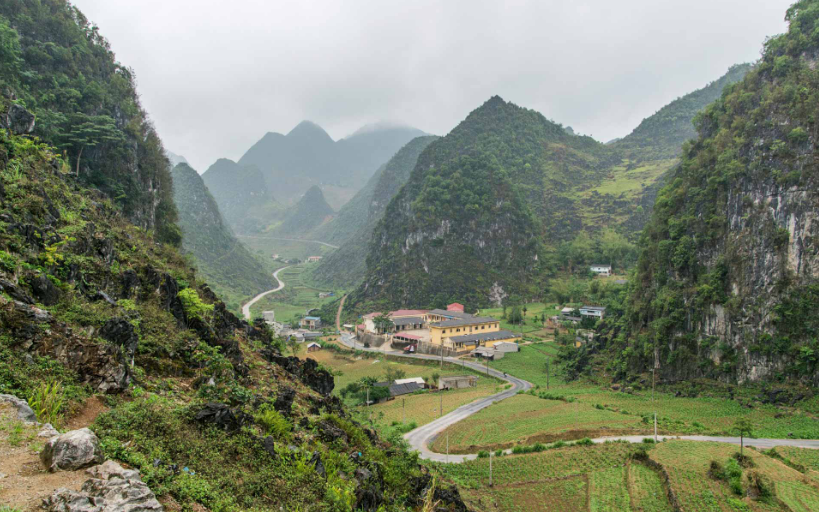
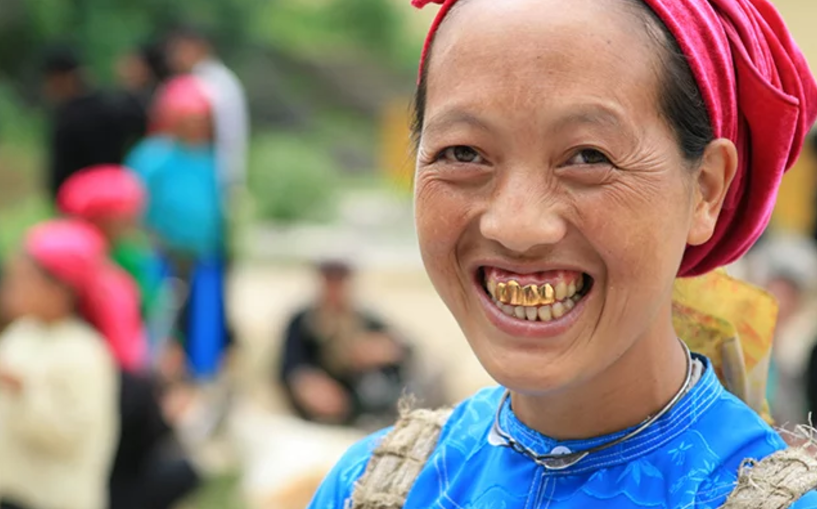
The park spreads over 4 districts of Meo Vac, Dong Van, Yen Minh and Quan Ba with the total area of 2,356 square kilometers. It is home to more than 250,000 people from 17 different ethnic minorities with diverse cultures and traditions. These ethnic minorities live on cultivating rice along the basins of the Nho Que River and corn on the rocky mountain slopes.

  1. How to get there

Ha Giang City is often the starting point for every traveler who wishes to embrace Dong Van Karst Plateau Geopark, as well as other popular highlights of the province such as Quan Ba Twin Mountains, Lung Cu Flagpole, Dong Van, Ma Pi Leng Pass, Meo Vac, Yen Minh and Hoang Su Phi… About 320km from Hanoi, you can reach there by motorbike, local bus or private car for your comfort with 6-7 hours driving. It is recommended to spend one night in Ha Giang City to continue your journey to Dong Van. Following National Highway 4C for more 150km, you will reach Dong Van Rock Plateau.

  1. Best time to visit Dong Van Karst Plateau Geopark
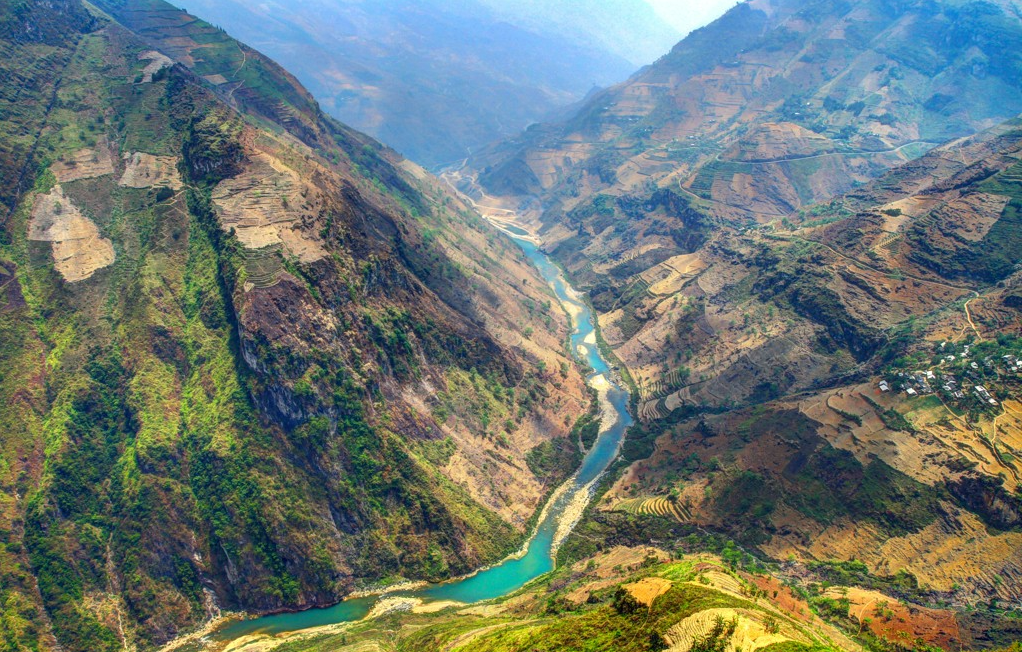
Dong Van Karst Plateau Geopark has a temperate climate which is divided into two seasons: rainy season (May – October) and dry season (November – April). The annual average temperature is 21 – 23ºC. It may get up to 27 – 28ºC in July and August and may drop down to below 0ºC in January. Tourists can visit Dong Van all year round but it is best in blooming season. Buckwheat, a typical flower of the northern mountain area of Vietnam, is blossoming from October to November. You can witness its beauty everywhere, in hills, stepped-rice fields, or in around makeshift local houses. Between January and February is time for blooming peach and plum. The moss-roofed roofs could be added with crimson peach petals and pure white plum blossoms. The scenery brightens up by the colors of the flowers, creating a romantic picture of the mountainous area.

  1. Sightseeing around Dong Van Karst Plateau Geopark

4.1. The mansion of Vuong Family
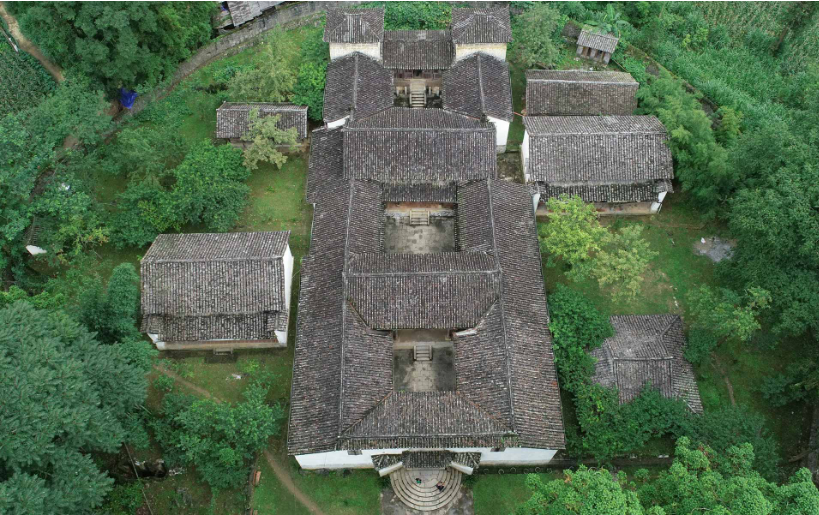
The mansion of Vuong Family is an interesting tourist site, located in Sa Phin Commune, about 14km from the town of Dong Van District. The mansion’s structure is strongly influenced by traditional Chinese architecture with pine woods, terra cotta tiles and Chinese-writing decorations. The two-storeys mansion has 64 different rooms; all are decorated with carvings of dragons, phoenixes, and bats which are symbols of royalty and prosperity. Built from 1919 by the skillful craftsmen from Yunnan (China) and the best of the H’Mong builders, the mansion took 9 years to complete and costed 150,000 silver coins, an equivalent of 150 billion VND today. Vuong Family’s Palace echoes with the history of time past and deserves to be the pride of the H’mong ethnic people.

4.2. Dong Van Ancient Town
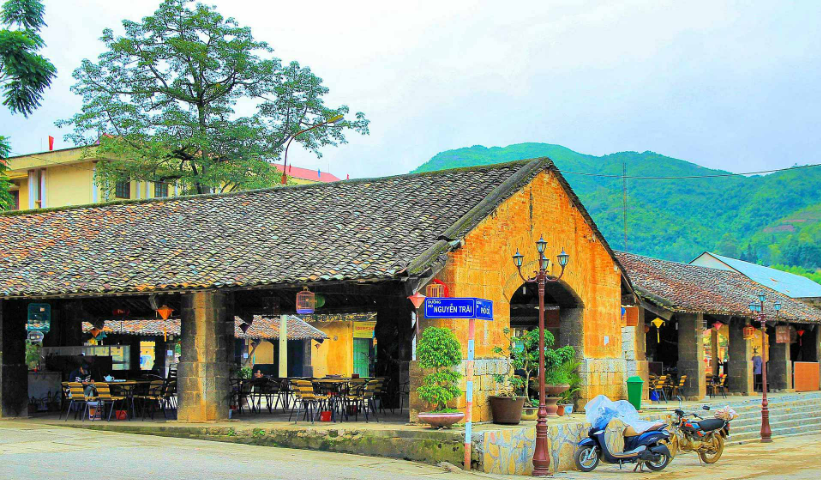
This must be very enjoyable and exciting when wandering in the old town to explore the culture, cuisine and traditions of the local people. Having existed for 100 years old, Dong Van ancient town features with the typical Chinese architecture with yin and yang symbols found in roofs and tiles with stone floors. There is a collection of 40 ancient houses being 100-300 years old. On every full-moon night, the street in ancient town is colorfully lightened with red lanterns of various sizes. It also serves food and has other cultural activities in those days.

4.3. Dong Van Fair Market
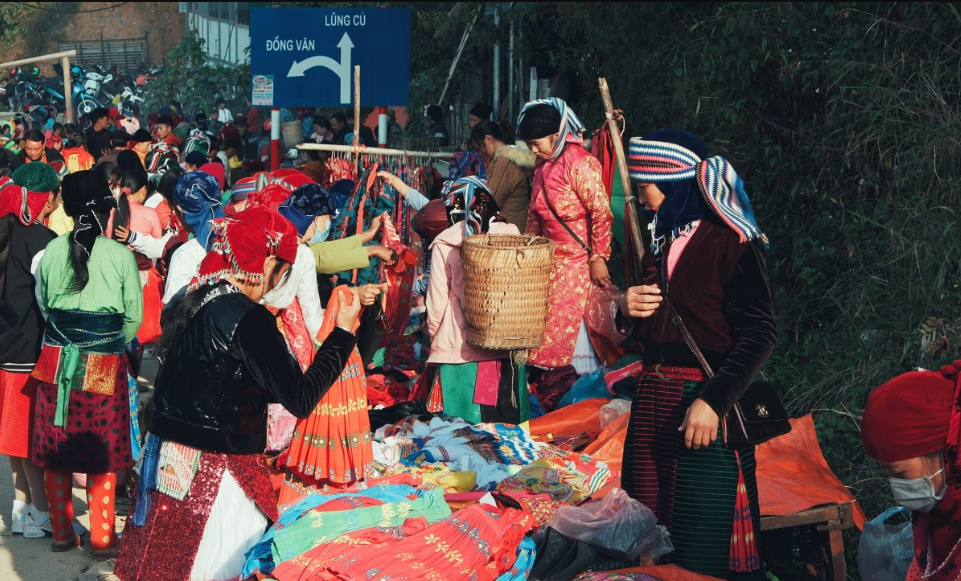
One of the must-do things in Dong Van is to visit the fair market that is held on every Sunday. Occupied at Dong Van ancient town, the market is a delightful highlight which turns the highland town vibrant and exciting from 5 AM to 10 AM. The ethnic people, including H’mong, Tay, Nung and Hoa ethnic minorities come here to attend the weekly market. This is not only place for locals buy and sell goods, but also a chance to socialize and meet each other. It is an entirely local affair full of color and friendly atmosphere. You will be definitely surprised with many strange things when visiting to one of many markets in Ha Giang.

4.4. Lung Cu Flag Tower
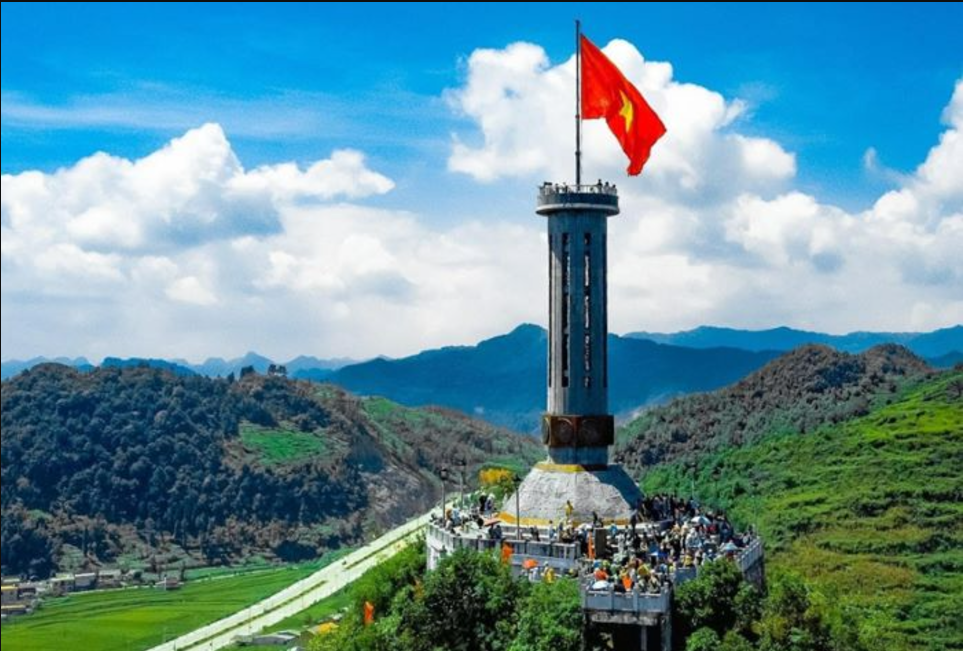
Around 25km north of Dong Van and just a few kilometers from the Chinese border, Lung Cu is a massive flag tower erected in 2010 to mark the northernmost point of Vietnam. It is modeled on the flag tower of Hanoi. The flag tower shows the affirmation of position and sovereignty of Vietnam as well as honor the patriotism and bravery of the people and soldiers in the border area. The flag on the tower has an area of 54 square meters, representing the unity of 54 ethnic groups in Vietnam. On the top of the flag tower, you can admire the majestic panoramic view of Dong Van District.

4.5. Sung La Valley
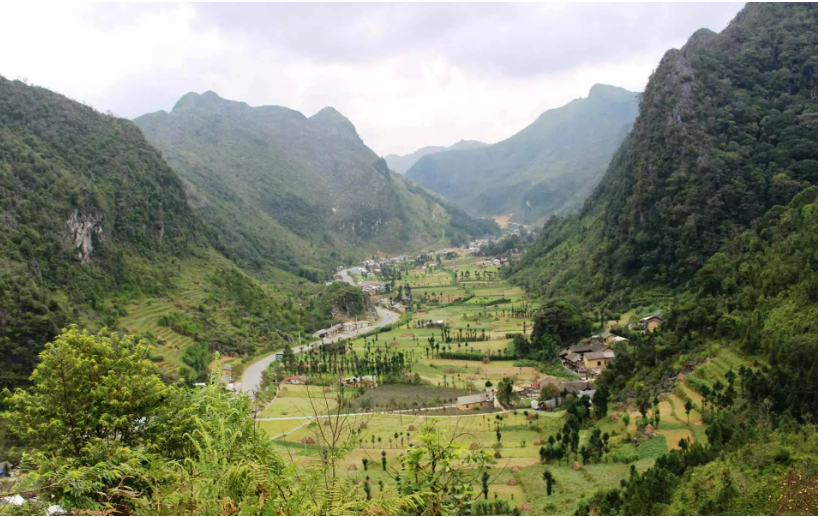
Sung La Valley, about 20km from Dong Van District, is famous for blooming flower gardens and attract a lot of tourists with the rustic beauty, the quiet small log home, the green corn fields and the lovely buckwheat flowers. Spring is considered as the most beautiful season of Sung La Valley when many flowers blossom making the whole natural setting of the normal karst plateau landscape become brilliantly colorful. It is a great place for photos.
There is a small village, named Lung Cam, in the center of Sung La Valley with 61 households living in 100-years-old wall houses. Here tourists have chance to experience local daily life, cuisine and traditional values. This place was also chosen as the backdrop for the famous 2006 movie “Pao’s Story”.

4.6. Ma Pi Leng Pass & Nho Que River
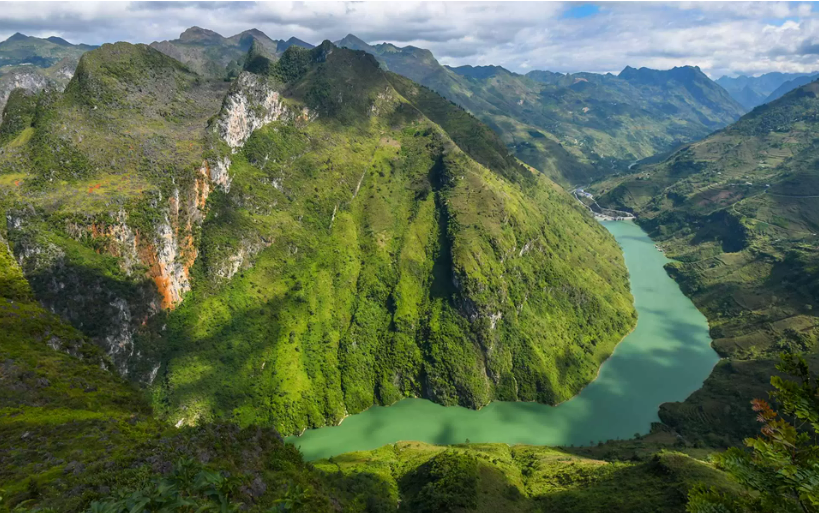
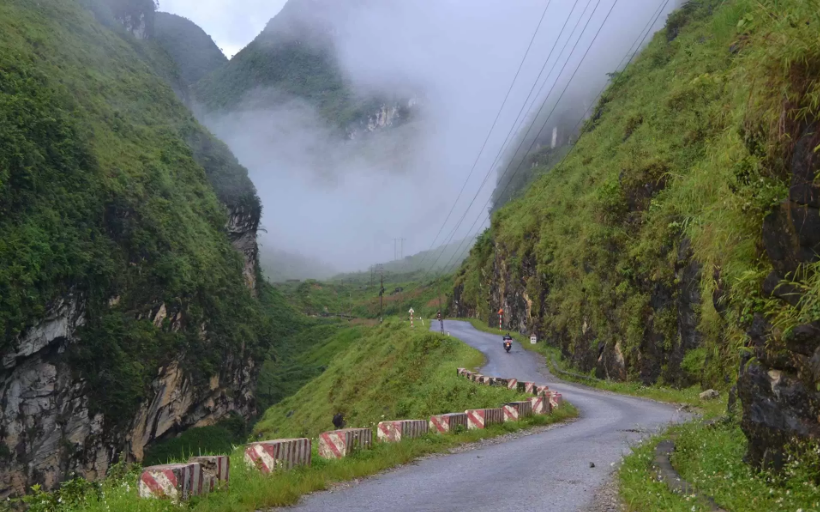
Located within Dong Van Karst Plateau Geopark, Ma Pi Leng is considered as one of 4 most beautiful yet dangerous passes in Vietnam. It is about 20km long with the altitude of approximately 1500m above the sea level. The name “Ma Pi Leng” in H’mong language means “the bridge of a horse’s nose” that describes its shape. Conquering Ma Pi Leng Pass is unmissable experience in Ha Giang, which offers you astonishing landscapes of limestone mountains, green forest, blue sky, especially, Nho Que River, like a turquoise blue soft silk ribbon, at the foot of Ma Pi Leng Pass. All creates a romantic picturesque scenery. Tourists can also take a boat trip or go kayaking on Nho Que River to enjoy the scenery around.

4.7. Khau Vai Love Market – Meo Vac
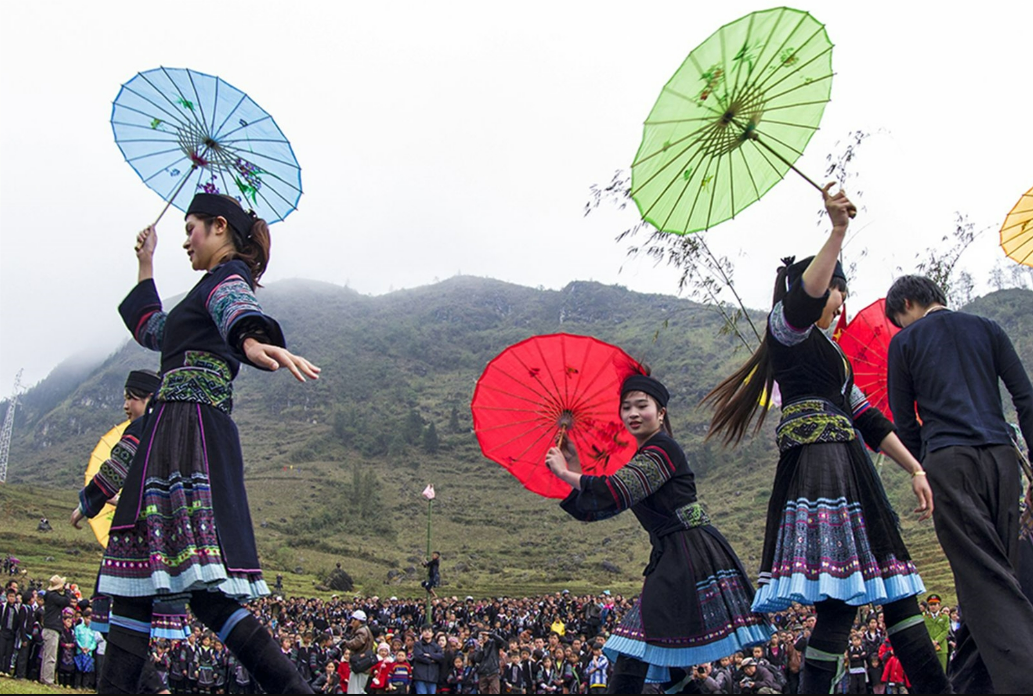
Khau Vai Love Market is one of the most famous and unique markets in Ha Giang. It is organized once a year, on 26th and 27th of the third lunar month. Unlike other love markets, Khau Vai Market is a meeting place of ex-lovers. It attracts many locals from various hill tribes like Nung, Tay, San Chi, Lo Lo, Dzao and Giay. On that day, they put on their best traditional costumes and go to the market where they are free to meet their past partners to share the emotions. Husbands and wives arrive at the market together before they both look for their ex-lovers among the crowd. This meeting at the market is just a temporary moment and does not influence their daily lives and their relationship.
Located at Khau Vai Commune, Meo Vac District, the market is about 170km from Ha Giang City. Here tourists will have a great chance to enjoy some traditional games and exciting activities, explore Meo Vac night market and try some local specialties. Besides, ethnic costumes, jewelry and ethnic musical instruments are on display at the market and you can buy some as souvenirs.

 Apply For Vietnam Visaapply Vietnam visaApply visa vietnamBook E-visa Vietnambook visa vietnamCheap Vietnam VisaE-visa Vietnamevisa VietnamEvisa Vietnam onlineexpedited e-visaexpedited E-visa to Vietnamexpedited Vietnam E-visaGet a Vietnam visaGet Vietnam Visaget vietnam visa onlineget visa to vietnamget visa Vietnammultiple entry visamy vietnam visaOrder Vietnam E-Visaquick vietnam evisarush vietnam visaUrgent Vietnam VisaVietnamVietnam E-visaVietnam EvisaVietnam touristVietnam travelVietnam vacationVietnam VisaVietnam visa costVietnam Visa ExemptionVietnam Visa for India citizensVietnam Visa For IndiansVietnam Visa for South Africa citizensVietnam Visa In IndiaVietnam visa in South AfricaVIetnam VIsa on arrivalVietnam VIsa onlineVietnam visa provisa for vietnam Visa On Arrivalvisa onlineVisa to VietnamVisa Vietnam
Posted on

Most Beautiful French Colonial Architecture Sites in Ho Chi Minh

Although it is the most modern city in Vietnam, Saigon – Ho Chi Minh City still retains the ancient, quiet and surprisingly attractive. After more than 300 years of establishment and development, previous Saigon – present Ho Chi Minh City has become a busy commercial center. Through many ups and downs of history, the French immense influence after their colonization in Vietnam from 1884 to 1954 still obviously remains. You can easily see many existing ancient French architectural sites as a gentle silence in modern life of Ho Chi Minh City nowadays. These works have existed for less or over 100 years, becoming famous tourist attractions, appealing tourists to come to see and learn the history of development of the place once known as “Pearl of the Far East”. Here, Vietnam Travel introduces you the Top 12 French Colonial Architecture Sites in Ho Chi Minh City that you should visit whenever you plan a holiday to this must-travel city of the country.

>>> Apply Visa to Vietnam <<<

>>> Order Fast Track Service <<<

  1. Notre Dame Cathedral

Add: No. 1 Cong Xa Paris Street, District 1, HCM City

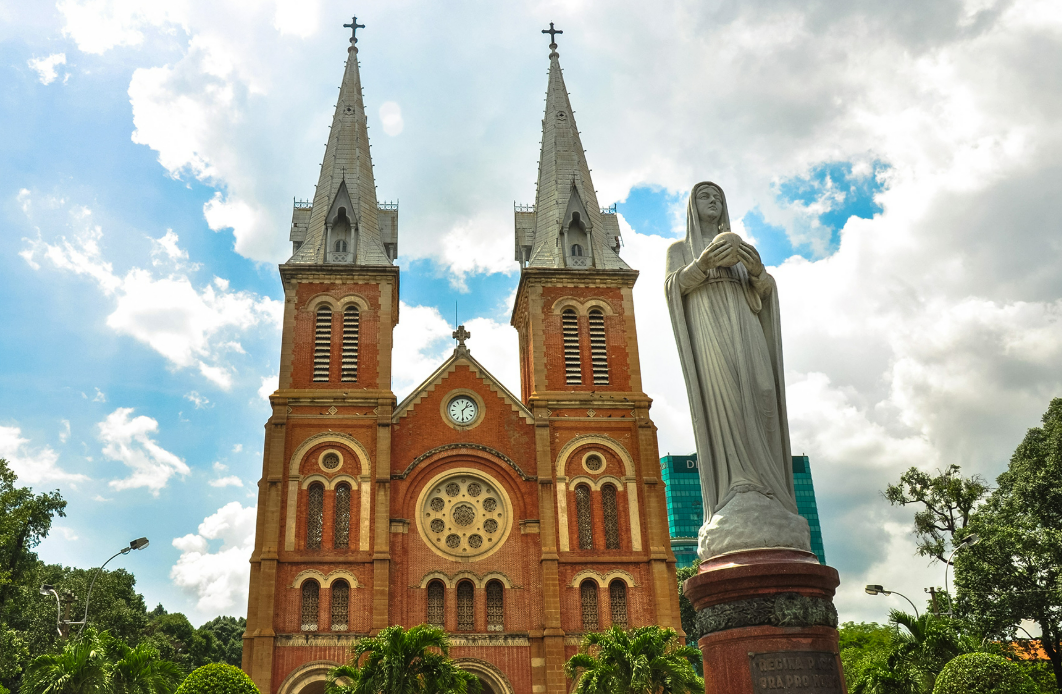
Built between 1863 and 1880 by 100% French imported materials, the Notre Dame Cathedral is a superb example of French design which remains an important symbol of the city. Also known as Nha Tho Duc Ba in Vietnamese, it’s the largest church ever built in any of the French colonies.

Designed by architect J. Bourad, the style of Notre Dame Cathedral could be seen with a mix of Gothic and neo-Roman. The church’s brick-like appearance came from the structure which was made with locally quarried granite and then covered with red tiles from Marseilles.

Its two bell towers were 57.6 m high each and had 6 large copper bells. At the top of the tower, there is a crucifix with a height of 3.50m while its overall height from the ground to the top is 60.50m.

Currently, the cathedral was under renovation, and nobody was allowed inside. Only the front plaza was still accessible, where one can find a large statue of Mary added in the 1959.

  1. Central Post Office

Add: No. 2 Cong Xa Paris Street, District 1, HCM City

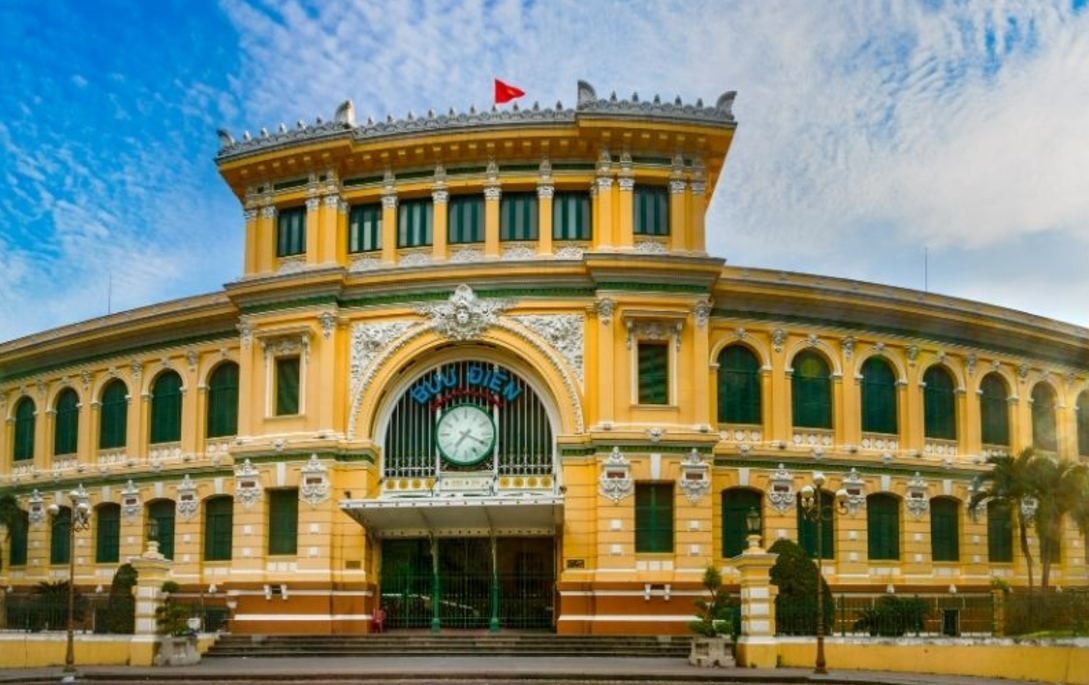
Constructed between 1886 and 1891, the Central Post Office is a grand example of gothic and renaissance influenced architecture. It can be found adjacent to the Notre Dame Cathedral. Sometimes it is credited as the work of Alexandre Gustave Eiffel who are best-known for the world famous Eiffel Tower in Paris, however, it was actually designed by Alfred Foulhoux.

In terms of architecture, this bright yellow building with white trim has arched windows, wooden shutters, looping arches and marble floors reminiscent of the 19th century architectural style. A large clock prominently features at the entrance. Once walking inside, you’ll get to see domed ceilings and metal arches with two large hand painted maps showing old Saigon and the former south-eastern area of Indochina in the early 1900s.

Today it is still a fully functioning post office with helpful English speaking staff, a half of dozen international phone boxes and a range of quirky & reasonably priced souvenirs.

  1. Saigon Opera House (Municipal Theatre)

Add: No. 7 Cong Truong Lam Son Street, District 1, HCM City

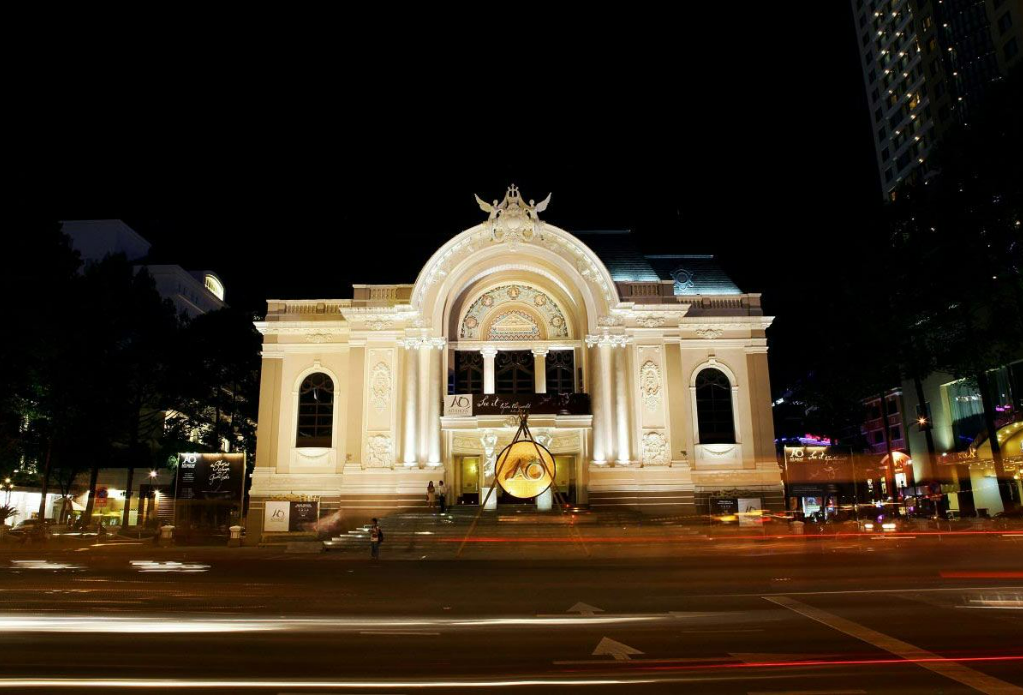
Designed by French architect Eugene Ferret, the Municipal Theatre, also referred to locally as the Opera House, is perhaps modern day Saigon’s most ornate buildings. It was built in 1898, and become a counterpart to Hanoi Opera House.

Its feature has a tree-lined boulevard leading up to the entrance reminiscent of European design. There are two seating levels inside that are capable of housing around 800 guests. It was firstly as an entertainment source for French colonists and the middle-class.

Today, Saigon Opera House continues to host performances, most popularly the AO Show that blends Vietnamese elements with the Cirque du Soleil, and only open to the public during such events.

  1. People’s Committee Building (Saigon City Hall)

Add: 86 Le Thanh Tong Street, District 1, HCM City

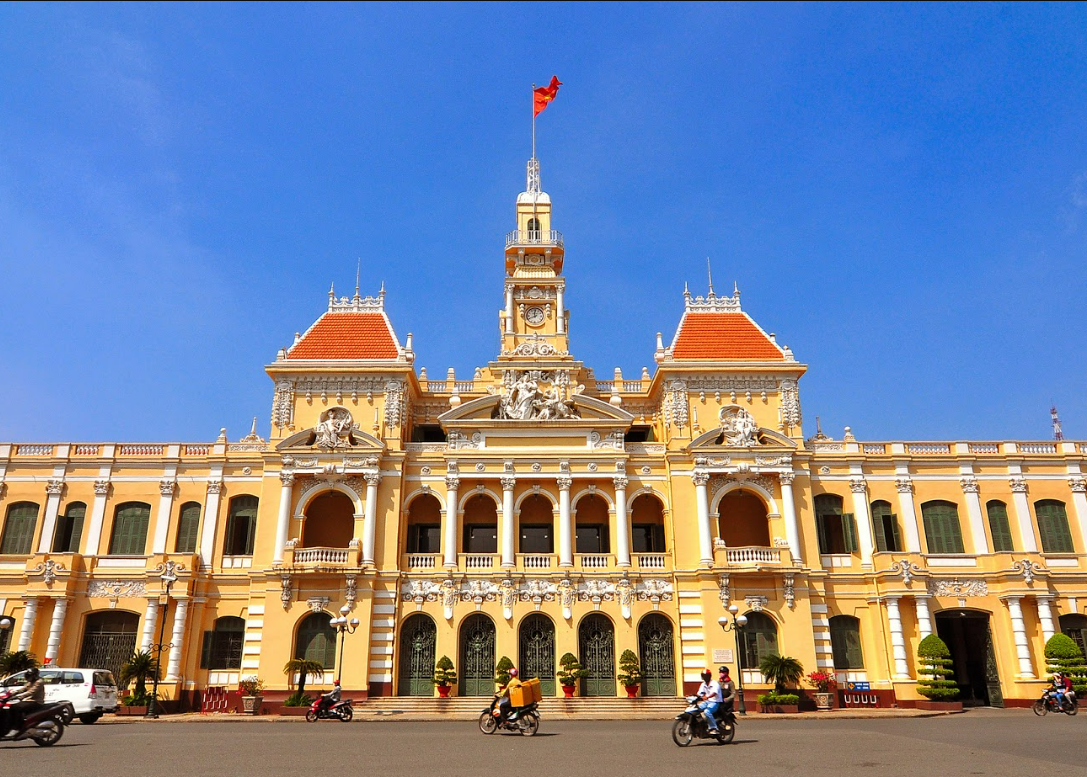
Nestled nearby the newly renovated Nguyen Hue Boulevard, the People’s Committee building of Ho Chi Minh City, also referred to as Saigon City Hall, is a true beauty. Built between 1897- 1908 with the design by famous French architect Femand Gardes, the building was modelled after the City Hall building in Paris. It was formerly Hotel de Ville de Saïgon.

The building is symmetric, with the bell tower as the base line and the national flag on its top The left and right side of building have a carving statue of women holding swords while the middle one has a statue of a woman and child. On the walls, the bas-reliefs bring characteristic of French architecture. In front of the building’s small yard, there is a statue of the greater Ho Chi Minh that was constructed in 2015 to commemorate his 125th birthday. When the night falls, this entire building is lit up with LED lights, making it quite a spectacle.

Today, this building is still in use by the officials so remains guarded and off limits for tourists. However, unlike other government buildings in Vietnam, photos of the outside are still allowed.

  1. Reunification Palace

Add: 135 Nam Ki Khoi Nghia Street, District 1, HCM City

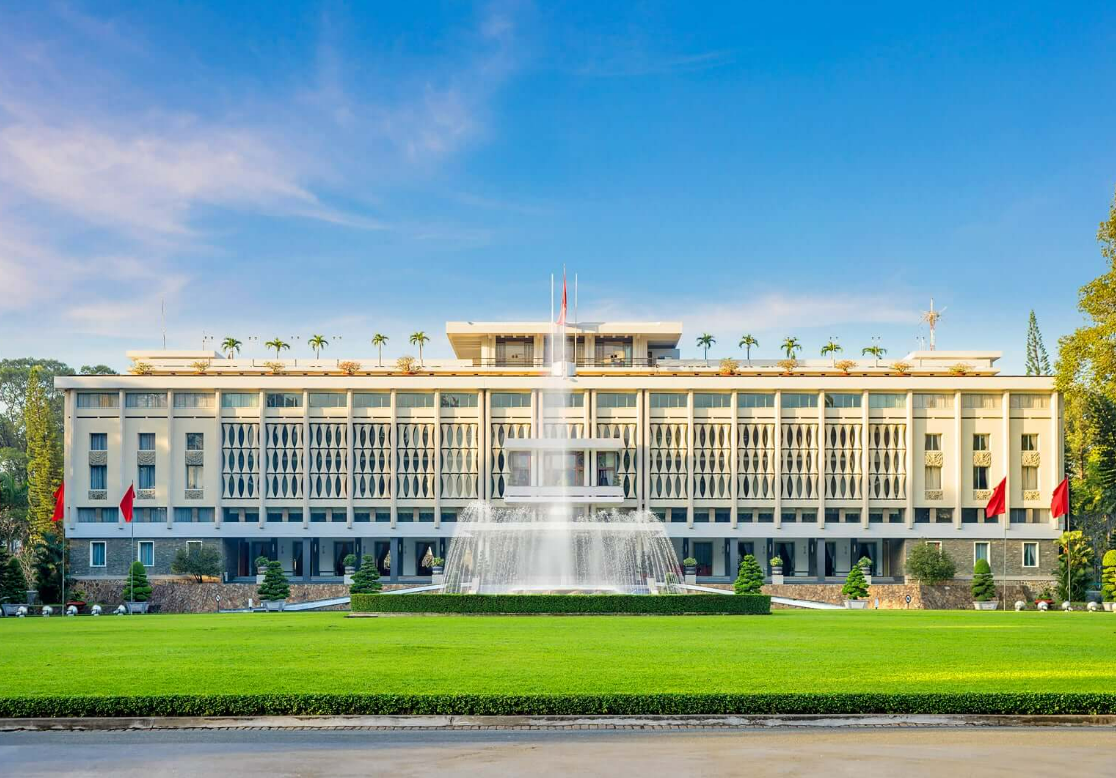
Reunification Palace, also known as Independence Palace, is a well-preserved museum which offers a glimpse into the lifestyle of South Vietnam’s bureaucratic elite, while also providing plenty of historical info about the war.

According to the authority of Ho Chi Minh City and historians, the name Reunification is for the main meeting-hall inside Independence Palace which is its official name. For years, people have made mistakes between these names.

The palace was firstly built in 1868 by architect Achille-Antoine Hermitte with an area of 12 hectares, including a palace with an 80-meter-wide façade, a guest-chamber capable of accommodating 800 people, and spacious gardens covered by green trees and a lawn. Most of the building materials were imported from France. The construction was only completed by 1871 and named Norodom Palace after the king Norodom of Cambodia (1834–1904).

In 1954, Norodom Palace was handed over to Ngo Dinh Diem – the prime minister of the State of Vietnam. After defeated former Emperor Bao Dai in 1955, Diem declared himself president of the newly proclaimed Republic of Vietnam and renamed the building the Independence Palace.

Being bombed by two rebelled pilots of Diem’s Republic of Vietnam Air Force, the entire left wing of the Palace was destroyed and almost impossible to restore. Therefore, the new Palace was constructed and started in 1962 according to a design by Vietnamese architect – Ngo Viet Thu, but Diem could not stay for a single day before his demise in 1963. Nguyen Van Thieu – 2nd president became the new owner of the Palace for following 12 years, until 30 Apr 1975 when two tanks crashed into the main gate and the exit of the Palace, forcing Nguyen Van Thieu and all members of his Cabinet to surrender. This moment went down in history as one of the greatest and most memorable days of Vietnam, putting a full stop to the colonization of the Americans.

Today, it’s a well-preserved museum which offers a glimpse into the lifestyle of South Vietnam’s bureaucratic elite, while also providing plenty of historical info about the war.

  1. Hotel Continental Saigon

Add: Corner of The Saigon Opera House, Cong Truong Lam Son Street &, Hai Ba Trung Street, District 1, Ho Chi Minh City.

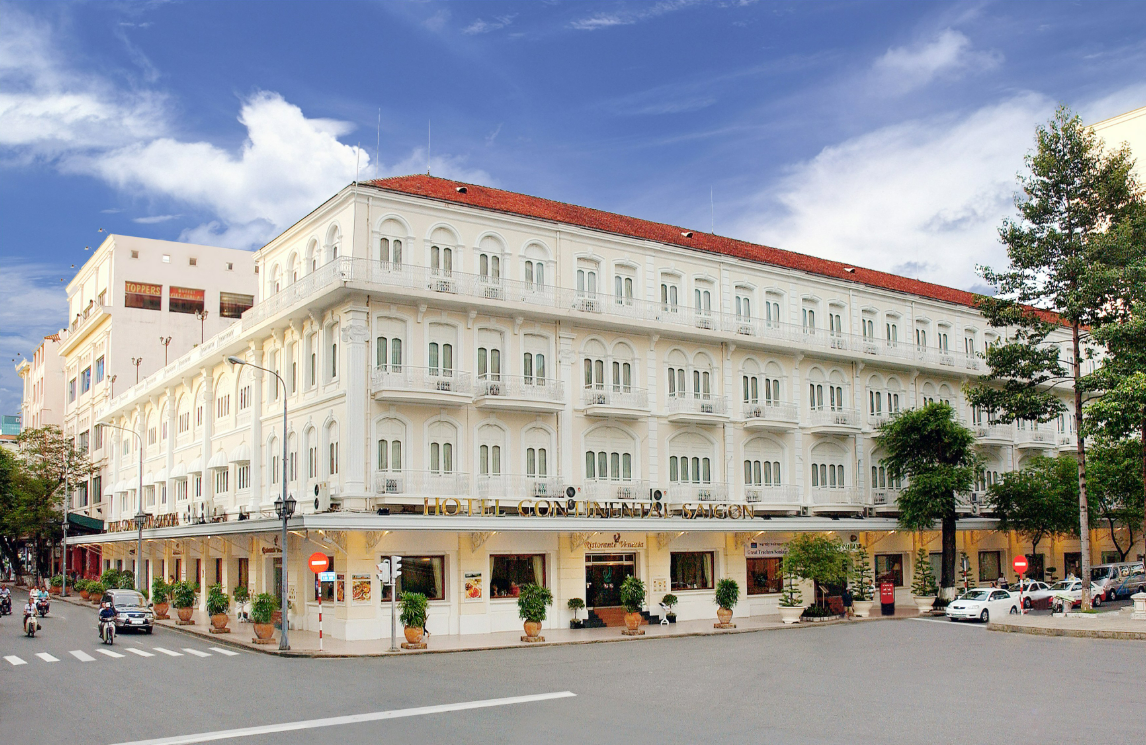
Completed in 1886, the Hotel Continental Saigon is probably the most splendid of the hotels left by the French. During French – Indochina war, a number of celebrities and important writers regularly met here. One of them was Graham Greene, author of the novel “The Quiet American” and the hotel was prominently featured in this book. Located next to the Municipal Theatre, the hotel retains its original shape and charm and becomes the oldest one in the city.

  1. Ho Chi Minh City Museum of Fine Arts

Add: 97A Pho Duc Chinh Street, District 1, Ho Chi Minh City

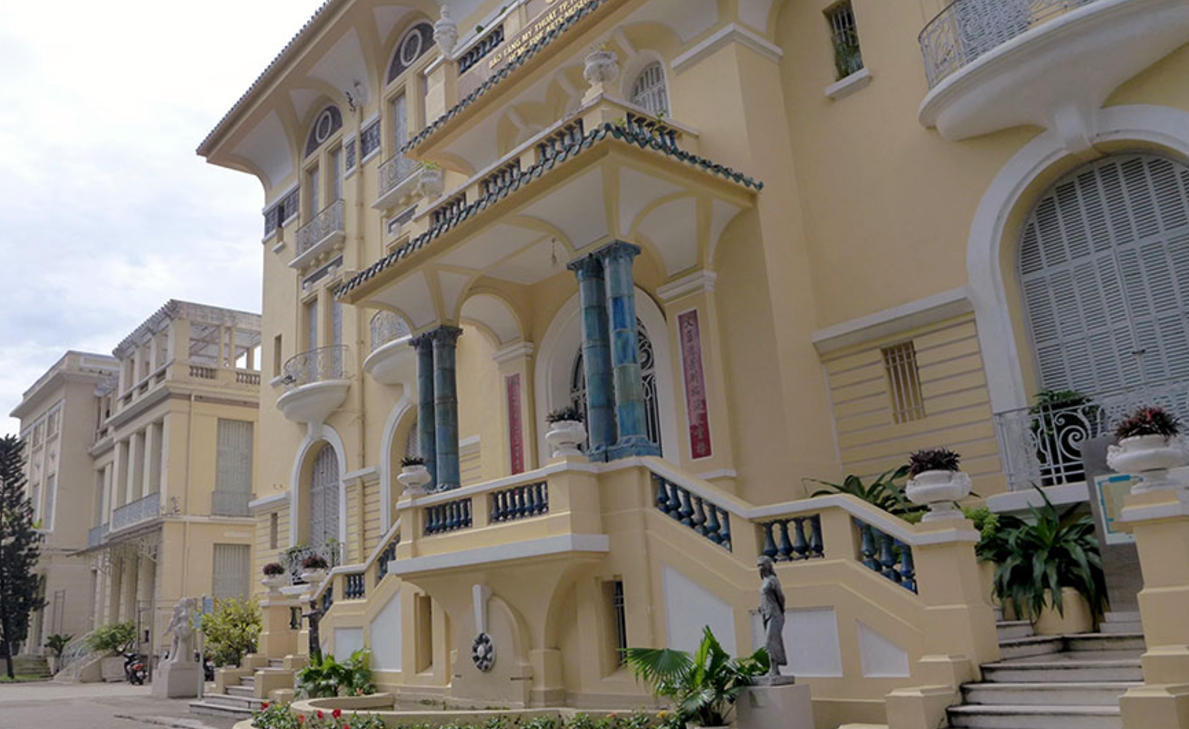
Ho Chi Minh City Museum of Fine Arts is one of the largest museums in Ho Chi Minh City.

The construction was built in 1929 and completed 5 years later in 1934. It was designed by Mr. Rivera, a French architect, featuring a harmonious combination of Asian and European architecture. At first, it was a villa for the Hua (Hui Bon Hoa) family – the wealthiest traders in South Vietnam by that time, and the museum moved there in 1987.

The owners of this construction changed through different periods of time, however, the architectural work still remains its antique appearance and embellishes the general development of Ho Chi Minh City.

  1. Ben Thanh Market

Add: at the intersection of Le Loi, Ham Nghi, Tan Hung and Le Lai Streets, District 1, HCM City

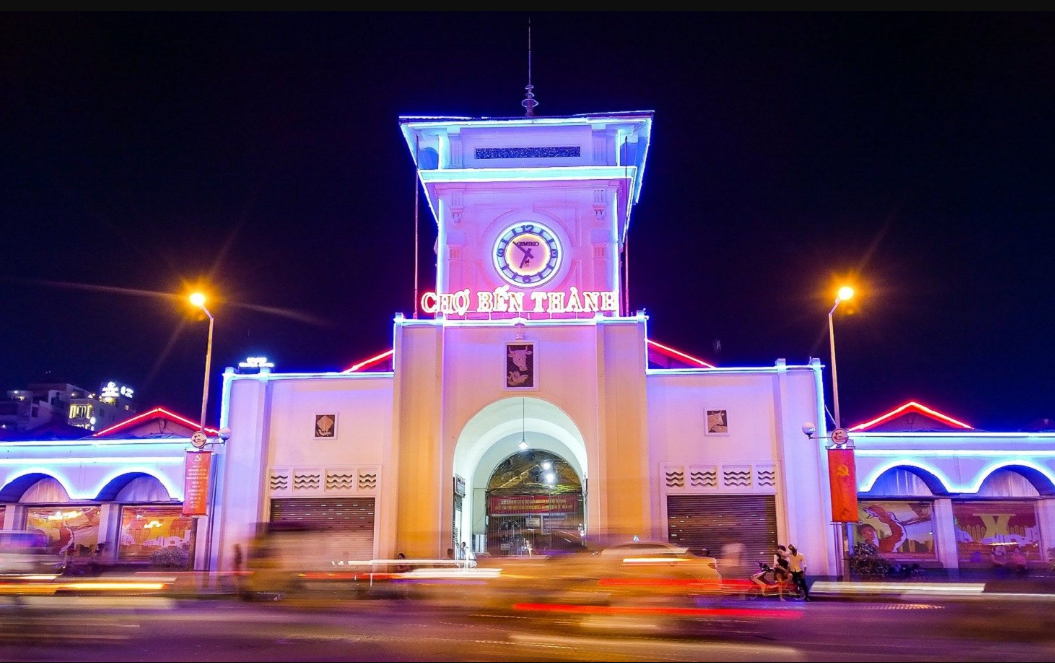
Ben Thanh Market is definitely one of the city’s icons. The market has a history dating back to the early 17th century, with its original as a meeting place for small businesses selling goods on the street near the Ben Thanh River (now it is Saigon River). In 1870, the French colonial government officially named the area Les Halles Centrales (or Central Market). Later in 1912, the market was moved into a new building and renamed as today Ben Thanh Market.

Designed by architects Brossard and Mopin, this Art Deco-style market is surmounted by a vast dome of 28m in diameter, and the main entrance stands out thanks to its large belfry. Its four main doors are giving all-side access to its 10,000 visitors daily. With a space of over 13,000 m², the market houses some 1,500 sellers of textiles, shoes, crafts, food and much more.

Ben Thanh Market is not only interesting in day time, but at night, it can be described as the miniature Saigon, where tourists can fully experience the local life and food culture.

From 6.00pm, two streets at the West and the East gates of Ben Thanh Market are closed for transportation. The night vendors set up their tents and display selling items in the most attractive way to get as much attention from tourists as possible. It is worth for a must-visit.

  1. Hotel Majestic Saigon

Add: 1 Dong Khoi Street, District 1, HCM City

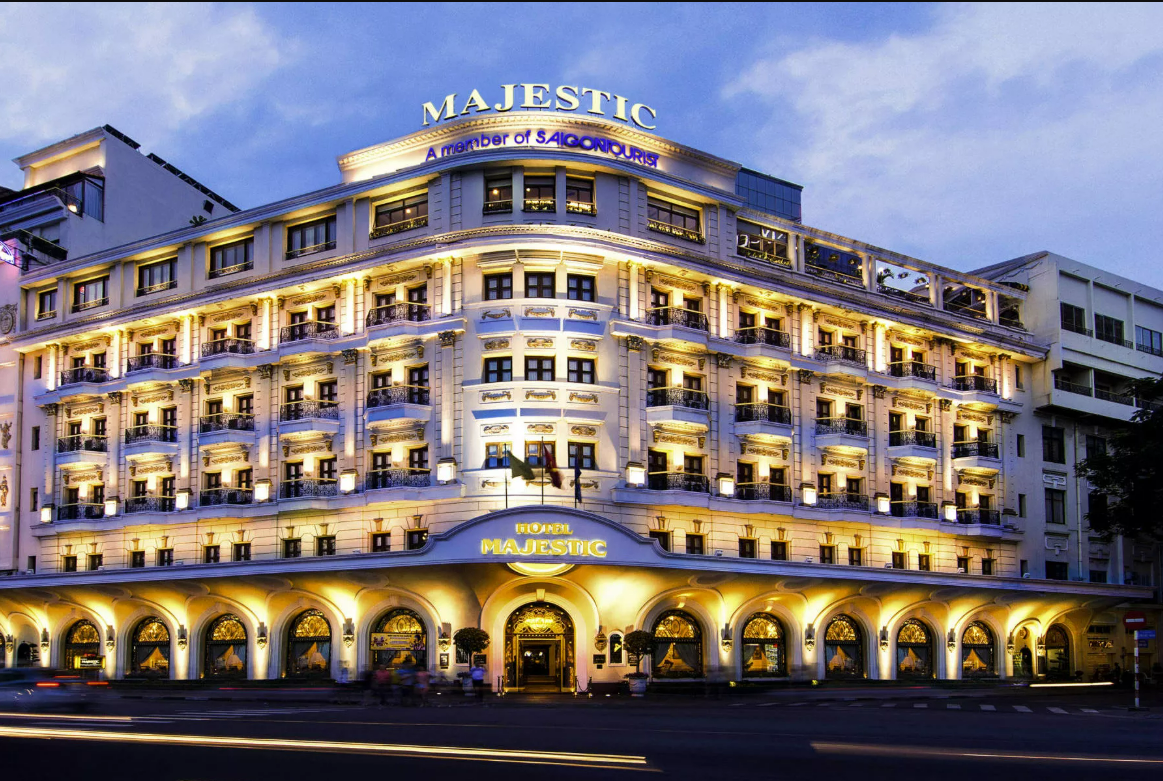
Another building by Hui Bon Hoa, the Chinese-born businessman and also designed by the same French architect – Mr. Rivera, are the Hotel Majestic Saigon overlooking the banks of the Saigon River. Built in 1925, undergoing various extensions, the hotel turned into six-storey 5 star masterpiece and as one of the oldest hotels in the city. It also was in one of the river view rooms that Graham Greene wrote his classic novel “The Quiet American”.

The most unique feature of the building is the large arched roof that comes out from the hotel and over the sidewalk. Its gold adornments and individual balconies can be thought as a classic European hotel. Its large arched windows on the ground floor allow a good view (both inside and outside) of the grand lobby and dining area. The roof top bar here is a wonderful flashback to days gone by. Certainly, you can book a room to stay at Hotel Majestic and learn more about this historic French Architecture site!

  1. Dragon Wharf – Ho Chi Minh Museum

Add: 1 Nguyen Tat Thanh Street, District 4, HCM City

Built between 1862 and 1863 on the Saigon River, the Dragon Wharf was the first commercial port of the city meeting the demand of transportation between the colonized Vietnam and the world.

Its unique architecture combines Vietnamese and French style which is well reflected by the design of a French-style main building. It features 2 Vietnamese dragon-shaped statues on its roof. This detail can be often seen in the architecture of Vietnam’s traditional temples and pagodas, and the wharf name was said to come from this decoration.

From here, on 5 June 1911, Ho Chi Minh (at the time named Nguyen Tat Thanh) at his age of 21 departed on the French ship – Admiral Latouche Treville for a 30-year journey around the world.
For this reason, the place was reconverted in 1979 into a museum housing a rich collection of 3,000 pictures and 700 artifacts relating to President Ho Chi Minh, including his personal belongings and journals as well as many scripts and publications documenting his wondrous life.

  1. Tan Dinh Church

Add: 289 Hai Ba Trung Street, District 3, HCM City

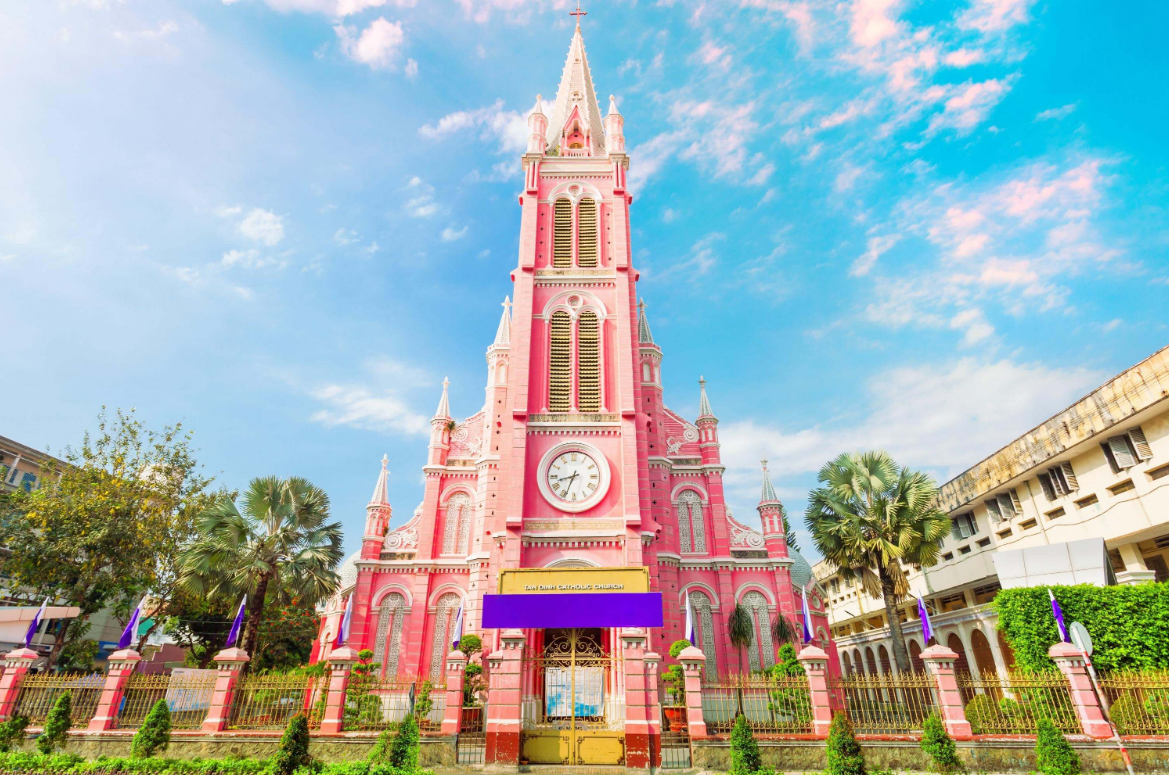
Nestled next to the Tan Dinh market in District 3, Tan Dinh Church is the 2nd largest church in the city, after Notre Dame Cathedral and belongs to the Roman Catholic Archdiocese of Ho Chi Minh City. It is known for the mix of Gothic and Renaissance elements. Over 60m high, the church has two bell towers and three beautifully carved Italian marble altars donated in 1929.

In 1976, it underwent the renovations on its 100th anniversary. Its eye-catching pink colour becomes prominent point to attract visitors to come and visit.

  1. Phuong Nam Mansion

Add: 110-112 Vo Van Tan Street, District 3, Ho Chi Minh City

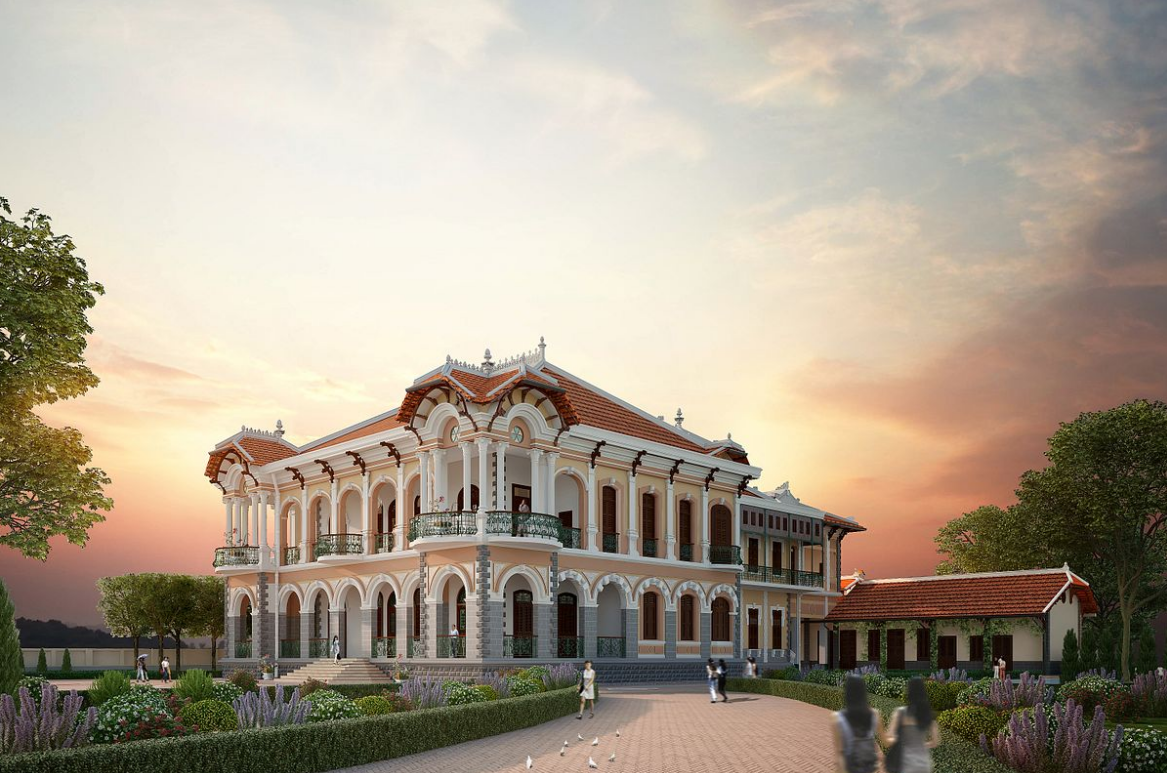
Also located in District 3, Phuong Nam Mansion, a site of 2,800m², is less known of a privately owned colonial building (by Minerva JSC. now). The mansion has often been described as one of Saigon’s most magnificent heritage buildings. Facing 3 of the most crowded streets in the downtown area, Phuong Nam is expensive not only for the luxurious French style at the valued price of nearly US$ 35million, but also its golden location.

Built between 1924-1927 by a wealthy Vietnamese gem dealer, this residence possesses a French style with a touch of local Eastern flavor outside while the interior is furnished with luxurious antiques. The house consists of two floors with dozens of large windows to enjoy the view of the city center.

Visitors can look around the outside of Phuong Nam for a small charge. For the inside, it is still a bit of a mystery because entry is not allowed.

Hopefully, this article will be helpful for those who love French colonial architecture style in Ho Chi Minh City.

 Apply For Vietnam Visaapply Vietnam visaApply visa vietnamBook E-visa Vietnambook visa vietnamCheap Vietnam VisaE-visa Vietnamevisa VietnamEvisa Vietnam onlineexpedited e-visaexpedited E-visa to Vietnamexpedited Vietnam E-visaGet a Vietnam visaGet Vietnam Visaget vietnam visa onlineget visa to vietnamget visa Vietnammultiple entry visamy vietnam visaOrder Vietnam E-Visaquick vietnam evisarush vietnam visaUrgent Vietnam VisaVietnamVietnam E-visaVietnam EvisaVietnam touristVietnam travelVietnam vacationVietnam VisaVietnam visa costVietnam Visa ExemptionVietnam Visa for India citizensVietnam Visa For IndiansVietnam Visa for South Africa citizensVietnam Visa In IndiaVietnam visa in South AfricaVIetnam VIsa on arrivalVietnam VIsa onlineVietnam visa provisa for vietnam Visa On Arrivalvisa onlineVisa to VietnamVisa Vietnam
Posted on

Time Out ranks Vietnam as one of the Top 5 Most Memorable Christmas Destinations in Asia.

As December approaches and the holiday season draws near, it’s the perfect time to begin planning your Christmas escape. Booking your flights, accommodations, and unique activities in advance will help you maximize both your time and your budget.

Time Out highlights Asia as a top destination for travelers seeking an unforgettable Christmas abroad. This diverse region offers a harmonious mix of nature, vibrant culture, rich history, delicious cuisine, and a wide range of outdoor activities, making it an ideal choice for holiday adventures.

Ranked second on the list, Vietnam stands out for its breathtaking landscapes, fascinating history, and vibrant culture. With its exotic charm and natural beauty, the country promises endless memorable experiences. From the lively streets of Hanoi to the serene waters of Ha Long Bay, Vietnam is a treasure trove of stunning sights and adventures.

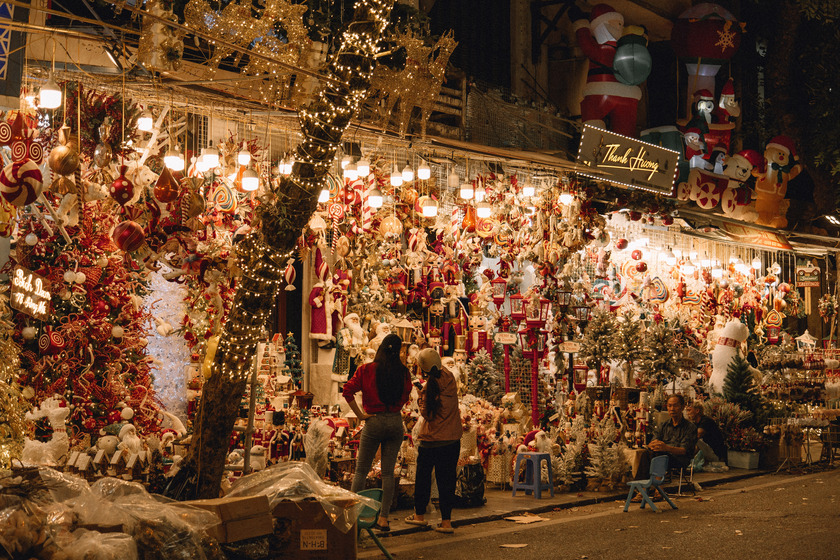
   Street vendors in Vietnam begin selling a variety of Christmas items starting in mid-October.

To fully experience the festive spirit of Christmas in Vietnam, immerse yourself in the vibrant atmospheres of its two largest cities: Hanoi and Ho Chi Minh City. In Hanoi, visit the Old Quarter on Christmas Eve, where the streets come alive with stunning decorations, the sound of live music fills the air, and locals warmly celebrate the holiday. The sense of community and joy is unmistakable, making it a memorable experience for any traveler.

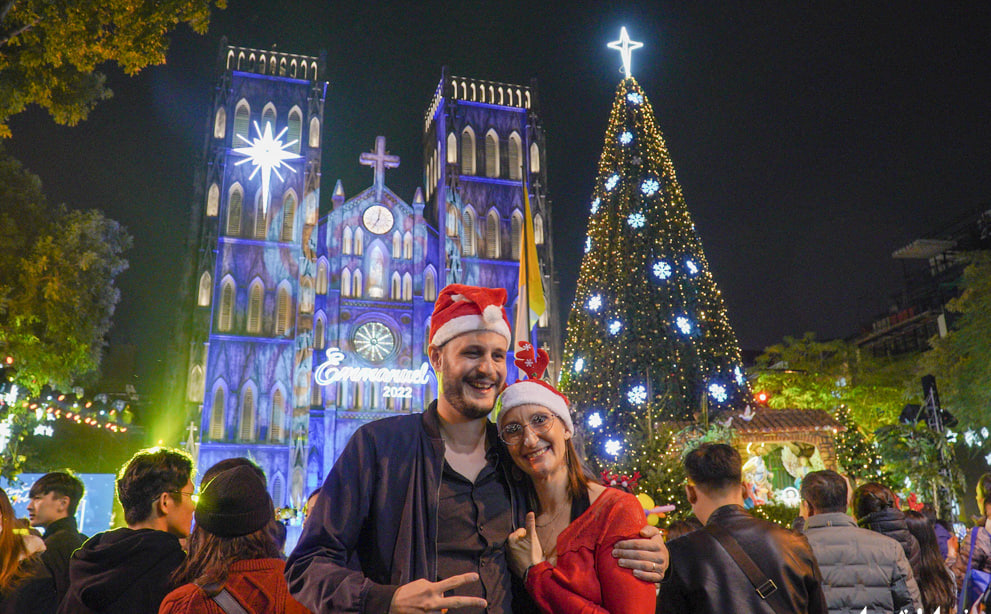
            Foreign visitors celebrate Christmas Eve at St. Joseph’s Cathedral in Hanoi.

If you’re craving a sunny getaway, Vietnam’s tropical climate offers the perfect escape during the winter months. The southern beaches are ideal for soaking up the sun, with Phu Quoc Island being a top destination for those seeking a blissful beach retreat. Immerse yourself in the soft sands, crystal-clear waters, and lively marine life, while enjoying a relaxing vacation filled with beachside fun, fresh seafood, and breathtaking sunset views—everything you need to truly unwind.

                                 Christmas Activities on Phu Quoc Island, Vietnam

Vietnam, with its perfect mix of adventure, culture, and stunning natural beauty, provides a captivating getaway that will stay with you long after you leave. Along with Vietnam, the list also includes Laos, Thailand, Cambodia, and Myanmar. Plan your trip to Vietnam now and experience a memorable Christmas Eve by securing your Vietnam visa at https://vietnamvisapro.net/. As a trusted and reliable visa service, we are here to help turn your dream vacation into reality from the very first step.

Posted on

A Guide to the Hoi An Lantern Festival: When and How to Experience It

Hoi An, an ancient town in Quang Nam province, is renowned for its traditional handicrafts, with lantern making being the most prominent. As you stroll through the town, you’ll find vibrant lanterns adorning every street, creating a breathtaking and unforgettable atmosphere. For those fascinated by lanterns and eager to learn more about this cherished tradition, the Hoi An Lantern Festival—held monthly on the 14th day of the lunar calendar—offers the perfect opportunity to immerse yourself in the town’s unique cultural heritage.

I. History of Hoi An Festival

As you may know, the full moon holds special significance in Vietnamese traditions. In the 16th and 17th centuries, Hoi An was a bustling trade port, attracting merchants from all over the world. Among them were Japanese traders, who often hung colorful lanterns in front of their homes. Over time, the local people adopted this practice, creating their own lanterns to hang as a symbol of good luck.

This tradition has endured through the centuries. In 1998, local authorities in Hoi An formalized the practice by organizing monthly lantern festivals during the full moon. Today, the festival has become a popular event, drawing both Vietnamese and international tourists to the town to celebrate.

II. Highlights of Hoi An Lantern Festival

As the name suggests, lanterns take center stage during the festival. Colorful lanterns, each with a candle inside, are placed on the river as a way of praying for good health, peace, and fortune. During this time, the city minimizes electricity usage, allowing the lanterns to light up the ancient town of Hoi An, creating a stunning and serene atmosphere unlike anywhere else in Vietnam.

With vehicles and bicycles banned from the area, visitors can stroll freely through the streets, fully immersed in the festive spirit. Along the riverbanks, you’ll have the chance to enjoy traditional performances, including bamboo flute music, fiddles, poetry readings, and even participate in the local game of Bai Choi.

The river is also lined with food stalls, offering a perfect opportunity to sample delicious local dishes and try tasty mooncakes. For those interested in local religious practices, visiting the shrines is a chance to see locals making offerings of food, flowers, and candles to the gods.

III. What to See and Do at Hoi An Lantern Festival?

1. Dropping Lanterns from a Boat

Releasing lanterns from the shore is a popular activity among tourists, but the experience is even more magical when done from a boat. Simply head to Bach Dang Wharf, where you’ll find boatmen ready to take you on a river journey to release your lanterns. Along the way, they’ll share captivating stories about this historic town, making the experience even more unforgettable.

2. Watch Bai Choi Performance

Bai Choi is a vibrant folk game from this region of Vietnam that blends music, acting, painting, poetry, and literature. Originating from local peasants long ago, the game features a unique set of rules that combine folk singing with card drawing. The songs performed in Bai Choi reflect the lives and work of farmers, while also expressing their patriotism and the strong sense of community. If you visit the festival, be sure to join in or watch this captivating folk game to fully experience the lively and spirited atmosphere.

3. Visiting a Temple

The full moon is a time when pagodas and temples in Hoi An are especially busy, as locals gather to honor their ancestors, offering incense, flowers, and fruits. These temples are easily recognizable, with a distinctive style that reflects strong Chinese architectural influences. For VND 120,000, you can purchase a single ticket that grants access to all the temples, historic houses, and museums in the ancient town. During the Lantern Festival, Quan Cong Pagoda is the most popular temple to visit, where many local visitors come to pray for good fortune and happiness.

4. Take Photos of Lantern View

The festival offers plenty of opportunities for great photos, so be sure to bring a good camera to capture the unforgettable moments. The Hoai River, illuminated by lanterns, is a particularly scenic spot for photography. Additionally, other iconic locations like the Japanese Covered Bridge, the Old House of Tan Ky, the Fujian Assembly Hall, and the Cantonese Assembly Hall provide stunning backdrops, all glowing under the vibrant, multi-colored lanterns.

IV. Tips on Visiting the Festival

The largest Hoi An Lantern Festival takes place on the first full moon of the Lunar New Year, making it the perfect time to experience the event at its most vibrant. As this is a highly anticipated celebration, both locals and tourists flock to the riverbanks, so it’s advisable to arrive early to secure a good viewing spot.

For the best night photos, be sure to bring quality camera equipment. Just remember to keep your gear and personal belongings close to you, and take care not to let anything fall into the water. Since vehicles are restricted, it’s a good idea to wear comfortable, durable shoes as you may need to walk a fair distance.

Lastly, don’t miss the chance to buy a beautiful handmade lantern, which can be purchased for around $0.50.

Start planning your trip to Vietnam today by getting your visa at vietnamvisapro.net. As a trusted and reliable visa service, we’re here to help you turn your travel dreams into reality from the very first step.

Posted on

A Culinary Guide to Vietnam’s Noodle Dishes

Noodles for breakfast, lunch, and dinner? In Vietnam, the answer is a resounding “Why not?” Whether served hot or cold, in a soup or stir-fried, fresh or crispy, noodles are a beloved staple—one we think you’ll quickly fall for. For food enthusiasts visiting the country, the diverse world of Vietnamese noodles offers endless delights, with each dish offering something new to discover and savor. Keep reading for an insider’s guide to the best noodles in Vietnam, along with a few must-try dishes to enjoy during your trip.

Main varieties of Vietnamese noodles

Phở (steamed flat rice noodles)

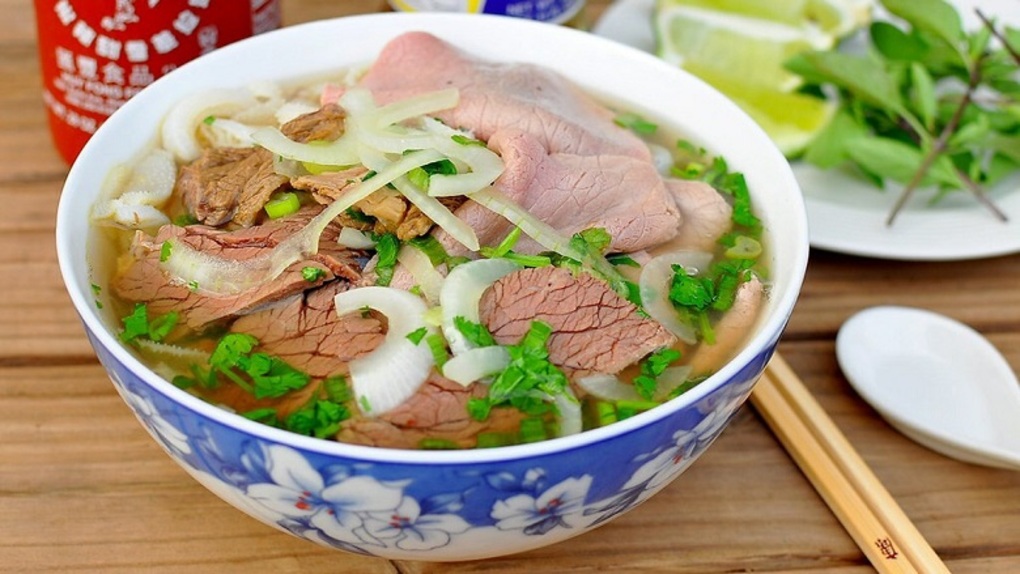
Phở noodles, like many staples of Vietnamese cuisine, are made from rice, but what sets them apart is their flat, rectangular shape, which gives them a heartier texture ideal for more filling meals. While you might be familiar with phở bò (beef) or phở gà (chicken), the light, flavorful soup that originates from Northern Vietnam and is popular for breakfast nationwide, in Hanoi, you can also enjoy phở in stir-fried dishes and fresh spring rolls.

Bún (steamed round rice noodles)

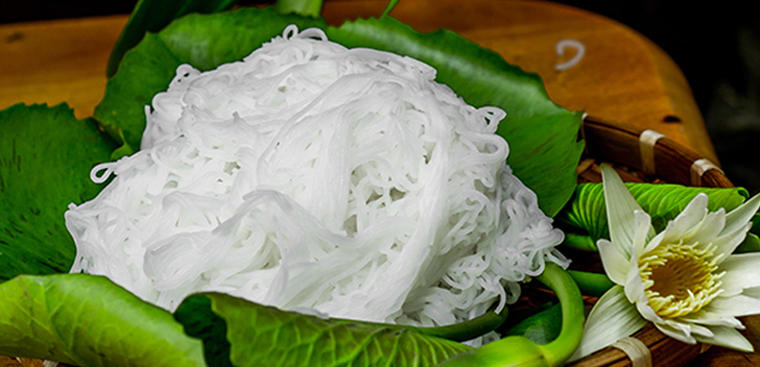
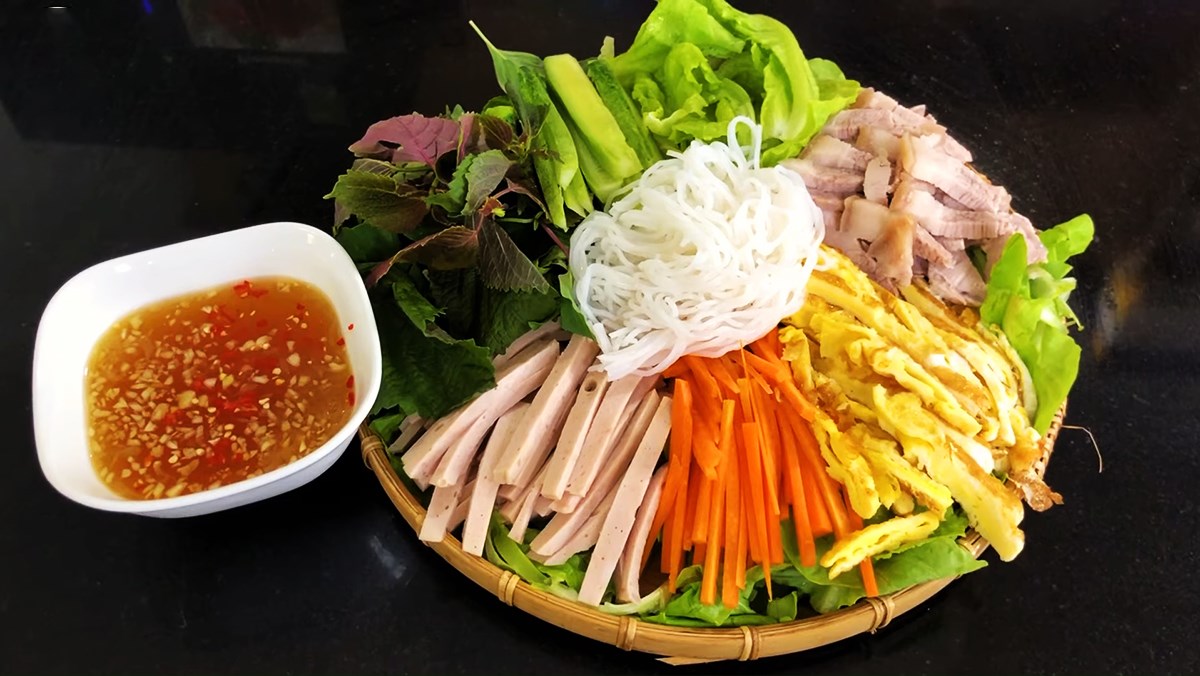
Bún is one of Vietnam’s most adaptable noodles. Its subtle tang, imparted by the herbs used during steaming, beautifully complements the country’s savory and sweet dipping sauces. These thin, round, and tender noodles, with their pristine white color, are a key ingredient in iconic noodle soups and serve as a delicate starch base in spring rolls and noodle salads topped with grilled meats.

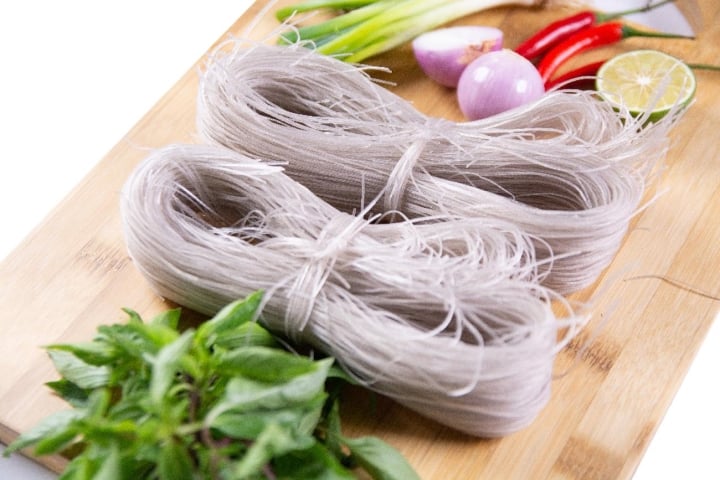
Miến (dried glass noodles)

In Vietnam, “miến” refers to thin, transparent glass noodles or vermicelli, which have a slightly chewy texture. These noodles are commonly used in various dishes, such as *miến gà* (glass noodles with chicken), served as a base in dishes like *miến lươn trộn* (dry glass noodles with crispy eel), or as a filling in deep-fried snacks like *bánh gối* (crispy empanadas filled with pork and mushrooms).

Mì (wheat or egg noodles)

Mì is the Vietnamese term for thin wheat noodles, typically enriched with egg yolk to give them a golden color. These noodles are either dried or cooked al dente, often served in hot soups. Mì noodles are commonly found at stalls offering mì vằn thắn, a Vietnamese wonton noodle soup featuring a flavorful broth made with green onions and shallots, along with char siu pork and slices of boiled egg.

Cooking methods and preparation techniques.

Noodle salads

As the weather warms up, Vietnamese people stay cool with refreshing noodle dishes packed with crisp herbs and greens. For a perfect summer lunch, try bún chả or bún thịt nướng. Both feature grilled pork served on a bed of dry bún noodles, complemented by shredded lettuce, fresh herbs, and a light drizzle of fish sauce that ties everything together.

Noodle soups

While Vietnam’s iconic phở bò often takes the spotlight, there’s a whole world of other delicious noodle soups to discover across the country. Must-try dishes on any Vietnam food lover’s list include bún bò Huế, hủ tiếu Nam Vang, and bún riêu. These hearty soups are typically served with lime, chili, and fresh herbs on the side, allowing you to adjust the flavor to your liking.

Noodle rolls 

The Vietnamese have mastered the art of creating small rolls bursting with bold flavors. Fresh noodles are a key textural element in iconic dishes like nem lụi, bò bía, and gỏi cuốn. Throughout the country, you’ll also find fresh fish—whether fried or grilled—served with noodles and a variety of vegetables, all meant to be rolled by hand and dipped in savory fish sauce.

Fried noodles

Stir-fried noodles, or *mì xào*, are a treat when prepared in the traditional style: vibrant, fresh vegetables stir-fried with onions, your choice of meat or seafood, and topped with fragrant coriander leaves, all drizzled with a rich, chilli-infused soy sauce. Another dish worth seeking out is *phở chiên phồng*—crispy, deep-fried squares of pho noodles, piled with cooked tomatoes, choy sum, tender beef, and savory gravy.

Unique and distinctive noodle creations

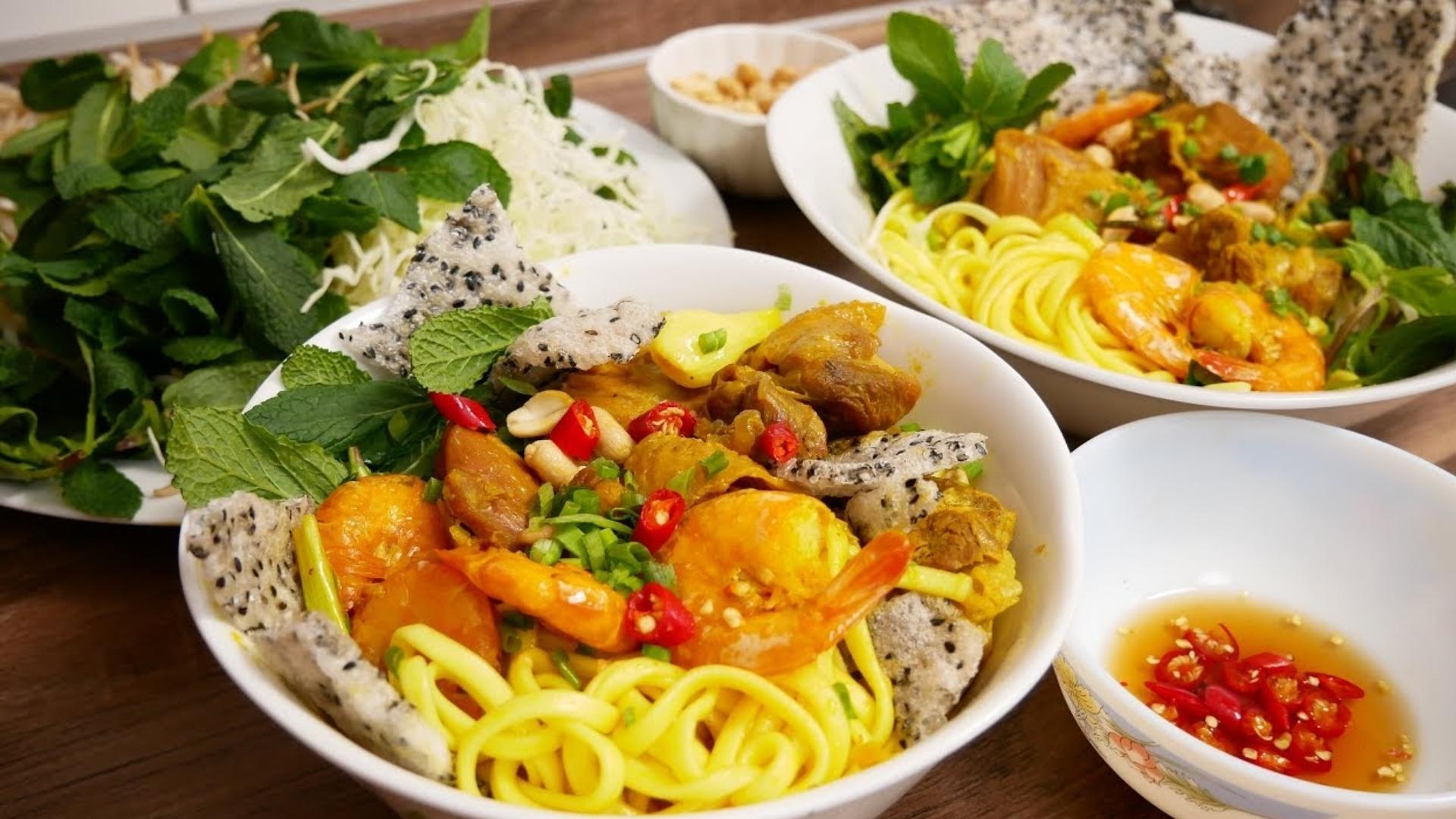
Mì Quảng 

These noodles from the Quảng Nam region in Central Vietnam are truly unique. Each bowl features a generous portion of wide, flat rice noodles, bathed in a rich, peanut-infused broth, topped with slices of pork, boiled shrimp, fresh lettuce, quail eggs, and crispy sesame rice crackers. To try Mì Quảng, head to the alleyways and eateries in Đà Nẵng and Hội An.

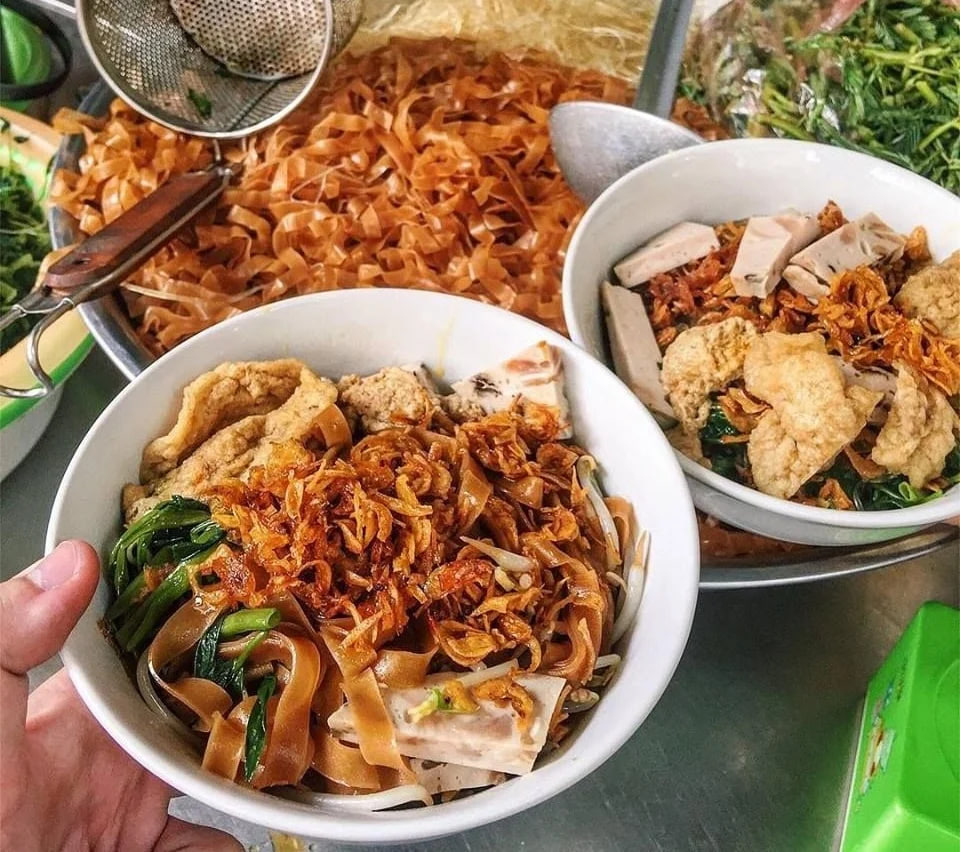
Bánh đa đỏ

These thin, flexible, and chewy rectangular noodles originate from Hải Phòng City, located along Vietnam’s northern coastline. Their unique brown color comes from a special blend of caramel and gấc fruit powder. Often served in a rich broth, you can enjoy them with crab and tomato or fish and dill at local eateries throughout Northern Vietnam.

Bánh canh

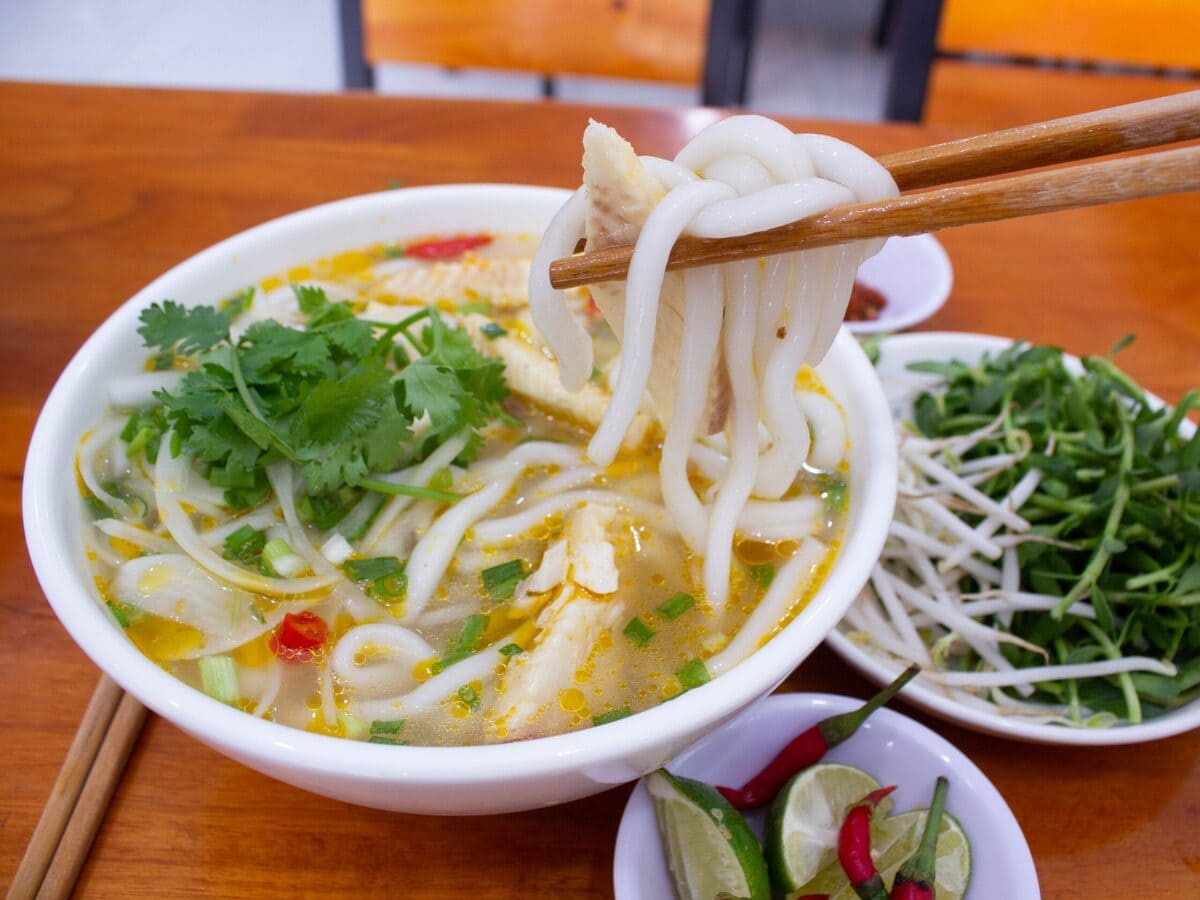
These hearty tapioca noodles may not be as well-known as other Vietnamese varieties, but they’re definitely worth sampling for their smooth, slippery texture. A rich, meaty version featuring pork knuckles, sausage, and crab is popular throughout Vietnam. In the Mekong Delta, bánh canh is a comforting breakfast dish made with freshwater fish, a delicate fish bone broth, and fragrant herbs, gently simmered to perfection.

Cao lầu

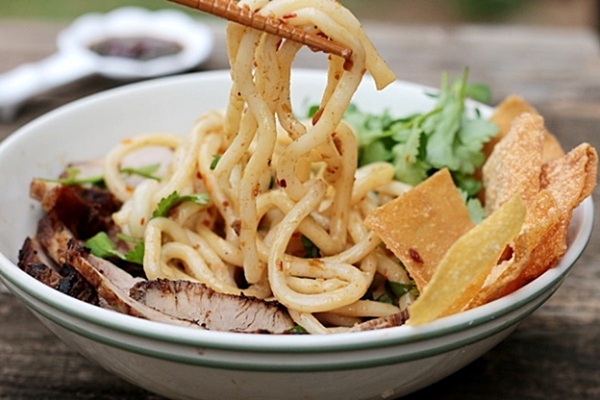
Authentic cao lầu can only be found in the historic trading port of Hội An. These thick, udon-style noodles are traditionally soaked in water drawn from the local mineral-rich well, giving them a unique texture and flavor that’s impossible to replicate. The noodles are served with a savory lemongrass-infused sauce, a bed of crisp bean sprouts, and topped with tender slices of roasted pork and fresh leafy greens.

Start planning your trip to Vietnam today by getting your visa at vietnamvisapro.net. As a trusted and reliable visa service, we’re here to help you turn your travel dreams into reality from the very first step.

Posted on

Hanoi Food Guide- Must-Try Street Food Dishes

Vietnamese cuisine is deeply regional, with many dishes in Hanoi being unique to the capital, even though some can also be found in other cities. Vietnamese food has gained worldwide popularity and is now a favorite among food lovers everywhere. There’s no need for formal attire or strict dining etiquette in upscale restaurants—Hanoi’s vibrant street food scene offers a taste of the city’s culinary delights at every corner. Here, you’ll be welcomed by the warmth and friendliness of the locals. All you need is a hungry stomach and a spirit of adventure to enjoy the authentic flavors of Hanoi.

In addition to the city’s three most iconic dishes—pho bo (traditional Vietnamese beef noodle soup), bun cha (grilled pork with rice vermicelli), and banh mi (baguette)—Hanoi’s street food scene is incredibly diverse and full of culinary adventure.

Bánh cuốn (Steamed rice rolls)

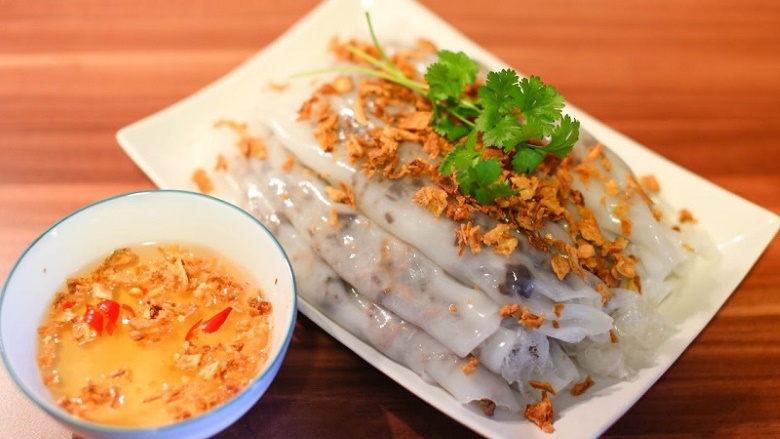
A traditional breakfast in Hanoi, the capital city of Vietnam, is *Bánh cuốn*. This dish comes in various versions, including ones with minced pork (*bánh cuốn nhân thịt*), mushrooms, eggs, or a mix of these ingredients. *Bánh cuốn* is typically served with fried shallots, a sweet and sour fish sauce (*nước mắm chua ngọt*), fresh herbs, and a tangy lime-based sauce on the side.

Bún Ốc (Snail rice vermicelli soup)

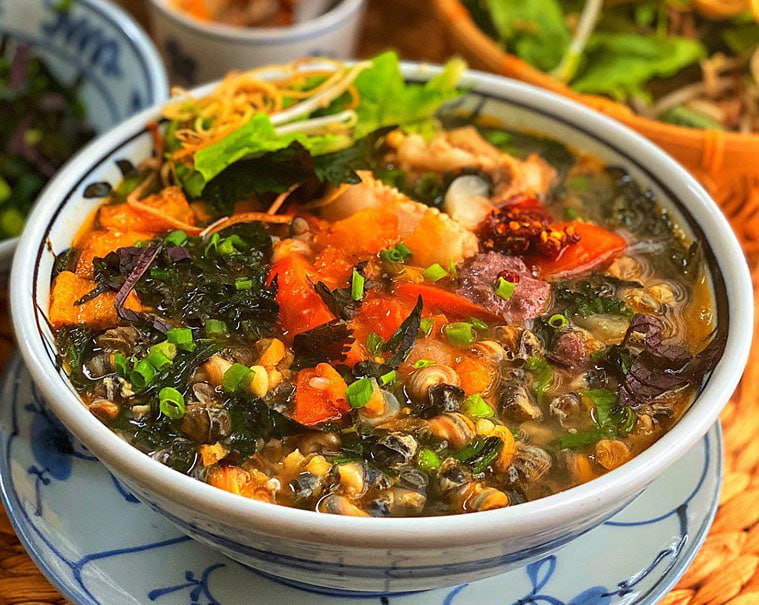
Snail rice vermicelli soup is a beloved comfort food in Hanoi. A typical bowl features rice vermicelli (bún) along with a mix of toppings like beef and crab meat, all served with a generous side of fresh herbs, a staple in many Vietnamese dishes. The broth is infused with key ingredients like tomatoes, wine vinegar, and pepper, giving it a tangy, flavorful kick.

Lẩu (Vietnamese hot-pot)


Gather around the steaming pot and add a generous selection of fresh vegetables, meat, and seafood—just the way you like it. It may seem a bit daunting at first, but hot pot is one of the most authentic ways to dive into the vibrant street food scene of the city. Who knows? You might even make a few new friends while enjoying a cold beer and good conversation.

Bún cá (Fish rice vermicelli soup)

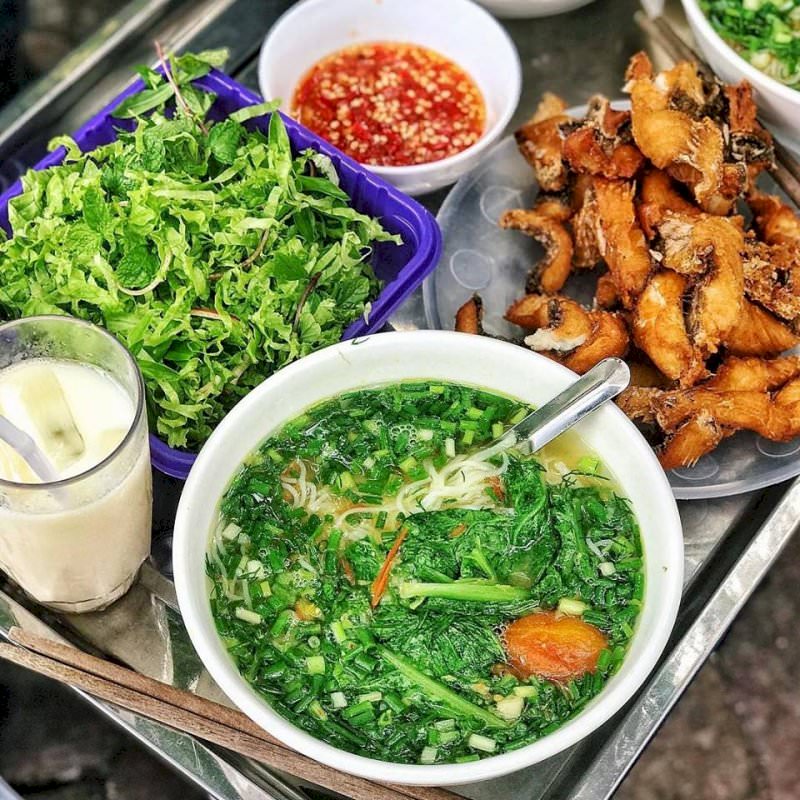
This dish is a popular choice for lunch. One version features bún (rice vermicelli) paired with crispy fried fish pieces. The broth is made with green vegetables, typically including a variety of ‘morning glory’—a beloved vegetable often stir-fried or boiled. A blend of aromatic herbs, such as cilantro and dill, gives the dish its distinctive flavor.

Miến lươn (Stir-fried glass noodles with eel)

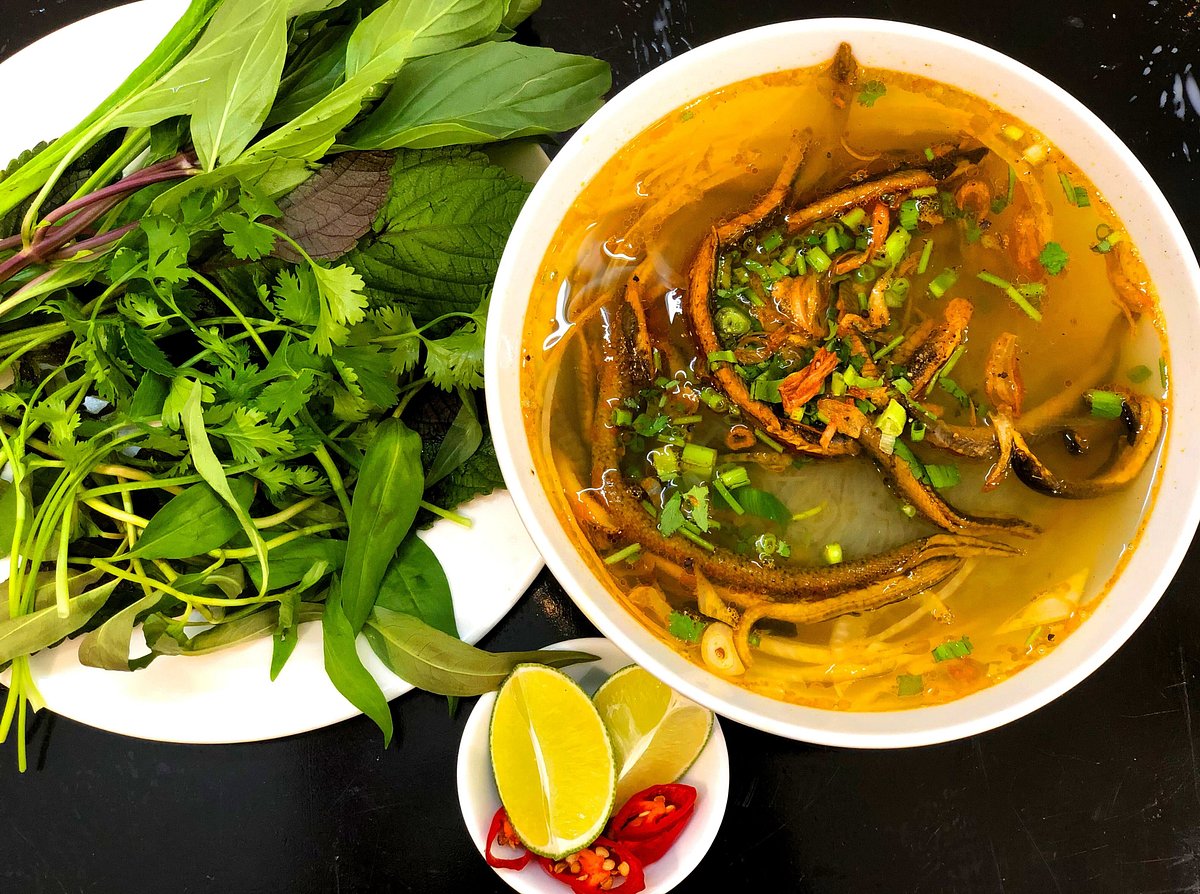
Although it’s not a typical ingredient in everyday dishes, crispy eel is definitely worth trying. It’s combined with stir-fried glass noodles, eggs, and bean sprouts for a unique flavor. Other variations include mien tron (noodles with eel, cucumber, and herbs) and chao luon (eel porridge).

Bánh đa trộn (Mixed flat rice noodles)

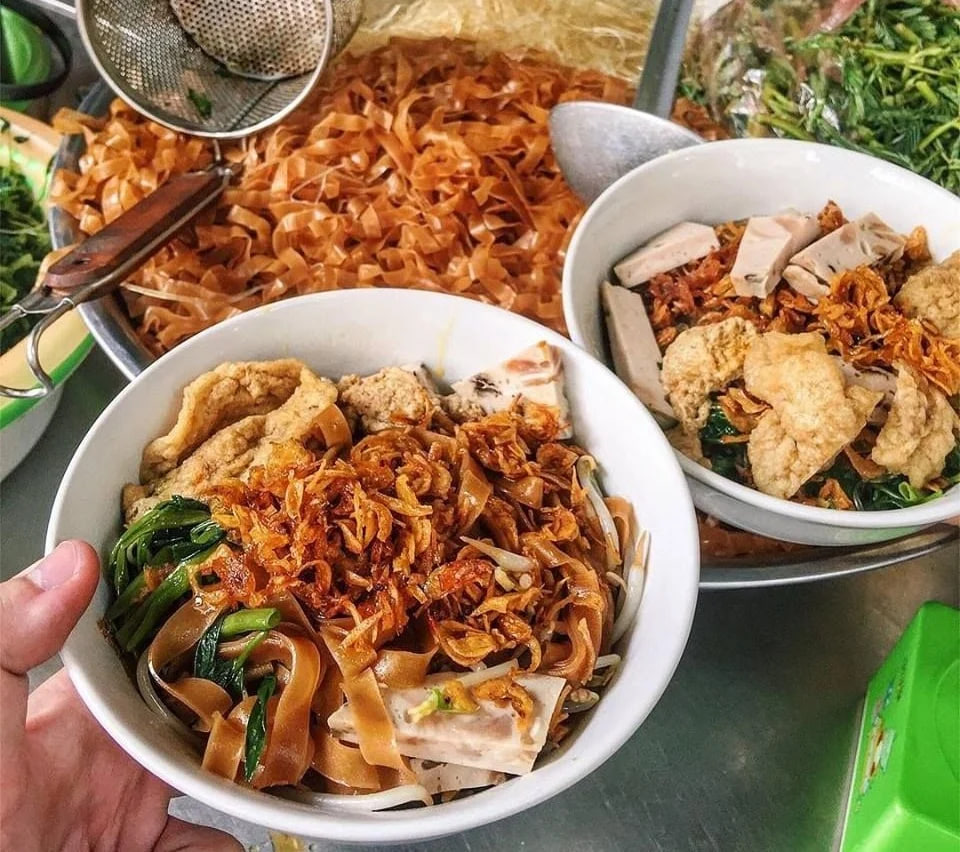
As you stroll through the charming streets of the Old Quarter, you might come across a woman with a carrying pole balanced on her shoulders, two baskets hanging from either side. One basket holds a steaming pot, while the other is filled with fresh ingredients. Together, these baskets carry a beloved Hanoi specialty: *Bánh đa trộn*. This dish features thick, flat noodles topped with a medley of sausage, crispy fish cakes, tofu, peanuts, and fresh greens. Another variation includes delicate glass noodles called *miến*. The flavors of this authentic local treat are sure to impress anyone who tries it.

Bánh tôm (Ha Noi shrimp cakes)

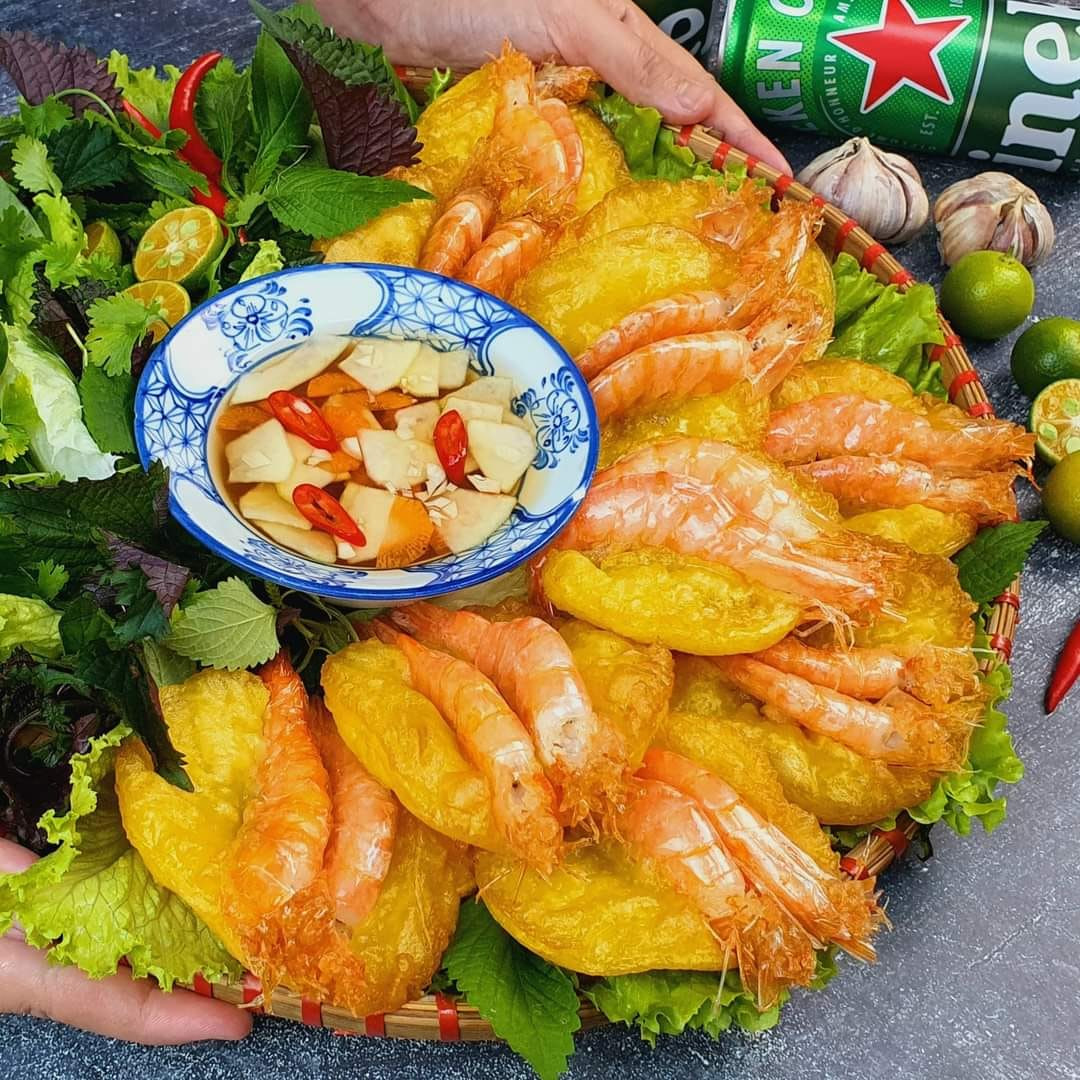
These snacks originate from Ho Tay, the West Lake area, and are made with locally caught shrimp. Bánh tôm consists of crispy battered sweet potatoes and prawns, served with a side of sweet and sour fish sauce and fresh papaya. To balance out the richness, you can pair it with a refreshing glass of iced soy milk.

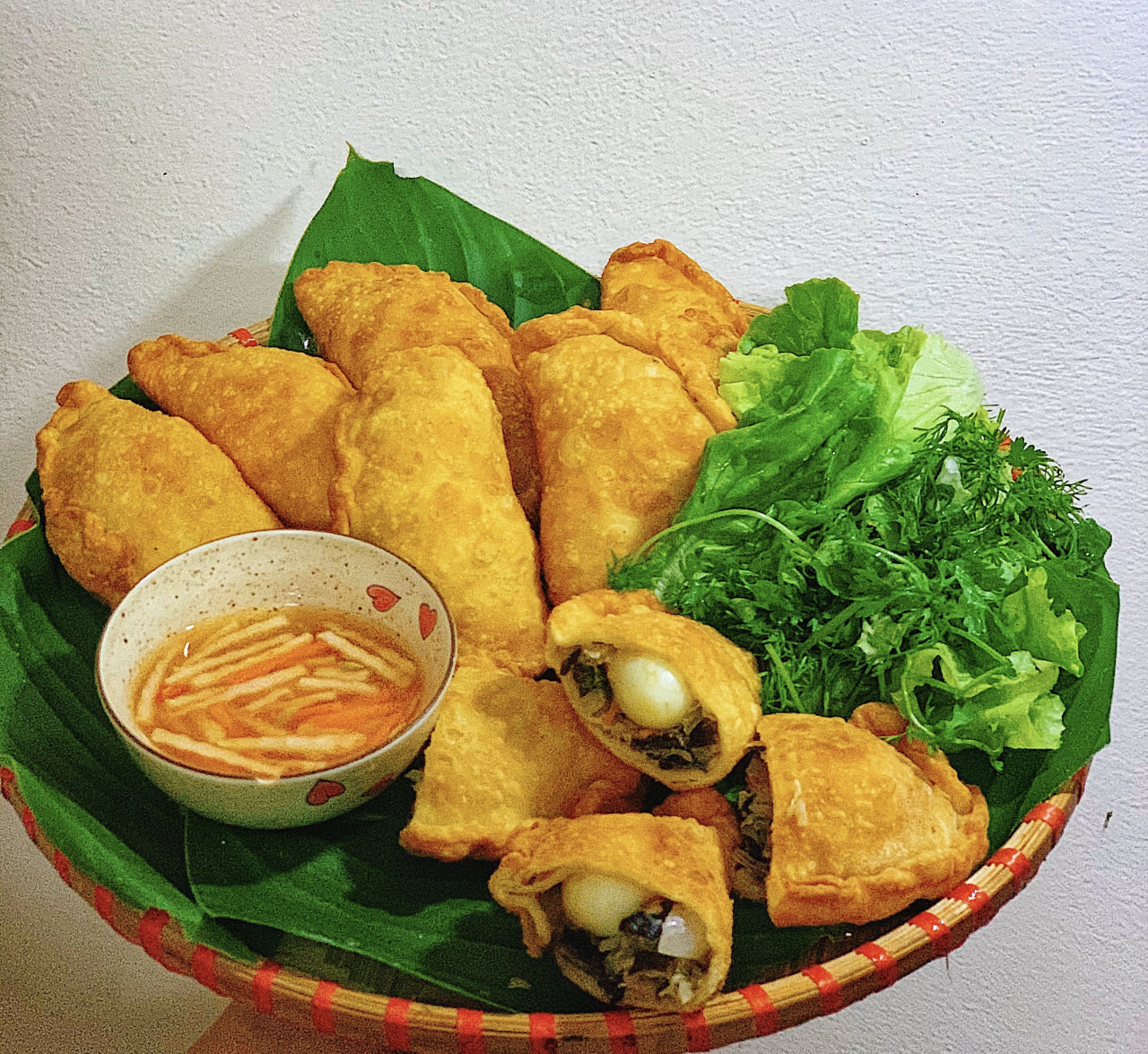
Bánh gối (Crispy “pillow” cake)

Another energizing snack for an active afternoon exploring Hanoi is *bánh gối*—a pillow-shaped pastry filled with minced pork, black fungus, vermicelli noodles, and a quail egg. For those craving more fried treats, you can also find *há cảo* (fried dumplings), *phô mai que* (fried cheese sticks), and *nem chua rán* (fried fermented sausage) sold alongside *bánh gối*.

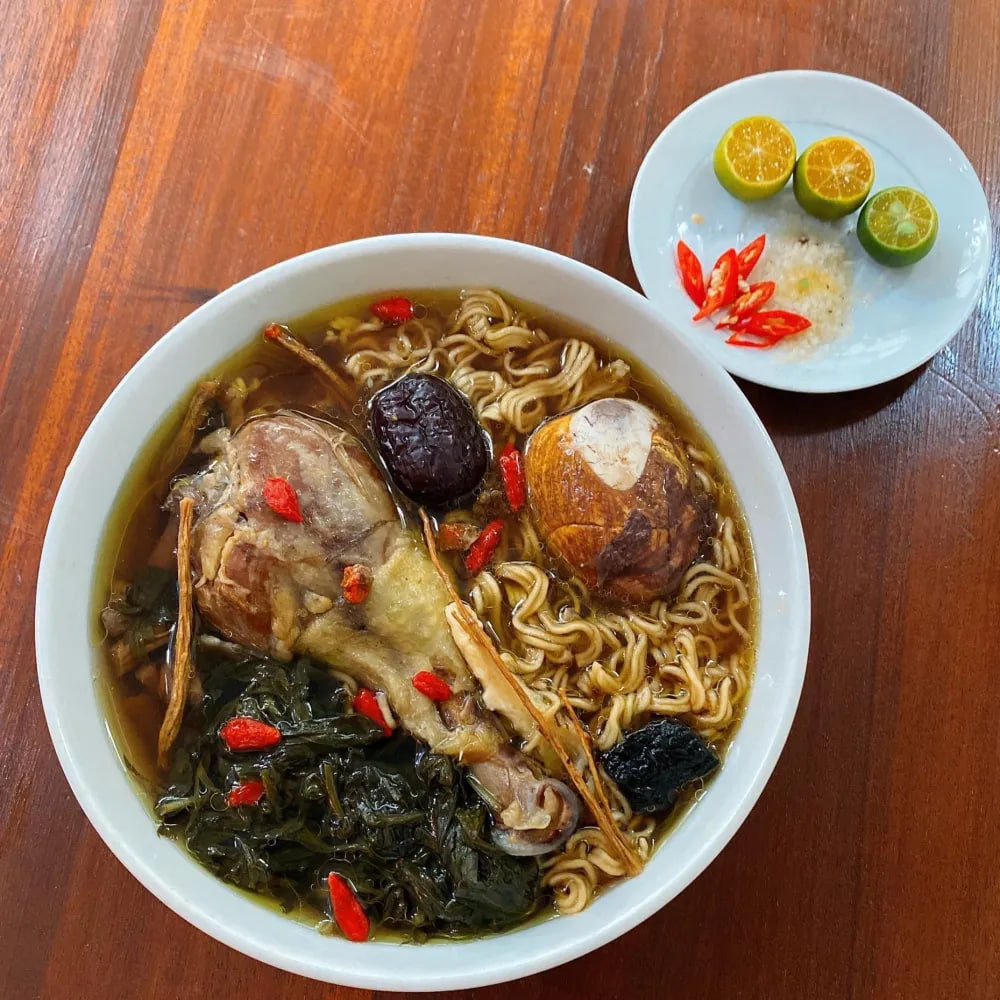
Mỳ gà tần (herbal braised chicken noodles)

This dish might seem a bit unusual to some, but it’s both hearty and satisfying, featuring braised chicken and egg noodles. Diners can choose between the ‘regular’ chicken or a smaller, slightly pricier black chicken, which gets its name from its dark-colored skin.

The chickens are carefully stuffed into empty soda or beer cans along with aromatic herbs like mugwort. The cans are then heated, allowing the meat to absorb the rich flavors as it simmers. Egg noodles (mỳ trứng) are added to the stew, completing the comforting dish.

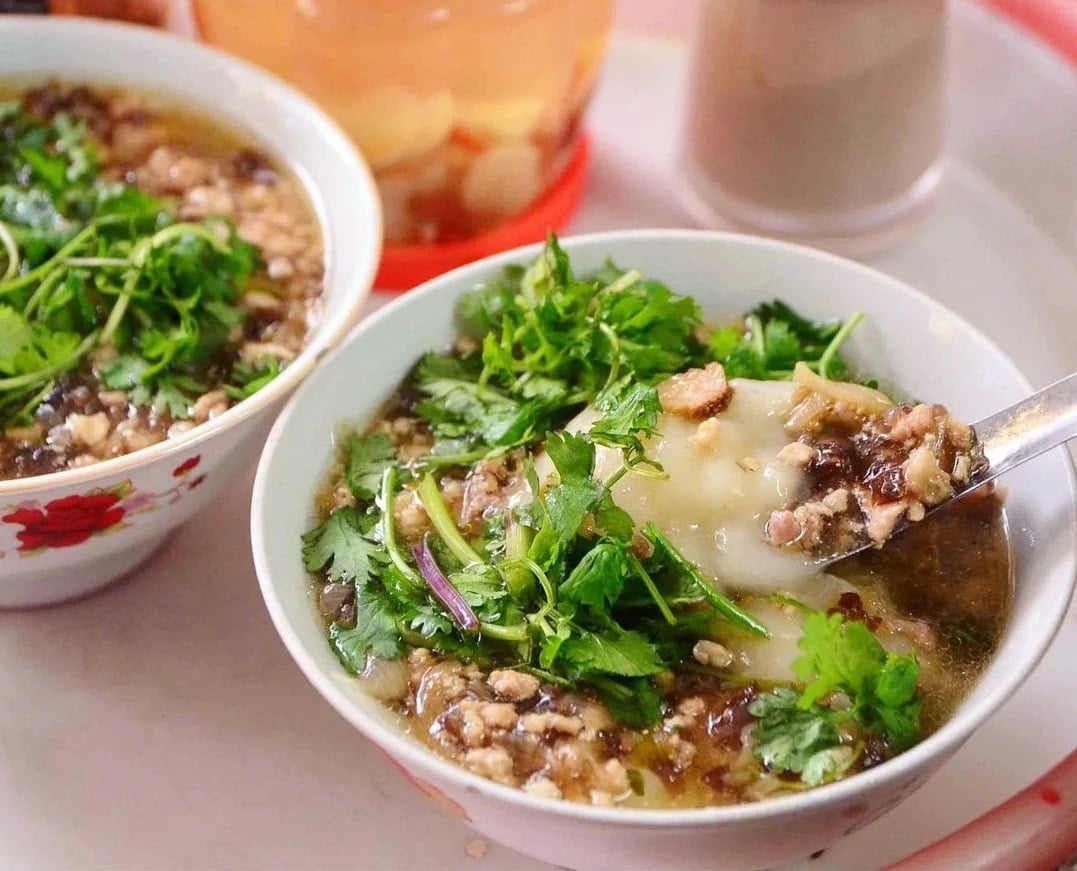
Bánh đúc nóng (Vietnamese hot steamed rice cake)

When visiting Hanoi during the winter, be sure to try a bowl of hot *Bánh đúc* – a steamed rice cake made from a blend of rice and tapioca flour. This dish is prepared with great care and precision, requiring skillful cooking and stirring to achieve the perfect texture. The filling typically includes black fungus, meat, and fried shallots, and it’s served with a flavorful chili garlic fish sauce and fresh herbs. The warm, soft, and savory *Bánh đúc*, infused with the aroma of onions and meat, is the perfect choice for a comforting snack on a chilly afternoon.

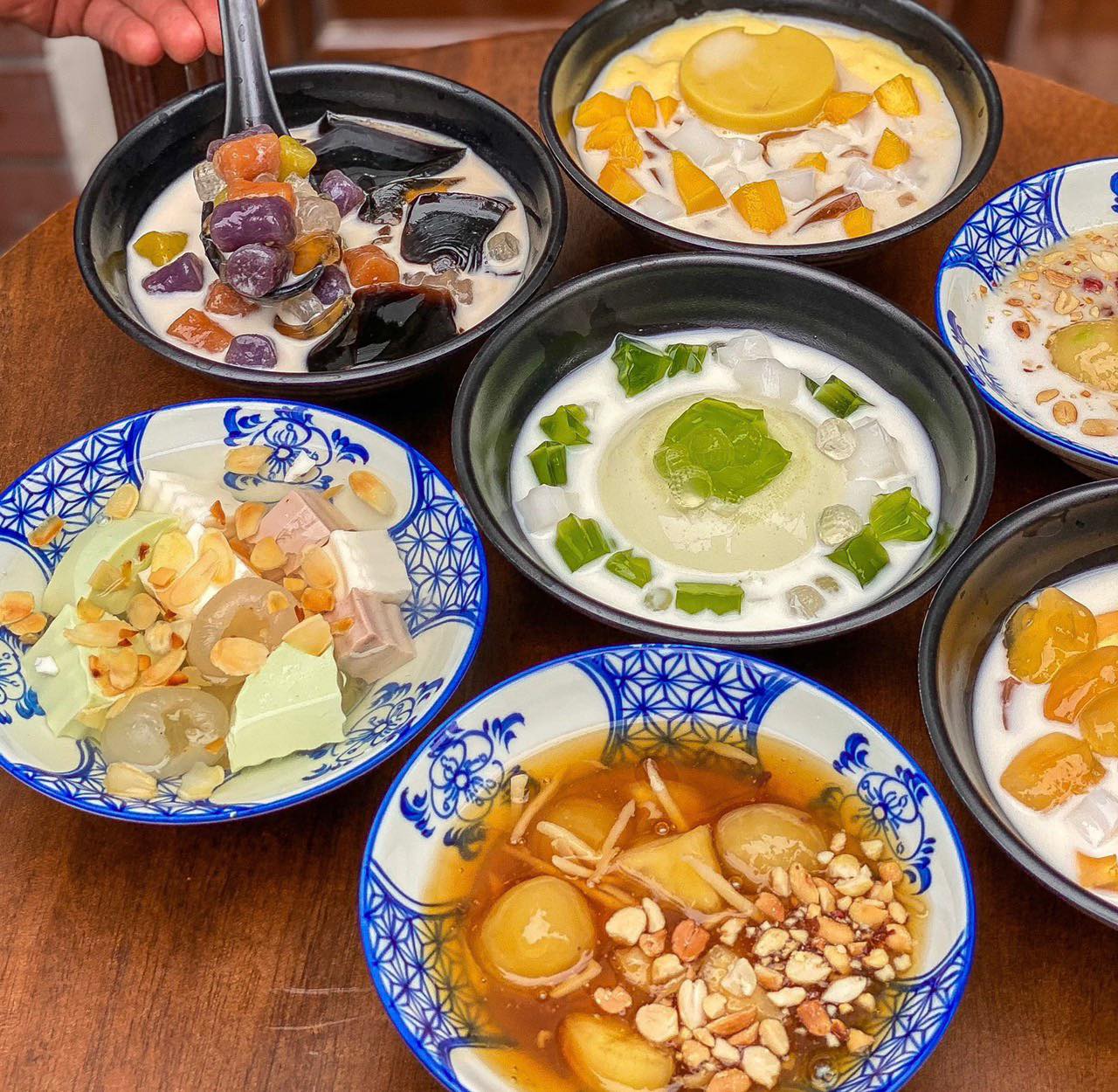
Chè (Colourful sweet  dessert soup)

There’s always room for dessert. A sweet, fragrant dish featuring fruits and flowers is the perfect way to end a culinary adventure in Hanoi. One must-try is *chè*, a traditional “sweet soup” made from layers of red bean and mung bean pastes, glutinous rice balls, herbal jelly cubes, and topped with syrup and coconut shreds. For an authentic experience, be sure to try the mixed *chè thập cẩm* with the town’s famous jasmine syrup.

Start planning your trip to HaNoi ,Vietnam today by getting your visa at vietnamvisapro.net. As a trusted and reliable visa service, we’re here to help you turn your travel dreams into reality from the very first step.

Posted on

About Temple of Literature, Hanoi

Temple of Literaturei Hanoi
Date Established1070
Address58 Quoc Tu Giam Street, Dong Da District, Hanoi.
Opening Hours8:00 AM – 5:00 PM (daily)
Entrance Fee70,000 VND ($3 USD)

>>> Apply Visa to Vietnam <<<

>>> Order Fast Track Service <<<

 The Temple of Literature, Hanoi (Van Mieu – Quoc Tu Giam) is a rare example of well-preserved traditional Vietnamese architecture that is dedicated to Confucius and honors Vietnam’s finest scholars. For those who love Vietnamese culture and history, visiting the Temple of Literature is one of the best things to do in Hanoi, as it showcases the ancient and rich heritage of the country. Located in the south of the Imperial Citadel of Thang Long, this is often cited as one of Hanoi’s most picturesque tourist attractions. Being as Vietnam’s first national university, the Temple of Literature is a place of study rather than a religious landmark. It is ranked in Hanoi’s categories of Historic Sites, Points of Interest & Landmarks, Sacred & Religious Sites.

  1. History

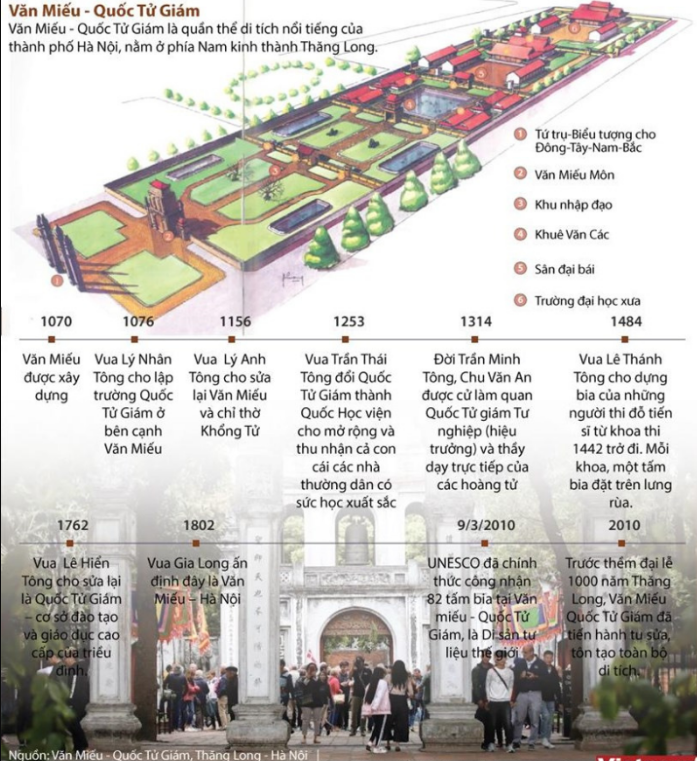
The Temple of Literature was originally founded under Ly Thanh Tong’s dynasty in 1070 to honor Confucius, known as Văn Miếu (“Văn” means Literature, “Miếu” means Temple).

Six years later, in 1076, Quoc Tu Giam was built behind the Temple of Literature, and became Vietnam’s Imperial Academy, a prestigious school for top academics shortly after, under the reign of King Ly Nhan Tong.

At first, the Imperial Academy as a royal school was opened for only members of the elite such as princes, nobles, and bureaucrats. Later on, in 1253, under Tran Thai Tong’s dynasty, Imperial Academy was expanded as National Academy to accept the civilians’ children who had excellent academic abilities.

Under the reign of King Tran Minh Tong, Chu Van An was appointed Quoc Tu Giam’s mandarin, as today’s principal, who directly taught the princes. In 1370, after his death, King Tran Nghe Tong worshiped him at the Literature Temple which was located next to the Confucius.

In late Le dynasty, Confucianism became very popular. In 1484, King Le Thanh Tong set up stelae for those who passed the doctoral exam from 1442 onwards. Each stele was placed on turtle’s back which is symbol of the longevity & wisdom. Under King Le Thanh Tong’s dynasty (1460-1497), exactly 12 examinations were held every three years.

In 1802, the Nguyen dynasty’s monarchs founded the capital in Hue where they established a new Imperial Academy. During this period, the Literature Temple was called “Van Mieu Bac Thanh” (Literature Temple of the Northern Citadel) and later changed to “Van Mieu Hanoi” (Hanoi’s Literature Temple). As for Quoc Tu Giam, it became the school of Hoai Duc prefecture and then developed into the Khai Thanh Shrine, a place for honoring Confucius’ parents. By this time, the Pavilion of Constellation was also built next to the side of square well.

In 1906, the Temple of Literature was ranked as a historical and cultural vestige by the General Governor to Indochina. Unfortunately, during the French war (1946-1954), the Literature Temple was almost destroyed because of bombs.

  1. Architecture

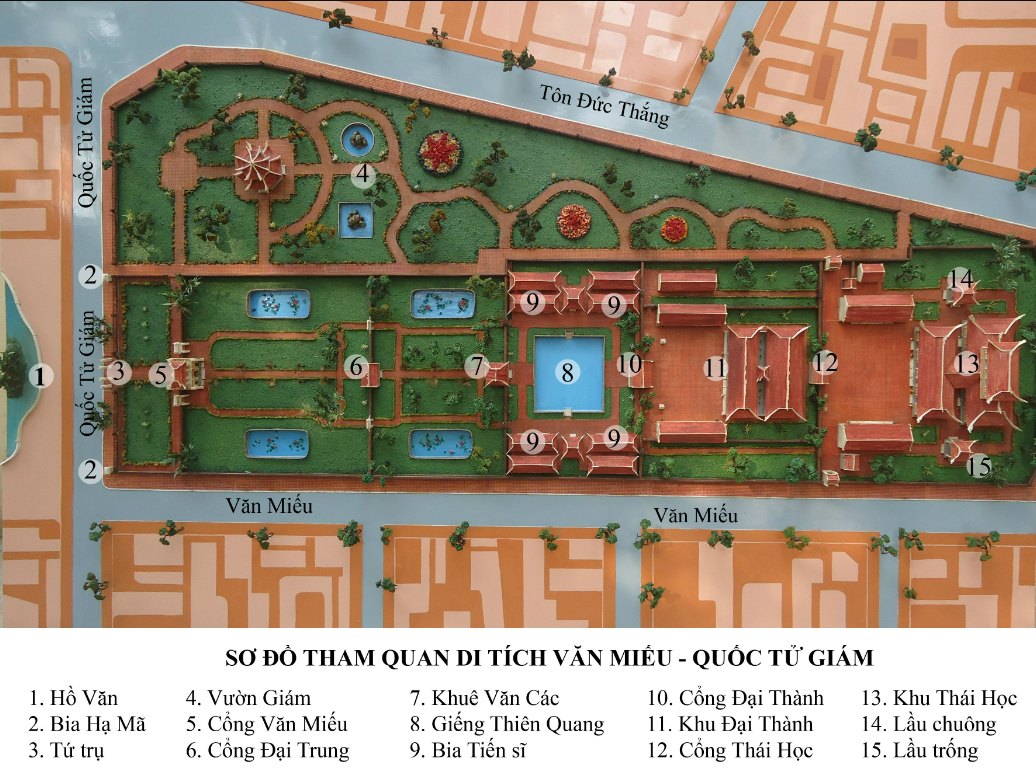
The whole complex of Temple of Literature covers an area of 54,331 square metres, including the Exterior (Lake of Literature & Giam Garden), and Interior Area which is divided into five sections as mentioned details below.

Architectural complex of Van Mieu – Quoc Tu Giam was built for each zone, layer by layer along the North-South axis. It is similar to that of the temple at Qufu, Shandong (China) where is Confucius’ birthplace.

2.1. Exterior Area: Lake of Literature & Giam Park

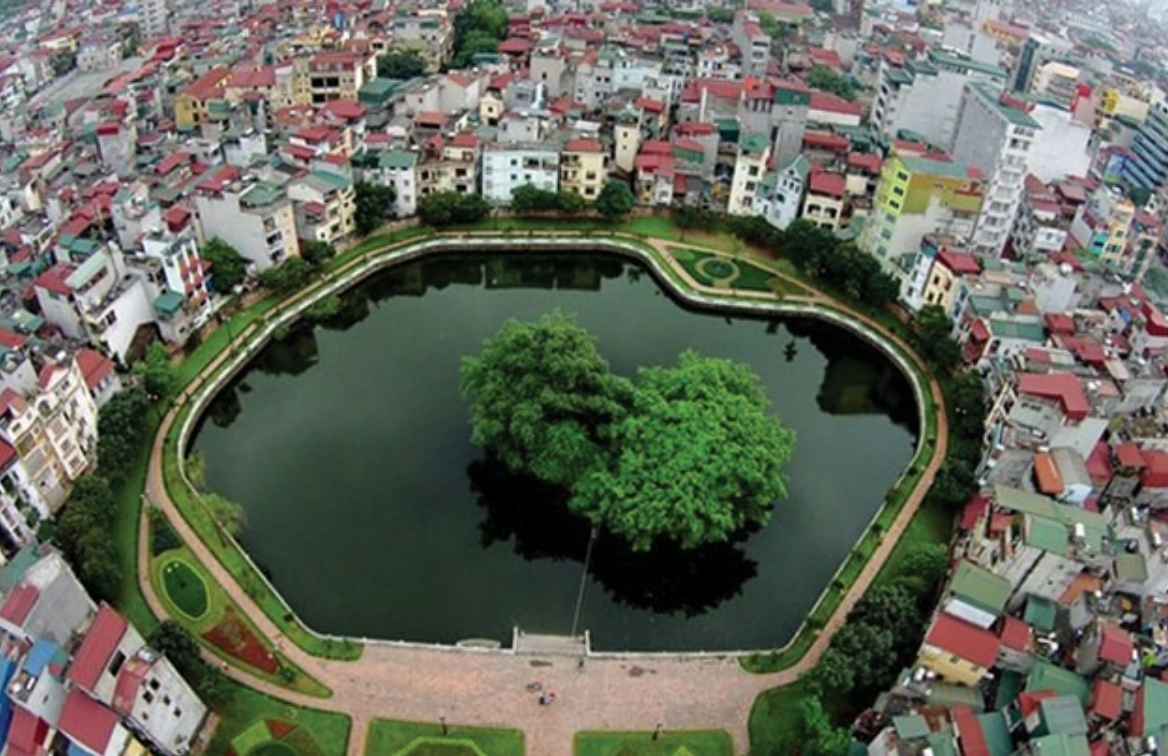
Lake of Literature (or Hồ Văn, or Hồ Giám, also known as Minh Duong Lake) is located in front of the main gate of Literature Temple (on the other side of the current Quoc Tu Giam Street). There is Kim Chau mound in the middle of the lake, which is the place where poetry commentary of ancient citadel took place.

Giam Garden, located on the west side of the temple, is an important space of the relic, displaying many ornamental plants, octagonal houses. It is often used as a venue for cultural and artistic activities during Tet Holidays such as: water puppet show, dragon dance, poetry performance etc.

2.2. Interior Area: Literature Temple & Quoc Tu Giam

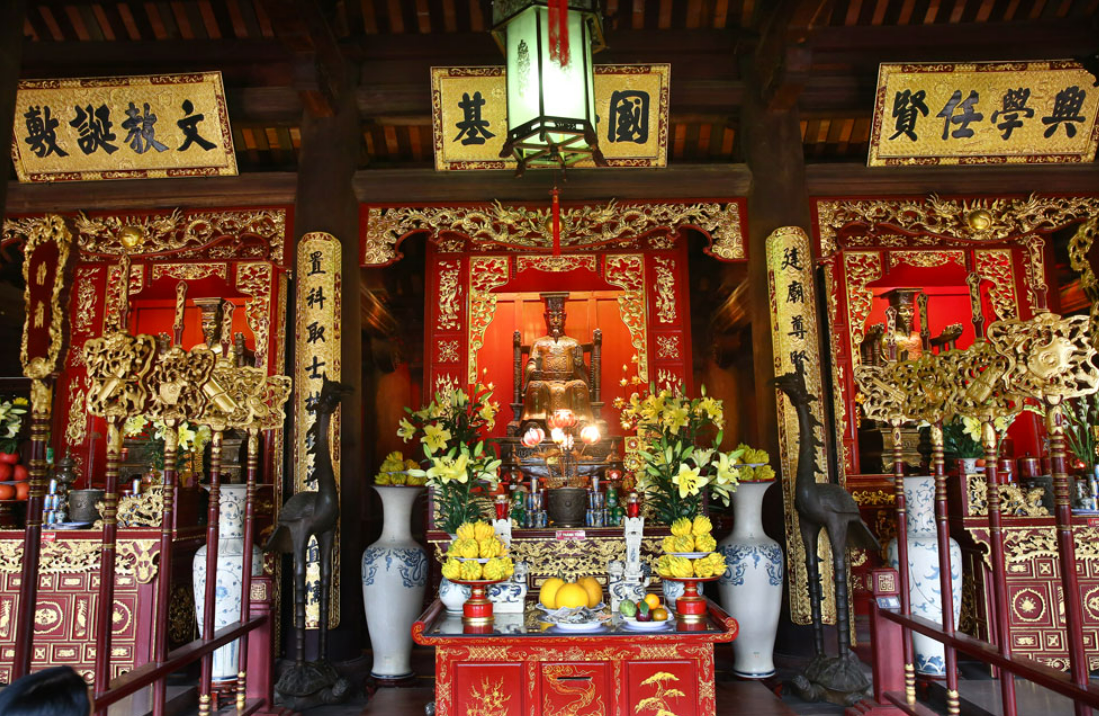
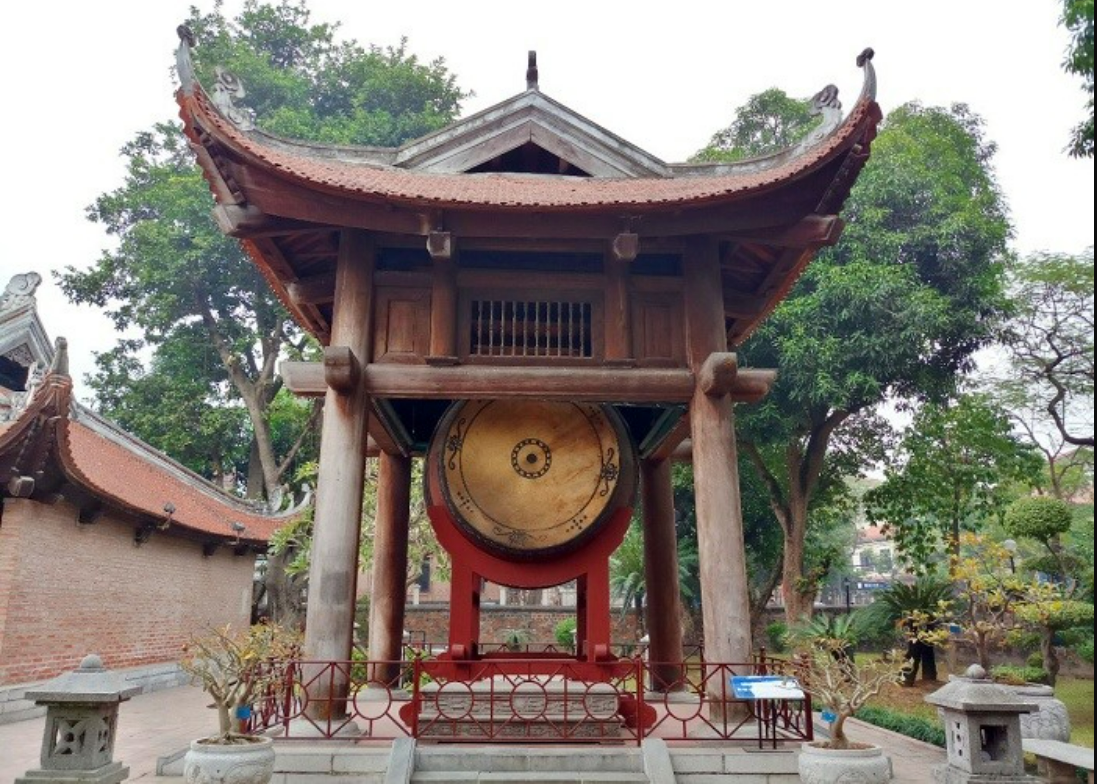
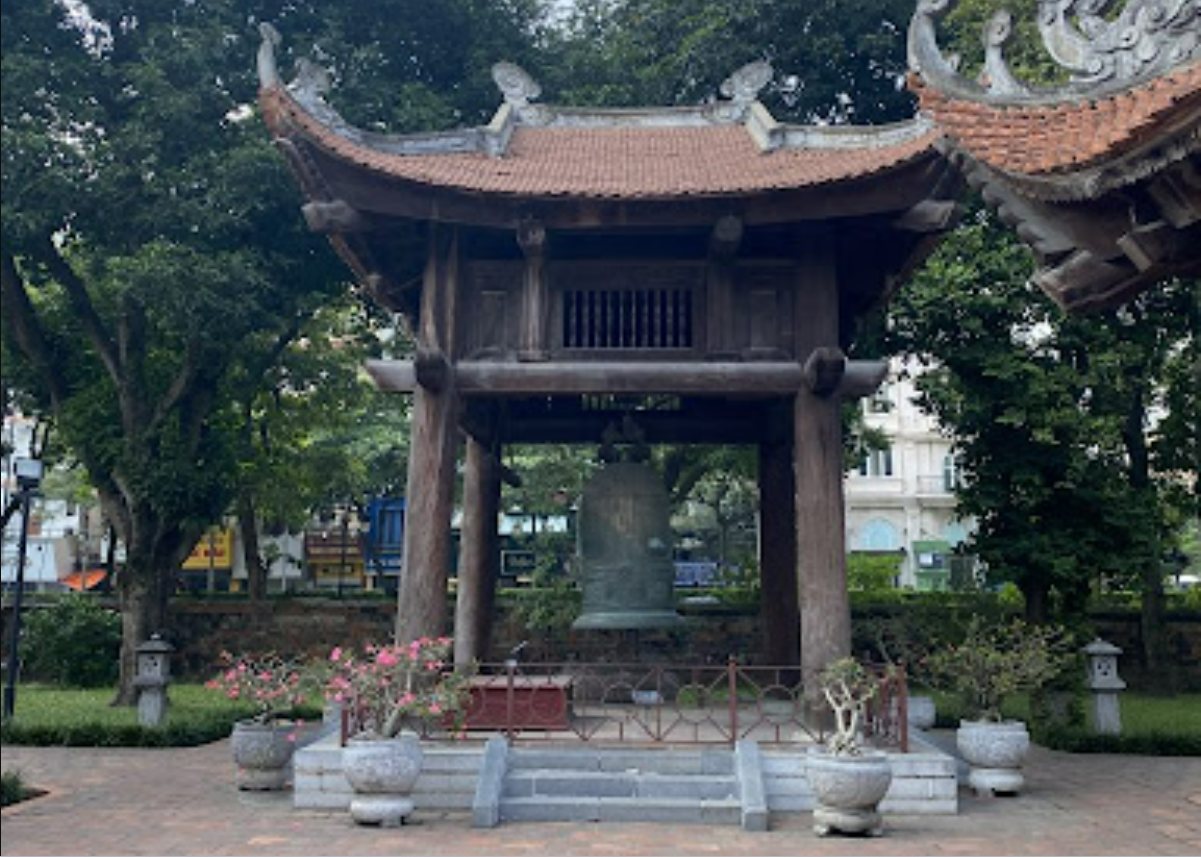
The Interior Area of Literature Temple is divided into five courtyards, each of which is surrounded by brick walls. There are three gates at each courtyard: the biggest one in the center and two smaller ones on either side. The first two courtyards are shady and provide a quiet buffer from the bustle of the surrounding streets. The third one contains a large pond known as the “Well of Heavenly Clarity”. The fourth hosts the House of Ceremonies, which contains a large statue of Confucius and is flanked by souvenir shops. The last one hold some of the largest structures including a bell tower and drum.

The Front of Literature Temple is an open space, making the vestige appearance looks majesty and holy. It consists of four brick pillars and two stelae commanding horsemen to dismount (Hạ Mã) on two sides. There are two lions facing each other on the top of the two highest pillars in the middle. The two other pillars are topped with four phoenixes in a charming position with out-stretched wings and tails huddled together. The two “Hạ Mã” stelae were built in 1771, in front of the entrance of Literature Temple, to remind all people, including doctors, high-ranking mandarins and emperors, getting off their horses to pay homage to the saints and the talented educational center of the country.

  • The First Courtyard: Great Portico & Great Middle Gate

The first courtyard leads from the Great Portico (Khu Nhập Đạo) to The Great Middle Gate (Đại Trung Môn) with two smaller gates on sides: Attained Talent Gate (Đại Tài Môn) and the Accomplished Virtue Gate (Thành Đức Môn), which implies that a successful person should have both talent and virtue. Here you will see 2 small ponds on each side of the garden and 3 walking paths with meaning used in the past as follows: the middle one was for the king, the royal family and the great mandarins; two small paths on each side were for students and normal people.

The Great Middle Gate, located at the end of the central path in the first courtyard, is built in the architectural style of post Le dynasty (15th-17th centuries). It is a construction with three compartments supported by wooden pillars and a red shoe-shaped tiled roof. On the rooftop, there are signs of two carps flanking a flask that were decorated with pieces of glazed terracotta and porcelain. The ground of the gate was paved with bricks that made in Bat Trang Pottery Village. The Great Middle Gate was set up on a brick platform surrounded by stone with three steps, making it sizeable and solemn.

  • The Second Courtyard: Success Courtyard and Pavilion of Constellation

Pavilion of Constellation (Khuê Văn Các) was built in 1805. The architecture includes 4 square brick pillars (85cm x 85cm) supporting the upper attic, with very beautiful wooden structures. It is not too big, but the pavilion has unique and harmonious architecture. Pavilion of Constellation has a red elaborate roof with two circular windows and a bronze bell which is only rung on special occasions. Pavilion of Constellation was originally used to hold a review of the beautiful essays from the students who passed the examinations.

The Pavilion of Constellation is a symbol of Hanoi today, a familiar image featured on the back of the 100,000 Vietnamese Dong banknote.

  • The Third Courtyard: Well of Heavenly Clarity & Garden of the Doctors’ Stelae

The third courtyard starts with square shape well which also known as the Well of Heavenly Clarity (Thien Quang Well). The square represents the earth while the circle at the top of the pavilion represents the sky which created a harmony between the sky and earth. This well functions as a mirror absorbing the best essence of the universe, and helped students see themselves and dress up before entering the sacred inner part.

On both sides of the Well of Heavenly Clarity are 82 stelae, known as the Doctors’ Steles, mounted on stone tortoises. Each stele recorded details of candidates who successfully passed the state royal examinations held at the National Academy from 1442 to 1779, and thus are a precious historical resource. Tortoise is considered to be a holy creature and a symbol of longevity and wisdom in ancient Vietnamese tradition. It used to be good luck for pupils and students to rub the heads of the turtles before their important exams, but in order to preserve these stone turtles, everyone is forbidden to touch them now.

  • The Fourth Courtyard: Gate of Great Success & Attained Talent Sanctuary

The fourth courtyard lies behind the Gate of Great Success, the central area, as well as the main architecture of the Temple of Literature. It consists of two large works arranged parallel and connected by other houses. This place is used for the worshiping of Confucius, four most brilliant students of Confucius (Mencius, Yanhui, Zengshen, and Zisi) and Ten Chinese Philosophers.

This is where most Vietnamese visit and make their offering especially during the exam period.

  • The Fifth Courtyard: The Imperial Academy

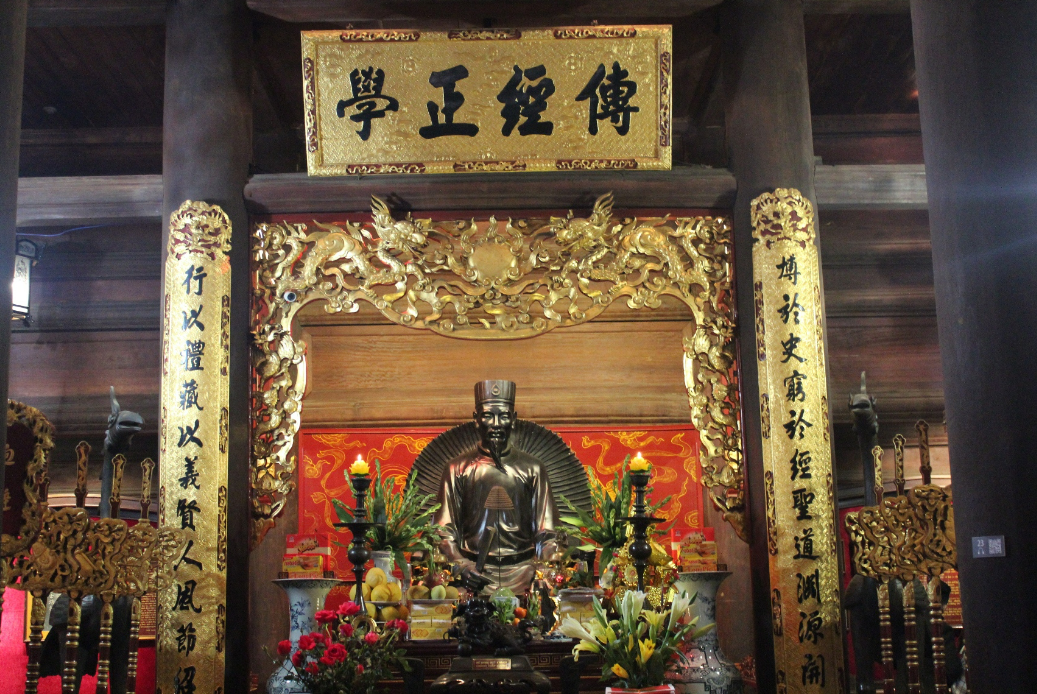
The fifth courtyard housed Vietnam’s actual first academy that was established in 1076 with the principal aim of educating the country’s high officials. In 1946, it was destroyed in the First Indochina War. The present Imperial Academy was reconstructed in 2000 on the former ground of Quoc Tu Giam. Nowadays, there are several exhibits here with a statue of Chu Van An, one of the Academy’s rectors and a beloved figure in Vietnamese history for his dedication to teaching. There are also many cultural events held at the hall in this courtyard, as well as displays of old uniforms that the scholars wore while studying there.

In this area, incense are often lighted and flowers are offered by students and their parents especially at the time of examinations.

  1. Cultural Value

– With more than 700 years of operation, having trained thousands of talents for the country, Quoc Tu Giam is considered as Vietnam’s first university and also an academic symbol of the feudalism of the country.

– This is not only a visiting site for domestic and foreign tourists, but also a place of praise for excellent students.

– An annual poetry festival is taken place on the full moon day of lunar-calendar January. Other activities from traditional villages and Spring Calligraphy Festival (asking and giving letters) are also set up during the New Year’s days for local people to come and join. This is a beautiful culture of Vietnamese for centuries.

– Previously, the martyrs often came to “get lucky” before each exam by stroking the turtle’s head at the doctoral stelaes. However, today, a fence is set up to preserve the monuments, so the martyrs no longer do the ritual of luck as before.

– Water puppet performances are sometimes set to tell about Vietnam’s history. At souvenir stores, you can buy water puppets and other objects such as stamps, wooden masks or miniature statues of Vietnamese famous historical people. You can also see & enjoy traditional Vietnamese musical instruments in the temple as well.

– Temple of Literature is an image on a polymer banknote with par value of 100,000 VND of Vietnam.

– This was in the list of 23rd National Special Monuments by the Prime Minister of Vietnam.

  1. Some interesting facts regarding the Temple of Literature Hanoi

– The first student at the Imperial Academy – Vietnam’s first university was Crown Prince Ly Can Duc who became King Ly Nhan Tong later.
– The three kings are worshiped at the Literature Temple (the second floor of The Imperial Academy): Ly Thanh Tong, Ly Nhan Tong, Le Thanh Tong.
– The three celebrities are worshiped at the Literature Temple: Confucius, Chou Kung (Duke of Chou) and Chu Van An.
– There were total 18 Great Tutors had their names engraved on stone stelae at the Temple of Literature. Nguyen Truc – the first grade doctoral laureate was named (in 1484), while Trinh Tue – the last one received this honor.
– UNESCO recognized these 82 Doctors’ Stelae as part of the world’s documentary heritage and in 2011 placed this in the Memory of the World International Register of UNESCO.
– The main purpose of the architecture is for studying rather than for religion practice though it is a temple.

 Apply For Vietnam Visaapply Vietnam visaApply visa vietnamBook E-visa Vietnambook visa vietnamCheap Vietnam VisaE-visa Vietnamevisa VietnamEvisa Vietnam onlineexpedited e-visaexpedited E-visa to Vietnamexpedited Vietnam E-visaGet a Vietnam visaGet Vietnam Visaget vietnam visa onlineget visa to vietnamget visa Vietnammultiple entry visamy vietnam visaOrder Vietnam E-Visaquick vietnam evisarush vietnam visaUrgent Vietnam VisaVietnamVietnam E-visaVietnam EvisaVietnam touristVietnam travelVietnam vacationVietnam VisaVietnam visa costVietnam Visa ExemptionVietnam Visa for India citizensVietnam Visa For IndiansVietnam Visa for South Africa citizensVietnam Visa In IndiaVietnam visa in South AfricaVIetnam VIsa on arrivalVietnam VIsa onlineVietnam visa provisa for vietnam Visa On Arrivalvisa onlineVisa to VietnamVisa Vietnam
Posted on

Binh Dinh Landscape

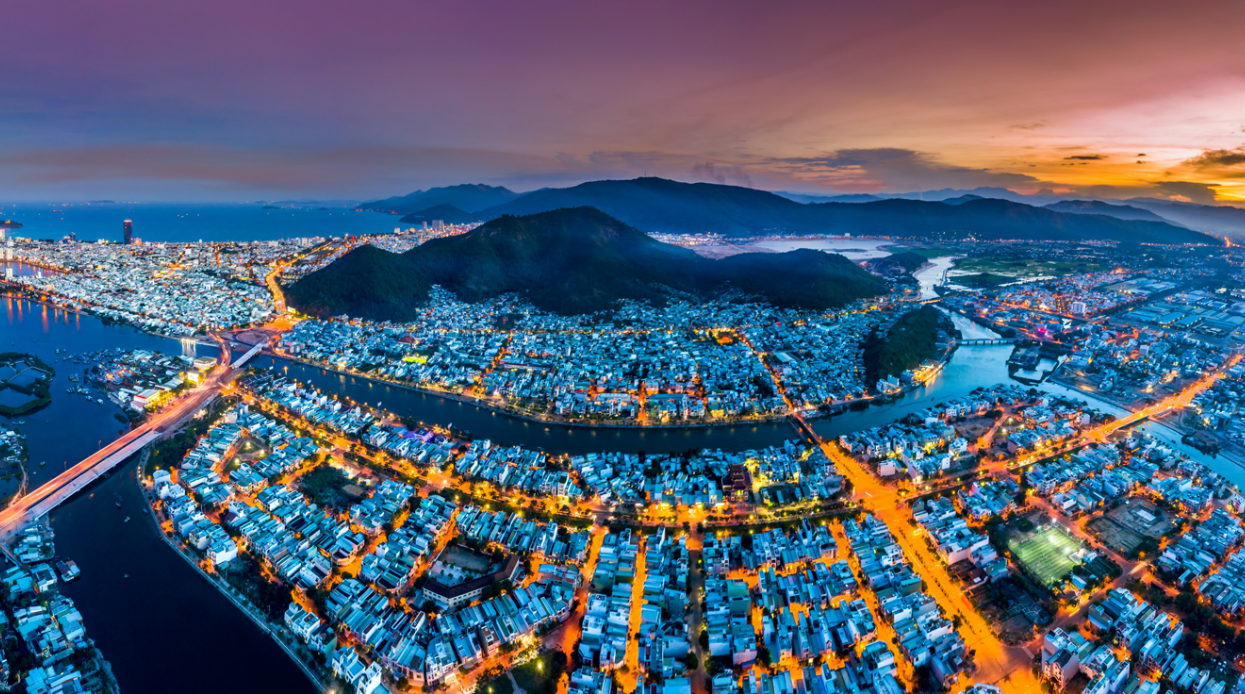
Binh Dinh province lies along the south-central coast of Vietnam. This is the key economic region of central Vietnam. The capital city is Quy Nhon, which is 649km from Ho Chi Minh City or 1,065km from Hanoi. Binh Dinh shares the border with Quang Ngai province on the north, Gia Lai province on the west, and Phu Yen province on the south. The province takes up a long coastline of 100km with many offshore islands. With advantage in well-maintained infrastructure, Binh Dinh has good condition to become an energetic economic center.

>> Apply Visa to Vietnam <<<

>>> Order Fast Track Service <<<

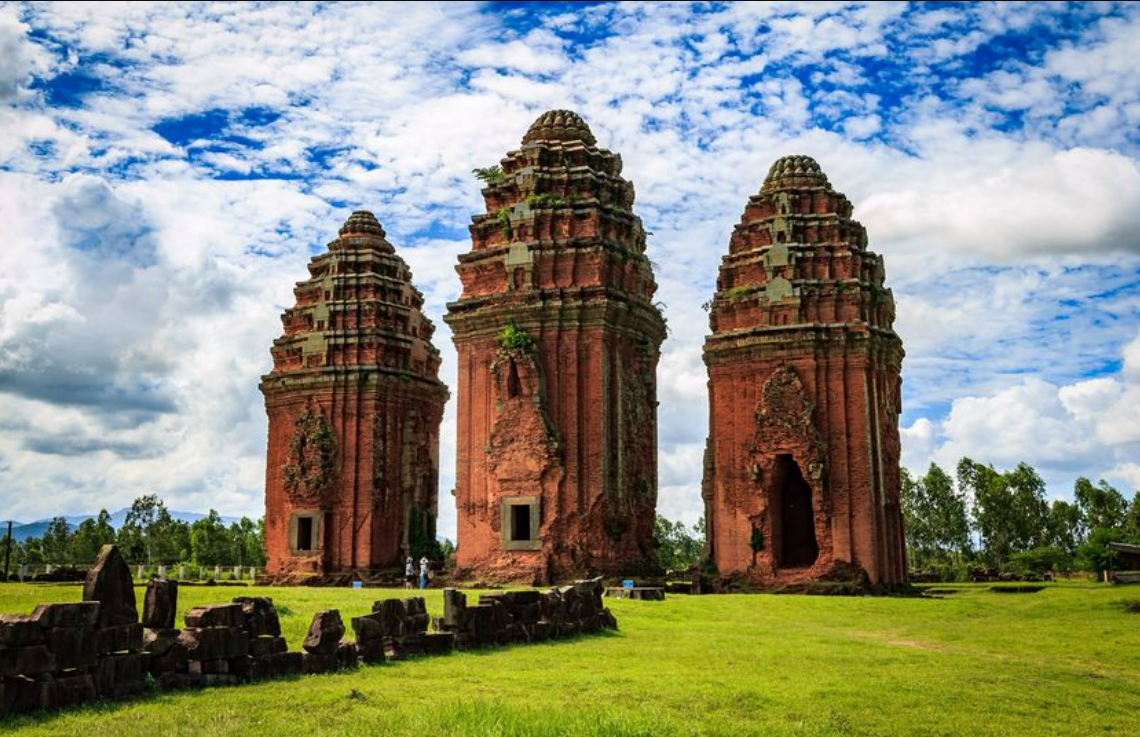
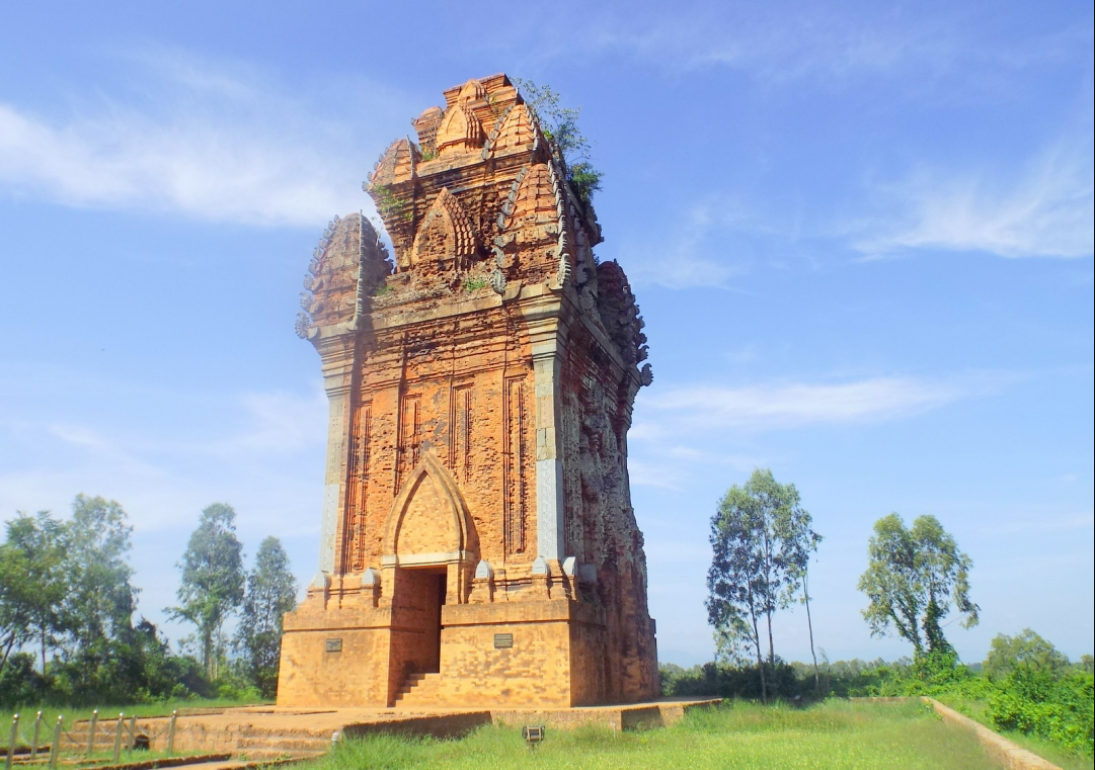
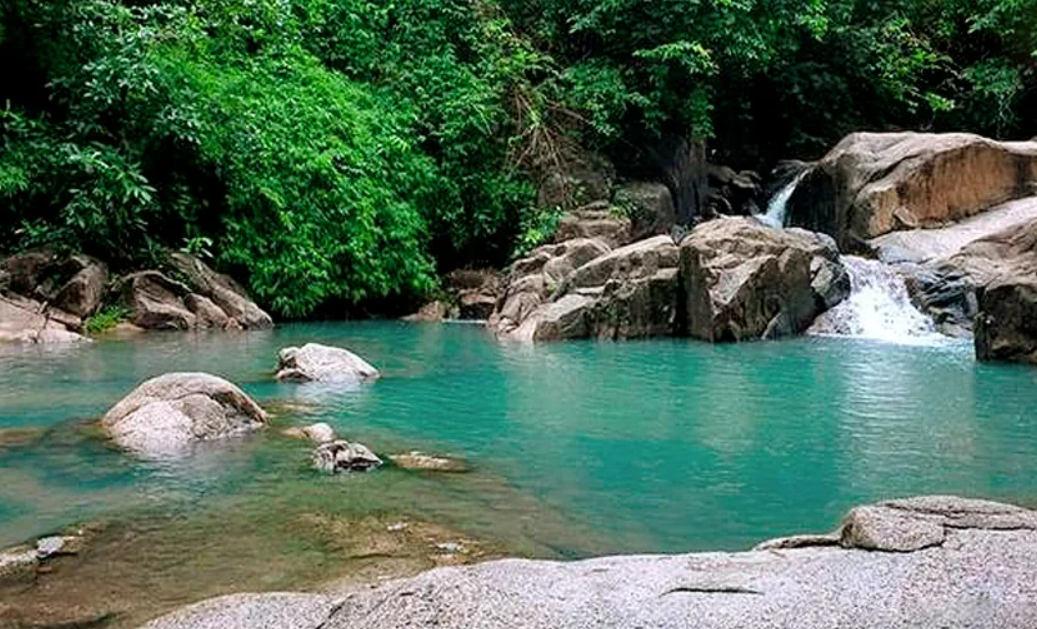
This coastline province is famous as the centre of the old Sa Huynh Culture. It used to be established as one of the capital cities of the former Cham Kingdom for a long period. The popular Cham towers are “Pyramid Shaped Black Cake” Tower, Duong Long Tower, “Flying Fairy Wings” Tower and Twin Towers. The long coast with many coves and lochs makes many beautiful spots and beaches such as Phuong Mai Peninsula, Queen, Quy Hoa and Ghenh Rang beaches. Besides these, Ham Ho Valley is a beautiful freshwater spot as a change for visitors who prefer tramping in the bush and a swim in the fresh water stream.

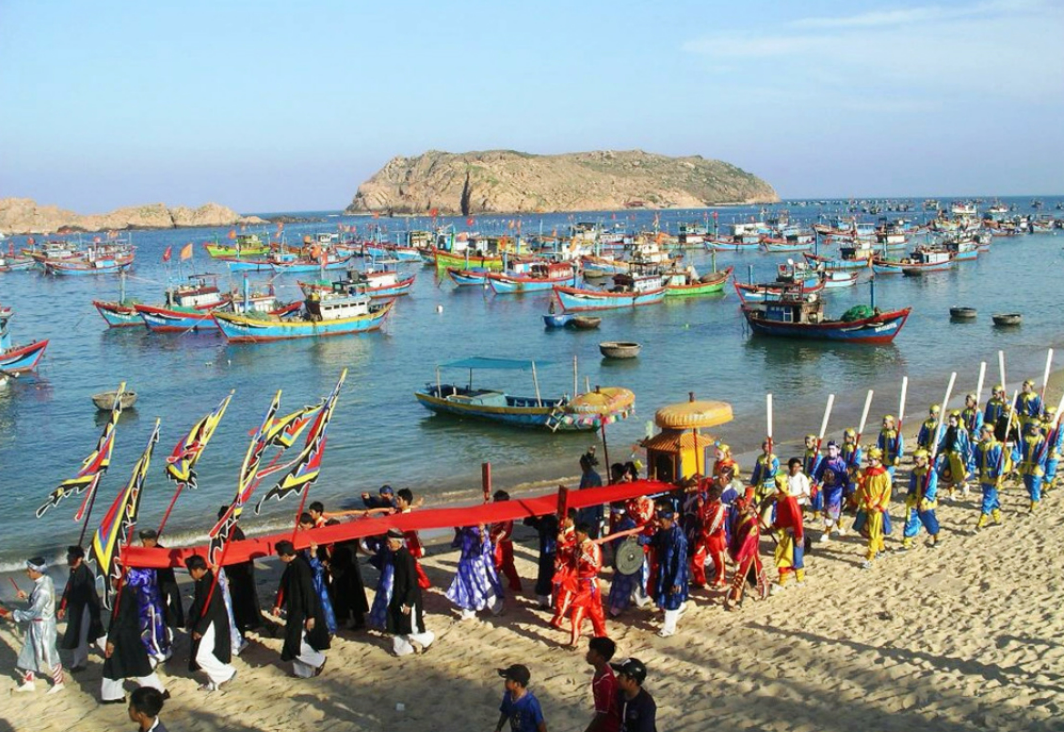
Binh Dinh is cradle of Tuong opera (hat boi), Tay Son martial music, Bai Choi musical plays, Ba Trao festival music of the fishermen along central coastline. The traditional festivals are Tay Son, Cau Ngu, An Thai Village Muscle art…

The province has special products such as silk, swallow nest, shrimp, fish, precious wood, vegetable oil, rice, marble, titanium, and handicraft articles.

  1. Best time to visit Binh Dinh?

Binh Dinh province is featured with typical tropical monsoon climate with the average temperature of 27oC. Rainy season normally lasts from September to December and the rest months are in dry season (from January to August). The best time to travel to Binh Dinh is from March to May, when the number of tourists is relatively small so tourists can feel comfortable to enjoy their vacation. The weather at this time is relatively dry and not too hot, suitable for sightseeing and outdoor activities. The weather will be hotter if you come in later months. In addition, the beaches there can be quite crowded during summer vacation (at the end of May to August).

  1. Attractions in Binh Dinh.

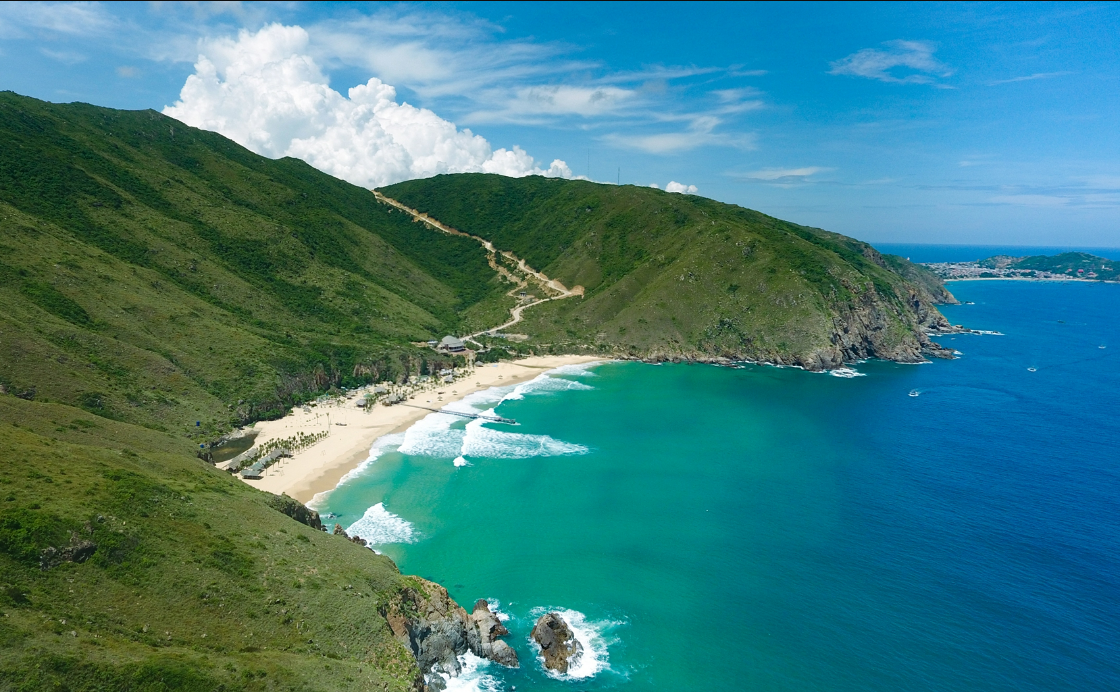
Most of the province is covered by mountains or hills. Most districts of Binh Dinh have a topography that is a mix of mountains or hills and lowlands. The largest lowland area located in the south of the province along the lower Con River. The long coast with many coves and lochs makes many beautiful spots and beaches such as Phuong Mai Peninsula, Queen, Quy Hoa and Ghenh Rang beaches. Besides these, Ham Ho Valley is a beautiful freshwater spot as a change for visitors who prefer tramping in the bush and a swim in the freshwater stream.

2.1. Ghenh Rang – Tien Sa Tourist Area

Ghenh Rang is one of the most attractive destinations in Binh Dinh, located 3km southeast of Quy Nhon City. It has magnificent natural scenery with mountains, forests, beaches and islands that can’t be seen in such a combination anywhere else. At the southwest are high mountains that reach the ocean, and from these mounts you can survey great distances of natural beauty: the Lion’s Head rock that leaps to reach the sea; the silent Waiting Statue; the Lying Elephant and Bear rocks that guard the beaches, and Chong Islet which seems to be light, but is stable in the heavy storms.

On the northeast of Ghenh Rang is a blue ocean that covers the white sandbanks with cool water and a stunning view. This is one of the most beautiful beaches in Binh Dinh and has greeted bathers in search of relaxation for many years. In 1927, Bao Dai, the last king of Vietnam, built a villa where his family could come and relax. He reserved the whole beach for just Queen Nam Phuong, his most beloved wife. It is because of this that the beach is now called Queen Beach. From the view on the top of the mountain, the beach looks like a large turquoise field filled with jade and granite eggs. And so, apart from “Queen’s Beach”, the local people also call it “Egg Stone” beach.

2.2. Ham Ho Tourist Spot

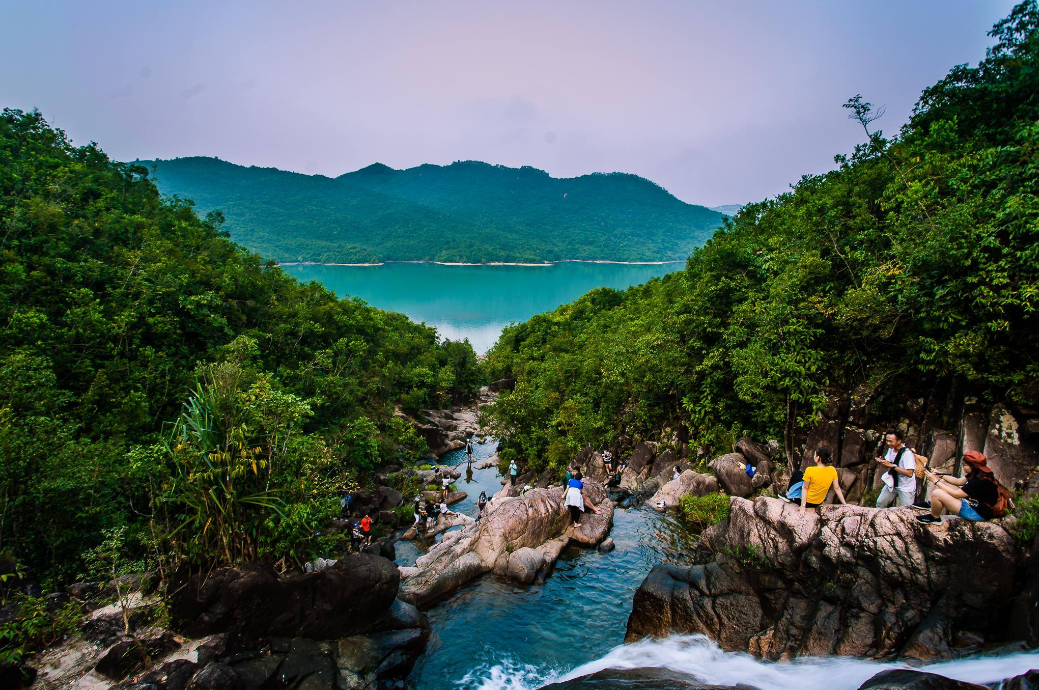
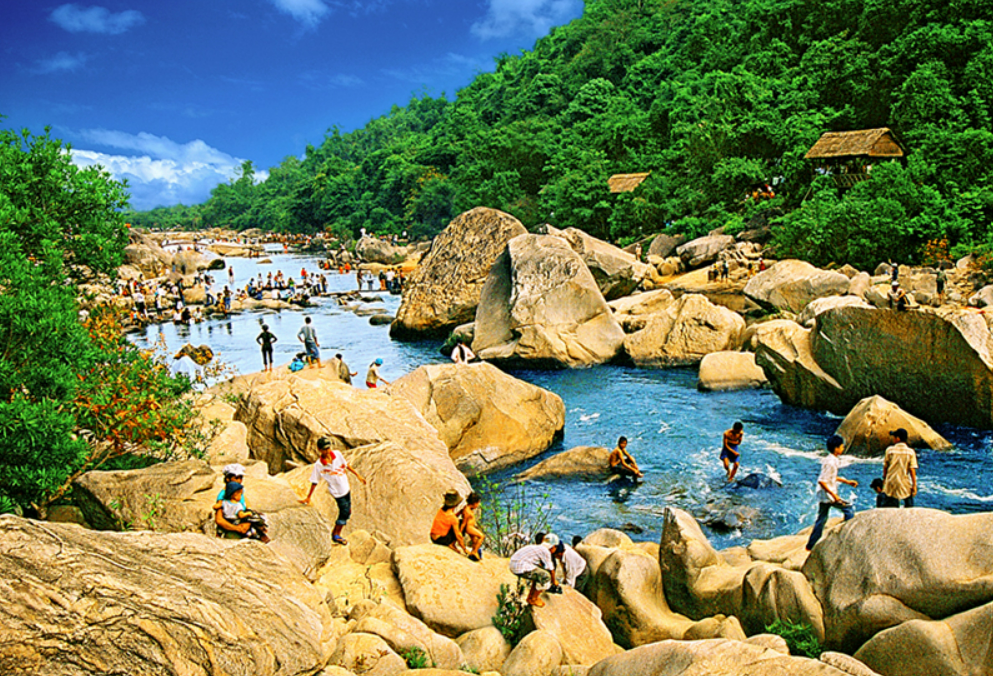
Ham Ho (Vietnamese: Hầm Hô) is a downstream part of the Kut River in Tay Son, Binh Dinh, and located 55km northwest of Quy Nhon City. The name originated from an interesting phenomenon that occurs here in the dry season. In a drought year when people wanted rain, there were many strange sounds like people screaming and praying at this bend of the river. The locals began to call this place as Ham Ho, or ‘Yelling Cellar’. This part of the Kut River is only 1km but is a lush green all year long with cool streaming waters. Along the riverbanks are a dense forest mixed with high cliffs, dotted by a number of marble outcroppings with varied strange shapes. There are several stone places that are of particular interest to visitors, such as Chess Stone, Flying Fish Stone, and the Gates of Life and Death, which are also known as the Giant’s Feet.

Ham Ho is also famous because it draws a considerable number of fish, especially in the flooding season. The local people say that this time of year is the Contest of Fishes organized by the Dragon King (the God that governs lakes, rivers and the ocean). The fish that wins the contest will turn into a dragon. In addition, fish that come to Ham Ho always swim against the river’s flow and get pushed into the air like flying fish, so that this particular part of the river is also called The Flying Fish.

* Tour Activities in Ham Ho:

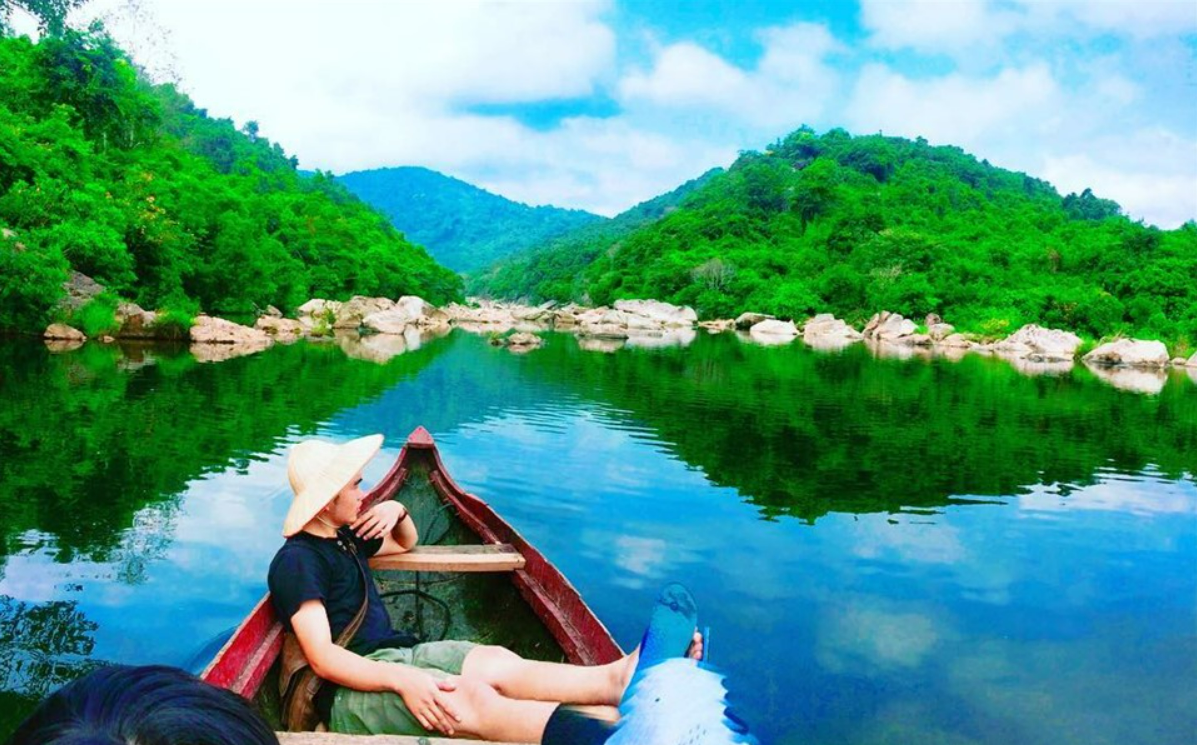
+ Boat tours on the river with man-powered punters make for a fun river ride through the rocky canals. Sitting on a boat along Ham Ho, you can explore a lot of amazing landscapes such as green old-growth forests, impressive mountainous sceneries, and wonderful rock masses on the riversides as well as under the pure water.

+ Swimming in the water to cool off is popular. There are safety ropes running through the river to aid those who want to sink.

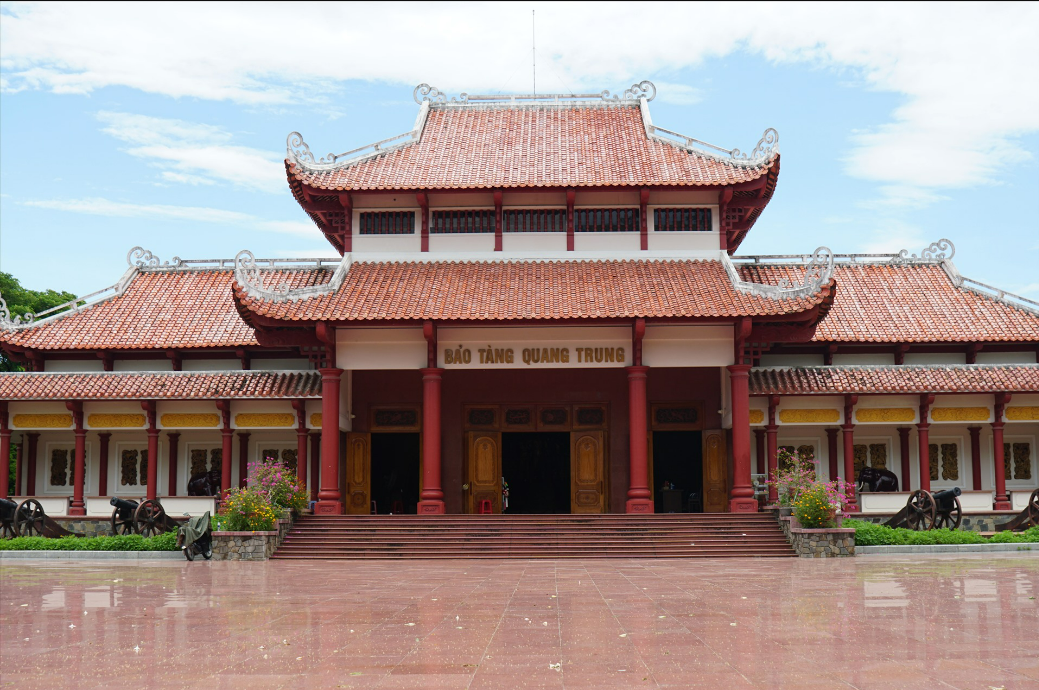
+ Quang Trung Museum just across the Kon River has a display from once ruler, King Quang Trung. If you’re lucky, you can experience some Kung Fu Dancing reenactments.

2.3. FLC Zoo Safari Park Quy Nhon

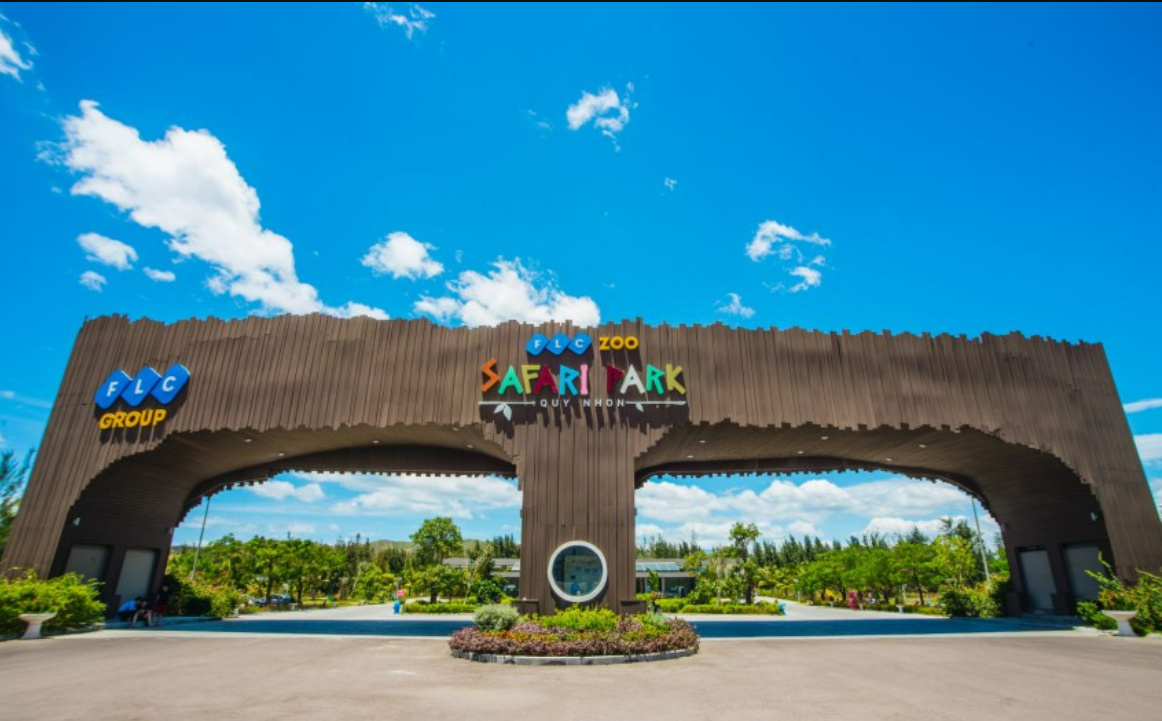
FLC Zoo Safari Park Quy Nhon is the first wildlife safari in the South Central Vietnam with the typical tropical climate, natural sand dunes and conifers. It was open to the public on 25 Mar 2017. As a part of Nhon Ly – Cat Tien Beach Tourism Spot, FLC Zoo Safari Park Quy Nhon is connected to the 5-star FLC Quy Nhon Beach & Golf Resort with high-class accommodation and recreation facilities. It covers a total area of 129 ha constructed under international standard for Safari park and is home to nearly 900 individual animals. Protect species in FLC Zoo Safari Park Quy Nhon come in a large number ranging from Purple Swamphen, Hare, Wild Duck, Chinese Goose, Geese, Spotted Deer, African Ostrich, Black Swans, Yellow Tadorama Duck, Monkey, Peacock, Swan….

2.4. Trung Luong Camping Site

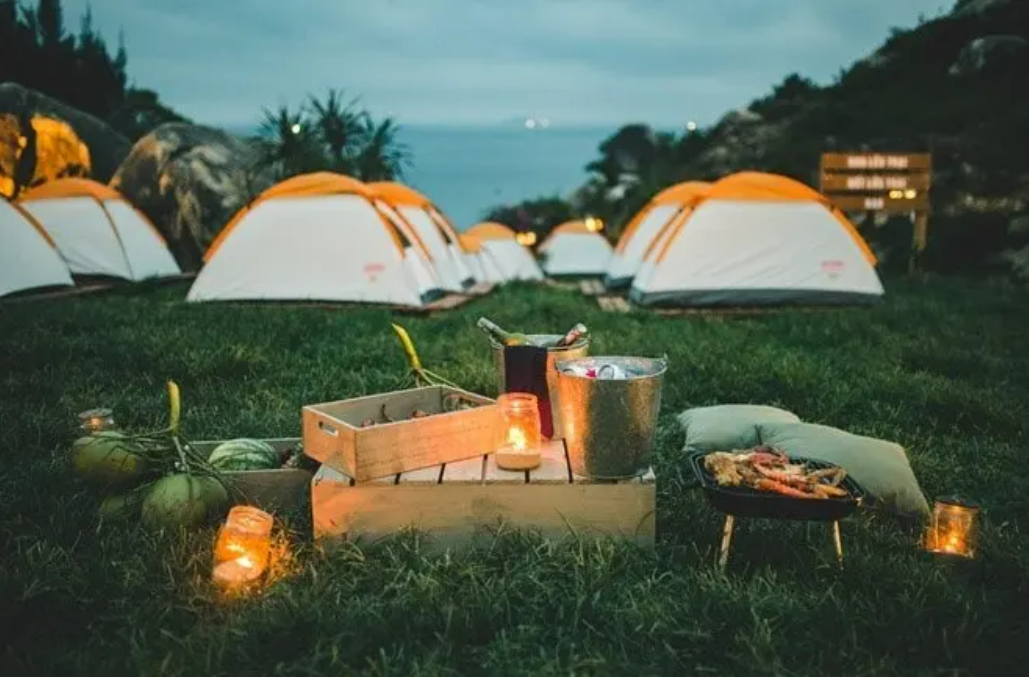
Trung Luong Camping Site is located in Phu Cat District, about 30km from Quy Nhon City. Since its opening, Trung Luong has quickly become a hot tourist destination in Binh Dinh that attracted a lot of visitors, especially young people, who come for fun and camping activities.

Trung Luong is a picnic camping site with a huge green lawn area, overlooking to stretched coastline and white sandy beaches. It lies in the middle of the undulating mountains which will make you feel like you are visiting South Korea’s Jeju Island.

The most highlight of this site is the spacious amusement park with beach view, including camps with red and green roofs, colorful chairs. For tourist groups, spending the night with fire camping, singing, watching the stars, listening to the waves lapping the shore will be an unforgettable experience.

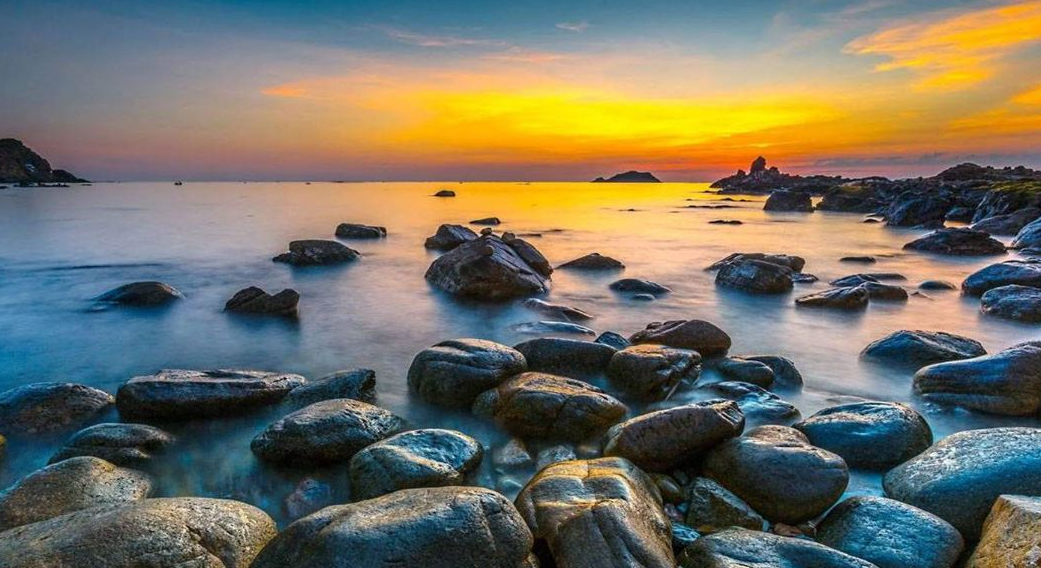
From the picnic area, following the beautiful paved road, tourists can reach Trung Luong Beach. The sea with clear blue water is so peaceful. The beach stretches to the horizon with smooth sand. As you walk along this path, you will surely be attracted by the countless large rocks with all sorts of strange shapes around. Besides camping activity, tourists can enjoy snorkeling, diving to see beautiful coral reefs.

2.5. Cham Towers

Cham cultural relics can be found in all of Vietnam’s central coast provinces. But Binh Dinh province was considered as the heart of the Champa Kingdom that flourished here from the 10th to the 15th century. The Cham Pa (Champa) were a group of pioneers that occupied a territory in today’s Central and South Vietnam. There are eight complexes of 14 Cham towers scattered throughout Binh Dinh. In terms of architecture, the Cham towers in this province are the largest in Southeast Asia, mainly centered in Quy Nhon City and three districts of Tuy Phuoc, An Nhon and Tay Son in the area of Do Ban Citadel, the last kingdom of the ancient Champa Kingdom. Visiting Binh Dinh will give you the opportunity to see them in person.

Below are the most distinctive and famous Cham towers in Binh Dinh:

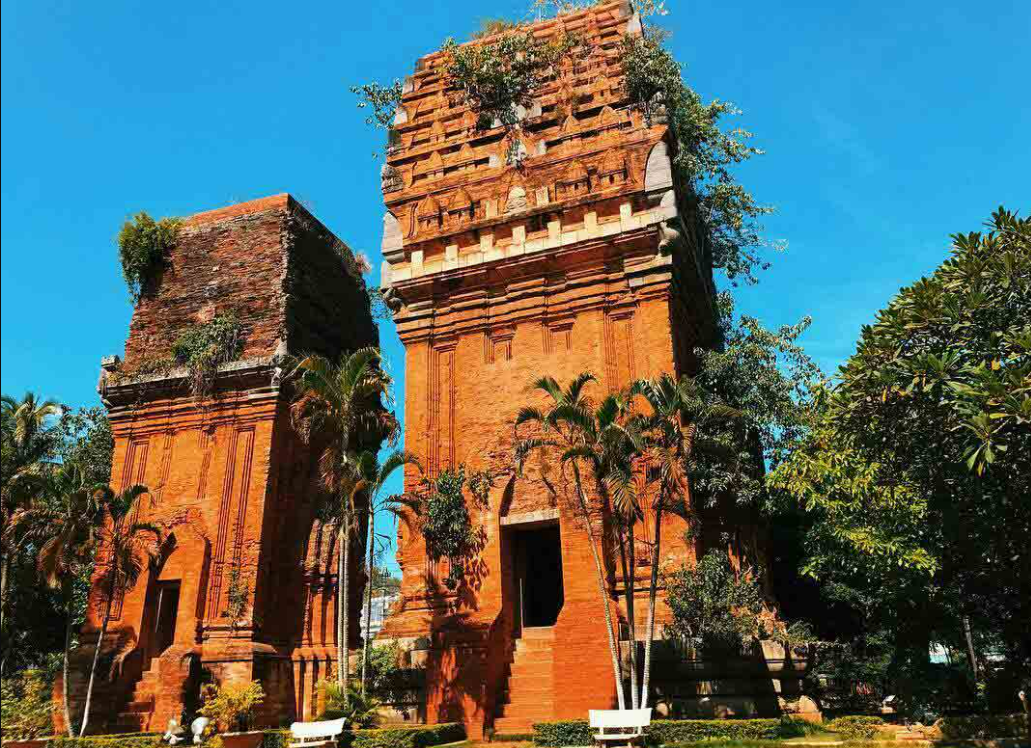
  • Twin Towers (Tháp Đôi)
  • The most famous Cham towers in Binh Dinh province, located in Dong Da Ward, Quy Nhon City.
    • Built in the late 12th century.
    • One of the pair is 20 meters high and the other is 18 meters.
    • Constructed with roofs that curve up, unlike most other Cham towers whose tops taper to a point from a square foundation.
    • Noticeable Hindu influences in the artwork:

+ Upper parts: carved with dancing monkeys, deer, elephant-head lions, and meditators.
+ Corners: decorated with mythical Hindu stone birds.
+ Decorative motifs: animal genies, revered in the Cham religion

  • Recognized as the national cultural and historical relic in 1980.
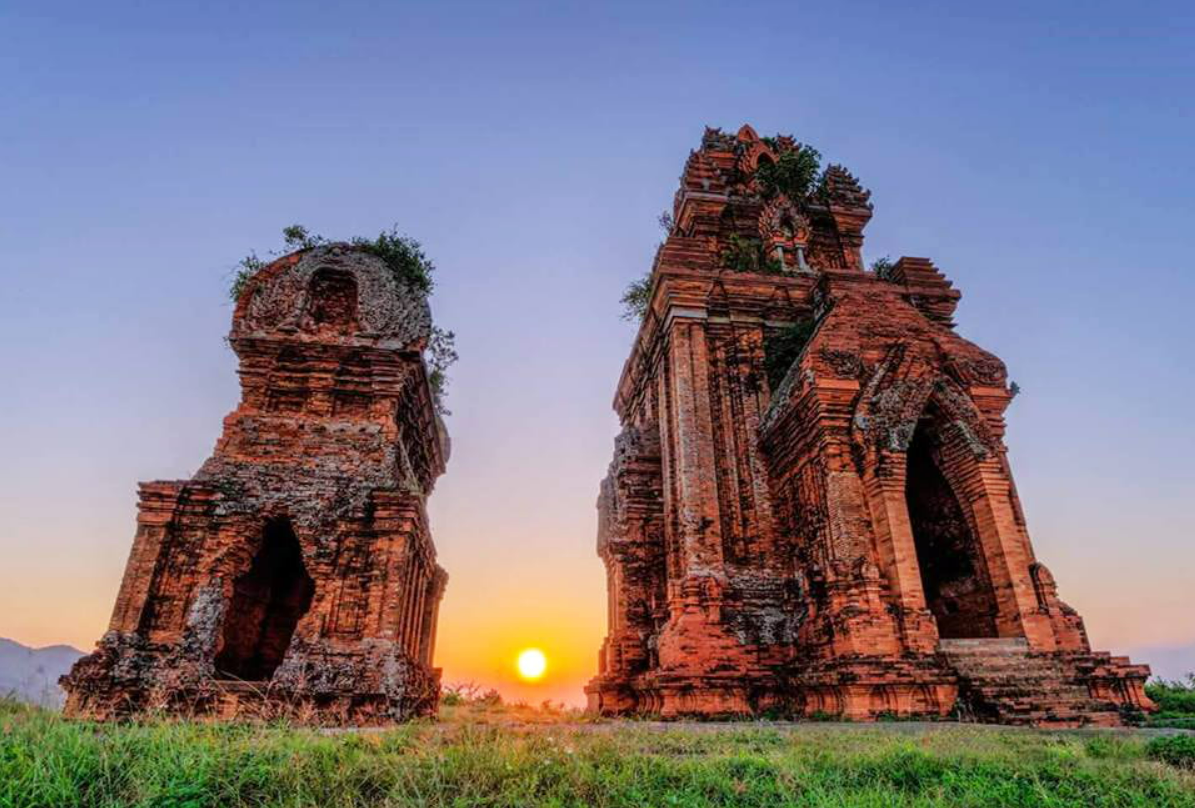
  • “Pyramid Shaped Black Cake” Tower (Tháp Bánh Ít)
  • Located near Phuoc Hiep Commune, Tuy Phuoc, 20km from Quy Nhon City.
    • Built at the early 12th century atop a hill.
    • 4-towers pyramid as its name.
    • Each tower has a distinctive architecture, beautiful decoration, and great aesthetic value.
    • Recognized art monument by Vietnam’s Ministry of Culture in 1982.
  • Duong Long Tower (Tháp Dương Long)
  • Located in Tay Binh Commune, Tay Son District, about 50km from Quy Nhon City.
    • Built in the late 12th century, when the Champa culture was flourishing.
    • 3-towers: central tower – 42m high; south one – 36m high; north one – 34m high.
    • Exterior made of bricks, sculptures, and carvings depicting animals that seem to come alive.
    • Vivid decorative patterns of flowers and animals show off delicate carving techniques.
    • Recognized by the Ministry of Culture as an Art Architecture Monument in 1980.
    • Recognized by the Prime Minister as a significant national monument on December 23, 2015
  • “Flying Fairy Wings” Tower (Tháp Cánh Tiên)
  • Located at Do Ban Citadel in Nhon Hau Commune, An Nhon district.
    • Built around the 16th century.
    • Interior design includes purple sandstone that twists and carve in design.
    • Exterior has 4-tiers that get smaller as they rise creating the image of a bird or fairy flying.

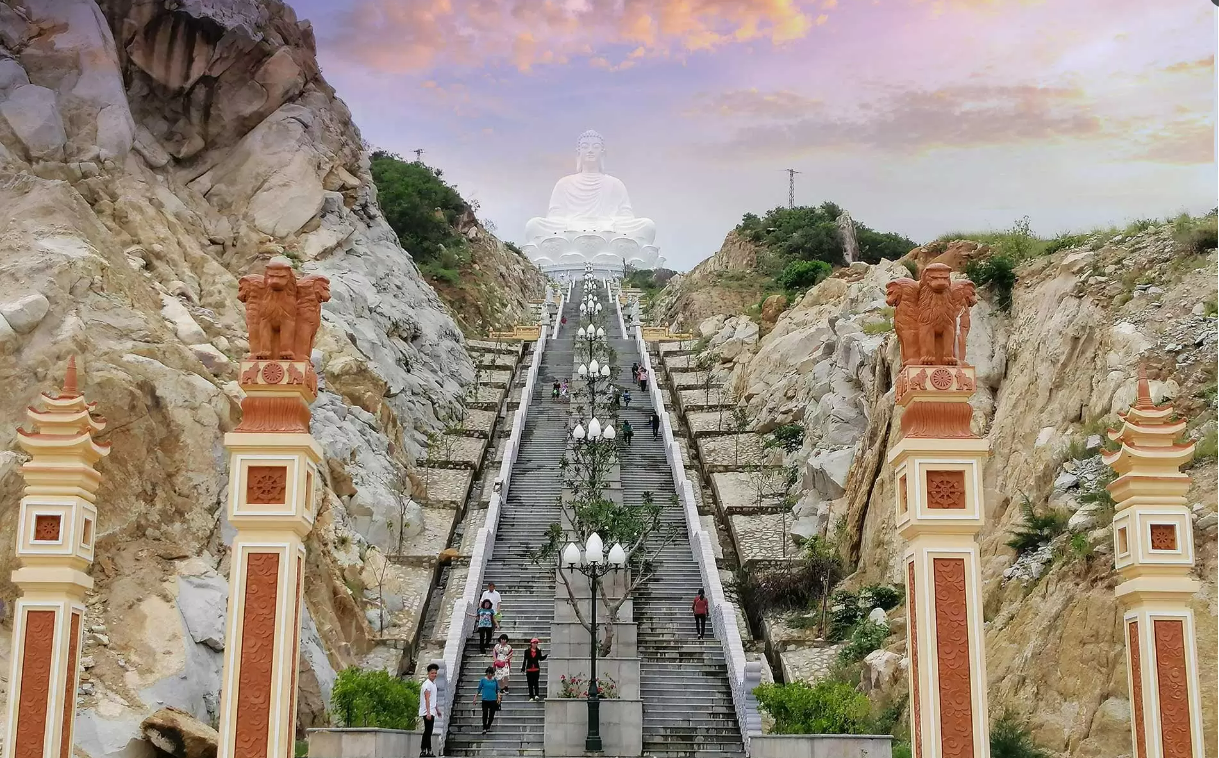
3.6. Ong Nui Pagoda (Chùa Ông Núi)

Ong Nui Pagoda (also known as Linh Phong Sơn Tự), lying on Chop Vung Mountain, Phu Cat district – 30km from Quy Nhon City, is one of the most important and famous Buddhist relic sites in Binh Dinh province.

The pagoda worships Buddhist monk Tinh Giac-Thien Tri who was called “Ông Núi” by local people (Ông means an old man, Núi means mountain). He cured villagers from diseases and epidemics by giving them medicines.

Binh Dinh provincial People’s Committee and the provincial Buddhist Sangha carried out the VND 500 billion project to build a historical, ecological and spiritual tourism complex in Ong Nui Pagoda. The most highlight of this project is the 69m siting Buddha Statue. From Ong Nui Pagoda, looking down to the Southwestern direction, visitors can see immense rice fields while a boundless blue sea is visible in the East. To the Southeastern direction stand the Thi Nai lagoon and a willow forest.

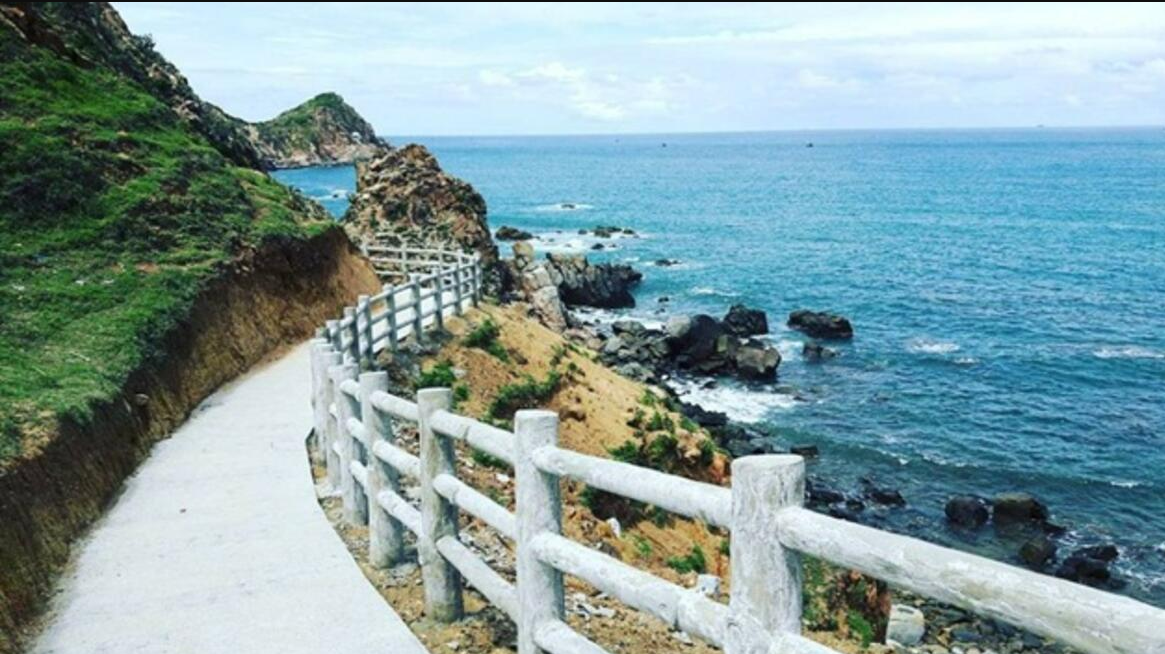
2.7. The Windy Pass (Eo Gió)

Eo Gio – located just 20kms from Quy Nhon City, is where the lush mossy mountains meet the calm coastal waters of the South China Sea. Just ride across the Thi Nai Bridge towards the coast and make your way towards Nhon Ly Commune. Eo Gió is the best place to see the sunrise in Quy Nhon – Binh Dinh. Though it’s not safe to swim here since the waves are strong, visitors can enjoy a nice, romantic walk and catch some cool breeze on the small winding walkway built on the side of the mountain. It is an unforgettable experience as one is surrounded by rough cliffs, massive caves, gusty wind and deep blue water smashing against large rocks which creates such a beautiful landscape.

2.8. Ky Co Beach (Bãi biển Kỳ Co)

About 25 km from Quy Nhon city center, Ky Co is a must – visit beach destination with the curved coastline and is fondly dubbed the “Maldives of Vietnam”. It has three sides facing to the mountain and one side facing to the sea. So there are two ways to reach this beach paradise. From Quy Nhon’s center, tourists can come to Ky Co beach by private car and enjoy the spectacular mountain scenery along the way. Or you can take private car to Eo Gio area and then go to Ky Co beach by 30-minute canoe. You are surely impressed by the magnificent rocky mountains, white sands and clear blue water with small sea rocks around. What could be better than to be immersing in the cool water or just simply lying down on the soft sand under the warm sunlight to enjoy a charming artwork from nature?

2.9. Phuong Mai Sand Dune (Đồi cát Phương Mai)

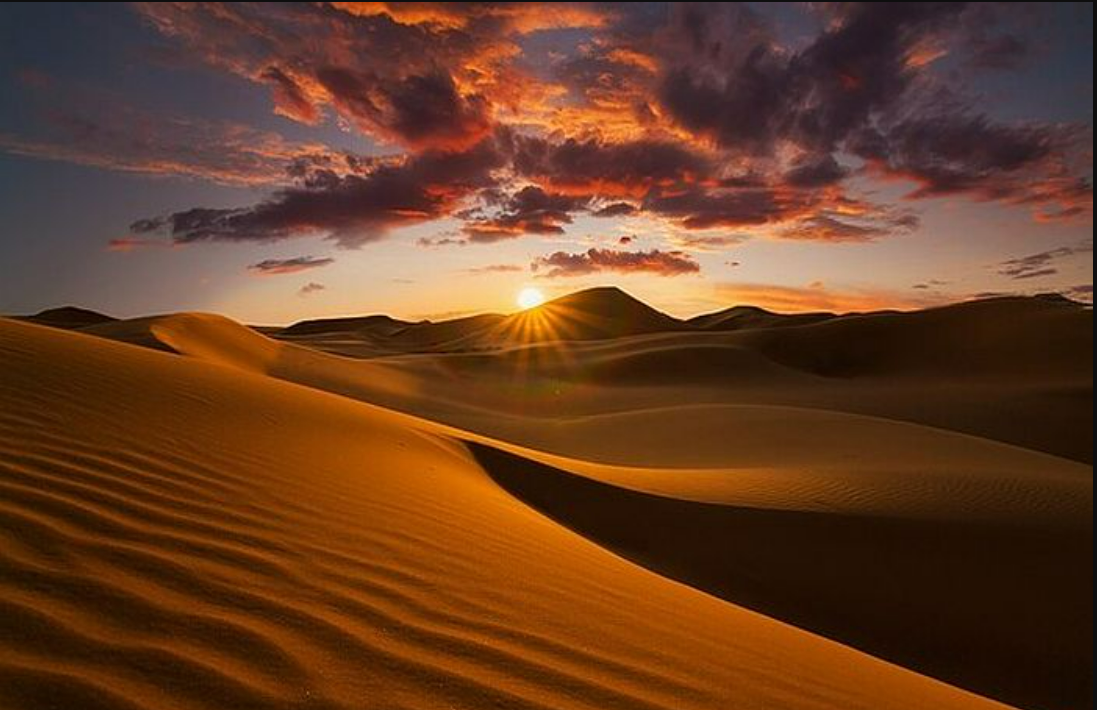
Just about 20km from Quy Nhon city, Phuong Mai peninsula is a secluded place with vast expanses of sand right beside Nhon Trach beach. Sand dunes on Phuong Mai peninsula are widely considered to be the most beautiful in the central region and are on par with other popular destinations such as Mui Ne in Binh Thuan province, Quang Phu in Quang Binh province, and Nam Cuong in Ninh Thuan province.

The huge sandy dunes keep changing its shape owning to windy blows from the nearby beaches. The sand dunes here are perfect for sand sliding activity. Tourists can see a lake formed in a sand pit at 100m depth and running close to Thi Nai Lagoon.

2.10. Cu Lao Xanh Island

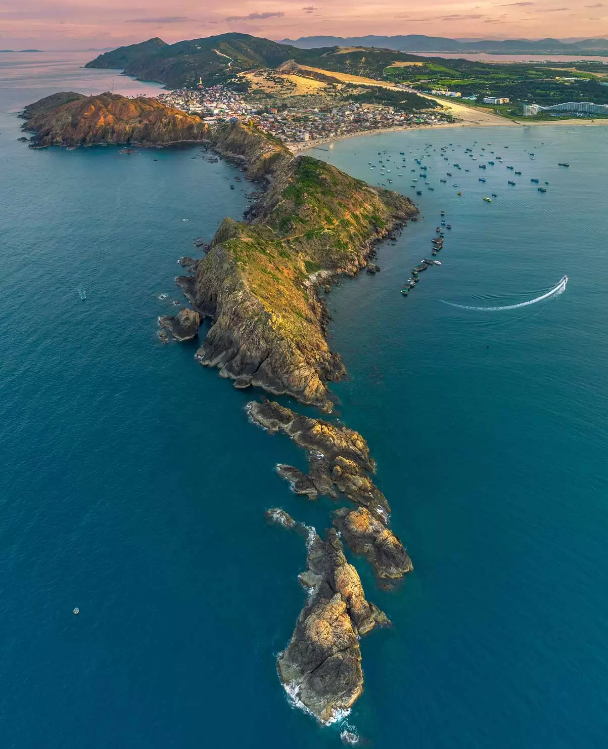
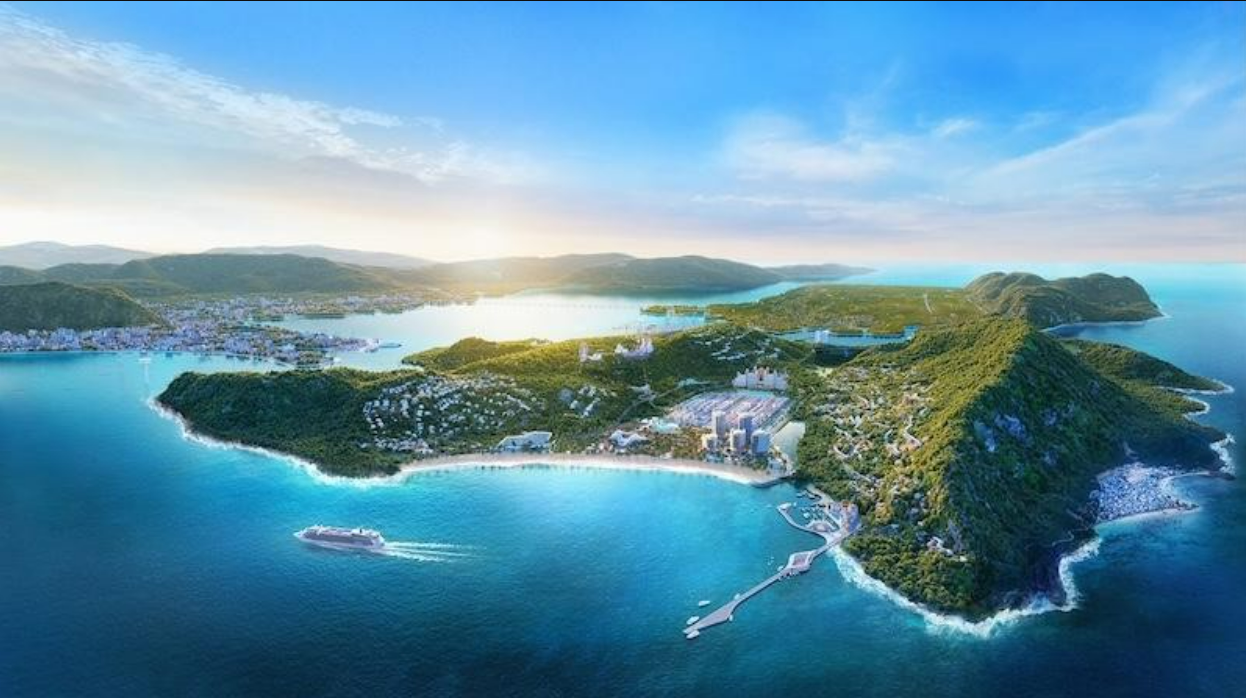
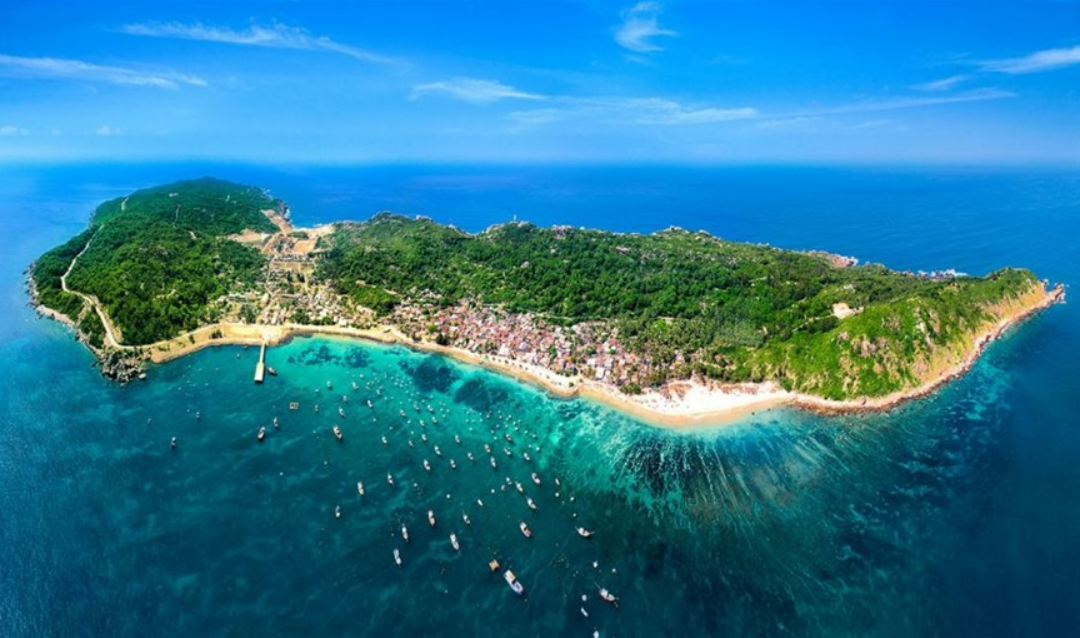
Cu Lao Xanh (or Vân Phi Island) of Quy Nhon city, Binh Dinh province is a hidden beauty and considered a charming pearl of the East Sea. The island is just about 24 km away from the mainland, located near the Xuan Dai Bay in Nhon Chau Commune, Binh Dinh Province. Cu Lao Xanh is translated into English as Green Islet, which refers to its greenery beauty and vitality.

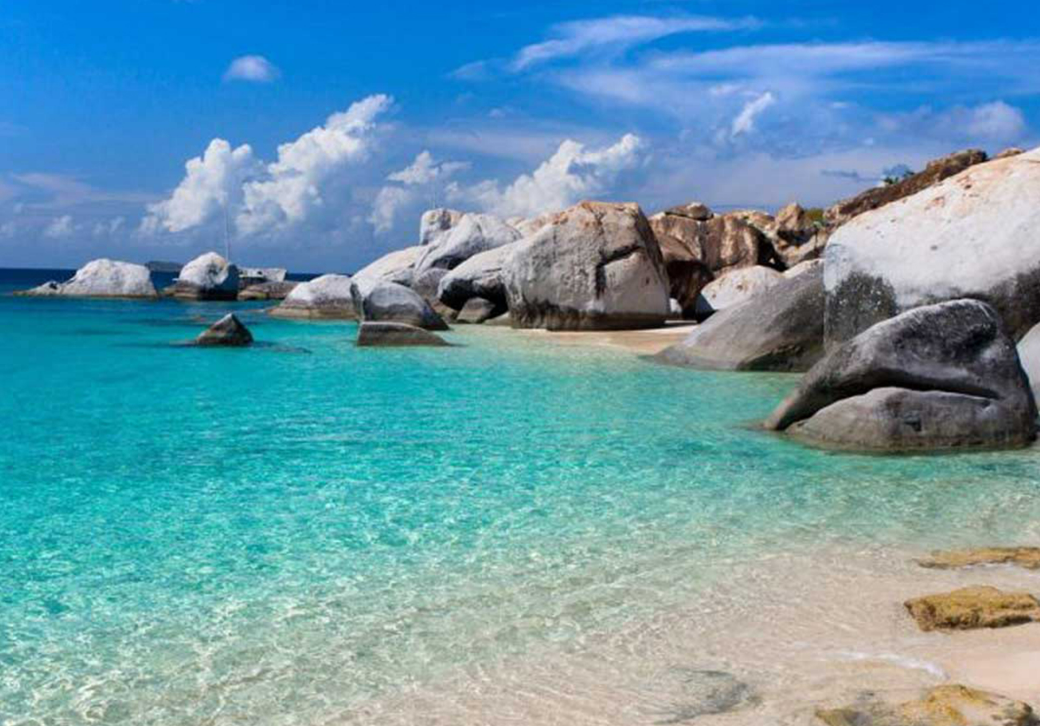
The whole island is covered by the greenish lush natural forest, the lines of the tall coconut trees along the beach, the pure blue sky and crystal-clear sea water. You may be fascinated by the sparkling water surface under the sunshine. Cu Lao Xanh has soft white sand dunes. From the above, Cu Lao Xanh looks like a sexy woman with full of vitality lying among the vast oceans. If you are on the planning step to visit Quy Nhon, Cu Lao Xanh must be included into your travel bucket list.

 Apply For Vietnam Visaapply Vietnam visaApply visa vietnamBook E-visa Vietnambook visa vietnamCheap Vietnam VisaE-visa Vietnamevisa VietnamEvisa Vietnam onlineexpedited e-visaexpedited E-visa to Vietnamexpedited Vietnam E-visaGet a Vietnam visaGet Vietnam Visaget vietnam visa onlineget visa to vietnamget visa Vietnammultiple entry visamy vietnam visaOrder Vietnam E-Visaquick vietnam evisarush vietnam visaUrgent Vietnam VisaVietnamVietnam E-visaVietnam EvisaVietnam touristVietnam travelVietnam vacationVietnam VisaVietnam visa costVietnam Visa ExemptionVietnam Visa for India citizensVietnam Visa For IndiansVietnam Visa for South Africa citizensVietnam Visa In IndiaVietnam visa in South AfricaVIetnam VIsa on arrivalVietnam VIsa onlineVietnam visa provisa for vietnam Visa On Arrivalvisa onlineVisa to VietnamVisa Vietnam

Posted on

The Da Lat Flower Festival 2024 will run for nearly a month.

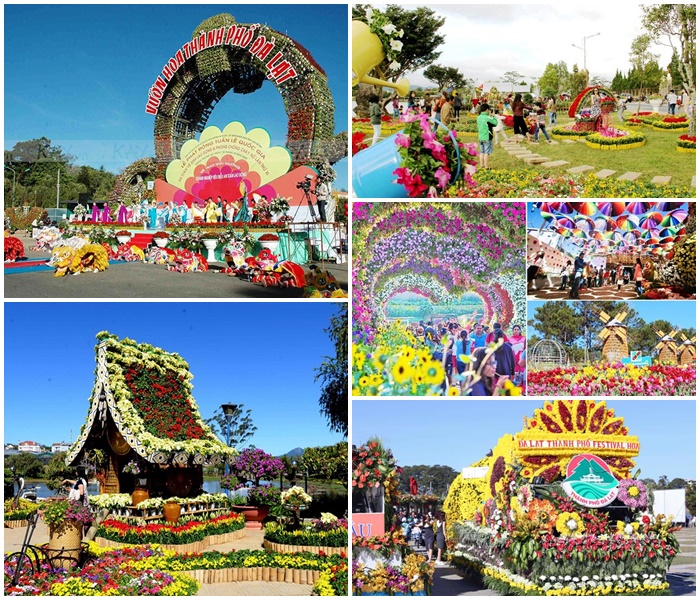
This year, we celebrate the 10th Da Lat Flower Festival. Unlike previous years, which lasted 5 to 7 days, this year’s event will be extended to 25 days. The Lam Dong Provincial People’s Committee is confident that this longer duration will amplify the festival’s impact and attract more tourists to the region.

This year, the Flower Festival has adopted the theme “Da Lat Flowers – Symphony of Colors,” distinguishing it from previous festivals. This choice is particularly significant as, in 2024, Da Lat City will be recognized by UNESCO as a Creative City of Music and named one of Asia’s “Top 5 Impressive Festival Cities.” The festival will introduce a range of new activities, including an international cultural exchange program, a rock band festival, and a Korean music showcase.

The event will feature 10 main programs, 12 supporting activities, and additional events. Highlights among the main programs include the Opening Ceremony of the 2024 Flower Festival, a New Year’s Eve 2025 Art Program and Closing Ceremony, vibrant flower displays, and an international conference focused on green tourism and cultural industries.

Supporting activities will include the “Dalat Fun Color” Music Festival, the “Bao Lam – Legend and Convergence” Festival, the Korea – Da Lat 2024 Music Festival, and various running events. Furthermore, the festival will present workshops on cultural preservation, art exhibitions, and interactive tourism experiences.

The festival aims to showcase and promote the cultural essence of the Da Lat people, characterized by their “Gentle – Elegant – Hospitable” nature. It seeks to foster pride among the residents of Da Lat and Lam Dong while encouraging a sense of community responsibility across all sectors, organizations, businesses, and localities. By inviting participation from both within the province and beyond, the festival endeavors to enhance the brand and reputation of Da Lat city.

Start planning your trip to Da Lat,Vietnam today by getting your visa at vietnamvisapro.net. As a trusted and reliable visa service, we’re here to help you turn your travel dreams into reality from the very first step.

Posted on

Discovering Cu Lao Xanh (Van Phi Island).

Cu Lao Xanh (or Van Phi Island) of Quy Nhon City, Binh Dinh Province is a hidden beauty and considered a charming pearl of the East Sea. The island is just about 24 km away from the mainland, located near the Xuan Dai Bay in Nhon Chau Commune, Binh Dinh Province. Cu Lao Xanh is translated into English as Green Islet, which refers to its greenery beauty and vitality.

>>> Apply Visa to Vietnam <<<

>>> Order Fast Track Service <<<

The whole island is covered by the greenish lush natural forest, the lines of the tall coconut trees along the beach, the pure blue sky and crystal-clear sea water. You may be fascinated by the sparkling water surface under the sunshine. Cu Lao Xanh has soft white sand dunes. From the above, Cu Lao Xanh looks like a sexy woman with full of vitality lying among the vast oceans. If you are on the planning step to visit Quy Nhon, Cu Lao Xanh must be included into your travel bucket list.

  1. Best time to visit Cu Lao Xanh

Cu Lao Xanh shares the typical features of tropical climate in South Central Vietnam, which is similar to more popular beaches in Nha Trang or Phu Yen.

The best time to plan the visit to this island is from February to June or September to October. During these months, the island is in full summer mode, basking in constant sunshine (avg temp: 28°C), which is convenient for visitors to swim and dive to see the colorful coral reefs.

In contrast, the end of July and August should be avoided because typhoon tends to happen in this period. The northeast monsoon blows to cause rain and fluctuations, large waves prevent ships and boats from operating occasionally so tourists are highly recommended not to visit the island in bad weather conditions to ensure their safety.

  1. Things to do in Cu Lao Xanh
  2. 1. Swimming & Diving

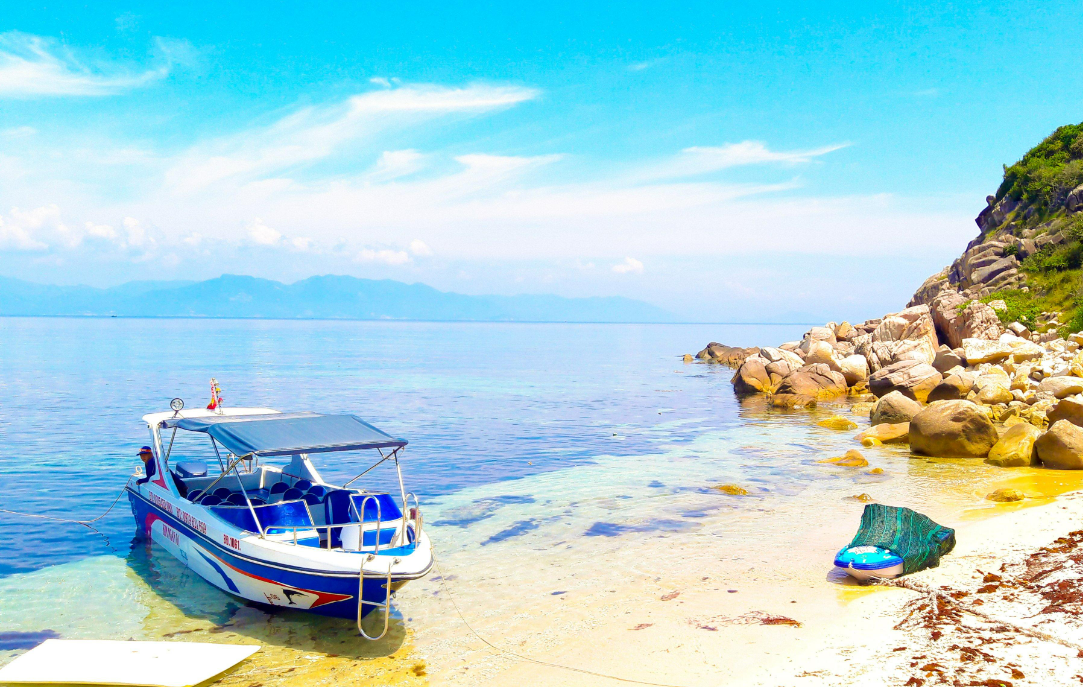
Beautiful beaches are located at the west of the island. They surely can meet the requirements of persons who likes swimming, admiring the blue crystal water, seeing colorful & unique multi-shape coral reefs and walking along the long soft white sand stripes. Sea lovers shouldn’t miss this amazing opportunity to experience these magnificent beaches. Moreover, you can take part in other exciting activities such as seeking sea stars, catch sea urchin, etc. Just immerse yourself into the blue sea and feel how close you are to nature more than ever.

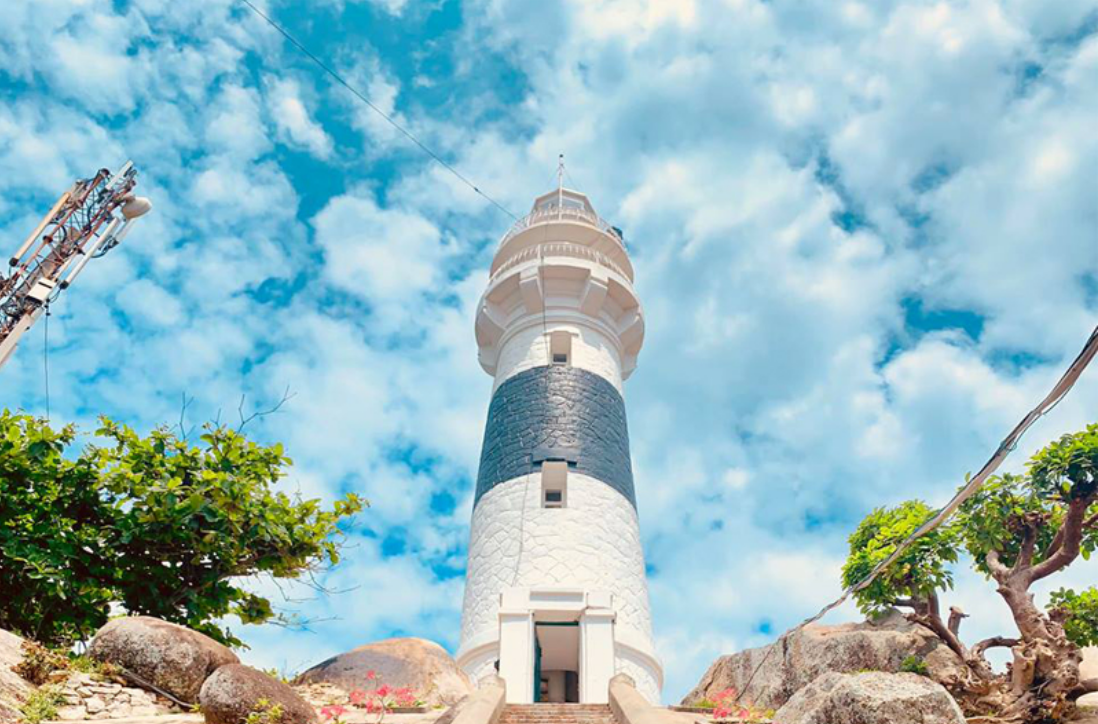
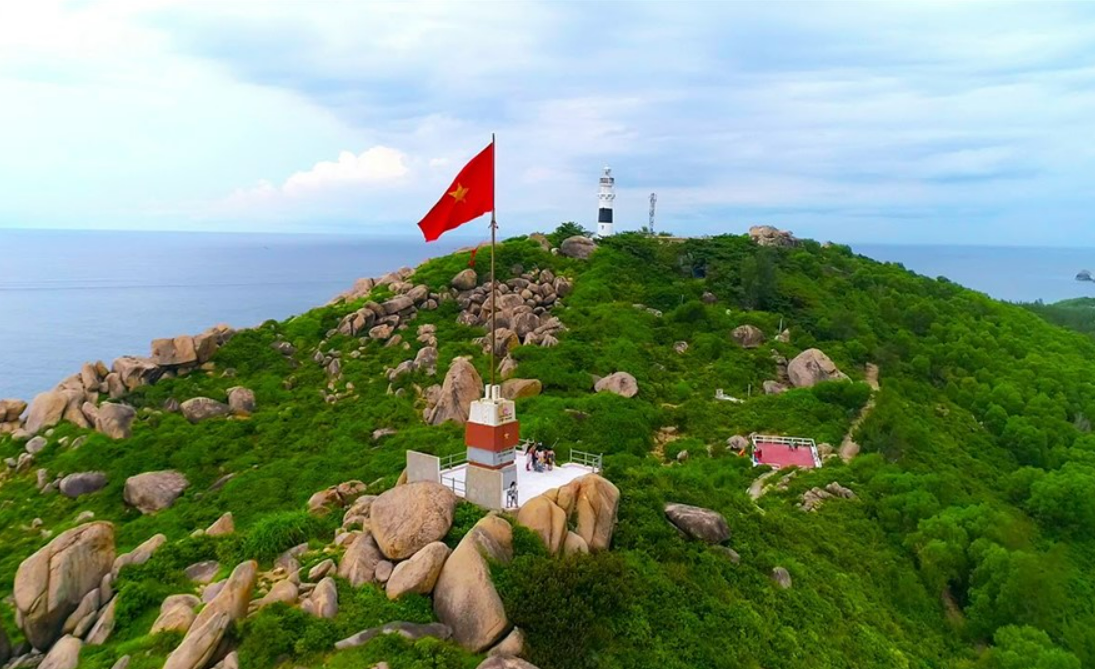
2.2. Discover Cu Lao Xanh Light Station & Lighthouse

Cu Lao Xanh Light Station is located on the top of a 120m hill and parallel to the 19m Lighthouse. It is a two-storey building with a unique structure and used to be the house of a French official during the war against the French colonialists. At the back of the Cu Lao Xanh Light Station standing a 19-meter lighthouse with French name as Plogam Bir. Its structure is a combination of Asian and Western Gothic architecture styles. This lighthouse was built in 1890 by French after a ship sank on colliding with the reef in Quy Nhon sea. By the time of its launching, this structure was the highest lighthouse of the Indochina, with 119 meters in length and its light can spread up to 50 kilometres.

Over the past 130 years, Cu Lao Xanh Lighthouse has become a close friend to fishing boats and fishermen in this region. Its light lead fishermen to row their boats safely at nighttime or overcome many strong waves and sea storms all year round.

Standing on top of the lighthouse, tourists can have a panoramic view over the Cu Lao Xanh Island and surely will be overwhelmed by the picturesque sceneries below. The island stretches out like a grand picture with many shades of blue and green.

2.3. Visit “Fairy Well” Stream (Giếng Tiên)

Tourists can move down toward the northwest of the lighthouse to reach Fairy Well Stream (Giếng Tiên). The name derived from a legend. According to the legend, on moonlit nights, fairies would descend, play around, enjoy the scenes, and take a shower in the stream before flying back to the sky. “Gieng” means “well” and “tien’ means “fairy’ in Vietnamese. Therefore, Gieng Tien stream means the well where the fairies take a bath. Bathing in the pure fresh water with salty smell is surely a great experience that every visitor should not miss.

2.4. Participate Cầu Ngư Festival

Cầu Ngư means “fish worshipping” in Vietnamese. This is the biggest traditional festival of the fishermen in coastal areas including Cu Lao Xanh. Cầu Ngư Festival is annually held on 16th March (lunar calendar) to express local fishermen’s gratitude to the fish lord, as well as pray for a peaceful and successful fishing season as fishermen often face up with uncertainties and potential dangers on the giant ocean. This is a spiritual tradition passed on from generation to generation since ancient time and still honorably preserved until today.
During the festival, besides the worship rituals, many traditional interesting games such as the racing boat, tugs of war, etc are also organized.

2.5. Other activities

Do not forget to bring fishing rope when discovering the Cu Lao Xanh Island. When tourists are tired from walking or swimming, they can sit on some rock cliffs and go fishing, or wade in the water to catch some “vú nàng” snails, a local specialty. What can be more pleasant than to enjoy the seafood one has just caught on their own, grilled on the spot with friends or family members.

There were also small sand dunes in which the sea turtles often lay their eggs. If a tourist is lucky enough, he might have a chance to see the tiny turtles crawling on the sand toward the sea.

  1. Accommodations in Cu Lao Xanh

This place is famous for its beautiful, natural and romantic beach and they have not been exploited much by tourism. Therefore, there are not many accommodation options for tourists to choose from. There are several homestays with extremely cheap prices from 50,000 VND – 100,000 VND/ person or 150,000 VND – 550,000 VND/ room, depending on tourists’ budget.

  • Homestay Travel Cu Lao Xanh
    • Uncle Nam’s Homestay in Hoa Hoa
    • Uncle Vuong’s Homestay
    • Phuc Hung Homestay
    • Homestay Ngoc Dinh

Besides a few homestays, if tourists want to experience local life, they can ask local people for staying in their houses. The local people and fishermen here are very friendly and open. They are willing to help and invite you a simple meal of delicious seafood and local specialty in Cu Lao Xanh.

  1. How to get to Cu Lao Xanh

Lying in a strictly managed area within the maritime boundary of the country, the island is virtually off limits for foreigners. The only way to get to this island, 24km away from the inland town of Quy Nhon, is by boat or speedboat. From the Ham Tu wharf, it takes 2 hours and 25,000 VND (~ 1.09$) to get there in a normal wooden boat. For 200,000 VND, you can get there on a high speedboat in 50 minutes. Cu Lao Xanh is wildly beautiful, with sunny beaches and a serene coast.

  1. Some notes when traveling to Cu Lao Xanh?

– Cu Lao Xanh is a military island, so the security is very strict. When arriving in the island you must bring identification card. Ideally, you should book the tour to Cu Lao Xanh with Vietnam Travel as we can assist you to get a guaranteed procedure quickly. Foreigners are prohibited to visit Cu Lao Xanh for any reason.

– Currently Cu Lao Xanh has not yet pulled electricity from the mainland. People living on the island only use generators from 9 am to 3 pm and 5 pm to 11 pm. So, you should prepare backup chargers, cameras, phones to avoid running out of battery.

Fresh air, blue sea, white sand and golden sunshine creates a poetic and peaceful natural scene of Cu Lao Cham, which makes it as a truly precious gem in the sea and a destination that should not be missed when exploring Quy Nhon.

 Apply For Vietnam Visaapply Vietnam visaApply visa vietnamBook E-visa Vietnambook visa vietnamCheap Vietnam VisaE-visa Vietnamevisa VietnamEvisa Vietnam onlineexpedited e-visaexpedited E-visa to Vietnamexpedited Vietnam E-visaGet a Vietnam visaGet Vietnam Visaget vietnam visa onlineget visa to vietnamget visa Vietnammultiple entry visamy vietnam visaOrder Vietnam E-Visaquick vietnam evisarush vietnam visaUrgent Vietnam VisaVietnamVietnam E-visaVietnam EvisaVietnam touristVietnam travelVietnam vacationVietnam VisaVietnam visa costVietnam Visa ExemptionVietnam Visa for India citizensVietnam Visa For IndiansVietnam Visa for South Africa citizensVietnam Visa In IndiaVietnam visa in South AfricaVIetnam VIsa on arrivalVietnam VIsa onlineVietnam visa provisa for vietnam Visa On Arrivalvisa onlineVisa to VietnamVisa Vietnam