Posted on 5 Comments

Travel Advisory 2026: Why Vietnam Continues to Be a Safe and Budget-Friendly Destination Despite Global Tensions

In recent months, geopolitical tensions in several regions have created uncertainty for international travelers. Conflicts in certain areas, combined with rising fuel prices and adjustments to global flight routes, are beginning to influence travel decisions for both tourists and business travelers worldwide.

As airlines respond by rerouting flights and managing higher operational costs, many travelers are becoming more selective about their destinations. Increasingly, people are prioritizing countries that offer political stability, safety, and convenient accessibility.

Amid these global uncertainties, Vietnam continues to stand out as one of the safest and most reliable travel destinations in Asia. With its peaceful environment, rapidly developing tourism infrastructure, and traveler-friendly Vietnam visa policies, the country remains an attractive choice for visitors planning to travel to Vietnam in the coming months.

To make the journey even smoother, Vietnamvisa provides convenient travel services that simplify the entire process—from applying for a Vietnam visa online to arranging arrival support, helping travelers enter the country quickly and enjoy a stress-free travel experience.

Vietnam Is Located Far from Current Global Conflict Zones

One of the main reasons Vietnam continues to be considered a safe travel destination is its favorable geographical location.

Geopolitical tensions today are mainly centered in regions like the Middle East and parts of Eastern Europe. Vietnam, situated in Southeast Asia, is geographically far from these areas and remains unaffected by the ongoing conflicts.

This distance offers travelers greater peace of mind when planning international trips. Compared with destinations located closer to unstable regions, Vietnam provides a calm and secure environment where visitors can explore and enjoy their journey without concerns about disruptions linked to global tensions.

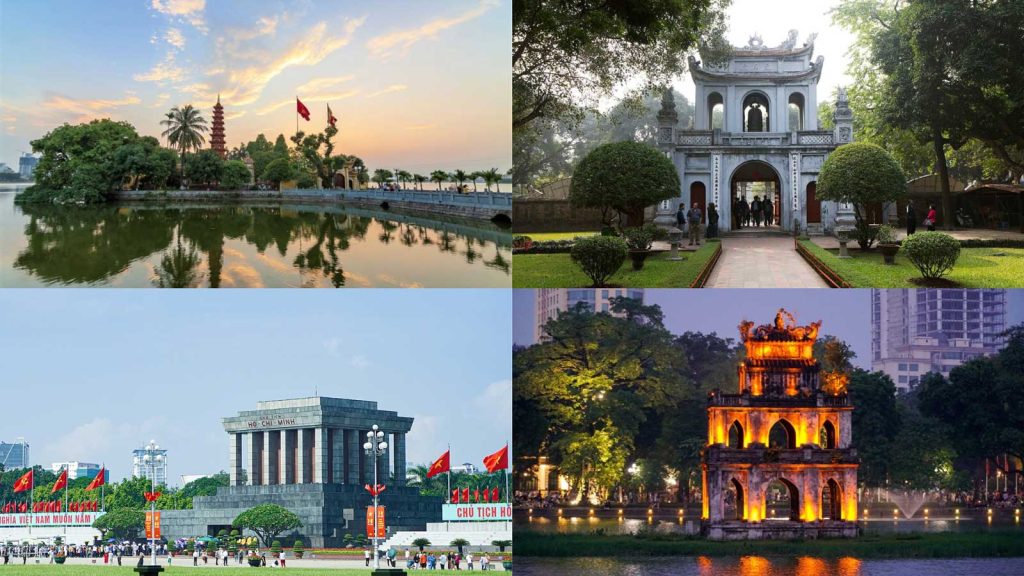
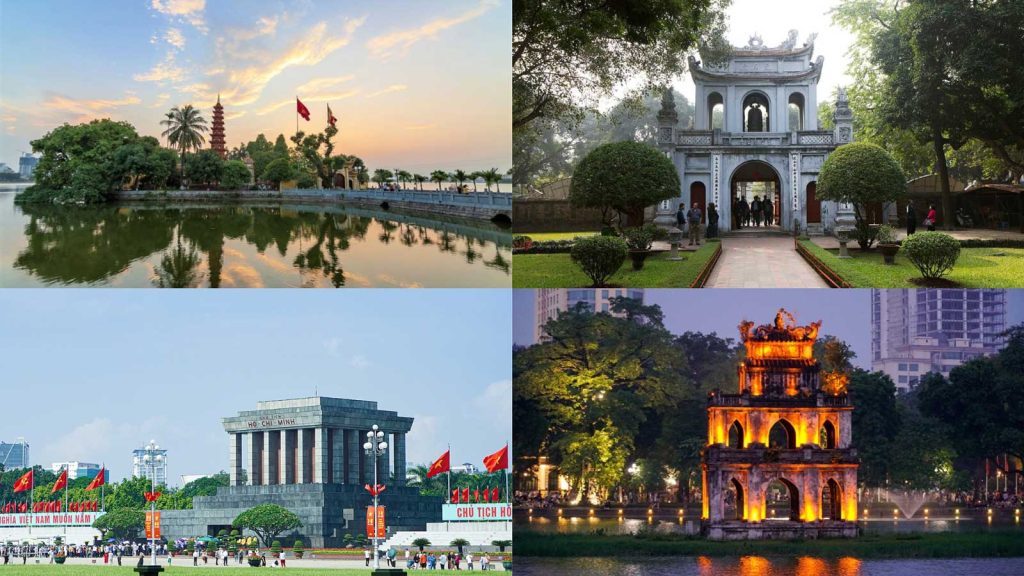
Major cities such as Hanoi and Ho Chi Minh City, along with coastal destinations like Da Nang, continue to welcome millions of travelers each year, supported by reliable tourism services and well-developed infrastructure.

Vietnam Tourism Remains Fully Operational

Despite global uncertainties, Vietnam’s tourism industry continues to operate smoothly.

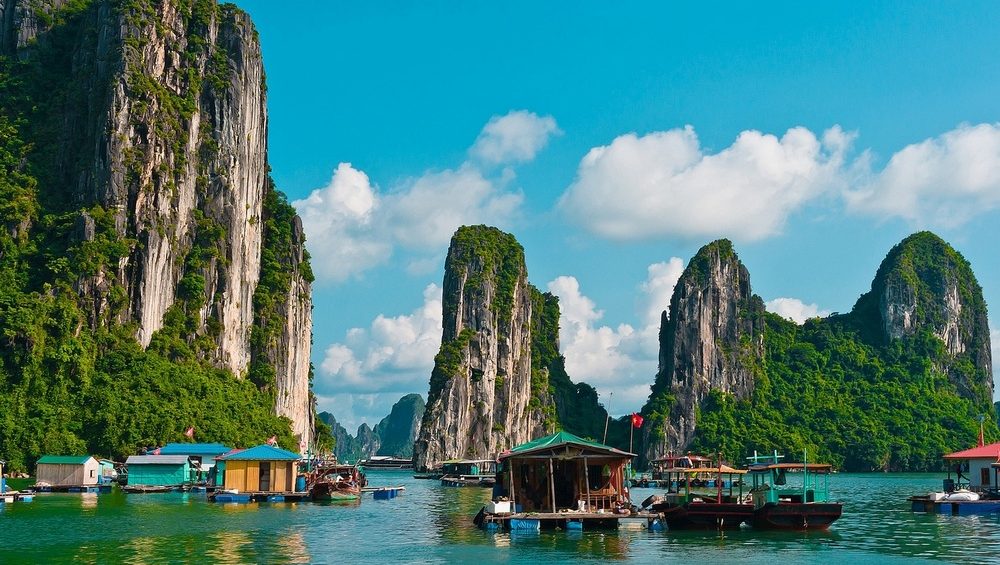
Hotels, restaurants, tour operators, transportation services, and tourist attractions throughout the country continue to welcome international visitors as normal. Iconic destinations such as Ha Long Bay, Hoi An Ancient Town, and Phu Quoc Island remain open and ready to receive travelers.

Visitors can still experience everything that has made Vietnam one of the fastest-growing tourism destinations in Asia, including:

  • Cultural heritage sites
  • World-famous cuisine
  • Scenic natural landscapes
  • Affordable luxury travel experiences

Vietnam’s government and tourism authorities also implement strict safety and stability measures to provide international visitors with a secure and comfortable travel environment.

Easy Air Travel Across Asia

Another significant advantage for travelers visiting Vietnam is the extensive network of flight connections across Asia.

Despite some airlines adjusting routes due to global tensions, Vietnam continues to maintain strong air connectivity with many of the region’s major aviation hubs.

Some of the key hubs offering frequent flights to Vietnam include:

  • Seoul
  • Tokyo
  • Singapore
  • Bangkok
  • Kuala Lumpur
  • Hong Kong

These cities act as key transit hubs, enabling travelers to reach Vietnam without depending on flight routes that may pass through potentially affected areas.

In addition, many major international cities offer direct flights to Vietnam’s main gateways, including Noi Bai International Airport, Tan Son Nhat International Airport, and Da Nang International Airport, providing convenient access for international visitors.

Vietnam Remains One of the Most Affordable Travel Destinations in Asia for 2026

While rising fuel prices may drive up airfares globally, Vietnam still delivers outstanding value once travelers arrive.

Compared to many international destinations, travel costs in Vietnam remain highly affordable. Visitors can experience high-quality services at budget-friendly prices, including:

  • Comfortable hotels
  • Delicious local cuisine
  • Private transportation
  • Guided tours
  • Cultural activities

For travelers worried about rising travel costs worldwide, Vietnam remains an attractive destination where visitors can enjoy diverse experiences, rich culture, and beautiful landscapes without exceeding their budget.

Vietnam Visa Guide: Easy and Convenient Application Options

Another key reason Vietnam appeals to international travelers is its convenient and accessible visa policy.

Most visitors can easily apply for a Vietnam eVisa online before their trip. This digital system allows travelers to submit their applications electronically and receive approval prior to departure, making the process simple and time-saving.

For those who prefer extra support, Vietnamvisapro offers professional visa assistance, helping travelers complete the application quickly and accurately.

These services include:

  • Vietnam eVisa support
  • Visa on arrival approval letter
  • Urgent visa processing

With professional visa assistance, travelers can avoid common application errors and minimize the risk of processing delays.

????Book it here:https://vietnamvisapro.net/en/apply-online.html

Vietnam: A Safe and Smart Destination for Travelers in 2026

During periods of global uncertainty, travelers tend to prioritize destinations that provide safety, stability, and great value for money.

Vietnam continues to stand out by offering all of these advantages. Known for its peaceful atmosphere, well-developed travel infrastructure, and visitor-friendly visa policies, the country remains one of Asia’s most attractive destinations.

Whether traveling for business or leisure, international visitors can enjoy a seamless journey with the support of services from Vietnamvisapro, including visa assistance, fast-track airport services and private airport transfers.

For those seeking a destination that combines safety, convenience, and rich experiences, Vietnam continues to be an excellent choice for 2026 and beyond.

Posted on

Advantages of Applying for a Vietnam e-Visa Online

In today’s digital age, traditional visa applications—often burdened with complex paperwork and the need to visit embassies or consulates—are being replaced by more modern and convenient methods. Among these, the Vietnam e-Visa stands out as a fast, simple, and efficient online solution highly valued by international travelers and business professionals alike.

What is Vietnam e-Visa?

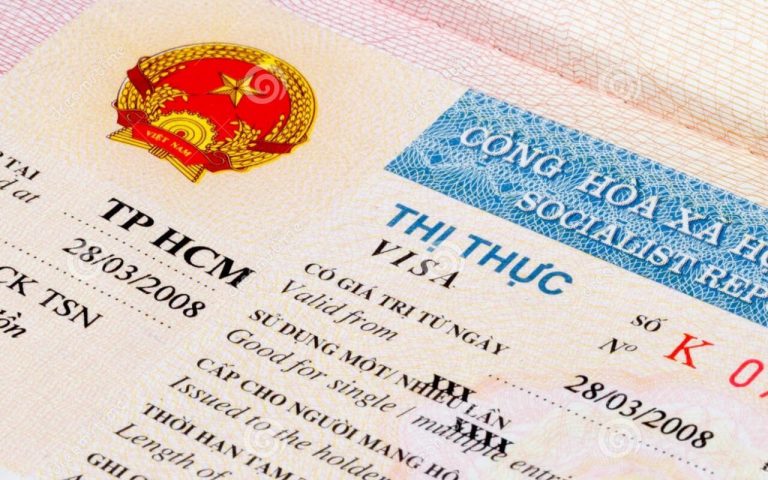
The Vietnam e-Visa is an electronic travel authorization issued by the Vietnam Immigration Department for foreigners wishing to visit Vietnam for a short stay. Applicants no longer need to visit a Vietnamese embassy or consulate in person — the entire process, from application to visa issuance, can be completed online through the official immigration website.

This e-Visa is typically valid for up to 90 days and may be issued for single or multiple entries, making it ideal for travelers visiting Vietnam for tourism or short-term business purposes.

Top Benefits of Getting Your Vietnam E-Visa Online

1. Cost-Effective

Applying for a Vietnam e-Visa online is typically more cost-effective than using traditional visa methods. Since there are no courier or embassy service fees, travelers can avoid extra expenses. The official e-Visa fee is fixed and transparent, enabling accurate budgeting with no hidden charges. This makes it an ideal choice for tourists, business travelers, and anyone looking to save on travel costs.

2. Convenience and Time-Saving

One of the greatest advantages of applying for a Vietnam e-Visa online is its exceptional convenience. Instead of spending hours visiting an embassy or consulate, applicants can easily complete the entire process from the comfort of their home—or anywhere with internet access. The online system operates 24/7, allowing travelers to apply at any time without worrying about office hours or public holidays.

The application process is simple and user-friendly, requiring only basic personal and travel details. Once submitted, the e-Visa is usually processed within four business days, dramatically cutting down waiting time compared to traditional visa applications.

3. Simplified Entry Process

With an e-Visa, travelers can skip the long queues at Vietnamese embassies or visa-on-arrival counters. The e-Visa is digitally connected to the traveler’s passport, enabling a seamless entry through designated international airports and border checkpoints. This streamlined process speeds up immigration, minimizes stress, and saves valuable time for travelers.

4. Secure and Reliable

Vietnam’s e-Visa system is operated through the government’s official portal, guaranteeing a secure and reliable application process. All online payments are handled via protected gateways, and applicants receive confirmation directly by email. As a fully digital document, the e-Visa minimizes the risk of loss or damage often associated with traditional paper visas or passport stamps.

5. Versatility to Suit Every Travel Purpose

Vietnam’s e-Visa accommodates various travel purposes, such as tourism, business, and official trips. Its flexibility allows travelers of all kinds to enter the country without dealing with complicated visa procedures. Typically, the e-Visa permits multiple entries or single  and a stay of up to 90 days, making it ideal for short-term travel.

6. Easy Access for Visitors of All Nationalities

Vietnam’s e-Visa system is open to citizens from more than 200 countries, offering easy access to a wide range of international travelers. This inclusive policy promotes tourism, facilitates global business exchange, and strengthens Vietnam’s international connectivity.

7. Easy to Track and Manage

Applicants can easily monitor the progress of their e-Visa applications online. With the digital format, travelers can securely store a copy of their visa on their electronic devices, minimizing the risk of losing essential travel documents.

8. Promotes Tourism and Drives Economic Development

By streamlining the visa process, Vietnam has made it easier for tourists and business travelers to visit, boosting the nation’s economic growth. The convenience of the e-Visa system also inspires spontaneous trips and encourages visitors to return.

10. Seamless Integration with Other Travel Services

Many online platforms that assist with e-Visa applications also offer additional services such as travel insurance, airport transfers, and guided tours. This integration provides a seamless travel planning experience from visa application to arrival.

Essential tips for a smooth Vietnam e-Visa application

  • Only applicable to some countries: Not all countries are granted e-Visa. You need to check the list of eligible countries on the official website.
  • Duration and number of entries: The e-Visa permits multiple entries or single  and a stay of up to 90 days
  • Print and bring a hard copy: Although it is an electronic visa, you still need to print it out and bring it with you when you arrive at the border gate.
  • Avoid fake websites: Only submit your application and payment on the official website of the Vietnam Immigration Department to ensure safety.

The Vietnam e-Visa system has revolutionized the way travelers enter the country, offering a fast, affordable, and eco-friendly alternative to traditional visa processes. With its simplicity, security, and convenience, it’s the ideal solution for anyone eager to explore Vietnam. From the vibrant streets of Ho Chi Minh City and the serene waterways of the Mekong Delta to the sun-kissed shores of Phu Quoc, obtaining your e-Visa in advance guarantees a seamless travel experience from beginning to end.

If Vietnam is on your travel list, applying for your e-Visa online is easily one of the smartest and most efficient choices you can make!

Posted on

3 not to miss things when traveling to Vietnam

Well-prepared before an oversea trip is important so in order to have a perfect trip in Vietnam, there are a lot of things you should know before travel to this country. In this article, we will provide you the information 3 basic things that everyone needs to consider including Vietnam visa requirement, best time to visit Vietnam, and unit of currency that can be used in the country.

1.Vietnam visa requirement

One of the most important documents you need to have before coming to Vietnam is Vietnam visa if your nationality is not included in Vietnam visa exemption list. There are 3 normal ways to get Vietnam visa which are mentioned clearly as below

  • Vietnam visa through Vietnam Embassy

You can get Vietnam visa by this traditional way after 4-5 working days with full visa stamp already stick in original passport. Besides, the required documents to submit and fees when applying for Vietnam visa at Vietnam Embassy in each country are not the same therefore, it is highly recommended to contact the nearest Vietnam Embassy or Consulate.

  • Vietnam Visa on arrival with vietnamvisapro.net

This kind of Vietnam visa will be obtained when you arrive at any Vietnam international airport which explains why Vietnam visa on arrival is only acceptable for foreigners who travel to Vietnam by air. The whole application process will be online until you get an approval letter before getting on board and finally get visa stamped at Vietnam airports by submitting other documents required. Full process of this convenient way of Vietnam visa application can be found at http://vietnamvisapro.net/

  • Vietnam e-visa

Vietnam e-visa which is a newly launched method is applicable for foreigners who wish to have one-single entry visa with vacation purpose. There are also some conditions if you plan to have Vietnam e visa such as your nationality must be on the list of 157 countries and your stay in Vietnam is no more than 90 days. For more details of Vietnam e-visa, please check out http://vietnamvisapro.net/

2. Best time to visit Vietnam

The whole Vietnam is a tropical country but the weather in Vietnam is not the same in every region as each region (the Northern, the Central, and the Southern) has its own weather. Therefore, it is not easy to recommend as the best time to travel to Vietnam. However, generally speaking, autumn (often lasts from September to December) and spring (often lasts from March to April) can be considered as the most favorable seasons in the whole country. It is the time that you can not only enjoy the good weather but also take part in some interesting festivals, especially Tet (Vietnam Lunar New Year). If you want to know the specific weather of the destinations in Vietnam that you wish to visit, checking weather forecast is highly recommended.

3. Currency used in Vietnam

The currency of Vietnam is Vietnam Dong therefore, it is necessary for you to exchange amount of Vietnam Dong before traveling to Vietnam. There is another currency that is widely used in this country is US dollar; however, it is only possible for you to make a payment by US dollar in big hotels, travel agents, restaurants, and flight booking. It is not difficult for you to exchange Vietnam Dong and US dollar in Vietnam. You can exchange currency in every bank, ATM machine, and even jewelry shop.

Vietnam is an interesting country with a lot of beautiful destinations and many things to explore. Three things above are the necessary points for all foreigners who wish to come to Vietnam and we hope our information can help you prepare well for your trip in Vietnam.

Posted on

Hanoi and Ho Chi Minh City: Among Top 100 Cities Globally

In a testament to their economic dynamism and cultural allure, Hanoi and Ho Chi Minh City, the two vibrant metropolises of Vietnam, have secured prestigious positions among the top 100 cities globally. This data comes from a collaboration between Euromonitor International, a leading global market research company, and Lighthouse Data, a data company renowned for its comprehensive insights, with Ho Chi Minh City ranked 85th and Hanoi at 98th.

Global experts assessed and ranked cities according to 55 indicators encompassing six aspects: economic and commercial efficacy; tourism outcomes; infrastructure for tourism; tourist policies and allure; health and security; and sustainability.

Hanoi: A Haven of Tradition and Modernity
du lich ha noi(4)

Hanoi, the capital city of Vietnam, is a captivating blend of tradition and modernity. Steeped in history, Hanoi’s Old Quarter is a maze of narrow streets adorned with colonial architecture, ancient temples, and bustling markets. The city’s inclusion in the top 100 cities globally is a testament to its economic growth, vibrant culture, and the resilience of its people. From the tranquility of Hoan Kiem Lake to the energy of the local markets, Hanoi offers a diverse and immersive experience for residents and visitors alike.

Ho Chi Minh City: The Southern Economic Powerhouse
du lich ha noi(4)

Formerly known as Saigon, Ho Chi Minh City has emerged as a bustling economic hub in Southeast Asia. The city’s inclusion in the global top 100 cities is a recognition of its rapid development, modern infrastructure, and the entrepreneurial spirit that permeates its streets. From the iconic Ben Thanh Market to the soaring skyscrapers that define its skyline, Ho Chi Minh City encapsulates the spirit of progress and innovation, making it a key player on the world stage.

Factors Behind the Rankings

The rankings of Hanoi and Ho Chi Minh City among the top 100 cities globally consider various factors, including economic performance, tourism appeal, quality of life, and overall city attractiveness. Both cities have demonstrated resilience and adaptability in the face of global challenges, making them standout destinations that offer a unique blend of tradition, modernity, and economic vitality.

As Hanoi and Ho Chi Minh City bask in the global spotlight, the recognition by Euromonitor International and Lighthouse Data opens up new opportunities for these cities. Whether you are drawn to the historic charm of Hanoi or the dynamic energy of Ho Chi Minh City, the global acknowledgment positions these Vietnamese cities as key players in the ever-evolving landscape of global urban centers. As they continue to grow and evolve, Hanoi and Ho Chi Minh City invite the world to explore the richness they have to offer, making them not just cities, but global destinations that captivate the imagination.

Make your plan to Vietnam right now by apply a Vietnam visa at vietnamvisapro.net. We, a reputable and reliable Visa service, will assist you turn your plan into reality at the very first step.

Posted on

Things to know about Notre Dame Cathedral of Saigon

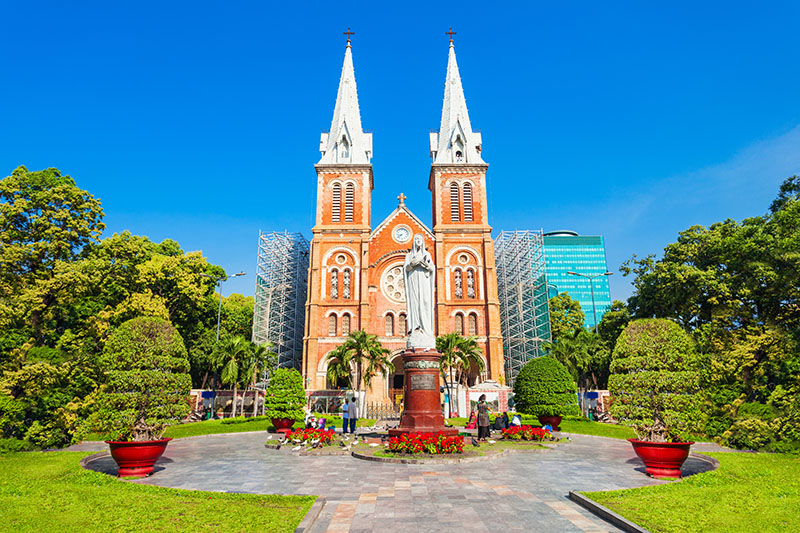
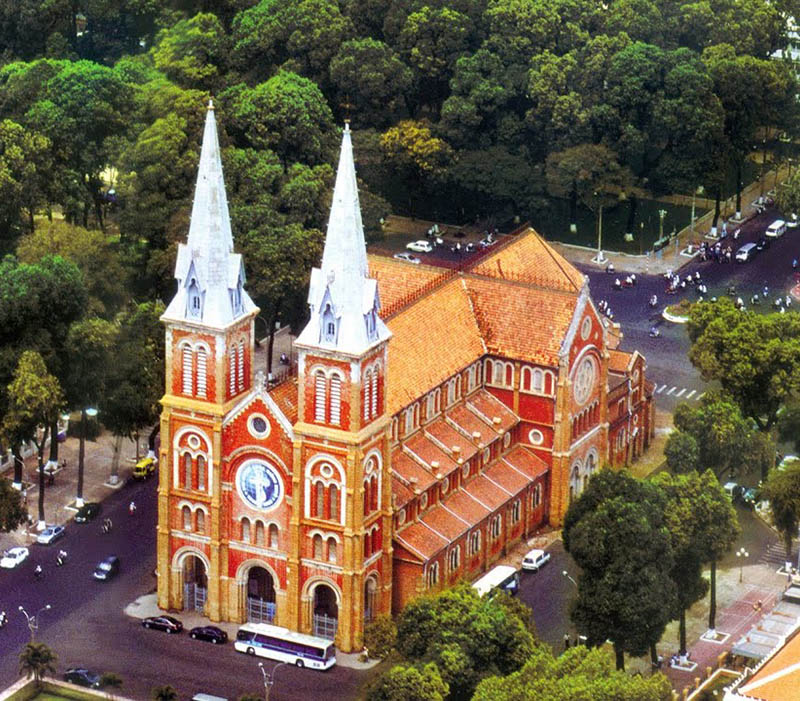
“Nha Tho Duc Ba Sai Gon” which is known as Notre Dame Cathedral Saigon has an official name as Immaculate Conception Cathedral Basilica in English and Cathédrale Notre-Dame de Saïgon in French. This French-built cathedral occupies scenic Paris Square in the heart of Ho Chi Minh City at 1 Cong Xa Paris, Ben Nghe, District 1, Notre Dame Cathedral. It is one of the oldest religious architectural works in Saigon. Combining to other constructions such as Central Post Office, Reunification Palace, Opera House, etc. Notre Dame Cathedral contributes to create a unique architectural complex, which is the symbol of urban architecture of the most dynamic city, Saigon – Ho Chi Minh city.

Notre Dame Cathedral Basilica of Saigon or Cathedral Basilica of Our Lady of The Immaculate Conception in Ho Chi Minh City, Vietnam

History

Immediately after occupying Saigon, the French established a church to serve as a place of worship for Catholics in the army. The first church was located on today’s Ngo Duc Ke street, which is an old Vietnamese temple abandoned due to the chaos of the war.
This first church quickly became small with an increasing number of believers. In 1863, Governor Louis Adolphe Bonard decided to build a wooden church on the banks of the Charner Canal (Kinh Lon). This canal was later filled and built into Nguyen Hue Street today. Father Dominique Lefèbvre put the first stone for the construction of this church, then named it as Saigon Cathedral. However, due to the wooden construction, the church was soon destroyed by termites. Thus, in preparation for a new solid church on the growing land, in August 1876, the Governor of Cochinchina – Victor Auguste Duperré organized a competition to select designs for the new church.
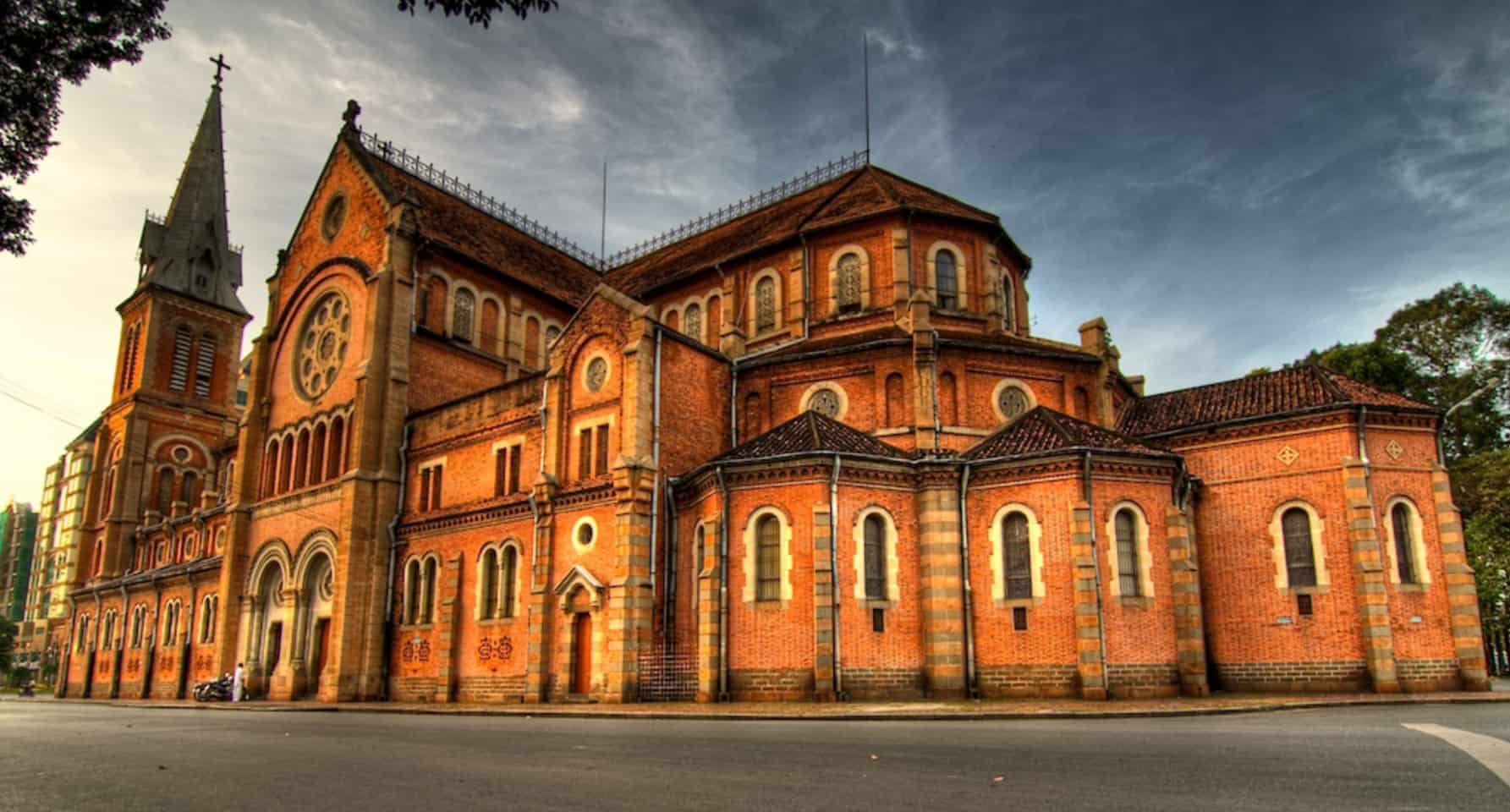
Architect J.Bourad was chosen with a modified Roman architecture project combining with Gothic characters. And he also won the bid to build this historic building. The original construction site was proposed in three places, and finally the Paris Commune Square was chosen. The front of the church turns to the Southeast, towards Nguyen Du Street, the back heads to the current Le Duan Street. The construction was done fairly quickly, nearly 3 years. On 11th April 1880, a blessing ceremony and inauguration ceremony of Saigon Cathedral was solemnly celebrated by Bishop Colombert with the participation of Cochinchina Governor – Charles Le Myre de Vilers.
All construction materials for the church such as cement, steel, tile, stained glass, bells, etc. were all transported from France. The outside of the buildings, for instance, was built totally of red bricks from Marseille without plastered or cemented. However, it still remains fresh orange-red color until today. In the beginning, the Church was called the State Church, because all the construction funding was provided by the French State, with an amount of up to 2,500,000 francs at that time.
In 1895, the church built two more bell towers, each tower was 57.6 m high and had 6 large copper bells. At the top of the tower is a crucifix with a height of 3.50m. Overall height from the ground to the top of the crucifix is 60.50m.
In 1958, the governor of the Saigon at that time, Father Joseph Pham Van Thien, ordered a statue of the Mother of Peace on white marble. The statue was carved in Italy and transported to Saigon by sea in 1959. After that, Société d’Entreprises Company has erected a statue of Our Lady on a stone pedestal that has been empty since 1945 in front of the church.
At the end of the ceremony of the National Congregation of the Holy Mother, Cardinal Aganianian from Rome blessed the statue in the afternoon of 17th February 1959. From this event, the Church was named Notre Dame Cathedral. On December 5, 1959, the Holy See allowed to hold anointment ceremony, conferring the Saigon Cathedral to the basilica. Since then, the official name of the cathedral is the Notre Dame Cathedral in Saigon.
In 1960, the Holy See erected Roman Catholic dioceses in Vietnam with three archbishops in Hanoi, Hue and Saigon. The church became the cathedral of the archbishop of Saigon to this day.

1-10

Know before you go

  1. Saigon Notre Dame Cathedral is open:

– Monday – Saturday: 08.00 AM – 11.00 AM
– Monday – Saturday: 14.00 PM – 16.00 PM
If you have a chance to take a look inside, then remember to enter the sided gate, which is open every day while the main gate opens only during Sunday Mass. Many tourists visiting Notre Dame Cathedral would like to attend the mass, but do not know the exact mass schedule of the Notre Dame. Please have a look at this schedule, hopefully you will choose the mass frame that match your itinerary
– Weekday Mass: at 05.30 AM and 5.30 PM.
– Sunday Mass: at 05.30 AM; 06.45 AM; 08.00 AM; 09.30 AM; 16.00 PM; 17.30 PM; 18.30 PM. (The Sunday Mass at 9.30 AM is in English)

  1. No entrance fee is required to visit this place but we recommend booking Saigon Notre Dame Cathedral tours ahead of time to secure your spot. See all Saigon Notre Dame Cathedral tours on Vietnam Travel.

However, the cathedral is under is undergoing large-scale renovation, the renovation is expected to last for 3 years (6/2017 – end 2020). The church is closed to tourists during this time but remains a site of worship for Vietnamese Catholics every Sunday where a mass is held at 09.30 AM in both Vietnamese and English. You can still admire the scenery or take pictures from the surrounding grounds.

nha-tho-duc-ba-sai-gon-ruc-ro-1692570394
  1. Others

– Please dress appropriately and avoid disturbing the worshipers when visiting.
– Don’t use flashlight inside Cathedral.
– From the Notre Dame Cathedral Saigon, you can visit other attractions nearby:
o Central Post Office
o The Independence Palace
o People’s Committee Building
o Ho Chi Minh’s book street
o If you have time, please pass by Diamond Plaza, 30/4 Park and sip a cup of coffee while view the local life and enjoy peaceful moment.  This is most properous part of HCM City and most of cafe or shop in this area is more expensive than the rest of the country.
o You can also try several delicious street foods around the Cathedral area such as: Banh Canh Cua, Banh Xeo, Banh My, Bun Rieu, Bun Mam…

Make your plan to Vietnam right now by apply a Vietnam visa at vietnamvisapro.net. We, a reputable and reliable Visa service, will assist you turn your plan into reality at the very first step.

Posted on

Quy Nhon 2024 : best things to do & travel guide

Quy Nhon city is bordered by beautiful beaches and the surrounding landscape is also breathtaking. Life here also feels much more authentic.

5 reasons to visit Quy Nhon

  1. Visit local fishing villages
  2. Beach hopping to secluded beaches
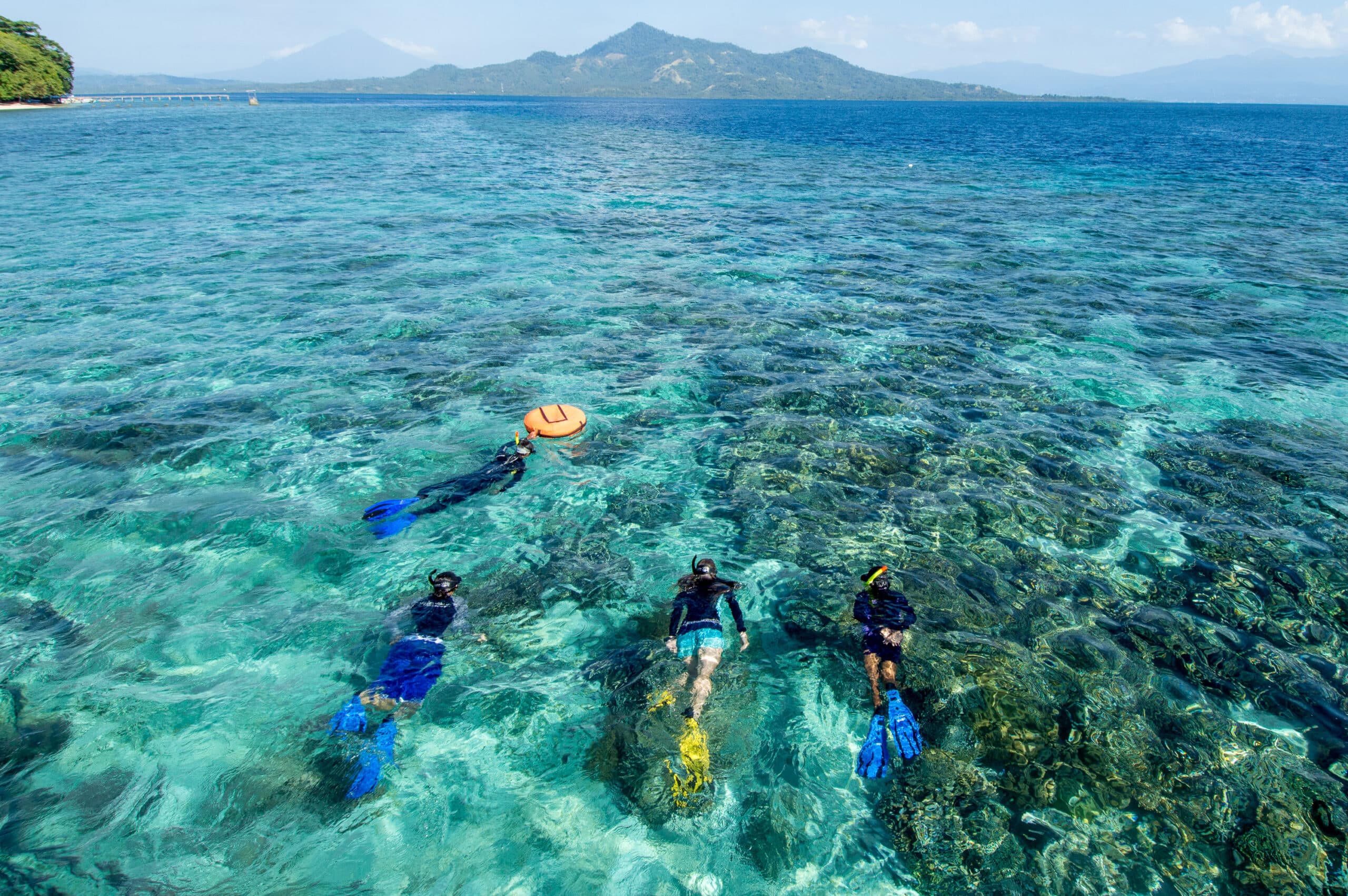
  3. Snorkel and swim around the islands
  4. Explore Champa architecture at Cham temples
  5. Enjoy the sunset at Eo Gio

Best time to visit

From March to August it is the dry season, when there is little rain. However, the best months are between January and March, when the worst of the rain is over and when it doesn’t get as hot as during the summer months.

10 best things to do in Quy Nhon

The best things to do in Quy Nhon are mainly the activities you can do on and around the beach. This region has one of the most beautiful beaches in Vietnam. Relax with a book on the beach, visit islands or go snorkeling.

1. Stay overnight in Bai Xep

1

Although the city of Quy Nhon is already not touristy, staying in Bai Xep is even more fun and authentic. Bai Xep can be found in a small fishing village 12 kilometers from the city center. It started with two hostels that settled in this village right on the beach, but nowadays there are already some more accommodations here, including a luxury resort next door.

Yet you still feel the real authentic atmosphere of the fishing village here. There is not much to do here except to enjoy the beach and take a boat trip to the nearby island where you can snorkel well.

2. Explore beaches

Besides Bai Xep, many more beaches can be found here. One of the best things to do in Quy Nhon is beach hopping, where you drive along the coast and choose beaches along the way to enjoy yourself. 

You don’t necessarily have to get out of town to find beautiful beaches, because Municipal Beach, the main beach along the city’s strip, is already beautiful. The waves are often calm here, making it an ideal place for swimming. There are a number of bars right on the beach where you can enjoy the sunset with a cocktail.

3. Island hopping

There are a number of small islands off the coast of Quy Nhon. Some are so small that you can only sail and snorkel around them. Many resorts can arrange boat trips to these islands, often combined with snorkeling.

The most famous islands where you can go are Ky Co Island and Kho Island. Khy Co is a remote island with a beautiful beach and crystal clear water that is so inviting that you have to go swimming. Kho Island is a good place to see coral reefs. Hon Kho is also a turtle conservation center.

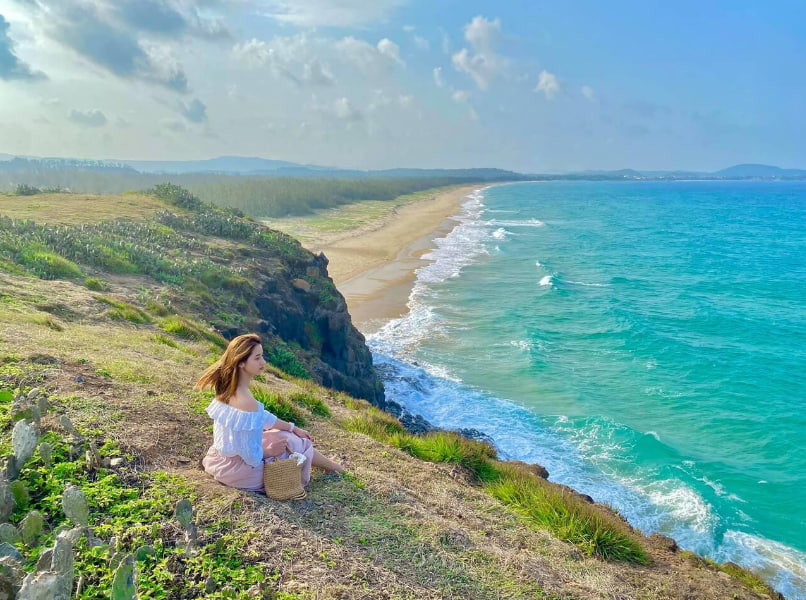
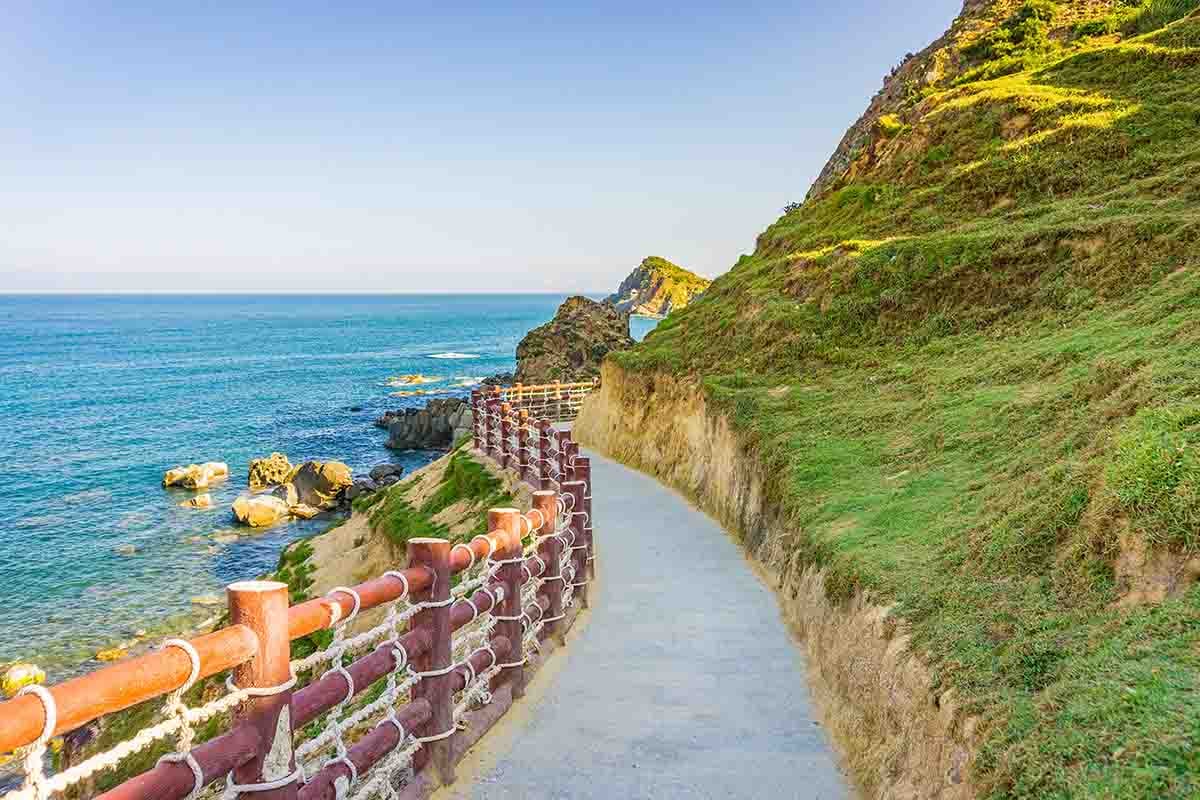
4. Sunset at Eo Gio

eo-gio-quy-nhon-4_1703490354

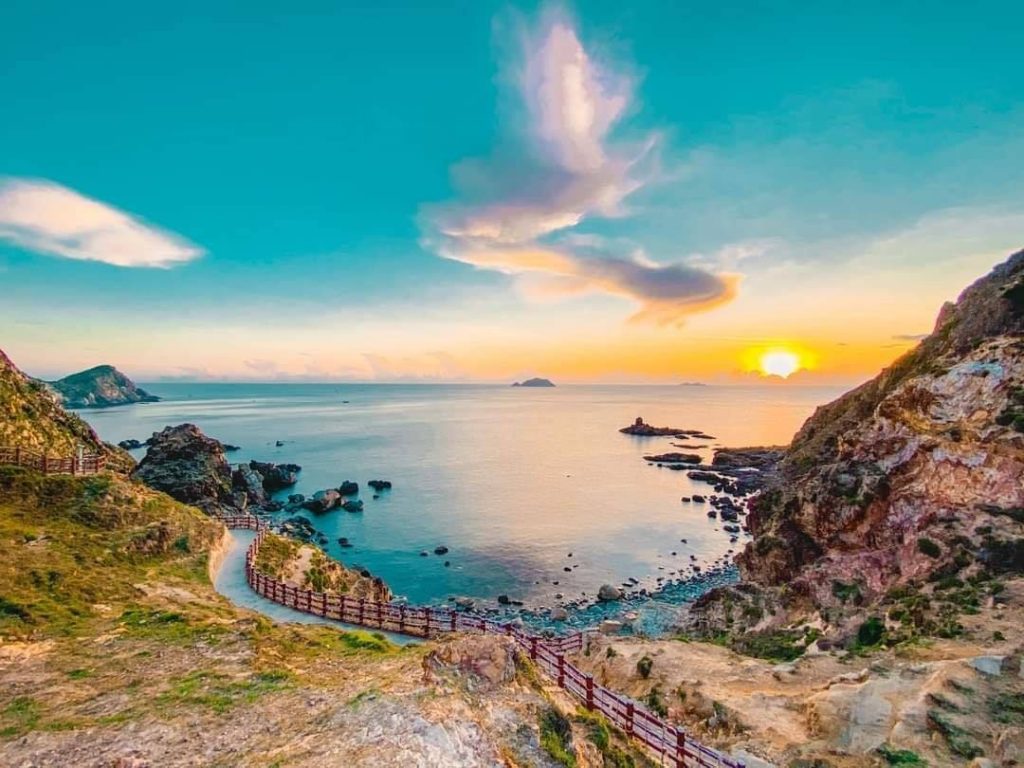
One of the other great things to do in Quy Nhon is wathing the beautiful sunset at the ocean. The best place to do this is at Eo Gio. You can of course also visit this place during the day.

Eo Gio, known as the Windy Pass, is a naturally rocky structure in the sea. It is a beautiful landscape of rough cliffs that fall straight into the water and is fun to explore.

5. Dune sliding

sandboarding

Mui Ne isn’t the only place in Vietnam where you can find sand dunes so big it feels like you’ve landed in a desert. The Phuong Mai dunes are huge and can be found next to the beach of Nhon Ly. It is not only a place to take beautiful photos, but you can also enjoy sandboarding of the dunes.

You can combine a visit to these dunes with Hải Nam fishing village. A nice local and authentic village with a nice beach and island in front of it.

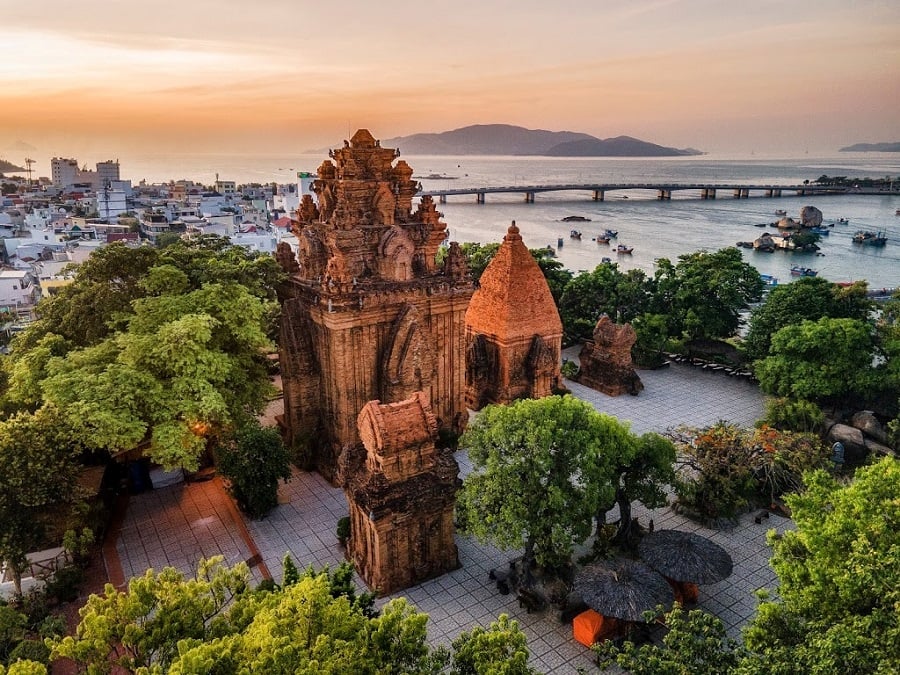
6. Cham towers

po-nagar-cham-towers-3_1701485608

In the vicinity of Quy Nhon you will also find several Cham Towers. These come from the same era and culture as the temples you find in My Son, near Hoi An. They are not difficult to spot when driving through this area as they are usually on top of a hill. It is a mighty sight to see such an old building on a hill from the distance. There is also a Cham tower on the beach in the town of Quy Nhon. The two most famous Cham towers here are Thap Banh It and Thap Doi.

7. Fishing villages

Vung-Vieng-Fishing-Village-1000x565

Quy Nhon feels very authentic and what you should do is explore the local life. Stop in one of the fishing villages to see how the fishermen make a living. When you drive along the coast you will come across dozens of small villages. In the sea in front of the village you can see all the blue fishing boats floating in the distance and on the beach you can see the basket boats that they use to paddle to their boat or to check the nets that are close to shore.

8. Snorkeling

Siladen_Snorkeling_20190827-DSC_7680-scaled

Quy Nhon is one of the best places to go snorkeling in Vietnam. In the first place that the coral around some places are very beautiful and the sea is also a lot calmer; especially at the parts of coast where there are islands in front or in the bays. Unfortunately, Vietnamese are very efficient fishermen, so many large fish have disappeared due to fishing.

It is not a problem if you do not have a snorkel set with you, as these can often be rented at the resorts, hostels and homestays by the sea. Also, usually snorkeling is included during the boat trips to the islands.

9. Countryside of Quy Nhon

12 1

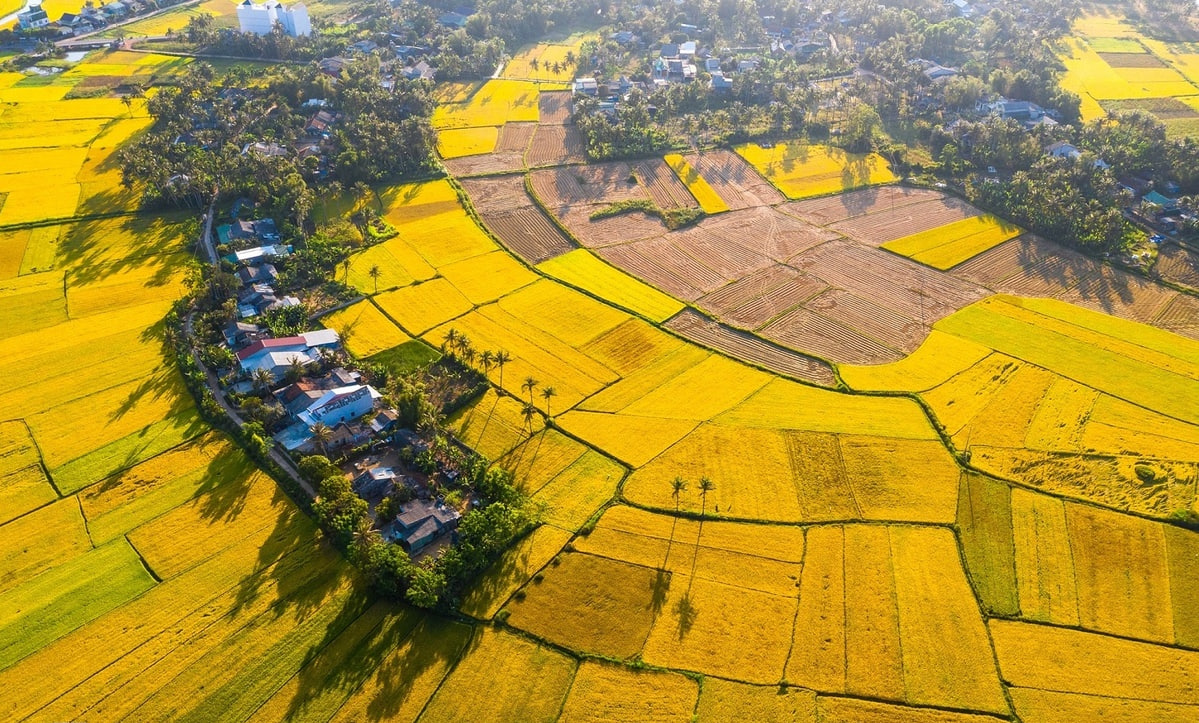
When you’ve seen enough beaches and sea, you can visit the rugged countryside. These are places where tourists never come, not even Vietnamese, so expect a very authentic lifestyle. There are many rice fields and villages in the area. You do have to go out with a motorcycle or rent a car with a driver.

10. Eat great food

dac-san-quy-nhon-1

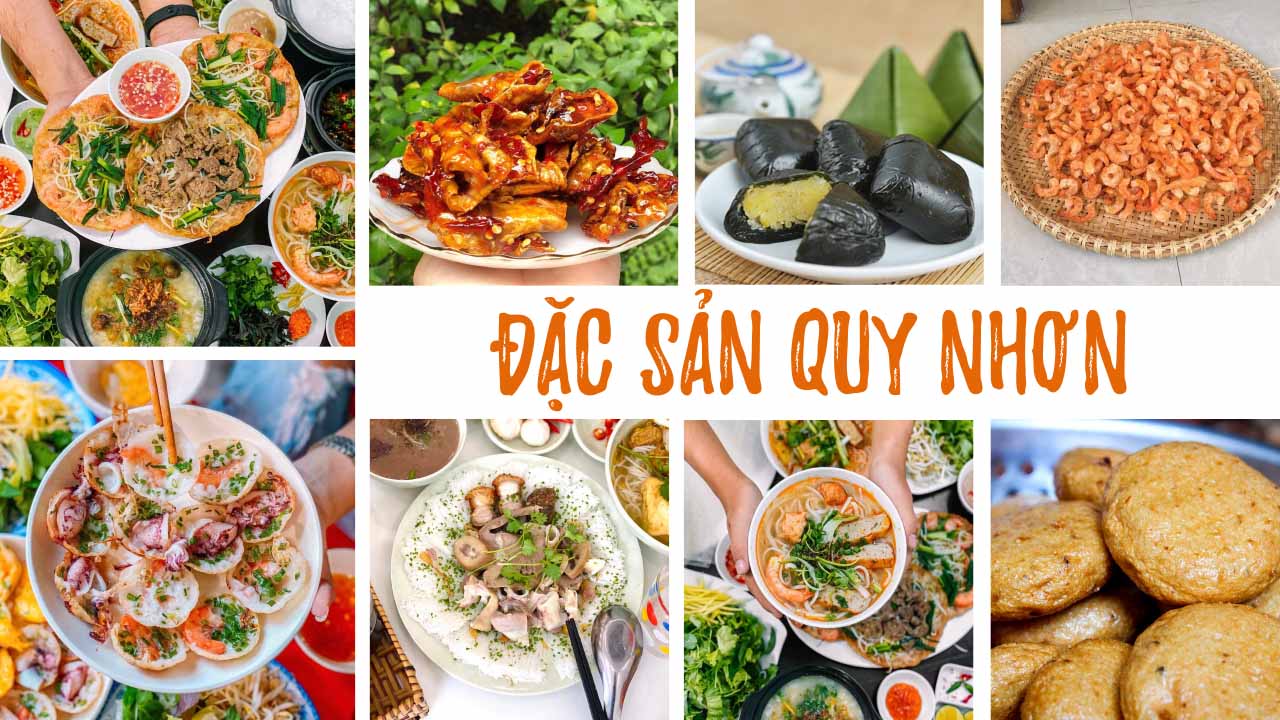
You’ll find everywhere great food in Vietnam, but in Quy Nhon you should definitely try a few things. Because of the location at the sea you will of course find delicious seafood here. If you don’t like seafood you can try a number of other dishes, such as Ban Xeo (very different from the Ban Xeo you find in the south), cuốn, one of the best fresh spring rolls in the country and bún thịt nướng, one of the best dry noodles.

Best hotels & hostels in Quy Nhon

Where to stay

Bai Xep – A charming place 10 km south of the city, not so long ago what made this just a simple fishing village. It is the favorite place for backpackers to stay in Quy Nhon, but for other travelers this village is more advisable than in the city of Quy Nhon.

Quy Nhon city – Accommodation in the city is spread over a four-kilometer beach. There is enough choice of resorts, hotels and other small to medium sized accommodations, depending on the budget.

Secluded beaches – On more secluded beaches you will find backpacker hostels such as Bai Bau, Bai Rang and Nhon Hai. It doesn’t get much more authentic here.

Best hotels & hostels in Quy Nhon

Budget hotels & hostels

  • Life’s A Beach
  • Big Tree Backpackers
  • John & Paul Inn

Mid range hotel

  • Life’s a Beach Apartments
  • Seagull Hotel

High end hotel & resort

  • AVANI Quy Nhon Resort & Spa

Food & drinking

Restaurants

Quy Nhon a surprisingly good city to eat. The local seafood along the beach are cheap and delicious. And some of the local specialties are also worth seeing. There are numerous small seafood restaurants along the beach north of the large statue of Ho Chi Minh with his father.

Nightlife

The nightlife in Quy Nhon is small but growing. There are no night clubs, but there are places where you can have a drink. Locals often gather around the beach in the evenings to enjoy a cold beer.

In Bai Xep all hotels and hostels have a bar, so you certainly won’t get thirsty. Go to Life’s a Beach Backpackers for wild nights and drinking games.

How to get there

Flights to Quy Nhon

Quy Nhon has an airport. There are daily domestic flights from Ho Chi Minh City and Hanoi. The airport is called Phu Cat and is 30 kilometers from the city of Quy Nhon. A taxi or shuttle bus will take you from the airport to the city.

Buses to Quy Nhon

Quy Nhon is located between Nha Trang and Hoi An. The bus ride from Hoi An takes approximately 9 hours, the bus from Nha Trang 4 hours. There are also direct buses to and from Dalat (8 hours) and Pleiku (3 hours).

Trains to Quy Nhon

Quy Nhon train station is located in Dieu Tri, about 10 kilometers outside the city. From the train station you can take a bus or taxi to Quy Nhon.

Posted on

Three Vietnamese Destinations Shine with ASEAN Clean Tourist City Awards 2024

In a significant recognition of their commitment to cleanliness, waste management, and environmental awareness, three enchanting Vietnamese destinations – Hue, Vung Tau, and Quy Nhon – have been honored with the prestigious ASEAN Clean Tourist City Awards 2024. The announcement took place at the ASEAN Tourism Forum 2024, held in the picturesque capital of Laos, Vientiane, from January 22 to 27, 2024. This accolade not only celebrates the beauty and cultural richness of these destinations but also highlights their dedication to sustainable tourism practices.

These three places have previously received the ASEAN Clean Tourism City Award. Quy Nhon received the honor in 2020, while Vung Tau and Hue had each received it three times before.

The recognition was based on 108 criteria divided into seven major categories: environmental management, cleanliness, waste management, environmental protection and cleanliness awareness-building, the presence of green spaces, health safety, urban safety, and security, and the quality of tourism infrastructure and facilities.

Huế: Preserving Imperial Grandeur with Cleanliness
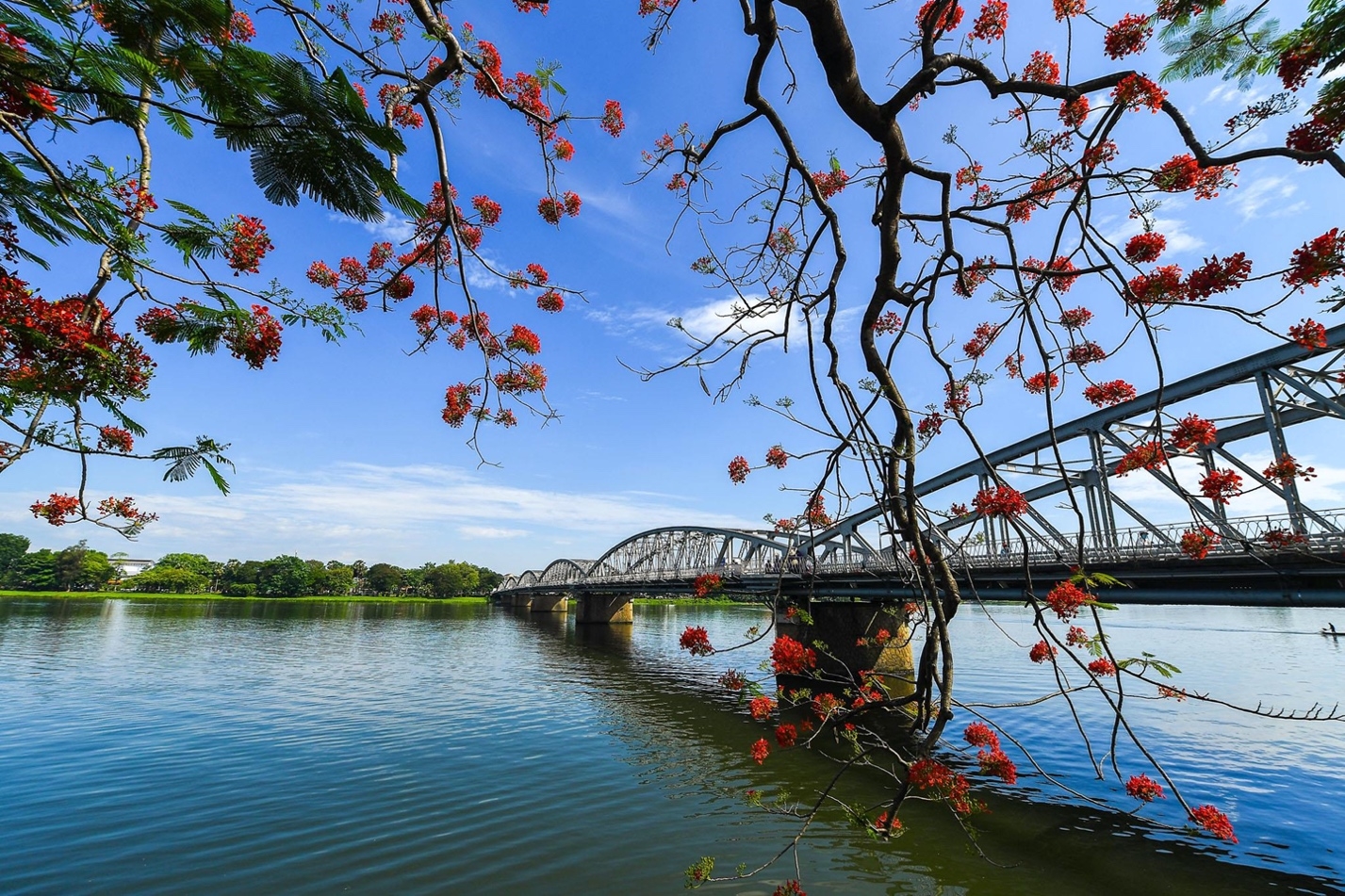
image001

Nestled along the picturesque Perfume River, the ancient city of Hue is renowned for its imperial history and architectural marvels. The city has seamlessly blended its historical charm with a modern commitment to cleanliness and sustainability. From the well-preserved citadel to the vibrant markets, Hue has become a shining example of a destination that values both its rich heritage and the environment. The ASEAN Clean Tourist City Award recognizes Hue’s efforts to maintain its imperial grandeur while adopting eco-friendly practices.

Vũng Tàu: Where Pristine Beaches Meet Environmental Consciousness
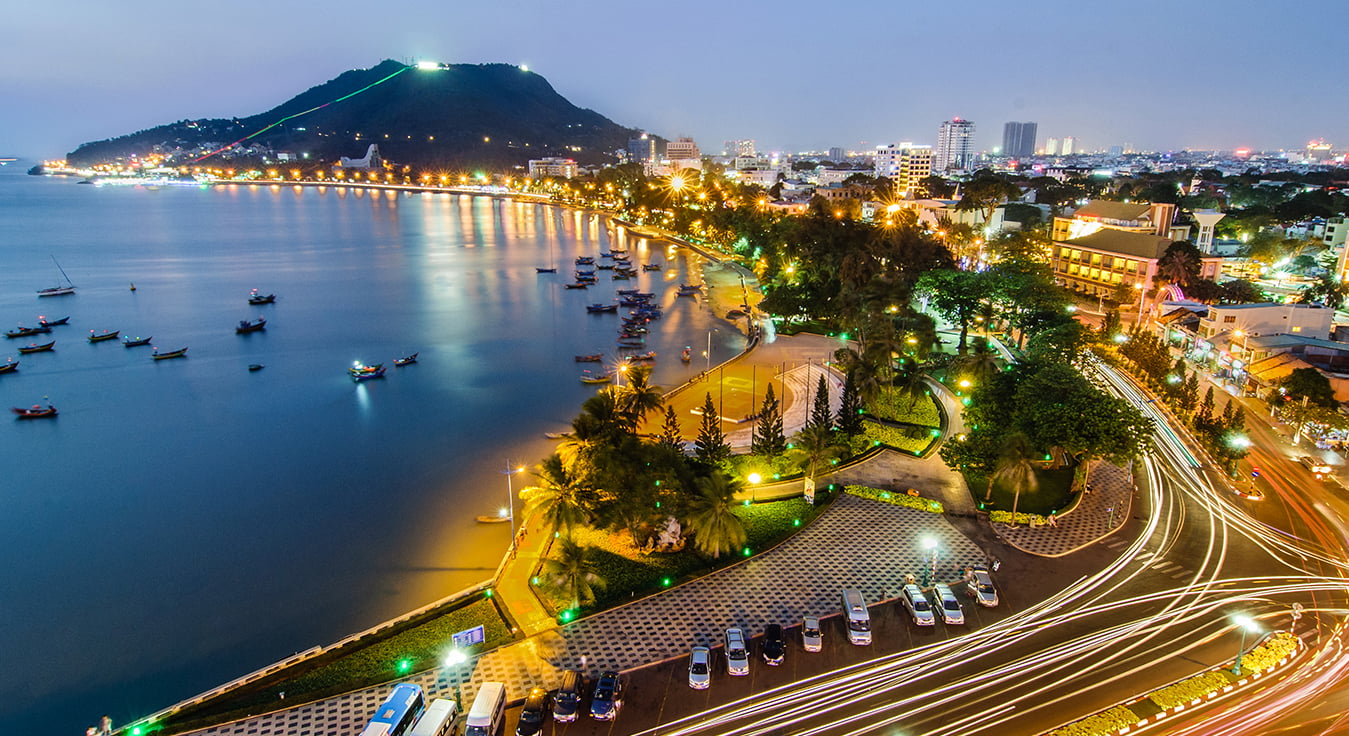
Tổng-quan-du-lịch-Vũng-Tàu-ivivu

Vũng Tàu, a coastal gem with stunning beaches and panoramic views, has been recognized for its pristine landscapes and a dedication to environmental preservation. The city’s authorities have implemented innovative waste management systems and initiatives to ensure the cleanliness of its beaches and public spaces. Vung Tau’s recognition at the ASEAN Clean Tourist City Awards is a testament to its commitment to providing a delightful and sustainable experience for both locals and tourists.

Quy Nhơn: Balancing Natural Beauty and Environmental Responsibility
eo-gio-1024x768

Quy Nhơn, known for its tranquil beaches and pristine landscapes, has struck the perfect balance between preserving its natural beauty and promoting environmental responsibility. The city’s efforts in waste management and environmental education have not gone unnoticed, earning it a well-deserved place among the recipients of the ASEAN Clean Tourist City Awards. Quy Nhon stands as a model destination that demonstrates how responsible tourism can enhance the allure of a place without compromising its ecological integrity.

The ASEAN Clean Tourist City Awards 2024 have cast a spotlight on three remarkable Vietnamese destinations – Hue, Vung Tauand Quy Nhon – for their dedication to cleanliness, waste management, and environmental awareness. These cities not only showcase the diverse beauty of Vietnam but also serve as inspiring examples for other destinations aiming to harmonize tourism with sustainability. As Hue, Vung Tau, and Quy Nhon continue to welcome visitors with open arms, their commitment to a cleaner and greener future will undoubtedly make them even more appealing to travelers seeking responsible and enriching experiences.

Make your plan to Vietnam right now by apply a Vietnam visa at vietnamvisapro.net. We, a reputable and reliable Visa service, will assist you turn your plan into reality at the very first step.