Posted on

Central Highlands aglow: golden rice paints the terraces

Since late May, Kon Tu Rang Village in Mang Den Town has transformed, its terraced fields turning a vibrant yellow, offering travelers a glimpse into the harvest season.

In Vietnam’s Central Highlands, Kon Tum Province boasts a hidden gem: Kon Plong District. Traveling just ten kilometers from the township of Mang Den, this region transforms during harvest season. Here, nestled amidst the tapestry of seasonally changing hues, lies Kon Tu Rang Village. Known for its vistas, the village offers a prime location to witness the wonders of the harvest season.

>>> Apply Visa to Vietnam <<<

>>> Order Fast Track Service <<<

Visitors can ride a motorbike or car along the main road in the village until the intersection at the end of the road. There, park at the nearby forest ranger’s house, and walk to the terraced fields.

It is currently the rainy season, and the road to the village is being repaired. Visitors should consider taking a motorbike taxi or taxi.

“The dirt road after the rain was muddy, I slipped at the Pa Sy Waterfall because I was careless,” said Minh Le (pictured), 25, after a trip to Kon Tu Rang on May 19. He had driven from the center of Mang Den Town, through the pine forests for about half an hour.

Kon Tu Rang Village is located near the “37 households” area of Mang Den Town, which is home to many agricultural projects and famous tourist attractions. The terraced fields are located at the foot of Ngoc Le Mountain, with Dak Bla Stream flowing below. There is also the famous Kon Tu Rang Bridge, which offers a wider and more open view of the terraced fields.

Minh, a tour guide at Mang Den, said the ripening rice season in Kon Tu Rang usually comes in May, earlier than in the northern mountains. In April, the fields were still green, but now they have turned yellow under the sun, signaling that the harvest is approaching.

Unlike regular fields in the plains, Mang Den terraced fields are irregular plots overlapping each other. Each plot has different colors, creating an interweaving color transition.

“If the ripe rice season in the northwest is magnificent, the Kon Tu Rang terraced fields are like a new baby of mother nature, beautiful in a gentle and peaceful way,” he said.

The rice fields in Kon Tu Rang are gradually turning yellow, ready to be harvested. This is also a good time for tourists to visit and take photos. From the field, visitors can trek to Ngoc Le Peak to have a panoramic view of Kon Tu Rang terraced fields and Mang Canh Commune.

According to Minh, visitors should spend about half a day in Kon Tu Rang, then move to Mang Den to visit other places such as the café located at the beginning of the new Mang Den Pass, which has a panoramic view of the mountains and hills, or Highway 24 towards Quang Ngai Province, curving up to the the statue of Our Lady of Mang Den, a significant pilgrimage site for Catholics in the Kon Tum Diocese.

Photos by Minh Le

Source: VNExpress International
Posted on

Best Things to Do in Nha Trang in 2025

Nha Trang is one of the most popular and exciting cities in Vietnam. This coastal city offers a variety of attractions and activities for all kinds of travelers. Whether you are looking for fun, relaxation, culture, or adventure, Nha Trang has something for you. We have carefully selected the top things to do in Nha Trang that will make your trip unforgettable. You can go diving or snorkeling in the crystal clear waters, visit the amazing waterfalls and temples, cruise the islands and bays, and enjoy the lively nightlife and cuisine. Join us on a journey to the city of fun and relaxation in Nha Trang.

duong-tran-phu-nha-trang-2_1651556571

1.Swim & sunbathe in picturesque beaches

With total length of about 7 kilometers coastline, Nha Trang has some of the most breathtaking beaches in Vietnam where the blue sea mixes harmoniously with white sandy coastline. Possessing many beaches which are equal in beauty, Nha Trang can accommodate different choices for anyone’s beach break. From bustling beaches in downtown center to quiet and pristine beaches, tourists can have all to their own tastes. Nha Trang’s beaches can be distinguished from beaches in other regions in Vietnam by its minor waves, which makes it as an ideal place for persons who look for a peaceful beach vacation. Not only attracting tourists by beautiful beaches, Nha Trang also has a wide array of beach resorts and recreational beach-side activities. Below are our suggested beaches:

nha-trang-beach-12 (1)

– Tran Phu Beach: It’s the most popular beach of the city because it can easily be seen and accessed from everywhere in Nha Trang. The beautiful Nha Trang coastal city is partly formed by the boulevard running along Tran Phu Beach with swaying palm trees; wide range of seaside resorts, hostels and restaurants. Nightlife is also active here with most popular bars, such as: The Sailing Club, ZIMA, Skylight Skydeck & Rooftop Beach Club.

– Doc Let Beach: lying 50km north of Nha Trang City, relatively untouched due to its remote location. Featuring warm blue sea, hot white sand, plenty of palm trees, and fishing boat docked offshore, Doc Let Beach is a romantic place for married couples and honeymooners.

– Long Beach: located 28km from southern coast of Tran Phu Beach, Long Beach can be a perfect day trip for those who seek for empty and pristine beaches. This beach is mostly visited by backpackers so it’s famous for the hippy-like ambiance.

2. Discover local religious life through cultural sites

Besides beautiful beaches, Nha Trang attracts tourists by its historical relics and various ritual areas, which reflects local residents’ beliefs and religions.

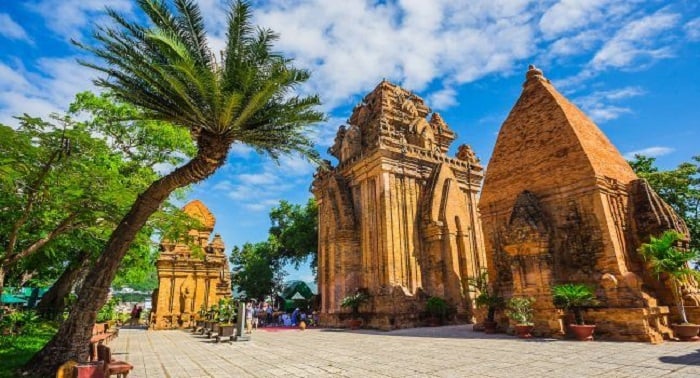
2.1. Ponagar Towers.

po-nagar-cham-towers-thumb_1645347698

Location: 2 Thang 4, Vinh Phuoc.
Opening hours: Daily from 6 am to 5:30 pm.

Ponagar Towers – a scared Hindu site dating back to the 7th century, is the most well-preserved ruins of Cham Culture in Central Vietnam, just after the World Heritage My Son Sanctuary in Hoian. Each of the towers honors different Gods and Goddesses but the most striking structure is Yang Po Inu Nagar, which was built to worship Goddess Ana – the mother of Champa Kingdom. The towers are square red-bricked structures with tapered roofs. Situated on the top of a hill, Ponagar Towers offers spectacular views to the Cai River and the fishermen’s village. There are traditional music and dance performances in special occasions.

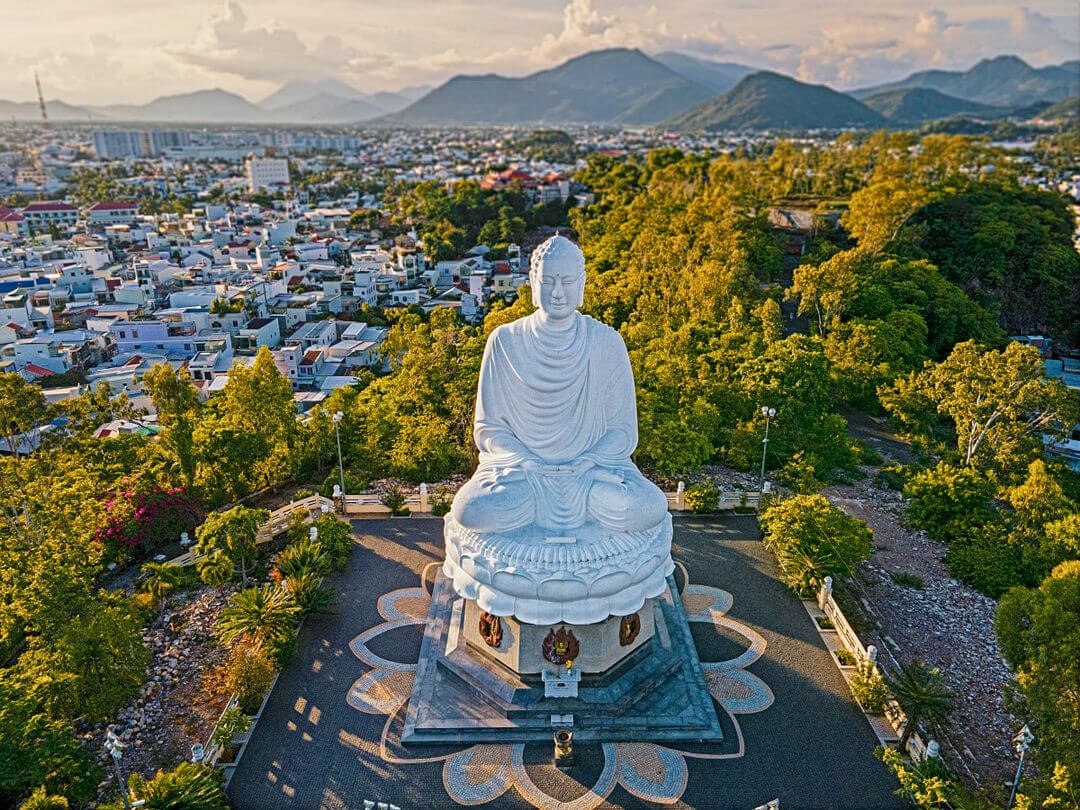
2.2. Long Son Pagoda.

Long-Son-Pagoda-5-1

Location: No. 22 Road 23/10, Phuong Son.
Opening hours: Daily – open 24 hours.

Long Son Pagoda with a remarkable history of over 100 years is the most famous and impressive Buddhist pagoda in the style of Taoist architecture in Nha Trang. Coming there, tourists will be impressed by its plethora of Vietnam’s largest outdoor Buddha Statues. The main highlight is the 24-metre tall white Buddha image seated on a lotus throne. Another impressive structure is the large reclining Buddha whose back panel features a bas-relief representation of the monks and nuns who died in the late 1950s while fighting against the corrupt US-backed Diem regime.
As Long Son Pagoda is set upon a hilltop, visitors can enjoy a bird’s eye view of Nha Trang and the sea beyond from the platform at the base of the white Buddha statue.

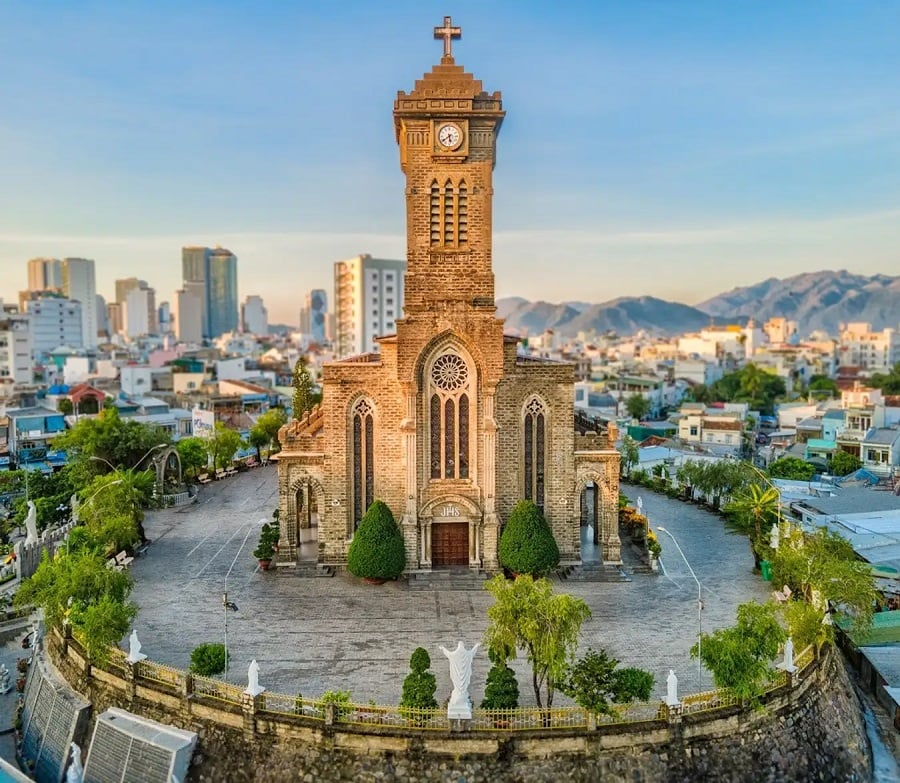
2.3. Nha Trang Stone Cathedral.

nha-trang-cathedral-1_1701872633

Location: No. 31 Thai Nguyen Street, Phuoc Tan.
Opening hours: 5:30 AM – 5 PM on Monday-Saturday | 5 AM – 7 AM & 11 AM – 4:30 PM on Sundays

Nha Trang Stone Cathedral is also called Nha Trang Mountain Church and official name as King Christian Church. It was built from 1928 to 1933 by the French with the architectural style of a Catholic cathedral. The design is the perfect combination of the French Gothic style and distinct Vietnamese architecture elements. The church layouts are constructed by simple cement blocks and the chapel’s dome was made of lattice girders and hard-core bamboo.

Perched atop a small hill, the cathedral has picturesque setting with the mountains rising dramatically in the distance behind it. Therefore, it’s a must see site for visitors and photographers to take excellent photos in both day and night time.

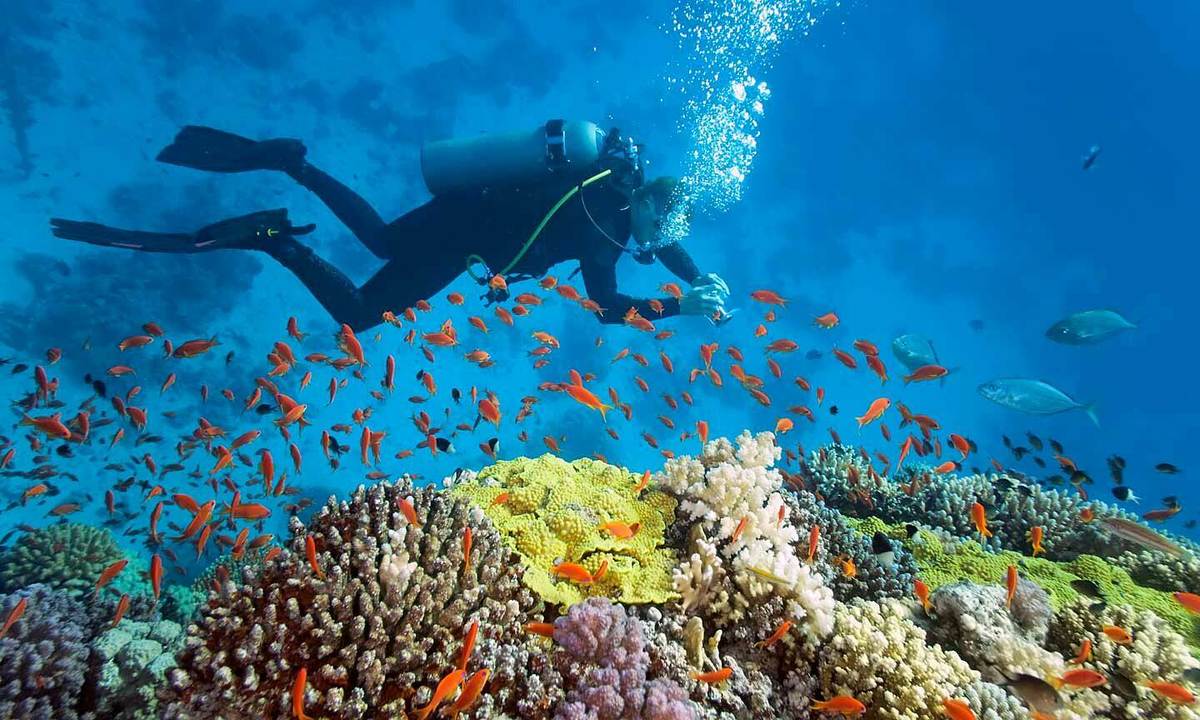
3. Snorkeling and Scuba Diving – Unique things to do in Nha Trang

Snorkeling and Scuba Diving in nearby islands are two most interesting water-related activities in Nha Trang. Known as Vietnam’s premier scuba location, Nha Trang and nearby Hon Mun Marine Park give divers the chance to enjoy 350 species of hard coral species and many colorful sea creatures in clear and calm waters. June to August is the peak season of diving because the sea water will be at its clearest and most beautiful conditions during these months. Even you take any level of diving, the most important things are following basic safety rules to ensure a fun but safe diving experience. In addition, many foreign tourists said that diving in Nha Trang is cheap and straightforward.

jpg

* Suggested diving organizers:
– Sailing Club Divers – 72 – 74 Tran Phu Boulevard.
– Rainbow Divers Vietnam – 132 Nguyen Thien Thuat Street.

4. Wallow in a mud bath to refresh your body & mind

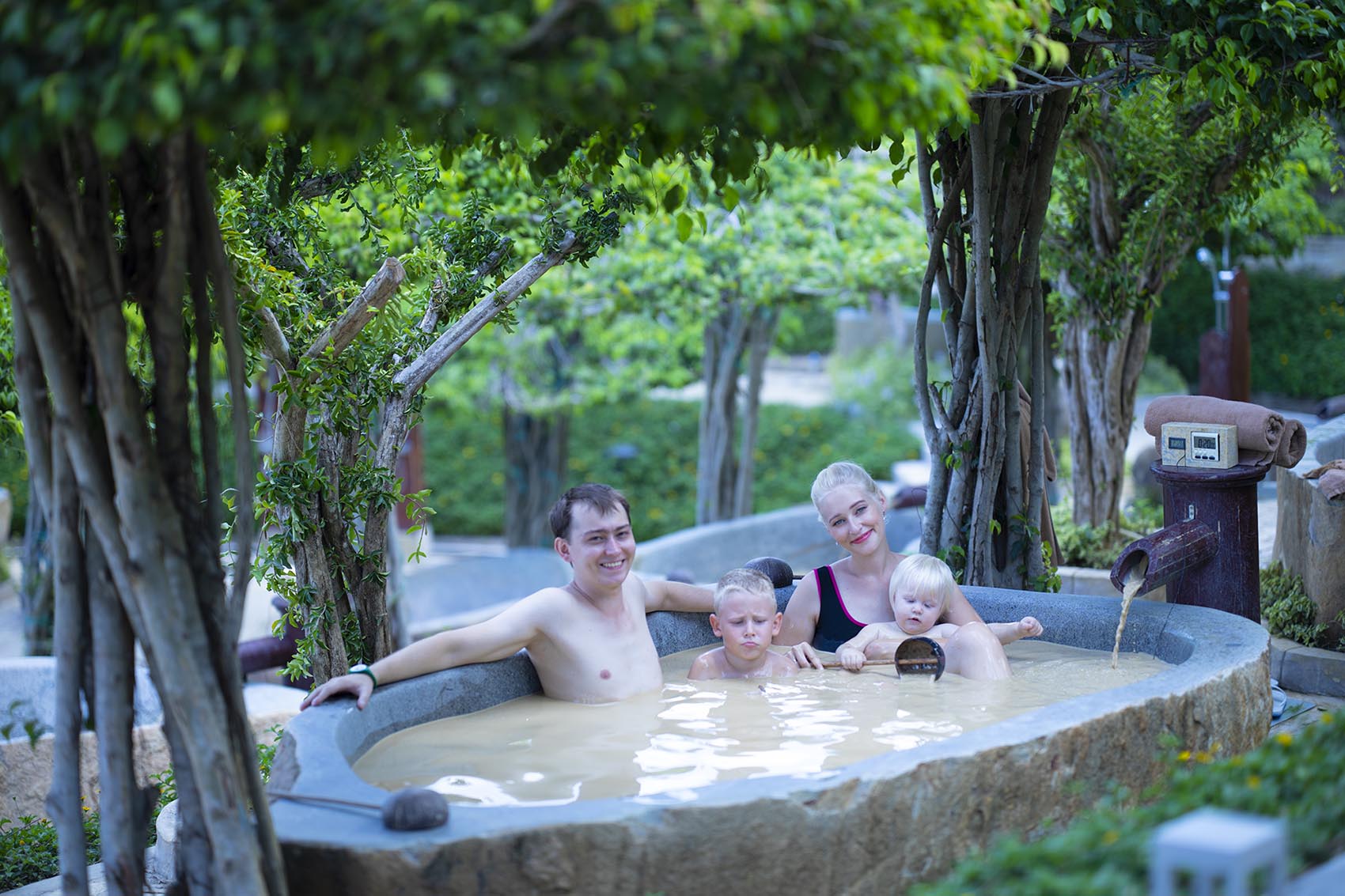
It will be such a regrettable loss if you visit Nha Trang without trying mud bath because it’s considered as the quintessential experience in this coastal city. The mud used in mud bath resorts in Nha Trang is mineral mud with lots of benefits, such as: remove dead skin cells, deposit minerals into the body, eliminate blackheads, and support blood circulation.
If tourists are tired of sightseeing trips and islands hopping tours, it will be a great idea to spend at least half day to relax your body and soul in a hot mineral spring.

tam-bun-nha-trang-1_1698078887

* Where to take mud bath?
– I-Resort hot mineral spring – To 19 – Xuan Ngoc – Vinh Ngoc.
– Thap Ba hot mineral spring – 438 Ngo Den – Ngoc Hiep.

5. Celebrate festive spirit in Vinpearl Amusement Park

vinpearl-land-nha-trang-5e983f0c271c7

Location: Vinpearl Resort Island, Nha Trang Bay.
Opening hours:
 Daily 9 AM – 6 PM.

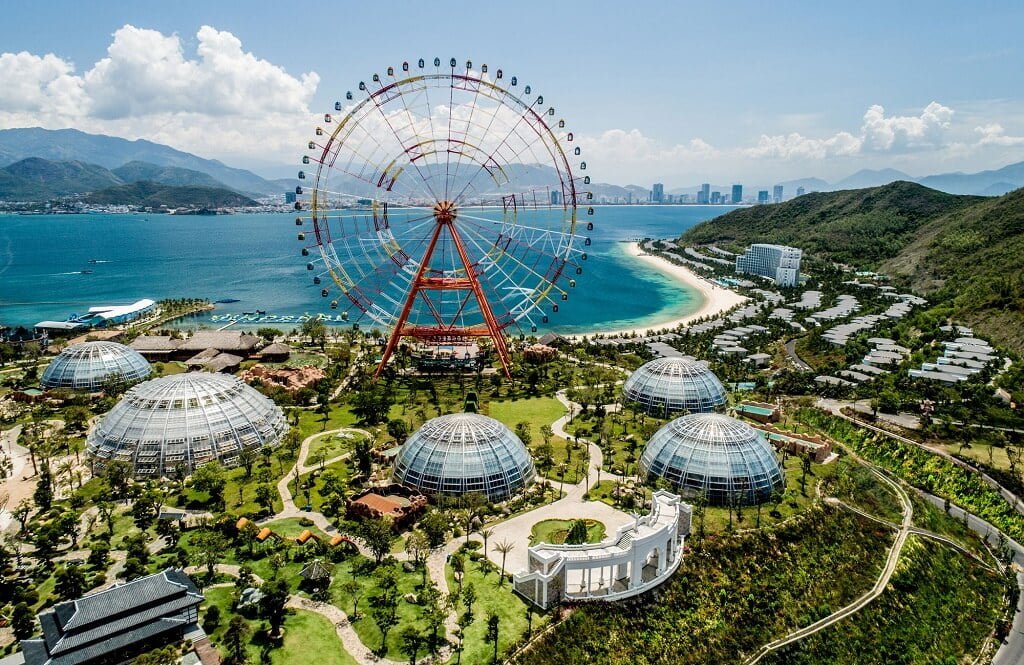
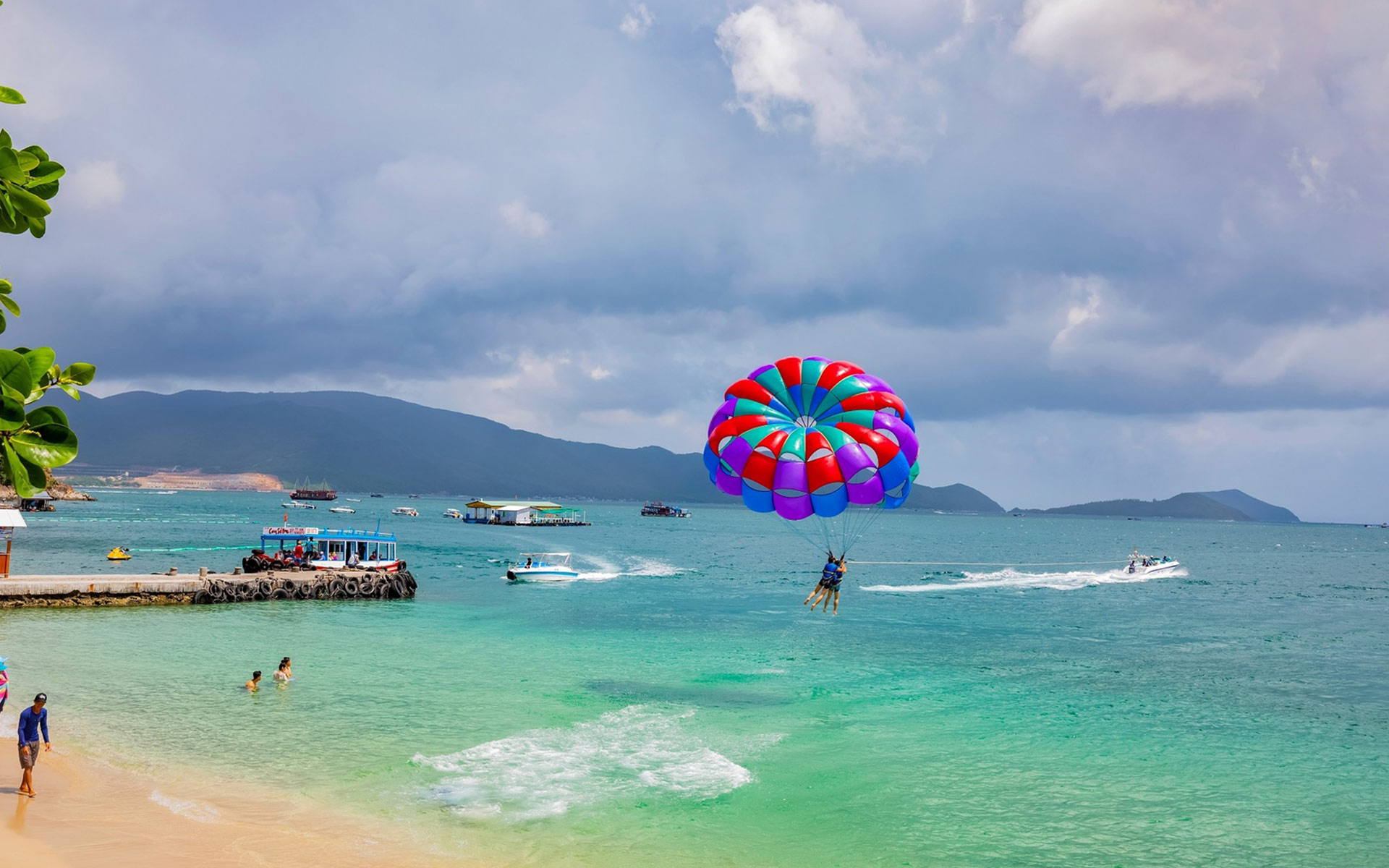
Regarded as Disneyland in Vietnam, the fun and festive Vinpearl Amusement Park makes for a great day out for all the families with children or youngsters with high adventurous spirit. Located on Hon Tre Island, the park can be approached by 15-minute ride by Vinpearl Cable Car from Nha Trang mainland. This Cable Car used to be the world’s longest oversea cable car with a length of more than 3km before 2018. The park offers a plethora of rides, games, water slides, fish-filled aquarium and huge water park. The park complex consists of restaurants and shopping malls, as well as a gorgeous beach for tourists to recline on, with lots of fantastic watersports.

6. Enjoy Nha Trang bustling nightlife

Choi-dem-o-Nha-Trang

In the night time, Nha Trang brings tourists a tremendous feeling with wide range of options from local experiences to rooftop night clubs and bars, all which will keep you entertained.

6.1. Buying some local souvenirs at Nha Trang Night Market.

Suan_Lum_Night_Market_Main

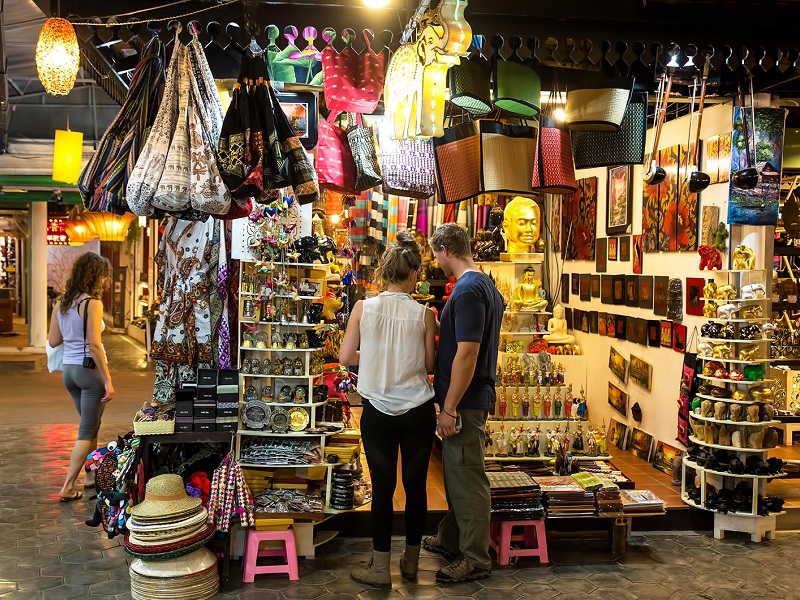
Nha Trang Night Market is really a great place for tourists to take insight into local culture of this city. The walking street and night market are opened along Tran Phu Street from 6-7 pm and busy until midnight. Walking here, you can find a lot of items like clothing, souvenirs, handicrafts to bring home. But don’t forget to stop at street food stalls where you can enjoy the mouth-watering local dishes with affordable prices.

6.2. Have fun at bars & nightclubs.

Nha Trang bars and clubs are exactly where you can find the sleepless atmosphere of the late night revelers as well as this dynamic city. To mingle with the locals and fellow tourists; you are highly recommended to take a stroll along Tran Phu Street; where plenty of bars and clubs are welcoming you to come.

puerto-escondido-nightlife-2022-scaled

Here are some popular nightlife spots to check out:

* Nha Trang Sailing Club

Location: 72 – 74 Tran Phu Street,
Opening hours: Daily 07:30 – 02:30

Located along Tran Phu Beach; Sailing Club is like an open space offering diverse services such as restaurants, bars and a vibrant club. During sunset, the club appears with a shimmering and fanciful look. It becomes busier after sunset until late night because more and more tourists will come there to dance and swing with the latest electro house tunes and EDM tracks from the talented hands of famous DJs.

* Louisiane Brewhouse and Restaurant:

Location: 29 Tran Phu Street
Opening Hours: Daily 07:00 – 00:00

Louisiane Brewhouse Nha Trang offers exciting combinations of beer, cuisine and entertainment against the stunning backdrop of Nha Trang beach. It serves the most exclusive beers in Vietnam, that are made with specialty malts from Australia and New Zealand. To match its special home-brewed beers; this all-day beach bar also offers a special collection of favorite Western and Asian dishes. Evening events are held from 8:30 AM to 11:00 PM with a wide range of popular music styles from Latin American, Pop & Mainstream to Rock & Blues.

* Skylight Skydeck & Rooftop Beach Club:

Location: 38 Tran Phu Street, Nha Trang
Opening hours: Skylight Skydeck: 9.00 – 12.00 and 15.00 – 18.00 daily | Rooftop Beach Club: 17.00 – 00.00 Tuesday to Sunday

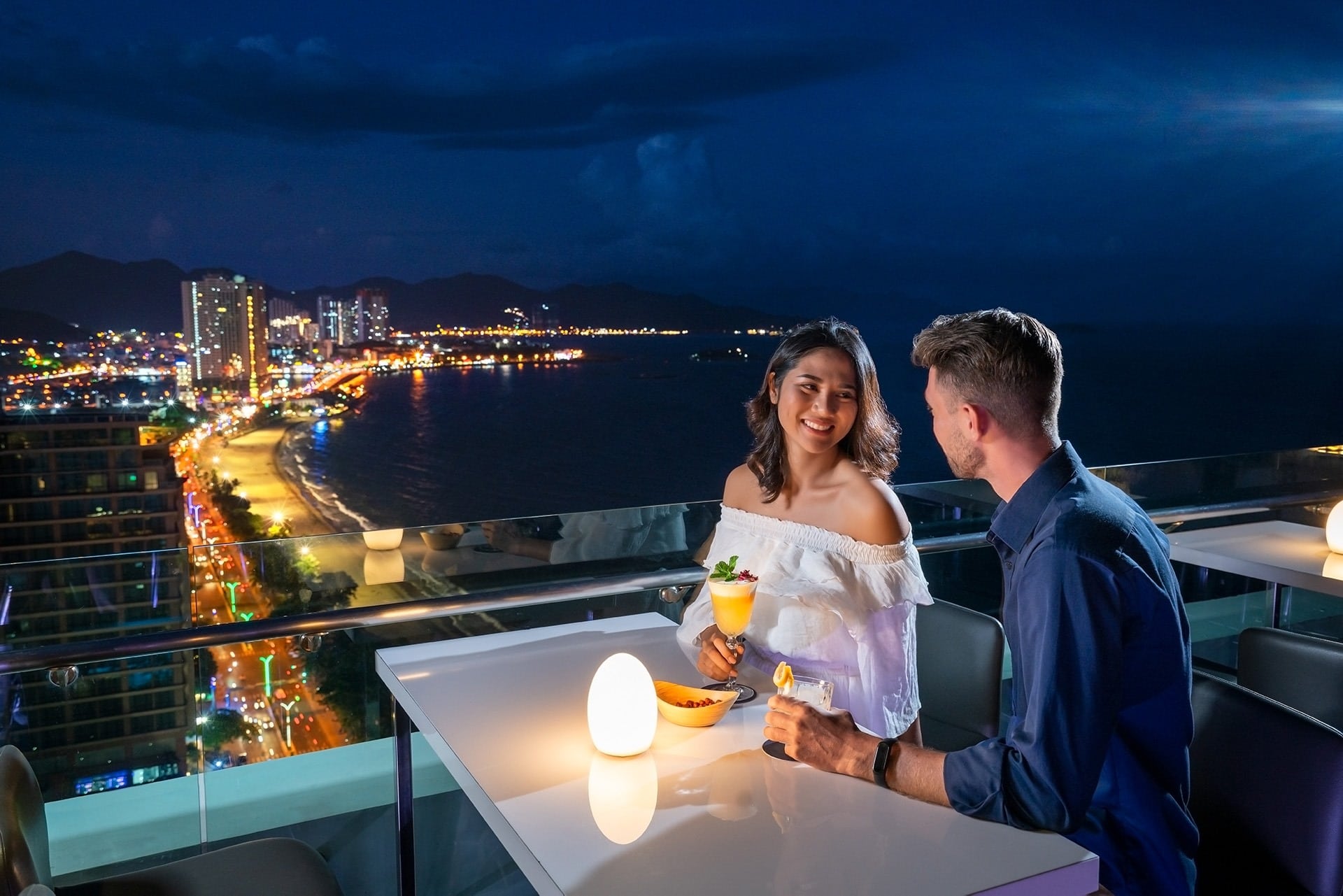
To enjoy the nightlife of the young and admire the shimmering lights of Nha Trang City at night from above at the same time, there is no place as perfect as Skylight Skydeck & Rooftop Beach Club. Located in the 43th-45th floors of Havana Nha Trang Hotel; this is the first attraction of its kind in Nha Trang that allows guests to view the beautiful beach city from unrivaled heights. Meanwhile, the Rooftop Beach Club features handcrafted specialty cocktails, ice-cold draught beer, international Pan-Asian cuisine, and an unparalleled nightlife experience.

6.3. Sunset Cocktail & Dinner on luxury Emperor Cruise.

du-thuyen-toi-9

Duration: 4 hours (approx.) from 4:30 PM – 8:30 PM
Services included pickup and drop off at hotels/stay in Nha Trang City Center.

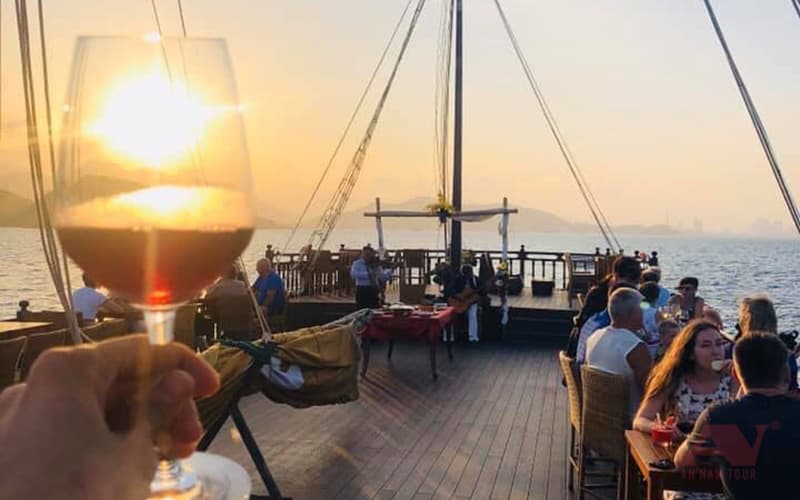
Set sail on Emperor Cruise in Nha Trang Bay; you will have the great opportunity to enjoy the wonderful panorama of Nha Trang Bay; along the coastline while cruising and enjoying the dinner with best selection of cocktails.

Essential Takeaways:

Nha Trang, a coastal city in Vietnam, is renowned for its stunning beaches, vibrant marine life, and rich cultural heritage. Here’s a curated list of must-do activities that promise an unforgettable experience:

  1. Dive into the Underwater World at Hon Mun Island: Discover the marine biodiversity at Hon Mun Island, known for its crystal-clear waters, captivating caves, and colorful coral reefs. It’s a paradise for snorkelers and divers alike.
  2. Soak in the Architectural Splendor of Po Nagar: Step back in time at the Po Nagar Cham Towers, a testament to the Cham civilization. Admire the intricate carvings and statues that reflect a blend of cultural influences.
  3. Relax on the Pristine Beaches: Nha Trang’s beaches are perfect for a day of relaxation. Soak up the sun, enjoy the soft sand between your toes, and listen to the soothing sound of the waves.
  4. Savor the Local Cuisine: Treat your taste buds to the local flavors. Don’t miss out on the fresh seafood, and be sure to try the famous ‘Bun Cha Ca,’ a delightful fishcake noodle soup.
  5. Embrace the Nightlife: As the sun sets, the city comes alive with bustling night markets and lively bars. Experience the local nightlife and mingle with both locals and travelers.
  6. Find peace at Long Son Pagoda, Nha Trang’s most renowned Buddhist landmark, and marvel at the colossal white Buddha statue.
  7. Admire the European charm of Nha Trang Stone Church, a captivating blend of French Gothic architecture and Vietnamese influences.
  8. Take a boat tour to pristine islands like Monkey Island or explore Nha Trang Bay’s hidden coves.
  9. Visit the National Oceanographic Museum to learn about Vietnam’s marine life and its rich underwater ecosystems.
  10. Hike to Ba Ho Waterfalls, a scenic spot with cascading waterfalls and refreshing pools for a dip.
  11. Experience a mud bath at Thap Ba Hot Springs, known for its therapeutic mineral-rich mud baths.
  12. Enjoy a thrilling ride on the Vinpearl Cable Car, offering panoramic views of Nha Trang and access to Vinpearl Land amusement park.

In comparison with other beach destinations in Vietnam; such as Mui Ne and Phu Quoc; Nha Trang is more urban and lively and home to some of Vietnam’s best beach resorts. It will be definitely the perfect choice for those who are looking for a mix of big city life and a relaxing coastal atmosphere; busy night markets and quiet places under the palm trees; modern buildings and ancient architectures. 

Make your plan to Nha Trang,Vietnam right now by apply a Vietnam visa at vietnamvisapro.net. We, a reputable and reliable Visa service, will assist you turn your plan into reality at the very first step.

Posted on

Sapa, Vietnam : Weather,Climate, Seasons

Nestled amidst the breathtaking mountainous landscape of northwestern Vietnam, Sapa offers a captivating blend of cultural charm and natural beauty. But planning a trip to this enchanting destination requires consideration of its unique weather patterns. From the crisp, cool air of winter to the misty embrace of summer, Sapa’s climate fluctuates dramatically throughout the year. Understanding the intricacies of Sapa’s weather can help you choose the best time to visit, pack effectively, and make the most of your outdoor adventures. This comprehensive guide provides a detailed breakdown of Sapa’s weather, encompassing its climate, seasons, rainfall patterns, temperature variations, and tips for navigating unpredictable conditions.

Sapa Vietnam Weather Overview

Sapa’s weather is characterized by its mountainous setting, which profoundly influences its climate. Situated in the Hoang Lien Son mountain range, Sapa enjoys a subtropical highland climate, marked by distinct seasons and notable temperature variations throughout the year. The town’s elevation, ranging from 1,500 to 1,650 meters, contributes to its cooler temperatures than those found at lower altitudes.

What is the climate like in Sapa?

Sapa experiences a diverse range of weather conditions throughout the year, from chilly winters to warm summers. The climate is significantly influenced by its location in the mountains, leading to distinct seasons and unpredictable temperature swings. The mountain terrain creates varying microclimates within the Sapa region, resulting in localized weather variations.

Key aspects of Sapa’s climate:

  • Subtropical Highland Climate: Sapa’s climate belongs to the subtropical highland category, characterized by distinct seasons and significant temperature fluctuations.
  • Mountainous Influence: The presence of the Hoang Lien Son mountain range plays a crucial role in shaping Sapa’s weather, leading to cool temperatures, frequent rainfall, and occasional fog.
  • Elevation: Sapa’s elevation, ranging from 1,500 to 1,650 meters, contributes to its cooler temperatures compared to lower altitudes.
  • Microclimates: The mountainous terrain fosters diverse microclimates within the Sapa region, leading to variations in weather patterns within close proximity.

When is the best time to visit Sapa for good weather?

The ideal time to visit Sapa depends on your personal preferences for weather and activities.

  • Spring (March – May): Spring offers pleasant weather with milder temperatures, occasional rain, and vibrant greenery. It is a good time for hiking, trekking, and exploring rice terraces.
  • Autumn (September – November): Autumn presents clear skies, comfortable temperatures, and stunning autumn foliage, perfect for photography and leisurely walks.
  • Winter (December – February): Winter in Sapa brings chilly temperatures, occasional snow, and breathtaking winter scenery. It’s ideal for enjoying a cozy atmosphere and experiencing the unique charm of Sapa in winter.

Average temperatures throughout the year in Sapa

Sapa experiences a wide range of temperatures throughout the year, with distinct variations across the seasons. Here’s a breakdown of average monthly temperatures:

MonthAverage High (°C)Average Low (°C)
January146
February167
March189
April2111
May2314
June2516
July2517
August2417
September2315
October2012
November179
December157

Seasons in Sapa Vietnam

Sapa experiences four distinct seasons, each offering unique characteristics and appeal. Understanding these seasons will help you choose the time that best suits your travel preferences.

Winter in Sapa

Winter in Sapa (December – February) is a magical time, characterized by crisp, cool air, occasionally dusted with snow. The landscape transforms into a breathtaking spectacle of frosty mountains, misty valleys, and snow-covered rooftops.

  • Temperature: Average high temperatures range from 14°C to 16°C, while average lows hover around 6°C to 7°C. Snowfall is infrequent but can occur, especially in higher elevations.
  • Weather: Days are often sunny and clear, with occasional fog and misty mornings. Nights are cold and crisp, requiring warm clothing.
  • Activities: Winter offers the perfect setting for cozying up in a local café, savoring traditional cuisine, and admiring the snow-capped landscapes. Enjoying winter festivals, like the Sapa Winter Festival, provides a unique cultural experience.

Spring in Sapa

Spring in Sapa (March – May) heralds the arrival of warmer days and lush greenery. As the weather transitions from winter’s chill to the warmth of summer, the landscape comes alive with vibrant colors.

  • Temperature: Average temperatures gradually rise from 18°C to 23°C, making it comfortable for outdoor activities. Nights are cool, with average lows ranging from 9°C to 14°C.
  • Weather: The weather is generally pleasant, with sunshine, occasional showers, and milder temperatures. Foggy mornings may occur.
  • Activities: Spring is ideal for hiking and trekking, immersing yourself in nature, and witnessing the beauty of blooming flowers and flourishing rice terraces.

Summer in Sapa

Summer in Sapa (June – August) is the wettest season, characterized by warm temperatures, high humidity, and frequent rainfall. While the weather can be unpredictable, it also brings an enchanting misty ambiance to Sapa’s scenery.

  • Temperature: Average temperatures range from 24°C to 25°C, with high humidity and frequent rain showers. Nights are warm, with average lows ranging from 16°C to 17°C.
  • Weather: The weather is often cloudy and rainy, with occasional bursts of sunshine. Foggy days are common, adding a mystical touch to the landscape.
  • Activities: Summer is a great time to explore Sapa’s waterfalls, immerse yourself in the local markets, and enjoy the tranquility of the misty mountains.

Autumn in Sapa

Autumn in Sapa (September – November) is a magical time with warm days, cool nights, and a vibrant tapestry of fall colors. As the season progresses, the mountains transform into a breathtaking canvas of reds, yellows, and oranges.

  • Temperature: Temperatures drop from 23°C to 17°C, offering pleasant days and cool evenings. Nights are crisp, with average lows ranging from 15°C to 9°C.
  • Weather: The weather is generally sunny and clear, with crisp air and occasional showers. The skies are often clear and blue, perfect for photography.
  • Activities: Autumn is ideal for hiking, biking, exploring the local culture, and capturing the stunning scenery of Sapa’s fall foliage.

Rainfall in Sapa

Sapa experiences a significant amount of rainfall, particularly during the summer months. Understanding the rainfall patterns is crucial for planning your trip.

How much rain does Sapa receive?

Sapa receives an average of 2,000 mm of rainfall per year, with significant variations across the seasons.

MonthAverage Rainfall (mm)
January134
February127
March153
April178
May220
June335
July503
August493
September345
October216
November112
December90

Rainy season in Sapa

The rainy season in Sapa typically runs from June to August, with the heaviest rainfall occurring in July and August. During this period, expect frequent showers, occasional downpours, and high humidity.

  • Impact: Rainy season can make outdoor activities challenging, especially hiking and trekking. However, it can also create a mystical atmosphere with misty mountains and waterfalls.
  • Preparation: Packing a waterproof jacket, umbrella, and appropriate footwear is essential.

Impact of rainfall on travel plans

Rainfall can impact your travel plans in Sapa.

  • Transportation: Heavy rainfall can affect road conditions, leading to delays or cancellations for transportation.
  • Outdoor Activities: Hiking and trekking can be challenging during heavy rain, as trails can become slippery and muddy.
  • Photography: Cloudy skies and rain can limit photography opportunities, but also add a unique and atmospheric quality to photographs.

Temperature variations in Sapa

Sapa experiences significant temperature variations throughout the year, with distinct differences between daytime and nighttime temperatures.

Daytime temperatures in Sapa

Daytime temperatures in Sapa generally range from 14°C to 25°C, depending on the season. Spring and autumn offer comfortable daytime temperatures, while summer brings warmer days with high humidity.

  • Warmest Months: July and August are the warmest months, with average highs reaching 25°C.

Nighttime temperatures in Sapa

Nighttime temperatures in Sapa can be significantly cooler than daytime temperatures, especially during winter. Average lows range from 6°C to 17°C, depending on the season.

  • Coldest Months: January and December are the coldest months, with average lows around 6°C to 7°C.

Variations in temperature by season

  • Winter (December – February): Daytime highs average 14°C to 16°C, while overnight lows dip to 6°C to 7°C.
  • Spring (March – May): Temperatures gradually rise, with daytime highs reaching 23°C and overnight lows ranging from 9°C to 14°C.
  • Summer (June – August): Warm days with average highs of 24°C to 25°C and humid nights with lows around 16°C to 17°C.
  • Autumn (September – November): Pleasant days with average highs ranging from 23°C to 17°C and cool nights with lows from 15°C to 9°C.

Weather conditions for outdoor activities

Sapa’s diverse weather patterns can influence your enjoyment of outdoor activities. Understanding the best weather conditions for specific activities is crucial for a successful trip.

Trekking and hiking in Sapa

Trekking and hiking are popular activities in Sapa, offering breathtaking views and cultural immersion.

  • Best Weather: Spring and autumn provide optimal conditions for trekking. The weather is pleasant, with clear skies and comfortable temperatures.
  • Considerations: Avoid trekking during periods of heavy rainfall, as trails can become slippery and muddy. Pack layers of clothing to adjust to temperature fluctuations.

Cycling tours in Sapa

Cycling tours offer a unique way to explore Sapa’s scenic landscapes and charming villages.

  • Best Weather: Autumn is ideal for cycling tours with clear skies, pleasant temperatures, and dry trails.
  • Considerations: Spring can also be enjoyable for cycling, but be prepared for occasional showers. Avoid cycling during heavy rainfall, as roads can become slippery.

Best weather for outdoor adventures

  • Hiking and trekking: Spring (March – May) and autumn (September – November) offer the most favorable conditions.
  • Cycling tours: Autumn (September – November) is the ideal time for cycling tours, with clear skies and dry trails.
  • Waterfall exploration: Summer (June – August) is the wettest season, perfect for witnessing waterfalls at their fullest.

Packing tips for Sapa weather

Packing appropriately for Sapa’s diverse weather is crucial for a comfortable and enjoyable trip.

Essential items to pack for all seasons

  • Waterproof jacket: A waterproof jacket is essential for all seasons, especially during the rainy season.
  • Comfortable walking shoes: Pack sturdy walking shoes for hiking and exploring Sapa’s cobblestone streets.
  • Layers of clothing: Pack layers of clothing to adjust to temperature fluctuations throughout the day.
  • Sunglasses and sun hat: Protect yourself from the sun, especially during the summer months.
  • Insect repellent: Mosquitoes can be prevalent, especially during the warmer months.
  • First-aid kit: Pack a basic first-aid kit for minor injuries.

Clothing recommendations for different times of the year

  • Winter (December – February): Pack warm clothes, including sweaters, jackets, scarves, gloves, and a hat. Consider thermal underwear for extra warmth.
  • Spring (March – May): Pack light layers, including sweaters, a light jacket, and a waterproof jacket.
  • Summer (June – August): Pack light, breathable clothing, such as t-shirts, shorts, and dresses. Pack a waterproof jacket for rain showers.
  • Autumn (September – November): Pack comfortable layers, including sweaters, a light jacket, and a waterproof jacket.

Tips for staying comfortable in changing weather conditions

  • Layer your clothing: Wearing layers allows you to easily adjust to temperature fluctuations.
  • Pack a raincoat or umbrella: Be prepared for sudden rain showers, especially during the rainy season.
  • Carry a small pack with essentials: Keep a small backpack packed with a waterproof jacket, sunscreen, insect repellent, and water.
  • Stay hydrated: It’s important to stay hydrated, especially in the hot and humid weather.
  • Be prepared for fog: Fog can be common in Sapa, especially in the mornings and evenings. Pack a scarf or face mask to protect your face.

Local weather patterns in Sapa

Sapa’s weather is influenced by its unique geographical features and local weather patterns.

Influence of nearby geographical features on Sapa’s weather

  • Hoang Lien Son Mountain Range: The Hoang Lien Son mountain range plays a major role in shaping Sapa’s weather, creating a cooler and wetter climate compared to lower altitudes.
  • Fansipan Peak: Sapa’s proximity to Fansipan, the highest peak in Southeast Asia, influences its weather patterns, particularly in terms of snowfall and fog.
  • Muong Hoa Valley: The Muong Hoa Valley, which surrounds Sapa, contributes to the area’s unique microclimates and distinct weather patterns.

Microclimates within the Sapa region

The mountainous terrain of Sapa creates various microclimates within the region, leading to variations in weather patterns within close proximity.

  • Hilltop villages: Hilltop villages experience cooler temperatures and higher rainfall compared to lower lying areas.
  • Valleys: Valleys often experience milder temperatures and less rainfall than hilltop villages.
  • Rice terraces: The areas surrounding rice terraces can experience unique microclimates, influenced by water bodies and elevation.

Weather forecasting accuracy in Sapa

Weather forecasting in Sapa can be challenging due to the mountainous terrain and the influence of microclimates.

  • Accuracy: Forecasts for Sapa can be accurate in terms of overall weather patterns, but may vary in accuracy for specific locations and times.
  • Local awareness: Paying attention to local weather patterns, such as fog and rainfall, can help you stay informed and adjust your plans accordingly.

Important Notes

Weather can be unpredictable in Sapa, so it’s crucial to stay informed and adaptable.

Importance of checking weather updates before traveling to Sapa

  • Before your trip: Check weather forecasts for Sapa before your trip, and be aware of potential weather conditions.
  • During your trip: Stay updated on local weather patterns during your trip by checking forecasts and speaking with locals.

Flexibility in travel plans based on weather forecasts

  • Be flexible: Be prepared to adjust your travel plans if necessary, depending on weather conditions.
  • Alternative activities: Have backup plans for indoor activities in case of rain or bad weather.

Frequently asked questions

What is the hottest month in Sapa? July and August are the hottest months in Sapa, with average highs reaching 25°C.

What is the coldest month in Sapa? January and December are the coldest months, with average lows around 6°C to 7°C.

Does it snow in Sapa? Snowfall is infrequent in Sapa, but it can occur in higher elevations during the winter months.

What should I pack for Sapa? Pack layers of clothing, a waterproof jacket, comfortable walking shoes, sunglasses, a sun hat, insect repellent, and a basic first-aid kit.

Sapa’s weather adds an element of excitement and unpredictability to your travel experience. By understanding its climate, seasons, and rainfall patterns, you can prepare for anything and make the most of your adventures in this captivating region. From the chilly embrace of winter to the misty charm of summer, Sapa offers a unique and unforgettable experience throughout the year. Embrace the weather as part of your journey and enjoy the beauty of this enchanting destination.

Make your plan to Sapa,Vietnam right now by apply a Vietnam visa at vietnamvisapro.net. We, a reputable and reliable Visa service, will assist you turn your plan into reality at the very first step.

Posted on

Best time to visit Hanoi-How many days in Hanoi is enough?

Hanoi, the capital city of Vietnam, is a bustling metropolis that offers a unique blend of traditional and modern culture. From its ancient temples and pagodas to its vibrant street markets and trendy cafes, Hanoi has something for everyone. But with so much to see and do, it can be overwhelming to plan a trip to this vibrant city. One of the most common questions among travelers is how many days are enough to explore Hanoi. In this blog post, we will answer this question and also discuss the best time to visit Hanoi.

Hanoi is worth being visited?

Before we dive into the ideal duration of a trip to Hanoi, let’s first address the question of whether Hanoi is worth being visited at all. The short answer is yes! Hanoi is a must-visit destination for anyone traveling to Vietnam. It is a city steeped in history, culture, and delicious food. Here are some reasons why Hanoi is worth being visited:

  • Rich history: Hanoi has a long and fascinating history, dating back over a thousand years. The city has been influenced by various cultures, including Chinese, French, and Vietnamese, which is reflected in its architecture, cuisine, and traditions.
  • Vibrant culture: Hanoi is a city that never sleeps. Its streets are always buzzing with activity, from street vendors selling their wares to locals practicing tai chi in the parks. The city also hosts numerous festivals and events throughout the year, showcasing its rich cultural heritage.
  • Delicious food: Hanoi is known for its mouth-watering street food, from pho (noodle soup) to banh mi (baguette sandwich). The city is a food lover’s paradise, with countless options to satisfy any craving.
  • Affordable: Compared to other popular destinations in Southeast Asia, Hanoi is relatively affordable. Accommodation, food, and transportation are all reasonably priced, making it an ideal destination for budget travelers.

How Many Days in Hanoi is Enough?

Now that we have established that Hanoi is worth being visited, let’s discuss “How many days in Hanoi is enough?“. The answer to this question depends on your travel style, budget, and personal preferences. Some travelers may be content with a quick one-day visit, while others may want to spend a week or more in Hanoi. To help you decide, here are three suggested itineraries for 1, 2, and 3 days in Hanoi.

Itinerary: 1 day in Hanoi

If you only have one day to spare in Hanoi, don’t worry; you can still experience the best of the city. Here is a suggested itinerary for a jam-packed day in Hanoi:

TimeActivity
8:00 AMStart your day with a bowl of pho at one of the many street food stalls in the Old Quarter.
9:00 AMVisit Hoan Kiem Lake, a picturesque lake in the heart of the city. Take a stroll around the lake and admire the Ngoc Son Temple located on a small island in the middle of the lake.
10:00 AMExplore the bustling streets of the Old Quarter, where you can find everything from souvenirs to traditional handicrafts. Don’t forget to bargain with the vendors!
12:00 PMStop for lunch at a local restaurant and try some authentic Vietnamese dishes like bun cha (grilled pork with noodles) or banh xeo (savory pancake).
1:30 PMVisit the Temple of Literature, Vietnam’s first university, and a beautiful example of traditional Vietnamese architecture.
3:00 PMTake a cyclo (bicycle rickshaw) tour around the French Quarter, where you can see the colonial buildings and tree-lined boulevards.
5:00 PMHead to the Ho Chi Minh Mausoleum, where you can pay your respects to Vietnam’s beloved leader.
6:00 PMEnjoy a traditional water puppet show, a unique form of Vietnamese entertainment that dates back to the 11th century.
7:30 PMEnd your day with a dinner cruise on the Red River, where you can enjoy stunning views of the city at night.

This itinerary may seem hectic, but it will give you a taste of Hanoi’s top attractions in just one day. Keep in mind that you may not have time to fully explore each destination, but it will give you a good overview of the city.

Itinerary: 2 days in Hanoi

If you have two days to spend in Hanoi, you can slow down the pace and explore the city in more depth. Here is a suggested itinerary for two days in Hanoi:

Day 1TimeActivity
 8:00 AMStart your day with a cup of Vietnamese coffee and some banh mi from a street vendor.
 9:00 AMVisit the Ho Chi Minh Complex, which includes the Ho Chi Minh Mausoleum, Ho Chi Minh’s stilt house, and the One Pillar Pagoda.
 11:00 AMExplore the Vietnam Museum of Ethnology, which showcases the country’s diverse ethnic groups and their cultures.
 1:00 PMStop for lunch at a local restaurant and try some regional specialties like bun bo nam bo (beef noodle salad) or cha ca (grilled fish with turmeric and dill).
 2:30 PMTake a leisurely walk around West Lake, the largest lake in Hanoi. You can also visit the Tran Quoc Pagoda, one of the oldest Buddhist temples in Vietnam.
 4:00 PMHead to the Thang Long Water Puppet Theater for another water puppet show.
 6:00 PMEnjoy a traditional Vietnamese dinner at one of the many restaurants in the Old Quarter.
Day 2TimeActivity
 8:00 AMStart your day with a visit to the Hoa Lo Prison Museum, also known as the “Hanoi Hilton.” This museum offers a glimpse into Vietnam’s turbulent history.
 10:00 AMVisit the Imperial Citadel of Thang Long, a UNESCO World Heritage Site that served as the political center of Vietnam for over a thousand years.
 12:00 PMStop for lunch at a local restaurant and try some northern Vietnamese dishes like bun thang (chicken noodle soup) or banh cuon (steamed rice rolls).
 1:30 PMExplore the Temple of the Jade Mountain, dedicated to Confucius and his disciples.
 3:00 PMTake a stroll around the Hoan Kiem Lake and visit the Ngoc Son Temple.
 5:00 PMEnd your day with a sunset cruise on the Perfume River, where you can enjoy stunning views of the city.

This two-day itinerary allows for a more relaxed pace, giving you enough time to fully explore each destination. You can also add or remove activities based on your interests.

Itinerary: 3 days in Hanoi

If you have three days to spend in Hanoi, you can take your time and explore the city at a leisurely pace. Here is a suggested itinerary for three days in Hanoi:

Day 1TimeActivity
 8:00 AMStart your day with a bowl of pho at one of the many street food stalls in the Old Quarter.
 9:00 AMVisit the Ho Chi Minh Complex, which includes the Ho Chi Minh Mausoleum, Ho Chi Minh’s stilt house, and the One Pillar Pagoda.
 11:00 AMExplore the Vietnam Museum of Ethnology, which showcases the country’s diverse ethnic groups and their cultures.
 1:00 PMStop for lunch at a local restaurant and try some regional specialties like bun bo nam bo (beef noodle salad) or cha ca (grilled fish with turmeric and dill).
 2:30 PMTake a leisurely walk around West Lake, the largest lake in Hanoi. You can also visit the Tran Quoc Pagoda, one of the oldest Buddhist temples in Vietnam.
 4:00 PMHead to the Thang Long Water Puppet Theater for another water puppet show.
 6:00 PMEnjoy a traditional Vietnamese dinner at one of the many restaurants in the Old Quarter.
Day 2TimeActivity
 8:00 AMStart your day with a visit to the Hoa Lo Prison Museum, also known as the “Hanoi Hilton.” This museum offers a glimpse into Vietnam’s turbulent history.
 10:00 AMVisit the Imperial Citadel of Thang Long, a UNESCO World Heritage Site that served as the political center of Vietnam for over a thousand years.
 12:00 PMStop for lunch at a local restaurant and try some northern Vietnamese dishes like bun thang (chicken noodle soup) or banh cuon (steamed rice rolls).
 1:30 PMExplore the Temple of the Jade Mountain, dedicated to Confucius and his disciples.
 3:00 PMTake a stroll around the Hoan Kiem Lake and visit the Ngoc Son Temple.
 5:00 PMEnd your day with a sunset cruise on the Perfume River, where you can enjoy stunning views of the city.
Day 3TimeActivity
 8:00 AMStart your day with a visit to the Bat Trang Ceramic Village, located just outside of Hanoi. Here, you can learn about traditional ceramic making and even try your hand at making your own pottery.
 10:00 AMVisit the Vietnam Fine Arts Museum, which showcases a collection of Vietnamese art from ancient times to the present day.
 12:00 PMStop for lunch at a local restaurant and try some more Vietnamese delicacies.
 2:00 PMTake a trip to the outskirts of Hanoi to visit the Thay Pagoda and Tay Phuong Pagoda, two beautiful Buddhist temples nestled in the mountains.
 6:00 PMEnjoy a farewell dinner at one of Hanoi’s rooftop restaurants, where you can take in the stunning views of the city while enjoying delicious food.

This three-day itinerary allows for a more immersive experience in Hanoi, giving you enough time to explore the city’s top attractions and also venture out to nearby destinations.

Best time to visit Hanoi

Now that we have discussed how many days are enough to explore Hanoi, let’s talk about the best time to visit the city. Hanoi has a tropical climate, with hot and humid summers and cool, dry winters. The best time to visit Hanoi is during the spring (March-May) and autumn (September-November) months when the weather is pleasant, and there is less chance of rain.

If you don’t mind the heat and humidity, you can also visit Hanoi during the summer months (June-August). However, be prepared for occasional heavy rains and high temperatures. The winter months (December-February) are also a good time to visit Hanoi, but it can get quite chilly, especially in the evenings.

Another factor to consider when planning your trip to Hanoi is the festivals and events that take place throughout the year. Some of the most popular festivals include Tet (Vietnamese New Year), which usually falls in January or February, and the Mid-Autumn Festival, which takes place in September or October. These festivals offer a unique opportunity to experience Vietnamese culture and traditions.

FAQs

1. Is Hanoi safe for tourists?
Yes, Hanoi is generally considered a safe city for tourists. However, like any other destination, it is always advisable to take precautions and be aware of your surroundings.

2. What is the currency used in Hanoi?
The official currency of Vietnam is the Vietnamese dong (VND). However, US dollars are widely accepted in tourist areas.

3. What is the best way to get around Hanoi?
The best way to get around Hanoi is by walking or using public transportation. Taxis and ride-hailing services like Grab are also available, but make sure to negotiate the fare before getting in.

4. What are some must-try dishes in Hanoi?
Some must-try dishes in Hanoi include pho (noodle soup), banh mi (baguette sandwich), bun cha (grilled pork with noodles), and banh xeo (savory pancake).

5. Is it necessary to tip in Hanoi?
Tipping is not expected in Hanoi, but it is always appreciated for exceptional service.

Conclusion

In conclusion, the number of days you should spend in Hanoi depends on your travel style and preferences. However, we recommend spending at least two to three days in the city to fully experience its rich culture and history. The best time to visit Hanoi is during the spring or autumn months, when the weather is pleasant and there are many festivals and events to enjoy. With this guide, we hope you can plan the perfect trip to Hanoi and make the most out of your time in this vibrant city.

Make your plan to Hanoi,Vietnam right now by apply a Vietnam visa at vietnamvisapro.net. We, a reputable and reliable Visa service, will assist you turn your plan into reality at the very first step

Posted on

Quang Binh Province: The land of 500 caves

With the recent discovery of 22 more caves, the central province of Quang Binh, renowned as Vietnam’s cave kingdom, now boasts over 500 caves, with about 40 open for tourism.

On April 14, Pham Hong Thai, Director of Phong Nha – Ke Bang National Park, announced that an expedition team had discovered 22 caves in Minh Hoa and Tuyen Hoa districts during a recent survey, and an additional three caves the Va, Doi Trieng 2, and Tien cave system, combining for a total length of 3,550 meters. With a plethora of caves, both large and small, already accessible for tourism, Quang Binh has earned its title as the kingdom of caves.

>>> Apply Visa to Vietnam <<<

>>> Order Fast Track Service <<<

Phong Nha Cave

Phong Nha Cave stands as one of Quang Binh’s most sought-after destinations for tourists. Nestled within Phong Nha – Ke Bang National Park, a UNESCO World Natural Heritage site, it is located in Son Trach Commune, Bo Trach District, approximately 45 kilometers from Dong Hoi City.

Having been explored numerous times since the early 20th century, Phong Nha Cave garnered recognition in 1994 when a report on a geomorphological survey of Vietnam by a renowned British exploration group hailed it as “one of the two most beautiful water caves in the world.” Serving as the flagship attraction within Phong Nha – Ke Bang National Park, it was among the first sites opened for tourism in the area.

To embark on an exploration of Phong Nha Cave, visitors purchase tickets from the Phong Nha Tourism Center, then board a boat journey along the Son River, enjoying a 30 minute journey before entering the cave. Inside, visitors are greeted by stalactites and other natural wonders.

Paradise Cave

Paradise Cave, situated in Phong Nha – Ke Bang National Park, lies 60 kilometers northwest of Quang Binh’s capital city Dong Hoi. Discovered in 2005, Paradise is a dry cave, distinct from Phong Nha Cave as it lacks an underground river. Its terrain mostly consists of soft and flat ground, and the cave’s temperature remains consistently around 10 degrees Celsius cooler than outside.

To reach Thien Duong Cave, visitors depart from the west branch of the Ho Chi Minh Highway, traveling approximately 5 kilometers before ascending over 520 steps to access the cave entrance. The cave path extends for 1.1 kilometers.

Son Doong Cave

Son Doong Cave holds the distinction of being the largest cave in the world. Discovered by Ho Khanh, a native of Phong Nha, in 1990, it underwent survey and measurement by an English-Vietnamese cave exploration group in 2009. Subsequently, in 2013, Son Doong earned recognition from the Guinness World Records as the world’s largest natural cave.

With a total length of nearly 9 kilometers and a vast cave arch, Son Doong Cave boasts a volume of 38.5 million cubic meters. Within its chambers, visitors encounter towering stalactites, some exceeding 80 meters in height, alongside a primeval forest, unique ecosystem, and an underground river.

Offered as an adventure tourism experience, Son Doong cave exploration tours span 6 days and 5 nights, with bookings available since 2013. Demand for these tours remains consistently high, often fully booked a year in advance. This photo captures the Dinosaur Echo at Sinkhole 1 within Son Doong Cave.

Tu Lan cave system

The Tu Lan cave system is nestled within the primeval forest and limestone mountains spanning over 650 hectares in Tan Hoa Commune, Minh Hoa District. The cave system is connected to eight different valleys and mountain ranges via underground rivers and cave passages, which are all outside of Phong Nha – Ke Bang National Park.

Comprising 20 caves, this system was explored in 1992 by a joint Vietnamese and English cave exploration team. Subsequent extensive surveys were conducted from 2010 onwards.

The above photograph showcases the stalactite columns found within Tu Lan Cave.

Ba Cave

Situated within the heart of Phong Nha – Ke Bang National Park, the Ba Cave area lies within the park’s strictly protected zone. This expanse is adorned with ancient forests featuring millennia-old trees, providing habitat for rare animal species.

Among the features of this area are several large caves, each adorned with diverse stalactite formations. These caves were discovered and mapped by a joint British-Vietnamese cave exploration team in 1992 and 1994.

Scheduled for development into an adventure tourism destination in 2022, this area offers exhilarating experiences for adventurers.

This image captures the Sang Cave campsite during the Ba Cave deep jungle expedition.

Va Cave

Va Cave, situated within the core area of Phong Nha – Ke Bang National Park, and it is situated around 4 kilometers away from the west branch of the Ho Chi Minh Highway.

Known as an underground water cave, Va Cave has a stalagmite system featuring around 1,000 conical-shaped stalactites of uniform size. These formations have developed within sedimentation lakes, with stalagmite towers characterized by steep slopes, reaching heights of up to 2 meters. These columns are covered in a layer of soft mud.

En Cave

En Cave, one of the largest natural caves globally, is nestled deep within the core area of Phong Nha – Ke Bang National Park. To embark on an exploration of En Cave, adventurers must traverse through Doong Village, home to the Bru – Van Kieu ethnic communities.

Spanning more than 1.6 kilometers, the cave runs through a mountain range, boasting three entrances. Among these, the largest and most renowned entrance stands at an impressive height of 120 meters and width of 110 meters.

Moreover, the cave ceiling reaches heights of up to 145 meters in certain areas, while the cave corridor stretches to a width of 200 meters at its broadest point. Inside the cave, visitors encounter a stream leading towards Son Doong Cave.

This image showcases the back entrance of En Cave, soaring to a height of 120 meters.

The Tiger Cave System

The Tiger Cave system lies within Phong Nha – Ke Bang National Park, spanning the Bo Trach and Minh Hoa districts. This complex comprises three significant interconnected caves: Tiger, Over, and Pygmy caves. Within the Tiger Cave System, visitors also encounter Kong Sinkhole, one of the tallest sinkholes globally, boasting a height of 450 meters.

Stretching approximately 1,600 meters in length and descending to a depth of 46 meters, the system features a cave entrance approximately 50 meters wide. Located around 10 kilometers from Dong Hoi City, tourists typically access the cave by traveling along the Ho Chi Minh Road to DT20 Road, where they then turn left and continue for about 3.5 kilometers to reach the cave entrance.

This photograph shows a night camp in the heart of Tiger Cave.

Hung Thoong Cave System

The Hung Thoong Cave System comprises several caves, including Tron, Hung, and Thung, each named after its discoverer. This system is notable for its Nightmare Sinkhole, plunging to a depth of 250 meters, and a natural lake amidst limestone mountains.

Hung Cave has an exceptional stalactite system where crystal-like formations hang from the cave’s ceiling, appearing hollow inside. These stalactites release droplets of water at their tips, resembling pearls. Additionally, Hung Cave is adorned with cave pearls of different sizes, resembling eggs. Further exploration of the cave leads to the discovery of a clear underground lake.

Tron cave features a blue lake stretching over 1 kilometer in length, offering visitors the opportunity to swim or enjoy some stand-up paddleboarding.

Resource: VNExpress International.

Posted on

16 best resorts in Vietnam as voted by The Times

British newspaper The Times introduced the 16 best hotels and resorts in Vietnam for a wellness retreat.

Four Seasons Resort The Nam Hai spreads over 35 hectares and overlooks Ha My Beach in the central province of Quang Nam.

The Times described the resort as ‘best for romance.’

Surrounded by coconut palms and green trees, it has 100 villas and eight separate spa rooms all designed in traditional Vietnamese style.

The resort has its own vegetable garden and uses eco-friendly materials. At the heart of the resort is a small temple where fishermen pray for peace before each voyage.

>>> Apply Visa to Vietnam <<<

>>> Order Fast Track Service <<<

Zannier Hotels Bai San Ho on a secluded peninsula in the central province of Phu Yen is described as ‘best for a secret retreat.’

The resort has 73 suites and villas wearing the architecture of traditional Vietnamese villages with thatched roofs and woven bamboo walls.

Its interior decorations highlight unique local culture with items like dried calabash gourds, traditional braided baskets and coconut shell tools made by local artisans.

Located on Le Phung Hieu Street in Hanoi’s Old Quarter, Capella Hanoi Hotel is described as ‘best for drama.’

The hotel has 47 rooms and suites, each individually styled with operatic artefacts and custom portraiture that pay tribute to legendary Opera artists, composers, designers and performances.

Each has a balcony, overlooking Hoan Kiem (Sword) Lake.

Amanoi Resort is nestled in Nui Chua National Park beside Vinh Hy Bay in south-central Ninh Thuan Province.

Vietnam’s first six-star resort is described as ‘best for one-percenters.’

It has 36 villas facing the sea or hills. Its most luxurious villa costs $8,000 a night, while the lowest deal starts at $1,150.

Tam Coc Garden Resort in Ninh Binh Province, around two hours to the east of Hanoi, is hailed by the British newspaper as ‘best for country living.’

The resort is in Hai Nham Village of Hoa Lu District, around five kilometers from Bich Dong Pagoda and Tam Coc Tourist Area.

One of the highlights of the resort is the surrounding rice fields, ancient villages and fruit orchards.

Located on a secluded peninsula in Ninh Van Bay in the south-central province of Khanh Hoa, An Lam Retreat Ninh Van Bay has 37 villas made of eco-friendly materials like wood and bamboo.

The Times described it as ‘best for nature.’

The only way to reach the resort is by boat.

Six Senses Con Dao on Dat Doc Beach is the only five-star beach resort in the Con Dao archipelago off Vietnam’s southern coast.

Located inside Con Dao National Park, it has 50 beach villas, built mainly with natural materials and each with a private swimming pool.

It is described as ‘best for beaches.’

The Reverie Saigon in Ho Chi Minh City is described as ‘best for glitz.’

The hotel on Nguyen Hue Boulevard has 286 rooms, suites and residential suites that combine modern design and traditional Italian craftsmanship.

It has a 24-meter-long swimming pool decorated with unique tiles on the sixth floor where guests can enjoy music from an underwater sound system.

Sofitel Legend Metropole Hanoiis ‘best for history.’

Founded in 1901, it is one of the few capital hotels featuring French architecture and has garnered numerous travel awards in recent years.

The hotel is home to a two-meter-high wartime bomb shelter discovered by chance in 2011. It was where many famous figures of the Vietnam War, including actress Jane Fonda and author Tom Hayden, both anti-war activists, took refugee as bombs rained down on Hanoi.

JW Marriott Phu Quoc Emerald Bay Resort & Spa on the southern island Phu Quoc is described as ‘best for style.’

Lying only 15 minutes from Phu Quoc International Airport, the resort stretching along Khem Beach has 234 rooms, suites and stand-alone villas.

Construction of the French-style resort started in 2015, with its doors opening in 2016.

Azerai La Residence in the former imperial capital Hue is described ‘best for boutique vibes.’

Set on a two-and-a-half-hectare site with 200 meters of frontage on the Huong (Perfume) River, the hotel was built in a colonial style.

The mansion at the heart of the hotel was built in 1930 as part of the residence of the French Resident Superior.

Its distinctive facade, long horizontal lines and nautical flourishes are hallmarks of the streamline modern school of art deco.

Anantara Quy Nhon near Bai Xep beach is ‘best for getting off the beaten track.’

The resort has 26 beach-view villas with private outdoor swimming pools. And it is near Bai Xep fishing village that was listed by Business Insider as “one of the 16 hidden gems” of Asia.

InterContinental Danang Sun Peninsula Resort in the central city of Da Nang is described as ‘best for monkeying around.’

It has 201 rooms, suites, penthouses, and villas along a 700-meter-long private beach.

Located within Son Tra Nature Reserve, home to some critically endangered species including red-shanked douc langur, the resort has strict policies to protect the wildlife.

Situated in the eponymous bay around 60 kilometers from downtown Nha Trang, Six Senses Ninh Van Bay is ‘best for barefoot luxury.’

It consists of 62 villas built entirely of wood and rattan and with thatched roofs.

No plastic bottle is allowed inside, making it one of the few eco-friendly resorts in Vietnam.

Regent Phu Quoc, which opened in April this year, is described as ‘too fancy for mere rooms.’

It features 302 suites and villas, six restaurants and bars, swimming pools overlooking Long Beach, one of the most beautiful on Phu Quoc, next to a UNESCO-recognized world biosphere reserve.

Topas Ecolodge in northern highlands town Sa Pa is described as ‘best for gorgeous views.’

Opened in 2005, the five-star resort offers 41 bungalows built with white granite that resemble ethnic minority stilt homes.

All furniture is made from natural materials like wood, bamboo and rattan.

All rooms offer views of Hoang Lien Son mountain range and terraced rice fields.

Posted on

Chu Chi tunnels or Cu Chi tunnels – Which one is right name?

1. Chu Chi or Cu Chi tunnel?

It may sounds similar by visitors but Vietnamese says “ Cu Chi”

2. Why it namesCu Chi?

The name of the District Cu Chi which located 40 km in the North – west of HCM City. In Nguyen Dynasty Cu Chi belong to Binh Duong district, Tan Binh, Phien An. In 1836, Cu Chi became part of Binh Duong District, Gia Dinh Province. In 1956 Cu Chi became a new district of Binh Duong.

In 1963, South Vietnam setup Hai Nghia province and half of Cu Chi remain the same name and belong to Hai Nghia Province. The other half belong to Phu Hoa, Binh Duong province. After 1975. These two parts rejoins and became Cu Chi District of HCM City.

Cu Chi is local name of plan “Strychnos” (Vietnamese called Mã Tiền) which growing wildly here, and people use its seed as local remedy.

>>> Apply Visa to Vietnam <<<

>>> Order Fast Track Service <<<

3. Cu Chi tunnels

It was designed and dug with simple tools and bare hands during the French occupation in the 1940s, and further expanded during the Vietnam War in the 1960s to provide refuge and a defensive advantage over the American soldiers. Despite all the bombings in their town, the Cu Chi people were able to continue their lives beneath the soil, where they slept, ate, planned attacks, healed their sick, and taught their young. Some even wed and gave birth underground, but over 10,000 lost their lives here.

There are two different tunnel sites open to travellers NOT one, operated by the same organization and with similar experiences in each (a 15-minute scratchy B&W propaganda film, tunnel tour, displays of booby traps, tasting of tapioca): Ben Dinh & Ben Duoc

• Ben Duoc (VietnameseBến Dược)

Closer to HCM City
Larger grounds with more to see
Could see some broken tanks and other war items along the walking route
One long tunnel setup for casual tourists
The gun site is positioned at the end of the tour conveniently.

BUT

Touristy with so many visitors
Due to the quantity of people, guides (at the site) are under pressure to push you around quickly
The actual tunnel is hugely widened make it easier for visitors to test but not authentic.

• Ben Dinh (VietnameseBến Đình)

Slow-paced level of tourists with no queue
Most of the tour is built around going through lots of small tunnels. Good for those who really want to experience the true value of Cu Chi.
Local guides (ath the site) are taking their time, no rush, all they want is a good service to get tips.

BUT

Less things to see, the tour takes shorter time.
Alot of small tunnels, no good for non-adventurers or oversize visitors
Longer drive from HCM City
The gun range is nearly impossible to find.

Here is a part of Cu Chi tunnels design.

4. Where is Cu Chi tunnels from HCM City?

5. Some Old images Cu Chi from 1965 -1967.

Posted on

A COMPREHENSIVE GUIDE-GET TO HO CHI MINH CITY FROM CAMBODIA

Are you planning a trip to Ho Chi Minh City from Cambodia? This bustling city, also known as Saigon, is a popular tourist destination in Vietnam. With its rich history, vibrant culture, and delicious cuisine, it’s no wonder that many travelers are drawn to this enchanting city. However, before you can immerse yourself in all that Ho Chi Minh City has to offer, you need to figure out the best way to get there from Cambodia. In this blog post, we will guide you through the various transportation options, border crossings, visa requirements, and cultural etiquette to help you plan your journey seamlessly.85Planning Your Journey: Key Considerations
Before embarking on your journey to Ho Chi Minh City, there are a few key considerations that you should keep in mind.
Time of Travel
The first thing to consider is the time of travel. The weather in both Cambodia and Ho Chi Minh City can be hot and humid, so it’s important to plan your trip during the cooler months. The best time to visit Ho Chi Minh City is from December to April when the weather is dry and pleasant. Avoid traveling during the monsoon season, which runs from May to November, as heavy rains can disrupt your plans.
Budget
Another important factor to consider is your budget. The cost of traveling from Cambodia to Ho Chi Minh City can vary depending on your mode of transport. If you’re on a tight budget, overland routes may be a more affordable option compared to flying. However, if you value convenience and time, then flying might be the better choice for you.
Itinerary
Your itinerary will also play a crucial role in deciding how you get to Ho Chi Minh City. If you have limited time and want to maximize your stay in the city, then flying would be the most efficient option. On the other hand, if you have a more flexible schedule and want to explore the countryside along the way, then overland routes may be a better fit for you
Border Crossings: A Comprehensive Overview
There are several border crossings between Cambodia and Vietnam that you can use to get to Ho Chi Minh City. Here’s a breakdown of the most popular ones:
Bavet/Moc Bai Border Crossing
This is the most popular border crossing for travelers going from Cambodia to Ho Chi Minh City. It connects Bavet in Cambodia to Moc Bai in Vietnam and is located about 70 kilometers from Ho Chi Minh City. This border crossing is open 24/7 and is accessible by bus, taxi, or private car.
Kaam Samnor/Vinh Xuong Border Crossing
Located near Chau Doc in Vietnam and Kandal Province in Cambodia, this border crossing is another popular option for travelers. It is open from 7 am to 5 pm and can be accessed by bus, taxi, or private car.
Phnom Den/Tinh Bien Border Crossing
This border crossing connects Takeo Province in Cambodia to An Giang Province in Vietnam. It is open from 7 am to 5 pm and can be reached by bus, taxi, or private car.
Prek Chak/ Ha Tien Border Crossing
This border crossing connects Kampot Province in Cambodia to Ha Tien in Vietnam. It is open from 7 am to 5 pm and can be accessed by bus, taxi, or private car.
Visa Information: Essential Requirements and Regulations
Before traveling to Ho Chi Minh City from Cambodia, it’s important to understand the visa requirements and regulations. Here’s what you need to know:
Visa Exemption
Citizens of most countries will need a visa to enter Vietnam, while citizens of certain countries are exempt from needing a visa for stays of up to 45 days. These exemptions include citizens of ASEAN countries, South Korea, Japan, Russia, and several European countries.
E-Visa
Citizens of the countries, including Cambodia, can apply for an Vietnam e-visa online. The process is simple and can be done through the Vietnam Immigration Department’s website. An e-visa allows you to stay in Vietnam for up to 90 days and is valid for single/multiple entry.
Visa on Arrival
If you’re not eligible for an e-visa, you can also apply for a visa on arrival. This option requires you to obtain a visa approval letter from a travel agency or tour company before arriving in Vietnam. Once you arrive at the airport, you will need to present this letter along with your passport and pay a stamping fee to get your visa.
Transportation Options: Exploring Various Modes of Travel
There are several transportation options available for traveling from Cambodia to Ho Chi Minh City. Let’s take a closer look at each one:
By Flight
Flying is the most convenient and fastest way to get to Ho Chi Minh City from Cambodia. There are daily flights from Phnom Penh and Siem Reap to Ho Chi Minh City, with a flight time of about an hour. However, this option can be quite expensive, especially during peak season.
By Bus
Taking a bus is a popular choice among budget travelers. There are many bus companies that offer direct routes from various cities in Cambodia to Ho Chi Minh City. The journey can take anywhere from 6 to 12 hours, depending on your starting point and the border crossing you choose.
By Train
Traveling by train is another affordable option, but it is not as popular as taking a bus. The train journey from Phnom Penh to Ho Chi Minh City takes about 12 hours and involves a change of trains at the border. However, the scenery along the way is breathtaking, making it a great option for those who want to enjoy the countryside.
By Private Car
For a more comfortable and hassle-free journey, you can also hire a private car to take you from Cambodia to Ho Chi Minh City. This option is more expensive than taking a bus or train, but it offers more flexibility and convenience.
Border Formalities: Tips for a Smooth Passage
Crossing the border from Cambodia to Vietnam can be a bit daunting, but with proper preparation, it can be a smooth and hassle-free process. Here are some tips to keep in mind:
Have Your Documents Ready
Make sure to have all your travel documents, including your passport, visa, and any other necessary paperwork, ready before reaching the border. This will save you time and prevent any delays.
Be Prepared to Pay Fees
When crossing the border, you may be required to pay various fees, such as visa fees, stamping fees, and road tolls. Make sure to have enough cash on hand to cover these expenses.
Arrival in Ho Chi Minh City: Welcoming the Enchanting City
After a long journey, you’ll finally arrive in Ho Chi Minh City, ready to explore all that it has to offer. Here are some tips to help you get settled:
Getting Around
The most convenient way to get around the city is by using ride-hailing apps like Grab or Go-Viet. Taxis are also available, but make sure to negotiate the fare before getting in.
Accommodation
Ho Chi Minh City offers a wide range of accommodation options, from budget hostels to luxury hotels. Make sure to book your accommodation in advance, especially during peak season.
Must-See Attractions
No trip to Ho Chi Minh City is complete without visiting some of its top attractions, such as the War Remnants Museum, Ben Thanh Market, and the Cu Chi Tunnels. Make sure to plan your itinerary accordingly to make the most of your stay.
Conclusion
Traveling from Cambodia to Ho Chi Minh City is a relatively easy and straightforward process, with several options available for different budgets and preferences. Whether you choose to fly, take a bus, or embark on a boat journey, you’ll be able to experience the unique cultures and landscapes of both countries. Just make sure to plan ahead and have all the necessary documents and information before embarking on your trip. Happy travels!
Posted on 8,298 Comments

SOME TOP TOURIST ATTRACTIONS IN VIETNAM

Some Top Tourist Attractions in Vietnam

Before planning a trip to Vietnam, you must do a lot of research to find out the top tourist attractions to visit. Among the top tourist attractions in Vietnam, iconic sites like Ha Long Bay, the Imperial City of Hue, and the historic Old Quarter of Hanoi are must-sees. Thanks to such a huge stretch from the North to the South, over 3200 kilometers, crossing various topographies, Vietnam holds in itself a collection of mountains, deltas, rivers, caves, lagoons, ocean, canals, hills. Vietnam Travel lists top destinations below which shows the best features of the country.

>>> Apply visa to Vietnam <<<

>>> Order Fast Track Service <<<

  1. Ha Long Bay

Leading the chart of the top tourist attractions in Vietnam should not be something else but the sensational Ha Long Bay. The UNESCO World Heritage Site added another sight to see in their list presenting the world’s most spellbinding karst seascape, Ha Long Bay even twice. One was in 1991 and the other one was in 1998. Situated along the Gulf of Tonkin, there lies thousands of limestone islands scraped away by nature into breath-taking rock formations. It is highly recommended to spend an overnight tour to fully appreciate the iconic views this site has to offer.

The best times to visit Ha Long Bay are during the spring (March to May) and autumn (September to November) when the weather is mild and dry, providing ideal conditions for exploring the bay’s iconic limestone islands and enjoying outdoor activities.

If you’re interested in immersing yourself in the local culture, consider timing your visit to coincide with one of the region’s vibrant festivals or events. The Ha Long Carnival, held annually in late April or early May, is a lively celebration featuring street parades, traditional music and dance performances, and delicious local cuisine.

To fully appreciate the wonders of Ha Long Bay, an ideal duration of stay is 2-3 days. This allows ample time to embark on a cruise through the bay, exploring its hidden caves, secluded beaches, and floating villages. Additionally, you’ll have the opportunity to participate in various activities such as kayaking, hiking, and visiting nearby attractions like Cat Ba Islands.

Speaking of top activities, a Ha Long Bay cruise is an absolute must-do. These multi-day cruises offer the chance to witness the bay’s incredible scenery up close while indulging in luxurious amenities. Other popular activities include exploring the mystical caves like Sung Sot Cave, Thien Cung Cave, hiking to scenic viewpoints like Ti Top Island, and participating in water sports like kayaking or swimming in the bay’s emerald waters. Additionally, don’t miss out on discovering the fascinating things to do in Ha Long City, such as visiting local markets, enjoying fresh seafood, and experiencing the vibrant nightlife.

2. Hanoi

Hanoi, the capital of Vietnam, attracts millions of visitors each year. Hanoi has a long history of 1000 years of culture and civilization that attracts visitors of its old age. Traveling to Hanoi, you cannot miss Long Bien Bridge (over 100 years old), Hoa Lo Prison (Hilton House), Temple of Literature, Bat Trang pottery village, Hoan Kiem LakeNgoc Son Temple and many different kind of museums such at Vietnam museum of EthnologyVietnam Fine Art Museum, etc. Besides, Hanoi Old Quarter is a favorite place of many travelers.

The best times to visit Hanoi are during the spring (March to May) and autumn (September to November) when the weather is pleasant, with warm days and cool evenings. If you’re seeking to immerse yourself in the city’s vibrant cultural tapestry, consider timing your visit to coincide with one of Hanoi’s iconic festivals, such as the Lunar New Year celebrations or the Mid-Autumn Festival, both of which showcase traditional music, dance, and culinary delights.

To fully experience the city’s charm, an ideal duration of stay in Hanoi is 3-4 days. This allows ample time to explore its historic Old Quarter, visit iconic landmarks like the Temple of Literature and Ho Chi Minh Mausoleum, and indulge in the city’s renowned street food scene. Top activities in Hanoi include taking a cyclo tour through the bustling streets, attending a traditional water puppet show, exploring the Imperial Citadel of Thang Long, and embarking on a day trip to the picturesque Ninh Binh province, renowned for its stunning karst landscapes. Don’t miss out on discovering the diverse range of things to do in Hanoi, from exploring ancient temples to sampling local delicacies in bustling markets.

3. Sapa

Sapa located in Lao Cai Province, about 350 km northwest of Hanoi, close to the Chinese border. Traveling to Sapa to discover the north mountainous area of Vietnam with the Hoang Lien Son range of mountains, which includes Fan Si Pan—the country’s highest peak. In Sapa, you can both enjoy the beauty of nature with stunning mountains, colorful paddy fields and experience our various culture of H’Mong ethnic minority. Here, travellers can spend their time hiking in the villages of Cat CatY Linh HoLao Chai and Ta Van Villages. If, you love to discover the remote village where less tourist travels, you can go to Can Cau Village to visit local market and Love market as well. After all, your memories to Sapa would be filled with the exotic cuisine, the colorful costumes of the ethnic minorities and the stunning of nature.

The best times to visit Sapa are during the spring (March to May) and autumn (September to November) when the weather is mild and dry, providing ideal conditions for trekking and enjoying the town’s picturesque landscapes.

If you’re interested in immersing yourself in the local culture, consider timing your visit to coincide with one of Sapa’s vibrant festivals or events, such as the Bac Ha Sunday Market or the Gau Tao Festival, where you can witness traditional dress, music, and dance performances by the region’s ethnic minority groups.

To fully appreciate the wonders of Sapa, an ideal duration of stay is 3-4 days. This allows ample time to embark on guided treks through the verdant rice terraces and visit remote hill tribe villages, as well as explore the town’s charming French colonial architecture and bustling markets.

Top activities and things to do in Sapa include trekking through the breathtaking Muong Hoa Valley, visiting the Love Waterfall and Bamboo Forest, exploring the Bac Ha Sunday Market for traditional handicrafts and textiles, and indulging in local delicacies like Thang Co (a unique sour soup). Additionally, adventurous travelers can partake in thrilling experiences like a Mt. Fansipan climb or a motorbike tour through the winding mountain roads.

4. Ninh Binh

If Ha Long Bay is the rocky limestone destination in the northern far seas, then Ninh Binh is would be the equivalent on the mainland. Located around 95km south of Hanoi, Ninh Binh and its’ neighboring area Tam Coc are filled with similar sights from the emerald green waters of Ha Long Bay. Being the perfect place to start an adventure around Vietnam and Cambodia, Nan Binh is a favored spot for tourists to post on social media, especially for its natural and untouched beauty.

In addition to the captivating natural features that Ninh Binh has to offer, the city is known to be the ancient capital of feudal Vietnam during the 11th century under the Dinh and the Early Le Dynasties. A two-day trip all around Ninh Binh would give you an ideal insight into how the ancient Vietnamese once ruled their country against the major outside force from China.

The best times to visit Ninh Binh are during the spring (March to May) and autumn (September to November) when the weather is pleasant and dry, providing ideal conditions for exploring the region’s iconic limestone landscapes and enjoying outdoor activities.

To truly appreciate the wonders of Ninh Binh, an ideal duration of stay is 2-3 days. This allows ample time to explore the breathtaking Trang An Landscape Complex, a UNESCO World Heritage Site renowned for its stunning karst formations, caves, and tranquil waterways, as well as visit nearby attractions like the ancient capital of Hoa Lu and the stunning Bai Dinh Pagoda complex.

Top activities and things to do in Ninh Binh include taking a mesmerizing boat tour through the limestone karst formations of Trang An, exploring the ancient temples and citadels of Hoa Lu, embarking on a cycling adventure through the picturesque countryside and rural villages, and indulging in the local cuisine, which features unique dishes like goat meat and specialties from the nearby Cuc Phuong National Park.

5. Phong Nha – Ke Bang National Park, Quang Binh

Located in Quang Binh province, central Vietnam, this mysterious land is endowed with breathtaking landscape of limestone mountain ranges, wild forests and stunning rivers. This place which is recognized by UNESCO World Heritage Site in 2003, famous for the largest cave in the world with whole ecosystems and forests within, called Son Doong cave. Son Dong cave is 5km long, 200m high and 150m wide. But it is not Son Dong, with more than 300 caves, many waterways, mountains and forests, Phong Nha – Ke Bang national park is now a famous destination for tourists from all over the world to trekking, hiking, cycling and kayaking.

Adventure awaits year-round in Phong Nha – Ke Bang National Park, but the dry season (March-August) offers ideal conditions for exploring. Hike through lush rainforests, delve into the world’s largest caves, or kayak on crystal-clear rivers. Aim for a stay of 2-3 days to experience the park’s highlights, like Paradise Cave or Phong Nha Cave. Don’t miss a boat trip down the Son River for a truly unforgettable experience!

6. Hue citadel

Knowing as the place of the last reign – Nguyen dynasty, Hue is considered one of Vietnam’s most historic towns and the former imperial capital of the country. The emperor’s residence, palaces, and temples are some of the historic sites left standing inside walls of the Imperial Enclosure that spans for around 2.5km along the Perfume River. Other landmarks are the citadel’s main entrance, the Ngo Mon Gate, the Thai Hoa Palace with its intricate interiors, Dien Tho Residence which serves as the Queen Mothers’ chambers and lastly the Hall of Mandarins housing its’ well-preserved ceiling murals.

Hue, Vietnam’s former imperial capital, is best explored during the dry season (February-August) when skies are clear and temperatures comfortable. History buffs will be enthralled by the city’s vibrant past, evident in its magnificent Hue Imperial Citadel and royal tombs. Hue also boasts a rich festival scene, with the Hue Festival offering a spectacular display of traditional performances and colorful parades. To fully appreciate Hue’s imperial charm and cultural treasures, a 2-3 day stay is ideal. Don’t miss a boat trip on the Perfume River, exploring bustling local markets, and indulging in Hue’s renowned royal cuisine.

7. Da Nang

Da Nang will surprise you by its modern, cleanness and nature. Da Nang has so many things to offer from Hai Van Pass, Marble Mountain, Ba Na hills to the Golden bridge. The fresh and beautiful white sand beach also Nang are also one of the reasons to hold tourist stay longer at this city. The amazing traditional food here is also one thing visitors could not resist.

Da Nang’s charm unfolds throughout the year, but the best time to visit depends on your preferences. For sunshine and warm seas ideal for swimming and lounging on the beach, April to August offers the most pleasant weather. This peak season coincides with the Da Nang International Fireworks Festival, a dazzling spectacle that usually takes place in April or May (check specific dates as they follow the lunar calendar).

If you prefer smaller crowds and don’t mind occasional rain showers, consider visiting during the shoulder seasons (September to November and March to May). You might even snag some travel bargains during this time. Three to five days is a good amount of time to explore Da Nang’s beaches, historical sites, and surrounding attractions. If you’re planning day trips to Hoi An or My Son Sanctuary, factor those into your itinerary.

Top activities in Da Nang include relaxing on pristine beaches like My Khe Beach, exploring the Marble Mountains with their stunning caves and pagodas, and getting a dose of history at the Museum of Cham Sculpture. Adventure seekers can try surfing or scuba diving, while foodies will delight in Da Nang’s fresh seafood and flavorful central Vietnamese cuisine.

8. Hoi An

Hoi An is the place where not only attracting newcomers but also encouraging many tourists to come back again. It is famous for being an ancient town where the rustic yellow-walled tubed buildings line up. The town was built and developed by the Japanese, Chinese and Vietnamese in which the Chinese architecture is the main theme throughout the whole site. The most sought-after destinations are the Thanh Ha Pottery Village, Tra Que Herb Village, and Kim Bong Carpentry Village. Besides, there are plenty of restaurants with lots of variety at cheap price, the night markets are great and the people are lovely. It truly is a paradise for visitors to go and explore.

The dry season (February to August) offers sunshine, warm temperatures, and minimal rain, making it ideal for sightseeing and outdoor activities. However, this coincides with peak tourist season. For pleasant weather with fewer crowds, consider the shoulder seasons (March to May or September to November). March to April boasts comfortable temperatures and coincides with the Full Moon Lantern Festival, transforming Hoi An into a magical spectacle with glowing lanterns illuminating the Thu Bon River.

Throughout the year, Hoi An comes alive with vibrant festivals. The Full Moon Lantern Festival, held on the 14th day of each lunar month, is a must-see, while the larger Festival of Lights in February celebrates Vietnamese traditions with lantern displays and performances.

2-3 days is a good amount of time to explore Hoi An’s captivating ancient town, with its well-preserved architecture, tailor shops, and Japanese Covered Bridge. Foodies can delve into Hoi An’s culinary scene, while beach lovers can relax on nearby Cua Dai Beach. If you’re planning day trips to My Son Sanctuary or Da Nang, factor those into your itinerary.

Discover the enchanting streets of the ancient town, a UNESCO World Heritage Site. Get custom clothing made by skilled tailors, a Hoi An specialty. Take a boat ride on the Thu Bon River, adorned with colorful lanterns at night. Learn about Hoi An’s history at museums like the Fukian Assembly Hall and the Tan Ky House. Relax on the pristine sands of Cua Dai Beach or try water sports. In the evening, take a boat trip and release floating lanterns, a beautiful local tradition. Don’t forget to explore the vibrant things to do in Hoi An, including sampling delicious local cuisine and participating in traditional lantern-making workshops.

9. Ho Chi Minh City (Saigon)

Saigon – Ho Chi Minh City is such a young and modern city born and raised for roughly over 300 years. Traveling here, you will see the attractions influenced by the French-era architecture such as Vietnam’s own Notre Dame Cathedral, the War Remnants Museum, and Ben Thanh Market. The Central Post Office, Reunification Palace are also visited by travelers.

Let’s not stop here, Sai Gon by night attracts you by its vibe and personal charming, please wander around Bui Vien streets, or taste local cuisine such as Huynh Hoa Bread (Banh my Huynh Hoa), Sauce Noodle (Bun mam), Nam Vang vermicelli (Hu tieu Nam Vang), Crab noodle (Banh canh cua), grilled pork noodle (bun thit nuong0, etc. Ho Chi Minh is also as a stop-over for tourists of they want to visit Mekong Delta, Cu Chi Tunnel, Cao Dai temple, Vung Tau and the other southern provinces.

The ideal time to visit Ho Chi Minh City is during the dry season from December to April, when the weather is most pleasant, offering clear skies and comfortable temperatures for exploring the city’s vibrant streets and historical landmarks.

The city’s calendar is dotted with cultural festivals and events, such as the exuberant Tet Festival in January or February, where the city bursts into celebrations of the Lunar New Year Attending this festival is a unique opportunity to immerse yourself in local traditions and witness the city at its most festive.

For travelers wondering about the ideal duration of stay, three to four days are recommended to fully experience the city’s top attractions and hidden gems. This allows ample time to delve into the rich history at the War Remnants Museum, marvel at the architectural wonder of the Notre-Dame Cathedral Basilica of Saigon, and indulge in the culinary delights of street food tours in District 4.

Discover the best things to do in Ho Chi Minh City, from exploring iconic attractions like the Ben Thanh Market and the Reunification Palace to immersing yourself in the vibrant atmosphere of the city’s night markets. Indulge in local delicacies, shop for souvenirs, and soak in the bustling energy of places like Binh Tay Market in Chinatown. Additionally, experience the charm of Nguyen Hue Street at night, lined with dazzling lights and bustling cafes, offering a perfect blend of culture and entertainment.

Incorporating these elements into your itinerary will ensure a memorable journey through the heart of Vietnam’s most dynamic city, where traditional charm meets modern vitality. Whether you’re a history buff, food enthusiast, or simply in search of adventure, Saigon’s warm embrace has something for everyone.

10. Phu Quoc

Unlike Bali or Thai Lan, Phu Quoc is an isolated tropical island located down South of Vietnam with 150km of coast in which you can reach there by plane at Phu Quoc International Airport. Phu Quoc is well known with many white sandy beaches and a perfect combination from mountain to forest and sea. With such a balmy weather, Phu Quoc is a good choice for all travelers who love nature and seek for a place to balance sightseeing and beaches. You can spend your time at your luxury resort or walk along the sandy beach to enjoy the fresh air or dipping yourself under the fresh green water of the sea. At the end of the day, Phu Quoc will end up with the colorful sky to complete your day with such a customized romantic dinner next to the beach. Travelling to Phu Quoc will bring you pleasant and relaxed.

The best times to visit Phu Quoc are from October to April, when the weather is dry with little rain, perfect for beach activities and exploration. This period also includes the peak tourist season, so for those seeking a quieter experience, the shoulder seasons of April to June or October provide a more tranquil atmosphere.

The island’s vibrant culture comes to life with festivals and events that are not to be missed. From the traditional Tet Festival celebrating the Lunar New Year to the Viet Traditional Music Festival, these cultural showcases offer a deep dive into the island’s rich heritage.

For an ideal visit, 2 to 5 days in Phu Quoc allow for a comprehensive experience, giving you enough time to explore the central town of Phu Quoc Islands, the serene Phu Quoc beaches likes Khem beach, Sao beach, Long beach, the bustling south, and the untouched eastern part of the island.

Top activities in Phu Quoc include exploring the Phu Quoc National Park, lounging on the pristine Sao Beach, and indulging in the tranquility of Khem Beach. For adventure seekers, snorkeling, scuba diving, and trekking are among the must-do activities. Whether you’re looking to immerse yourself in nature, enjoy the local cuisine, or simply relax on the beach, Phu Quoc caters to all desires, making it a must-visit destination on your Vietnam journey.

Posted on 192 Comments

Airport Fast Track Service and its advantages

Airport Fast Track Service is a premium service that allows you to skip the long queues at immigration and customs. This can save you a significant amount of time, especially at busy airports.

BENEFITS WE CAN GIVE YOU

– Prompt assistance via phone, live chat and email is always available.

– Services implement quickly, no wasting time.

– Being met and guided from the arrival gate.

– Get Visa stamp fast, without getting in line.

– Be assisted and escorted through Immigration checkpoint.

– Baggage porters available on request.

– Clear Terms & Conditions guarantee protect customers’ right.

Airport Fast Track Service can be a great way to save time, reduce stress, and get priority treatment when you travel. If you are looking for a way to make your journey more enjoyable, then airport fast track service is a great option.

For using our Airport Fast Track Service, kindly send the information of your name + number of people + flight information to our email https://vietnam-airport.net/ We will support you at any time.