Posted on

Top 7 Best Markets in Ho Chi Minh City

For the shopping enthusiasts and first-time visitors, the best markets in Ho Chi Minh are must-visits place. Mostly located in District 1, these markets bring you a brand new shopping experience, totally different from the supermarkets and commercial malls you have visited. So what market in Ho Chi Minh should you visit? Let’s take a look at this list of 7 best markets in Ho Chi Minh City, Vietnam.

1. Ben Thanh  Market

Why go: Ben Thanh market is the most popular name when mentioning about shopping. As the biggest market in HCMC, you can find all the stuff you need right here in District 1. It’s a great place to buy branded goods, handicrafts, Vietnamese art, and souvenirs. It is so big that you may find it difficult to navigate at times but worth your visiting. If you are not going to buy anything and tired of bargaining too much, let’s find eating stalls inside the market. You can simply cool off with a cold drink or get a taste of hawker-style Vietnamese cuisine. Especially, the market becomes more vibrant when night falls. All the restaurants around the market open their doors welcome the guests with the mouth-watering scents of fried noodles, barbecued fish and meats. It is totally on top 1 market for enjoying the authentically Vietnamese market.
Insider tip

  • If you go in the early morning, you can get a better price as some traders offer “morning price” to bring them luck.
  • If you are not a local, the price is often inflated up 2 or 3 times than normal. So, you can try to bargain and just haggle your way down.
  • If you don’t want to buy anything, then just look for a moment and walk along. Do not touch the items and put it down. The vendors don’t like it.

Location: Ben Thanh, District 1, Ho Chi Minh City
Opening hours: Daily 6:00 am – 00:00 pm

2. Ben Thanh Street Food Market
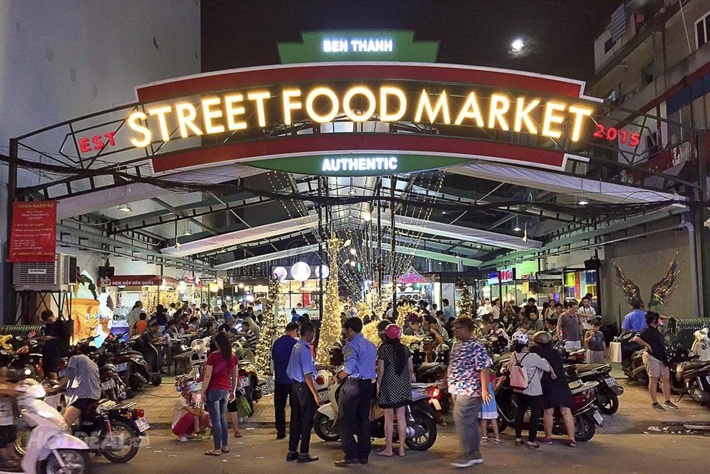
Why go: Ben Thanh street food market is a highlight in Ho Chi Minh City as a food heaven. For food lovers, it is a must-visit place to enjoy a wonderful dining experience with tasty specialties from many countries as well as tasty dishes from all regions of Vietnam. Also, the guests can discover the hustle and bustle of nightlife in the heart of Saigon at the same time. Some traditional Vietnamese dishes you should try: bun ca Long Xuyen (noodles with fish), bun mam (noodles with broth made of fermented fish), com tam la sen (Vietnamese broken rice wrapped in lotus leaf), chao tom (grilled shrimp mousse on a sugarcane stick), and grilled seafood. The price is very cheap, starts at VND 25.000. The Thai, Japanese, Korean, and Indian dishes are also easy to find in this street food market.

Insider tip: At high times, the market usually lack sufficient seating. So, it is better to avoid the lunchtime and dinner time.

Location: 26-28-30 Thu Khoa Huan Street, District 1, Ho Chi Minh City
Opening hours: 10:00 am – 09:00 pm

3. Binh Tay Market

Why go: Binh Tay market is located in the center of the largest Chinatown district in Vietnam. Constructed by the French in the 1880s, it is a great example of French architecture. Unlike Ben Thanh Market, this market mainly provides the Saigoners with its wide range of fresh fruits, poultry, vegetables, meat and seafood from all regions of Vietnam. Also known as Cho Lon Chinatown Market, it is a two-storey building along Thap Muoi Street. Though the goods are not as various as other markets in downtown Hanoi, you can find an assortment of handicrafts, textiles, and lacquerware here. Apart from the interesting cultural and historical aspects, Binh Tay market also attracts the customers for experiencing the local lifestyle and sampling delicious unique Vietnamese-Chinese delicacies.

Insider tip

  • While you are walking around Binh Tay market, be careful of your belongings. Especially when you are taking photos, be cautious and don’t be too attached to anything you take with you.
  • It’s better to visit the market in the early morning to buy the fresh food such as meat and seafood in outdoor wet market. The fresh food is the best to create a delicious meal.
  • Significantly influenced by Chinese culture, some popular dishes you should try include: Chinese-style roast duck, black chicken braised with Chinese medicine, Pha Lau (pig’s organs), and fish curry.

Location: 57 Thap Muoi, District 6, Ho Chi Minh City
Opening hours: Daily 07:00 am – 06:00 pm

4. An Dong Market
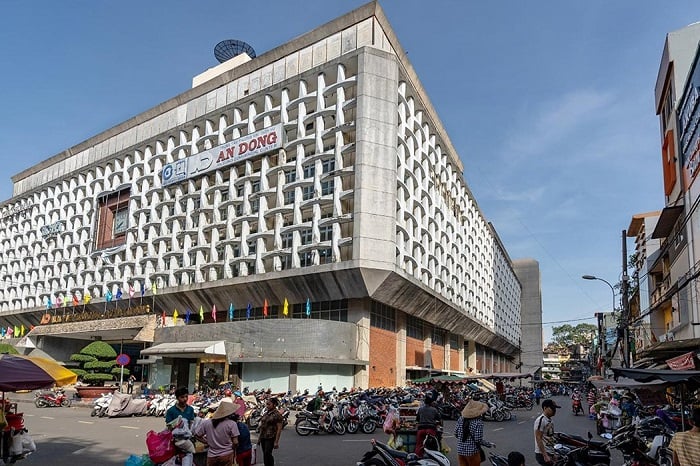
Why go: Compared to other markets, An Dong Market has its reputation for the variety of fashion wholesalers and handicraft stalls. Located in District 5, An Dong Market occupies a four-storey indoor market and it only takes around 10 minutes to drive from downtown Ho Chi Minh City. The market is an ideal place for fashion enthusiasts because you can find a huge collection of textiles, apparel, handbags, and accessories on the first two floors and quality knitwear, trinkets, and woodwork in the top floor. The ground floor also has several stalls where you can enjoy traditional snacks, desserts, and bulk food for less than USD 1. Some recommended food to enjoy here: pho, banh xeo, goi cuon, and mi quang.
Insider tip: For an interesting contrast, let’s check out An Dong Plaza which is just next door to An Dong Market. It’s a modern and convenient shopping center. If you can’t find something in the market, you probably can find it in the Plaza but at a higher price.

Location: An Duong Vuong Street, District 5, Ho Chi Minh City
Opening hours: Daily 08:00 am – 02:00 pm

5. Tan Dinh Market
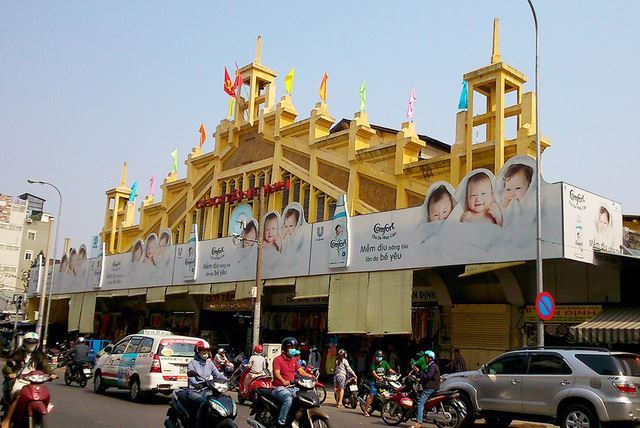
Why go: Built in 1926, Tan DInh market serves as a historical monument and also a well-known shopping location for both local people and newcomers. If you want to have a look at the Vietnamese food heaven, Tan Dinh should be on your itinerary. You can taste many different kind of food, really good food. We especially recommend “bun rieu”- one of Saigon’s signature dishes and sea snails. Besides, you can also immerse in colorful local silks in sophisticated patterns as you walk into the main area of the building. Although fabrics and food are Tan Dinh market’s specialties, the market contains a lot more commodities to make your routine much better: clothing, footwear, fresh produce, household items, accessories,… Many products has good quality but there are other ordinary products as well that you can buy at an affordable price.
Insider tip: 

  • Since the market is surrounded by some bustling streets such as Tran Quoc Toan, Nguyen Huu Cau, and Hai Ba Trung, the traffic jam could get extremely bad especially in the peak hours, so please choose your time wisely.
  • Check out the Tan Dinh Church nearby. The unique building is fully painted pink will probably give you the most memorable snapshots when in Saigon.

Location: 300 Hai Ba Trung Street, District 1, Ho Chi Minh City 
Opening hours: Daily 05:00 am – 05:00 pm

6. Russian Market
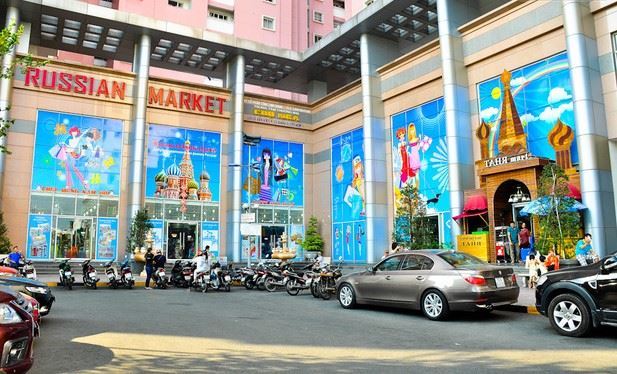
Why go: Located next to Sunland Hotel Ho Chi Minh City, the Russian Market attracts a steady following of expats and tourists from the north of Eurasia. The market is like a miniature of Russia in the center of Ho Chi Minh City. There are a lot of reasons that it becomes a must for you to pay a visit. It offers you a totally different aspect of the city. Much like its name, it brings the Russian atmosphere from the exterior decoration to the inside. The market has 3 floors for trading and packaging. With approximately 2.000 square meters and about 100 booths, the market offers various goods from clothes, shoes to unique souvenirs. The price is so reasonable that you may not need to bargain. And, another interesting thing you can find in this market is that most of the sellers used to study and work in Russia. They can speak several languages like Vietnamese, English, and Russian. They sometimes share their own stories to the customers who they like. 
Insider tip: The sellers in this market know that it’s difficult to make the customers pay, so the price is just a little higher than normal price. So please don’t bargain too much that causes sellers angry.

Location: 328 Vo Van Kiet, District 1, Ho Chi Minh City
Opening hours: 09:00 am – 07:00 pm

7. Dan Sinh Market
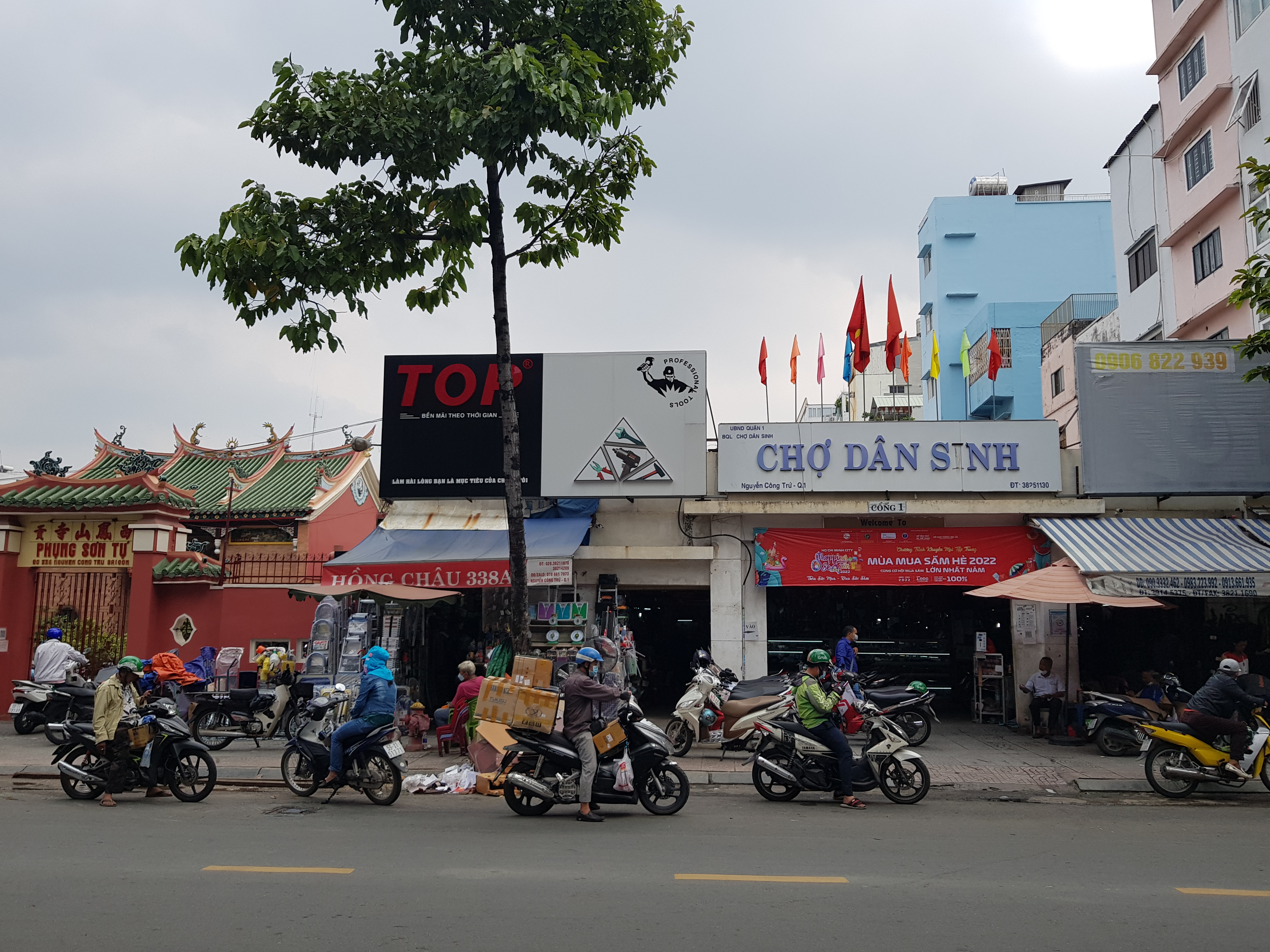
Why go: Dan Sinh Market is so called War Surplus Market. You just need a short five-minute walk from backpacking street to arrive here. The most common goods in this market are related to the Vietnam War from both infantries (the Vietnamese and the Americans). You can buy old zippo lighters, M-17 gas masks, the helmets of fighter pilots, army uniforms, and dog tags. There are also countless stalls selling different types of building materials, household hardware, plumbing pipes, and industrial machinery. And, if you are planning for a camping, this is the place to go to buy useful camping gear like water-resistant clothing, combat tents, rain boots, sleeping bags, and mosquito nets.
Insider tip: Vietnam War has ended since 41 years ago, therefore, it is very challenging to find authentic items. If you are a serious collector, it may be disheartening because more and more sellers admit that the goods are copies or reproductions. The price is always negotiable, so remember to bargain for the best prices.

Location: 104 Yersin, District 1, Ho Chi Minh City 
Opening hours: Daly 07:00 am – 06:00 pm

The above markets are the most popular markets in Saigon. They play a central role in the daily lives of locals, so it will be truly a shopping experience you won’t forget quickly to visit these markets. Make your plan to Vietnam right now by apply a Vietnam visa at vietnamvisapro.net. We, a reputable and reliable Visa service, will assist you turn your plan into reality at the very first step

Posted on

Van Phuc Silk Village Hanoi

Listed as one of more than 1,000 traditional villages in Vietnam, Van Phuc is a silk weaving village with a long history of development. The village captivates visitors not only with its unique embroidery lines and patterns, but also with its most beautiful cultural and historical tradition of the country.

>>> Apply Visa to Vietnam <<<

  1. Overview

Vietnam has a long history of silk production and Hanoi is one of the best places in the country to discover the ancient handicraft. Van Phuc Village, located 10km far from the Hanoi Old Quarter, is renowned for its traditional weaving and premium quality silk products. Like other so called “craft villages”, there’s not a strong sense of tradition here and most of the village has been turned over to modern shops selling silk wares of varying quality and appeal. Shoppers or visitors just need to spend a half-day trip or less to Van Phuc Silk Village that reveals the secrets of traditional silk weaving and offers plenty of opportunities to purchase quality silk products.

  1. History

Some documents & relics say that the weaving of Van Phuc village originated in the 9th century. It was rumored that a local girl gave birth to the rough silk weave with simple, ordinary silk products and the tradition didn’t become flourished until the 16th century, when a lot of premium items had been created with vivid, subtle patterns.

Van Phuc Silk Village once used to select as the tailor taking responsibility for making royal outfit under Nguyen Dynasty in Hue. Between 1931 and 1932 during French colonial, Van Phuc Silk, for the first time, was introduced worldwide in international exhibitions in Marseille and Paris. Since then, French clients have paid special interest in Van Phuc Silk. From 1958 to 1988, Van Phuc Silk mostly was exported to Eastern European market, and it has been popular product worldwide since 1990.

  1. Special features of Van Phuc Village’s Silk

With long tradition and well conservation by the locals, weaving has been passed from generation to generation, contributing to create unique cultural features on costumes of Vietnamese people.

All the patterns are made elaborately and sophisticatedly, each sheet of silk is a masterpiece bearing the enthusiasm and soul of each artisan. Moreover, all the processes are done by the oldest techniques that can only be achieved by Van Phuc villagers. Each stage follows strict regulations.

Van Phuc Silk has been known for its smooth, soft, and elegant appearance. Especially, a traditional kind of silk called Van Silk made in Van Phuc make the wearers feel cool in summer and warm in winter. Today, to satisfy various demand for silk of the market, Van Phuc handicraftsmen have expanded their silk and garment goods like embroidered silk, wrinkled silk, double layers and more colors for silk products.

  1. What to explore at Van Phuc Silk Village?

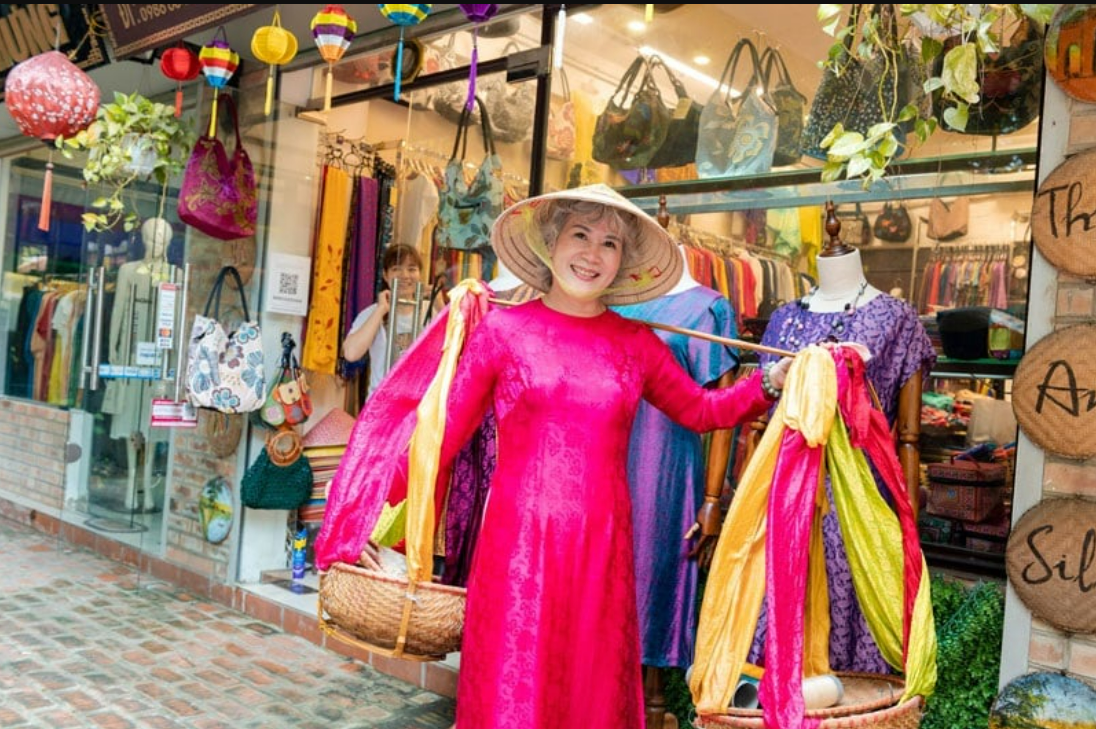
Many families in Van Phuc open their own shops in a convenient location in the village; create a “town of silk” that sell eye-catching and high-quality silk products. You may buy items available in the shop, or favorite fabric to get customized products. Most of the sellers are very friendly and can speak a basic English and French to serve foreign tourists.

Silk products of Van Phuc could vary differently from clothes to accessories like handbags or purses. Price is incredibly reasonable (the price for the meter of silk usually depends on the material, about 10 USD in average), some of the models you could bargain for a lower price even. Additionally, you could also drop in spiritual spots like Van Phuc Pagoda, or Natural Silk Protected area to understand more about the tradition of Van Phuc Village.

A highlight of a visit to Van Phuc will be an opportunity to see the old looms in operation. While some basic technology has been introduced to the process in recent years, there is still plenty of manual labour in Van Phuc’s silk production processes.

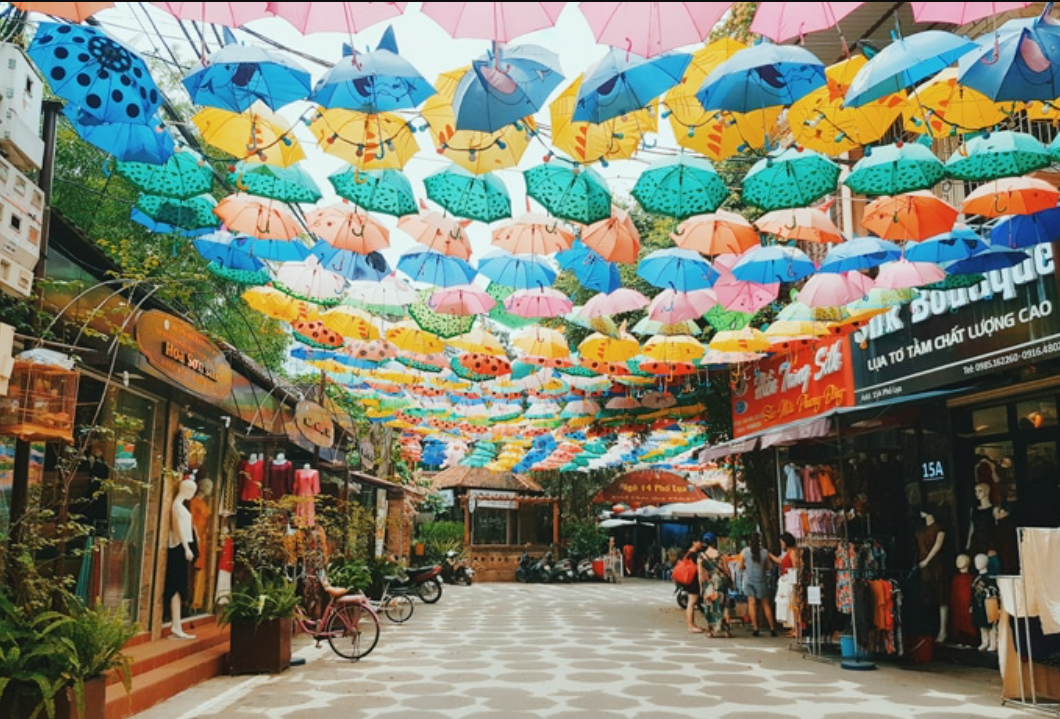
Additionally, a 100 meter-street decorated with colorful umbrellas that look no less than the art of Agueda in Portugal. Don’t skip to wander along it and snap some photos!

  1. How to get there

In a short distance to Hanoi Old Quarter, it is very convenient to access Van Phuc Silk Village.

You can easily rent a motorbike, take a taxi or catch a local bus number 02 or 21 before going on foot 500m to reach the village gate. You should travel Southwest out of Hanoi center on Nguyen Trai Road until reach the border of Ha Dong District, then turn right and drive about 3km to reach the village.

Apply For Vietnam Visaapply Vietnam visaApply visa vietnamBook E-visa Vietnambook visa vietnamCheap Vietnam VisaE-visa Vietnamevisa VietnamEvisa Vietnam onlineexpedited e-visaexpedited E-visa to Vietnamexpedited Vietnam E-visaGet a Vietnam visaGet Vietnam Visaget vietnam visa onlineget visa to vietnamget visa Vietnammultiple entry visamy vietnam visaOrder Vietnam E-Visaquick vietnam evisarush vietnam visaUrgent Vietnam VisaVietnamVietnam E-visaVietnam EvisaVietnam touristVietnam travelVietnam vacationVietnam VisaVietnam visa costVietnam Visa ExemptionVietnam Visa for India citizensVietnam Visa For IndiansVietnam Visa for South Africa citizensVietnam Visa In IndiaVietnam visa in South AfricaVIetnam VIsa on arrivalVietnam VIsa onlineVietnam visa provisa for vietnam Visa On Arrivalvisa onlineVisa to VietnamVisa Vietnam

Posted on

Guide to Halong International Cruise Port for Tourists

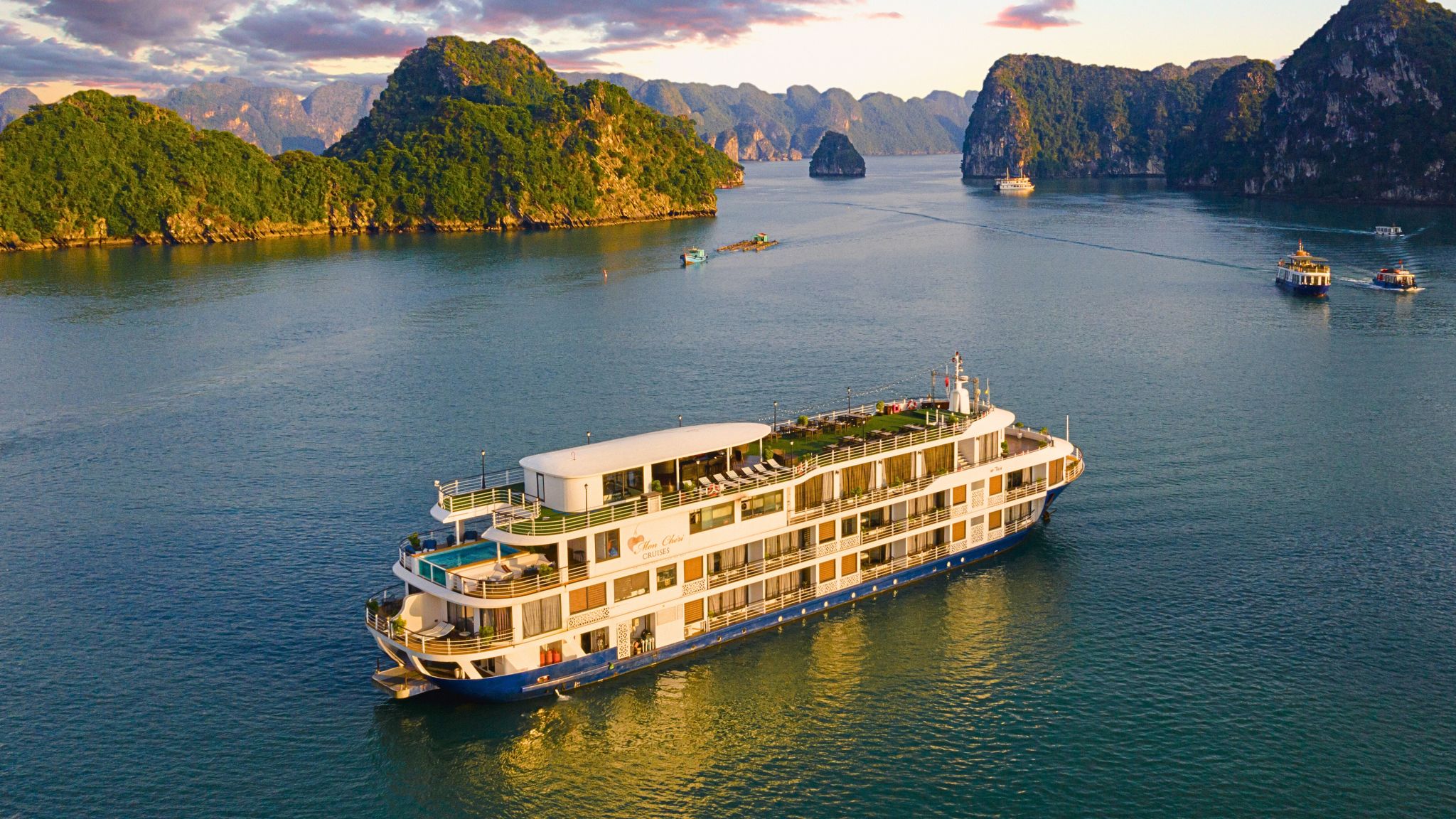
Halong International Cruise Port is a premier cruise port located close to the stunning Halong Bay, a UNESCO World Heritage site in northern Vietnam. So exactly where it is located, how to reach it from the surrounding areas, as well as what to do to fill in your cruise experience to the port, check all here.

Halong International Cruise Port Overview – Location and facilities

Ha Long International Cruise Port is the first cruise port in Vietnam with a large capacity that can accommodate the largest and most modern cruise ships to Vietnam.

The port is located on Beach Road, New Beach, Bai Chay Ward, Halong City, Quang Ninh Province (or Đường Bao Biển Bãi Cháy  Mới, Phường Bãi Cháy, Thành phố Hạ Long, Tỉnh Quảng Ninh, in Vietnamese). Its strategic location on the shore of Ha Long Bay makes it convenient for visitors to explore the area. In addition, the port is approximately 500m away from the Sunworld Ha Long Complex, an amazing playground in the city.

The Ha Long International Cruise Port has 6 wharves, of which:

  • 4 wharves for receiving cruise ships & tourist boats
  • 1 pier with 2 wharves, dedicated for heavyweight international passenger vessels.

In addition, to serve the tourists’ demands, the cruise port is also well equipped with:

  • Passenger shuttle services:  The port provides shuttle buses to take you between your cruise ship and the terminal building, as well as to nearby attractions and hotels.
  • Support services: To ensure a stress-free experience, the port offers a variety of services including luggage handling, currency exchange, and assistance with booking tours.
  • Security and safety: The port prioritizes your safety and has comprehensive security measures in place. This includes CCTV cameras, security checkpoints, and a trained emergency response team.
How far is Hanoi from the cruise port?

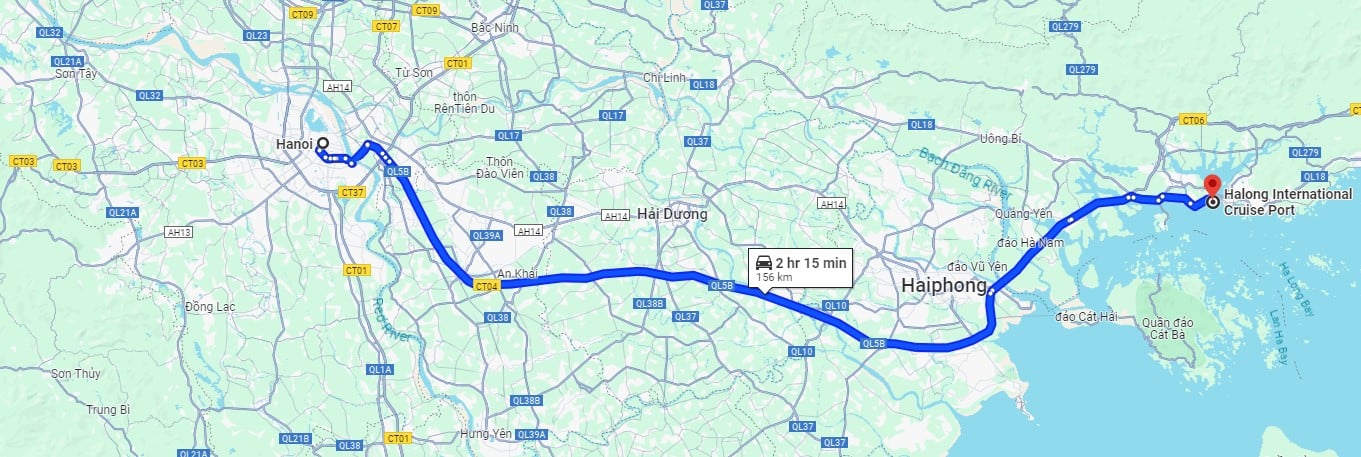
The driving distance between Hanoi and the Ha Long International Cruise Port is approximately 150-180 km, depending on the specific route taken.

Given typical driving speeds in Vietnam, the travel time from Hanoi to the Ha Long International Cruise Port would likely be around 2.5 to 3 hours.

How to get to Hanoi from Halong International Cruise port?

There are a few options for getting from the Ha Long International Cruise Port to Hanoi:

  1. Private Transfer/Taxi:
    • This is likely the most convenient and direct option.
    • You can arrange a private transfer or taxi service from the cruise port directly to your destination in Hanoi.
    • Travel time would be approximately 2.5-3 hours depending on traffic conditions.
  2. Public Bus:
    • There are regular bus services that connect Ha Long City to Hanoi.
    • You can take a bus from the Ha Long bus station, which is likely in close proximity to the cruise port.
    • Bus travel time is around 2.5-3 hours.
    • This is a more budget-friendly option compared to a private transfer.
  3. Organized Tour/Shore Excursion:
    • Some cruise lines or local tour operators may offer organized day trips or shore excursions from the Ha Long port to Hanoi.
    • This can be a convenient option if available, as the transportation and logistics are handled by the tour provider.

Regardless of the method, it’s recommended to plan your transportation in advance, especially if you have a tight schedule or specific requirements.  

How far is Halong Bay from the cruise port?

The Halong international cruise port is located on the shore of Halong bay area, so it’s quite close to each other. As such, a Halong Bay cruise is an activity that is often included in the experience during the free time from the international cruise docking in Halong.

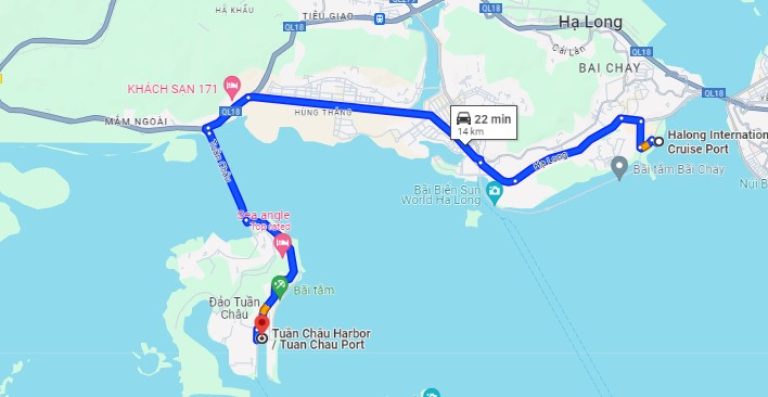
If you want to take a domestic Halong Cruise from Tuan Chau Harbor, it’s around 14km from the port, 20 minutes drive.

Cruise Lines Calling at Halong Bay International Cruise Port, Vietnam

Halong Bay is a popular destination for cruise lines, and several major players feature it in their itineraries. Here are some of the most common:

  • Regent Seven Seas Cruises:Known for their all-inclusive luxury experiences, Regent offers elegant voyages through Southeast Asia, frequently including Halong Bay as a port of call.
  • Silversea Cruises:Another luxurious option, Silversea emphasizes all-suite accommodations, personalized service, and a refined experience. Their itineraries often involve Halong Bay, providing guests with exquisite views and excursions.
  • Seabourn:Seabourn offers a similar luxury experience to Silversea, prioritizing small-ship intimacy, gourmet dining, and curated shore excursions. Halong Bay is a regular stop on their Asian voyages.
  • Holland America Line:Known for their classic elegance and relaxed atmosphere, HAL frequently features Halong Bay in their transpacific and Asia itineraries.
  • Princess Cruises:Considered a solid mid-range option, Princess Cruises offers a lively on-board experience with multiple dining options and entertainment. Their itineraries often include Halong Bay as part of their Asia sailings.
  • Royal Caribbean International:Offering a more contemporary cruise experience with innovative activities and entertainment, Royal Caribbean includes Halong Bay in their Asia itineraries, offering a range of shore excursions.
  • Viking Ocean Cruises:While their focus is on cultural immersion and exploring destinations in depth, Viking Ocean Cruises also includes voyages featuring Halong Bay.
  • Celebrity Cruises:Celebrity Cruises offers a modern, contemporary experience with a focus on stylish design and dining. They often bring their ships to Halong Bay as part of their Asia sailings.

Note: It’s important to check specific itineraries, as ports of call can vary greatly depending on the route and time of year.

Beyond the cruise lines listed, many smaller, more niche lines may also call at Halong Bay International Cruise Port. It is always best to consult the official website of your chosen cruise line to confirm port calls.

Suggested Things to Do from Halong International Cruise Port

Halong International Cruise Port serves as a gateway to a wealth of exciting shore excursion opportunities, enabling cruise passengers to explore the natural and cultural wonders around the region.

Halong Bay Cruises and Excursions

The most popular shore excursions from Halong International Cruise Port revolve around exploring the stunning Halong Bay. These excursions may include:

  • Day cruises or multi-day voyages through the bay’s limestone islands
  • Visits to the famous Sung Sot Cave and other cave systems
  • Kayaking and paddleboarding adventures
  • Excursions to floating fishing villages

These activities offer a chance to witness the breathtaking natural beauty of Halong Bay up close.

Conclusion

Halong International Cruise Port is a premier cruise destination that offers a truly exceptional experience for visitors exploring the wonders of Halong Bay and the surrounding region. With its strategic location, comprehensive facilities and services, and a diverse array of shore excursion options, the port serves as a gateway to one of Vietnam’s most captivating natural and cultural destinations.

Plan well before your cruise to make your every moment in Vietnam unforgettable.Make your plan to Vietnam right now by apply a Vietnam visa at vietnamvisapro.net. We, a reputable and reliable Visa service, will assist you turn your plan into reality at the very first step
Posted on

“Cai Rang Floating Market Culture” Tourism Festival In 2024

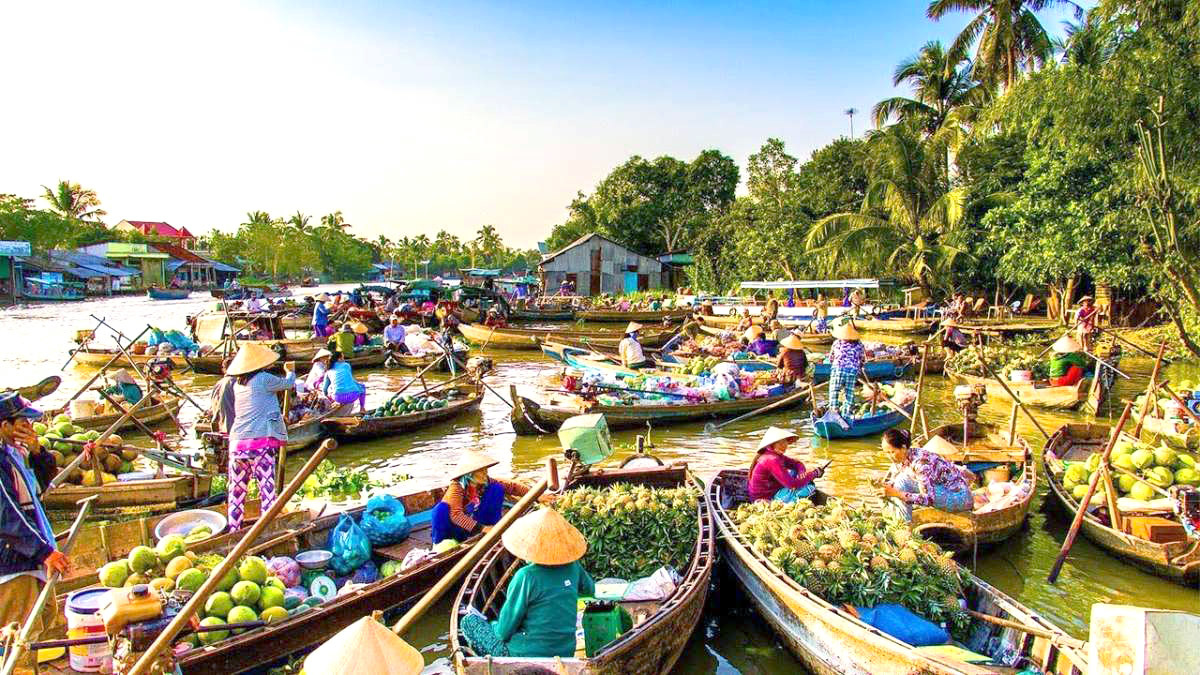
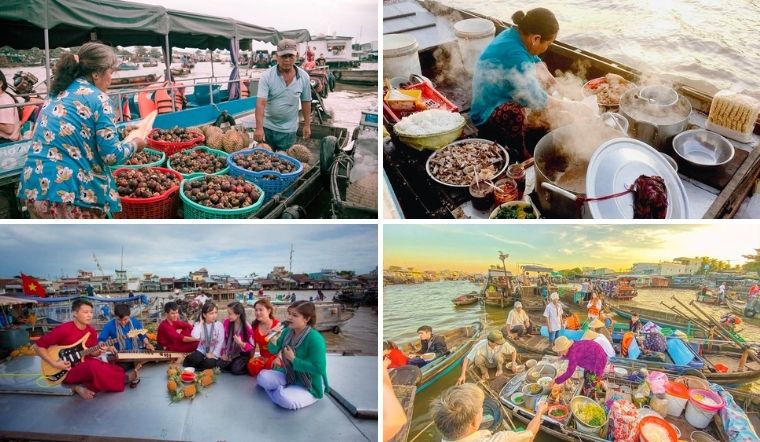
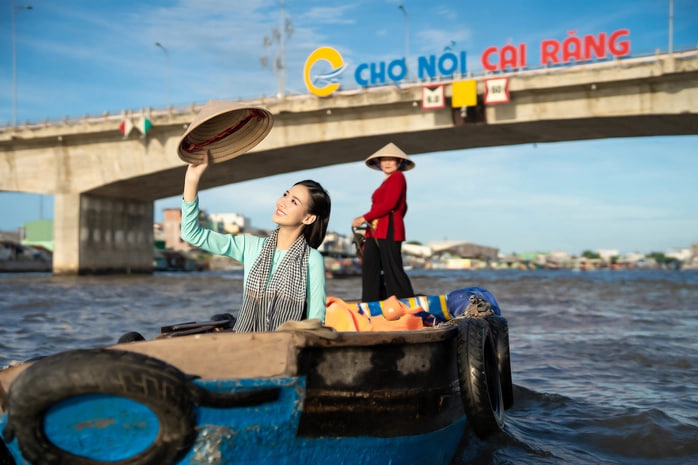
In response to World Tourism Day of September 27th, the 8th “Cai Rang Floating Market Culture” Tourism Festival in Can Tho city – 2024, will take place for 3 days, from August 30th to September 1st.

This year’s festival celebrates the theme: “Preserving and Promoting Cai Rang Floating Market Culture – A National Intangible Cultural Heritage, Associated with Tourism Development.” Visitors will have the chance to immerse themselves in the daily life of the locals and delve into the rich culture of the Mekong Delta.

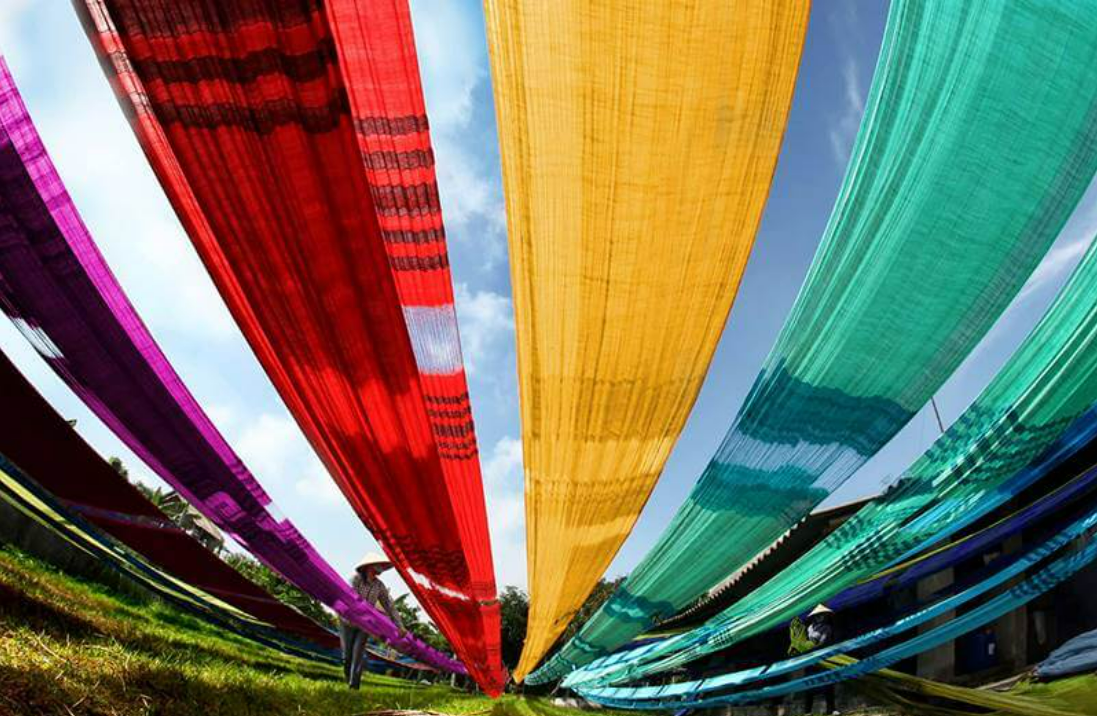
The festival features over 130 booths, showcasing businesses from both within and outside the city. The activities are centered around preserving the unique values of the “Cai Rang Floating Market Culture.” Additionally, there are numerous events dedicated to supporting merchants, trade services, and local cuisine.

Specifically, in addition to the opening and closing ceremonies, the festival has many activities such as boat parades on the river; booths to promote tourism and trade; seminars on developing the potential of river tourism from Ho Chi Minh City to Can Tho; surveying the river tourism route from Ho Chi Minh City to Can Tho… 

Sports enthusiasts can enjoy various competitions, including the National Motorcycle Racing Tournament, Can Tho City Football Championship, and the Can Tho City Open SUP Boat Racing Tournament.

The Cai Rang District People’s Committee oversees activities like the contest for decorating and displaying models of boats, ships, and poles for selling agricultural products at Cai Rang Floating Market. They also organize a culinary competition and a contest celebrating “The Beauty of Ao Ba Ba – Past and Present.”

Beyond cultural and artistic activities, the festival emphasizes social and welfare initiatives, such as repainting boats for merchants at Cai Rang Floating Market and boat parades to collect trash from the river.

Pack your bags, book your flight, and get ready to enjoy this interesting festival in Mekong Delta regions of Vietnam.

Make your plan to Vietnam right now by apply a Vietnam visa at vietnamvisapro.net. We, a reputable and reliable Visa service, will assist you turn your plan into reality at the very first step
Posted on

Vietnam Architecture: Hanoi Opera House

Located in the heart of Hanoi, in a beautiful intersection downtown meets five main city roads, is a huge building called Hanoi Opera House, or the Grand Opera House (Vietnamese: Nhà Hát Lớn Hà Nội). Standing with times over 100 years, Hanoi Opera House has become a witness of Hanoi’s history. This historic building hosts to shows by many of cultural entertaining performances, contemporary dance, bamboo cirque, orchestra concerts and government events.

>>> Apply Visa to Vietnam <<<

>>> Order Fast Track Service <<<

The beautiful Hanoi Opera House was built from 1901 to 1911 by the French government, during the period French occupied Vietnam. Initially, Opera House’s position used to be a wetland area belonging to two villages, Thach Tan and Tay Luong. Thus, the construction is a strenuous work. It was designed by two French architects V. Harley and Broyer, inspired by ancient Greek architecture styles and the Opéra Garnier de Paris. The design was under much modification due to comments of many other architects and required a huge workforce and materials: 300 workers; 35,000 bamboo poles and concrete blocks of 0,9m thick; 12,000m3 of materials with 600 tons of iron and steel on the total area of 2600 square meters are amazing figures for any construction. It’s an outstanding piece of neo-classical French architecture featuring Gothic themes on the doors and domes with pillars, shuttered windows, balconies and a glass room. The interior design of Hanoi Opera surprises visitors with T-shape white marble staircase right in the center decorated with red carpet centered, crystal chandeliers, large wall mirrors, Corinthian columns and colorful dome by colorful murals and reliefs. The auditorium is 24 x 24 meters in size with three sitting floors including 589 velvet chairs. The second and third floors are reserved for separate box seats. The building also has a meeting room called “Mirror Room”, 18 dressing rooms, two rooms for voice training and a library at the back.

There are three grand opera theatres built by French in VietnamHanoi Opera HouseHai Phong Opera House and Saigon Opera House. Hanoi Opera House is the biggest one of three and speaks volumes as historical and cultural evidence of Vietnam under French rule. In 1899, the city council held a meeting chaired by Richard – envoy of Hanoi, and he proposed to build the Theater with the purpose of entertaining for French colonialists. Vietnamese elites were allowed to attend these performances but they had to be well-dressed and paid much money for tickets.

After the August Revolution in 1945, the Opera House was changed from entertaining the French elite to becoming the center of major historical events including the first session of the National Assembly of Vietnam Democratic Republic. In 1995, the building was restored to prepare for the La Francophonie summit in 1997, with nearly 14 million US dollars for renovation. Nowadays, conferences, seminars and press conferences under the plans of Ministry of Culture Sport and Tourism are taken place in the Opera House as well.

Not only it is a symbol of Hanoi in many aspects but Hanoi Opera House is also the stage of flourishing art. Invited to perform in the stage is the dream of all Vietnamese artists because it’s such a way to recognize their talent and contribution to art of Vietnam. The auditorium offers a superb setting in which to see any live show. The stage is three metres high and there are three storeys in total to guarantee wonderful experiences regardless of your seating arrangements. Musicians, actors and dancers play to a 600-strong audience delivering powerful operatic and classical performances, making it a very popular theatrical attraction.

Hanoi Opera House has the own significances that are worthy of standing in the list of the world’s classics. In terms of its values of architecture and landscape, the Opera House is still the most important artistic art form and most suitable for high-quality art programs and meets requirements of international performances.

Interesting facts and figures:
– The building took 10 years to be completed from 1901 to 1911.
– The building is 34 meters above the ground and carried out in a total area of 2600 square meters with the 87-meter length and 30-meter width.
– The auditorium is 24 x 24 meters with three seat floors that include 589 velvet seats.
– In 1995, the government spent nearly 14 million US dollars to restore the opera house.
– The building was acclaimed as Nation Relic, on its 100th birthday, December 9th 2011.

Hanoi Opera Hotel is just a few minutes walking from Hilton Hotel, Hotel de l’Opera Hanoi – Mgallery, Sofitel Legend Metropole Hotel, Conifer Boutique Hotel, The Lapis Hotel, Apricot Hotel and many others in the Old Quarter. Hoan Kiem Lake and Vietnam National History Museum are also nearby. Visitors can see the imposing colonial architecture of the Hanoi Opera House from the outside. Wander around the sprawling gardens and admire the huge building features many elements of Gothic and neoclassic architecture. To see the inside, visitors will need to book a seat for a performance. While it is interesting with the architecture, the true highlight is of course seeing a show in this grand setting. The Hanoi Opera House hosts both classic French and Italian opera and also traditional Vietnamese performances. This city landmark is also included in most of our Hanoi Tours. If you don’t find it in your city tour itinerary, please ask your travel consultant to fill in.

 Apply For Vietnam Visaapply Vietnam visaApply visa vietnambook visa vietnamCheap Vietnam VisaE-visa Vietnamevisa Vietnamexpedited e-visaexpedited Vietnam E-visaGet a Vietnam visaGet Vietnam Visaget vietnam visa onlineget visa to vietnamget visa Vietnammultiple entry visamy vietnam visaquick vietnam evisarush vietnam visatourist visaUrgent Vietnam VisaVietnamVietnam E-visaVietnam EmbassyVietnam touristVietnam travelVietnam vacationVietnam VisaVietnam visa costVietnam Visa ExemptionVietnam Visa FeeVietnam Visa for India citizensVietnam Visa For IndiansVietnam visa for IsraelisVietnam Visa for South Africa citizensVietnam Visa In IndiaVietnam visa in South AfricaVIetnam VIsa on arrivalVietnam VIsa onlineVietnam visa proVisa Approval Lettervisa for vietnamVisa On Arrivalvisa onlineVisa to VietnamVisa Vietnam

Posted on

Top 10 Famous Mountains In Vietnam

Whenever thinking of the first trip to Vietnam, the most popular places often come up in travelers’ minds are: Hanoi, Halong Bay, Sapa, Danang, Hoian, Nha Trang, Phu Quoc and Saigon. However, this beautiful country is not just all about bustling cities, Buddhist pagodas or untouched beaches, it’s also famous for spectacular mountain ranges. Mountains in Vietnam possess incredible landscape and unique features that differentiate them from the others. If you are climbing enthusiasts or you like spectacular and panorama views, don’t forget to check out the top 10 famous mountains in Vietnam.

>>> Apply Visa to Vietnam <<<

>>> Order Fast Track Service <<<

1. Fansipan Summit, Hoang Lien Mountain – Lao Cai Province.

Located about 9km west of Sapa Town, Fansipan Peak belonging to Hoang Lien Son Mountain Range, is the tallest mountain in Vietnam with an impressive height of 3,143m and was labelled as “the Rooftop of Indochina”. Fansipan means “Hua Si Pan” in local language (aka Huge Rock). Conquering the summit of Fansipan is a challenge itself as you have to be physically fit, have great experiences in hiking and trekking. It is highly recommended to hire a local guide or porter to escort your groups because he can lead you on the right and safest trekking path; help you carry some stuffs and prepare meals during the journey.

If you don’t want to take risks and can’t pass the physical tests, Fansipan Cable Car is available to meet your desire to visit the summit. The cable car was opened to public in 2016, got the Guinness World Records of the longest three – rope cable car in the world (6,292.5m) and the greatest elevation difference by a non-stop three – rope cable car (1,410m). Thanks to the massive cable car system, it takes only 15 minutes of riding and around 600 extra steps to reach the summit: instead of 2 – 3 hard trekking days. The cable cars operate from 7:30am to 5:30pm every day, with capacity of 35 passengers per car. Once you leave the station, you’ll immediately start to float high above the rice terraces and rocky cliffs below. Huge windows let you take in the sights all around, as you ascend gradually to this towering tip above the clouds.

The most suitable time for taking a visit to the mountain is from September to the next March. Especially, you can witness the magnificent landscape of Fansipan in February when various mountainous flowers in the valleys start to bloom, or breathtaking views of golden rice paddy fields in September. Despite modern commercialism with the appearance of cable car, Fansipan is still a favorite mountain destination in Vietnam and a true adventure experience – a must-do on any Sapa itinerary.

2. Yen Tu Mountain – Quang Ninh Province.

Yen Tu Mountain is located 40km away from Halong Bay in Quang Ninh Province. It belongs to the Dong Trieu Mountain Range in the north-eastern area of Vietnam. Previously, Mount Yen Tu was called as “Bach Van Son” (translated into English as” White Could Mountain”) because it is surrounded by white huge clouds around the year. Yen Tu is well known for the picturesque landscapes, ancient pagodas and especially the capital of Buddhism in Vietnam. King Tran Nhan Tong (1258-1308), the third emperor of Tran Dynasty, who guided Dai Viet army to defeat the Mongolian invaders in 1285 and 1287, decided to leave the palace and devoted his life to the Buddha. Then he established temples, meditation centers where he could perform his lectures to other monks and propagate Buddhist scriptures. Later, he co-established the Truc Lam Zen Sect, the first Vietnamese Buddhist Zen Institution. Up to now, a lot of Buddhists from around the country choose this sacred landmark to pray and pilgrimage, especially during the first three months of Lunar Calendar. That’s the time of spring festival in Yen Tu (from January to March) when the worshipers show their sincerity and wish for a new peaceful and prosper year.

In addition, Yen Tu has its own great natural diversity. There are thick bamboo and pine forests along the path to ancient pagodas and temples. In the dense forests, next to the pagodas and temples, or even at the peak of the mountain are architectural masterpieces. Dong Pagoda (Bronze Pagoda) lies in the highest peak, with the altitude of 1,068 meters above the sea.
To reach this peak, there are 2 options: on foot or by aerial tramway. The walking distance is around 6,000m with 6 hour hiking up thousands stone steps, passing through the dense green bamboo forests, stream. This option requires good physical conditions and many Buddhist pilgrims take this way because they believe that is a way of expressing their sincerity to Buddha. Another way to reach the mountain top is taking Yen Tu Aerial Tramway which was introduced in 2002. Travelling by this cable car, passengers will have an amazing experience to contemplate the whole fascinating view of the Yen Tu National Forest. From the top of Yen Tu Mount, visitors enjoy the poetic scenery of Halong Bay with thousands of limestone islands at the East or they can look to the South towards Hai Phong City with Bach Dang River flowing gently.

3. Ma Pi Leng Mountain Pass – Ha Giang Province.

Ma Pi Leng Pass is a high mountain pass at an elevation of 1.500m (4,921ft) above the sea level. It’s a part of the Dong Van Karst Plateau, lies on the Happiness Road, which connects Ha Giang City, Dong Van and Meo Vac. Happiness Road is about 200km long and was built by thousands of youth volunteers from 16 ethnic groups of 8 Vietnam Northern provinces. It took 6 years (1959-1965) to complete the construction and especially, the 20-km pass Ma Pi Leng was built by suicide troops volunteers who had to hang themselves on rock cliffs and move every centimeter to finish the dangerous 11-month building process.

The name Ma Pi Leng means literally “horse’s nose”, implying the dangerous of the topography here when mountains upstanding like horse’s bridge of the nose. It is considered as one of the “greatest four mountain passes” in the northern mountainous regions of Vietnam, together with Khau Pha in Yen Bai Province, O Quy Ho in Lao Cai Province and Pha Din in Lai Chau Province.
Conquering the legendary Ma Pi Leng Pass and stopping by the Ma Pi Leng viewpoint to look down to Nho Que River is the dream of many adventurous motorbike-riding lovers. One of the first turnout points on the road heading south is the Ma Pi Leng Skywalk, complete with a statue celebrating the construction of the Happiness Road. In addition, there’s a small museum known as the “Happiness Road Museum” which documents some of the history of the road. A bit further south, you’ll find the Ma Pi Leng Viewpoint, the best-known stop in the area because it offers a perfect view of the dramatic valley the river has carved into the mountains. Taking Ha Giang Tours with Vietnam Travel, tourists definitely will have chance to ride a bike along the Happiness Road and seeing the sunrise or sunset over Ma Pi Leng Pass. Neither words nor photos can beat the awesome experience of standing there physically among those awe-inspiring mountains.

4. Thung Khe Pass – Hoa Binh Province.

Thung Khe Pass (also known as the White Stone Pass) is located on Highway 6 connecting Mai Chau and Tan Lac Districts of Hoa Binh Province. It’s considered as the main gate to Mai Chau, Moc Chau and other beautiful destinations in the Northwest Vietnam. The pass is at an altitude of 1000m above sea level with spectacular scenery but dangerous due to steep and sharp curves. On the way to Mai Chau or Moc Chau, buses often stop at the peak of Thung Khe pass for short break. There are few local stalls setting aside to sell local specialties, such as wild herbs and vegetables, fresh corns, sticky rice. Visitors stop here to take photos, enjoy panorama view of greenery Mai Chau valley in the cool breeze.

Staying at the pass, tourists can enjoy four seasons in a day: spring in the morning, summer at noon, autumn in the afternoon and winter at nighttime. Thung Khe is really an attractive spot that you should not miss on the way to discover Northwestern regions in Vietnam.

5. Bach Ma Mountain – Thua Thien Hue Province.

Bach Ma or White Horse Mountain is a natural border between Thua Thien Hue province and Danang city. Bach Ma Mountain belongs to Bach Ma National Park, located at Phu Loc village, Nam Dong district, Hue Province. It is about 60 km to the south from Hue city centre and 90 km away from Danang city. Bach Ma is only 18km from the coast, also the only connection of Vietnam’s primeval forest between the sea and the Vietnam – Laos border. Located at an altitude of 1450 meters above sea level, Bach Ma Mountain range features typical weather of two sides of the Truong Son Mountain Range and recognized as one of the biodiversity centre in Indochina for ecological diversification.  If you are nature lovers, this region is truly a paradise with more than 1400 species of plants, including rare orchids, representing one fifth of the flora of Vietnam. In addition, the park is the home to 132 species of mammals, three of which were only discovered in the 1990s: the antelope-like saola, the Truong Son muntjac and the giant muntjac.

Not surprisingly, Bach Ma was selected to become a hill station for the colonial administration of Hue in the year of 1932. Over a hundred villas were built here to accommodate the colonial French officers and Hue’s upper-class families. When the French – Vietnam war ended in 1954, Bach Ma was soon forgotten and the villas abandoned. In the 60’s the Americans took over this region as a strategic base for their military actions controlling the stretch between Hue and Da Nang. After our independence in 1975, the Vietnamese Government stated the Bach Ma National Park at this mountain and extending the Park over the years to its current. Nowadays, this mountain is a popular summer retreat for locals and foreigners thanks to its legendary history, exotic nature with spectacular beauty, astoundingly pristine atmosphere and the cool climate all year round. The mountain trails are quite slippery during the rainy season (September – December) so tourists should avoid visiting Bach Ma Mountain in these months or should follow the instructions from experienced tour guides. The best time to visit Bach Ma National Park is from December to April, which is the dry season with low rainfall offering the perfect stretch of jungle walk.

6. Son Tra Mountain – Danang City.

Son Tra Mountain, known to American soldiers during the Vietnam War as Monkey Mountain, is located on Son Tra Peninsula, in Son Tra District, 35-minute drive from Danang City. Standing at the height of 693m above sea level, the mountain peak overlooks the Bay of Danang and the East Sea. Used to be a former U.S. military base during the Vietnam War, Monkey Mountain houses two radar domes that are now taken over by the Vietnamese military as well as a helicopter pad. The mountain is a favorite place of animal lovers and adventure seekers while traveling in Danang because it’s the rich diversified nature reserve, protected under the nationally prohibited forest regime with many rare wild animals, especially pygathrix (red-shanked douc) is on the IUCN Red List of endangered species. The lush mountain is also surrounded by unspoiled beaches such as Bai Bac, Bai Nam, Bai But and Tien Sa Beach. Thanks to its sea-oriented location, Son Tra acts as a giant screen protecting Danang City from storms and typhoons coming from the sea.

The prominent attraction set on this mountain is Linh Ung Pagoda. The stunning pagoda was built during the 18th century and houses a 67 metre-tall white statue of the Goddess of Mercy set atop a lotus-shaped platform. This is the largest pagoda by its scale and artistic architecture in Danang City. The statue of Lady Buddha facing to the sea is believed to protect the locals from strong storms. Entrance to Linh Ung Pagoda is free of charge, though it gets crowded with pilgrimages on special occasions. Additionally, Tien Sa Port at the base of the mountain’s western face, is one of the most important and largest deep-water seaports in central Vietnam. Tien Sa port welcomes thousands of international tourists from sea cruise ships visiting Vietnam annually. With its perfect location, Son Tra Mountain is a popular retreat for tourists and locals alike looking to day trip to stay away from the crazy noise of the big city.

7. Bana Hills – Danang City.

Bana Hill is a mountain top resort complex, located in the Truong Son Mountains at the west of Danang City. The station was founded and built in 1919 by French colonists to be used as a leisure destination for French tourists. Being located above 1500 metres above sea level, it offers stunning view over the East Sea and the surrounding mountains. Due to the elevation, the temperature here is significantly cooler (10 – 15 degrees) than the environment near the coast, you can revel yourselves in the typical rotation of four seasons in a single day. Bana Hills is most famous for its French village with buildings that look like medieval castles, but inside these stone walls are majestic Golden Bridge, popular hubs of endless entertainment and more.

To reach the hilltop, visitors get to take the picturesque cable car. The cable car system at Bana Hills was completed in 2013 and holds several Guinness World Records, including the widest gap between stations and the greatest change in elevation. During the cable car ride, you can enjoy the surrounding views of the lush forest leading up to your destination. In recent years, Bana Hills has get more and more attentions from tourists all over the world thanks to newly built Golden Bridge. Golden Bridge with the length of 150m and at the height of 1,414m above sea level, was officially inaugurated in June 2018 in Bana, was also voted by TIME magazine as one of the “Top 10 best destinations of the world 2018” and admired by The Guardian as “The world’s most impressive pedestrians’ bridge”.

Exploring Ba Na Hills, you will not only enjoy the spectacular views of mountains, greenery, and cities but also join a plethora of recreational activities in one of the most amazing amusement parks in Vietnam.

8. Lang Biang Mountain – Lam Dong Province.

Lang Biang Mountain is located in Lac Duong district which is 12km North of Dalat City, Lam Dong Province. Impressively standing at an altitude of 2,169 meters above sea level, Lang Biang Mountain is considered as the roof of Dalat. The mountain is the paradise for both nature lovers and adventure seekers. There are several options to reach the mountain top: by jeeps, by motorbike on a paved road. Or if you look for a physical challenge, it takes around two or three hours along a forested trail to hike to the peak. But you should be aware of four seasons within one day even Dalat’s temperatures are known as pleasant for hiking activity. Standing on the top of mountain, tourists can enjoy pleasant climate, bewitching nature and marvelous views of the whole city, forests, rivers and houses of tribal villages.


The name Lang Biang itself originated from a bittersweet love story. Long time ago, there was one couple who were deeply in love with each other. The boy was K’Lang from Lach minority and the girl was H’Biang from Chil minority. According to the long-standing feud between their tribes, they couldn’t get married so they left their hometown, got married and lived in the mountain top. When H’Biang was ill, K’Lang found many methods to help her get over the illness. He even came back to H’Biang’s village to ask for help but no one welcomed him. They even prepared poisoned arrow to kill him. Suddenly, H’Biang appeared to protect her husband from the arrow. After her death, K’Lang cried a lot and also died. His tear turned into a scream called Dankia (Golden Stream) nowadays. After their death, H’Biang’s farther realized his faults and tried to unify two tribes. To memorize the couple with profound love, the mountain range was renamed into what we call it today: Lang Biang.
Nowadays, Lang Biang is an ideal place for adventurous activities like mountain climbing, conquering high peaks, paragliding and trekking. Camping, exploring the natural flora, bird-watching and enjoying the unique culture of ethnic minority groups are recommended activities for tourists coming to Lang Biang.

9. Ba Den Mountain – Tay Ninh Province.

Located 11km in the northwest Tay Ninh, around 3-hour drive from Ho Chi Minh City, Ba Den Mountain (Black Virgin Mountain or Nui Ba Den in Vietnamese) is suitable for those who love outdoor activities and want to escape from the hustle and bustle of big cities. Together with Nui Heo (Pig Mountain), Nui Phung (Phoenix Mountain), Nui Ba Den (Black Virgin Mountain) are parts of Nui Ba Historical and Cultural Complex. At the height of 986m, this mountain is the highest mountain in the southeastern part of Vietnam because it was formed by the extinct volcano rising from the flat Mekong Delta jungle and farmland. It is also best known for pristine natural scenery and long-standing spiritual architectural complex.

The mountain name of Ba Den is translated into English as Black Virgin Mountain because it’s related to the myth about Ly Thi Thien Huong, the woman who is considered as the Black Virgin. At the end of the 18th century, there was one loving couple named Le Sy Triet and Ly Thi Thien Huong. Thien Huong was a beautiful girl with lovely tanned skin. Le Sy Triet is a young man with great intelligence and bravery. He enlisted in the army of Nguyen Hue – a general who later became King Quang Trung. When Triet was away from home, Thien Huong was forced to marry a rich man in the village. She committed suicide by jumping off the mountain edge to protect her virginity. After her death, villagers regretted her beauty and trait and built a temple on that mountain, which was changed as Ba Den Mountain (Black Virgin Mountain or Black Lady Mountain) in memory of this mysterious young lady.
Nowadays, the mountain is best known for its temples. Buddhists come to worship at Linh Sơn Thiên Thạch pagoda. There’s a large reclining Buddha statue, and many pleasant paths to explore.

The visit to Ba Den Mountain can be really dangerous and a reasonable level of fitness is required. It takes around 2.5 to 3 hours trekking on the foot path to the top of the mountain. The trail is well defined but steep, rocky and uneven in places but you can reward yourself with the stunning views along the way. However, it’s much easier to reach the mountain top thanks to newly built cable car system by Sun Group. Instead of the difficult journey as before, all visitors from the old to the young are able to move quickly and gently when visiting Ba Den Mountain. Not only helps to shorten the travel time to visit Ba Den Mountain, Ba Den cable car also helps visitors have unique and interesting experiences during the journey to conquer the roof of the South.

10. Sam Mountain – Chau Doc, An Giang Province.

Sam Mountain is often include in the Mekong Delta tours which suitable for a 3-4 day package or for a stopover between Cambodia and Vietnam by boat trip. Travelling about 6km to the west of Chau Doc Town, An Giang Province, visitors will have chance to view Sam Mountain at the height of 230m with beautiful landscapes and many historic remains. On the way to the foot of mountain, there are rice paddy fields stretching along the road’s two sides. The mountain is mainly well-known as a sacred place for Buddhists with dozens of pagodas and temples. A strong Chinese influence makes it particularly popular with ethnic Chinese. Moreover, temples at the base and surrounds can illustrate Islamic, Indian and Khmer influences.
While climbing up to the summit, don’t forget to visit temples and pagodas dotted around the foot of the mountain, such as Ba Chua Xu Temple, Tay An Pagoda, Thoai Ngoc Hau Tomb. Chua Xu Festival is annually held on the second half of the 4th lunar month and attracts lots of worshippers all over the country. If weather permits, the views from the top are spectacular and Cambodia can be easily looked out from there.

If you are planning for a truly breathtaking adventure, you definitely have to put one of the spectacular mountains of Vietnam on the bucket list of things to do while in Vietnam.

 Apply For Vietnam Visaapply Vietnam visaApply visa vietnambook visa vietnamCheap Vietnam VisaE-visa Vietnamevisa Vietnamexpedited e-visaexpedited Vietnam E-visaGet a Vietnam visaGet Vietnam Visaget vietnam visa onlineget visa to vietnamget visa Vietnammultiple entry visamy vietnam visaquick vietnam evisarush vietnam visatourist visaUrgent Vietnam VisaVietnamVietnam E-visaVietnam EmbassyVietnam touristVietnam travelVietnam vacationVietnam VisaVietnam visa costVietnam Visa ExemptionVietnam Visa FeeVietnam Visa for India citizensVietnam Visa For IndiansVietnam visa for IsraelisVietnam Visa for South Africa citizensVietnam Visa In IndiaVietnam visa in South AfricaVIetnam VIsa on arrivalVietnam VIsa onlineVietnam visa proVisa Approval Lettervisa for vietnamVisa On Arrivalvisa onlineVisa to VietnamVisa Vietnam

Posted on

Vietnam Flag: History, Meaning & Attractions

Each country has its own national flag, which represents and symbolizes that country. A national flag is typically designed with specific meanings for its colours and symbols. Visiting Vietnam, tourists can often see the national flag with the red background and yellow five-pointed star in the centre. The design and color of Vietnam national flag is very simple but has its own special meanings and has always been the national pride of all Vietnamese. This article will help you understand more about the history and meaning of Vietnamese flag.

>>> Apply Visa to Vietnam <<<

>>> Order Fast Track Service <<<

1. History of Vietnamese Flag.

The Vietnamese flag is identified by its people and the global community today predates a unified and independent Vietnam. It first appeared in the southern uprising (Nam Kỳ Khởi Nghĩa) on 23 November 1940, against French rule in Southern Vietnam. The Vietnamese flag was designed by Nguyen Huu Tien (Nguyễn Hữu Tiến), a leader of the uprising who was arrested by the French in advance of the failed uprising and executed 28 August 1941.

In 1941, the flag of Vietnam was displayed at a conference, at which the Viet Minh (a communist group) was founded by the leader Ho Chi Minh to support the locals in the war against the French colonial government. On 17 August 1945, the Viet Minh proclaimed it as the national flag of Vietnam at the meeting held in the village of Tan Trao in the North.

As World War II drew to a close, the Japanese surrendered, the Viet Minh entered Hanoi and Ho Chi Minh declared Vietnam independent and the flag became the official emblem of North Vietnam or the Democratic Republic of Vietnam on 02 September 1945. And later then, 2 September was chosen as Vietnam Independence Day, the day Vietnam was recognized as an independent nation in the world.

Meanwhile, French troops returned in October and restored colonial rules in the South. Under French sponsorship, the South of Vietnam was controlled by Southern government, officially called as the Republic of Vietnam and had its own flag with a yellow background and three horizontal red stripes in the middle.

On March 1946, the National Assembly voted to keep the Viet Minh flag and after the Geneva Accord between France and Vietnam in 1954, the Democratic Republic of Vietnam became the national government. The Vietnamese flag was modified in 1955, making the central star slightly smaller with straighter edges.

With the defeat of American and South Vietnamese forces in 1975, communists ruled the entire country and the government and flag of the South disappeared. The 1945 flag was adopted in the South when the two halves of the country were unified as the Socialist Republic of Vietnam on 02 July 1976. And today the red flag with a yellow star is used throughout Vietnam.

Vietnam is among 59 countries with star on national flags (Source: https://www.worldatlas.com/articles/country-flags-with-stars.html). Star’s meaning and symbolism on a flag is not worldwide because each country may have a specific reason for including star on flag.

2. What is Vietnam Flag Meaning?

The National Flag of the Socialist Republic of Vietnam is rectangular in shape, its width is equal to two thirds of its length (the proportion is 2:3), in the middle of red background is a bright five-pointed golden star.

Vietnam flag meaning and origins can be traced all the way back to the French Revolution of 1789 when a plain red flag became the symbol of left-wing politics. Overtime the symbolism evolved and the basic color scheme was adopted by socialist and then communist causes. Since then, that red core has become a foundation for a number of communist or democratic-socialist nations such as China, North Korea, Macedonia.

What originated as a symbol of left-wing politics in 18th-century France has morphed into something much different in Vietnam today. Vietnam flag colors include red and yellow with special meanings. According to the designer Nguyen Huu Tien, the red background represents blood – a symbol of bloodshed, struggle and the success of revolution, while the yellow foreground represents “the color of our race’s skin”. The five points of the central star stands for the five principal classes composing the political front – businessmen, farmers, workers, intellectuals and military.

On every special national holidays such as Reunification Day, Independence Day, Tet Holidays and traditional festivals, locals proudly hang their Vietnamese flags right at their houses’ entrances. That’s also a meaningful way to remember the Vietnamese soldiers who sacrificed themselves in the wars to protect our country’s peace and independence.

3. Vietnam’s Flag As Tourist Attractions.

Below is the list of Vietnam flag towers in some tourist attractions all over Vietnam. These Vietnamese symbols are very meaningful to all Vietnamese people.

3.1. Hanoi Flag Tower.

Hanoi Flag Tower was built in the early 19th century and is renowned as one of the few remaining pre-war relics of Hanoi. The tower was built from 1805 to 1812 during the reign of Emperor Gia Long as an observatory. In the past, most of the constructions in the inlying area of Hanoi were destroyed through the wars. However, Hanoi Flag Tower was one of rare architecture works which still remains today.

Moreover, the image of Flag Tower has been embedded in many remarkable historic events. After The August Revolution’s success in 1945, Vietnam’s flag flew on the top of the Hanoi Flag Tower for the first time, and on October 10th, 1954 – the capital liberation day. In 1989, this structure was recognized as a historical site and the image of the 200-year-old flagpole was printed on the first banknotes of the Democratic Republic of Vietnam.

The Vietnam flag with yellow star can be seen at the top of 33m tower. It has been hung on there since 1986 and each flag is used within two to three weeks on average. With original construction purpose as a watch tower; Hanoi Flag Tower offers a breathtaking view for the watchers standing on it. The top of the tower is an octagonal room with eight windows overlooking to eight directions, offering enough space for six people.

Located on Dien Bien Phu Street, Hanoi Flag Tower is a historic landmark that tourists who arrive in Hanoi should visit once. It is the most intact and the largest historical site in the complex of the Thang Long Imperial Citadel, located on the campus of the Military History Museum. After visiting the flagpole, tourists can pay a visit to the museum (closed on Mondays and Fridays).

3.2. The ceremony of Raising and Lowering the Vietnam National Flag at Ba Dinh Square (in front of Ho Chi Minh Mausoleum).

While traveling in Hanoi, you can experience impressive moments of flag raising and lowering ceremony at 6 A.M and 9 P.M everyday (whether it is sunny or rainy) at Ba Dinh Square with excited orchestra and national anthem performed by military solders in white uniforms. The delegation carrying out the Vietnamese flag consists of 34 soldiers, typically new soldiers of the Vietnam Armed Unit for National Liberation, the forerunner of the Vietnam People & Army. Interestingly, despite its solemnity during the moment of flag salutation rituals, the square is then back again a popular gathering place for the locals: families who want a walk, elderly who want to exercise and friends who want to hang out.

3.3. Hue Flag Tower.

Hue Flag Tower is located opposite the main entrance to Hue’s Imperial City, overlooking the river. It was officially built under the reign of Gia Long Emperor in 1807 then renovated and remodeled continuously in 1829, 1831 and 1840. Hue Flag Tower includes two main parts: tower and flagpole. The tower was constructed by brick and has the shape of the three tiered pyramid. Each cube platform was placed on the top of the next one in descending order from bottom to top. Through the ups and downs of history and natural disasters, the flagpole had been destroyed and rebuilt several times. The steel-core flagpole we can see today was constructed by the Contemporary Council of Central Vietnam in 1948. Hue Flag Tower, together with Ngo Mon Gate, witnessed the significant event to mark the end of the absolute monarchy on 30th August 1945. On this day, thousands of locals observed the abdication ceremony of Bao Dai Emperor. The transfer of king’s sword and seal represented the independence of Vietnam government under the leadership of Ho Chi Minh President. On this occasion, Vietnamese flag freely flied over the Hue Flag Tower to mark this important historical event. In spring of 1968, Vietnam red flag with yellow star was hung on the tower in 26 days and nights in the pride of Hue’s soldiers and citizens.

3.4. Lung Cu Flagpole.

Located at Vietnam’s northernmost tip, Lung Cu Flagpole is a sacred symbol of country’s sovereignty. It’s located in the peak of Dragon Mountain (at altitude of nearly 1,500m above sea level), Lung Cu Commune, just 24km North of Dong Van, Ha Giang Province. The proud flagpole can be seen from miles away. From a distance, Lung Cu Flagpole is an amazing sight with the view dominated by giant boulders and the national flag flying above Dragon Mountain, all set to the backdrop of magnificent forests.

It is said that the first flagpole has existed here for almost a thousand years, since national hero Ly Thuong Kiet first made one out of conifer wood. Generation upon generation of Vietnamese have taken care of the flagpole and built it to the nowadays size. Its height is 1468.73 m and has similar design to the Hanoi Flag Tower, with eight bronze drums guarding the eight sides of the octagonal tower. The national flag of Vietnam flies flutteringly at the top of the 135-stair tower has the size of 54m², representing 54 ethnic groups living in Vietnam’s territory.

Standing on top of Dragon Mount, visitors can admire the hogback landform made from riding cones, which in turns consist of steadily titled in one direction limestone layers. To the northeast and southwest, there are two lakes right at the food of the mountain, considered as “dragon eyes” by locals.

Ha Giang itself is beautiful at any time of year, with endless scenery to inspire visitors. Among many gorgeous attractions in Ha Giang such as Quan Ba Twin Mountain, Dong Van Hill tribe market, Meo Vac, Ma Pi Leng Pass etc., Lung Cu Flagpole is one milestone that should not to be missed.

3.5. Nation Flag tower in Ca Mau – the southern cape of Vietnam.

It was built in 2016 and completed in 2019 at Vietnam’s southern tip. The first level is 4 meters high, while the second and third level are 4.4 and 6 meters high. The height of the tower is 24.5 meters. The Vietnam flag tower was in the tourist area of Cabo Ca Mau, near other important local monuments.
The architecture of the tower resembles that of Hanoi with a solid and modern structure, which could withstand adverse weather conditions.
Ca Mau welcomed one million tourists in 2019, among those 30,000 were foreigners. The province is striving to receive at least two million visitors per year from 2020 on. The replica of Hanoi Flag Tower in Ca Mau cape is expected to be a spotlight of the region, thereby, attract more visitors to a nice destination in the southern of Vietnam.

 Apply For Vietnam Visaapply Vietnam visaApply visa vietnambook visa vietnamCheap Vietnam VisaE-visa Vietnamevisa Vietnamexpedited e-visaexpedited Vietnam E-visaGet a Vietnam visaGet Vietnam Visaget vietnam visa onlineget visa to vietnamget visa Vietnammultiple entry visamy vietnam visaquick vietnam evisarush vietnam visatourist visaUrgent Vietnam VisaVietnamVietnam E-visaVietnam EmbassyVietnam touristVietnam travelVietnam vacationVietnam VisaVietnam visa costVietnam Visa ExemptionVietnam Visa FeeVietnam Visa for India citizensVietnam Visa For IndiansVietnam visa for IsraelisVietnam Visa for South Africa citizensVietnam Visa In IndiaVietnam visa in South AfricaVIetnam VIsa on arrivalVietnam VIsa onlineVietnam visa proVisa Approval Lettervisa for vietnamVisa On Arrivalvisa onlineVisa to VietnamVisa Vietnam

Posted on

Nine of the Best Tourist Islands in Vietnam

Vietnam’s reputation as a beach destination is growing, and it’s slowly becoming a favorite sun-soaked holiday in Southeast Asia for beach lovers. With 3,000 kilometers of coastline, Vietnam has undergone substantial growth, resulting in a wide range of resorts and hotels, and tourist facilities in beach cities. However, even though city beaches and seaside resorts are beautiful, noise and traffic often aren’t far.

Therefore, if you are looking for off-the-beaten-track beach destinations, Vietnam’s islands are exactly where you should look for because they offer a wonderful place to relax with deserted white sand beaches, enjoy local cuisine and hospitality and give you the chance to experience the quintessence of Vietnam. In this article, we’ve come up with a list of the top best tourist islands to visit in Vietnam (listed from the North to the South), which may be useful to help you choose which islands to include in your next adventure in our beautiful country.

>>> Apply Visa to Vietnam <<<

>>> Order Fast Track Service <<<

1. Co To Island, Quang Ninh

The paradise of white sand and blue sea is not only found in Central and South Vietnam. Co To Archipelago in Quang Ninh Province – one of the most beautiful destinations of North Vietnam, also attracts tourists with pristine beaches, white sand and blue water. This is an archipelago with more than 50 large and small islands. Locals living in Northern Vietnam take the short vacation to Co To in summer time to explore beautiful sediments, wonderful sandy beaches, small paths through the primeval forests, fresh delicious seafood and other interesting activities. From 2016, foreigners don’t have to obtain a permit from the governmental authorities. Foreign travellers now are free to visit Co To Island.

Co To has just recently developed for tourism, so high-end accommodations and luxury eating, and entertainment services are hard to find here. Co To, however, is still in the travel buckled list due to its wild nature, local friendliness, and the irresistible fresh seafood.

2. Cat Ba Island, Hai Phong

Cat Ba is one of the largest islands in Northern Vietnam, surrounded by Bai Tu Long Bay and HaLong Bay and the paradise of relaxation in the Gulf of Tonkin.

If you’re already in the north of Vietnam and are visiting Ha Long Bay or Lan Ha Bay, Cat Ba Island should also be included on your itinerary. Several overnight cruises choose Viet Hai Village in the secluded eastern area of Cat Ba as one of the most highlights in their cruise itinerary. You will take a walking tour around the gorgeous village and its attractively wild borders, then ride bicycles around the rainforest and rice fields of the local farmers.

With travellers having more time to stay overnight in the island, there are more attractions to offer. Cat Ba is famous for three small beaches named Cat Co 1, 2, 3 with soft yellow sand and crystal-clear water, luminous waves and bracing winds. While Cat Co 1 and 3 are linked by a cliffside path that’s great to stroll anytime, day or night, the other is a quieter retreat, perfect for romantic getaways.

There are interesting remnants of the Vietnam War for those who are intersted in Vietnam history. You can check out the historic Cannon Fort, a military site which was used by the Japanese during WWII, the French during the Indochina War and the Viet Cong during the Vietnam War. Perched on a 177-meter-high hill, it offers panoramic views of the bay and made for a great defensive point back in the day. Hospital Cave is another cool place to explore. Half cave, half bunker this three-story building has 17 rooms, one operating theater and a natural cavern which was used as a cinema.

3. Cham Island, Quang Nam

Lying 18km offshore from Hoi An, the Cham Island (known locally as Cu Lao Cham) occupies beautiful sand beaches, forested hills, and breathtaking landscapes. It is a group of 8 small islands, which has been recognized by UNESCO as the World Biosphere Reserve (Cu Lao Cham Marine Park).

From the busy streets of the World Heritage Hoi An Town to the soft sands and quiet Cham Island, it’s only a short boat ride (30 minute speedboat) but it gives a complete change of scenery. With the picturesque and pristine setting, Cham Island is an ideal place for island seekers but are tight on time because they can take a day trip from Danang or Hoi An with Vietnam Travel. This trip departs daily and includes the returned speedboat transfer, a visit to the island’s main town, snorkeling to explore corals and colorful marine life, seafood lunch on the beach and some time to relax and swim before heading back to the mainland in the afternoon.

4. Ly Son Island, Quang Ngai

Ly Son Island, formerly known as Re Isle (Cu Lao Re) of Quang Ngai Province, off the South Central Cost of Vietnam. It takes around one hour to travel on speedboat from the mainland to Ly Son Island. In recent years, it has become increasingly popular with young Vietnamese travellers, but foreigners have not caught on to this trend yet. That makes Ly Son a great place for those who seek for a place that has not yet been over-dominated by mass tourism.

Five prominent mountains in the middle of the vast ocean and blue sky capture the whole view of island. You can climb to the hills for great view of the ocean and garlic and onion fields because the rocky beaches are not suitable for you to linger and relax. Growing mild, fragrant garlic and onions are also characteristics only to stumble on in this island. Ly Son cuisine uses these two ingredients liberally to create yummy seafood specialties you won’t easily find elsewhere.

If you want to fulfill your beach dream, small Ly Son Island (also called as An Binh Island) is definitely a must-try experience. Just 15-minute boat from Ly Son Island, you will find beaches of white sands, swaying palm trees and clear blue waters.

5. Hon Tre Island, Khanh Hoa

Hon Tre Island, just off the coast of Nha Trang, is best known for housing Vinpearl Amusement ParkGetting to Hon Tre Island from Nha Trang is fairly easy thanks to daily ferries and speedboat transfers from Cau Da Port, near the Oceanographic Museum. For those heading to Vinpearl Amusement Park, they can enjoy a 10-minute cable car ride from the port. Roundtrip cable car tickets cost VND 880,000 per adult and VND 660,000 per child, inclusive of access to all games (except water sports) in the park. Vinpearl Cable Car is a 3,320 metre long gondola lift, which links Nha Trang mainland with Hon Tre Island, is the world’s longest cable car over the sea.

You will find a massive aquarium, amphitheatre, shopping mall, and a variety of rides to enjoy on the island. Another highlight is Bai Tru Beach, located adjacent to the park. Despite the immense development on the island, nature lovers can still enjoy a hiking day on Hon Tre Mountain or enjoy a peaceful retreat from Bay Lagoon to the bustling town centre.

The best time to visit Hon Tre Island is during the dry season, around mid-February until May. If you’re a fan of diving activity, plan your visit between April and August to enjoy clear waters in coral-rich dive sites around Hon Tre Island.

Attractions on Hon Tre Island mostly resulted from the private business investment of luxury all-inclusive resorts, expansive amusement park and cultural village. However, there are plenty of natural beaches that are great for water sports, beach volleyball, and sunbathing.

6. Binh Ba Island, Khanh Hoa

If you are looking for a beach destination to escape away from the noisy and overcrowded cities, Binh Ba Island is among the best place to spend your time. Historically speaking, it was a military island with restrictions on outsiders entering this island. In the recent years, the rules has been lossened and Binh Ba has become a hot name on the lips of domestic tourists, even it’s still a new destination for international visitors. This island is only 15 km from Cam Ranh Airport60 km from Nha Trang City and can be reached in within 90 minute boat.

The day starts in Binh Ba earlier than other places because it’s in the eastern-most island of Vietnam. Don’t miss the chance to catch the sunrise from one of the beautiful beaches when you are here and take the advantages of the gentle morning light to explore rich and colorful marine life. Binh Ba island possesses lots of beaches, but the most famous beaches are Bai Chuong beach, Bai Nom beach, and Nha Cu beach. All three are practically deserted and have soft sands and clear waters.

Apart from its incredible scenery, the island has a culinary sumptuousness to fascinate every food lovers. Binh Ba Island is also locally known as the “Lobster Island” because you can try very fresh lobster with reasonable price here. You can find from clams and spiny lobsters to shrimp and prawns in this island, so be sure to work up an appetite and try them all.
There are some great viewpoints complete with old artillery and watchtowers. Since there is still a military presence today, be aware and respectful of “no entry” and “no photo” signs.

7. Con Dao Islands, Ba Ria – Vung Tau

Con Dao Islands, or also called as Con Dao National Park, are an archipelago of sixteen mostly uninhabited islets just off the southern coast of Ba Ria – Vung Tau Province. With about one-hour flight from Ho Chi Minh City, Con Dao is a great escape from noisy bustling cities, immerse yourselves in striking natural beauty surrounded by granite cliffs and crystal blue water.
It was ranked the 4th in the top 10 must-see places in Asia in 2016 by Lonely Planet magazine; and was named on a list of the best secret islands on Earth compiled by the New York-based site Travel + Leisure.

Island-hopping and diving are popular activities on Con Dao Islands, where you can explore most of the isolated islets and spot various wildlife. In terms of tourism infrastructure, Con Dao is still primitive with not many choices for accommodation. The most luxurious Six Senses resort, part of a chain of luxury hotels in exotic destinations around the world, has its own private beach and is a great getaway from everything.

Beaches aside, Con Dao is also known as a spiritual destination where you can see the evidence of a period of dramatic time, with the prison system established and ran by French colonist and American military. Con Dao Prison was once called “the Hell on Earth” where hundreds of Vietnamese political prisoners were detained and cruelly tortured during wartime. Home to beautiful, unspoiled beaches, a fresh and delicious cuisine, a rich biodiversity, and significant historical values, Con Dao Island promises to be the ideal vacation destination.

8. Nam Du Island, Kien Giang

Nam Du Archipelago, around 40 kilometers away from Phu Quoc Island, is becoming an attractive destination for backpackers heading to the Mekong Delta province of Kien Giang. Reachable by ferry from Rach Gia (2.5-hour ferry) or Phu Quoc (1.5-hour ferry), Nam Du is another great getaway when island-hopping in Vietnam. This pristine island has 21 islets, 11 islets of which are inhabited, while the others remain completely untouched.

The immense blue sea and sky, imposing mountains erupting amidst the ocean, endless evergreen primeval forests, long stunning beaches and splendid rock cliffs of Nam Du Archipelago in Kien Giang Province have seen it compared to the “New Wonder of the World” – Ha Long Bay in Quang Ninh Province. Formed from a volcano, it has numerous six-meter creeks which are advantageous for transportation. As it is endowed with high mountains, Nam Du also is suggested as a great spot for offshore fishermen to flee rough storms.

The best time to visit Nam Du Island is from December to April when the sea is peaceful and turquoise, the temperature is comfortable, and the weather is consistent and sunny. Spend few days here to immerse in this island’s rich natural beauty and join local fishermen as they get some of the freshest fish and seafood you’ll ever have.

Foreigners need a valid passport, visa, residence papers and “permits for entry into maritime boundary areas issued by provincial-level public security departments” to go to Nam Du Island. However, Nam Du is off limits to foreigners because Nam Du businesses cater to mainly “package tourists and tour group”, please check with us for foreigner’s permission information to travel to Nam Du, which is best worth to spend your beach holiday when you want to extend your Mekong Delta tour.

9. Phu Quoc Island, Kien Giang

Finally, it can’t be somewhere other than Phu Quoc being in this list of best islands in Vietnam. Phu Quoc Island with 150km of coast, off Vietnam’s southern province of Kien Giang, is considered one of the most accessible and affordable getaways for Vietnamese and foreigners alike. You can reach there by plane at Phu Quoc International Airport, it offers a 30-day visa-free policy and multiple friendly tourism services.

Phu Quoc is well known with many white sandy beaches and a perfect combination from mountain to forest and sea. With such a balmy weather, Phu Quoc is a good choice for all travelers who love nature and seek for a place to balance sightseeing and beaches. You can spend your time at your luxury resort or walk along the sandy beach to enjoy the fresh air or dipping yourself under the fresh green water of the sea. At the end of the day, Phu Quoc will end up with the colorful sky to complete your day with such a customized romantic dinner next to the beach.

The Phu Quoc National Park covers around 50% of the island, which means you can experience more adventurous activities like riding around the island, hiking through jungle or trekking to mountains if you want to move away from the gorgeous palm covered beaches. Aside from beach-side activities, visitors can also explore local fishing villages, fish sauce factory, pepper plantation, or express your admiration for political and wartime convicts in former prisons. Phu Quoc, with its spectacular landscapes and wild nature, rich history and local culture, must be in the bucket list of all travel addicts.

Being one of the most popular beach vacation destinations in Vietnam, it is not difficult for tourists to find suitable accommodation in Phu Quoc. From affordable hostels to luxurious beach resorts, Phu Quoc has a variety of accommodations suitable for your taste and budget plan. Here are some suggested luxury hotels, resorts for you to look: JW Marriott Phu Quoc Emerald Bay Resort & Spa, MGallery La Veranda Resort Phu Quoc, Premier Village Phu Quoc Resort, Salinda Resort Phu Quoc Island, Novotel Phu Quoc Resort, Chen Sea Resort & Spa…

 Apply For Vietnam Visaapply Vietnam visaApply visa vietnambook visa vietnamCheap Vietnam VisaE-visa Vietnamevisa Vietnamexpedited e-visaexpedited Vietnam E-visaGet a Vietnam visaGet Vietnam Visaget vietnam visa onlineget visa to vietnamget visa Vietnammultiple entry visamy vietnam visaquick vietnam evisarush vietnam visatourist visaUrgent Vietnam VisaVietnamVietnam E-visaVietnam EmbassyVietnam touristVietnam travelVietnam vacationVietnam VisaVietnam visa costVietnam Visa ExemptionVietnam Visa FeeVietnam Visa for India citizensVietnam Visa For IndiansVietnam visa for IsraelisVietnam Visa for South Africa citizensVietnam Visa In IndiaVietnam visa in South AfricaVIetnam VIsa on arrivalVietnam VIsa onlineVietnam visa proVisa Approval Lettervisa for vietnamVisa On Arrivalvisa onlineVisa to VietnamVisa Vietnam

Posted on

15 Most Incredible Pagodas & Temples in Vietnam

Vietnam temples play an important role in spiritual life of local people. Temples in Vietnam is dedicated to the Saints of the Nation or the Heroes who were respected as the Saint. We listed the most famous temples that you could be able to access in Vietnam with brief information and updated photos. During your Vietnam visit, you should visit these sites if your time is permitted to get to know more about Vietnam Culture and religious life in this Communist country.

>>> Apply Visa to Vietnam <<<

>>> Order Fast- track Service <<<

1. Quan Thanh Temple, Hanoi

Located by West Lake Hanoi, Quan Thanh Temple is worshiping Tran Vu guardian spirit – one of four guardian spite in protect Thang Long (later is Hanoi) in the early time. In 1677 during the reign of King Le, artisans from the nearby Ngu Xa village offered the Temple a very large statue of Tran Vu in black bronze, which remains today. This statue is measured 3.96 metres (13.0 ft) in height, weight around 3,600 kilograms (7,900 lb) and depicts Tran Vu as a deity with his two symbolic animals, the serpent and the turtle. Considered a masterpiece of Vietnamese bronze casting and sculpture, it is the second biggest bronze statue in Vietnam. This artwork is evidence of the advanced technical standard of bronze casting and sculpture of Vietnamese artisans in the 17th century. Legend has it that Quan Thanh Temple was established during the reign of Emperor Ly (reigned 1010–1028. Nowadays it become one of the leading tourist attractions in Hanoi.

2. Tran Quoc Pagoda, Hanoi

This is the oldest Buddhist temple in Hanoi, is located on a small island near the southeastern shore of Hanoi’s West Lake (Ho Tay)

Tran Quoc Pagoda was originally constructed in the sixth century during the reign of Emperor Lý Nam Đế (from 544 until 548), thus giving it an age of more than 1,450 years. When founded the temple was named Khai Quoc (National Founding) and was cited on the shores of the Red River, outside of the Yen Phu Dyke. When confronted with the river’s encroachment, the temple was relocated in 1615 to Kim Ngu (Golden Fish) islet of Ho Tay (West Lake) where it is now situated. A small causeway links it to Thanh Nien Road. There are more local people visit the pagoda in the first and 15th of lunar month. This is one of most famous temple in Hanoi and the must see in the City Tour Itinerary of Hanoi.

3. Temple of Literature, Hanoi

Van Mieu was dedicated to Confucius in Hanoi. The temple also hosts the Imperial Academy – Vietnam’s first national university. The temple was built in 1070 at the time of Ly Emperor. It is one of several temples in Vietnam which is dedicated to Confucius, sages and scholars. The temple is located to the south of the Imperial Citadel of Thang Long. The various pavilions, halls, statues and stelae of doctors The temple was reconstructed during the Tran dynasty (1225–1400) and in the subsequent dynasties. For nearly two centuries, despite wars and disasters, the temple has preserved ancient Vietnamese temple architecture of many dynasties as well as precious relics. Major restorations have taken place in 1920, 1954 and 2000. The Temple is an important stop when visit Hanoi City.

4. Ngoc Son Temple, Hanoi

Ngoc Son Temple translates to English “The Jade Mountain Temple” is located on a small islet on Hoan Kiem lake, Hanoi. The temple is dedicated to Confucian and Taoist philosophers and General Tran Hung Dao – a hero in Vietnam in Tran dynasty. Inside the temple, there is a dry remains of Old Turtle which related to the legend of Hoan Kiem Lake. Ngoc Son temple is connected to the Ten Shape Tower by a Red wooden bridge. It became one of the top tourist attractions in Hanoi.

5. Perfume Pagoda, Ha Tay, Hanoi

Perfume Pagoda (Chua Huong) lies in Huong Son commune, My Duc district, Hanoi (Former Ha Tay). The Pagoda is the site of a religious festival which draws large numbers of pilgrims up to 4 thousand a day during March. My personal experience, you should visit this temple in the rest of the year and avoid this festival time so the trip will be more relaxing in slow pace and you could enjoy the beauty of this sacred temple and the tranquillity of a mountainous area which is only 90 minutes’ drive from Hanoi.

During the day trip to Perfume pagoda. You could take an hour of rowing sampan along Yen River to Ben Yen and visit Thien Tru pagoda. As a foreign traveller, you should skip Den Trinh (Reception Temple) which normally for local. Next you will continue your hiking to Tien Son cave and visit a temple inside the cave. Then continue to Huong Tich Pagoda. Another bigger Temple inside the cave with stalagmite and stalactite hanging from the ceilings. On the way out, you may stop to visit Giai Oan temple if your time is permitted otherwise, you could go back straight to boat station for the trip back to your car parking.

The most beautiful part of the trip is the hiking to Huong Tich and the most beautiful temple of Huong compound is Thien Tru Pagoda. The current site of Thien Tru which existed during Le reign dated in 15th century. Legend claims that the site was discovered over 2000 years ago by a monk meditating in the area, who named the site after a Tibetan Mountain where Lord Buddha practiced asceticism

Parts of the pagoda was destroying during Vietnam Wars, and it was restored several times in 1986 and 1994. Vietnam Travel organize the day trip to Perfume pagoda, more information & the best deals, please contact their travel consultant.

6. But Thap Pagoda, Bac Ninh

But Thap Pagoda is a Buddhist temple located by the dyke of the Duong River in Bac Ninh Province just an hour drive from Hanoi.

The temple was built in the 13th century. The temple houses the biggest Buddha statue with a thousand eyes and a thousand arms. But Thap Temple is one of the most famous pagodas in Viet Nam. Inside, there are various valuable ancient objects and statues, which are Vietnamese masterpieces of 17th-century wood carving. During the same time the temple had become famous for the venerable abbot and Zen Buddhist master

The pagoda has 10 buildings spreading for 100 meters from the three-entrance gate to the belltower and back house. Inside the temple are more than 50 statues of different sizes including the Triad Buddha, Manjusri (Van Thu) on a blue lion and Samanta Bhadra (Pho Hien) on a white elephant. The most remarkable is the thousand-handed and thousand-eyed Guanyin, which is described as a sculptural masterpiece of Vietnam. The architecture, sculpture and decoration of the temple were exclusively confined to the 17th century, so it was the best intact and typical example of Vietnam’s classical Buddhist art. Travelers should visit But Thap Pagoda in the half day trip of Vietnam Travel or you will combine But Thap Pagoda with Dong Ho Village and Bat Trang Village in a day vicinity tour from Hanoi.

7. One Pillar Pagoda, Hanoi

The One Pillar Pagoda is located near HCM museum in Hanoi. The temple was built by Ly Emperor in 11th century. The pagoda has only One pillar as the shape of a lotus flower with a stem. The building related to the dream of Ly King who was granted a child from Buddha on lotus blossom. Later his dream come true, and a Monk advise him to build pagoda with a pillar in the middle of a lotus pond, similar to the one he saw in the dream.

The temple was first built of wood on a single stone pillar 1.25 m in diameter and 4 m in height, and it is designed to resemble a lotus blossom, which is a Buddhist symbol of purity, since a lotus blossoms in a muddy pond. In 1954, the French Union forces destroyed the pagoda before withdrawing from Vietnam after the First Indochina War. It was restored afterward. One Pillar pagoda is one of the must see in Hanoi today.

8. Tran Temple in Nam Dinh

Tran Temple Complex is located in Nam Dinh province about 2-and-a-half-hour drive from Hanoi. The Temple is dedicated to national hero Tran Hung Dao who led Vietnamese fight off Northern evasion in 13th Century. Many local people visit Tran Temple after the TET. Traveler should visit Tran temple when you travel from Ninh Binh to Hai Phong or Halong Bay. A shot visit of 30 minutes to an hour is good enough to see the beautiful statues and sacred objects was displayed in these 3 nice buildings.

9. Bai Dinh pagoda, Ninh Binh

Bai Dinh Temple Spiritual and Cultural Complex is a complex of Buddhist temples on Bai Dinh Mountain in Ninh Binh Province, about 2-hour drive from Hanoi. The compound consists of the original old temple and a newly created larger temple. It is considered the largest complex of Buddhist temples in Vietnam and has become a popular site for Buddhist pilgrimages from across the country. You should combine the trip to Bai Dinh with visit to Hoa Lu ancient Citadel, Tam Coc or Cuc Phuong National Park… which all located in Ninh Binh province.

10. Hung Temple, Phu Tho

Hung Temple is in Phong Chau District, Phu Tho province about 2 hour drive from Hanoi.

It is the most sacred of the historic sites by the Vietnamese. The complex consisting of several temples dedicated to the cult of Hung King – the first descendants the mythological founders of the Vietnamese.

Legend recounts that in his search for a site for his court, Hung King I travelled to 99 places but found none to his satisfaction. Upon reaching the village of Hy Cuong, The King’s mount abruptly stopped and whinnied. The king climbed the highest peak Mount Nghia Linh nearby where he scanned the four directions. It was then that he proclaimed the site as fitting of his capital.

The festival of Hung Temple is in April, and it is National holidays in Vietnam. During the festival thousands of local people visit the Temple and pay respect to the King as the Ancestor of nation.

11. Thien Mu Pagoda, Hue

Thien Mu is iconic seven-story pagoda is regarded as the unofficial symbol of Hue. The pagoda sits on ha Khe hill about 5 km from central of Hue by the bank of Perfume River. Visitor could access Thien Mu pagoda by boat or by car.

Built in 1601, it was related to the dream of Nguyen Lord. According to the royal annals, First Nguyen Lord while traveling the vicinity, was told of the local legend in which an old lady, known as Thien Mu (in Vietnamese “Celestial Lady”), dressed in red and blue sat at the site, rubbing her cheeks. She foretold that a lord would come and erect a pagoda on the hill to pray for the country’s prosperity. She then vanished after making her prophecy. Upon hearing this, First Nguyen Lord ordered the construction of a temple at the site, so it became the pagoda we visit today. Thien Mu pagoda is one of the must see when you visit Hue City.

12. Truc Lam Zen Monastery

Truc Lam temple is a Zen Buddhist temple located on the top of Phuong Hoang hill in vicinity of Da Lat

Truc Lam bell tower is clearly seen from far distance. The tiled roof of the pagoda is also prominent, contrasting against the green of surrounding pine woods. The entrance of the temple is somewhat isolated, so there is a direct entrance to the temple with 61 steps or climbing, or the person can go directly past the Lake and then climb 222 steps past the triple gated entrance to enter the main courtyard in front of the temple. Truc Lam monastery is in the list of sites to visit in Da Lat.

13. Vinh Nghiem Pagoda, HCM City

Vinh Nghiem Pagoda is the biggest pagoda in HCM City. The pagoda covers an area of 6,000 square metres (65,000 sq ft) in District 3 about 30 minutes’ drive from city center. This is the first concrete built pagoda in Vietnamese traditional architecture with is the 7-story, 40-metre-high (130 ft) tower. This pagoda houses and worship of one Buddha and two bodhisattvas. In 1964, two monks originally from the North came South Vietnam from North Vietnam to spread Buddhism started the construction of Vinh Nghiem Pagoda. Nowadays, Vinh Nghiem pagoda is one of the must see in HCM City.

14. Cao Dai Temple, Tay Ninh

Cao Dai temple is headquartering of the newest religion in Vietnam. Caodaism is a monotheistic syncretic religion officially established in the city of Tay Ninh in 1926.  Cao Dai Temple is 2-hour drive from HCM City. The 30 minutes celebration at noontime (Starts exactly at Noon time, so you should manage the time and don’t miss it). The symbol of the faith is the Left Eye of God, representing the yang (masculine, ordaining, positive and expansive) activity of the male creator, which is balanced by the yin activity of Mother Goddess, the Queen Mother of the West, the feminine, nurturing and restorative mother of humanity. Statistics in 2015. There are about 2.5 million Cao Dai followers. You should combine the visit to Cao Dai temple with Cu Chi tunnels in the full day trip from HCM City.

15. Ba Chua Xu Temple, An Giang

Ba Chua Xu Temple is located in Chai Doc city, An Giang province. Ba Chua Xu translated to Vietnamese is “Holy Mother of the Realm” is a prosperity goddess of southern Vietnam. She is a tutelary of business, health, and a protector of the Vietnamese border. She is considered prestigious and is worshipped in her temple in Vinh Te village at the foot of Sam Mountain about 5km from Chau Doc.

The festival at this temple last for 3 days is held in the village at the beginning of the rainy season, beginning on the twenty-third day of the fourth lunar month, in her honor.  Travelers could reach to Ba Chua Xu Temple when you visit Chau Doc City.

 Apply For Vietnam Visaapply Vietnam visaApply visa vietnambook visa vietnamCheap Vietnam VisaE-visa Vietnamevisa Vietnamexpedited e-visaexpedited Vietnam E-visaGet a Vietnam visaGet Vietnam Visaget vietnam visa onlineget visa to vietnamget visa Vietnammultiple entry visamy vietnam visaquick vietnam evisarush vietnam visatourist visaUrgent Vietnam VisaVietnamVietnam E-visaVietnam EmbassyVietnam touristVietnam travelVietnam vacationVietnam VisaVietnam visa costVietnam Visa ExemptionVietnam Visa FeeVietnam Visa for India citizensVietnam Visa For IndiansVietnam visa for IsraelisVietnam Visa for South Africa citizensVietnam Visa In IndiaVietnam visa in South AfricaVIetnam VIsa on arrivalVietnam VIsa onlineVietnam visa proVisa Approval Lettervisa for vietnamVisa On Arrivalvisa onlineVisa to VietnamVisa Vietnam

Posted on

Flights to Vietnam

Looking to book flights to Vietnam for your upcoming trip? Securing a plane ticket to Vietnam can often be one of the major expenses when planning your travel. To help you find the most affordable options, we’ve put together some practical tips to guide you in booking the cheapest airline tickets for your Vietnam tour.

Tips for booking the cheapest flight ticket to Vietnam

1. Avoid high season

When it comes to booking the cheapest flight ticket to Vietnam, the best way to safe money on your ticket is is to avoid the high season.

During the high season, there is a surge in demand for flights to Vietnam, leading to increased prices. Many tourists visit Vietnam during holidays, festivals, and the summer months, resulting in higher competition for flight bookings. Airlines take advantage of this increased demand to maximize their profits.

If you choose to travel during the low season or shoulder season, you’ll find more affordable flight options. These seasons are characterized by fewer tourists, and airlines may offer discounted fares to attract travelers. By planning your trip during these periods, you can potentially save a significant amount of money on your flight tickets.

2. Book in advanced

As the travel date approaches, airlines tend to increase their prices due to the principle of supply and demand. Popular flights fill up quickly, leaving fewer seats available at lower fares. By booking in advance, you have a better chance of accessing early bird discounts and promotional offers, allowing you to secure more affordable flight tickets.

3. Set price alert

A useful tip for finding the cheapest flight ticket to Vietnam is to set price alerts. This can be done through various flight search platforms, such as Skyscanner, which offers a handy feature for tracking price fluctuations.

When searching for flights to a specific destination, like Ho Chi Minh City, you can utilize the “Set price alerts” option. By selecting this feature, you will receive email notifications whenever there are changes in the flight ticket prices. This allows you to keep track of any potential price drops or increases.

4. Try different booking platforms

To find the cheapest flight ticket to Vietnam, it is recommended to try different booking platforms. There are several reliable platforms available, such as Momondo, Google Flights, Skyscanner, and even checking directly on the airline’s website.

Each booking platform may have access to different airlines, deals, and discounts, so it’s worth exploring multiple options. Momondo, Google Flights, and Skyscanner are popular flight search engines that don’t sell flight tickets themself, but compare fares from various airlines and online travel agencies.

5. Check different airports

When searching for the cheapest flight ticket to Vietnam, it is advisable to check different airports and explore various options beyond the primary destinations. Consider the following strategies:

  1. Compare Hanoi and Ho Chi Minh City: Flight prices can vary depending on the airport you choose to fly to or from. Sometimes, flying to or from Hanoi may be cheaper than Ho Chi Minh City, or vice versa. By comparing prices for both airports, you can potentially find more affordable options.
  2. Consider neighboring countries: Exploring flights from neighboring countries can sometimes lead to cost savings. For example, flying to a major hub like Bangkok, Thailand, and then taking a separate flight to Vietnam might be more economical. Be sure to compare the total cost, including the price of both flights and any additional expenses or transit time involved.
  3. Look for nearby airports: Are there any airports you can consider flying from. Especially if you live in Europe, you can easily consider flying via an airport of another country.

6. Be flexible

Being flexible is a key tip when searching for the cheapest flight ticket to Vietnam. It involves considering various factors, such as travel dates, times, and even the day of the week, to maximize your chances of finding affordable fares. Here’s why flexibility can greatly assist you in finding that elusive cheap ticket:

  • The day of the week and the time of the flight can also impact the ticket prices. Flying during weekends, when many people prefer to travel, can often be more expensive. Conversely, flights during weekdays, especially Tuesdays and Wednesdays, tend to be cheaper due to lower demand. Additionally, opting for early morning or late-night flights, which are less popular, can sometimes result in lower fares.
  • Stay open to different airlines: Don’t limit yourself to a specific airline when searching for the best price.
  • Alternative airports and routes: As mentioned earlier, considering different airports and alternative routes.

International Airports in Vietnam

Vietnam has several international airports that serve as gateways to the country. The major international airports in Vietnam are:

  1. Noi Bai International Airport (HAN) – Located in Hanoi, the capital city of Vietnam, Noi Bai International Airport is the largest airport in northern Vietnam and serves as a major international gateway.
  2. Tan Son Nhat International Airport (SGN) – Situated in Ho Chi Minh City (formerly known as Saigon), Tan Son Nhat International Airport is the busiest airport in Vietnam and is the main international airport in the southern region.
  3. Da Nang International Airport (DAD) – Located in the coastal city of Da Nang, Da Nang International Airport serves as a significant hub in central Vietnam and offers both domestic and international flights.
  4. Cam Ranh International Airport (CXR) – Situated in Khanh Hoa Province, Cam Ranh International Airport serves the popular tourist destination of Nha Trang and handles a growing number of international flights.
  5. Phu Quoc International Airport (PQC) – Located on Phu Quoc Island in the Gulf of Thailand, Phu Quoc International Airport is an important gateway for travelers visiting this tropical paradise and offers international connections.
  6. Can Tho International Airport (VCA) – Located in Can Tho, a city in the Mekong Delta region, Can Tho International Airport provides international flights to connect the delta area with other destinations.

Flying to Hanoi or Ho Chi Minh City

When deciding whether to fly into Ho Chi Minh City or Hanoi, there are a few factors to consider.

Firstly, a majority of travelers choose to start their Vietnam journey in the south by flying into Ho Chi Minh City (formerly Saigon). This is partly because flight prices to Ho Chi Minh City are often cheaper compared to Hanoi. The larger number of international flights to Ho Chi Minh City contributes to the competitive pricing.

Additionally, Ho Chi Minh City is often seen as offering a somewhat “softer” landing culturally for first-time visitors to Vietnam. The city has a more cosmopolitan and modern vibe, with a blend of traditional and contemporary attractions. This can be advantageous for travelers who prefer a smoother transition into the country’s cultural nuances. However, it’s important to note that this aspect may be subjective, and some travelers may prefer the bustling charm of Hanoi.

On the other hand, Hanoi’s airport, Noi Bai International Airport, is known for being more modern and efficient. Travelers often find that everything, including immigration procedures, tends to move faster at this airport compared to Ho Chi Minh City’s airport. However, it’s worth considering that Noi Bai International Airport is located further away from the city center, which may require additional travel time and logistics to reach your destination.

Flying from Europe to Vietnam

Direct flights

  1. London, United Kingdom: London Heathrow Airport (LHR) is a common departure point for direct flights to both Ho Chi Minh City and Hanoi.
  2. Paris, France: Paris Charles de Gaulle Airport (CDG) is another major hub with direct flights to Ho Chi Minh City and Hanoi.
  3. Frankfurt, Germany: Frankfurt Airport (FRA) serves as a connection point for several airlines offering direct flights to Vietnam.

Airlines

Popular airlines flying between Europe and Vietnam:

  • KLM (stopover at Singapore or Kuala Lumpur)
  • Emirates (stopover at Dubai)
  • Vietnam Airlines (stopover at Frankfurt)
  • Etihad Airways (stopover at Abu Dhabi)
  • Malaysia Airlines (stopover at Singapore or Kuala Lumpur)
  • Cathay Pacific (stopover at Hong Kong)
  • China Southern (stopover at Guangzhou)

Cost for flight ticket

A rough estimate for a round-trip economy class ticket between Europe and Vietnam can range from approximately $600 to $1,500 USD or more, depending on season, date, airline and flight route.

Flight time

Direct flights between Europe and Vietnam have an average duration of around 12 hours. For flights that include a transit or layover, the total travel time can range from approximately 15 to 22 hours.

Flying from United States & Canada to Vietnam

Direct flights

  • San Francisco, California: San Francisco International Airport (SFO) is the only airport offering direct flights between United States and Vietnam.

There are no direct flights from Canada.

Airlines

Popular airlines flying between both Canada and the United Sates with Vietnam:

  • Korean Air (stopover at Seoul, Korea)
  • China Airlines (stopover at Taipei, Taiwan)
  • ANA (stopover at Tokyo, Japan)
  • Delta(stopover at Seoul, Korea)
  • Cathay Pacific (Hong Kong)

Cost for flight ticket

A rough estimate, a round-trip economy class ticket between the United States and Vietnam can range from approximately $700 to $1,500 USD or more.

Flight time

The only direct flight from the US to Vietnam is from San Francisco, which typically takes a bit more than 16 hours.

For flights from Los Angeles, the average duration is around 18 to 22 hours, including transit. This also applies to flights departing from Vancouver, Canada. From New York, the fastest flights would have an average duration of around 21 hours, including transit.

It’s important to note that these are average durations and can vary based on factors such as flight connections, layover times, and the specific airline you choose. While it is possible to find flights with longer durations that can extend the total travel time to over 30 hours, it is generally recommended to search for flights with shorter durations.

Flying from Australia & New Zeeland to Vietnam

Direct flights

  • Melbourne, Victoria: Melbourne Airport (MEL) offers direct flights between Australia and Vietnam.
  • Sydney, New South Wales: Sydney Airport (SYD) is a common departure point for direct flights to both Ho Chi Minh City and Hanoi.

Airlines

  • Jetstar (direct flight between Melbourne and Vietnam)
  • VietJet Air (direct flight between Melbourne and Vietnam)
  • Vietnam Airlines (direct flight between both Sydney and Melbourne with Vietnam)
  • Air Asia (stopover in Kuala Lumpur, Malaysia)
  • Thai Airways (stopover in Bangkok, Thailand)

Cost for flight ticket

A rough estimate, a round-trip economy class ticket between Australia and Vietnam can range from approximately $500 to $1,200 USD or more, depending on the factors mentioned above.

Flight time

Direct flights from both Sydney and Melbourne to Vietnam have an average duration of about 9 hours. Flights with a stopover or transit typically take between 12 to 16 hours. The fastest connection from New Zealand to Vietnam takes a little over 14 hours, although most flights have a total duration of around 20 hours, including the transit time.

Flying from Asia to Vietnam

Many people use the cheaper option of a flight to Vietnam via Bangkok, Singapore or Hong Kong. A stay in one of these cities can be incorporated into your schedule, often at very little extra cost. You can save even more by booking a cheap flight ticket from Bangkok, Kuala Lumpur or Singapore to Vietnam with a budget airline, such as Jetstar, Tiger Airways and Air Asia.

Regional air connections from Asia to Vietnam are getting better and better. You can fly from many cities in Cambodia, Laos, Malaysia and Thailand and there are also plenty of options from South Korea, Japan and China. Budget options are increasing every year: from Singapore you can choose from Jetstar, Scoot, Silk Air and Vietjet Air, and from Bangkok you can take AirAsia, Jetstar, Lion Air, Nok Air or Vietjet. There are also plenty of options from Kuala Lumpur.

Make your plan to Vietnam right now by apply a Vietnam visa at vietnamvisapro.net. We, a reputable and reliable Visa service, will assist you turn your plan into reality at the very first step