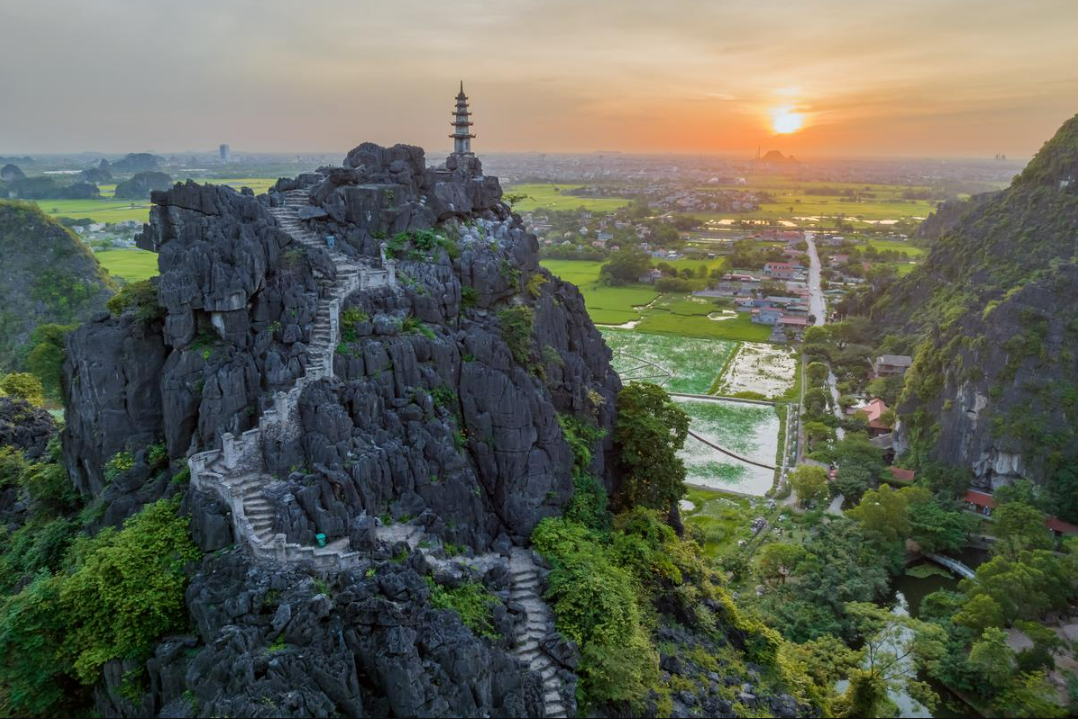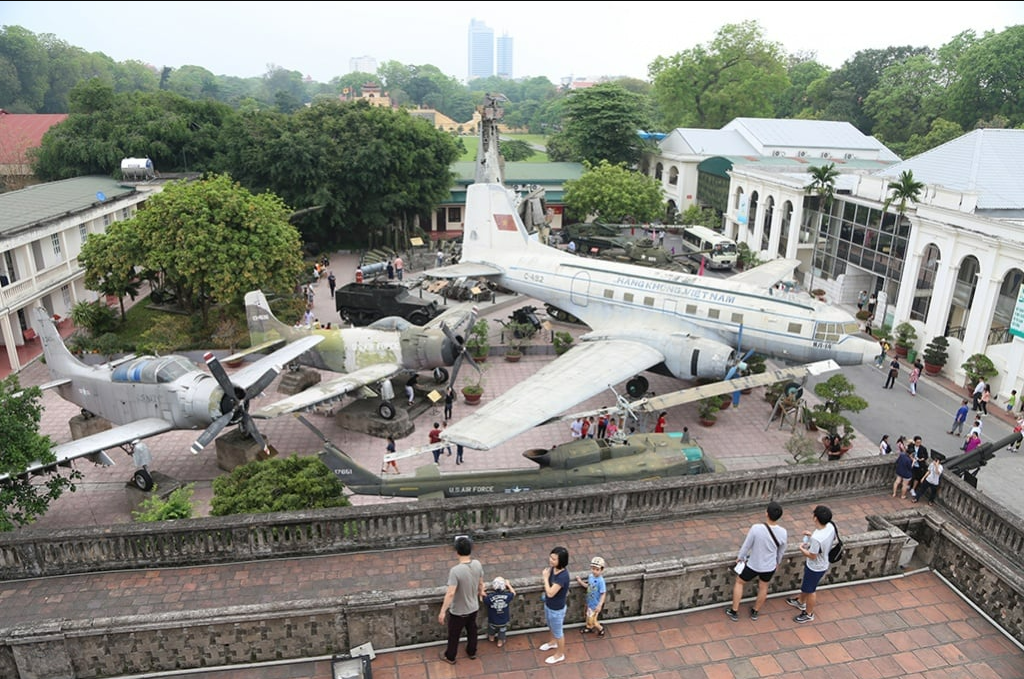
Posted on

Binh Dinh Landscape

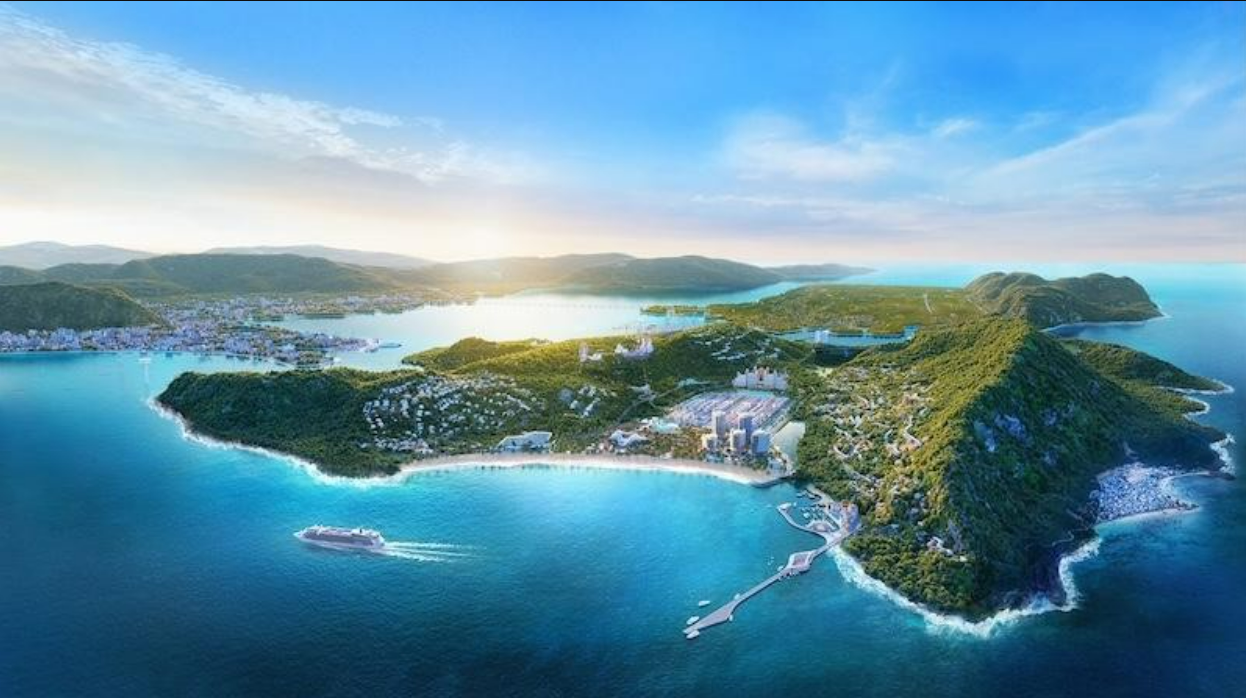
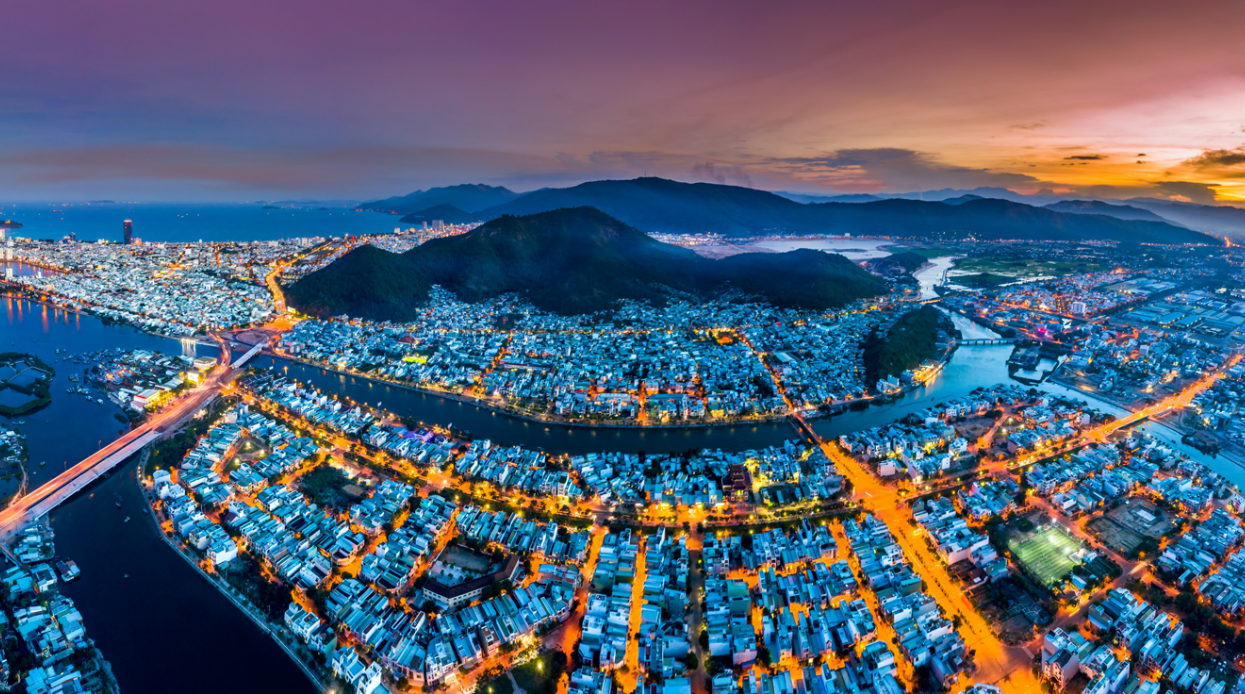
Binh Dinh province lies along the south-central coast of Vietnam. This is the key economic region of central Vietnam. The capital city is Quy Nhon, which is 649km from Ho Chi Minh City or 1,065km from Hanoi. Binh Dinh shares the border with Quang Ngai province on the north, Gia Lai province on the west, and Phu Yen province on the south. The province takes up a long coastline of 100km with many offshore islands. With advantage in well-maintained infrastructure, Binh Dinh has good condition to become an energetic economic center.

>> Apply Visa to Vietnam <<<

>>> Order Fast Track Service <<<
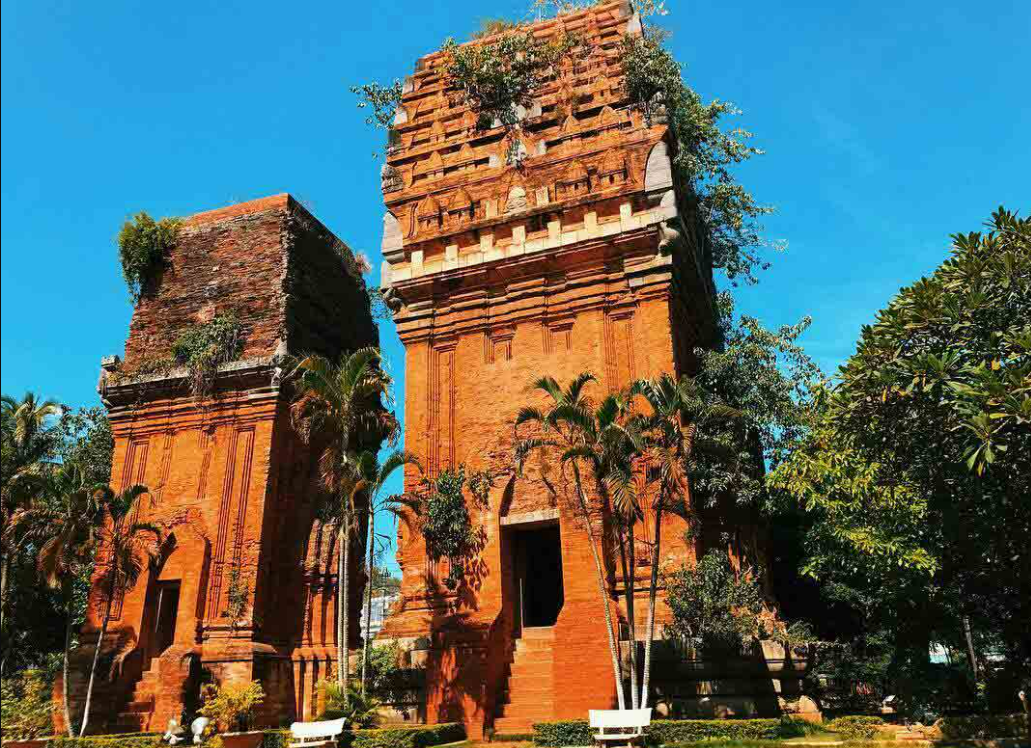
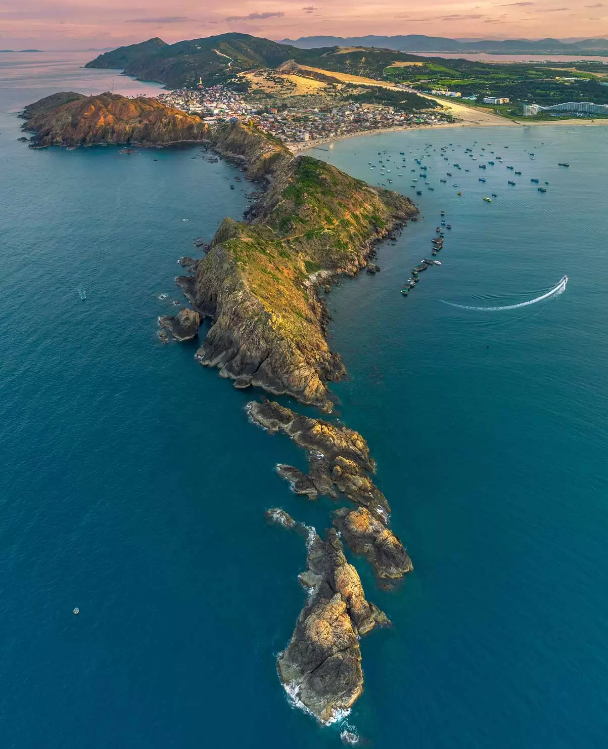
This coastline province is famous as the centre of the old Sa Huynh Culture. It used to be established as one of the capital cities of the former Cham Kingdom for a long period. The popular Cham towers are “Pyramid Shaped Black Cake” Tower, Duong Long Tower, “Flying Fairy Wings” Tower and Twin Towers. The long coast with many coves and lochs makes many beautiful spots and beaches such as Phuong Mai Peninsula, Queen, Quy Hoa and Ghenh Rang beaches. Besides these, Ham Ho Valley is a beautiful freshwater spot as a change for visitors who prefer tramping in the bush and a swim in the fresh water stream.

Binh Dinh is cradle of Tuong opera (hat boi), Tay Son martial music, Bai Choi musical plays, Ba Trao festival music of the fishermen along central coastline. The traditional festivals are Tay Son, Cau Ngu, An Thai Village Muscle art…

The province has special products such as silk, swallow nest, shrimp, fish, precious wood, vegetable oil, rice, marble, titanium, and handicraft articles.

  1. Best time to visit Binh Dinh?

Binh Dinh province is featured with typical tropical monsoon climate with the average temperature of 27oC. Rainy season normally lasts from September to December and the rest months are in dry season (from January to August). The best time to travel to Binh Dinh is from March to May, when the number of tourists is relatively small so tourists can feel comfortable to enjoy their vacation. The weather at this time is relatively dry and not too hot, suitable for sightseeing and outdoor activities. The weather will be hotter if you come in later months. In addition, the beaches there can be quite crowded during summer vacation (at the end of May to August).

  1. Attractions in Binh Dinh.

Most of the province is covered by mountains or hills. Most districts of Binh Dinh have a topography that is a mix of mountains or hills and lowlands. The largest lowland area located in the south of the province along the lower Con River. The long coast with many coves and lochs makes many beautiful spots and beaches such as Phuong Mai Peninsula, Queen, Quy Hoa and Ghenh Rang beaches. Besides these, Ham Ho Valley is a beautiful freshwater spot as a change for visitors who prefer tramping in the bush and a swim in the freshwater stream.

2.1. Ghenh Rang – Tien Sa Tourist Area

Ghenh Rang is one of the most attractive destinations in Binh Dinh, located 3km southeast of Quy Nhon City. It has magnificent natural scenery with mountains, forests, beaches and islands that can’t be seen in such a combination anywhere else. At the southwest are high mountains that reach the ocean, and from these mounts you can survey great distances of natural beauty: the Lion’s Head rock that leaps to reach the sea; the silent Waiting Statue; the Lying Elephant and Bear rocks that guard the beaches, and Chong Islet which seems to be light, but is stable in the heavy storms.
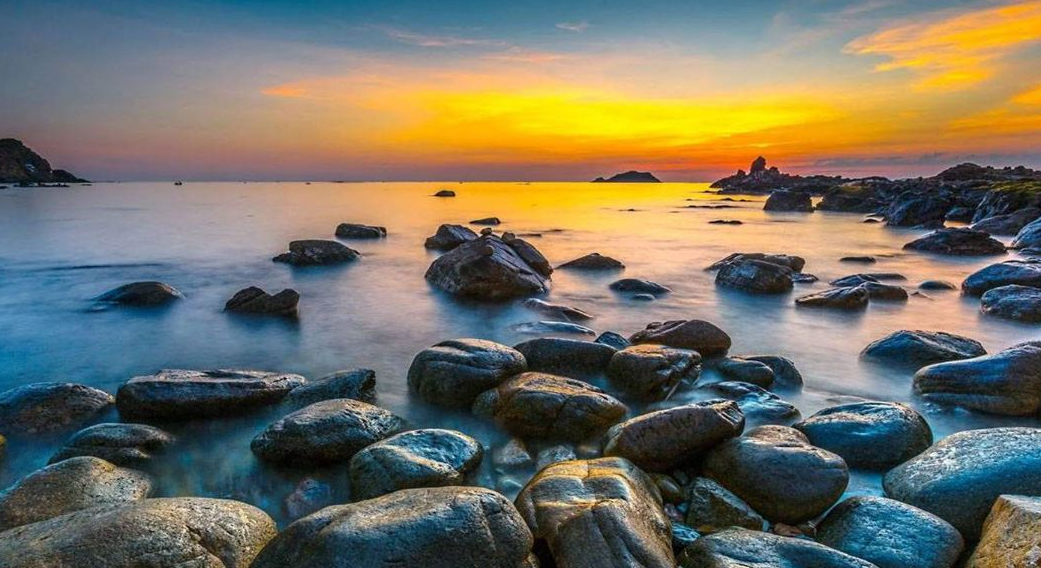
On the northeast of Ghenh Rang is a blue ocean that covers the white sandbanks with cool water and a stunning view. This is one of the most beautiful beaches in Binh Dinh and has greeted bathers in search of relaxation for many years. In 1927, Bao Dai, the last king of Vietnam, built a villa where his family could come and relax. He reserved the whole beach for just Queen Nam Phuong, his most beloved wife. It is because of this that the beach is now called Queen Beach. From the view on the top of the mountain, the beach looks like a large turquoise field filled with jade and granite eggs. And so, apart from “Queen’s Beach”, the local people also call it “Egg Stone” beach.

2.2. Ham Ho Tourist Spot

Ham Ho (Vietnamese: Hầm Hô) is a downstream part of the Kut River in Tay Son, Binh Dinh, and located 55km northwest of Quy Nhon City. The name originated from an interesting phenomenon that occurs here in the dry season. In a drought year when people wanted rain, there were many strange sounds like people screaming and praying at this bend of the river. The locals began to call this place as Ham Ho, or ‘Yelling Cellar’. This part of the Kut River is only 1km but is a lush green all year long with cool streaming waters. Along the riverbanks are a dense forest mixed with high cliffs, dotted by a number of marble outcroppings with varied strange shapes. There are several stone places that are of particular interest to visitors, such as Chess Stone, Flying Fish Stone, and the Gates of Life and Death, which are also known as the Giant’s Feet.
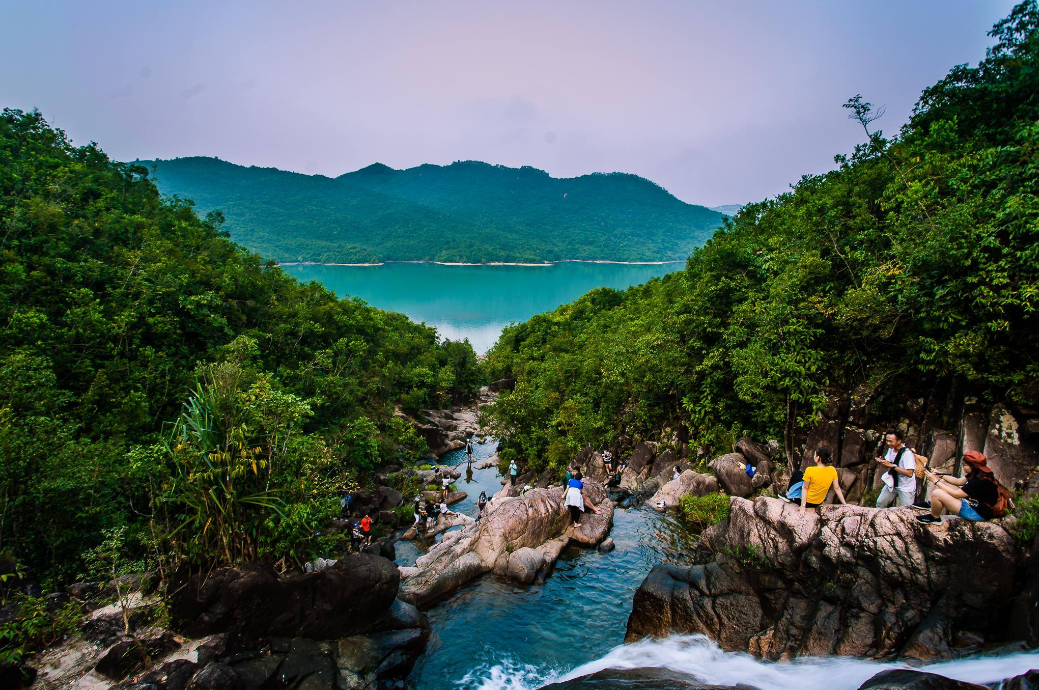
Ham Ho is also famous because it draws a considerable number of fish, especially in the flooding season. The local people say that this time of year is the Contest of Fishes organized by the Dragon King (the God that governs lakes, rivers and the ocean). The fish that wins the contest will turn into a dragon. In addition, fish that come to Ham Ho always swim against the river’s flow and get pushed into the air like flying fish, so that this particular part of the river is also called The Flying Fish.

* Tour Activities in Ham Ho:
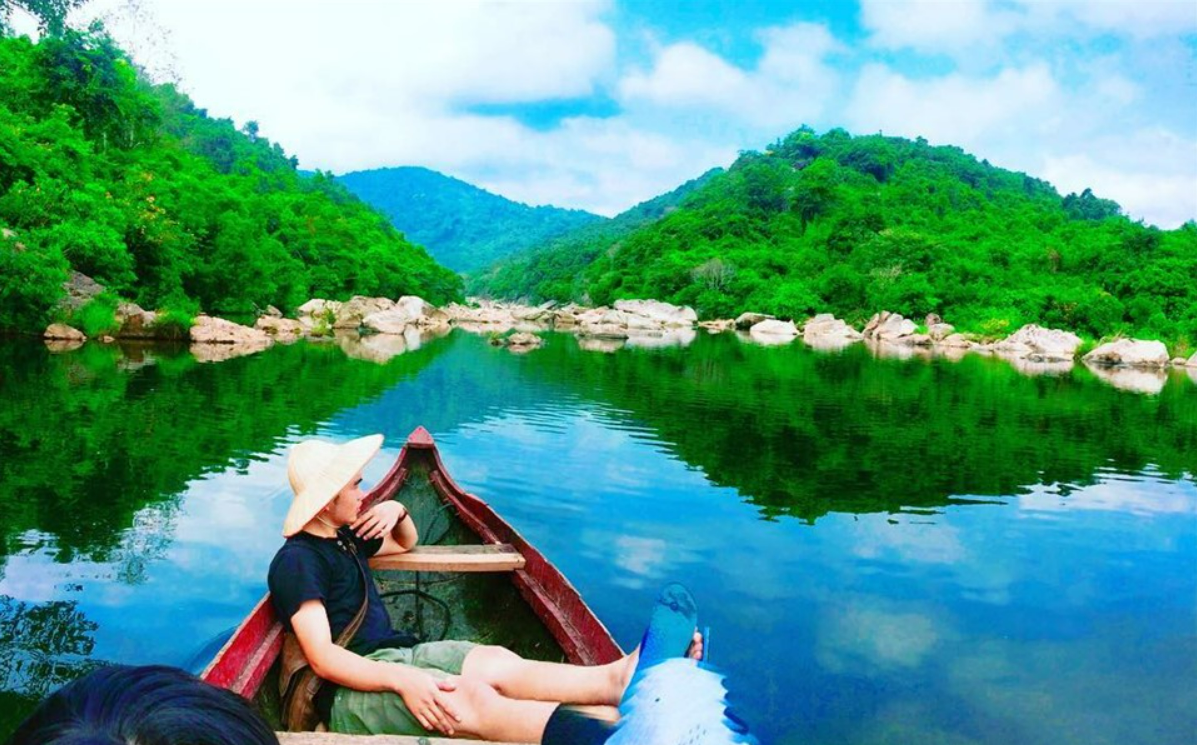
+ Boat tours on the river with man-powered punters make for a fun river ride through the rocky canals. Sitting on a boat along Ham Ho, you can explore a lot of amazing landscapes such as green old-growth forests, impressive mountainous sceneries, and wonderful rock masses on the riversides as well as under the pure water.
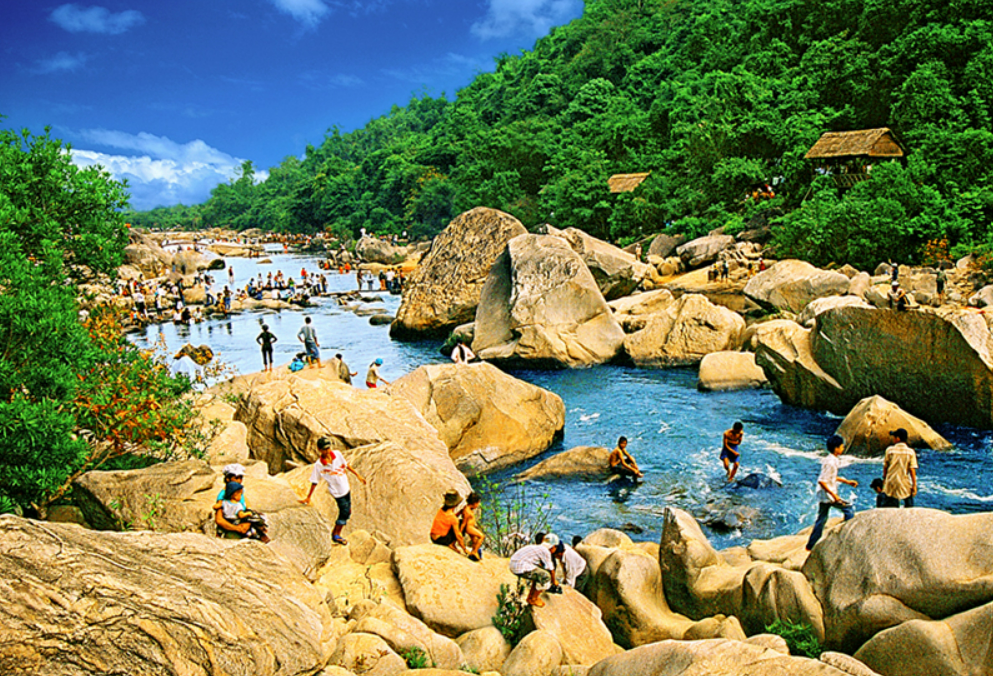
+ Swimming in the water to cool off is popular. There are safety ropes running through the river to aid those who want to sink.
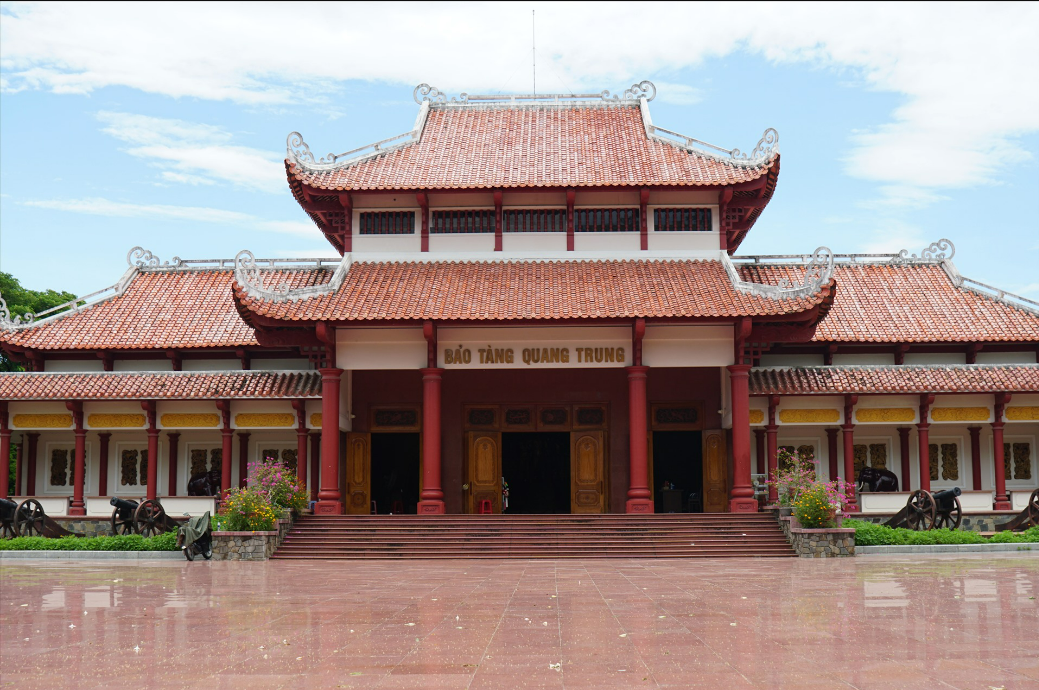
+ Quang Trung Museum just across the Kon River has a display from once ruler, King Quang Trung. If you’re lucky, you can experience some Kung Fu Dancing reenactments.

2.3. FLC Zoo Safari Park Quy Nhon
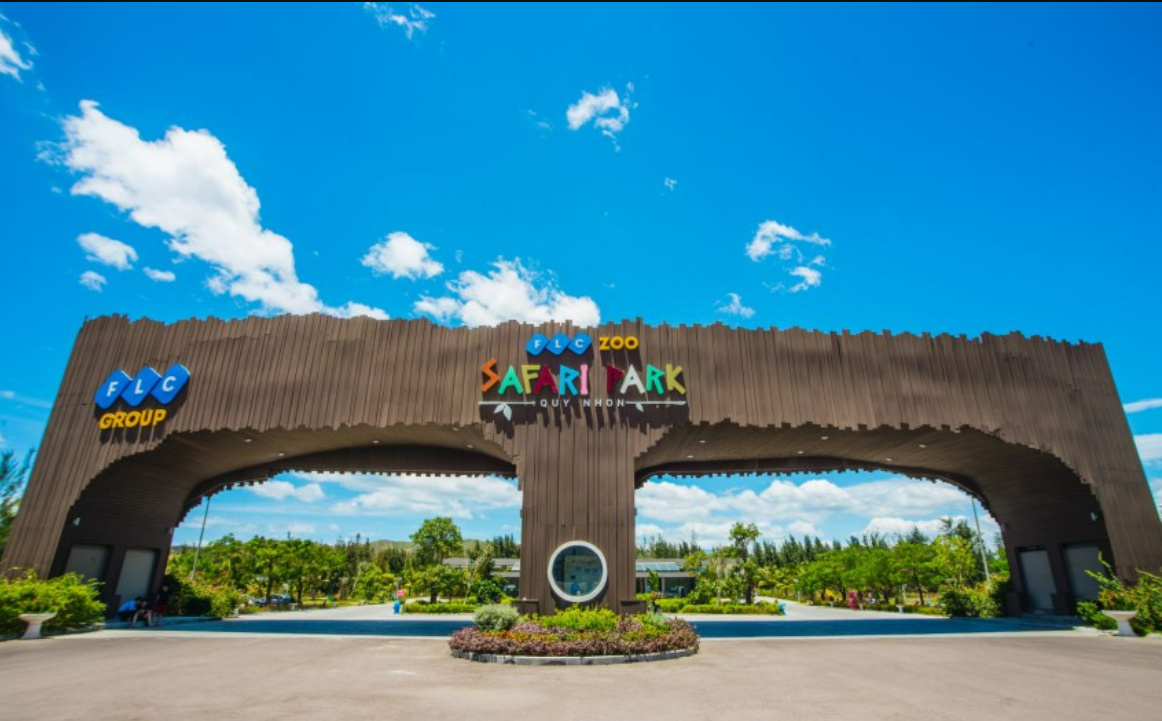
FLC Zoo Safari Park Quy Nhon is the first wildlife safari in the South Central Vietnam with the typical tropical climate, natural sand dunes and conifers. It was open to the public on 25 Mar 2017. As a part of Nhon Ly – Cat Tien Beach Tourism Spot, FLC Zoo Safari Park Quy Nhon is connected to the 5-star FLC Quy Nhon Beach & Golf Resort with high-class accommodation and recreation facilities. It covers a total area of 129 ha constructed under international standard for Safari park and is home to nearly 900 individual animals. Protect species in FLC Zoo Safari Park Quy Nhon come in a large number ranging from Purple Swamphen, Hare, Wild Duck, Chinese Goose, Geese, Spotted Deer, African Ostrich, Black Swans, Yellow Tadorama Duck, Monkey, Peacock, Swan….

2.4. Trung Luong Camping Site

Trung Luong Camping Site is located in Phu Cat District, about 30km from Quy Nhon City. Since its opening, Trung Luong has quickly become a hot tourist destination in Binh Dinh that attracted a lot of visitors, especially young people, who come for fun and camping activities.

Trung Luong is a picnic camping site with a huge green lawn area, overlooking to stretched coastline and white sandy beaches. It lies in the middle of the undulating mountains which will make you feel like you are visiting South Korea’s Jeju Island.
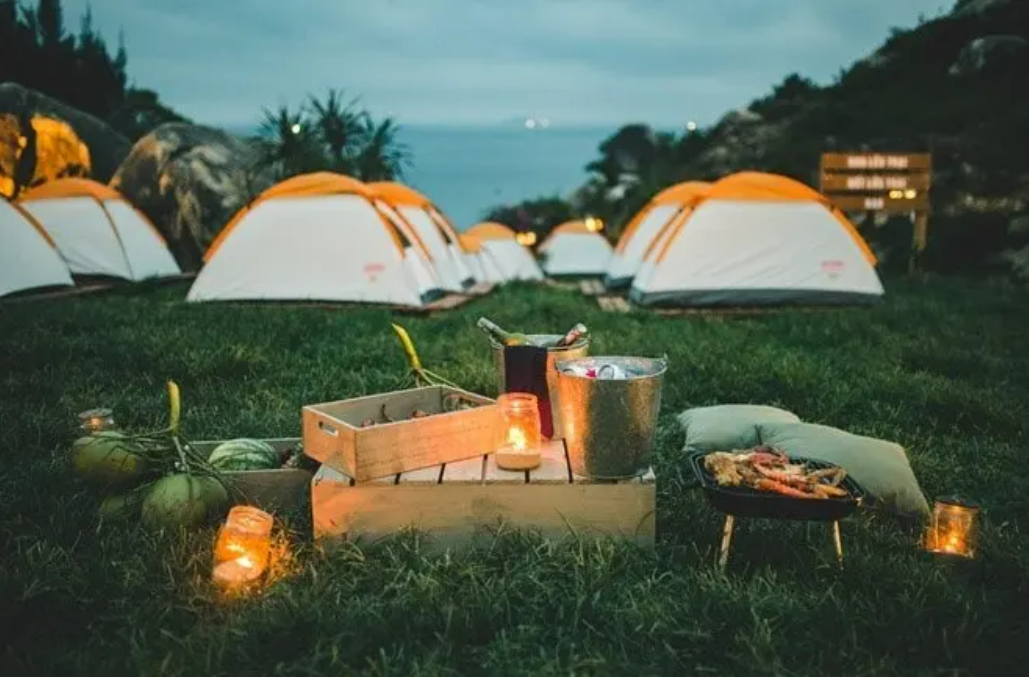
The most highlight of this site is the spacious amusement park with beach view, including camps with red and green roofs, colorful chairs. For tourist groups, spending the night with fire camping, singing, watching the stars, listening to the waves lapping the shore will be an unforgettable experience.

From the picnic area, following the beautiful paved road, tourists can reach Trung Luong Beach. The sea with clear blue water is so peaceful. The beach stretches to the horizon with smooth sand. As you walk along this path, you will surely be attracted by the countless large rocks with all sorts of strange shapes around. Besides camping activity, tourists can enjoy snorkeling, diving to see beautiful coral reefs.

2.5. Cham Towers

Cham cultural relics can be found in all of Vietnam’s central coast provinces. But Binh Dinh province was considered as the heart of the Champa Kingdom that flourished here from the 10th to the 15th century. The Cham Pa (Champa) were a group of pioneers that occupied a territory in today’s Central and South Vietnam. There are eight complexes of 14 Cham towers scattered throughout Binh Dinh. In terms of architecture, the Cham towers in this province are the largest in Southeast Asia, mainly centered in Quy Nhon City and three districts of Tuy Phuoc, An Nhon and Tay Son in the area of Do Ban Citadel, the last kingdom of the ancient Champa Kingdom. Visiting Binh Dinh will give you the opportunity to see them in person.

Below are the most distinctive and famous Cham towers in Binh Dinh:

  • Twin Towers (Tháp Đôi)
  • The most famous Cham towers in Binh Dinh province, located in Dong Da Ward, Quy Nhon City.
    • Built in the late 12th century.
    • One of the pair is 20 meters high and the other is 18 meters.
    • Constructed with roofs that curve up, unlike most other Cham towers whose tops taper to a point from a square foundation.
    • Noticeable Hindu influences in the artwork:

+ Upper parts: carved with dancing monkeys, deer, elephant-head lions, and meditators.
+ Corners: decorated with mythical Hindu stone birds.
+ Decorative motifs: animal genies, revered in the Cham religion

  • Recognized as the national cultural and historical relic in 1980.
  • “Pyramid Shaped Black Cake” Tower (Tháp Bánh Ít)
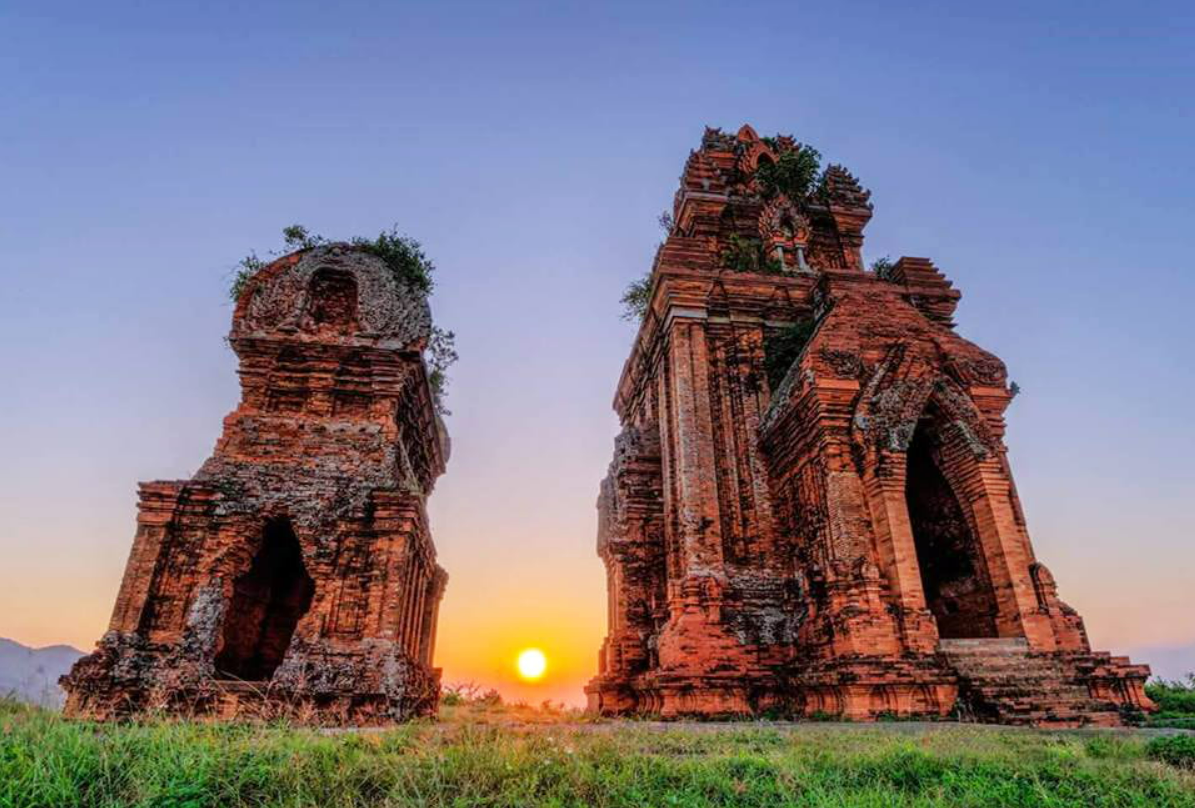
  • Located near Phuoc Hiep Commune, Tuy Phuoc, 20km from Quy Nhon City.
    • Built at the early 12th century atop a hill.
    • 4-towers pyramid as its name.
    • Each tower has a distinctive architecture, beautiful decoration, and great aesthetic value.
    • Recognized art monument by Vietnam’s Ministry of Culture in 1982.
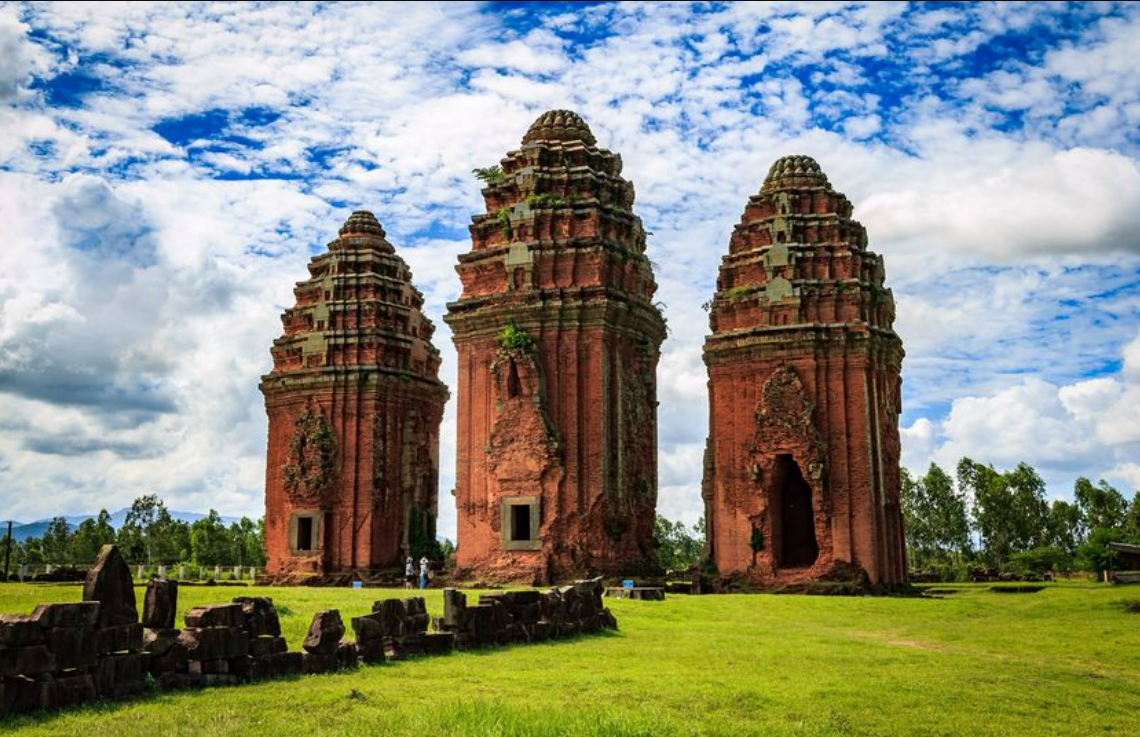
  • Duong Long Tower (Tháp Dương Long)
  • Located in Tay Binh Commune, Tay Son District, about 50km from Quy Nhon City.
    • Built in the late 12th century, when the Champa culture was flourishing.
    • 3-towers: central tower – 42m high; south one – 36m high; north one – 34m high.
    • Exterior made of bricks, sculptures, and carvings depicting animals that seem to come alive.
    • Vivid decorative patterns of flowers and animals show off delicate carving techniques.
    • Recognized by the Ministry of Culture as an Art Architecture Monument in 1980.
    • Recognized by the Prime Minister as a significant national monument on December 23, 2015
  • “Flying Fairy Wings” Tower (Tháp Cánh Tiên)
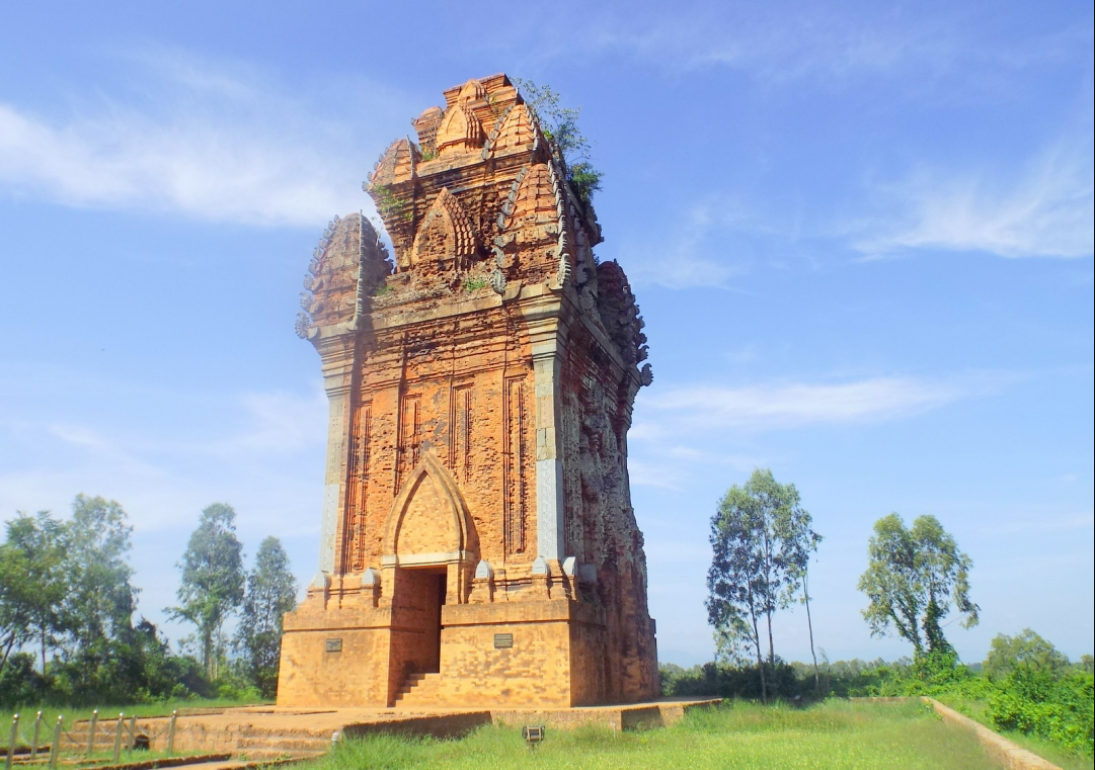
  • Located at Do Ban Citadel in Nhon Hau Commune, An Nhon district.
    • Built around the 16th century.
    • Interior design includes purple sandstone that twists and carve in design.
    • Exterior has 4-tiers that get smaller as they rise creating the image of a bird or fairy flying.

3.6. Ong Nui Pagoda (Chùa Ông Núi)

Ong Nui Pagoda (also known as Linh Phong Sơn Tự), lying on Chop Vung Mountain, Phu Cat district – 30km from Quy Nhon City, is one of the most important and famous Buddhist relic sites in Binh Dinh province.

The pagoda worships Buddhist monk Tinh Giac-Thien Tri who was called “Ông Núi” by local people (Ông means an old man, Núi means mountain). He cured villagers from diseases and epidemics by giving them medicines.
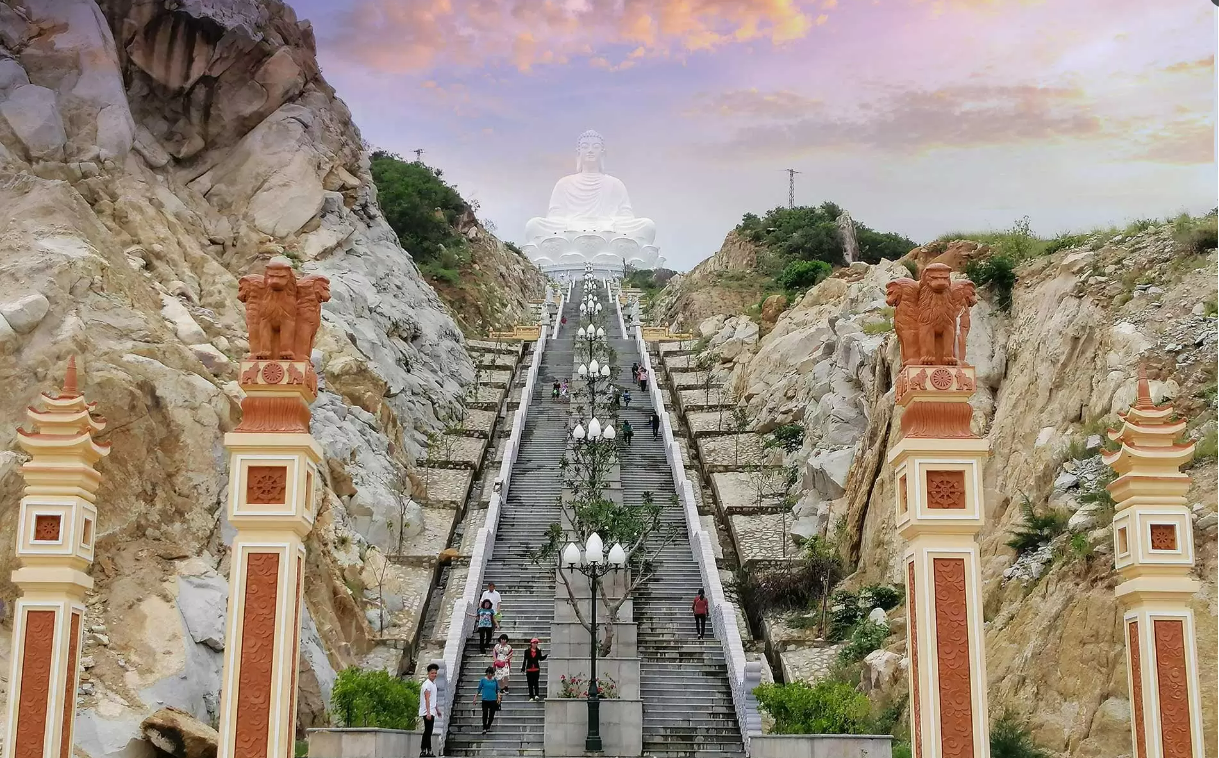
Binh Dinh provincial People’s Committee and the provincial Buddhist Sangha carried out the VND 500 billion project to build a historical, ecological and spiritual tourism complex in Ong Nui Pagoda. The most highlight of this project is the 69m siting Buddha Statue. From Ong Nui Pagoda, looking down to the Southwestern direction, visitors can see immense rice fields while a boundless blue sea is visible in the East. To the Southeastern direction stand the Thi Nai lagoon and a willow forest.

2.7. The Windy Pass (Eo Gió)
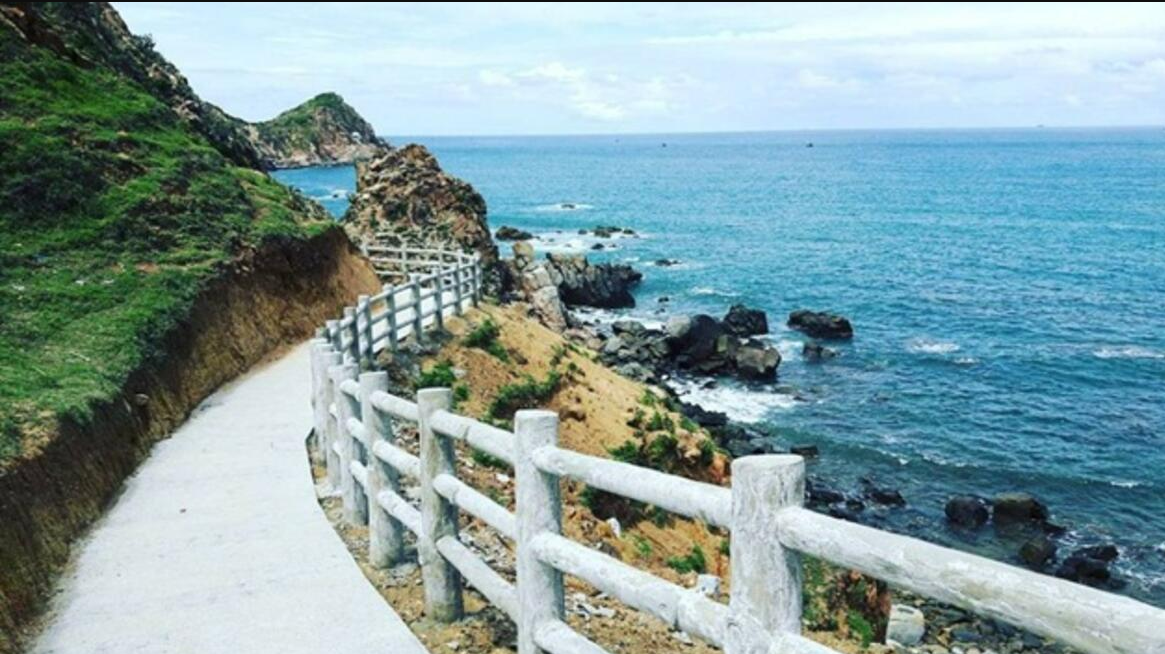
Eo Gio – located just 20kms from Quy Nhon City, is where the lush mossy mountains meet the calm coastal waters of the South China Sea. Just ride across the Thi Nai Bridge towards the coast and make your way towards Nhon Ly Commune. Eo Gió is the best place to see the sunrise in Quy Nhon – Binh Dinh. Though it’s not safe to swim here since the waves are strong, visitors can enjoy a nice, romantic walk and catch some cool breeze on the small winding walkway built on the side of the mountain. It is an unforgettable experience as one is surrounded by rough cliffs, massive caves, gusty wind and deep blue water smashing against large rocks which creates such a beautiful landscape.

2.8. Ky Co Beach (Bãi biển Kỳ Co)
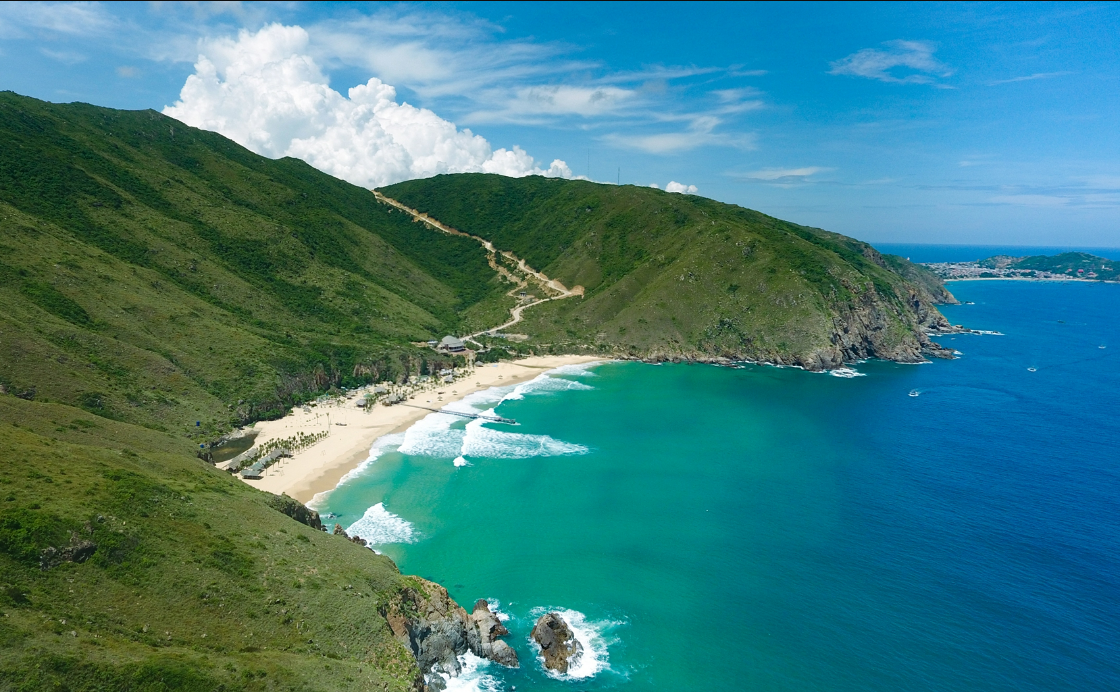
About 25 km from Quy Nhon city center, Ky Co is a must – visit beach destination with the curved coastline and is fondly dubbed the “Maldives of Vietnam”. It has three sides facing to the mountain and one side facing to the sea. So there are two ways to reach this beach paradise. From Quy Nhon’s center, tourists can come to Ky Co beach by private car and enjoy the spectacular mountain scenery along the way. Or you can take private car to Eo Gio area and then go to Ky Co beach by 30-minute canoe. You are surely impressed by the magnificent rocky mountains, white sands and clear blue water with small sea rocks around. What could be better than to be immersing in the cool water or just simply lying down on the soft sand under the warm sunlight to enjoy a charming artwork from nature?

2.9. Phuong Mai Sand Dune (Đồi cát Phương Mai)
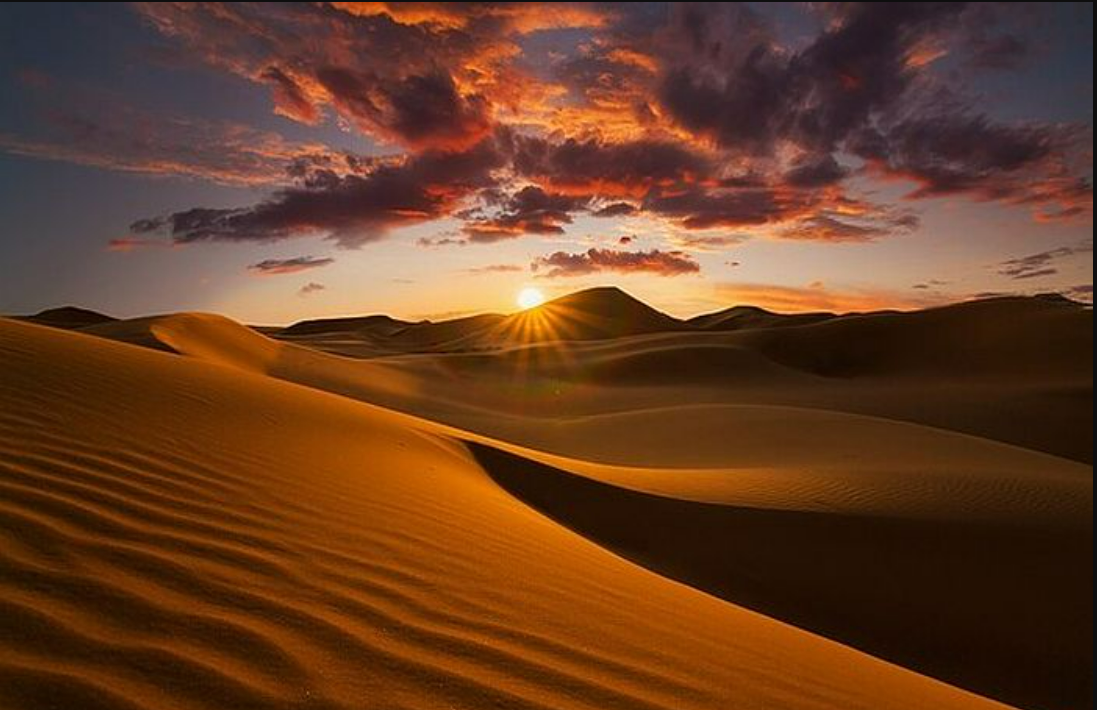
Just about 20km from Quy Nhon city, Phuong Mai peninsula is a secluded place with vast expanses of sand right beside Nhon Trach beach. Sand dunes on Phuong Mai peninsula are widely considered to be the most beautiful in the central region and are on par with other popular destinations such as Mui Ne in Binh Thuan province, Quang Phu in Quang Binh province, and Nam Cuong in Ninh Thuan province.

The huge sandy dunes keep changing its shape owning to windy blows from the nearby beaches. The sand dunes here are perfect for sand sliding activity. Tourists can see a lake formed in a sand pit at 100m depth and running close to Thi Nai Lagoon.

2.10. Cu Lao Xanh Island

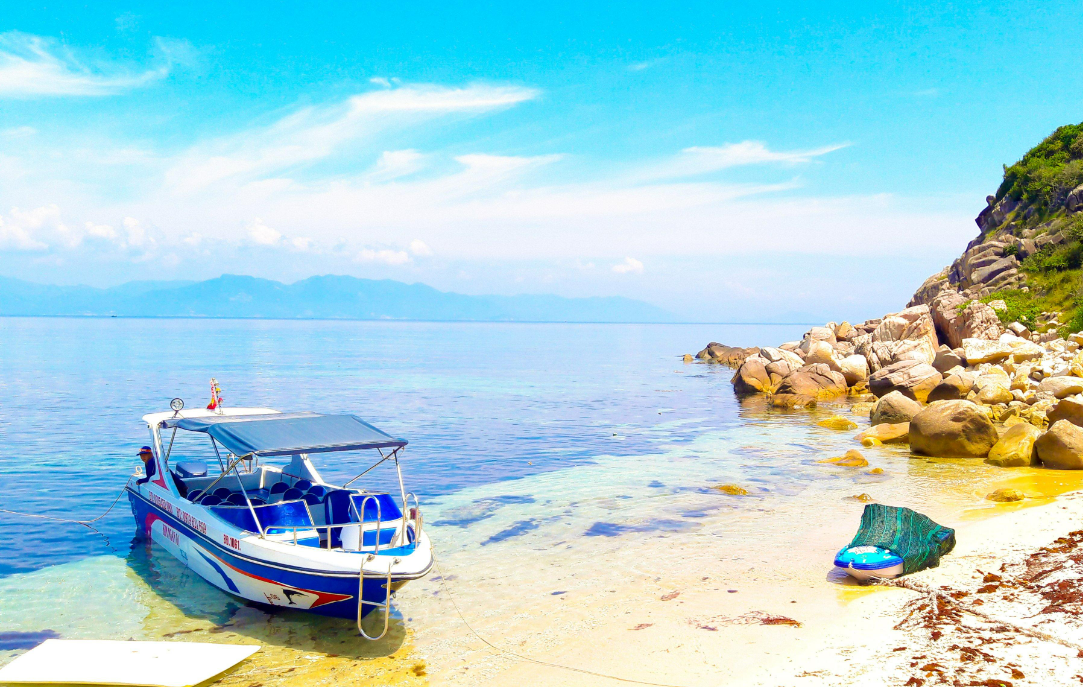
Cu Lao Xanh (or Vân Phi Island) of Quy Nhon city, Binh Dinh province is a hidden beauty and considered a charming pearl of the East Sea. The island is just about 24 km away from the mainland, located near the Xuan Dai Bay in Nhon Chau Commune, Binh Dinh Province. Cu Lao Xanh is translated into English as Green Islet, which refers to its greenery beauty and vitality.

The whole island is covered by the greenish lush natural forest, the lines of the tall coconut trees along the beach, the pure blue sky and crystal-clear sea water. You may be fascinated by the sparkling water surface under the sunshine. Cu Lao Xanh has soft white sand dunes. From the above, Cu Lao Xanh looks like a sexy woman with full of vitality lying among the vast oceans. If you are on the planning step to visit Quy Nhon, Cu Lao Xanh must be included into your travel bucket list.

 Apply For Vietnam Visaapply Vietnam visaApply visa vietnamBook E-visa Vietnambook visa vietnamCheap Vietnam VisaE-visa Vietnamevisa VietnamEvisa Vietnam onlineexpedited e-visaexpedited E-visa to Vietnamexpedited Vietnam E-visaGet a Vietnam visaGet Vietnam Visaget vietnam visa onlineget visa to vietnamget visa Vietnammultiple entry visamy vietnam visaOrder Vietnam E-Visaquick vietnam evisarush vietnam visaUrgent Vietnam VisaVietnamVietnam E-visaVietnam EvisaVietnam touristVietnam travelVietnam vacationVietnam VisaVietnam visa costVietnam Visa ExemptionVietnam Visa for India citizensVietnam Visa For IndiansVietnam Visa for South Africa citizensVietnam Visa In IndiaVietnam visa in South AfricaVIetnam VIsa on arrivalVietnam VIsa onlineVietnam visa provisa for vietnam Visa On Arrivalvisa onlineVisa to VietnamVisa Vietnam

Posted on

Hanoi Ceramic Mosaic Mural Road

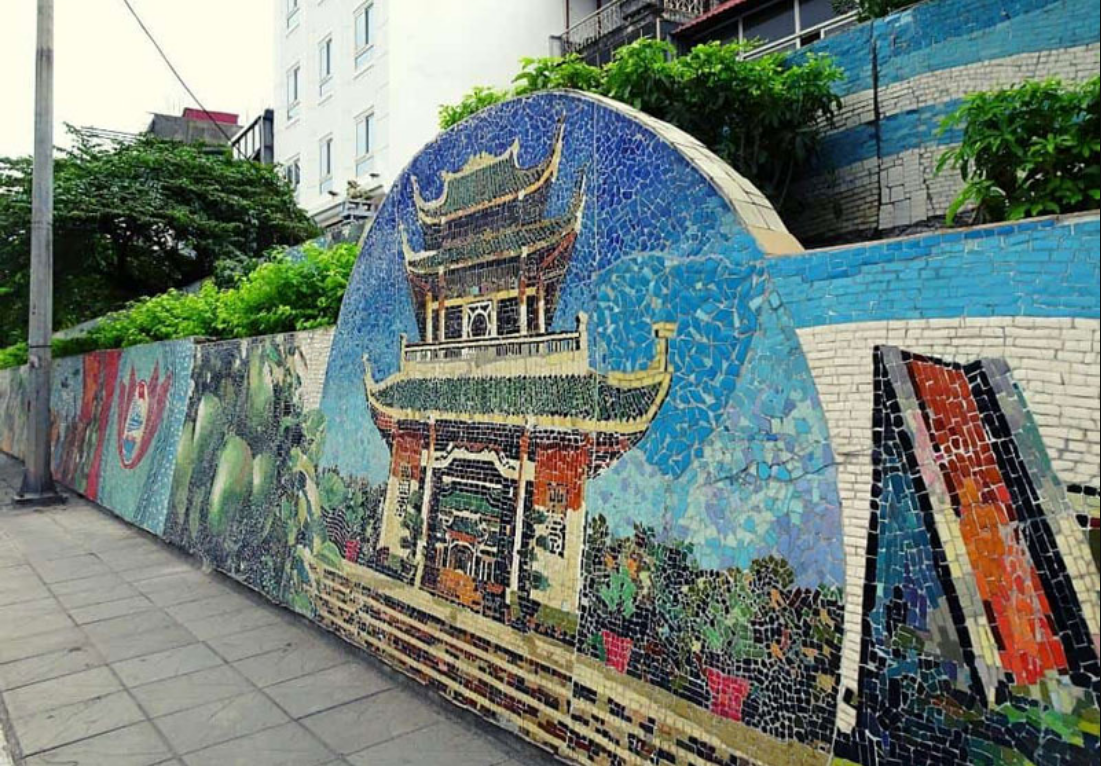
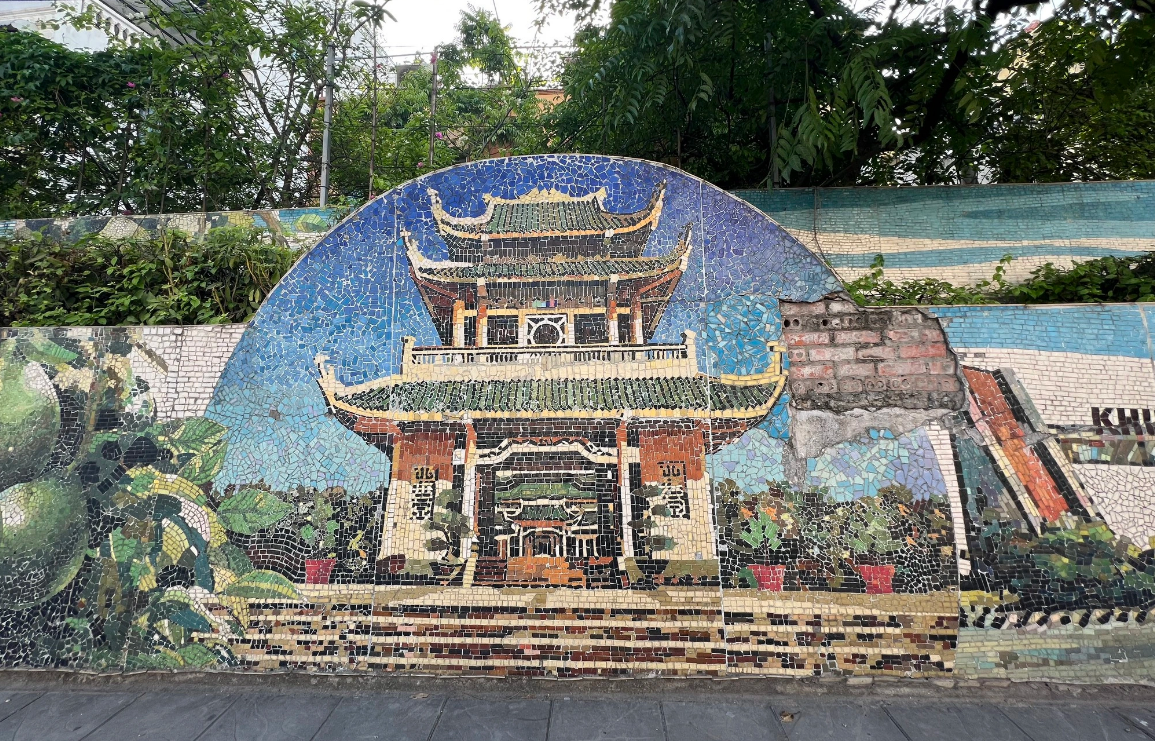
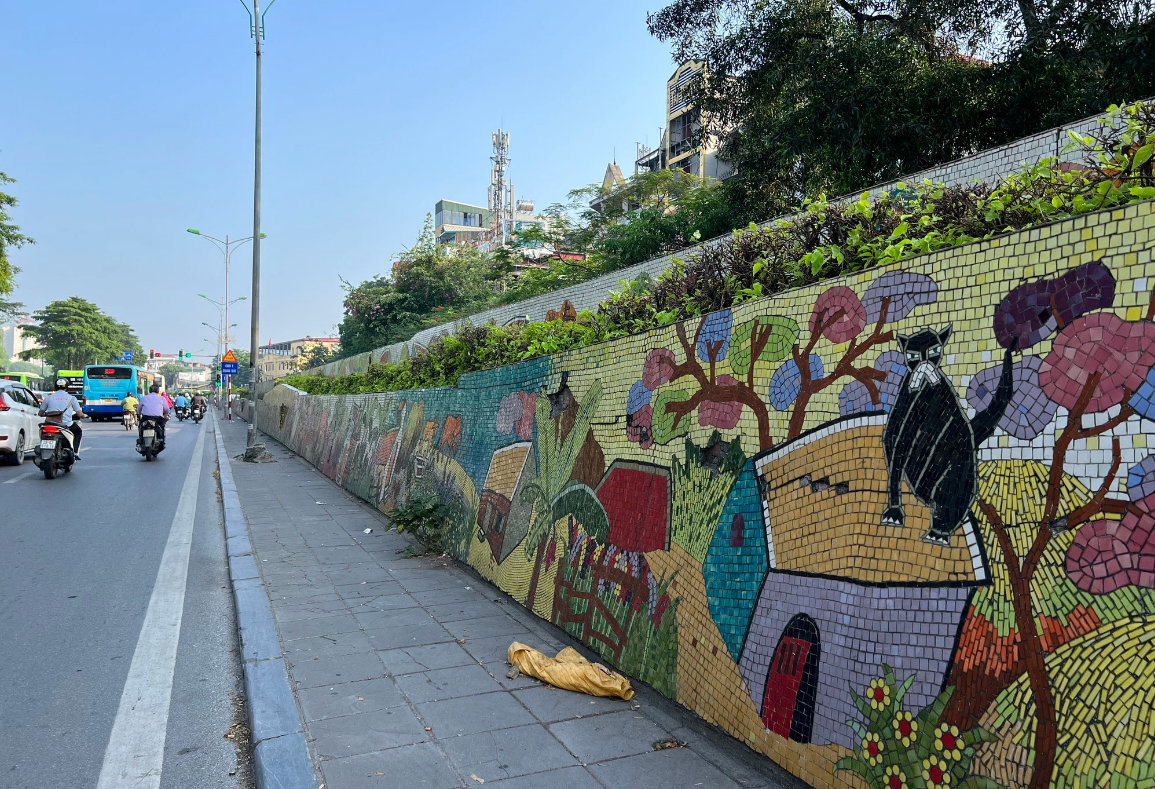
Hanoi Ceramic Mosaic Mural, or Hanoi Ceramic Road (Vietnamese: Con đường Gốm sứ), is a ceramic mosaic mural built along the walls of the Red River dike system in Hanoi Capital, northern Vietnam. In other words, it stays on the Eastern boundary of the city centre, within walking distance of most hotels known to casual travelers.

>>> Apply Visa to Vietnam <<<

>>> Order Fast Track Service <<<

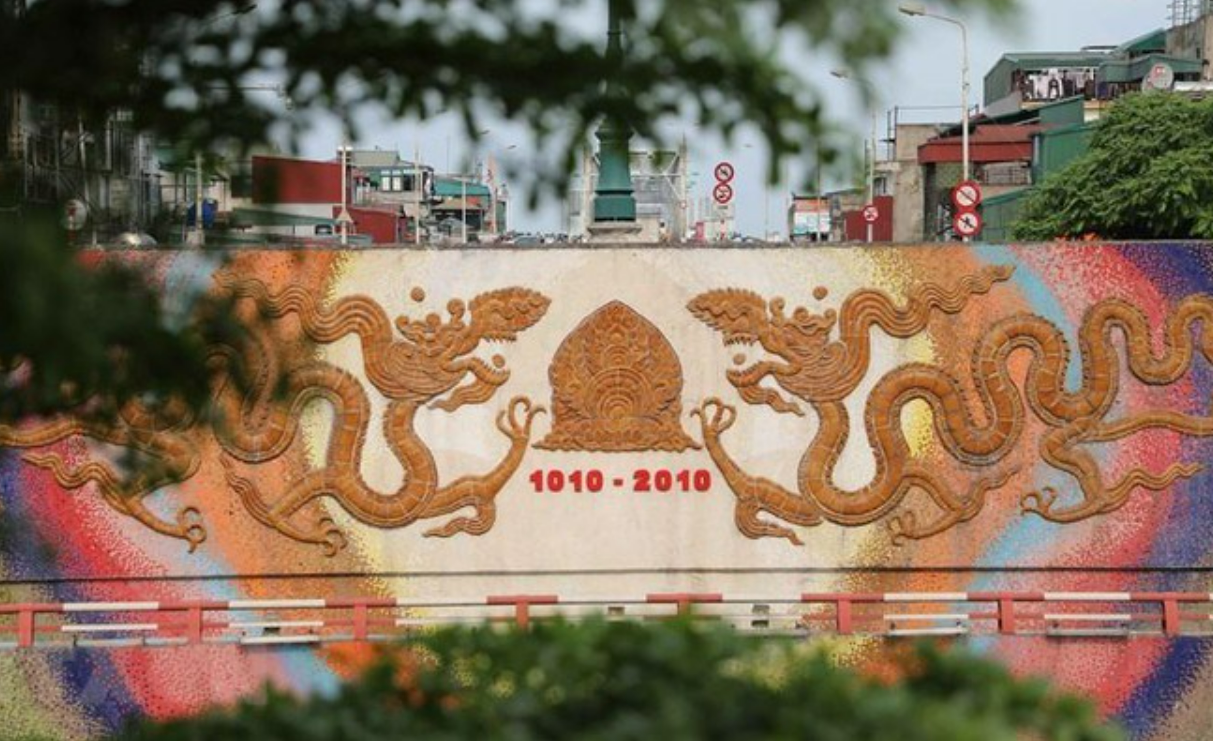
With a length of about 3.85 kilometres (6,950m2), the ‘Ceramic Road’ is one of the major projects that were developed on the occasion to celebrate the Millennial Anniversary of Hanoi in October 2010.

The concept of the Ceramic Road was first developed by Vietnamese journalist Nguyen Thu Thuy in March 2007. She won a prize in the Hanoi architecture contest for her idea of transforming the dike system around Hanoi Capital into a ceramic mosaic. She wanted to mark the city’s millennium with an artistic mural which reinvigorated urban Hanoi and brought local communities together through public art.

With the support of the Hanoi’s People Committee, the project began on the mural in 2007 and involved 35 professional artists from Vietnam and from 10 countries including Denmark, France, Holland, Spain, Italy, Britain, America, Argentina, New Zealand and Australia. In addition, over 100 artisans from traditional ceramic villages in Vietnam joined the project and were supported by 500 Vietnamese and international children, and students from fine arts colleges throughout Vietnam. Foreign embassies and culture centres in Hanoi are also participated in the consultation process such as the Goethe-Institut, Alliance française L’espace, British Council, Società Dante Alighieri Dalte Centre, and other cultural centres of Russia and South Korea.

On 5th October 2010, Guinness World Records adjudicator, Beatriz Fernandez, undertook an official review of the Hanoi Ceramic Mosaic to confirm its dimensions and ensure the strict guidelines relating to the record had been followed. Ms. Fernandez confirmed that at 3,850m linear meters (6.950m2) of the Hanoi Ceramic Mosaic Mural was the world’s largest ceramic mosaic and awarded a Guinness World Records certificate. The dyke along the Red River is 6km inside Hanoi centre and the ceramic mosaic mural is nearly 4km long.

Each artist has brought their own creative ideas and techniques to the mural and expressed these using ceramic tiles measuring just 3x3cm. Each meter square contains 1000 of these tiny tiles.
The ceramic mural runs along the road of Âu Cơ, Nghi Tàm, Yên Phụ, Trần Nhật Duật, Trần Quang Khải, Trần Khánh Dư and terminates at the pier of the Long Biên Bridge. The main material used to create mosaic mural was ceramic tesserae, a type of tile used in the mosaic which is made from the Bat Trang village. People may be familiar with using ceramic to decorate houses, social constructions, and the art of using ceramic have been popular by its endurance. Therefore, the idea of using ceramic to create a mosaic mural seems strange and distinctive. But it became into Hanoi ceramic mosaic mural – the first public collective artwork in Vietnam. Obviously, we can recognize that the technique of mosaic has been the best evidence for the project, as it has an ability to connect many crucial things – the tradition of local ceramics, excellent durability and exceptional expressive potential.

This public artwork reflects Vietnamese culture and history. The mosaic mural was divided into 21 sections and portrays of the different decorating styles throughout the flow of Vietnamese history, which have considered as a visual narrative of country’s history and harmonized to fit Vietnam’s eclectic cultural identity. The ceramic mosaic mural represented the decorative pattern from different periods in the long historic flow, such as Phung Nguyen and Dong Son culture, the myriad of the dynasty as Ly, Tran, Le, Nguyen. Also incorporated on the wall follow the traditional architectural designs of Vietnam’s 54 ethnic groups, performed by modern delicate artworks and paintings of Hanoi and children’s drawings also.

Part A1: a mural of the historical period from the era of Dong Son to dynasties of Ly, Tran, Nguyen, Le.
Part A2: a mural of 54 ethnic groups of Vietnam.
Part A3: the theme of a peaceful Hanoi inspired children’s drawings.
Part A4 to A9: performance of modern arts of Vietnamese and foreign artists.

From its inauguration, the ceramic mosaic road contributed to bring a new appearance for Hanoi Capital. Instead of the boring grey concrete road-trip along the Red River, people can travel with joy and contentment while looking at the well-designed walls on the road. The mural reflects the Vietnamese culture & history, transmits the hope for a better future. Therefore, this channel fence stands out and inspires for its spectators.

Tourists can bike or stroll along the Hanoi Ceramic Mosaic Road, stop at any time you want to listen about Vietnam’s history and culture via beautiful mosaic pictures. From there, your journey can continue to visit the most highlights in Hanoi City Tour: Long Bien Historic Bridge; West Lake including Quan Thanh Temple and Tran Quoc Pagoda.

 Apply For Vietnam Visaapply Vietnam visaApply visa vietnamBook E-visa Vietnambook visa vietnamCheap Vietnam VisaE-visa Vietnamevisa VietnamEvisa Vietnam onlineexpedited e-visaexpedited E-visa to Vietnamexpedited Vietnam E-visaGet a Vietnam visaGet Vietnam Visaget vietnam visa onlineget visa to vietnamget visa Vietnammultiple entry visamy vietnam visaOrder Vietnam E-Visaquick vietnam evisarush vietnam visaUrgent Vietnam VisaVietnamVietnam E-visaVietnam EvisaVietnam touristVietnam travelVietnam vacationVietnam VisaVietnam visa costVietnam Visa ExemptionVietnam Visa for India citizensVietnam Visa For IndiansVietnam Visa for South Africa citizensVietnam Visa In IndiaVietnam visa in South AfricaVIetnam VIsa on arrivalVietnam VIsa onlineVietnam visa provisa for vietnam Visa On Arrivalvisa onlineVisa to VietnamVisa Vietnam

Posted on

All about Chau Doc

>>> Apply Visa to Vietnam <<<

>>> Order Fast Track Service <<<

  1. General Information

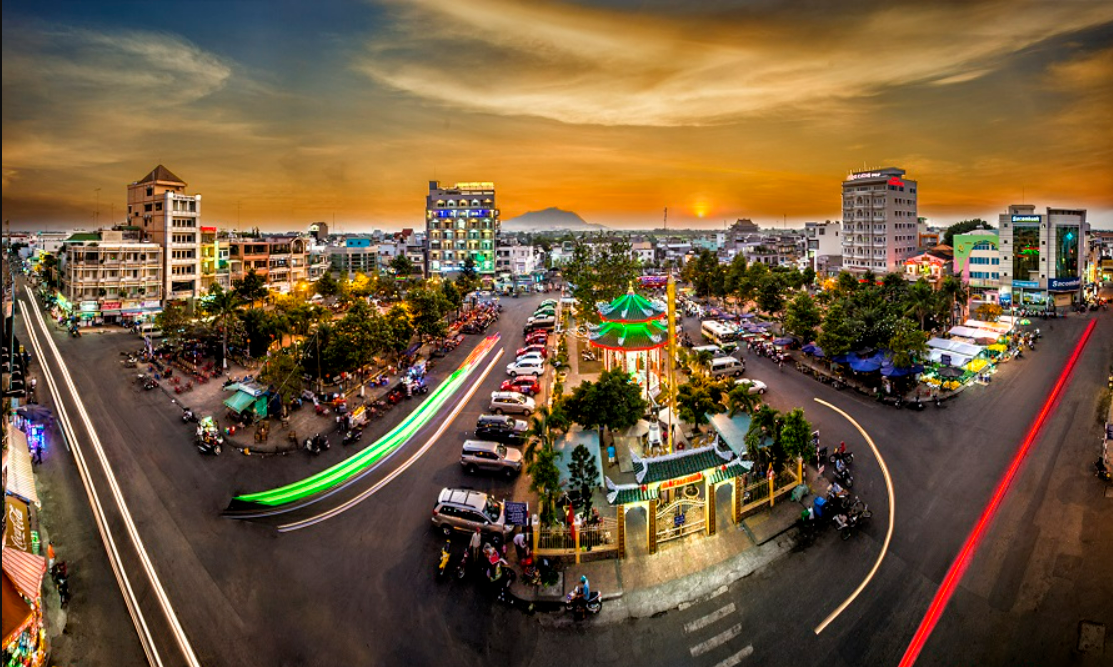
Chau Doc located in the northwest part of the Mekong Delta, close to the river border of Vietnam and Cambodia, about 250 km west of Ho Chi Minh City (or Saigon). All tourists who want to visit Vietnam’s Mekong Delta and continue the trip to Phnom Penh without coming back to Saigon are highly recommended to stay at least one night in Chau Doc. The city lies between the Hau Giang River, a branch of the Mekong River, and the man-made Vinh Te Canal.

Even being a little town, Chau Doc is one of the two cities in An Giang province that play important roles in the economic development of the Mekong Delta due to its strategic position.

Moreover, Chau Doc is known for many other great things such as beautiful scenery, cultural diversity and a transit point to Cambodia. From Chau Doc, tourists can access to Cambodia via Vinh Xuong river border crossing and Tinh Bien International Border Gate.

  1. Best time to visit Chau Doc?

Like other places in the northwest part of the Mekong Delta, Chau Doc is affected by tropical monsoon climate, and experiences two prominent seasons: wet and dry season. The wet season is from May until November; the dry season is from December until April. In general, the weather in Chau Doc is suitable to visit all year round. In the rainy season, Chau Doc receives heavy rain from the beginning of May but that’s the perfect time to feel the daily life of Chau Doc people in high water season. The dry season in Chau Doc, is usually sunny and hot, but the temperature is not too high and it does not interfere too much with the tourism.

  1. Attractions in/around Chau Doc

Chau Doc is worth visiting and most tourists usually stay there for 2-3 days, not only enjoy beautiful landscape but also immerse into unique local life. A likeable little town with significant Chinese, Cham and Khmer communities, Chau Doc’s cultural diversity – apparent in the mosques, temples, churches and nearby pilgrimage sites – makes it fascinating to explore even if you’re not Cambodia-bound.

3.1. Sam Mountain

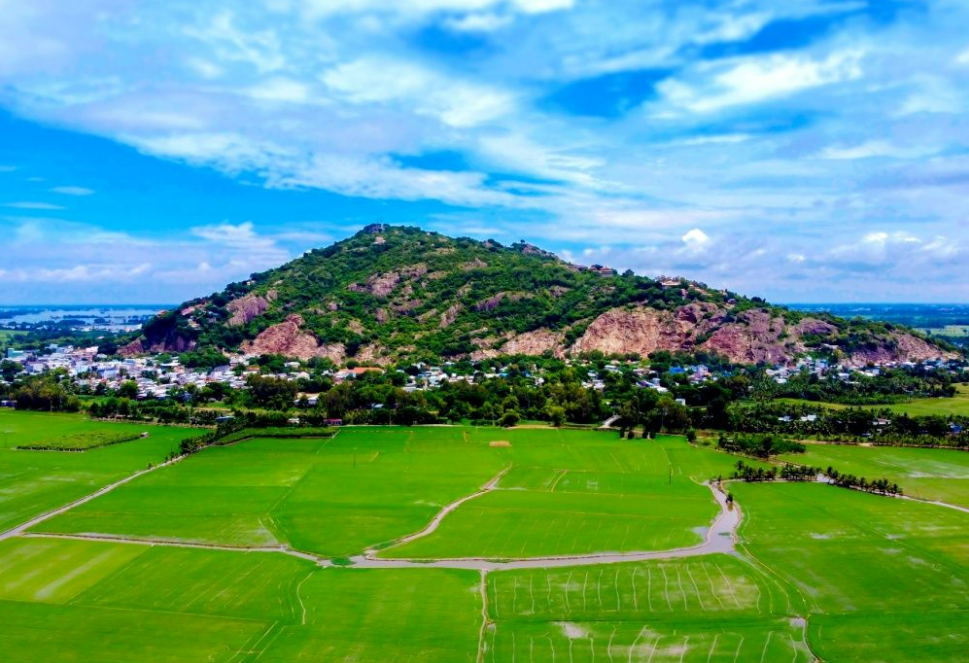
The main attraction in Chau Doc is the Sam Mountain, which is about 6km to the west of Chau Doc Town, and at the height of 230m with beautiful landscapes and many historic remains. On the way to the foot of mountain, there are rice paddy fields stretching along the road’s two sides. The mountain is mainly well-known as a sacred place for Buddhists with dozens of pagodas and temples. A strong Chinese influence makes it particularly popular with ethnic Chinese. Moreover, temples at the base and surrounds can illustrate Islamic, Indian and Khmer influences.

While climbing up to the summit, don’t forget to visit temples and pagodas dotted around the foot of the mountain, such as Ba Chua Xu Temple, Tay An Pagoda, Thoai Ngoc Hau Tomb. Chua Xu Festival is annually held on the second half of the 4th lunar month and attracts lots of worshippers all over the country. If weather permits, the views from the top are spectacular and Cambodia can be easily looked out from there.

3.2. Chau Doc Floating Market

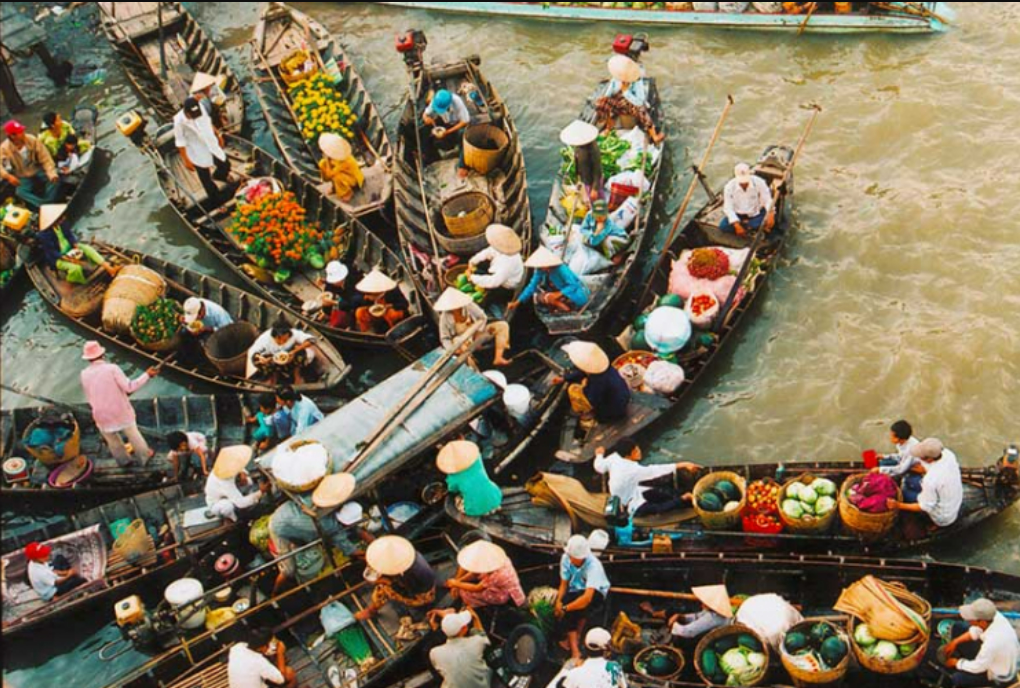
Even not as popular as the most well-known Cai Be or Cai Rang floating market, Chau Doc floating market with the unique features of the An Giang river still a must see place for tourists while they are in Chau Doc. Locals rarely use the phrase “Chau Doc floating market” but more familiar with the words “take a boat” (or “ra ghe” in Vietnamese). These are short words to refer to the trading activities in Chau Doc floating market. Especially when coming to this market, the sellers do not offer the goods by sales pitch, but by hanging the selling products up to the high pole (“bẹo hàng” in Vietnamese). By this way, the buyer can easily see what they are looking for from far distance. The most abundant and characterized products in Chau Doc floating market is local tropical fruits and vegetables. Don’t forget to get up early to visit the market at its busiest time between 6 – 7 am.

3.3. Chau Giang Cham Village

Known as the famous village of Cham community in An Giang province, Chau Giang Cham Village attracts tourist by the ethnic character and the cultural factors. For those who want to learn about Cham ethnic culture and people, this destination must be included in their trip to Chau Doc. Wooden stilt houses are the outstanding architectures in this village. The stilt houses here are small and made of precious wood with high level of durability. There is a wooden ladder leading to the entrance door. The entrance door is lower than the guest’s head, which implies that the guest must bow to the host before entering.

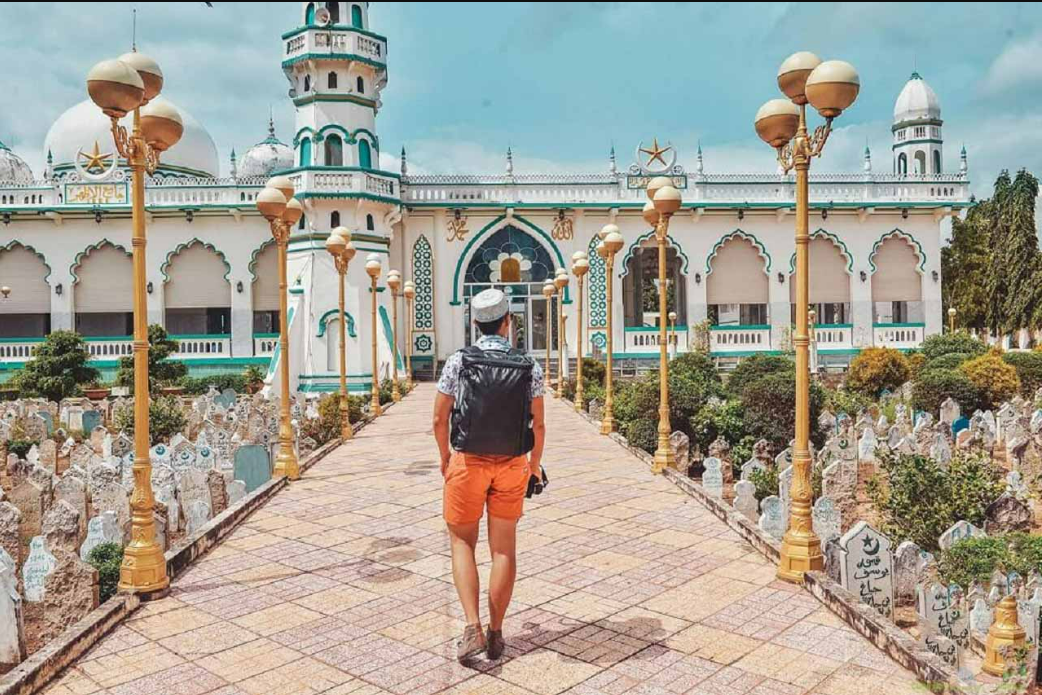
Most of the villagers are Muslim and they have their own praying venue called Mubarak Mosque. Mubarak is one of the oldest mosques of the Muslim community of Cham people in An Giang, and it lures many tourists to explore the culture and religion as well as architecture. Visitors are permitted, but should avoid entering during the calls to prayer (five times daily) unless they are a Muslim.

3.4. Tra Su Cajuput Forest

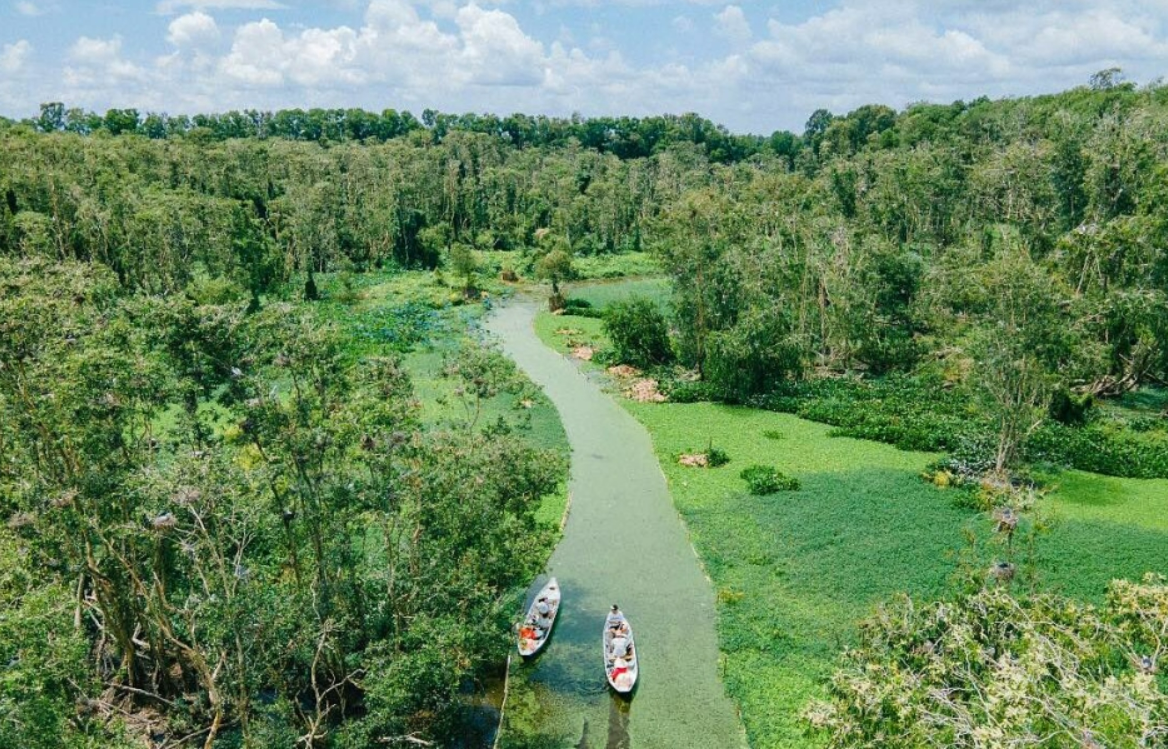
Tra Su cajuput forest, also referred to as Tra Su flooded forest, Tra Su mangrove forest, Tra Su bird sanctuary or Tra Su Melaleuca forest, is located in Van Giao commune, Tinh Bien district, about 23 kilometers away from Chau Doc City. For those who love the beauty of wild nature, Tra Su is an ideal place to explore the typical ecosystem of Mekong Delta. Setting foot in Tra Su cajuput forest, you will have an opportunity to enjoy memorable moments when animals, nature, and the wholesome atmosphere live in harmony. The forest blows your mind with a number of cajuput trees, wild animals, and more than 70 species of birds (like egrets, water cocks, cormorants, peafowl, storks, so on). Especially in flood season, the forest is dressed up with the appealing look of the green carpet of duckweed covering the whole large area.

3.5. Forbidden Mountain

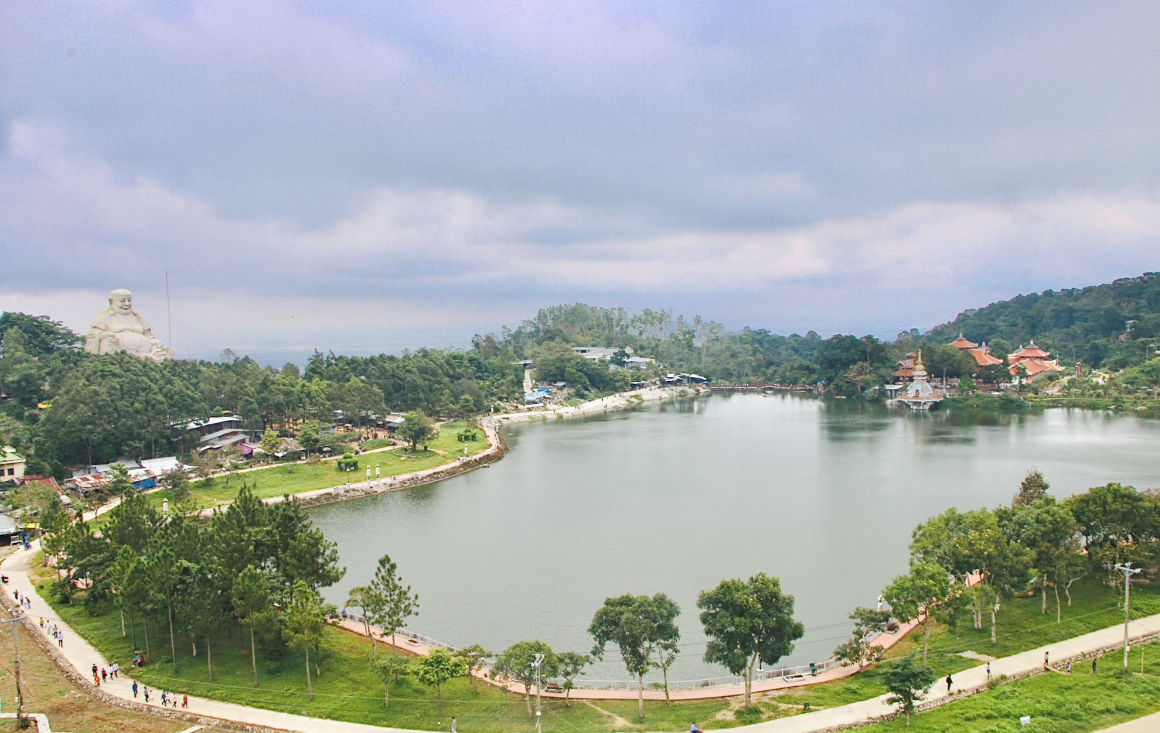
Forbidden Mountain, also known as “Thiên Cấm Sơn” in Vietnamese, is located in An Hao Commune, Tinh Bien district. With an altitude of about 710m above sea level, that is the highest mountain of the Seven Mountain Range in Mekong Delta. With a cool year-round climate, Forbidden Mountain is considered as Dalat (the famous highland resort in Vietnam’s Central Highland) and always covered by the green forests and countless blooming flowers. You can choose to spend a night at Forbidden Mountain to fully enjoy the peaceful silence and the cool breeze of the mountainous areas.

In addition, the mountain also owns magnificent religious architecture such as Asia’s largest Maitreya Buddha Statue with the height of 34 meters.

3.6. The Lê Công “100 Years Old Big House”

In Chau Doc, everyone can show you the way to the ‘Big House’ of the Le Cong clan in Le Loi Street. It’s located opposite to Victoria Chau Doc Hotel – the most luxurious accommodation in this small town. The house was built from 1909 to 1912 and it was named as “Big House” because it was the largest house in town at that time. It is an interesting combination of designs: French-influenced exterior with solid window panes, tile roofs and intricate ornamental decorations; and Western styled interior with lustres and floor tiles. An amazing fact about the house is that it was not made of concrete but of shell powder, sand, treacle and lindera myrrha resin. The furniture and utensils are made with nacre or mother-of-pearl. The wood was bought from Laos and Cambodia. For the nacre, wild snails and masters of the craft were brought in from the North because there was no trade in the South at that time. All throughout, Asian design is dominant, intelligently and beautifully blended in with foreign architecture.

According to the clan’s history, Lord Le Cong Thoan from Thanh Hoa Province arrived at Chau Doc with his wife and decided to settle there. They tilled the land, gave money to the poor, donated land to the homeless and built communes and schools for everyone in town. The couple had such good hearts that the king accorded Lord Le Cong Thoan with the highly-esteemed decrees as a sign of gratitude and honour.

Chau Doc has ten other century-old houses but the “Big House” of the Le Cong clan is the only one that still stands as strong as it did when it was first built, proof that Asian architecture, and culture in general, is exceptionally stable and beautiful; which should be proud of all over the world.

3.7. Cow Racing Festival

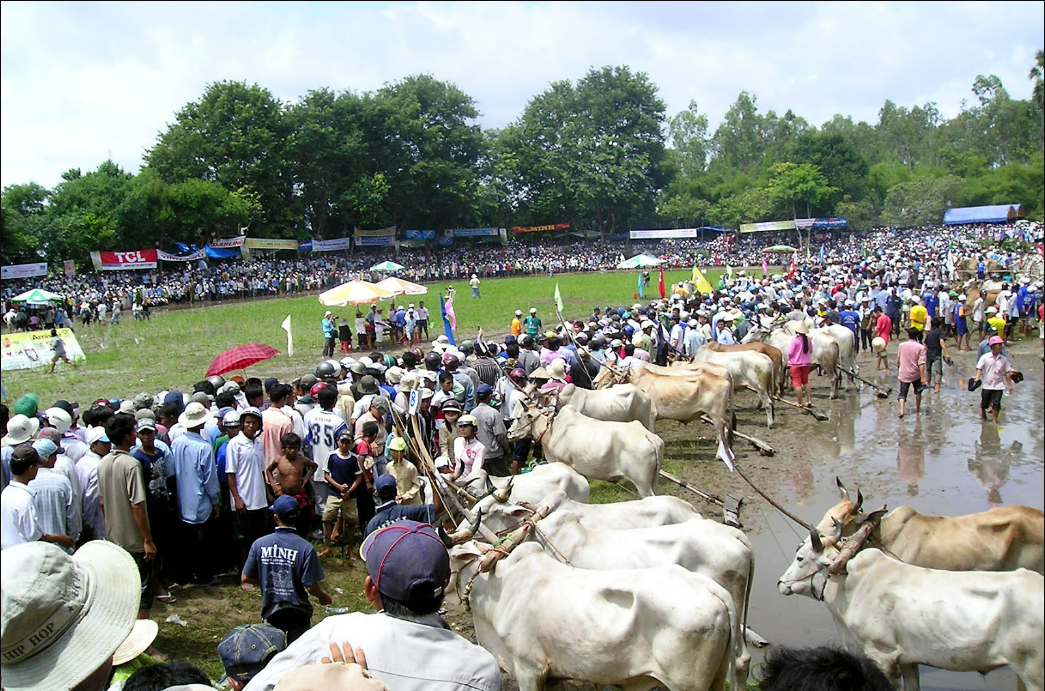
If tourists visit Chau Doc in the period of Sene Dolta Day of Khmer People in Mekong Delta (from the 9th to the 10th day in Lunar Calendar), they can participate in the Cow Racing Festival. This festival has existed for a long time in the Seven Mountains Region of An Giang Province with the purpose of expressing gratitude toward ancestors.

The unique and interesting point of cow racing is two cows are tied by a special rake. After the signal whistle of referee, the driver will hit into the cows’ asses with a tow. However, this driver must be very skillful in hitting two cows with the same energy to make them run with the same speed. According to the rule, pair of cows running out of the racing course must get out of the competition. In addition, the driver must stand steadily on the rake because falling out of the rake will be considered loser. The pair of cows trampling on the rake of the front pair will be the winner.

During the race, pairs of cows and their drivers are always encouraged and urged by the inspiring and exciting atmosphere of simmering cheers and applause. Coming to Cow Racing Festival, tourists will experience unique cultural festival which are only can be seen in Vietnam’s Mekong Delta.

3.8. Tapa rice paddy

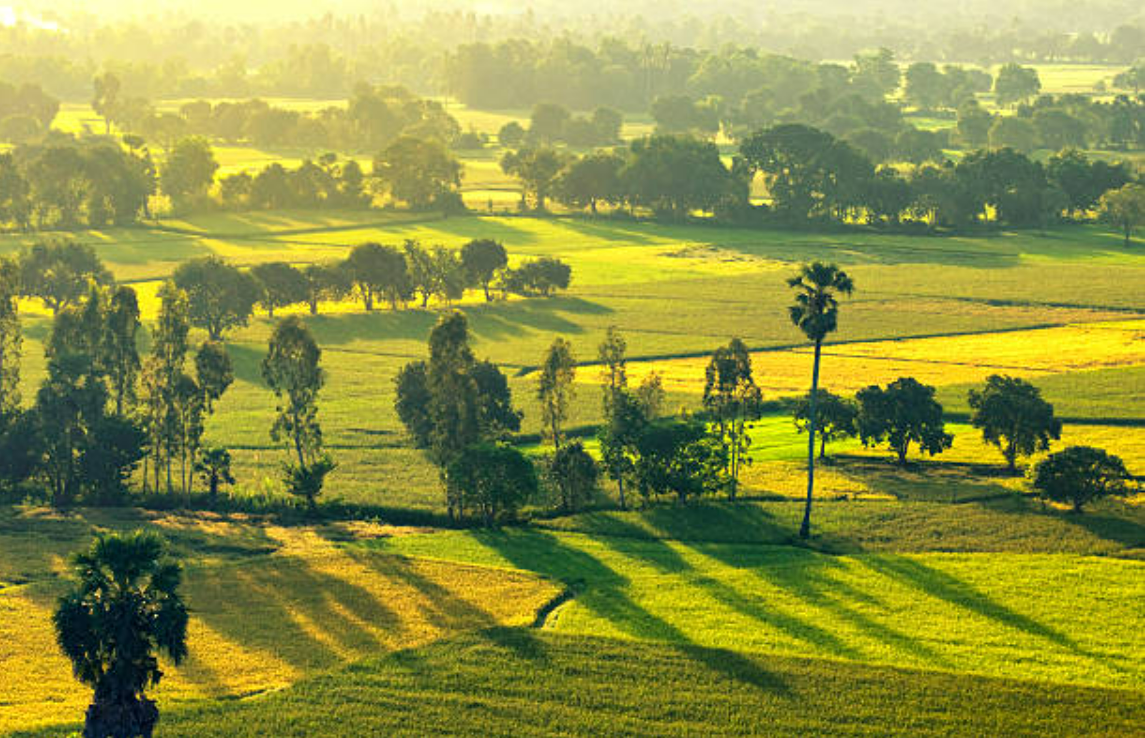
Just 1-and-a-half-hour drive by private car from Chau Doc you will get to Ta Pa hills in Tri Ton district, An Giang. Right at the foot of this hill, there is a spectacular view of the rice field. Some local photographers come for nice shot from above of the rice field dotted with palm trees. You could come any time of the year but the best view is from August to early of December.

  1. Accommodations in Chau Doc

4.1. Victoria Chau Doc Hotel

Category: 4.5 star standard.
Address: No.1 Le Loi Street, Chau Doc Town, Chau Doc City, An Giang Province.

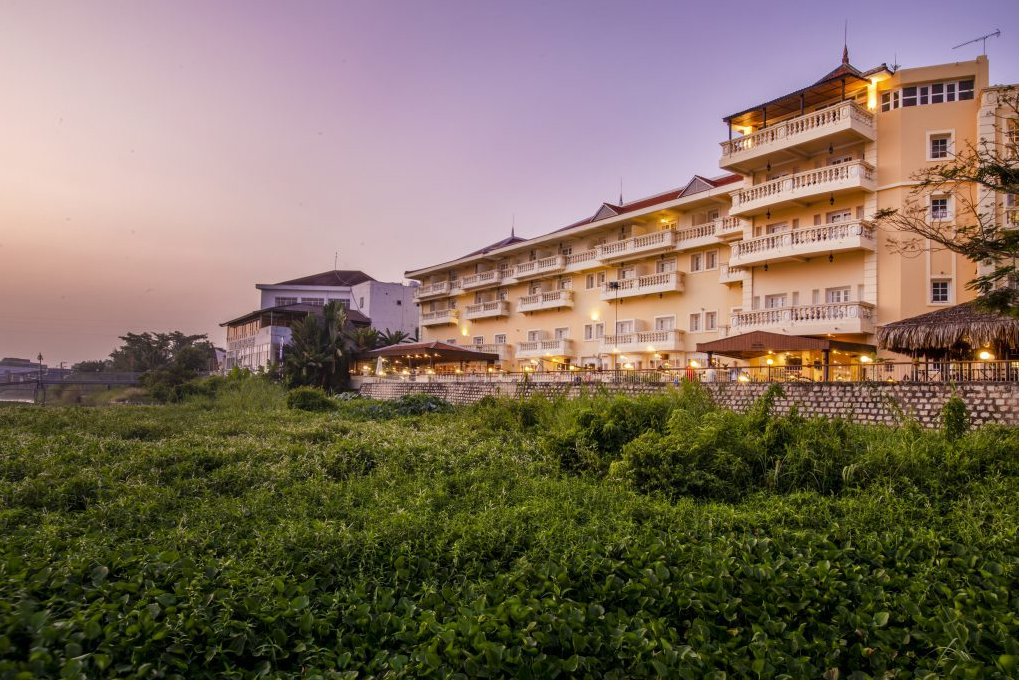
Situated on the banks of Bassac River and close to the speedboat pier, the beautiful Indochina-inspired Victoria Chau Doc Hotel offers cozy accommodation with river views in perfect harmony with the natural surroundings. The hotel features a riverfront outdoor swimming pool from where guests can watch the ever-changing scenery, especially in sunset moments. The hotel has 92 wooden-floored rooms, including 4 suites, most offering spectacular river views. Rooms combine the elegance of traditional Vietnamese handicrafts with turn-of-the-century old world charm. Guests can unwind in the hotel’s many beautiful spaces including the Bassac Restaurant overlooking the Bassac River and the stylish Tan Chau Salon Bar, bot with indoor and outdoor seating. This hotel is the best and most expensive accommodation in Chau Doc.

4.2. Victoria Nui Sam Lodge

Category: 3.5 star standard.
Address: Vinh Sam 1 Stress, Nui Sam Ward, Chau Doc City, An Giang Province.

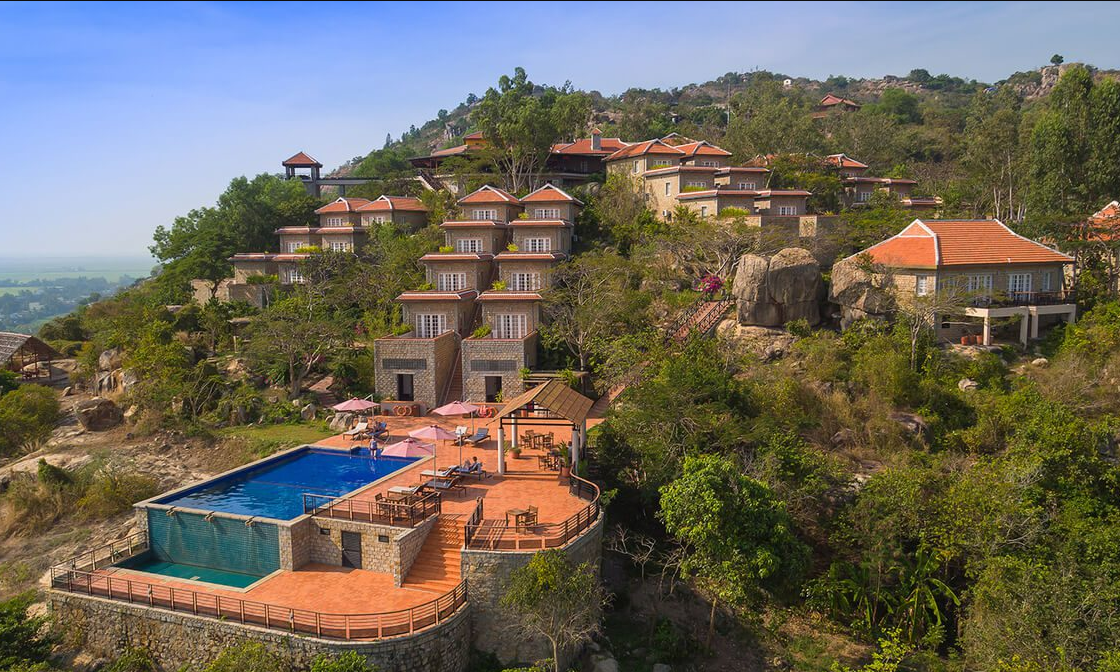
Victoria Nui Sam Lodge belongs to the same holding group with Victoria Chau Doc Hotel, but offers cheaper room rates for mid-ranged budget travelers. The hotel is located on the flank of the granite Sam Mountain in the heart of the Mekong Delta. Staying there, passengers can enjoy exceptional views over the paddy fields below stretching all the way to Cambodia. One of the most scenic pools in all of Vietnam, Victoria Nui Sam Lodge’s infinitive pool commands unobstructed views over the surrounding valley making it the ideal place for yoga and tai chi or to simply relax.

The lodge has 40 bungalows, all with a private terrace or balcony overlooking the paddy fields, featuring terracotta tiled floors, comfortable, stylish furniture and authentic decorative fabrics. La Giang Restaurant at the hotel serves local Vietnamese dishes along with Asian and Western taste. The genuine friendliness and hospitality of the people of the Mekong Detla embodied by the hotel’s staff, which makes each stay truly a truly personal experience.

4.3. Chau Pho Hotel

Category: 3 star standard.
Address: 88 Trung Nu Vuong Street, Chau Doc City, An Giang Province.

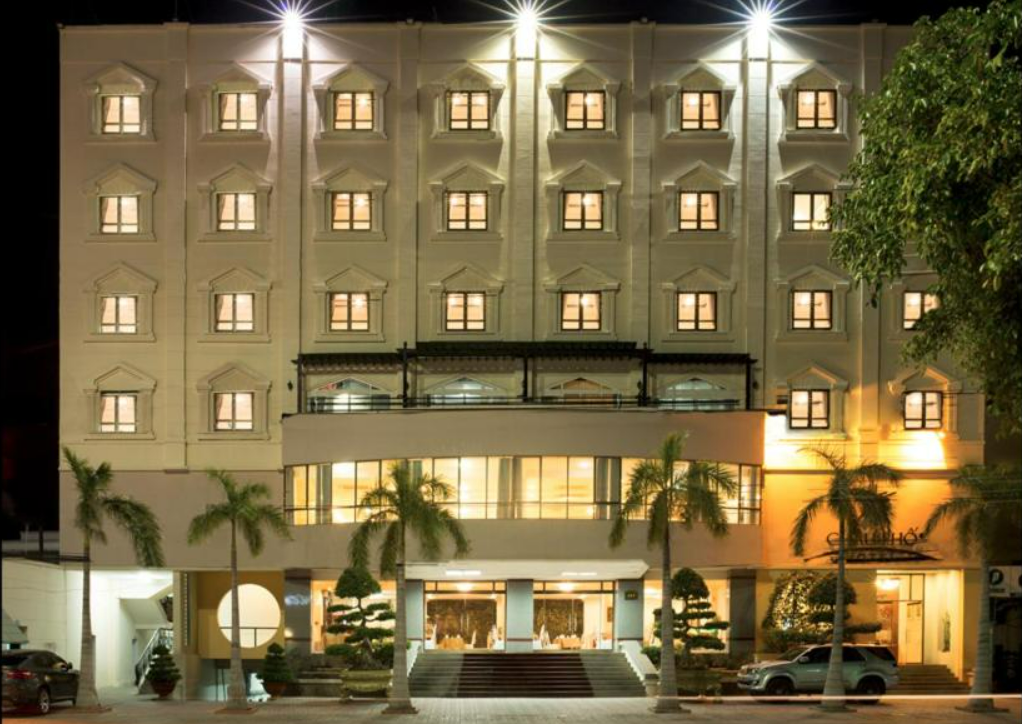
Chau Pho Hotel is located at the center of Chau Doc City which is the best 3-star hotels in Chau Doc City. Just 15 minutes’ drive from Chau Pho Hotel to tourist sites and historical – cultural sites such as Sam Mountain, Thoai Ngoc Hau Tomb, Tay An Pagoda, Champa Village, Chau Pho is often chosen for budget foreign tourists for one night stay in Chau Doc. At the hotel, you will find all the rooms are equipped with a flat-screen cable TV, a desk, and a minibar. There is also a seating area and a private bathroom with shower, hairdryer, and free toiletries.

  1. Chau Doc’s Special Cuisine

5.1. Chau Doc fish rice noodles (Bún cá Châu Đốc)

The most famous dish in Chau Doc is fish rice noodles with the stronger taste than other places. To make the sauce in the water bowl but not left the fishy smell, the artisan cook here experienced through life. They must have the secret to keep the bouillon sweet and not stinking. In addition to the goldfish broccoli, the chef also adds pork rolls, spinach meat with vegetables. Take a piece of fish sauce having the sugar with chopped chili, then take a spoon of water to enjoy all the deliciousness of this dish.

5.2. Steamed palm sugar rice cake (Bánh bò thốt nốt)

The steamed palm sugar rice cake is hot, combined with the sweetness of palm sugar, the coconut, mixed with the aroma of the jaggery is an unforgettable experience for diners. This is a specialty that should not be missed when visiting Chau Doc.

5.3. A special kind of beef sausage (Tung lò mò or Lạp xưởng bò)

This is the traditional dishes of the Cham people in An Giang. The name “tung lò mò” was originated from Cham language “tung laomaow”. “Tung” means intestine, “laomaow” means cow. This beef sausage is made from the intestines, fat, and cow’s thighs that have been cut up from the bone. After deodorizing with alcohol and ginger, the cook mixes the beef in proportion with the traditional spices of the Cham people. Then they stuff this mixture into cow’s gut and expose to sunlight for 3-4 days. The most delicious “tung lò mò” is grilled on the charcoal stove with cinnamon, papaya, cilantro and dipping sauce.

5.4. Typical dishes made from sesbania sesban flowers (Bông điên điển)

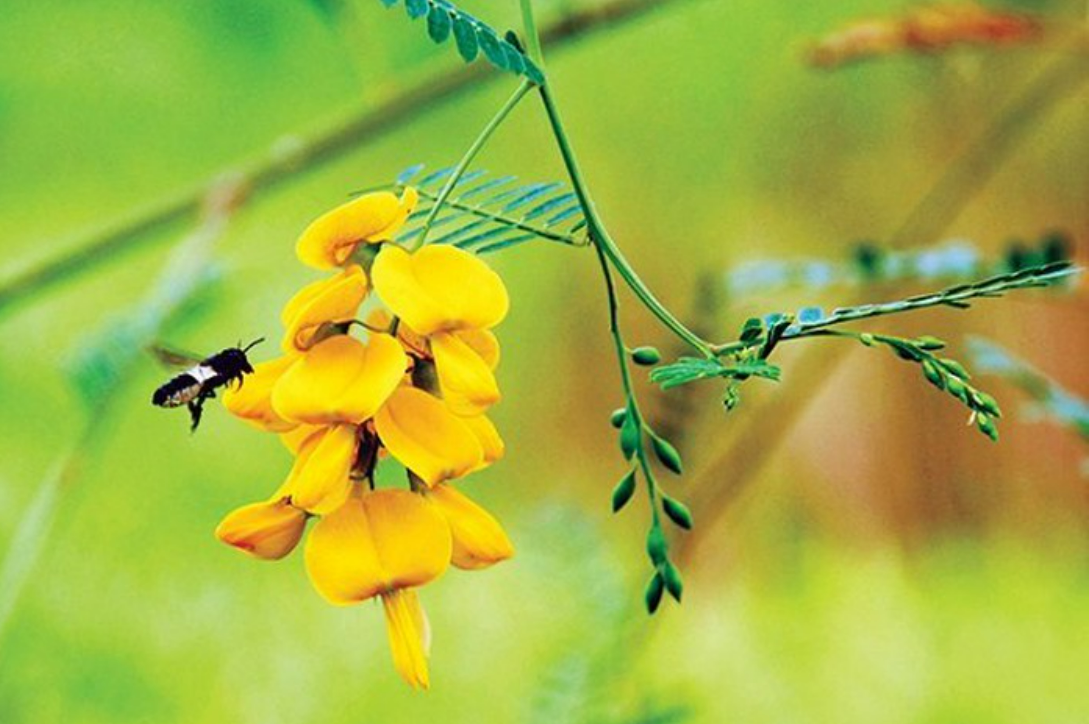
Sesbania sesban flowers are the popular ingredients for many dishes of Chau Doc people, especially in floating season. They can be cooked with sour soup, pickled or served as raw vegetables. When coming to An Giang in the rising season, tourists are highly suggested to try sesban flower sour soup. You will taste the sweet of the vegetable and fish, the sour of the tamarind and the spicy that the chili brings about.

Locals also use sesban flowers to make fried shrimps or traditional pancakes. A bowl of sesban flower sour soup and a pancake are the best combination.

5.5. Fermented seafood (Mắm)

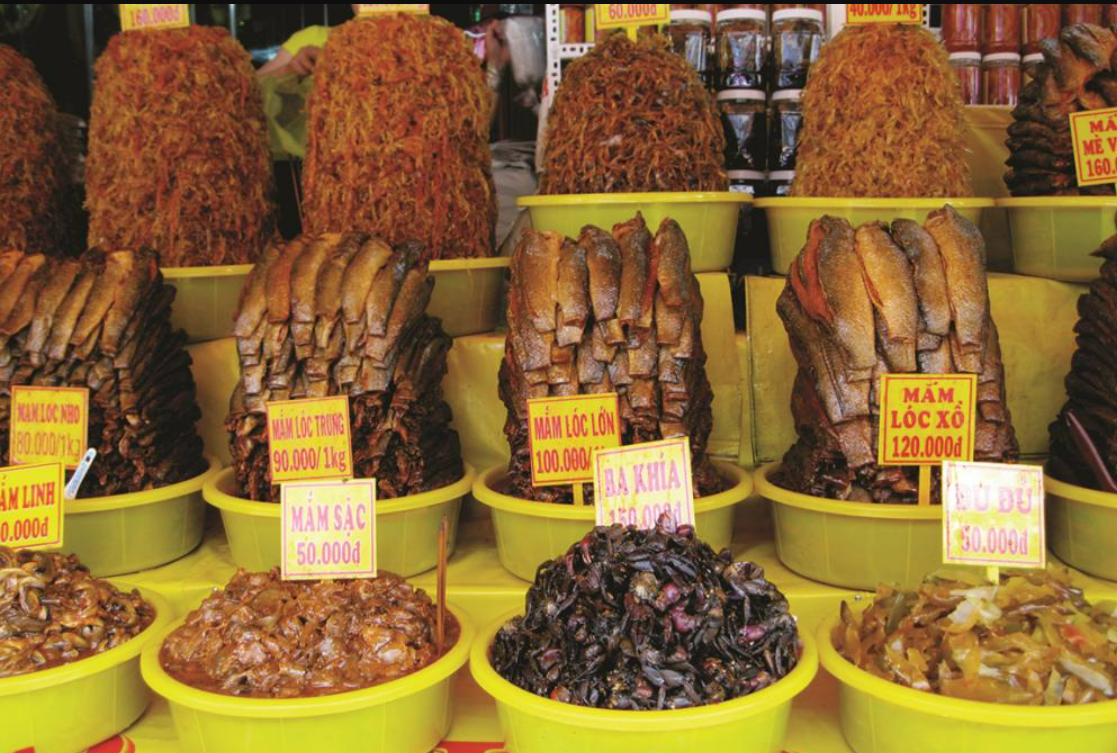
Chau Doc is known as the capital of fermentation, or mắm in Vietnamese, and locals use many spices to preserve various kinds of seafood. Vietnamese usually eat mắm with rice. It tastes slightly sweet at first, but has a salty aftertaste.

The best place to find and try this dish is Chau Doc Market.

5.6. Indica Salad (Gỏi sầu đâu)

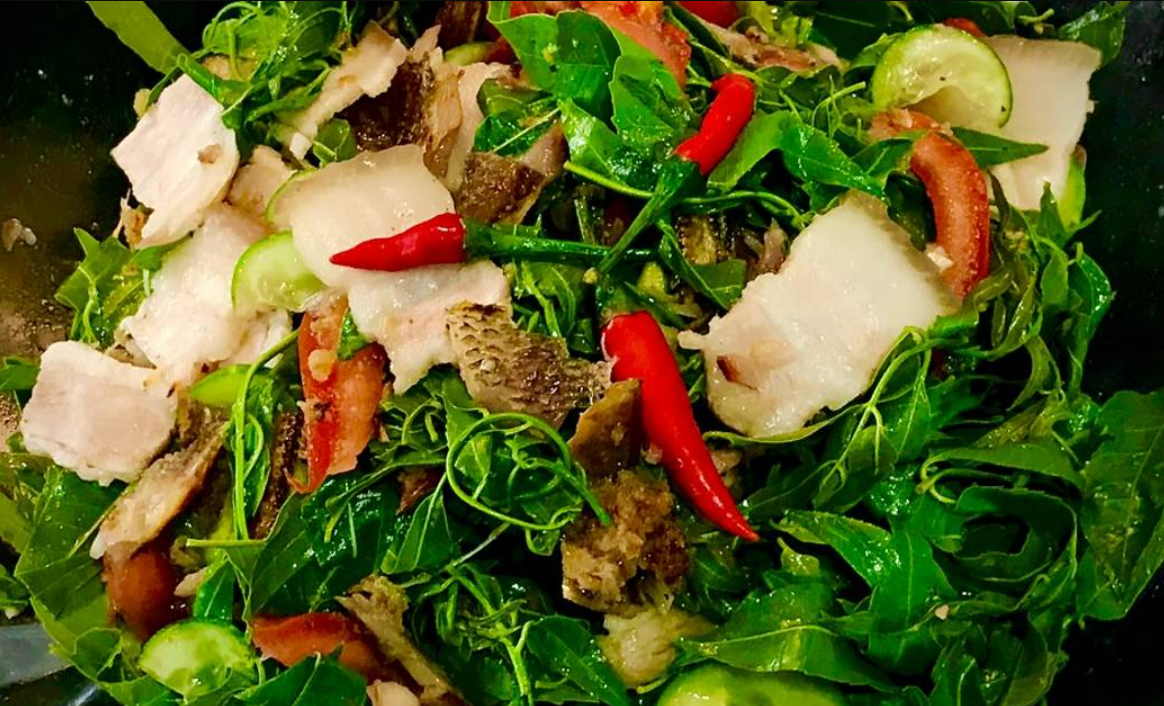
In Chau Doc, the bitter “lá sầu đâu” (or Azadirachta Indica leaf) is one of the most favorite vegetables to eat with braised fish, braised pork, macerated fish and steamed macerated fish. However, the best way to enjoy “lá sầu đâu” is to make salads. Collecting the early leaves and the flowers, the chef will clean them and soak the leaves and flowers with boiling water to reduce the bitterness. If you like the bitterness to be intact, you can put the leaves in ice so they can be a bit crunchier. After that, the chef will mix the leaves with boiled shredded bacon, steamed shrimps, dried fish, some slices of raw mangos, a few slices of cucumber, coriander and peanut. The most important part is the sweet-n-sour tamarind sauce. The Indica salad can be eaten with white rice, snakehead rice vermicelli, fish jam or the dangila. The fat of the bacon, the salty of the fish, the sweet of the shrimp, the sour of mango, and last but not least, the bitterness of the Indica leaf are combined to create one of the most special dishes in Chau Doc – An Giang. A dish likes no other.

5.7. Famous Seven dishes from beef (Bò bảy món núi Sam)

After visiting Sam Mountain, tourists can make a short stop to taste the famous seven-dishes of beef, which are boiled tripe, boiled meat with rice vermicelli cake, cow’s head porridge, grilled beef with bread, fried beef with Aganonerion, beefsteak, and roasted beef.

Among the seven dishes, the chefs of Sam Mountain take pride in the fried beef with Aganonerion the most. The dish is a combination of the sweet of the beef, the sweet sour of the Aganonerion leaves, the spicy of the pepper, and the fat of the peanut and coconut. The dish also has a special dipping sauce. The soybean sauce mixed with some ingredients and chopped lemongrass are the perfect companion with the fried beef. The boiled tripe is also a delicacy. The boiled tripe will have an ivory white color, and the dish is dipped with crab sauce with some garlic, chili, and lemon. Putting the tripe into the boiling hot pot, and dipping the slice of tripe into the sauce, you will instantly feel the crunchiness and softness of the gut, the liver, the lung of the cow.

 Apply For Vietnam Visaapply Vietnam visaApply visa vietnamBook E-visa Vietnambook visa vietnamCheap Vietnam VisaE-visa Vietnamevisa VietnamEvisa Vietnam onlineexpedited e-visaexpedited E-visa to Vietnamexpedited Vietnam E-visaGet a Vietnam visaGet Vietnam Visaget vietnam visa onlineget visa to vietnamget visa Vietnammultiple entry visamy vietnam visaOrder Vietnam E-Visaquick vietnam evisarush vietnam visaUrgent Vietnam VisaVietnamVietnam E-visaVietnam EvisaVietnam touristVietnam travelVietnam vacationVietnam VisaVietnam visa costVietnam Visa ExemptionVietnam Visa for India citizensVietnam Visa For IndiansVietnam Visa for South Africa citizensVietnam Visa In IndiaVietnam visa in South AfricaVIetnam VIsa on arrivalVietnam VIsa onlineVietnam visa provisa for vietnam Visa On Arrivalvisa onlineVisa to VietnamVisa Vietnam

Posted on

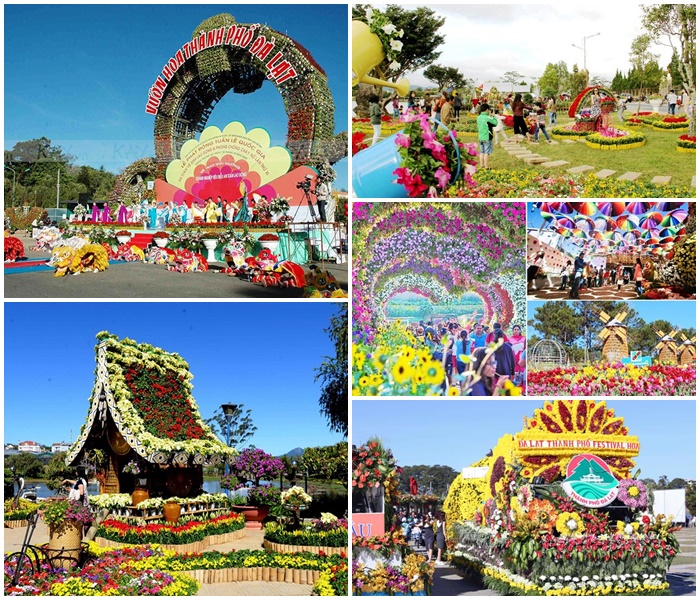
The Da Lat Flower Festival 2024 will run for nearly a month.

This year, we celebrate the 10th Da Lat Flower Festival. Unlike previous years, which lasted 5 to 7 days, this year’s event will be extended to 25 days. The Lam Dong Provincial People’s Committee is confident that this longer duration will amplify the festival’s impact and attract more tourists to the region.

This year, the Flower Festival has adopted the theme “Da Lat Flowers – Symphony of Colors,” distinguishing it from previous festivals. This choice is particularly significant as, in 2024, Da Lat City will be recognized by UNESCO as a Creative City of Music and named one of Asia’s “Top 5 Impressive Festival Cities.” The festival will introduce a range of new activities, including an international cultural exchange program, a rock band festival, and a Korean music showcase.

The event will feature 10 main programs, 12 supporting activities, and additional events. Highlights among the main programs include the Opening Ceremony of the 2024 Flower Festival, a New Year’s Eve 2025 Art Program and Closing Ceremony, vibrant flower displays, and an international conference focused on green tourism and cultural industries.

Supporting activities will include the “Dalat Fun Color” Music Festival, the “Bao Lam – Legend and Convergence” Festival, the Korea – Da Lat 2024 Music Festival, and various running events. Furthermore, the festival will present workshops on cultural preservation, art exhibitions, and interactive tourism experiences.

The festival aims to showcase and promote the cultural essence of the Da Lat people, characterized by their “Gentle – Elegant – Hospitable” nature. It seeks to foster pride among the residents of Da Lat and Lam Dong while encouraging a sense of community responsibility across all sectors, organizations, businesses, and localities. By inviting participation from both within the province and beyond, the festival endeavors to enhance the brand and reputation of Da Lat city.

Start planning your trip to Da Lat,Vietnam today by getting your visa at vietnamvisapro.net. As a trusted and reliable visa service, we’re here to help you turn your travel dreams into reality from the very first step.

Posted on

Discovering Cu Lao Xanh (Van Phi Island).

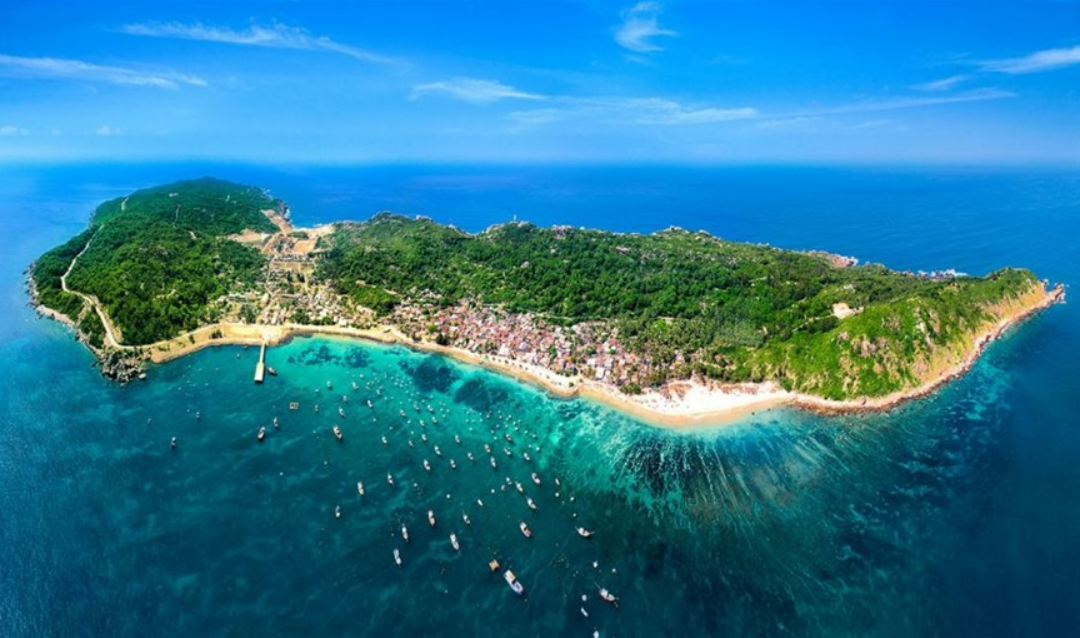
Cu Lao Xanh (or Van Phi Island) of Quy Nhon City, Binh Dinh Province is a hidden beauty and considered a charming pearl of the East Sea. The island is just about 24 km away from the mainland, located near the Xuan Dai Bay in Nhon Chau Commune, Binh Dinh Province. Cu Lao Xanh is translated into English as Green Islet, which refers to its greenery beauty and vitality.
>>> Apply Visa to Vietnam <<<

>>> Order Fast Track Service <<<

The whole island is covered by the greenish lush natural forest, the lines of the tall coconut trees along the beach, the pure blue sky and crystal-clear sea water. You may be fascinated by the sparkling water surface under the sunshine. Cu Lao Xanh has soft white sand dunes. From the above, Cu Lao Xanh looks like a sexy woman with full of vitality lying among the vast oceans. If you are on the planning step to visit Quy Nhon, Cu Lao Xanh must be included into your travel bucket list.

  1. Best time to visit Cu Lao Xanh

Cu Lao Xanh shares the typical features of tropical climate in South Central Vietnam, which is similar to more popular beaches in Nha Trang or Phu Yen.

The best time to plan the visit to this island is from February to June or September to October. During these months, the island is in full summer mode, basking in constant sunshine (avg temp: 28°C), which is convenient for visitors to swim and dive to see the colorful coral reefs.

In contrast, the end of July and August should be avoided because typhoon tends to happen in this period. The northeast monsoon blows to cause rain and fluctuations, large waves prevent ships and boats from operating occasionally so tourists are highly recommended not to visit the island in bad weather conditions to ensure their safety.

  1. Things to do in Cu Lao Xanh
  2. 1. Swimming & Diving

Beautiful beaches are located at the west of the island. They surely can meet the requirements of persons who likes swimming, admiring the blue crystal water, seeing colorful & unique multi-shape coral reefs and walking along the long soft white sand stripes. Sea lovers shouldn’t miss this amazing opportunity to experience these magnificent beaches. Moreover, you can take part in other exciting activities such as seeking sea stars, catch sea urchin, etc. Just immerse yourself into the blue sea and feel how close you are to nature more than ever.

2.2. Discover Cu Lao Xanh Light Station & Lighthouse

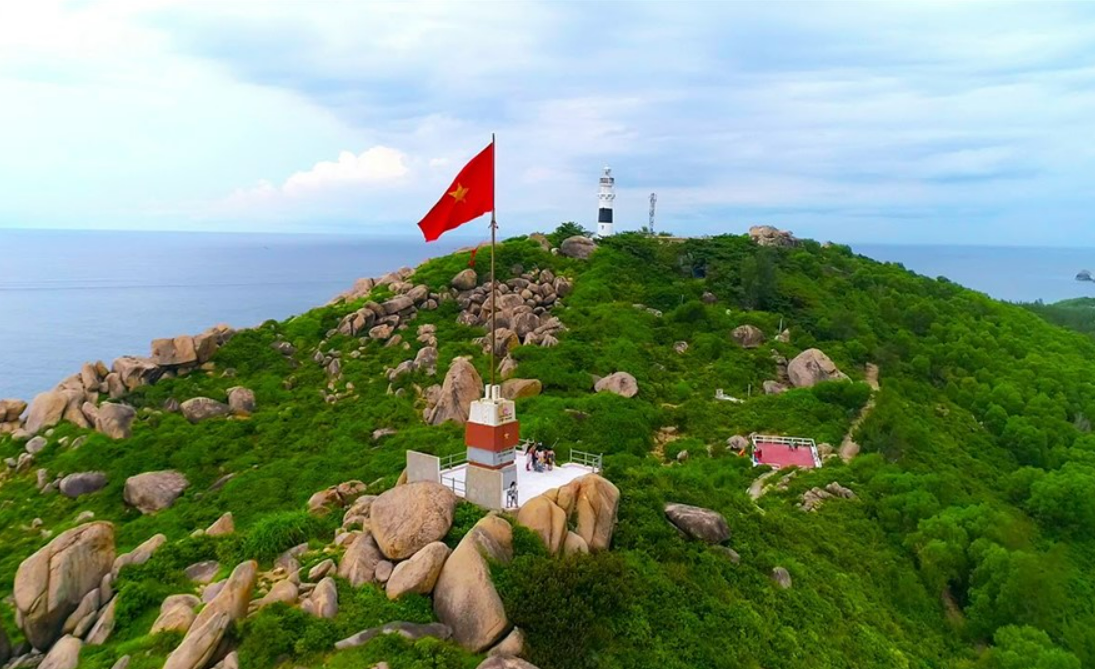
Cu Lao Xanh Light Station is located on the top of a 120m hill and parallel to the 19m Lighthouse. It is a two-storey building with a unique structure and used to be the house of a French official during the war against the French colonialists. At the back of the Cu Lao Xanh Light Station standing a 19-meter lighthouse with French name as Plogam Bir. Its structure is a combination of Asian and Western Gothic architecture styles. This lighthouse was built in 1890 by French after a ship sank on colliding with the reef in Quy Nhon sea. By the time of its launching, this structure was the highest lighthouse of the Indochina, with 119 meters in length and its light can spread up to 50 kilometres.

Over the past 130 years, Cu Lao Xanh Lighthouse has become a close friend to fishing boats and fishermen in this region. Its light lead fishermen to row their boats safely at nighttime or overcome many strong waves and sea storms all year round.

Standing on top of the lighthouse, tourists can have a panoramic view over the Cu Lao Xanh Island and surely will be overwhelmed by the picturesque sceneries below. The island stretches out like a grand picture with many shades of blue and green.

2.3. Visit “Fairy Well” Stream (Giếng Tiên)

Tourists can move down toward the northwest of the lighthouse to reach Fairy Well Stream (Giếng Tiên). The name derived from a legend. According to the legend, on moonlit nights, fairies would descend, play around, enjoy the scenes, and take a shower in the stream before flying back to the sky. “Gieng” means “well” and “tien’ means “fairy’ in Vietnamese. Therefore, Gieng Tien stream means the well where the fairies take a bath. Bathing in the pure fresh water with salty smell is surely a great experience that every visitor should not miss.

2.4. Participate Cầu Ngư Festival

Cầu Ngư means “fish worshipping” in Vietnamese. This is the biggest traditional festival of the fishermen in coastal areas including Cu Lao Xanh. Cầu Ngư Festival is annually held on 16th March (lunar calendar) to express local fishermen’s gratitude to the fish lord, as well as pray for a peaceful and successful fishing season as fishermen often face up with uncertainties and potential dangers on the giant ocean. This is a spiritual tradition passed on from generation to generation since ancient time and still honorably preserved until today.
During the festival, besides the worship rituals, many traditional interesting games such as the racing boat, tugs of war, etc are also organized.

2.5. Other activities

Do not forget to bring fishing rope when discovering the Cu Lao Xanh Island. When tourists are tired from walking or swimming, they can sit on some rock cliffs and go fishing, or wade in the water to catch some “vú nàng” snails, a local specialty. What can be more pleasant than to enjoy the seafood one has just caught on their own, grilled on the spot with friends or family members.

There were also small sand dunes in which the sea turtles often lay their eggs. If a tourist is lucky enough, he might have a chance to see the tiny turtles crawling on the sand toward the sea.

  1. Accommodations in Cu Lao Xanh

This place is famous for its beautiful, natural and romantic beach and they have not been exploited much by tourism. Therefore, there are not many accommodation options for tourists to choose from. There are several homestays with extremely cheap prices from 50,000 VND – 100,000 VND/ person or 150,000 VND – 550,000 VND/ room, depending on tourists’ budget.

  • Homestay Travel Cu Lao Xanh
    • Uncle Nam’s Homestay in Hoa Hoa
    • Uncle Vuong’s Homestay
    • Phuc Hung Homestay
    • Homestay Ngoc Dinh

Besides a few homestays, if tourists want to experience local life, they can ask local people for staying in their houses. The local people and fishermen here are very friendly and open. They are willing to help and invite you a simple meal of delicious seafood and local specialty in Cu Lao Xanh.

  1. How to get to Cu Lao Xanh

Lying in a strictly managed area within the maritime boundary of the country, the island is virtually off limits for foreigners. The only way to get to this island, 24km away from the inland town of Quy Nhon, is by boat or speedboat. From the Ham Tu wharf, it takes 2 hours and 25,000 VND (~ 1.09$) to get there in a normal wooden boat. For 200,000 VND, you can get there on a high speedboat in 50 minutes. Cu Lao Xanh is wildly beautiful, with sunny beaches and a serene coast.

  1. Some notes when traveling to Cu Lao Xanh?

– Cu Lao Xanh is a military island, so the security is very strict. When arriving in the island you must bring identification card. Ideally, you should book the tour to Cu Lao Xanh with Vietnam Travel as we can assist you to get a guaranteed procedure quickly. Foreigners are prohibited to visit Cu Lao Xanh for any reason.

– Currently Cu Lao Xanh has not yet pulled electricity from the mainland. People living on the island only use generators from 9 am to 3 pm and 5 pm to 11 pm. So, you should prepare backup chargers, cameras, phones to avoid running out of battery.

Fresh air, blue sea, white sand and golden sunshine creates a poetic and peaceful natural scene of Cu Lao Cham, which makes it as a truly precious gem in the sea and a destination that should not be missed when exploring Quy Nhon.

 Apply For Vietnam Visaapply Vietnam visaApply visa vietnamBook E-visa Vietnambook visa vietnamCheap Vietnam VisaE-visa Vietnamevisa VietnamEvisa Vietnam onlineexpedited e-visaexpedited E-visa to Vietnamexpedited Vietnam E-visaGet a Vietnam visaGet Vietnam Visaget vietnam visa onlineget visa to vietnamget visa Vietnammultiple entry visamy vietnam visaOrder Vietnam E-Visaquick vietnam evisarush vietnam visaUrgent Vietnam VisaVietnamVietnam E-visaVietnam EvisaVietnam touristVietnam travelVietnam vacationVietnam VisaVietnam visa costVietnam Visa ExemptionVietnam Visa for India citizensVietnam Visa For IndiansVietnam Visa for South Africa citizensVietnam Visa In IndiaVietnam visa in South AfricaVIetnam VIsa on arrivalVietnam VIsa onlineVietnam visa provisa for vietnam Visa On Arrivalvisa onlineVisa to VietnamVisa Vietnam
Posted on

All Things About Da Nang City

Located in Central Vietnam, Da Nang, the 4th largest city in Vietnam, marks the halfway point between Hanoi capital in the North and Ho Chi Minh city in the South. It is also the center of commerce, tourism and education. Has long been recognized by locals as the most worth-living place in Vietnam, Danang was listed in the world’s top 10 worth-living cities in 2018 the famous travel magazine Live and Invest Overseas. It additionally consolidates Danang’s position in the world tourism market.

>>> Apply Visa to Vietnam <<<

>>> Order Fast Track Service <<<

  1. Danang Weather & Best time to visit

Danang marks the northern limits of Vietnam’s tropical zone and has a pleasant climate all year round. There are two seasons: wet season from August to December and dry season from January to July. The highest temperature is 30°C and the lowest one is around 18°C. The best time to visit Danang is from March to May and September to October when the weather is cool and dry. If you can, avoid the summer months from June to August when Danang becomes a popular retreat for domestic tourists. It is very hot then, but very little rain and the sea is clear and calm.

  1. How to get to Danang

Danang is considered as a tourism hub of central Vietnam so there are many ways to reach Danang conveniently.

2.1. By Airplane

Danang has international airport within the city. There are many daily domestic flights connecting Danang with Hanoi, Saigon, Nha Trang, Dalat, Haiphong. The flight time is just over 1 hour. You can easily find the best suitable flight with reasonable price at Vietnam Airlines, Bamboo Airways and two low-cost airlines, namely, Vietjet Air and Jestar Pacific.

Besides, international flights to Danang are available from Guangzhou (China), Bangkok (Thailand), Seoul (Korea), Kuala Lumpur (Malaysia), Shanghai (China), Siem Reap (Cambodia), Singapore, Taipei (Taiwan) and Tokyo (Japan). This mean of transportation makes your trip to Danang easier.

2.2. By Train

Compared with the plane, the time to travel to Danang by train will be much longer, about 17-19 hours, either from Hanoi or Saigon. However, it is a best choice for those who want to take advantage of the beautiful scenery throughout the train windows. With prices ranging from 25USD (hard seats) to 50USD (air conditioned, soft berth), you have a lot of options to choose from depending on your budget. You can get the train ticket directly at train stations or contact with local agent to book in advance.

2.3. By Bus

To save money, tourists can choose travel by a local bus to Danang. The price is around 15USD – 20USD/ one way from either Hanoi or Saigon. There are many local buses serving the route Hanoi – Danang such as Hoang Long, Phuong Trang, Camel Travel… and Sai Gon – Da Nang: Hoang Long, Phuong Trang, Thuan Thao, Xuan Tung, Dinh Nhan… It also takes around 17-19 hours like a train trip.

2.4. By private car

Private car is another option you may consider when planning to visit Danang. It is more comfortable than a local bus and a train. An experienced driver will accompany with you, passing by breath-taking sceneries from North or South to Central Vietnam. You can stop anytime and anywhere along the way you want to take a short rest, take some photos and admire the Vietnam’s beauty.

  1. Sightseeing in Danang

3.1. My Khe Beach

My Khe is recognized as the best beach in Da Nang city. It was voted as one of six most charming beaches on the planet by Forbes Magazine in 2005. With 900m in length, My Khe beach is famous for blue sky, white gentle slope sandbank, mild waves, clear warm water all year round and beautiful areas surrounded by coconut trees. It is definitely an ideal place for relaxing, sightseeing, swimming, surfing, sunbathing and taking the best photos.

For those who want to enjoy sunrise and sunset, My Khe is one of the best choices. You will immerse in the fresh air and magnificent view, which gives you a huge energy. So stay close to the beach and get in close touch with the nature’s beauty.

3.2. Non-Nuoc Beach

Stretches 5km along the shore of Hoa Hai Ward at the foot of Marble Mountains, Non Nuoc beach is famous for its seaweed, which reaches exportation standards. Many five-star hotels were built in Non Nuoc to accommodate the domestic and foreign tourists in the area. Together with its feature of wave degree, climate, weather and salinity, the beach is suitable for water sports, especially surfing. In 1993, there took place an international champion with the participation of nearly 40 athletes from many countries around the world.

Along the beach, on the white sand is a forest of age-old casuarinas which is shady, green and is waving in the whistling wind. This is an ideal place for resting and camping. When the darkness falls and the moon rises, you can set yourself free on smooth benches along the beach to listen to melodious sounds of the waves and enjoy the occult space.

3.3. Son Tra Peninsula

Son Tra Peninsula, also called a precious gem in Danang, is not only famous for the beautiful, picturesque landscapes but also a highly potential eco-tourism-oriented resort area. Just 13km away from the city center, Son Tra Peninsula is an ideal getaway from the crowded and busy life. Visiting this place, you have a chance to immerse yourself in the beauty’s nature of white sand beaches, untouched natural scene, dense green forest, and see many kinds of rare animals.

Son Tra is surrounded by many nice pristine beaches like Bai Bac, Bai Nam, Bai But and Tien Sa beach. Each of them boasts their own beauty with smooth sandbank, clear blue water and colorful coral reefs. If you want to explore the amazing life under the sea, it also provides you the best opportunity to go snorkeling or scuba diving.

3.4. Linh Ung Pagoda

Linh Ung Pagoda – Bai But is located at the Son Tra Peninsula. This is one of the biggest, newest and the most attractive of the three pagodas with the same name in Danang. The pagoda features a perfect harmony of modern and traditional architectures of a Vietnamese pagoda, especially in the three-entrance gate, the main chamber and the ancestors’ house. Situated on an area of about 20 hectares on the side of Son Tra Peninsula, this pagoda is a magnificent artwork. There is the highest Quan Yin statue (67m) in Vietnam which leans on the mountain and looks toward the sea. You can see this statue from every corner of Danang city.

With its unique architecture and mountain landscape, Linh Ung pagoda has become a popular place for worshipping, living and practicing of monks and Buddhists as well as a spiritual tourist attraction in Danang. Just 10km from Danang city center, this pagoda can be reached by motorbike, taxi or private car for comfortable. This is a must-see place on the way to Son Tra Peninsula.

3.5. Marble Mountains

Marble Mountains or “Ngu Hanh Son” in Vietnamese, are located about 8km southeast of Danang city, close to the sea. It is a group of five marble and limestone mountains named according to the five elements of nature: “Kim Son” (metal), “Moc Son” (wood), “Hoa Son” (fire), “Tho Son” (earth) and “Thuy Son” (water).

Among these five mountains, “Thuy Son” is the largest and the most beautiful one. It has become the main attraction for visiting. It has many caves and Buddhist temples, many dating back to the 17th century. A natural stone stairway leads you up to the top of the “Thuy Son” Mountain or you can take a glass elevator instead to enjoy the beautiful panoramic views from above.

3.6. Champa Sculpture Art Museum

Located at the junction of Trung Nu Vuong and 2/9 Streets, Danang City, the Champa Sculpture Art Museum was built in 1915 under the sponsorship of the French School for Far Eastern Studies in Vietnam. It is based in the Danang region which was the seat of the old Champa Kingdom and boasts many attractions like Tra Kieu, Dong Duong, My Son and Thap Mam. In 1936 the Museum was expanded and opened to the public in 1939. It conserves the last collection of the Champa Sculpture Art in Vietnam and the world. Its architecture bears the features of Cham architecture. It boasts a row of showrooms white in color with simple yet graceful decorations. The Museum exhibits 300 original sandstone sculptures and some baked clay products collected from the temples and towers that lie scattered from Quang Binh to Binh Thuan in Central Vietnam. The exhibits are statues, embossments, images, and patterns displayed in 10 rooms named after the places where they were found.

3.7. Danang’s Golden Bridge on Ba Na Hills Resort

Considered as a work of art, Golden Bridge (Cau Vang) in Danang has attracted a big number of both domestic and foreign tourists since opening to the public in June 2018. People come here to see and take a photo with a novel piece of architecture famed for its unique design. The shimmering bridge is held up by two giant concrete humans above the clifftops. During the forest, the bridge stands out in yellow and looks like a golden silk trip hiding in the clouds of Danang. Especially, the hands look aged and weathered as if they have been there for centuries.

Golden Bridge rises above the Thien Thai gardens at the Ba Na Hills Resort, about 30km from Danang city. Opened in 1919 by French colonists with around 200 villas, today this area holds attractions like an alpine roller coaster and the longest nonstop, single-track cable car, according to Guinness World Records. You have to buy a ticket to enter this resort with the price of 750,000 VND a ticket/ adult including all cable cars and theme park entrance ticket. Then you freely explore Ba Na Hills and check out the world’s most striking footbridge.

3.8. Dragon Bridge

As its name suggests, Dragon Bridge illustrates the image of a dragon flying towards the sea with the architecture inspired by Ly dynasty. It was opened on the 38th anniversary of the liberation of Danang city in 2013. This inventive design is not only a reflection of Vietnamese customs and beliefs but also highlights Da Nang’s growth and development. Due to its unique design, the bridge has attracted worldwide attention.

Having 6 lanes crossing the Han River, Dragon Bridge forms a direct way from Danang International Airport to this city’s various main routes, easier to reach My Khe beach and Non Nuoc beach, two stunning beaches of Danang. Especially, there is dragon’s fire breathing and water spraying performance at 9pm every weekend and during the holidays. This is an incredible scene you should not miss in Danang.

  1. Danang Special Cuisine

Danang is a heaven of the authentic local cuisine. Check out some review articles about food in Danang, you will see many choices from the luxurious restaurants to street vendors. So don’t forget to try some famous specialties to complete your amazing trip here.

  • “Banh trang cuon thit heo” (sliced pork rolled with rice paper)
  • “Bun mam” (rice noodles with fermented fish sauce)
  • “Bun thit nuong” (rice noodles with grilled pork)
  • “Banh xeo” (Vietnamese pancake)
  • “Banh canh” (Cake soup)
  • Seafood
  1. Accommodation in Danang

Danang has countless resorts and hotels from budget to luxury options, which is suitable for any travelers.

5.1. Resorts in Danang

–  InterContinental Danang Sun Peninsula Resort (Luxury)


Address: Bai Bac beach, Son Tra District, Danang.

– Pullman Danang Beach Resort (Luxury)


Address: 101 Vo Nguyen Giap Street, Khue My Ward, Ngu Hanh Son District, Danang.

– Naman Retreat (Luxury)


Address: Truong Sa Road, Ngu Hanh Son District, Danang.

–  Meliá Danang Beach Resort (5 star)

Address: 19 Truong Sa street, Hoa Hai Ward, Ngu Hanh Son district, Danang city.

–  Fusion Maia Danang (5 star)

Address: Vo Nguyen Giap Street, Khue My Ward, Ngu Hanh Son District, Da Nang City.

5.2. Hotels

–  Four Points by Sheraton Danang (5 star)


Address: 118 – 120 Vo Nguyen Giap street, Phuoc My Ward, Son Tra District, Danang.

–  À La Carte Danang Beach (4 star)

Address: 200 Vo Nguyen Giap street, Son Tra District, Da Nang City.

–  Nalod Danang Hotel (4 star)

Address: 192 Vo Nguyen Giap street, Son Tra District, Da Nang City.

–  Maximilan Danang Beach Hotel (4 star)

Address: 222 Vo Nguyen Giap Street, Phuoc My Ward, Son Tra District, Danang City.

–  De L’amour Hotel (3 star)

Address: 46 Vo Nguyen Giap street, Son Tra District, Da Nang city.

–  Adaline Hotel & Suite (3 star)

Address: 45-47 Vo Van Kiet street, Son Tra District, Da Nang City.

 Apply For Vietnam Visaapply Vietnam visaApply visa vietnamBook E-visa Vietnambook visa vietnamCheap Vietnam VisaE-visa Vietnamevisa VietnamEvisa Vietnam onlineexpedited e-visaexpedited E-visa to Vietnamexpedited Vietnam E-visaGet a Vietnam visaGet Vietnam Visaget vietnam visa onlineget visa to vietnamget visa Vietnammultiple entry visamy vietnam visaOrder Vietnam E-Visaquick vietnam evisarush vietnam visaUrgent Vietnam VisaVietnamVietnam E-visaVietnam EvisaVietnam touristVietnam travelVietnam vacationVietnam VisaVietnam visa costVietnam Visa ExemptionVietnam Visa for India citizensVietnam Visa For IndiansVietnam Visa for South Africa citizensVietnam Visa In IndiaVietnam visa in South AfricaVIetnam VIsa on arrivalVietnam VIsa onlineVietnam visa provisa for vietnam Visa On Arrivalvisa onlineVisa to VietnamVisa Vietnam
Posted on

All things about Y Ty

Y Ty tourism is loved by many tourists because this is the most famous rattan hunting location in Lao Cai, Vietnam. The biggest difference of this tourist destination is its tranquillity, simplicity and rich, attractive natural scenery. Especially for tourists who love nature and want to explore, Y Ty is a place to visit at least once.

>>> Apply Visa to Vietnam <<<

>>> Order Fast Track Service <<<

  1. How is Y Ty unique?

With a natural area of up to 8,654 hectares and a border stretching 11.94km. Y Ty not only impresses visitors with its mysterious and attractive natural landscape. But also, with its endlessly fresh air. at an altitude of 2000m above sea level. This area offers a completely different wild and majestic beauty.

In addition, Y Ty is also the main birthplace of four main ethnic groups: Ha Nhi, H’Mong, Dao, and Kinh, so the national cultural identity is very diverse and extremely unique. Y Ty makes visitors ecstatic with the beautiful scenery of endless terraced rice fields, romantic cloudy sky and majestic high mountains. All bring a harmonious scene to Y Ty tourist area and attract many tourists to visit.

  1. The best time to visit Y Ty

Depending on each traveller’s arrangements, you can visit Y Ty at any time of the year. However, to experience the journey to explore this highland smoothly and easily, please note the following times.

  • During the period from September to April next year, known as the cloud hunting season, Y Ty has a cold climate and appears cloudy. This creates favourable conditions for you to take vivid photos with floating seas of clouds.
  • In addition, from March to April is also a great time for you to see azalea flowers blooming brilliantly.
  • The flood season takes place from May to June, making the fields in this highland become a living painting of nature. Visitors can admire the wonderful beauty of the landscape.
  • If you like to participate in the biggest festivals of the Ha Nhi people of the year, you should come to the Dry Old Festival on the first Dragon Day of the 6th lunar month. Depending on the year, it may fall around July -8.
  • Y Ty’s ripe rice season is from the end of August to the end of September, depending on the year. In recent years, Y Ty has focused on ripening rice when autumn festivals (around the next week of September 2).
  • In winter, visitors can visit Y Ty to experience white snow showers covering the mountains and hills. Y Ty is likely one of the possible snowfall spots with Sa Pa and Mau Son.
  1. How to get to Y Ty?

Y Ty is a border highland commune in Bat Xat district, Lao Cai province, Vietnam. About 75 km from Lao Cai city and about 365 km northwest of Hanoi capital.

As a highland commune close to the border of Lao Cai, to get to Y Ty you first need to be in Lao Cai City. Depending on the type of vehicle you use, depending on your trip plan, there will be many different directions that you can consider choosing.

4.1 From Hanoi to Lao Cai city

Traveling by bus:

Since the Hanoi – Lao Cai expressway was established, traveling to Lao Cai by bus has always been one of the first options chosen by tourists because of its quick travel time (about 4-5 hours). You can easily catch buses to Lao Cai city from My Dinh and Giap Bat bus stations in Hanoi. Departure time is very flexible to give visitors freedom to choose.

Travel by train:

If you are car sick or simply want to experience rail travel, you can choose to travel by train. Trains to Lao Cai usually run in the evening every day and it will take about 7-8 hours (depending on how fast or slow the train is) to get to Lao Cai city.

Traveling by plane:

For tourists in remote provinces such as the Central or Southern regions of Vietnam, traveling by plane is the optimal choice. It both saves time and keeps you in good health to explore the journey to Y Ty. After landing at Noi Bai airport, you can travel by road and rail.

4.2 From Lao Cai city to Y Ty

Traveling by bus

From Lao Cai bus station, you can find passenger buses (usually small, 16-seat cars) to Bat Xat and Trinh Tuong. Among these, there will be some vehicles going straight to the center of Y Ty commune. A slight inconvenience is that you will not be able to proactively stop at entertainment places along the way.

Traveling by motorbike

This is the most optimal option for tourists traveling by bus to Lao Cai. If you have some experience driving on mountain roads, you can drive all the way to the center of Y Ty. If you like to ride your car to get used to it, you can send your car with the train. If not, you can rent a motorbike right in Lao Cai City or go straight to Sa Pa to rent a motorbike quite easily.

  1. Sightseeing, Activities and experiences in Y Ty

With the wonderful beauty of majestic mountains and an altitude of more than 2000m. Y Ty has become one of the most popular attractions in the Northern region of Vietnam. Visitors can choose one of the following locations to explore:

5.1 Milestone 92 Lung Po Junction

Lung Po intersection is the intersection of the Red River and the Lung Po River flowing into Vietnam. If you stay upstream of the Red River, you can see an overall picture of green rice fields and beautiful sky.

In addition, milestone 92 also has pillar 96 (1) in Vietnam, milestone 92 (2) and milestone 92 (3) in China. To reach this Lung Po location, visitors need to travel through many passes and mountains that are quite winding. So, you should be careful when traveling on this road.

5.2 A Lu

Looking from above on normal days, A Lu is wild and majestic. But during the rice season, this place becomes a wonderful picture. If you come here during the green rice season, you will have the opportunity to see the lush green terraced fields. Also, during the ripe rice season, the scenery becomes impressive with a bright yellow sky.

Along with the typical aroma of rice during the seasons, surely the experience of visiting this Northwest region will bring more memories.

5.3 Ngai Thau

Located on the most beautiful road from A Lu to Ngai Thau during a trip to Y Ty, visitors will certainly be surprised with the unique beauty of Ngai Thau. With the golden rice fields viewed from above, you can see the overview of the fields and the drifting clouds, creating an impression that cannot be found anywhere else.

5.4 Lao Than

For tourists who love to explore and want to “hunt clouds”. Lao Than is definitely a destination not to be missed when visiting Y Ty. The peak of Lao Than is located at an altitude of 2,860 and is likened to the roof of Y Ty. Although the path is quite arduous, the result will make you satisfied when you can see and even touch the clouds.

5.5 Participating in Y Ty market

Coming to the land of Y Ty Lao Cai, you cannot miss the markets of the indigenous people here held every Saturday. Not only does it bring a variety of foods, vegetables, consumer goods, clothes, etc. But the market also gives you the opportunity to admire the beautiful costumes of ethnic people, discover cultural beauty and have fun. Opportunity to enjoy delicious specialties.

5.6 Kho Gia Gia Festival

When traveling to Y Ty in July – September, you can encounter different festivals. Among them, the Kho gia gia Festival is known as a long-standing cultural feature of the Ha Nhi people, with the purpose of praying for harvest and rain. Thanks to its unique characteristics, this festival was recognized by the Ministry of Culture, Sports and Tourism as a National Intangible Cultural Heritage on December 19, 2014. So it belongs to the type of traditional festival.

The time to organize this festival takes place from the day of the Dragon to the day of the 6th lunar month every year. It’s not only meaning to pray for good harvests and good weather. This is also an opportunity for children and grandchildren to find their roots and ancestors. With its own unique characteristics, the festival now attracts many visitors every year.

5.7 Muong Hum Market

An activity not to be missed when coming to Y Ty is participating in Muong Hum market. This is the gathering place of many ethnic groups such as: H’Mong, Ha Nhi, Han, Red Dao,…You can Encounter scenes of ethnic people buying and selling, chatting happily or seeing couples on dates.

5.8 Dragon Waterfall

Dragon Waterfall located in the area between Trung Ho village and Po Ho Thap village, Trung Leng Ho commune, Bat Xat district. Coming to Muong Hum, you ask for directions to Trung Leng Ho, then continue to Trung Ho or Po Ho Thap village to reach Dragon Waterfall. If you go by car, you need to stop and walk about 2km. If you ride a motorbike, you have to walk about 1 km.

  1. Specialties when traveling to Y Ty

When traveling to Y Ty, visitors not only admire the majestic and poetic natural landscape but also can enjoy the specialties of this beautiful land like Grilled chicken, Indigenous pigs, purple sticky rice, Raspberries, Y Ty shiitake mushrooms, Beer of the Ha Nhi ethnic people, Ha Sin Co tubers, …

  1. Accommodation when traveling to Y Ty

When traveling to Y Ty, visitors can refer to the accommodation facilities below. Most types of accommodation are homestays, visitors can stay close to the wild. And majestic nature, but also experience the daily life of the ethnic people here:

  • HomeStay Y Ty Explore. Address: Mo Phu Chai Village, Y Ty, Bat Xat, Lao Cai.
  • Homestay A Co. Address: Ngai Tro Village, Y Ty, Bat Xat, Lao Cai.
  • Y Ty Clouds Homestay. Address: Y Ty, Bat Xat, Lao Cai.
  • A Ho Homestay. Address: Y Ty, Bat Xat, Lao Cai.
  • Homestay A Sa. Address: Ngai Tro Village, Y Ty, Bat Xat, Lao Cai.
  • Lao Than Homestay. Address: Y Ty, Bat Xat, Lao Cai.
  • A De Homestay. Address: Nhi Hamlet, Y Ty, Bat Xat, Lao Cai.
  • Ly Co So Homestay. Address: Ngai Cho Village, Y Ty, Bat Xat, Lao Cai.
  1. Some important notes when traveling to Y Ty

To make your trip to Y Ty complete and safe, you need to refer to the following notes:

  • Regularly monitor the weather forecast before your trip. During the rainy season, roads in the highlands of Northwest Vietnam in general and Y Ty in particular are prone to landslides. You need to know in advance to choose a safe direction.
  • If you ride a motorbike, you should bring (or buy in Lao Cai) a pair of soft sandals. On the way, if you come across spillways or landslides, you don’t have to worry about getting your shoes wet.
  • Previously, because it was a border commune, when entering Y Ty, you needed to stop by border stations/posts to declare.
  • When renting a motorbike, the service often requires you to leave the ID card, you should prepare a photocopy at home and leave it there, and the ID card should be kept with you. This is a necessary document when traveling in border areas.
  • Y Ty is a highland place with an altitude of 2000m and bordering the Vietnam-China border. So regardless of the season, the climate here is quite cold. You should prepare warm clothes, towels, hats, sports shoes… You should also bring mosquito repellant, headache, flu medicine and some medical supplies such as bandages to prevent some diseases.
  • “Cloud hunting” spot not to be missed when coming to Y Ty. On the road running from Y Ty to Ngai Thau for about 4 km, there is a section of road running up the mountain. From here you can see the entire scenery of Y Ty. When you reach the end of the slope, leave your car at the bottom. And walk up the hill a little more to capture this wonderful “cloud hunting” moment.

 Apply For Vietnam Visaapply Vietnam visaApply visa vietnamBook E-visa Vietnambook visa vietnamCheap Vietnam VisaE-visa Vietnamevisa VietnamEvisa Vietnam onlineexpedited e-visaexpedited E-visa to Vietnamexpedited Vietnam E-visaGet a Vietnam visaGet Vietnam Visaget vietnam visa onlineget visa to vietnamget visa Vietnammultiple entry visamy vietnam visaOrder Vietnam E-Visaquick vietnam evisarush vietnam visaUrgent Vietnam VisaVietnamVietnam E-visaVietnam EvisaVietnam touristVietnam travelVietnam vacationVietnam VisaVietnam visa costVietnam Visa ExemptionVietnam Visa for India citizensVietnam Visa For IndiansVietnam Visa for South Africa citizensVietnam Visa In IndiaVietnam visa in South AfricaVIetnam VIsa on arrivalVietnam VIsa onlineVietnam visa provisa for vietnam Visa On Arrivalvisa onlineVisa to VietnamVisa Vietnam
Posted on

7 Essential Dishes to Experience in Nha Trang

Nha Trang draws visitors not just for its stunning beaches, but also for its delicious cuisine. Here are the top seven must-try street foods recommended by travelers to Nha Trang.

Bun Cha Ca

Bun Cha Ca is indeed a beloved dish in Nha Trang, showcasing the region’s unique flavors. The combination of the rich fish broth, rice vermicelli, and the fresh toppings like onions and chili creates a delightful balance of sweet and savory.

The recommended spots like Nam Beo, Nguyen Loan, and the stall on Yet Kieu Street are great places to experience this dish authentically. Each location has its own twist, making it fun to try them all. Have you had a chance to enjoy Bun Cha Ca?

Bun Sua

Bun Sua features the same ingredients as bun cha ca, with the key difference being the inclusion of jellied fish and ground fish patties, which can be prepared in three distinct ways: steamed, deep-fried, or barbecued. It is typically served with chopped herbs, red pepper, and a squeeze of lemon. For a delicious bowl of bun sua, you can visit stalls at 87 Yersin, Nam Beo on Phan Boi Chau Street, or Nguyen Loan on Ngo Gia Tu Street.

Nem Nuong

Ninh Hoa, located 34 km from Nha Trang, is famous for its nem chua (fermented pork rolls). In Nha Trang, this delicacy is prepared differently—grilled over a coal brazier and then wrapped in rice paper with fresh herbs, perfect for dipping in a sauce with pickled green papaya.

For a taste of nem nuong, a popular street food in Nha Trang, visit local stalls like Dang Van Quyen (4 Phan Boi Chau & 16A Lan Ong), Ngoc Tien (59 Le Thanh Phuong), Nha Trang (39 Nguyen Thi Minh Khai), or Vu Thanh An (15 Le Loi), each offering their unique twist on this dish.

Banh Can

Banh can is akin to banh khot found in the south. These small rice cakes are cooked in clay dishes placed over hot coals. The outer layer is crafted from rice flour, while the fillings can include pork, mushrooms, shrimp, or cuttlefish. Banh can is typically enjoyed with a unique dipping sauce made from fish sauce, chopped green onions, ground red chili, and bits of meat, accompanied by some diced sour mango.

The most popular stalls are on Ly Thanh Ton (open in the evening only); 151 Hoang Van Thu; 51 To Hien Thanh; 47 Yersin; 3A Thap Ba.

Banh uot

Banh uot are akin to banh cuon (steamed rolled rice pancakes) found in Hanoi. These delicious treats are made from steamed rice flour, rolled with ground pork, mushrooms, and dried onions, then served with fish sauce. For a taste of hot banh uot, visit Ninh Hoa restaurant at 9 Le Loi, 43 Truong Dinh, Ha restaurant at 23/10 street, 16A Hong Linh, or 1 Cao Ba Quat.

Seafood

Seafood in Nha Trang is truly exceptional. In addition to well-loved options like lobster, the area boasts unique specialties such as cow fish, prepared in various delicious ways.

In the evenings, the seafood stalls near Tran Phu Bridge and along Thap Ba Street come alive with crowds. Chieu Anh 2 and Bien Hong are particularly popular spots.

For a memorable dining experience, try Viet Pho at 18 Le Dai Hanh or Hai Dang at the end of Pham Van Dong Street, where you can savor both delectable seafood and stunning nighttime views of Nha Trang.

Grilled Beef

Founded 55 years ago, Lac Canh’s Grilled Beef is among the oldest eateries in Nha Trang. Rather than sourcing beef from America or Australia, its unique flavor comes from a secret blend of honey and more than ten spices, a recipe passed down through generations. Diners can cube the beef and grill it themselves on small charcoal stoves, allowing for a personalized cooking experience. This beloved Nha Trang establishment is located at 44 Nguyen Binh Khiem.

Start planning your trip to Vietnam today by getting your visa at vietnamvisapro.net. As a trusted and reliable visa service, we’re here to help you turn your travel dreams into reality from the very first step.

Posted on

What should we do in Ninh Binh?

Ninh Binh is a beautiful and diverse destination in northern Vietnam, often referred to as the “Halong Bay on land” because of its dramatic limestone karsts and stunning scenery.

Ninh Binh is just a 2-hour drive from Hanoi, making it convenient for a day trip. However, a 2-day trip is recommended to fully enjoy the region’s natural and cultural offerings.

>>> Apply Visa to Vietnam <<<

>>> Order Fast Track Service <<<

These activities ensure that whether you’re interested in history, nature, or simply soaking in the local culture, Ninh Binh will be an unforgettable part of your Vietnam trip.

Here’s a list of top things to do in Ninh Binh:

  1. Visit Hoa Lu Ancient Capital

Hoa Lu, as the ancient capital of Vietnam, carries significant historical and cultural importance, especially from the time of the Dinh and Le dynasties. Its role in shaping Vietnamese history is echoed throughout its landscapes, ancient temples, and historical relics. Surrounded by dramatic limestone mountains and serene lakes, Hoa Lu’s atmosphere is a blend of tranquility and mystery, making it a remarkable destination for those interested in Vietnam’s deep cultural roots.

Hoa Lu was the political, economic, and military center of Vietnam in the 10th and 11th centuries. It was established by Dinh Tien Hoang, the first emperor of the Dinh Dynasty, and later continued by Le Dai Hanh of the Le Dynasty. Both kings played crucial roles in defending the fledgling Vietnamese state from Chinese invasions. Many temples within Hoa Lu are dedicated to Dinh Tien Hoang and Le Dai Hanh. These temples, built on the foundations of ancient palaces, are ornate, showcasing traditional Vietnamese architecture with intricate wooden carvings and designs. Truong Yen Festival: Held on the 10th day of the third lunar month, this festival commemorates the great kings Dinh Tien Hoang and Le Dai Hanh. As the largest festival in the region, it draws crowds from across Vietnam. The festival is filled with traditional games, processions, and cultural performances, making it a vibrant experience for visitors who wish to engage with local culture.

In 1010, under King Ly Thai To, the capital was moved to Thang Long (modern-day Hanoi) to expand the kingdom and take advantage of the strategic and geographical position near the Red River.

This area is also home to ancient pagodas, peaceful lakes, and scenic surroundings that enhance the spiritual atmosphere of Hoa Lu. The arc-shaped limestone mountains enveloping the area provide a majestic backdrop, giving the capital a sense of grandeur and protection, similar to its role in ancient times.

Hoa Lu is one of the four key components of the Trang An Landscape Complex, a UNESCO World Heritage Site. Its ancient relics and connection to Vietnam’s historical dynasties contribute to the complex’s outstanding cultural and historical value.

Location: Truong Yen commune, Hoa Lu district, Ninh Binh.
Entrance fee: Free.
Opening time: 7:00 – 17:00 every day.
Visiting time: About 1 hour.

  1. Visit Cuc Phuong National Park

Cuc Phuong National Park is Vietnam’s oldest and largest nature reserve, making it an ideal destination for nature lovers, outdoor enthusiasts, and wildlife observers. Nestled in the lush mountains of Ninh Binh, it boasts a rich ecosystem, with diverse flora and fauna, including endangered species and ancient trees. Here’s a guide to help you make the most of your visit to this natural wonder.

The best time to visit Cuc Phuong is during the dry season from December to May, when the weather is cooler, and the trails are not too muddy. Avoid the rainy season (from June to November) due to slippery roads and the presence of mosquitoes and leeches, which can make hiking uncomfortable. For a truly unique experience, visit during April or May to witness the magical butterfly season, when millions of butterflies fill the sky.

Cuc Phuong National Park is not just a place to observe nature but a haven for conservation and learning about Vietnam’s incredible biodiversity. Whether you’re hiking through lush trails, visiting animal rescue centers, or exploring the park’s cultural history, Cuc Phuong is sure to leave you with unforgettable memories of Vietnam’s natural beauty.

Location: Nho Quan district, 45km from Ninh Binh city to the northwest.
Entrance fee: 60,000 VND/ person.
Opening time: 8:00 – 18:00 every day.
Visiting time: 4-6 hours.

  1. Take the leg rowing sampan along Ngo Dong River

Tam Coc, meaning “Three Caves,” including: First Cave (Hang Ca), Middle Cave (Hang Giua), Last Cave (Hang Cuoi) is one of the most iconic and beautiful destinations in Ninh Binh, often referred to as the “Halong Bay on land.” It is famous for its dramatic landscapes, tranquil river, and serene rice paddies.

One of the highlights of visiting Tam Coc is the sampan boat ride. Local rowers, often using their feet to row, take you along the calm Ngo Dong River, which winds its way through verdant rice fields and around towering limestone karsts. The atmosphere here is serene and magical, giving you the feeling of being in a hidden fairyland. As you glide along the river, you’ll pass through the three caves, each offering a unique experience of the surrounding landscape. On both sides of the river, you can enjoy picturesque views of green or golden rice fields, depending on the season, and karst formations.

On the way back from your boat ride, it’s highly recommended to stop at Ben Thanh and take a short walk to Thai Vi Temple. This temple dates back to the 13th century and is dedicated to the Tran Dynasty’s founder. Surrounded by peaceful nature and offering an atmospheric environment, it’s a great spot for those interested in history and a quiet retreat from the tourist sites.

You can visit Tam Coc year-round but if you want to capture stunning photos of golden rice fields, the best time to visit is between mid-April and early June. During this time, the fields are at their most vibrant as the rice ripens, creating a beautiful contrast with the green karst mountains under clear blue skies.

Tam Coc is a must-see destination in Ninh Binh, offering a harmonious blend of natural beauty and cultural heritage. From floating through caves on a peaceful river to exploring centuries-old temples, it provides a serene and enriching experience for travellers looking to connect with the best of Vietnam’s countryside.

Location: Ninh Hai commune, Hoa Lu District, Ninh Binh.
Entrance fee: 120,000 VND/ visitor
Boat: 150,000 VND/ boat.
Visiting time: About 2 hours.

  1. Explore Bich Dong Pagoda

If you have time after your boat trip in Tam Coc, visiting Bich Dong Pagoda is a perfect continuation of your exploration in Ninh Binh. Bich Dong, also known as the “Green Pearl Grotto,” offers not only a spiritual experience but also breathtaking scenery and a bit of adventure, making it one of the most iconic spots in the region.

Just 2 km southwest of the Tam Coc boat dock, Bich Dong Pagoda is easily accessible by bike or a leisurely walk. As you approach, you’ll pass through serene landscapes of lush greenery, small ponds, and limestone cliffs. One of the most famous sights at Bich Dong is the ornate stone gate, which stands at the foot of a mountain. Before entering the pagoda, you’ll cross a charming stone bridge over a tranquil lotus pond. The picturesque scene with lotus blossoms in full bloom, especially in the summer, makes for an incredible photo opportunity.

Bich Dong Pagoda is unique in its layout, as it consists of three separate pagodas: Ha Pagoda (Lower Pagoda), Trung Pagoda (Middle Pagoda), Thuong Pagoda (Upper Pagoda) positioned at different heights on the mountain, each connected by a winding path up the hillside. The layered structure creates a peaceful and mystical atmosphere as you ascend.

Visiting all three pagodas will take about 2 hours, but it’s worth every moment. The climb is moderately challenging, so be prepared with comfortable shoes and take your time. Once at the top, the stunning views and the quiet ambiance provide a perfect spot for rest and reflection.

Bich Dong Pagoda offers a serene and enchanting experience, combining religious devotion with the raw beauty of nature. Whether you’re seeking a spiritual retreat, a photo-worthy destination, or simply a peaceful break from the modern world, Bich Dong is a must-see when visiting Ninh Binh.

Location: Ninh Hai commune, Hoa Lu District, Ninh Binh.
Entrance fee: Free.
Opening time: 7:00 – 21:00 every day.

  1. Discover Trang An Scenic Landscape Complex

The Trang An Eco-Tourism Complex, a UNESCO World Heritage Site, is one of the most stunning destinations in Vietnam, renowned for its breathtaking landscapes, limestone mountain ranges, and vast network of caves. Often called the “Inland Halong Bay,” Trang An offers an unforgettable experience for visitors seeking both natural beauty and historical richness.

The ideal time to visit Trang An is during the dry season from November to April, when the weather is pleasant, and the rivers are calm, offering the best conditions for the boat tour. For photography enthusiasts, visiting in the morning or late afternoon provides the best lighting, especially with the mist hanging over the limestone peaks.

Trang An Eco-Tourism Complex combines the best of nature and history, offering a peaceful retreat into Vietnam’s natural landscapes while providing insight into its cultural heritage. The boat journey through the caves and rivers is not only visually stunning but also a meditative experience, as the quiet of the surroundings and the slow rhythm of the boat lull you into a sense of calm.

For visitors to Ninh Binh, this eco-tourism complex is a must-see, allowing you to enjoy one of Vietnam’s most dramatic landscapes in a relaxed and meaningful way.

There are 3 different routes with different sightseeings you can choose:

– Trang An Boat Tour Route 1 is designed for anyone who like exploring geological. Moreover, only this tour will take you through most of the caves.
Habor – Trinh temple – Bright cave – Dark cave – Nau Ruou cave – Tran temple – Ba Giot cave – Seo cave – Son Duong cave – Khong temple – Bao Hieu temple – Khong cave – Tran cave – Quy Hau cave – Habor (3,5 hours).
– Trang An Boat Tour Route 2: If you are tight on travel time, a boat trip route 2 is a perfect choice.
Harbor – Lam cave – Cao Son temple – Vang cave – Thanh Truot cave – Dia Linh mountain – Suoi Tien temple – Kim Quy mountain – Dai cave – Vu Lam palace – Habor (2 hours).
– Trang An Boat Tour Route 3 is suitable for those who want to see limestone mountains.
Harbor – Trinh temple – May cave – Suoi Tien – Dia Linh cave – Dai cave – Vu Lam palace – Habor (2,5 hours).

Location: Trang An, Truong Yen commune, Hoa Lu district, Ninh Binh.
Boat: 250,000 VND/passenger
Opening time: 8:00 – 18:00 every day.

  1. Conquer Mua Cave (Hang Mua)

Mua Cave (Hang Múa) has become one of the most popular and talked-about destinations in Ninh Binh, often referred to as the “miniature Great Wall of China” because of its iconic stone steps and the stunning panoramic views from the top. Here’s why you shouldn’t miss it during your trip:

  • To reach the top, you’ll climb approximately 500 steep stone steps that wind up the side of the mountain.
  • Breathtaking Panoramic Views: Once you reach the summit, you’ll be rewarded with one of the most breathtaking views in Ninh Binh. The panorama includes a majestic bird’s-eye view of the Tam Coc region, where the Ngo Dong River meanders through the verdant rice fields and dramatic limestone karsts.
  • Best Time to Visit: The most magical time to climb Mua Cave is during sunset.

At the very top of the mountain, you will find the impressive Lying Dragon Statue (Núi Ngọa Long), perched on the edge of the summit. If you still have energy left after the Mua Cave climb, you can embark on another climb to the lookout near Bich Dong Pagoda, which offers an equally impressive view of the surrounding karst mountains and rivers. Sometimes, the views from the top of Mua Cave might be partially obstructed by mist, which is common in Ninh Binh, especially in the early morning or late afternoon.

In short, Mua Cave is a highlight of any trip to Ninh Binh, offering a perfect combination of physical challenge and immense scenic beauty, rewarding visitors with unforgettable views of the surrounding countryside.

Location: Khe Dau Ha, Hoa Lu district, Ninh Binh.
Entrance fee:100,000 VND/ visitor
Opening time: 6:00 – 19:00 every day.

  1. Visit to Bai Dinh Pagoda

Bai Dinh Pagoda, the largest complex of Buddhist temples in Vietnam, is a significant site for spiritual pilgrimage and an architectural marvel that combines ancient traditions with modern constructions. Located in Ninh Binh province, Bai Dinh is a popular destination for both devout Buddhists and tourists, offering a peaceful and reflective experience.

The Bai Dinh Complex including Old Bai Dinh Pagoda (Ancient Temple), New Bai Dinh Pagoda. To fully appreciate Bai Dinh, you’ll need 3 to 4 hours to explore both the ancient and new temples, take in the scenic surroundings, and visit the various halls and structures.

The complex comes alive during the Bai Dinh Temple Festival, which begins on the 6th day of the first lunar month. This annual festival attracts thousands of Buddhists from across Vietnam, who come to pray and participate in religious rituals.

As Bai Dinh is a spiritual and religious site, it is important to dress appropriately. Wear clothing that covers your shoulders and knees. Since you’ll be walking a lot, comfortable shoes are essential for an enjoyable visit.

In short, Bai Dinh Pagoda offers a unique blend of history, spirituality, and cultural immersion. Whether you are visiting for religious reasons or simply to admire the architectural beauty and tranquil atmosphere, Bai Dinh is a highlight of any trip to Ninh Binh.

Location: Gia Sinh commune, Gia Vien district, Ninh Binh.
Entrance fee: Free.
Electric Car: 60,000 VND/ passenger
Opening time: 6:00 – 20:00 every day.

  1. Thung Nham Bird Garden

Thung Nham Bird Garden, located about 4km from Bich Dong Pagoda and close to the famous Tam Coc area, is a hidden gem in Ninh Binh. It offers an immersive natural experience in a serene and pristine environment, making it a perfect destination for nature lovers, bird watchers, and anyone looking to escape the hustle of daily life.

The best time to visit Thung Nham Bird Garden is in the late afternoon, just before sunset, when the birds return to their nests. The garden is at its most vibrant and serene during this time. Autumn is an ideal season to visit, as the cool weather and occasional mist enhance the garden’s romantic and peaceful vibe. However, Thung Nham is beautiful throughout the year, with each season offering a different kind of charm.

In short, Thung Nham Bird Garden is a destination that captures the serene beauty of Ninh Binh’s natural landscapes, while offering a rare opportunity to observe Vietnam’s birdlife in a tranquil and picturesque setting. Whether you’re visiting to experience the bird migrations at sunset or to explore the caves and forests, Thung Nham promises a peaceful and enriching experience.

Location: Hải Nham commune, Hoa Lu district, Ninh Binh.
Entrance fee: 100,000 VND/ visitor
Boat tour: 20,000 VND/ passenger
Opening time: 6:00 – 22:00 every day.

  1. Try local food

Ninh Binh is renowned not only for its stunning natural beauty but also for its unique and flavorful cuisine. The local dishes here offer a rich blend of traditional flavors and ingredients that reflect the region’s natural resources and cultural heritage. When visiting Ninh Binh, be sure to try the following specialties: Rice Crust, Goat Meat, Mountain Snails, Sticky Rice with Ants’ Eggs, Eel Vermicelli, Yen Mac Fermented Pork Roll, Shrimp Paste, Sandworm Fritters, …

Many of the seasonal specialties, such as mountain snails and ants’ eggs, are available during certain times of the year, so it’s worth checking local markets or restaurants to see what’s in season.

In summary, a trip to Ninh Binh wouldn’t be complete without sampling the local cuisine. From the crunchy Rice Crust to the flavorful Goat Meat and adventurous dishes like sticky rice with ants’ eggs, Ninh Binh’s culinary offerings are as rich and diverse as its landscapes.

  1. Fly above Trang An and Tam Coc

Experiencing Ninh Binh from above through a helicopter tour is a unique and unforgettable way to appreciate the stunning landscapes of the region. The ticket price for the helicopter tour is around $82 USD per passenger.

In conclusion, the helicopter tour of Trang An and Tam Coc offers a spectacular way to appreciate the natural beauty of Ninh Binh. With its stunning landscapes, this unique experience is perfect for those looking to add a touch of adventure and breathtaking views to their visit.

 Apply For Vietnam Visaapply Vietnam visaApply visa vietnamBook E-visa Vietnambook visa vietnamCheap Vietnam VisaE-visa Vietnamevisa VietnamEvisa Vietnam onlineexpedited e-visaexpedited E-visa to Vietnamexpedited Vietnam E-visaGet a Vietnam visaGet Vietnam Visaget vietnam visa onlineget visa to vietnamget visa Vietnammultiple entry visamy vietnam visaOrder Vietnam E-Visaquick vietnam evisarush vietnam visaUrgent Vietnam VisaVietnamVietnam E-visaVietnam EvisaVietnam touristVietnam travelVietnam vacationVietnam VisaVietnam visa costVietnam Visa ExemptionVietnam Visa for India citizensVietnam Visa For IndiansVietnam Visa for South Africa citizensVietnam Visa In IndiaVietnam visa in South AfricaVIetnam VIsa on arrivalVietnam VIsa onlineVietnam visa provisa for vietnam Visa On Arrivalvisa onlineVisa to VietnamVisa Vietnam

Posted on

Vietnam Military History Museum

The Vietnam Military History Museum (Bảo tàng Lịch sử Quân sự Việt Nam) also known as the Army Museumis one of the oldest and most prominent museums in Vietnam. Located in the capital city, Hanoi, it offers a deep insight into the country’s military history, especially focusing on its long and tumultuous journey toward independence.

>>> Apply Visa to Vietnam <<<

>>> Order Fast Track Service <<<

  • Established: 1956
  • Location: 28A Điện Biên Phủ Street, Ba Đình District, Hanoi
  • Exhibitions: The museum houses thousands of artifacts from various periods of Vietnam’s military history. Its primary focus is on the First Indochina War (against the French, 1946–1954) and the Vietnam War (known locally as the American War, 1955–1975), but it also covers earlier conflicts, including struggles against Chinese, Mongol, and Japanese invaders.

Notable Exhibits:

  • Military Hardware: The museum showcases a variety of military equipment, such as tanks, aircraft, and artillery. Of special note is the wreckage of American B-52 bombers, along with captured American and French weapons.
  • The Flag Tower of Hanoi: This 19th-century tower, built under the Nguyễn dynasty, is part of the museum complex. It’s an iconic symbol of Hanoi and stands within the museum grounds.
  • Artifacts from Famous Battles: Exhibits include maps, weapons, and personal items from key battles, such as Điện Biên Phủ, the defining victory that led to the end of French colonial rule in Vietnam.
  • Portraits of Heroes: Statues, paintings, and other memorabilia commemorate the contributions of Vietnamese generals and soldiers, including General Võ Nguyên Giáp, who led Vietnamese forces in both wars against France and the U.S.
  • Ho Chi Minh’s Role: The museum highlights the role of Ho Chi Minh, Vietnam’s revolutionary leader, in guiding the country through its wars for independence.
  1. General information

The Vietnam Military History Museum, also known as the Army Museum, was established on 17 July 1956 and is one of seven national museums in Vietnam. Spanning over 10,000 square meters, it is located in the heart of Hanoi, directly across from Lenin Park. The museum is just a short walk away from several iconic landmarks, including the Presidential Palace, the Ho Chi Minh Mausoleum, the botanical gardens, and Uncle Ho’s stilt house, making it a culturally and historically rich area for visitors.

Key Features:

  • Flag Tower of Hanoi: Located within the museum grounds, the Flag Tower of Hanoi (Cột cờ Hà Nội), constructed in the early 19th century, is an important symbol of the city and was declared a national historical architectural monument in 1990. The tower adds to the museum’s significance and charm, connecting Vietnam’s present with its historical past.
  • Exhibits and Displays: The museum houses thousands of artifacts, including weapons, photographs, maps, and scale models that recount Vietnam’s military history. These displays provide visitors with a comprehensive understanding of the development of the Vietnamese people’s armed forces, from their origins to their role in Vietnam’s many struggles for peace, independence, and freedom. The exhibitions cover significant events such as the First Indochina War, the Vietnam War, and other key military moments in Vietnam’s history.

Through these exhibits, visitors can gain a deeper appreciation of Vietnam’s resilience and the sacrifices made by its people during centuries of resistance against foreign invaders. The museum stands as a testament to the spirit of independence that has defined Vietnam’s history.

  1. Layouts

The Vietnam Military History Museum features a combination of indoor and outdoor exhibits, offering visitors a well-rounded perspective on Vietnam’s extensive military history.

2.1: Indoor Display:

The museum’s first floor is divided into three main rooms, each focusing on a different period of Vietnamese military history:

– 1st Room – Ancient Military History:

This room covers the early military history of Vietnam, beginning with the Hùng Kings period (the legendary founders of Vietnam) and extending through to Ngô Quyền’s victory over the Southern Han army at the famous Battle of Bạch Đằng River in 938 AD. This battle marked Vietnam’s independence from Chinese rule, making it a significant moment in the nation’s history.

The room showcases ancient weapons, armor, and historical artifacts, giving visitors insight into the formation of early Vietnamese military power.

– 2nd Room – The First Indochina War (1858–1945):

This central room features a statue of President Ho Chi Minh, symbolizing his pivotal role in leading Vietnam to independence. The room focuses on the First Indochina War, primarily Vietnam’s resistance against French colonial forces.

Through photographs, documents, and artifacts, the exhibits in this room tell the story of the Vietnamese struggle for independence from 1858, the start of French colonization, to 1945, when Vietnam declared its independence after World War II.

– 3rd Room – Vietnam from the Lý to Nguyễn Dynasties:

This room displays the military history of Vietnam during the Lý, Trần, Lê, and Nguyễn dynasties, spanning nearly a millennium (11th to 19th centuries). These dynasties are renowned for their wars of defense against invasions, especially from Mongols, Champa, and Chinese forces.

Exhibits include historical weapons, military uniforms, and models of fortifications that reflect the military strategies and tactics employed during these periods.

2.2: Outdoor Display:

In addition to the indoor exhibits, the museum has an outdoor display area, which features larger military equipment such as tanks, planes, artillery, and remnants of B-52 bombers shot down during the Vietnam War. This outdoor section provides a tangible experience of the military hardware used throughout Vietnam’s modern conflicts.

Together, the indoor and outdoor displays offer a comprehensive narrative of Vietnam’s enduring fight for independence, from ancient times to modern warfare.

The Vietnam Military History Museum displays a remarkable collection of artifacts, showcasing Vietnam’s military heritage through various periods of its history. Notable exhibits include:

– A bicycle used in the Điện Biên Phủ Campaign (1954), symbolizing the resilience and resourcefulness of Vietnamese soldiers who transported supplies over difficult terrain.

– MiG-19 and MiG-21 aircraft, which played a crucial role in aerial battles during the Vietnam War.

– SAM-2 and SAM-3 missiles, used in the campaign to defend against American air raids, particularly the famous Operation Rolling Thunder.

– Tanks, including the ones that famously entered the Independence Palace (Reunification Palace) in Saigon on April 30, 1975, marking the end of the Vietnam War.

2.3: The Museum’s Content is Organized into Six Main Historical Periods:

– The History of the Vietnamese Nation and the Birth of the Vietnam People’s Army: This section covers the early development of Vietnam, including the formation of the Vietnam People’s Army (VPA) under the leadership of Ho Chi Minh in 1944. It highlights the historical roots of Vietnam’s military organization and its early campaigns for independence.

– The Vietnamese Struggle Against French Colonialism: Exhibits focus on the First Indochina War (1946-1954) and Vietnam’s fight against French colonialism, culminating in the famous Điện Biên Phủ victory, which led to the end of French rule in Indochina. This section includes items such as military vehicles and personal artifacts from the battle.

– The Vietnamese Struggle Against American Imperialists: The third period covers the Vietnam War (American War), showcasing the key military strategies and battles that led to Vietnam’s victory over the United States. Items displayed here include aircraft, missiles, tanks, and uniforms used by Vietnamese soldiers.

– The Vietnam People’s Army on the Path to a Regular, Modern Army: This section illustrates the transformation of the VPA from a guerrilla force into a regular, modern military power. It emphasizes the army’s post-war efforts to professionalize and equip itself with modern technology, making it one of the most formidable military forces in Southeast Asia.

– The People and the Army Are One, and Will Be Invincible: A unique aspect of Vietnam’s military strength is the unity between the people and the army. This section emphasizes the close relationship between the civilian population and the military, which played a critical role in resisting foreign invaders throughout Vietnam’s history.

– Weaponry Displayed in the Museum Courtyard: The outdoor courtyard houses an impressive array of military equipment, including airplanes, tanks, heavy artillery, rockets, mortars, bombs, and other large-scale weaponry. Visitors can closely observe these relics of war, which stand as symbols of Vietnam’s struggle and eventual triumph in its wars for independence.

Through these exhibits, the museum provides an in-depth narrative of Vietnam’s military history, covering over a millennium of warfare, resistance, and eventual victory in defending the country’s sovereignty.

After visiting the Vietnam Military History Museum, you will gain a profound appreciation for the indomitable spirit of the Vietnamese people, which is deeply reflected in their long and determined fight for independence and freedom. The museum’s exhibits vividly embody this enduring national spirit, encapsulated in the famous words of President Ho Chi Minh:

“Nothing is more precious than independence and freedom.”

These words, from the Independence Proclamation of Vietnam, are not just a statement but a guiding principle that has driven the Vietnamese people through centuries of struggle against foreign domination—from ancient times to modern conflicts.

Each artifact in the museum tells a story of resilience, sacrifice, and determination to protect the country’s sovereignty. The bicycles used in Điện Biên Phủ, the tanks that rolled into Saigon, and the missiles that defended the skies against U.S. bombers all serve as reminders of the nation’s quest for liberty. Through its displays of military might, the museum stands as a testament to the powerful connection between the Vietnamese people and their armed forces, united in their pursuit of independence.

  1. How to get there

According to the central location in Hanoi (Dien Bien Phu Street, Ba Dinh district), it will be very easy for you to access this Museum, by public bus number 34 from Trang Tien street or by taxi and better with private car / van and experienced guide for best experience.

Available tours to the Vietnam Military History Museum can be found at any travel agency that offers Hanoi city tours or day tours in and around Hanoi. You can also combine your visit to nearby attractions of Ho Chi Minh complex; Hoang Thanh citadel; West Lake; Tran Quoc pagoda or Quan Thanh temple.

  • Address: 28A Dien Bien Phu, Ba Dinh District Hanoi, Vietnam
    • Opening hours: Every day except Monday & Friday
    Morning:from 8.00 – 11.30
    Afternoon: from 13.00– 16.30
    • Entrance fee: 40,000VND / Visitor – Camera fee: 30,000VND / Visitor

 Apply For Vietnam Visaapply Vietnam visaApply visa vietnamBook E-visa Vietnambook visa vietnamCheap Vietnam VisaE-visa Vietnamevisa VietnamEvisa Vietnam onlineexpedited e-visaexpedited E-visa to Vietnamexpedited Vietnam E-visaGet a Vietnam visaGet Vietnam Visaget vietnam visa onlineget visa to vietnamget visa Vietnammultiple entry visamy vietnam visaOrder Vietnam E-Visaquick vietnam evisarush vietnam visaUrgent Vietnam VisaVietnamVietnam E-visaVietnam EvisaVietnam touristVietnam travelVietnam vacationVietnam VisaVietnam visa costVietnam Visa ExemptionVietnam Visa for India citizensVietnam Visa For IndiansVietnam Visa for South Africa citizensVietnam Visa In IndiaVietnam visa in South AfricaVIetnam VIsa on arrivalVietnam VIsa onlineVietnam visa provisa for vietnam Visa On Arrivalvisa onlineVisa to VietnamVisa Vietnam