Posted on

Top of 12 Vietnamese destinations stole a British writer’s heart.

In a country where each visit could potentially uncover something new, a British journalist describes 12 places, from buzzing cities to hideaways, that capture the essence of Vietnam.

According to Claire Boobbyer, Vietnam, home to 99 million people and over 3,000 kilometers of coastline, is bursting with reasons to explore.

>>> Apply Visa to Vietnam <<<

>>> Order Fast Track Service <<<

She first visited the country in 2004 and has returned many times since.

In her article for The Times, she recommends 12 destinations, each one rich in identity, culture, nature, and experiences.

  1. Hanoi’s Old Quarter

“Hanoi is noisy, traffic-choked and beautiful all at once,” she writes of the capital city.

The city is full of lakes, charm, and history.

At its heart is the Old Quarter, a maze of temples, food stalls, shops, and hotels packed into narrow streets. Boobbyer recommends learning how to dodge motorbikes while on a street food tour or while exploring French villas and historic landmarks like the Ho Chi Minh Mausoleum, the Temple of Literature, Hoa Lo Prison, and the Museum of Ethnology.

  • Ha Giang Province

Up in the far north, Ha Giang borders China and offers what Boobbyer calls “an otherworldly landscape.” It is a region of sugarloaf peaks, mountain passes, and rice paddies carved into steep hills.

She suggests exploring Red Dao and Hmong villages, browsing local markets and glimpsing traditions like weaving.

On the way, she recommends stopping in Mu Cang Chai for its terraced fields.

  • Ha Long Bay

Ha Long Bay (also written as Halong Bay) is one of Vietnam’s most famous natural landmarks and a UNESCO World Heritage Site. Ha Long Bay has one of Vietnam’s most iconic landscapes, with limestone outcrops rising from the waters. No matter the weather, misty or sunny, the bay always feels magical.

Ha Long Bay made up of thousands of limestone karsts and islets that rise dramatically from the emerald waters. This place formed over 500 million years through processes of erosion, tectonic activity, and sea level changes. Some caves, arches, and grottoes are scattered throughout — popular ones include Sung Sot Cave (Surprise Cave) and Thien Cung Cave (Heavenly Palace Cave).

  • Bai Tu Long Bay

For a more peaceful experience, Boobbyer recommends venturing farther out to Bai Tu Long Bay, just east of Ha Long. The “fortress” of limestone towers, as she describes it, lies beyond the reach of most cruises and offers an escape from the crowds.

You also can enjoy  as trekking Bai Tu Long National Park on islands like Ba Mun and Tra Ngọ; wildlife spotting, cave exploration (Bat Cave), and archaeological sites within Van Đon port area and join local fishermen for squid fishing, aquaculture tours, or pearl farming visits in Cap La or Vung Vieng to learn about traditional livelihoods in some authentic villages there.

She suggests spending at least two nights to explore a place where the scenery is just as stunning but with fewer boats.

  • Pu Luong Nature Reserve

Pu Luong sits in western Thanh Hoa Province, near the Vietnam – Laos border, and spans more than 17,000 hectares. Boobbyer highlights its landscapes of green rice paddies, Muong villages and streams lined with water wheels. Here, travelers can trek through orchards, glide down rivers on bamboo rafts or unwind at eco-retreats tucked deep inside nature.

  • Hue City

Hue was home to Vietnam’s last emperors, and traces of that royal past still shape the city. Boobbyer highlights the citadel, built in the style of Beijing’s Forbidden City, and the tombs set along the Perfume River, where gardens, statues and streams reflect Confucian and feng shui design.

Often skipped for Hoi An, Hue deserves a stop for its history and cuisine. Many of the dishes once served to emperors are still enjoyed today. From here, it is also possible to visit the former border that once divided North and South Vietnam.

  • Da Nang

To Claire, Da Nang blends modern energy with echoes of the past. The city’s long curve of golden sand, once known to American GIs as China Beach, is now home to luxury escapes like the Four Seasons and the InterContinental Danang Sun Peninsula.

Beyond the beaches, Da Nang invites discovery. Claire highlights the Museum of Cham Sculpture, where sandstone carvings offer a window into the ancient Cham civilization. And at night, the Dragon Bridge bursts to life, breathing fire and water in a show that reflects the city’s spirit.

  • Hoi An

Though Hoi An has become one of Vietnam’s most popular destinations, it still holds on to a sense of calm. A trading port in the 17th century, the town retains its heritage in the form of Chinese temples, shop-houses and age-old crafts.

Ocher homes line narrow streets beside the Thu Bon River, glowing with lanterns at night. Boobbyer recommends Hoi An for its atmosphere, street food from cao lau (thick rice noodles) to banh mi, and its tailors, who can craft made-to-measure clothing in just a few days.

For a quieter escape, Claire suggests heading a few kilometers out to An Bang Beach, where you will find palm trees and gentle waves.

  • Ho Chi Minh City

With more than nine million people and nearly as many motorbikes, HCMC pulses with nonstop energy.

Boobbyer describes it as “heady”, full of street food, neon lights and a growing scene of craft beer and cocktails. She suggests exploring the city from the back of a motorbike, the most immersive way to take in its chaos.

  1. Mekong Delta

“The liquid fingers of the Mekong slink through southern Vietnam into the sea,” Boobbyer writes, describing a region shaped by water.

Its appeal lies in everyday moments: floating markets, fruit farms, temples and churches, and a rural life shaped by Vietnamese, Khmer and Cham heritages.

  1. Da Lat

Boobbyer calls Da Lat “a quirky place.” Once a French hill station in the pine-covered highlands, it is filled with early 20th-century villas, some now hotels or museums, flower gardens, waterfalls, markets, and even a golf course. Today the town is filled with bars and cute cafés.

  1. Con Dao Archipelago

Once used as a prison island by the French and later the Americans, Con Dao has transformed into a nature destination. Today this archipelago is a Ramsar-recognized wetland, and home to sea turtle nesting sites, coral reefs, dugongs, and dolphins.

Much of the island is protected, making it ideal for hiking or snorkeling. Visitors can also explore historical landmarks like the Con Dao Museum and Hang Duong Cemetery, where thousands of Vietnamese revolutionaries are buried.

A different perspective on the people, the scenery or even a local dish yet to be tried was what Boobbyer discovered during her visits. She says she is drawn back by the hospitality, energy and variety of experiences Vietnam has to offer.

“Vietnam is one of those countries where every return reveals something new.”

Source: VNExpress International.

Photo: Collected.

 Adventure travel in Northern VietnamApply For Vietnam Visaapply Vietnam visaApply visa vietnamBeach resorts in Da NangBest places to visit in VietnamBest trekking routes in VietnamBook E-visa Vietnambook visa vietnamCheap Vietnam VisaCon DaoDa LatDa NangE-visa VietnamEco-tourism in Pu Luong Nature Reserveevisa VietnamEvisa Vietnam onlineexpedited e-visaexpedited E-visa to Vietnamexpedited Vietnam E-visaExploring Vietnamese culture and heritageFloating markets in Mekong DeltaFrench colonial towns in VietnamGet a Vietnam visaGet Vietnam Visaget vietnam visa onlineget visa to vietnamget visa VietnamHa GiangHa Giang mountain sceneryhalong bayHanoiHidden gems in VietnamHistorical sites in Hue CityHo Chi Minh Cityhoi anHue VietnamLantern festival in Hoi AnMekong DeltaMost beautiful caves in Ha Long Baymultiple entry visamy vietnam visaNature in VietnamOrder Vietnam E-VisaPeaceful travel spots in VietnamPu Luongquick vietnam evisarush vietnam visaSnorkeling in Con Dao IslandStreet food tour in VietnamThings to do in Hanoi Old QuarterTop nature destinations in VietnamTravel guide to Bai Tu Long BayUrgent Vietnam VisaVietnamVietnam citiesVietnam CultureVietnam DestinationsVietnam E-visaVietnam EvisaVietnam TourismVietnam touristVietnam travelVietnam vacationVietnam VisaVietnam visa costVietnam Visa Exemption

Posted on

A Guide to Tourism in Hau Giang

If you’re planning a trip to Vietnam, Hau Giang is definitely worth a visit. If it’s next on your itinerary, keep reading to learn more about what this province has to offer.

Hau Giang province belongs to the Mekong Delta River region (Source: Collected)

Overview

Hau Giang is a small province situated in the heart of the Mekong Delta. It features a complex network of waterways totaling 2,300 kilometers in length. Bordering Can Tho City—the hub of the Southwest region—Hau Giang is one of the region’s key rice-producing areas. The province is rich in agricultural potential, with diverse fruit crops, plentiful freshwater fish and shrimp resources, and active cattle farming.

The Can Tho Bridge over the Mekong Delta River in Hau Giang province, Vietnam(Source: Collected)

The Nga Bay Floating Market is regarded as the largest trading hub in the western region, vividly reflecting the customs and daily lifestyle of the local people.

  • Area: 1.621,8 km²
  • Population: 733.017 people
  • Provincial Capital: Vi Thanh City
  • Districts: Nga Bay Town, Phung Hiep, Vi Thuy, Long My, Chau Thanh, and Chau Thanh A
History

Before 1976, Hau Giang was part of Can Tho and Rach Gia. In March 1976, the former Hau Giang province was created by merging three administrative units of equal status: Can Tho province, Soc Trang province, and Can Tho city.

Since 2004, Hau Giang has been reestablished with its current administrative divisions, including Vi Thanh Town and the districts of Chau Thanh, Chau Thanh A, Long My, Phung Hiep, and Vi Thuy.

Geography

Hau Giang is located in the heart of the Mekong Delta and is characterized by a dense network of rivers and canals, which facilitates efficient river transportation. It shares its northern border with Can Tho and Vinh Long, its southern border with Bac Lieu, its western border with Kien Giang, and its eastern border with Soc Trang.

Vi Thanh city is 230 km away from Ho Chi Minh City, accessible via National Highway No. 61.

Climate

Hau Giang is situated in the central belt of the Northern Hemisphere, close to the equator, and experiences a tropical monsoon climate with two distinct seasons. During the rainy season, the Southwest wind brings humid air, while the Northeast wind in the dry season creates a cool and pleasant atmosphere. The region maintains a consistent average temperature of around 27°C throughout the year, contributing to a generally cool and dry environment. April is typically the hottest month, with temperatures reaching up to 35°C, while December is the coolest.

The dry season in Hau Giang lasts from May to October(Source: Collected)

Tourism

Thanks to its abundant waterways, Hau Giang is known for its iconic floating markets, especially the renowned Phung Hiep Market. In addition, the Long My historical site preserves many powerful remnants and stories from the wartime era.

Hau Giang province holds great potential for tourism development, yet it faces challenges in infrastructure and souvenir offerings. Both domestic and international tourists are increasingly drawn to natural attractions such as gardens, rivers, forests, mountains, and pristine beaches. To tap into this demand, Hau Giang is implementing several projects aimed at boosting tourism, with a strong focus on eco-tourism that blends entertainment, dining, and resort experiences.

Unlike other regions in the South that have two distinct seasons of rain and sun, Hau Giang enjoys a moderate climate throughout the year. You can visit this province anytime you want, but the best time to explore its beauty is from October to September of the following year, when the weather is dry and pleasant.

If you’re looking to experience the peaceful and laid-back lifestyle of Hau Giang’s waterways, there are several budget-friendly hotels available, with prices starting at just \$10 per night. Here are a few hotels in Hau Giang you might want to consider:

  • Guest house of Provincial Party Committee of Hau Giang: Located on Nguyen Cong Tru street in Ward 1, Vi Thanh City. Phone: 0711 3581806
  • An Phuong Hotel: Located on No. 58, Nguyen Cong Tru street in Ward 1, Vi Thanh City. Phone: 0711 3580 212
  • Phuong Nhu Hotel: Located on 57, 3/2 street in Ward 5, Vi Thanh City. Phone: 0711 3581 469
  • Phong Nha Hotel: Located on Doan Thi Diem street in Ward 1, Vi Thanh City. Phone: 0711 3580 282
  • Ai Van Hotel: Located on Tran Hung Dao street in Ward 1, Vi Thanh City. Phone: 0711 3877 548
  • Thanh Huong Hotel: Located on 45-4, Hai Thuong Lan Ong street in Ward 1, Vi Thanh City. Phone: 0711 3876 361
  • Huynh Tuoi Hotel: Located on 3/2 street in Zone 3, Ward 5, Vi Thanh City. Phone: 0711 3876 776, 876 999
  • Thanh Dat Hotel: Located on 263, Nguyen Cong Tru street in Ward 1, Vi Thanh City. Phone: 0711 3877149
  • Hanh Xuan Hotel: Located on 02 Nguyen Cong Tru street in Ward 1, Vi Thanh City. Phone: 0711 3876215
Top 10 Attractions In Hau Giang

Nga Bay Floating Market:

This is the largest and most vibrant floating market in the West, offering a glimpse into the traditional trading practices and lifestyle of the locals. Located at the convergence of seven rivers—Cai Con, Bung Tau, Mang Ca, Soc Trang, Lai Hieu, Xeo Mon, and Xeo Dong—the market comes alive each day from 2-3 am as boats from various regions converge to conduct business. On these boats, you’ll find a wide range of goods, including fruits, vegetables, household items, and seafood. You can also sample local dishes and drinks, such as noodles, coffee, and cake soup, all served right on the boats. The market is approximately 30 kilometers from the center of Can Tho city.

Nga Bay Floating Market(Source: Collected)

Tay Do Ecotourism Area:

This serene and picturesque resort boasts lush green gardens, a variety of birds and animals, and a range of entertainment options. It draws numerous visitors seeking a peaceful escape to relax and rejuvenate after a busy work schedule or holiday. The resort features a blend of modern and traditional-style accommodations, including charming restaurants and cozy motels.

To access the cultural area, you’ll first cross a replica of the My Thuan suspension bridge. Afterward, you’ll encounter a lake connected to a network of winding waterways that guide you to tranquil beaches adorned with coconut trees, toads, and durian trees. Along the way, you’ll find spacious, open-air houses, motels, and restaurants offering a variety of famous dishes for you to enjoy.

Tay Do Ecotourism Area(Source: Collected)

Ba Bai Base:

This historical site offers a chance to explore photos and artifacts from the people of Can Tho during the period of 1972-1975. It features the base of the Can Tho Provincial Party Committee and a collection of wartime photographs from that era. Mr. Tran Van Thu, the site’s curator, shared that it attracts over 80,000 visitors annually. To enhance the tourism experience, the site will undergo renovations and expand its displays, including items like a telegraph, office equipment, a cannon shelter, and a secret tunnel.

Lung Ngoc Hoang Nature Reserve:

This biological reserve, located in the melaleuca forests, is both rare and ecologically diverse. Its flora is wild and distinctive, providing a long-term home to rare and valuable animal species. The reserve also hosts a variety of bird species, and during the wet season, thousands of waterfowl migrate here, creating a vibrant and exceptional natural spectacle.

Lung Ngoc Hoang Nature Reserve(Source: Collected)

Long My Cultural And Historical Site:

This area is a historical revolutionary base in Hau Giang province and the southwestern region, known for its role in the struggle against French colonialists and the U.S. During your visit to Long My, you can explore the Uncle Ho Temple in Luong Tam commune, established by the local Party and militia in 1969 following the passing of President Ho Chi Minh. The temple, located on a 1-hectare site, was restored and has become a place of tribute, attracting many visitors every year on May 19 and September 2. Additionally, you can visit the distinctive stork garden in Xa Phien commune, which was created in 1986. The garden is home to tens of thousands of storks and over 30 species of birds native to the Southern river region. Long My offers a captivating blend of cultural and ecological attractions in Hau Giang.

Long My Cultural And Historical Site (Source: Collected)

The Victory Relic Of 75:

The victory relic of the 75 enemy battalions, which took place in 1973, was officially recognized by the Ministry of Culture and Information as a historical landmark, designated as the “Event Memorial Place,” on July 20, 1997. Each year, the local community organizes various cultural, entertainment, and sports activities for union members and young people in the commune to participate in. At the site, visitors can admire an 8-meter-high monument located at its center, with a 20-meter-high coconut leaf sculpture standing behind it.

Adjacent to the monument is a large relief measuring 20 meters long and 4 meters high, depicting several groups of statues that represent the three army divisions and their three main attack points. The relief also portrays other significant events from the war. In addition to the monument, visitors can explore various artifacts on display. Annual events, festivals, and traditional days are also held here for the public to enjoy.

Vo Truong Toan University:

Located in Vietnam, this European-inspired university resembles the iconic “Hogwarts Magic Academy” from the Harry Potter films. Its fairy-tale architecture features towering buildings that stretch into the sky, blending grandeur, mystery, and timelessness. Designed as a “University City,” the campus follows modern international standards, offering top-notch quality. It functions as a self-contained mini-city, catering to all the needs of its residents.

Vo Truong Toan University (Source: Collected)

Xa No Park:

Xa No Park is one of Hau Giang’s most popular attractions, located alongside a picturesque river with a well-planned layout. It serves as a beloved spot for entertainment and community activities for the local people. The Xa No Canal, known as the “rice road” of the southwestern region due to its economic significance, flows near the park. Positioned along the canal’s banks, Xa No Park is considered one of the longest parks in the country, offering both aesthetic beauty and a welcoming atmosphere for visitors.

The park’s pathways are paved with tiles, and the grounds are adorned with lush greenery, including Javan red areca, Filipino ornamental coconut, bananas, queen palms, red willows, and mausoleum trees. Additionally, elegant white stone sculptures enhance its charm. At night, the park comes alive with colorful lights, creating a stunning, vibrant scene. Xa No Park’s unique allure captivates all who visit, making it a must-see destination in Hau Giang.

Phu Huu Tourist Area:

Located in the heart of Hau Giang, this riverfront resort offers a perfect blend of nature and adventure. Surrounded by lush greenery and shady coconut trees, it’s an ideal getaway for relaxation and fun. You can immerse yourself in the local culture by dressing up as a garden farmer and capturing beautiful moments in the scenic surroundings or exploring the vibrant gardens. For those seeking excitement, there are various activities to enjoy with friends, including fish slapping games, canoeing, and swinging. To wrap up your visit, indulge in some mouthwatering rustic dishes that are hard to find anywhere else.

Phu Huu Tourist Area (Source: Collected)

Vi Hung Church:

This stunning church is situated beside the tranquil and picturesque Xa No canal. Its striking architecture blends various styles, with the main structure reflecting the classic design of a Roman church, while the curved, prominent roof draws inspiration from Vietnamese temples. Every weekend and during Christmas, the church attracts not only Catholics for services but also many visitors who come to explore this beautiful landmark in Hau Giang.

Vi Hung Church (Source: Collected)

Transportation

Traveling to Hau Giang takes the National Highway No. 61, which connects Vi Thanh to Bac Lieu, Kien Giang, and Can Tho.

With the information about Hau Giang summarized above, hopefully, you will have a complete and meaningful journey to this beautiful place. Pack your luggage now to take in the scenery, enjoy the local delicacies, and feel the warm-heartedness of the people here.

Most importantly, don’t forget to order visa to Vietnam at https://vietnamvisapro.com/  before departing to this wonderful place.We as a trusted and reliable visa service, we are here to help turn your dream vacation into reality from the very first step.

Posted on

7 Essential Attractions to Visit in the Mekong Delta

The Mekong Delta in Vietnam boasts a breathtaking landscape filled with winding waterways, lush rice paddies, historic temples, and vibrant floating markets. As a popular tourist destination, it offers a wide range of activities to enjoy.

With so many options, deciding where to go can be tough, but here are seven must-do experiences: take a boat ride along the Mekong River, discover ancient temples, visit fruit orchards, and dive into the region’s rich culture and history at local museums.

Chau Doc

Chau Doc is a captivating town located on the Vietnam-Cambodia border, nestled along the Hau Giang River. It offers visitors the chance to discover a variety of cultural and religious landmarks, such as the De Dao Trang Plaza and the Chau Phu Temple.

The town’s lively marketplace is definitely worth exploring. You can easily reach the Chau Giang Mosque and Mubarak Mosque, located just across the river in Cambodia, by water taxi. Be sure to take the chance to immerse yourself in the unique mix of Vietnamese and Cambodian cultures in Chau Doc.

Sam Mountain

Sam Mountain, situated just six kilometers from Chau Doc, is the tallest peak in the Mekong Delta. Standing at 755 feet, it is home to several sacred sites that add to its charm, such as the Tay An Pagoda and the Ba Chua Xu Temple.

The tomb of Thoai Ngoc Hau, who brought farming to the area, is also situated here. For many, climbing the mountain is a spiritual journey, and once at the summit, visitors are rewarded with breathtaking views of both Cambodia and Vietnam.

Riverboat cruises

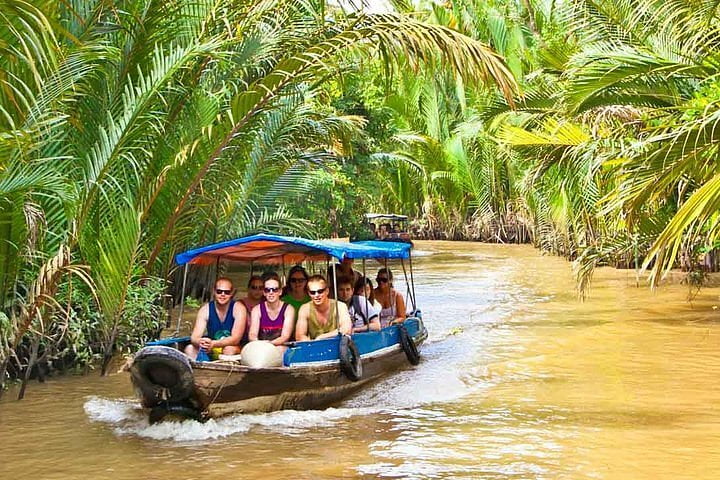
A boat cruise along the Mekong River offers a wonderful opportunity to explore the Mekong Delta. Various tours depart from Vinh Long or My Tho, guiding visitors through the river and its canals to experience the region’s distinct beauty.

These tours typically feature visits to flower farms, rice paper factories, and temples. As you journey through the region, you’ll travel past vibrant palm forests, expansive rice fields, and quaint villages, offering a window into the daily life of the Mekong Delta.

Vinh Trang Pagoda

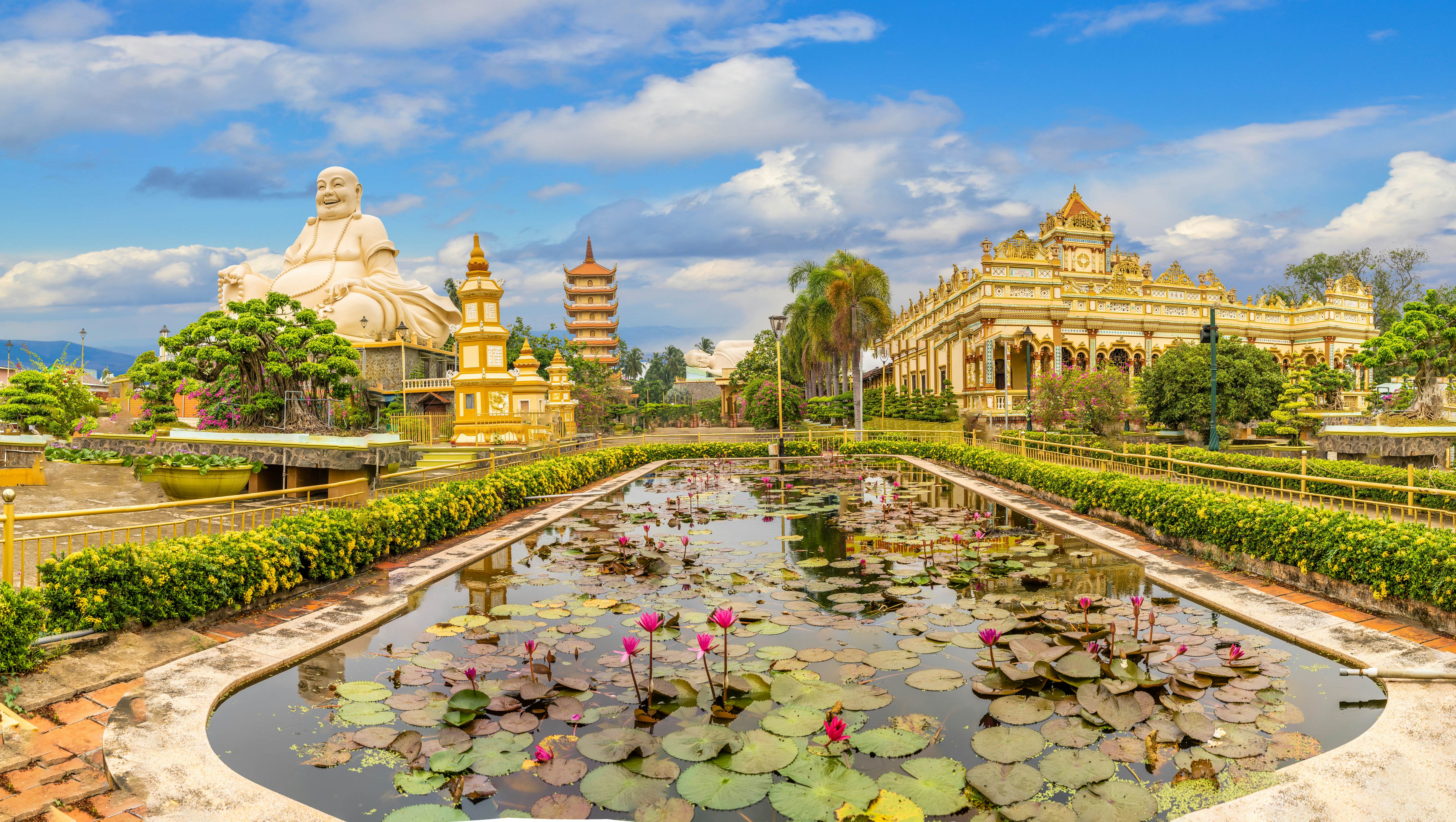
The Vinh Trang Pagoda, situated in My Tho, close to Ho Chi Minh City, is a renowned tourist spot dedicated to honoring Buddha through three remarkable statues. The standing Buddha embodies compassion and bliss, the laughing Buddha signifies good fortune and joy, while the reclining Buddha represents the attainment of nirvana.

The pagoda is a striking blend of Eastern and Western influences, showcasing Renaissance-inspired patterns, Romanesque arches, Japanese tiles, and traditional Vietnamese architecture. Its grandeur and intricate design make it a must-see for anyone fascinated by religious and cultural history.

Floating markets

The lively floating markets of the Mekong Delta offer a colorful glimpse into the daily life of this fertile agricultural area. Here, farmers sell fresh produce, such as pineapples and various tropical fruits, directly from their boats, creating a one-of-a-kind shopping experience.

The Mekong Delta is renowned for its rice production, supplying a significant portion of Vietnam’s rice exports. In addition to vast rice fields, the region is home to numerous fruit orchards and flower farms, making it a top destination for those keen to explore the area’s agricultural landscape.

Tra Su Indigo Forest

Tra Su Indigo Forest, located in An Giang Province, is a captivating ecotourism destination. While the forest remains lush and vibrant year-round, it transforms into a flooded wonderland during the rainy season from September to October.

During the high water season, visitors can embark on a guided boat tour through the forest, immersing themselves in the vibrant greenery and rich wildlife. The forest is also famous for its rare and captivating indigo hue, further enhancing the charm of this breathtaking natural wonder.

Ecotourism

The Mekong Delta, known for its rich, fertile soil, has been a strategic battleground for centuries. Today, it attracts visitors with its distinctive eco-tours, showcasing rice paddies, orchards, flower gardens, and riverbeds.

These tours offer a deeper understanding of the local economy and encourage sustainable environmental practices. By participating, visitors contribute to the local community while discovering the complex ecological systems that nourish the delta’s vibrant landscape.

Conclude

The Mekong Delta provides visitors with a wealth of cultural and natural experiences, highlighting the region’s rich history and distinctive landscape. Whether you’re visiting temples and monuments in Chau Doc and Sam Mountain, or cruising along the canals of My Tho and Vinh Long, the area offers a variety of captivating sights and activities. The lively markets and ecotourism sites, such as the Tra Su Indigo Forest, further enhance the experience. As a responsible traveler, it’s encouraged to support the local economy and environmental conservation efforts. The Mekong Delta is truly an essential destination in Vietnam.

The Mekong Delta in Vietnam is a must-see destination for tourists, especially those passionate about exploration. Make sure to include the Mekong Delta in your next adventure and create unforgettable memories of Vietnam. Secure your Vietnam visa today at vietnamvisapro.net, where we provide reliable visa services to help make your dream vacation a reality from the very beginning.