Posted on

8 Must-See UNESCO World Heritage Sites in Vietnam

The diverse and alluring charms of Vietnam can make it difficult for you to decide where to visit on your next trip to the S-shaped country. If that’s the case, checking out the 8 UNESCO World Heritage Sites in Vietnam may help start off your exploration into the country’s rich history and its unrivaled natural landscapes.

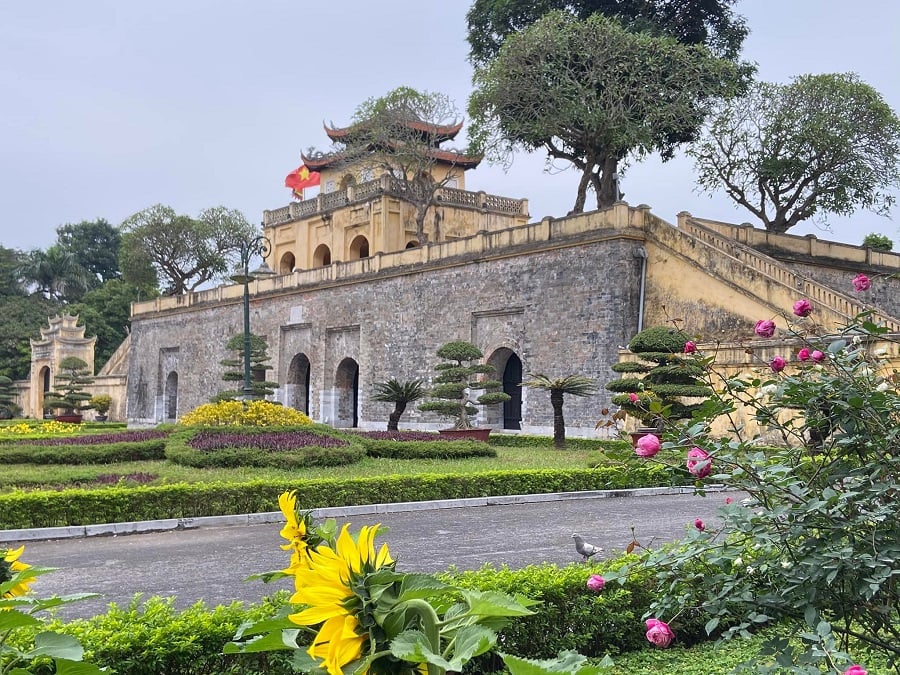
1. Central Sector of the Imperial Citadel of Thang Long – Hanoi

Being the only World Heritage Site in Vietnam to locate in the capital city – Hanoi, the Imperial Citadel of Thang Long has long been known for its unmatched historical and cultural values.

Constructed in the 11th Century of the Imperial Era, the Citadel has since transformed and evolved numerous times throughout its long-standing history. During the Vietnam War, the Headquarter of the Communist Party was situated within the site with an impressive underground bunker and an impenetrable war room in case of American bombings. The house was built in 1967; hence the name D67.

The Citadel was actually closed off from the public until 2004. It officially became an UNESCO World Heritage Site in 2010 during the celebration of Hanoi’s 1000th birthday.

Location: 19C Hoang Dieu, Dien Bien, Ba Dinh, Ha Noi

Opening hours: 8:00 AM to 5:00 PM daily except for Mondays

Year of recognition: 2010

2. Citadel of the Ho Dynasty (Thanh Hoa Province)

Perhaps the more obscure destination compares to the other World Heritage Sites in Vietnam, the Ho Dynasty citadel dates back to the 14th century. While the Ho Dynastic itself only lasted 7 years, the Citadel with an imposing arched gateway is a testament of Vietnamese’s exceptional ingenuity and superior craftsmanship in a flourishing period.

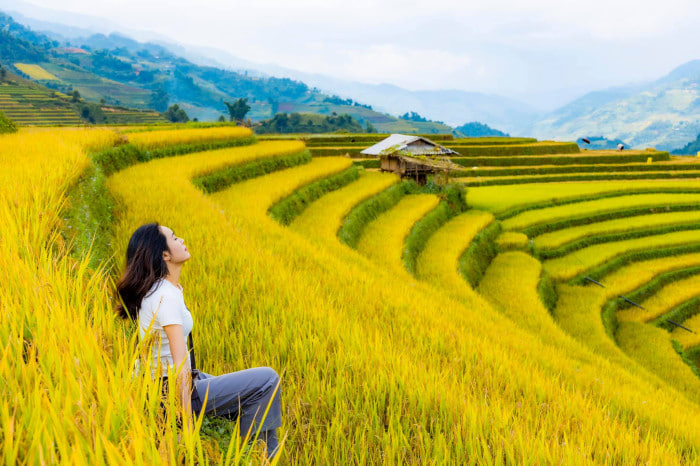
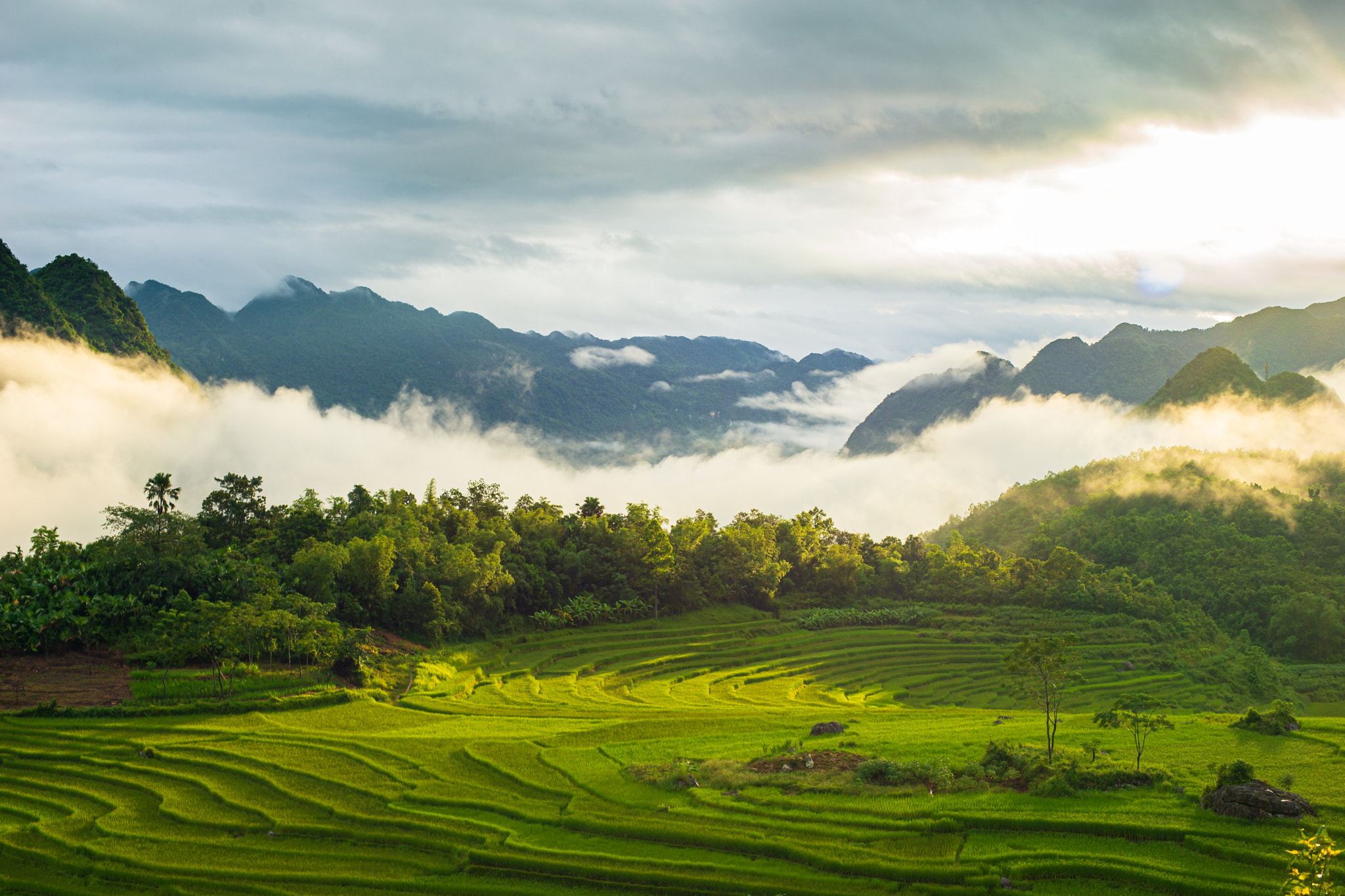
Climb up the towering stone steps to the top of the main gate and have a walk along the wall, you’ll fall in love with the scenic view of the serene Vietnamese countryside. While taking in a deep breath of the fresh air, you can have a chat with the welcoming villagers nearby as they work on fields golden rice paddies that seemingly stretch out to infinity.

The Citadel of the Ho Dynasty may not be as glamorous as other World Heritage sites on the list but its modest beauty will certainly take visitors away from the big buzzing cities into a world of peace and tranquility.

Location: Vinh Tien, Vinh Loc District, Thanh Hoa

Opening hours: 7:30 AM to 6 PM daily

Year of recognition: 2011

3. Complex of Huế Monuments (Hue)

Hue was the capital city of the Nguyen Dynasty that closes the historical Imperial Era of Vietnam. The complex of Hue Monuments harmoniously lies along the banks of the Perfume River, giving it a nostalgic and equally romantic setting as if you’re transported back in time.

This Vietnamese World Heritage site covers an extensive area, consisting of many monuments such as the Imperial City, royal residences, temples, tombs and fortresses. A visit to the site will for sure bring visitors into an exploration of the historical, cultural and spiritual essences of Vietnam during the Nguyen Dynasty.

Location: Hue City, Thua Thien Hue Province

Opening hours: 8 AM to 5:30 PM daily except for Thursday (opening from 8 AM to 10 PM)

Year of recognition: 1993

4. Halong Bay

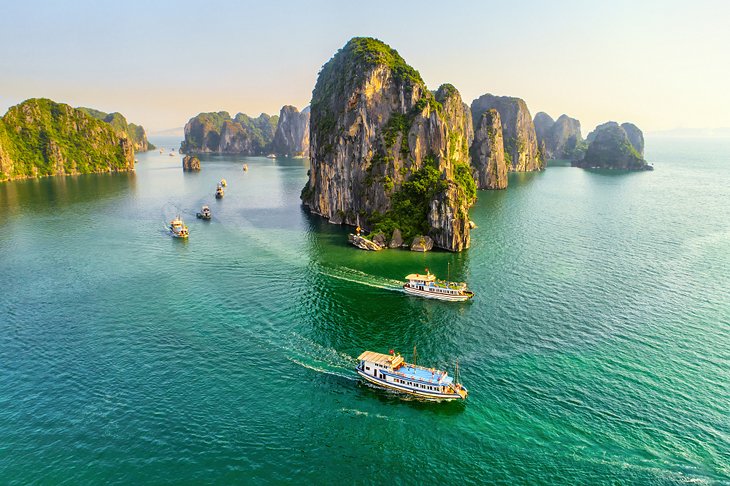
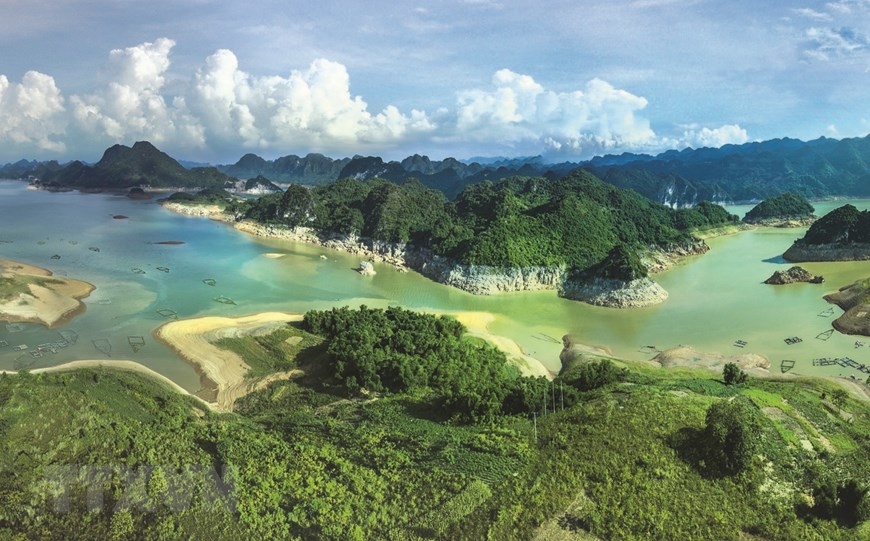
Known for its hypnotic, heart-stopping sceneries, Halong Bay has always been a popular travel destination and perhaps the most visited UNESCO World Heritage Site in Vietnam.

Attracting millions of visitors each year, Halong Bay entices travelers with the enchanting landscape of magnificent mountainous peaks rising and piercing through the soothing emerald water. Take a rowing boat inside of one of the mystical caves and you’ll witness the hidden limestone pillars as they glisten when the lights touches the reflective water.

An adventure in Ha Long Bay is a journey that everyone should have at least once in their lifetime. What else are you waiting for? Get up and book your next trip to Ha Long Bay for a one-of-a-kind experience.

Location: Ha Long City, Quang Ninh Province

Year of recognition: 1994

5. Hoi An Ancient Town 

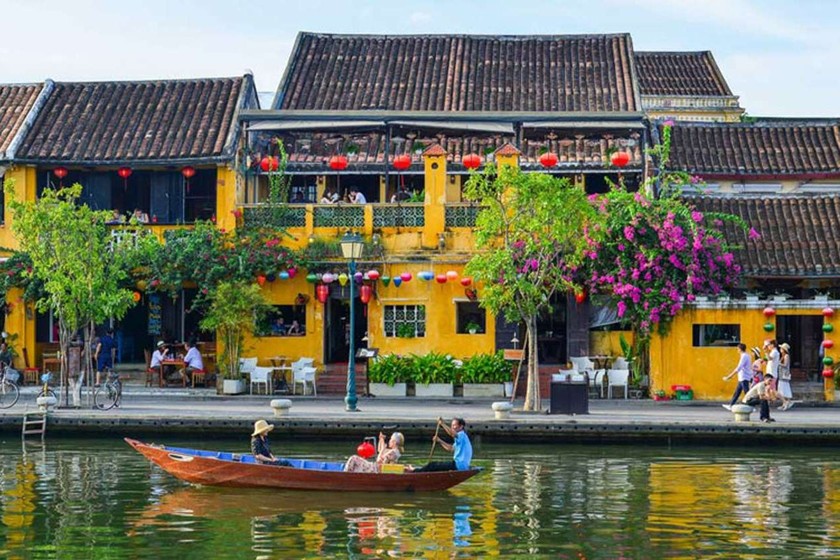
Its past as a bustling trading hub from the 15th to 19th century has left an everlasting mark on Hoi An as a city with a mixture of diverse influences. A stroll around Hoi An Ancient Town, which is situated in the very heart of Hoi An, will bring you to the postcard-perfect Japanese bridge, the historic Chinese temples and not to mention the iconic yellow houses of the French colonial era.

One may call Hoi An a dreamy Lantern Town as the place becomes illuminated in the warm amber hues of candle-lit lanterns at night. Through the test of time, the lively spirit of Hoi An still remains and it’s easy to see why it is among the most magical World Heritage Sites in Vietnam.

Location: Hoi An City, Quang Nam Province

Year of recognition: 1999

6. My Son Sanctuary

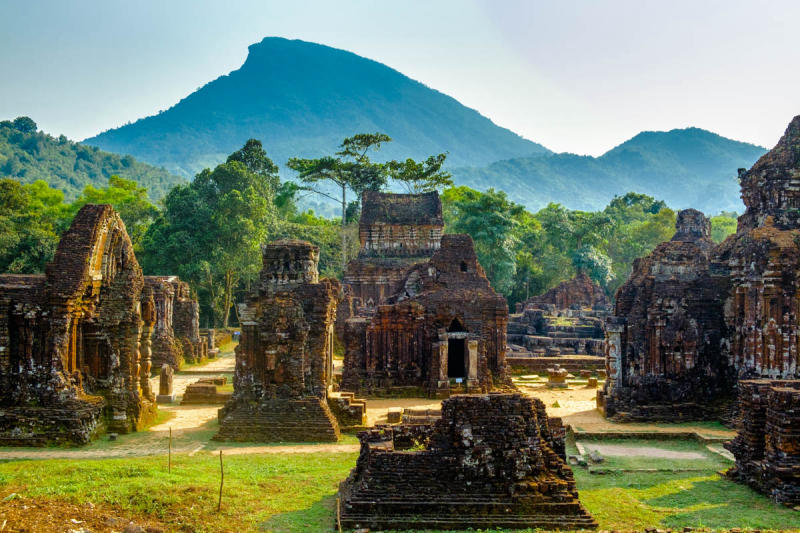
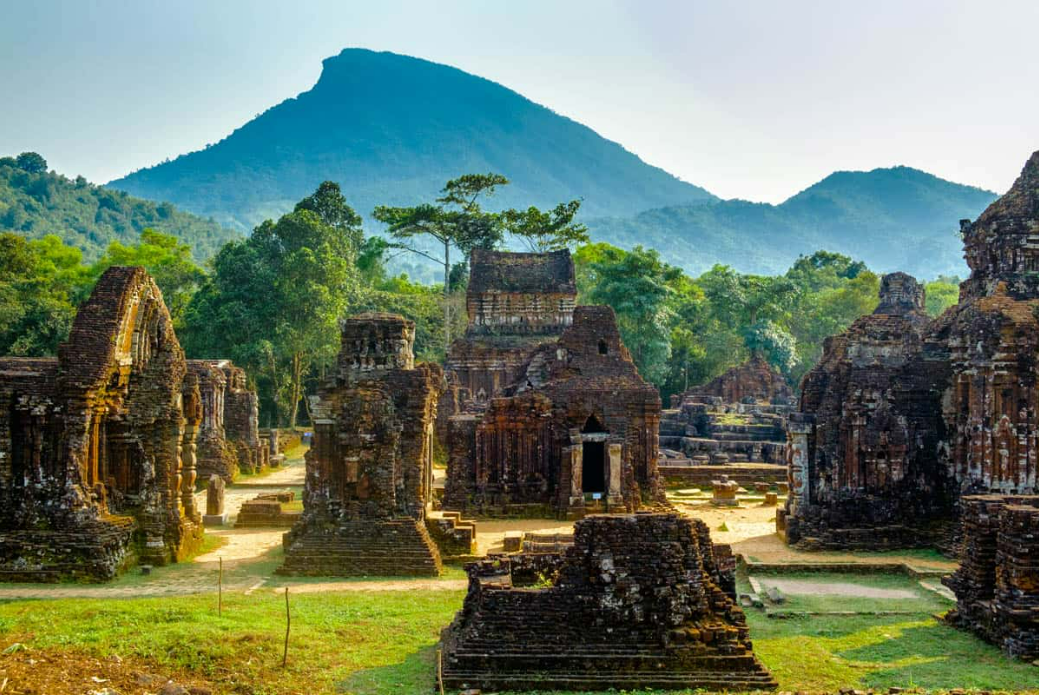
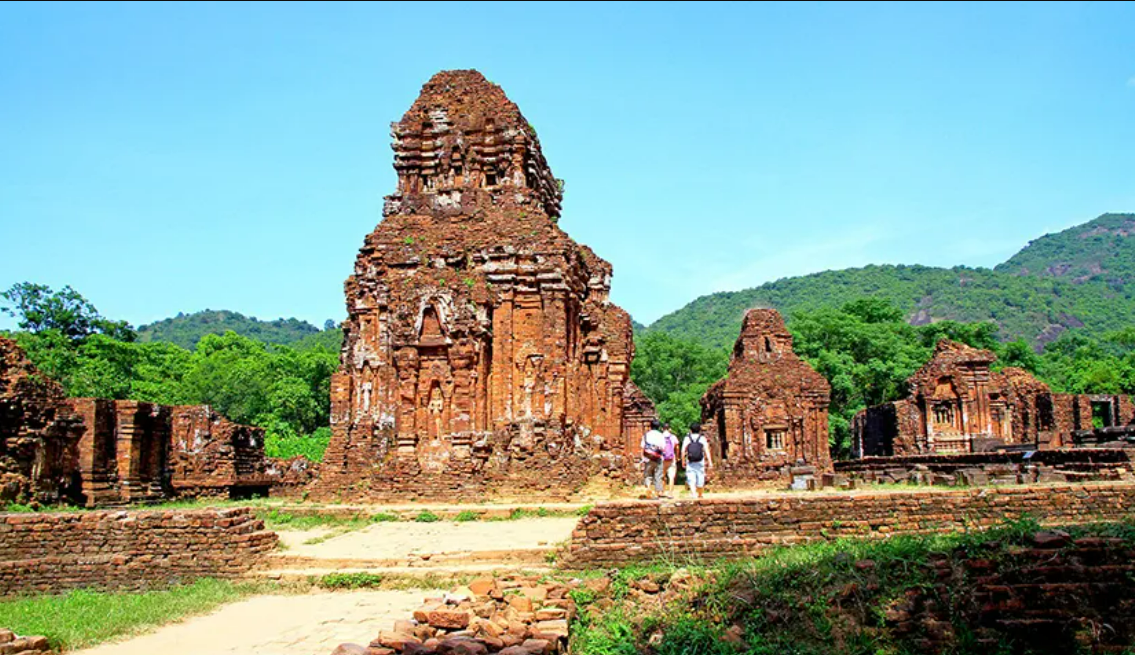
Approximately 1h-drive away from Hoi An, a trip to the My Son Sanctuary will take you into a historic period like no other in Vietnam. Built during the Champa civilization between the 4th to 13th century, this Vietnamese World Heritage Site is a striking architectural ensemble of more than 70 tower structures that are believed to be temples and tombs to worship Hindu Gods.

Cradled in a valley between two dramatic mountain ranges, the unique architecture of the temples is said to mirror the glory of the sacred Mount Meru – a mythical mountain at the center of the universe where Hindu gods reside.

Visitors will be able to witness the skillful mastery and technological prowess of the Cham through the intricate carvings on the temples, depicting scenes and iconography of Hindu mythology.

Location: Duy Phu, Duy Xuyen District, Quang Nam Province, Vietnam

Opening hours: 6:30 AM to 6:30 PM daily

Year of recognition: 1999

7. Phong Nha-Ke Bang National Park (Quang Binh Province)

Along with Halong Bay, the Phong Nha-Ke Bang National Park is the second of Vietnam’s only 2 natural UNESCO World Heritage Sites.

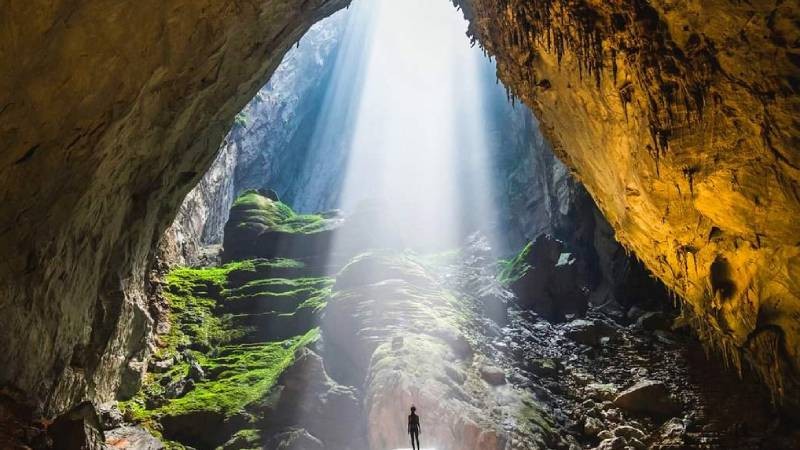
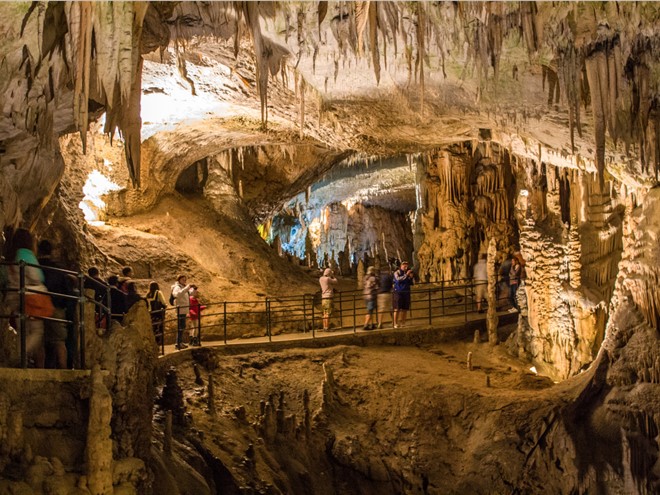
With a massive network of caves and underground rivers, including the world’s largest cave, many parts of this natural wonder has yet to be discovered. The elaborate karst formation of this mysterious natural World Heritage Site is thought to have been around for over 400 million years.

Exploring the Paradise Cave inside the National Park is a popular activity among visitors. There’s always something for every travelers to enjoy from mud bathing for spa-lovers to thrilling adventures on kayaks and zip lines for adrenaline junkies.

Location: Phong Nha, Bo Trach District, Quang Binh Province

Opening hours: 7 AM to 4 PM daily

Year of recognition: 2003

8. Trang An Landscape Complex (Ninh Binh)

Inscribed in 2014, the Trang An Landscape Complex is Vietnam’s latest attraction to be listed as a World Heritage Site by UNESCO and the first mixed heritage for both its natural and cultural significance.

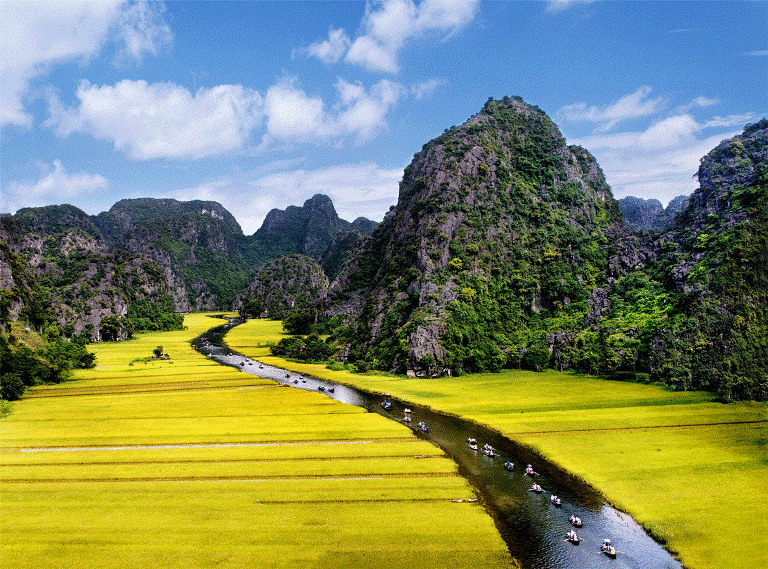
Enjoy a relaxing boat ride as you float along the mellow water to discover hidden caves and visit elegant temples and pagodas. The waterway gracefully curls around perching mountain peaks to reveal open valleys filled with lush golden rice paddies on the river banks.

While the destination is a popular day trip from Hanoi, visitors are highly recommended to stay overnight to fully experience the enchanting magic of this World Heritage Site where the raw natural beauty harmoniously blends in with a folksy, down-to-earth culture of the Red River Delta.

Location: Red River Delta, Ninh Binh Province

Year of recognition: 2014

Vietnam is the ideal travel destination that caters to anyone and everyone. Whether you’re a foodie, a culture-snob or a thrill-seeker, the endless list of attractions including these 8 UNESCO Heritage Sites in Vietnam will always offer something you want.

Grab your passport and go. Your adventure in Vietnam awaits!

Make your plan to Vietnam right now by apply a Vietnam visa at vietnamvisapro.net. We, a reputable and reliable Visa service, will assist you turn your plan into reality at the very first step

Posted on

Mai Chau best things to do & travel guide

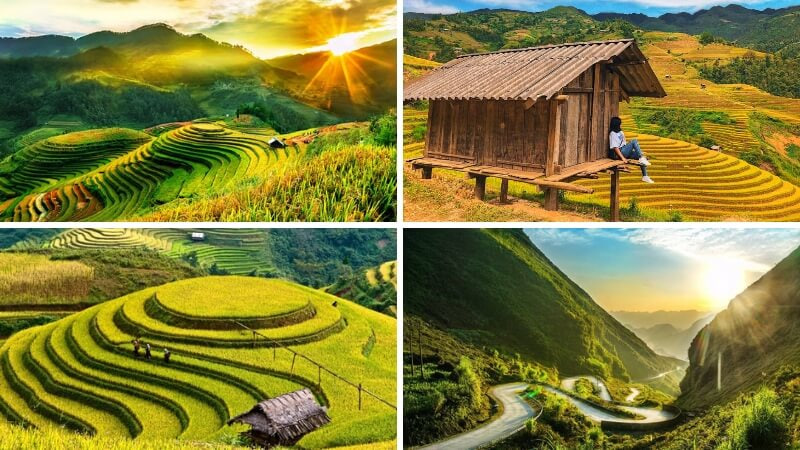
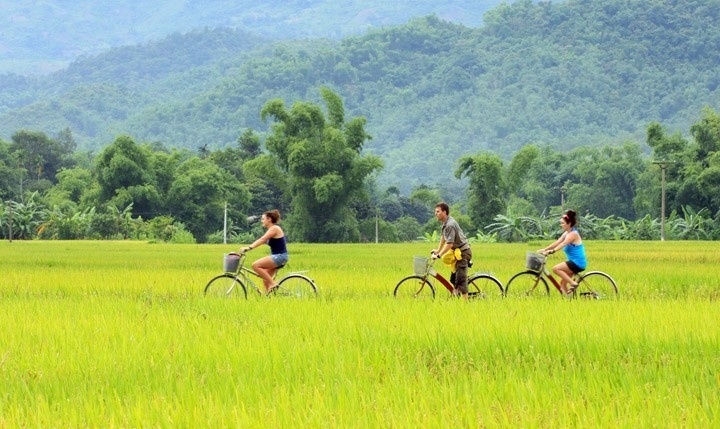
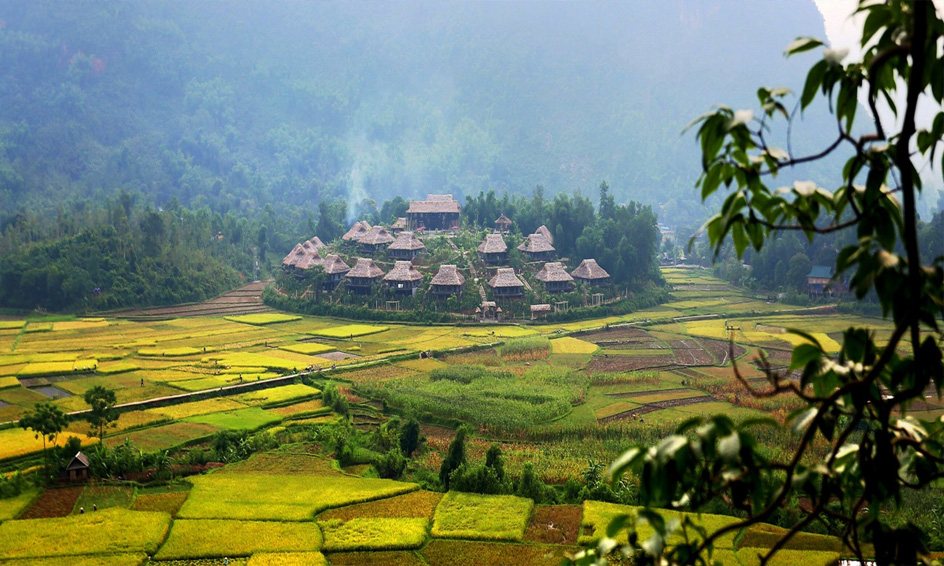
Mai Chau is located in a rural valley with towering cliffs, a unique culture and a relaxed atmosphere and only a three-hour drive from Hanoi. There are some nice things to do in Mai Chau, such as cycling through the beautiful green rice fields, visit minority villages, make a trekking in Pu Luong and enjoy the traditional Tai dances in the evening.

5 reasons to visit Mai Chau

  1. Explore the beautiful rice terraces and jungle of Phu Luong.
  2. Cycle past the rice fields through the Mai Chau valley.
  3. Drive a motorbike to various viewpoints on the Thung Khe Pass.
  4. Explore villages of local hill tribes.
  5. Go on an adventurous trip with a kayak or go rock climbing.

What is in this Mai Chau travel guide

Practical information

Recommended days to stay

There are not a lot of sights to visit, so if you are are here just to relax and bike between the rice fields, minimum two full days is good. If you are planning to visit Pu Luong nature Reserve it is recommended to stay a day or two longer.

ATM’s & money exchange

There are a number of ATMs in Mai Chau, but not in most villages and sometimes hard to find. Take enough cash with you. Most hotels accept a bank card or credit card, but homestays often do not.

Best time to visit
  • Best travel time: From December to May. The first 2 months can still be cold, but after that it gets warmer. There is also little rain this period.
  • From November to February it is winter and the temperature can drop to 10 degrees.
  • The rainy season is from June to September.
10 best things to do in Mai Chau

Mai Chau is a peaceful valley with extensive rice fields, villages of ethnic minorities and some small waterfalls. There is actually not much to do in Mai Chau, but this is what makes the area so attractive to visit. You come here mainly for the peace and the natural beautiful landscape.

1. Cycling through rice fields

Cycling in Mai Chau is great and in fact, it is one of the best places to go cycling in Vietnam. In the valley you will find a beautiful landscape with rice fields surrounded by mountains and small local villages of ethnic minorities. The valley is almost completely flat, with small roads connecting the villages and almost no traffic. This combination makes it the perfect for cycling. You can go with a guide or rent bikes yourself at your hotel or homestay; accommodation offer them often for free or for a very small fee.

2.Homestay experience

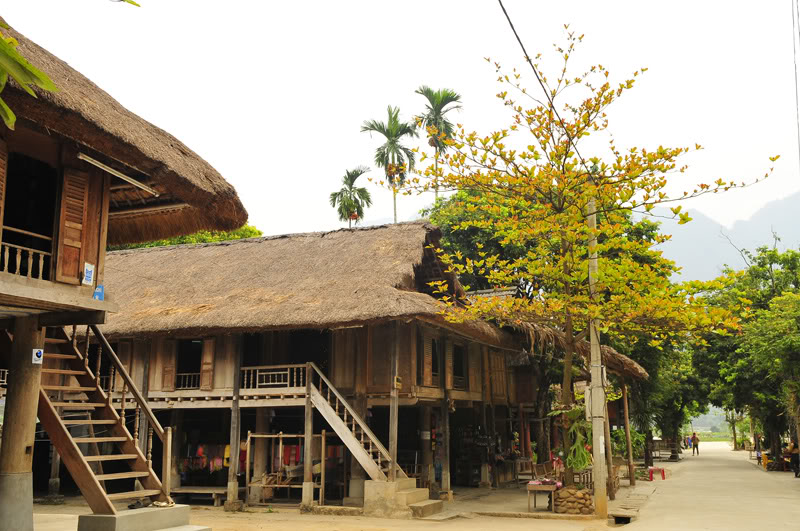
One of the best things to do in Mai Chau is stay in a homestay of a local ethnic minority. You learn more about their unique culture and traditions here. You can find homestays in one of the two largest villages in Mai Chau; Poom Coong and Lac. The houses here are usually built on stilts. Life is simple: you wake up to the sound of roosters crowing and farmers going to work, you sleep on a mattress lying on the creaking bamboo floor and you spend your evenings drinking the local wine and watching a cultural show.

Some homestays in Mai Chau have upgrades their accommodation, with more modern facilities and comfortable beds with private bathrooms. These small-scale accommodations are a little less authentic but still provide a unique experience compared to hotels.

3. Ethnic villages

With stilt houses and lush, green rice fields, Ban Lac, Pom Coong and other villages dotted in the valley are quaint and serene, ethnic Thai villages with very hospitable inhabitants. During the day you see the local population working on the land and moving cattle. In the evening, you are invited to relax and enjoy traditional alcoholic beverages and participate in traditional songs and dances of Thai ethnicity. The best way to explore villages in the Mai Chau valley are by bike or a trekking.

4. Go Lao waterfall

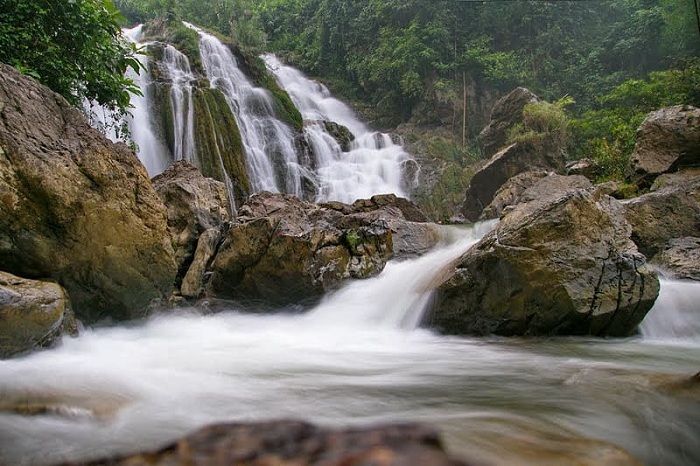
One of the most beautiful sights in Mai Chau is the Go Lao waterfall. About 20 meters high and located in a beautiful setting. After descending the unpaved stairs, you stand next to the waterfall. In the dry season there is little water, but you can take a dip in the cool water.

It is located next to Hoa Binh lake so it can be perfectly combined. If you like to see more waterfalls in Mai Chau, you can visit the Pung Waterfall and the Tat Nang waterfall.

5. Pu Luong Nature Reserve

Pu Luong Nature Reserve is not only a top attraction in Mai Chau, but also one of the biggest highlights in Vietnam. In this beautiful landscape you will find very beautiful rice terraces that are immersed by water wheels made of bamboo. There are local villages of ethnic minorities where you can see how they live. The best way to explore this area of villages and paddy fields is by making a trekking. Pu long is one of the hidden jewels of Vietnam.

6. Thung Khe pass

When you take the bus from Hanoi, you already drive over the Thung Khe Pass. but if you don’t stop here is worth going back by car or motorbike. You can rent a scooter yourself and ride this pass, but be very careful here. On this mountain pass you have a viewpoint with the best view over the Mai Chau valley. Drive a bit further to have more amazing views of mountains and the countryside.

7. Hoa Binh lake

Lake Hoa Binh was created after the construction of Hoa Binh hydroelectric power station. It is the largest lake in Vietnam, with 47 large and small islands. You can rent a boat to explore the lake for around VND 50,000 – 70,000.

8. Climbing

The most adventurous activity you can do in Mai Chau is rock climbing. Climb up to have a beautiful view of the Mai Chau valley. There are several possible routes for rock climbing to choose from, something for everyone, regardless of age, athletic ability or level of experience.

9. Caves

The shape of the mountains of Mai Chau come from limestone bottoms of karst, the same type of geological formations that Ha Long Bay has created. Where there is karst, you will find caves and Mai Chau is no exception. The two largest caves in Mai Chau are Mo Luong Cave and Chieu Cave.

10. Go off the beaten track

Mai Chau is already not as popular as Sapa or Ninh Binh, but you can even go more off the beaten track here if you don’t mind traveling a bit. 

The two earlier mentioned waterfalls Pung and Tat Nang are located further from the tourist villages and are hardly visited by other travelers. In addition they are located in a stunning landscape. Around the latter named waterfall you can visit the entire area of Van Ho with many villages of ethnic minorities and beautiful rice fields. Continue a little further to Pac Co village where you can visit an unique ethnic minority market on Sundays. Around the Pung waterfall you will find one of the few terraced rice fields of Mai Chau in various places.

Best hotels & hostels in Mai Chau

In Mai Chau there are two villages where tourists look for their accommodation: Lac and Pom Coong. These two villages are also right next to each other, with a few hundred meters away. Most accommodations consist of homestays, but there are also a few hotels and luxury resorts. In the village there are shops and a few restaurants.

Budget hotels & hostels

  • Little Mai Chau Home Stay
  • Mai Chau Backpackers House
  • Lim’s house
  • Eco Homestay

Mid range hotel

  • Mai Chau Nature Lodge
  • Mai Chau Valley View Hotel

High end hotel & resort

  • Mai Chau Villas
  • Mai Chau HideAway Resort
  • Mai Chau Ecolodge
Food & drinking

Restaurants

There are a few restaurants in Mai Chau, but it is more likely that you eat at your homestay, hotel or resort. Eating at a homestay overnight is often included in the price and the food is great. There is no menu. Classic, country-style dishes are served from a set menu for lunch and dinner. It is simple and nutritious and a good fuel to explore the region.

The restaurants in Mai Chau can be find in the main villages, surrounded by shops. Expect mainly local dishes. For western food you want to check the restaurants that are part of a resort.

Nightlife

There is no real nightlife in Mai Chau; which is only a good thing for a town in this setting. But every night there are traditional dance shows being giving to welcome the new guest. You can find these shows at some of the hotels and resorts.

How to get there

Mai Chau does not have a railway station or airport. If you want to use this, it is best to first travel to Hanoi and from here travel to Mai Chau.

Busses to Mai Chau

The easiest and fastest way is by minibus from Hanoi. These minibuses from Hanoi to Mai Chau are also included in most Mai Chau packages with accommodation.

Direct buses to Mai Chau leave from My Dinh bus station in Hanoi at 6 a.m., 8:30 a.m. and 11 a.m. The journey costs around 80,000-100,000 and lasts between 3.5 and 4 hours. If you want to stay in the villages of Lac or Pom Coong, ask the bus driver to drop you off there. You will be dropped off at the crossroads, were you can get a taxi to your accommodation.

Buses return to Hanoi at 9 a.m., 11 a.m. and 1 p.m. Host families in your homestay or hotel can reserve this bus for you and arrange for you to be picked up from the village.

How to get around

The best way to explore Mai Chau is walking or cycling. As you cycle or walk along the unpaved roads of Mai Chau, you can enjoy the landscape, wildflowers, rice fields, villages and the locals moving cattle from place to place. Guides can propose trekking or cycling paths. Most hotels and homestays have free bikes or can recommend a bicycle provider for a small fee.

In addition, if you are staying in a resort they also have electric golf buggies which they use to drive their guest around the rice fields. It is quiet, comfortable and offers a bit more cover for the sun.

Itinerary 2 days in Mai Chau

Check our 2 day example itinerary below to know what to do in Mau Chau.

Day 1

The first day is a day of relaxation. Rent a bike and explore the valley. Drive through peaceful villages, past rice fields and see how the locals live.

Day 2

Visit the main highlight of the area: Pu Luong Nature Reserve. Plan an organized trekking tour or day tour by motorcycle or car through this area. If you have more time it is recommended to stay here for at least one night.

More tips for traveling in Mai Chau

Where to go next?

Pu Luong Nature Reserve is a good next destination after Mai Chau. You can also visit both Mau Chau and Pu Luong with our tours to Mai Chau, including transfers from Hanoi.

You can also choose to go directly from Mai Chau to Ninh Binh and from here travel back to Hanoi or go farther south to Phong Nha or Hue / Hoi An.

For other destinations in north Vietnam you always have to travel to Hanoi first. From Hanoi you can go to Halong BayHa Giang or Sapa; though we recommend to either choose to go to Sapa or Mai Chau and not visit both if you have not many days to travel in Vietnam.

For people that want to go off the beaten track, they can head to Son La with Moc Chau. Here you can visit tea plantations, mountains and more minority villages.

Mai Chau with kids

This valley is one of the best places to travel in Vietnam with kids. Staying in a resort with a pool is highly recommended. Biking through the rice fields over small roads with little to no traffic at all. In addition, it is a great place to learn children about the ethnic minorities that live here.

Language

It might not be as touristy as other destinations in north Vietnam, it has developed over the years. English at the resorts is often spoken, the homestays and restaurants often much less, but they always have an English menu.

What to bring

The valley can get very hot most of the year, only not during the winter months in and around December and January. In the summer it can rain more. For that reason it is always good to see which season you are going.

Plan well before your cruise to make your every moment in Mai Chau unforgettable.Make your plan to Vietnam right now by apply a Vietnam visa at vietnamvisapro.net. We, a reputable and reliable Visa service, will assist you turn your plan into reality at the very first step

Posted on

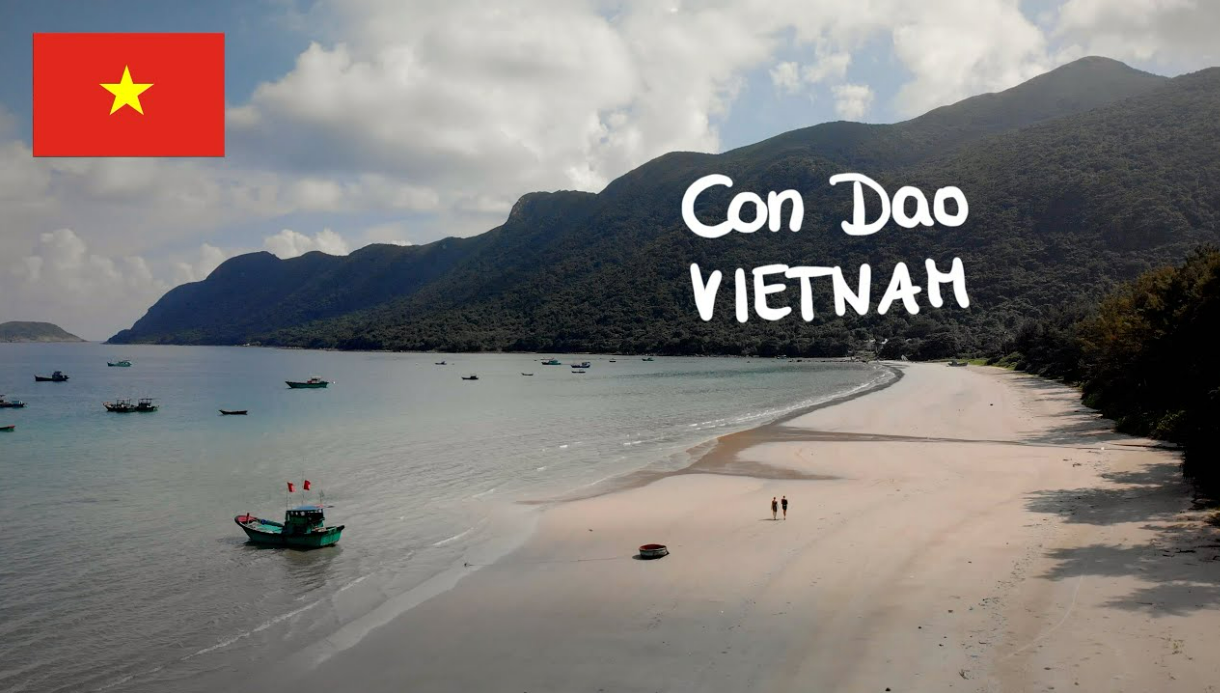
Exploring Con Dao Island – A laid-back Beach Getaway

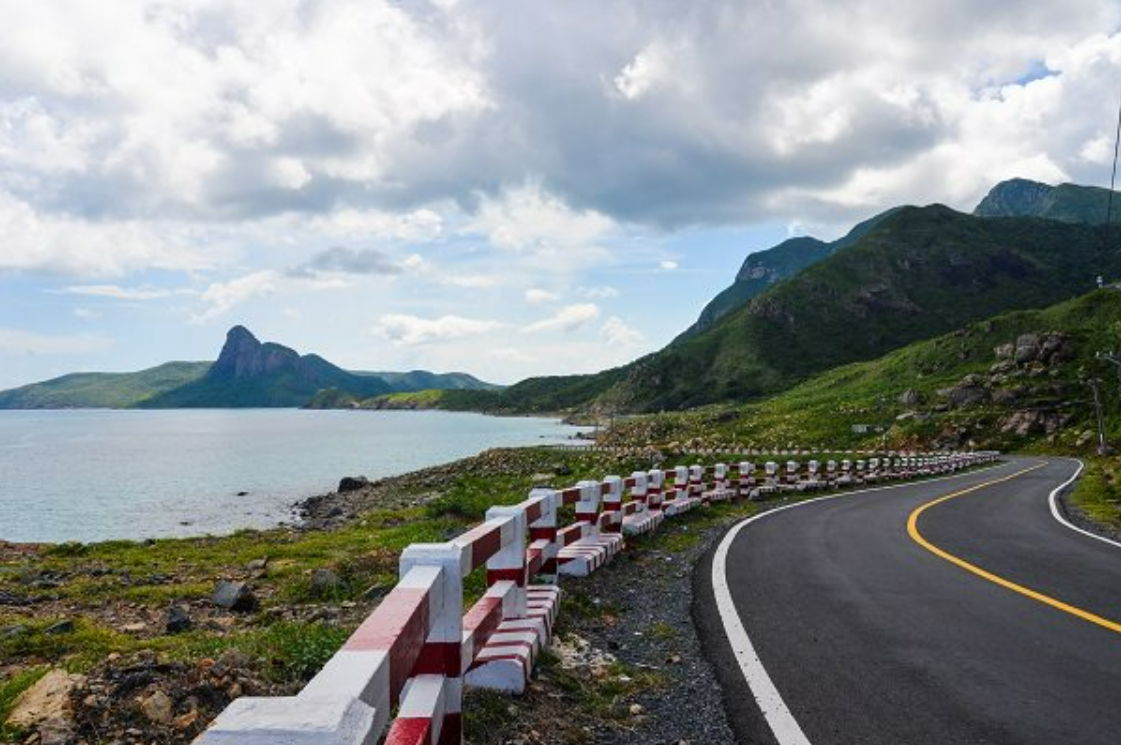
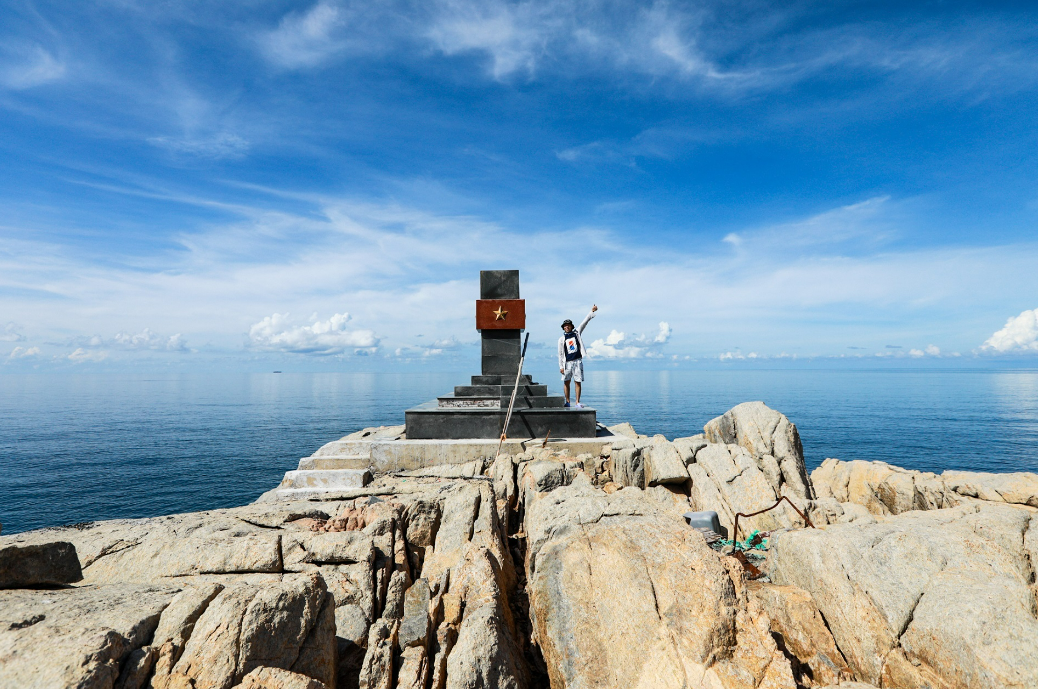
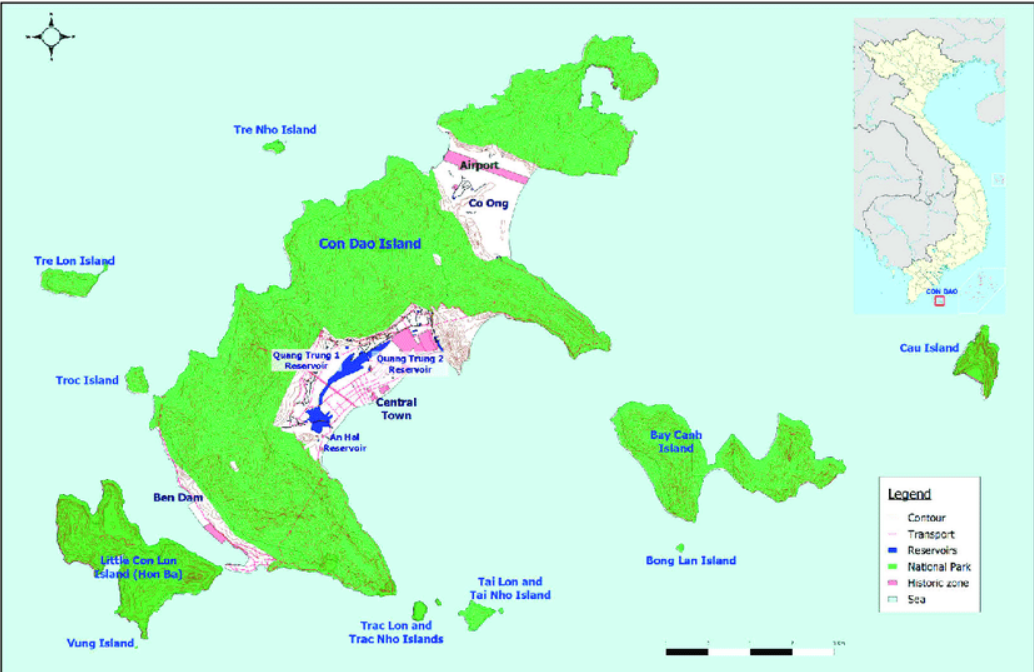
Con Dao is a name of an archipelago of Ba Ria – Vung Tau Province in the south of Vietnam. It is the largest island in the chain of 16 mountainous islands and islets, with a total area of 76km² and the local population is about 5,000 inhabitants. Con Dao Island is known for not only the prison system to detain and torture the political prisoners but also the lovely romantic beaches and the beauty of the wild nature. Ranked fourth in the top 10 must-see places in Asia in 2016 by Lonely Planet magazine, the island has now become an international charming tourism destination for tourists worldwide to explore

>>> Apply Visa to Vietnam <<<

>>> Order Fast Track Service <<<

  1. Mysterious and gruesome history of Con Dao Island

Con Dao Island has been referred asThe Hell on Earthwith the notorious prison built and ran by French colonist and American military during Vietnam War. This place is full of prisons, where many medieval punishments and tortures were carried out. Anyone arrested there would suffer the death slowly and painfully.

The most famous and terrible prison is “tiger cages” established in 1940 in order to incarcerate about 2,000 Vietnamese political prisoners. Containing 120 chambers having ceiling bars, where the jailers poked at the prisoners like tigers in the zoo. The prisoners were hit by the sticks from above and even sprinkled with water and lime. More horribly, jailers even invented “sunbathe room”, known as the “tiger cages” with no roof to force people inside to suffer from the sun heat for days. These “tiger cages” were constructed away from the major prisons and were not excavated until 1970 when Tom Harkin, a US congressional aide visited the town of Con Son and saw evidence of the brutal maltreatment of prisoners. Apart from “tiger cages”, Phu Hai Prison, Phu Binh camp or Hang Duong Cemetery are also the famous places which conjure up a dark memory in Con Dao that makes anyone trembling when reminding of the past.

  1. Sightseeing on Con Dao Island

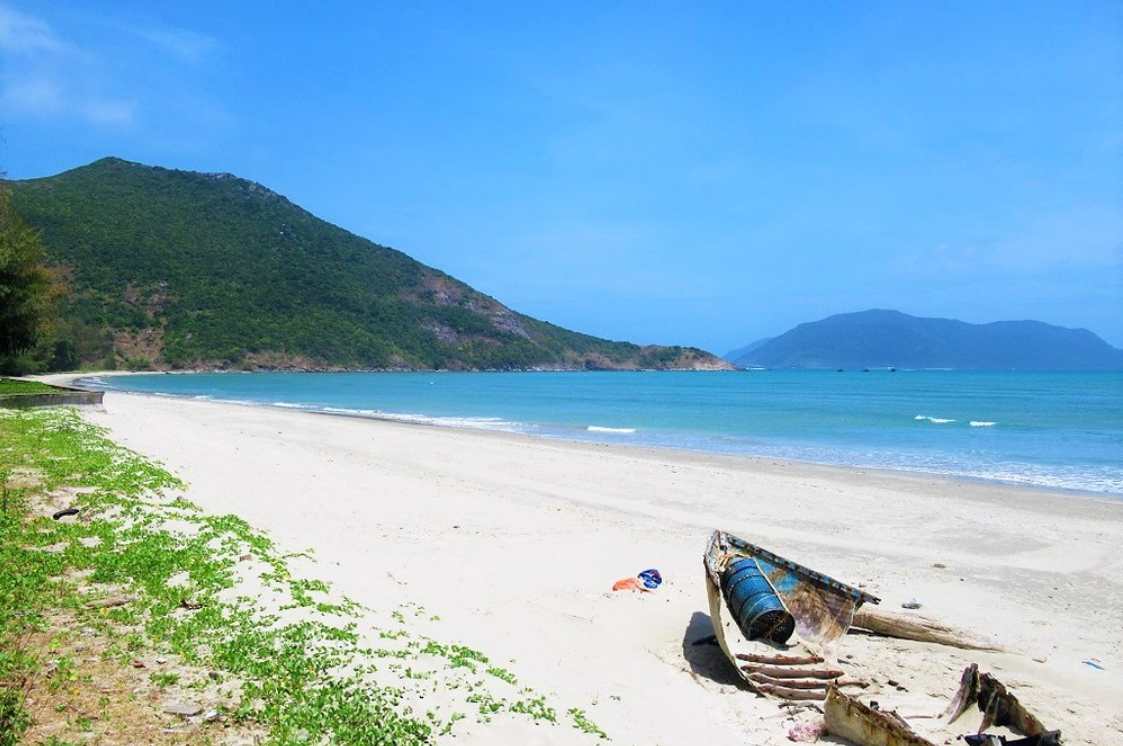
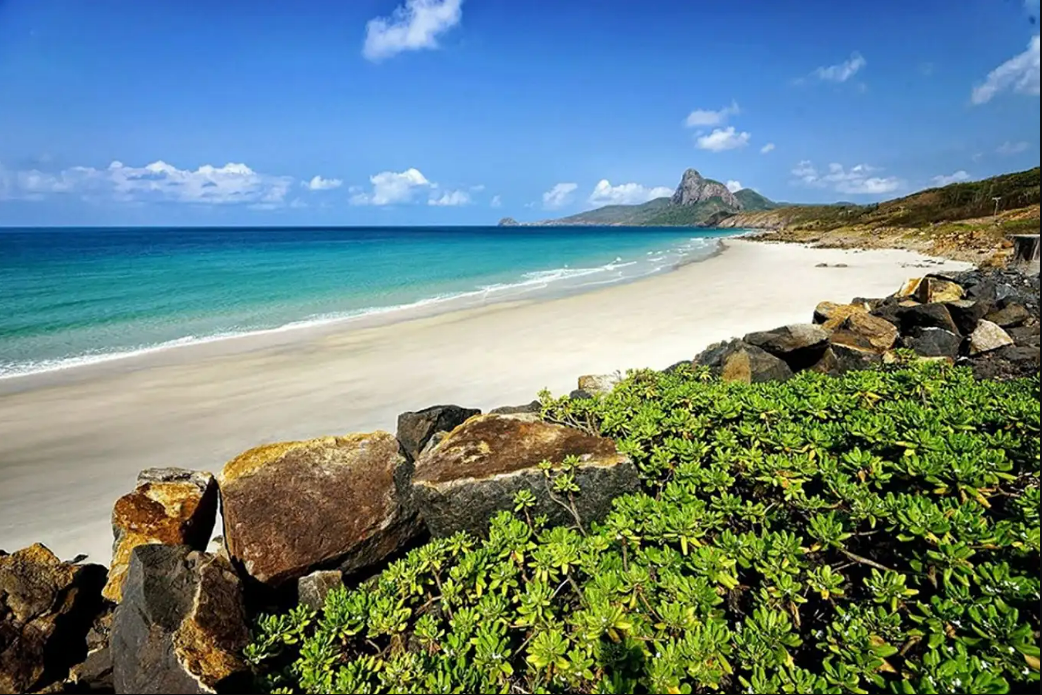
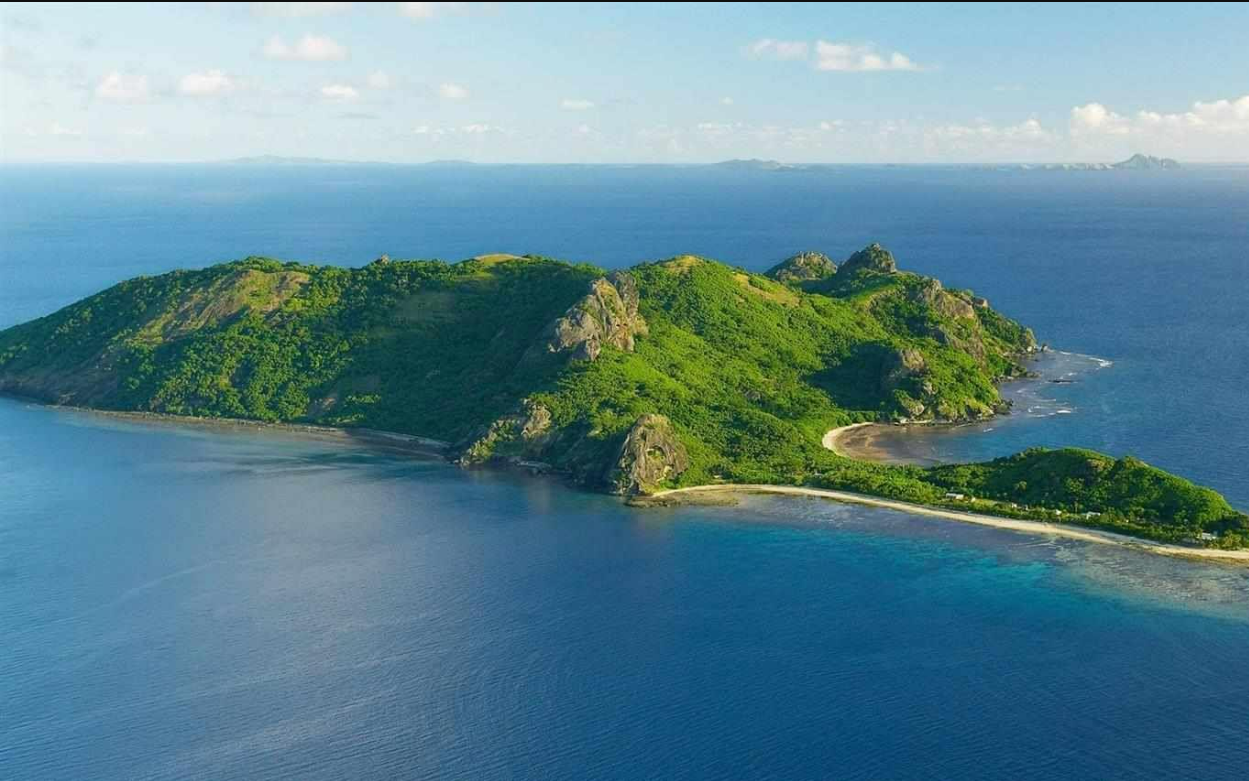
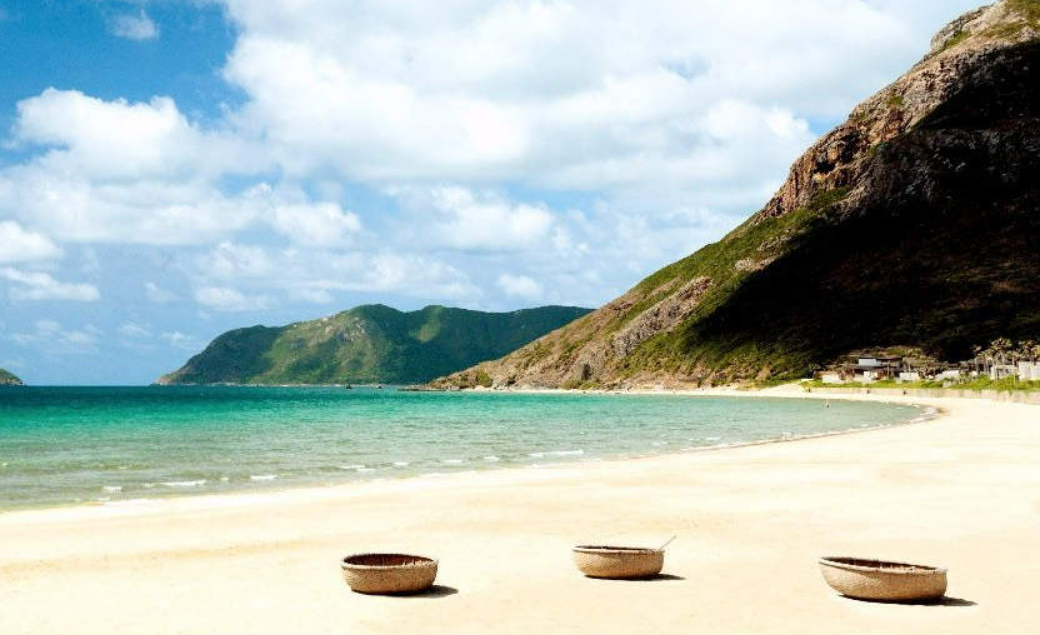
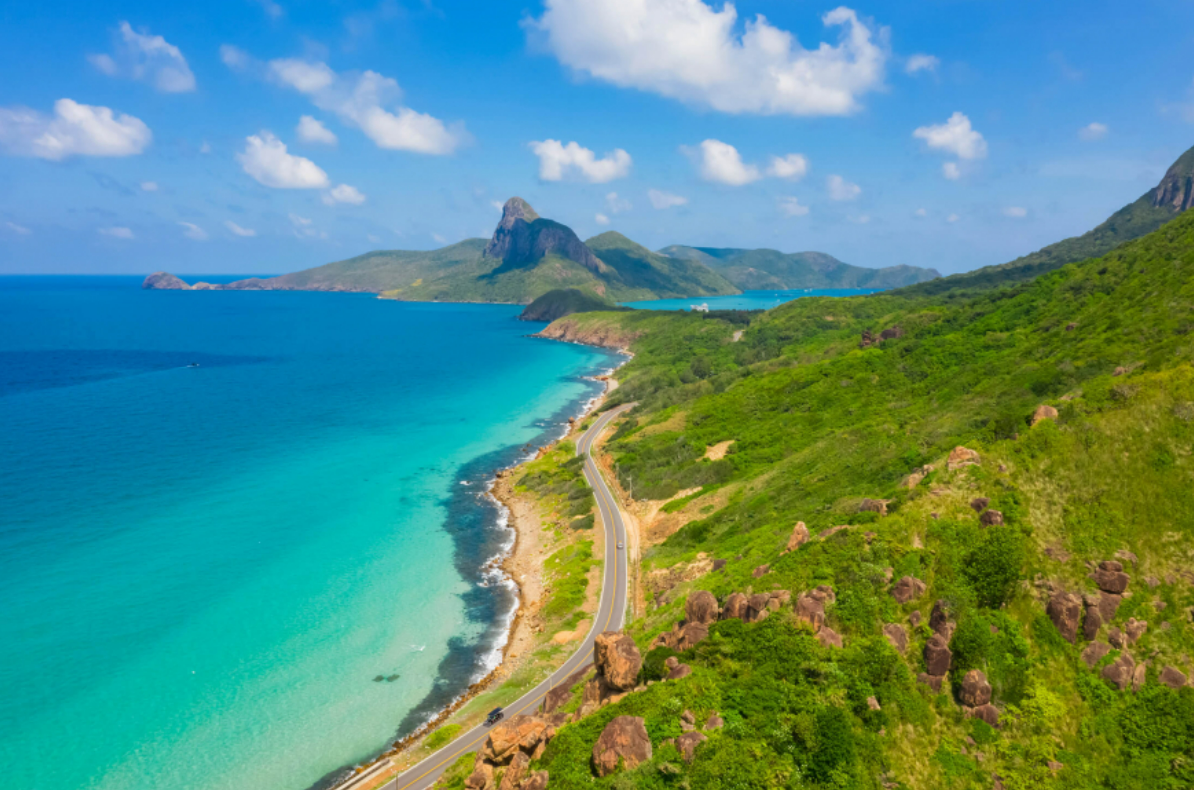
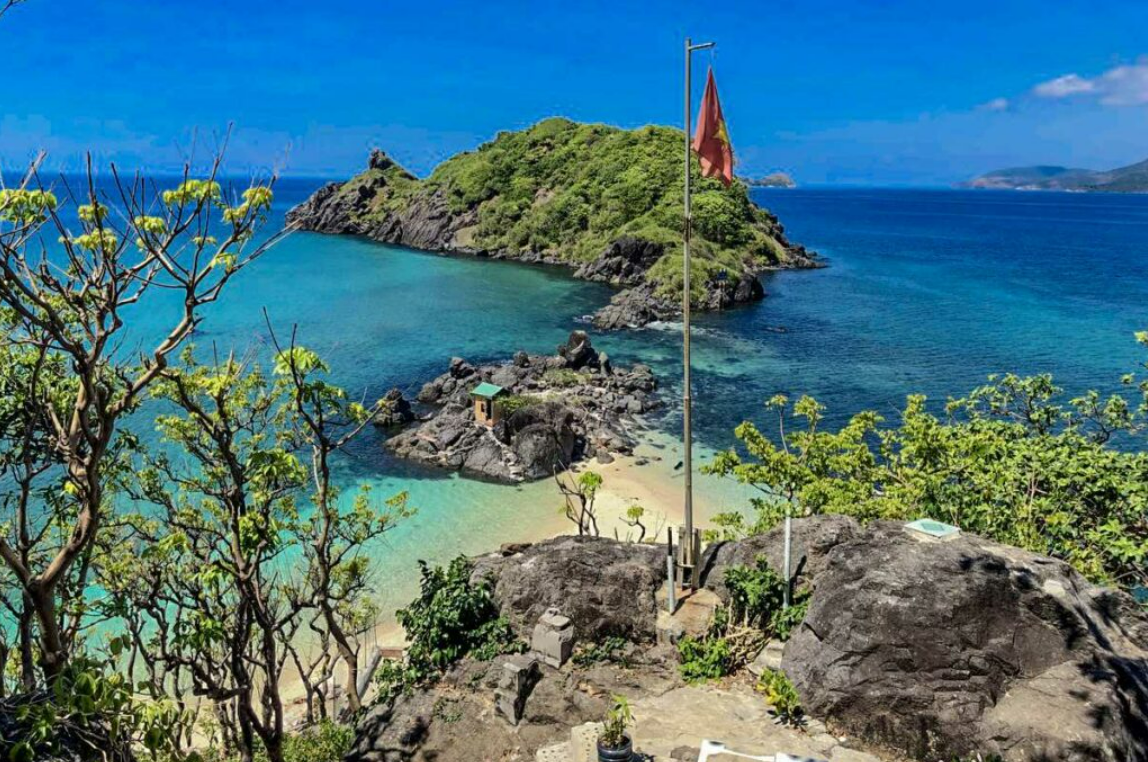
Con Dao Island nowadays is famous for the beautiful and untouched beaches in Vietnam. Travelers will be surprised at the splendid beauty of the island with lovely beaches, scenic bays, coral reefs, and partially covered in thick forests. As the largest one among 16 islands, Con Dao possesses 200km of ideal coast with crystal emerald sea and fine white sandy beaches. From a bird’s eye view, this island looks like a powerful hunting sea bear amidst the incredible blue of the sea.


Con Dao
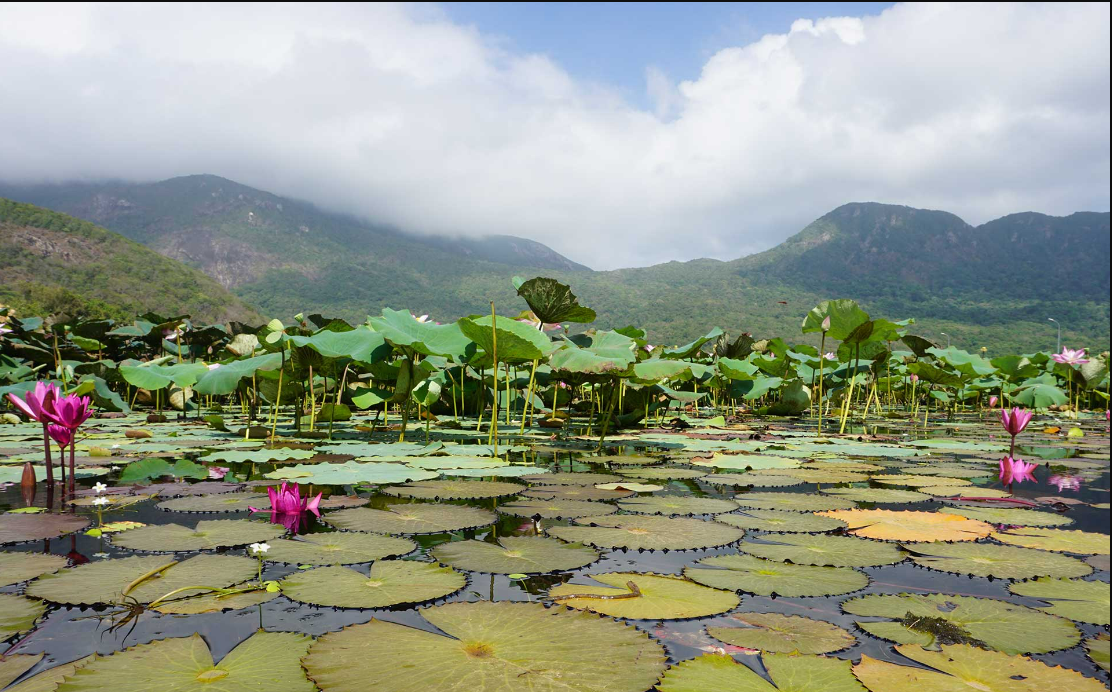
 is one of the few places in Vietnam that is home to rare dugong, sea turtles, and dolphins, and to varieties of orchids found nowhere else in this country. It is a shining example of good conservation. 80% of the land area of the archipelago is a National Park offering primary jungle teeming with interesting life such as the endemic black squirrel and the crab-eating macaque.

2.1. Dam Trau Beach

It is hard to ignore Dam Trau Beach which is considered as one of the most beautiful beaches on Con Dao Island. Located 15km to the north of Con Son town center, Dam Trau is home to stunning sceneries of smooth white sand that stretches along the bottom of all-shaped cliffs and has symbolized a yellow ribbon tied across the green carpet. Since the beach is surrounded by pockets of tropical jungle, old green pine trees and a prominent bamboo forest, the air is so fresh and the space is so quite. This is an ideal place for anyone to wind down.

2.2. An Hai Beach

An Hai Beach is the main beach of Con Dao Island, where most resorts and hotels are located. The beach stretches quite a long distance with white smooth sand, crystal waters and calm waves. It is relatively crowded, especially before sunset so if you want a quieter place, walk a bit far to the south, you could explore a new vision of peace and tranquility with your own patch of sand.

2.3. Lo Voi Beach

Lo Voi Beach is located in the northern of Con Son town center directly in front of some Con Dao’s famous prison complexes. There is no hotel built next to the beach, which makes it more unspoiled and cleaner than the other beaches. The sand here is quite dark and there is seaweed scattered on it, looking like as an isolated area. The ideal time to visit Lo Voi Beach is in the morning just after the sunrise when the tide recedes. You can see the very first light shining on this island while slowly walking around the wet, soft sand on the shore.

2.4. Bai Nhat Beach

Bai Nhat Beach is only exposed during low tide in the afternoon. You can visit the beach from 2PM to 7PM every day. Bai Nhat is a picturesque beach, with white sand, blue water, pleasant waters and wonderful natural scenery. It is also considered as the best place to watch the sunset in not only Con Son but also in Vietnam generally. Many couples come to this beach to take their wedding photoshoots because of the view and the stories about its backdrop mountains, which resembles two people embracing each other dearly.

2.5. Bay Canh Island

Bay Canh is the second largest island among 16 islands in Con Dao archipelago with the highest number of sea turtles in Vietnam. Each year there are hundreds of mother tortoises on the spawning grounds. The whole island is covered by primitive tropical forest, with rich composition and forest vegetation. Come to Bay Canh island, visitors will have the opportunity to explore the mangrove ecosystem and go snorkeling to view the coral. The coral reefs here are very diverse with species of plate coral, table type, branches, blocks which are in Vietnam’s Red Data Book.

2.6. Dat Doc beach

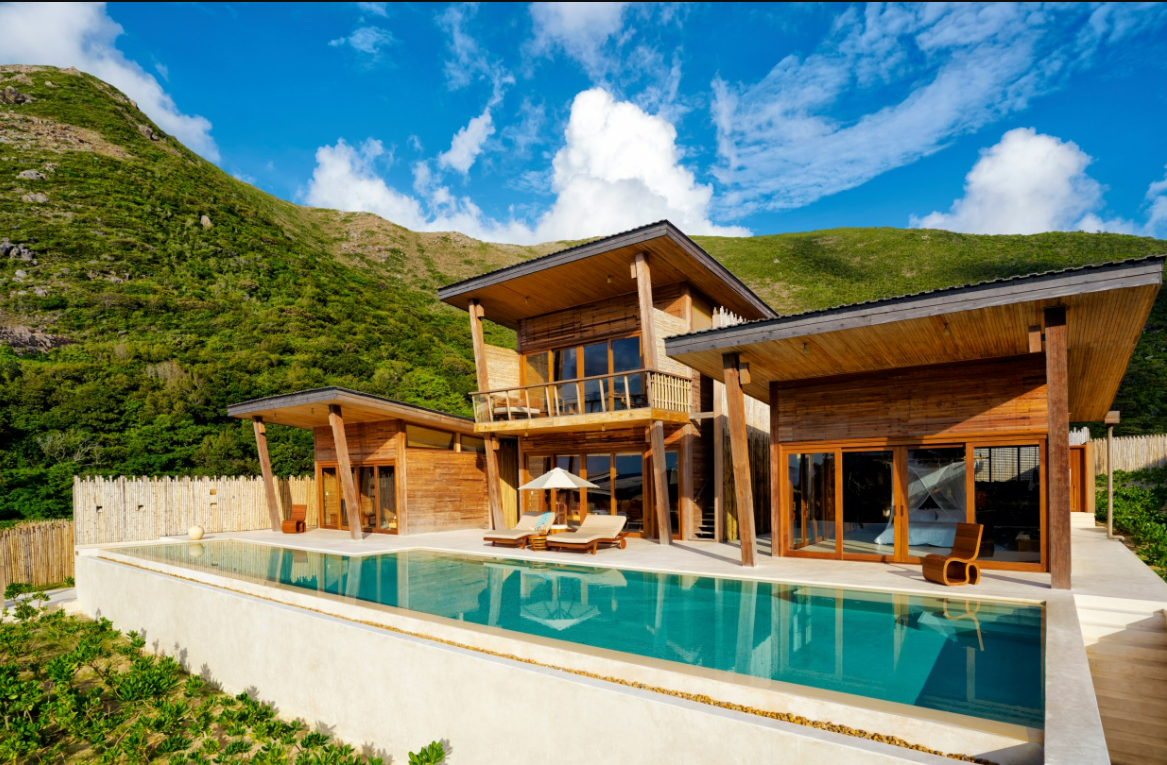
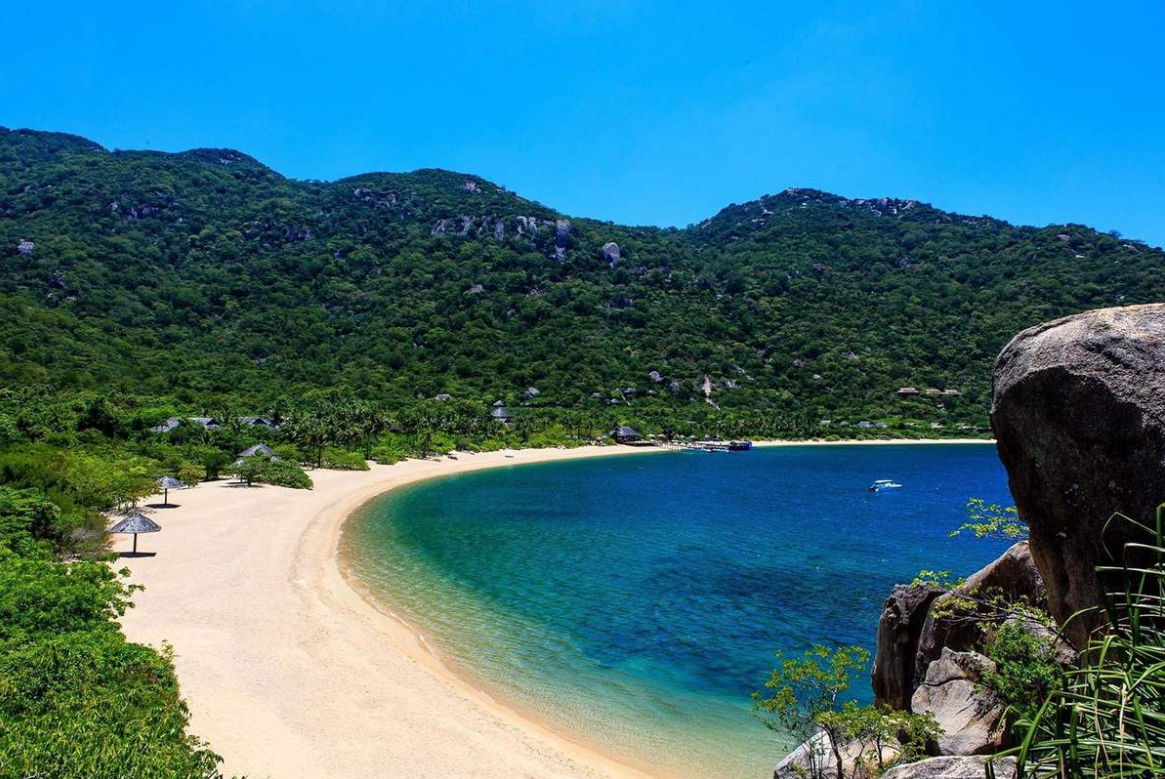
Dat Doc Beach has recently become famous as it is home to 5-star luxurious Six Senses Con Dao Resort – one of Vietnam’s best beach resorts. The beach attracts tourists with clear sea water, slight waves and long white sandbank. Passing through small trails deep in the forest, Dat Doc Beach appears with untouched image, covered by green forests and canyons reaching out to the coast made up the small beach that is romantic and privacy. Although the resort is restricted to public visitors, there is a small area that you can stop for a while and take some photos.

2.7. Con Dao National Park

Established in 1993, Con Dao National Park is the only place in the country where both forest and marine life are conserved. Famous for its wild beauty, the floral system in Con Dao National Park is extremely rich with over 882 species of plants and 150 species of animals. If you like to walk through the forest to breathe fresh air, hear the birds singing, or to watch colorful butterflies and many other animals, a trip to Con Dao National Park is recommended. Not only that, the beaches around the national park are also very beautiful and deserted so you can also participate in fishing services, snorkeling, or cycling here.

  1. Best time to visit Con Dao island

Since Con Dao is isolated from the mainland and located in the Asian monsoon climate and influenced by ocean climate, its weather is relatively cool and pleasant all year round. There are two seasons: rainy season and dry season. The rainy season runs from April to September with the highest rainfall in August and September. Meanwhile, in dry season, from October to March, it is cool with the annual average temperature of 27°C.

So depending on your travel purposes, you can consider and choose your best time to visit Con Dao Island:

  • For those who are adore diving and exploring the ocean, the period from February to July is a perfect choice when the beach is relatively calm with gentle waves and the waters around Con Dao have visibility averaging between 20 and 30m.
    • If you want to discover nature and wild life, you should consider visiting Con Dao during the dry season when you have chance to see turtles nesting on Hon Bay Canh Island.
    • If you are into history, you can visit Con Dao anytime except for the storm season, starting from September to October.
  1. How to get to Con Dao Island

Situated at about 185km from Vung Tau City and 230km from Ho Chi Minh City, Con Dao can be reached by plane from Ho Chi Minh City and Can Tho or by speedboat from Soc Trang, Can Tho and Vung Tau.

4.1. By plane

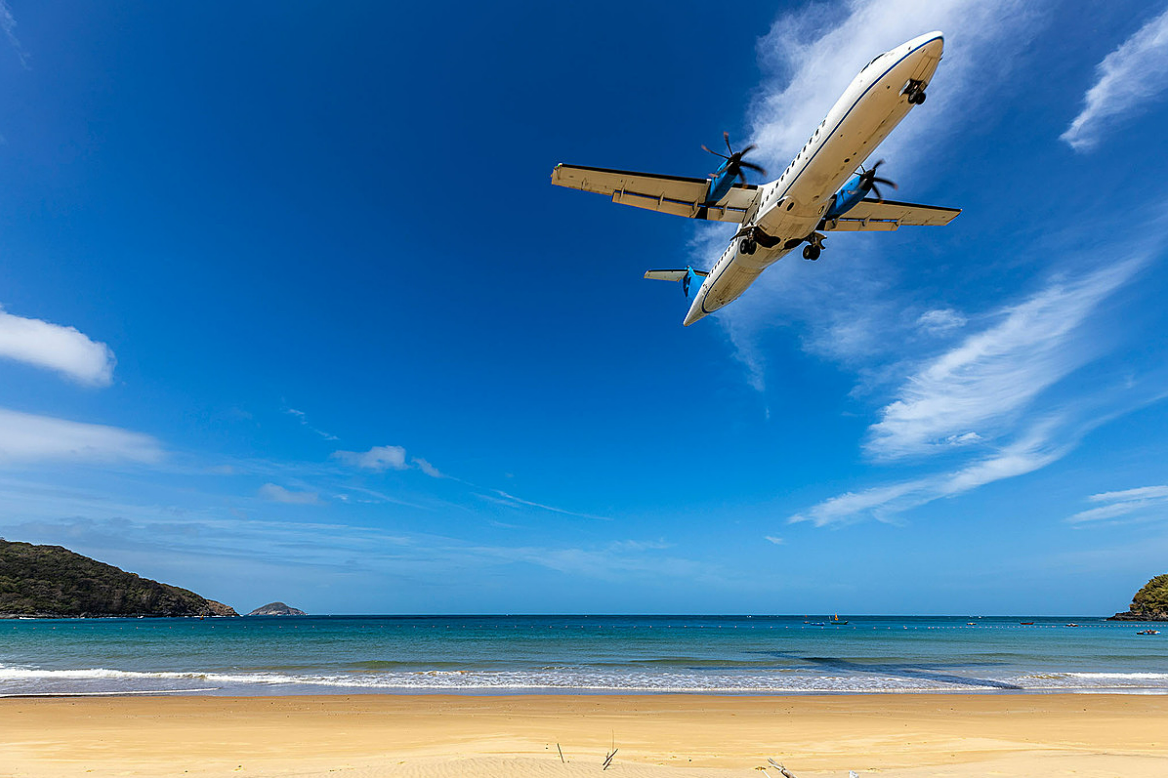
The fastest and most convenient way is to take a flight to Con Dao Airport. There are direct flights from Ho Chi Minh City or Can Tho to Cao Dao operated daily by VASCO collaborating with Vietnam Airlines – the best current airline of Vietnam. It usually takes about 65 minutes to fly from Tan Son Nhat Airport or 50 minutes from Can Tho Airport to Con Dao Airport. The price for round-trip ticket is about 150-200 USD.

4.2. By speedboat

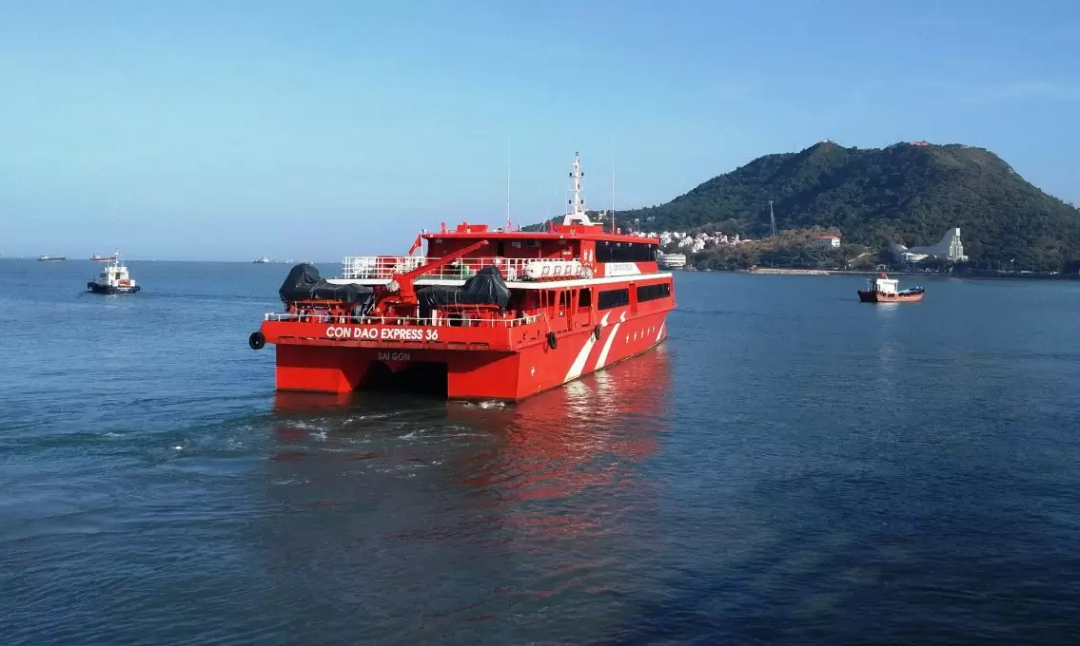
If you would like to have a new experience, traveling to Con Dao by speedboat is another choice. You can depart from Can ThoVung Tau or Soc Trang and reach Ben Dam port in Cao Dao Island after 2,5 – 4-hours journey. Recently, there are two companies operating the trip to Con Dao Island. Check out the detailed schedule and ticket price as below tables:

* Con Dao Express

TimeRouteDeparture – Arrival TimeAdultChildren <11 years old
Senior > 60 years old
Mon – ThuCan Tho – Con Dao
Con Dao – Can Tho
7:00 – 11:00610,000VND520,000VND
Fri – Sun12:00 – 16:00660,000VND600,000VND
Mon – ThuVung Tau – Con Dao
Con Dao – Vung Tau
8:00 – 12:00660,000VND550,000VND
Fri – Sun13:30 – 17:30880,000VND700,000VND
Mon – ThuSoc Trang – Con Dao
Con Dao – Soc Trang
9:00 – 11:00320,000VND260,000VND
Fri – Sun13:30 – 15:30350,000VND290,000VND

* Superdong Speedboat

TimeRouteDeparture – Arrival TimeAdultChildren <11 years old
Mon – SunSoc Trang – Con Dao8:00 – 10:30
13:15 – 15:30
310,000VND230,000VND
Con Dao – Soc Trang8:00 – 10:30
13:00 – 14:45
  1. Accommodations on Con Dao Island

Almost all accommodation on Con Dao is in the small town of Con Son. You can find here budget local guest house, homestays, mid-range hotels to luxury resorts with price vary from 20 USD to 2,000 USD per night.

The most reputable and luxury resort on Con Dao Island is Six Senses Con Dao at Dat Doc Beach. It is designed in contemporary style, yet draws on the essence of a traditional fishing village. The resort is out of reach of the hustle and bustle of Con Dao Town with a long private beach, which give you a perfect space to chill out and enjoy your holiday. Poulo Condor Boutique Resort & Spa is another high-end accommodation you may consider. Inspired by a harmonious blend of Vietnamese traditional design and French colonial heritage dating from the early 20th century, the resort embodies the richness of Vietnamese culture with the vibrancy of the present.

For some mid-range hotels, it is suggested to choose Villa Maison Con Dao Boutique HotelCon Dao ResortSaigon Con Dao Resort or Former ATC Resort… The room rate varies from 50 USD to 100 USD per night. For those who are tight on budget, a mini hotel or local homestay is a good choice, namely, Lighthouse Boutique Hotel, Phi Yen Hotel, Uyen’s House Homestay, Red Hotel… with price from 20-40 USD.

  1. Conclusion

Overall, Con Dao Island is an extremely perfect destination for an authentic getaway you should not miss in your travel list. The island itself is a paradise off the beaten track and is recognized by the immense natural beauty with forested hills, untouched sandy beaches and extensive coral reefs perfect for diving. Let’s get rid of the hectic traffic and the thousands of noisy motorcycles and then immerse yourself in the tranquil and peaceful atmosphere on the pretty island.

 Apply For Vietnam Visaapply Vietnam visaApply visa vietnamBook E-visa Vietnambook visa vietnamCheap Vietnam VisaE-visa Vietnamevisa VietnamEvisa Vietnam onlineexpedited e-visaexpedited E-visa to Vietnamexpedited Vietnam E-visaGet a Vietnam visaGet Vietnam Visaget vietnam visa onlineget visa to vietnamget visa Vietnammultiple entry visamy vietnam visaOrder Vietnam E-Visaquick vietnam evisarush vietnam visaUrgent Vietnam VisaVietnamVietnam E-visaVietnam EvisaVietnam touristVietnam travelVietnam vacationVietnam VisaVietnam visa costVietnam Visa ExemptionVietnam Visa for India citizensVietnam Visa For IndiansVietnam Visa for South Africa citizensVietnam Visa In IndiaVietnam visa in South AfricaVIetnam VIsa on arrivalVietnam VIsa onlineVietnam visa provisa for vietnam Visa On Arrivalvisa onlineVisa to VietnamVisa Vietnam
Posted on

How about My Son Holy Land Trip?

On the way to explore Danang and Hoian, tourists often choose to visit Marble Mountains, Linh Ung Pagoda, Bana Hills, Hoian Ancient Town and popular beaches such as My Khe Beach, Cua Dai or An Bang Beach. Besides these places, My Son Holy land can’t be missed for those who are interested in culture and history of Cham people while they are in Danang and Hoian. If Hoian enchants tourists by colorful lanterns along downtown streets by night, Da Nang city is lit up brilliantly by colorful lights of bridges, buildings and civil houses. Charming red towers in My Son surely amaze tourists in the sunset with the story about the religious and political capital of the Champa Kingdom for the most of its existence.

Location: Quang Nam Province, 69 km southwest of Da Nang City

Opening hours: 6AM to 5PM

Entrance fee: 150,000 VND/ foreigner visitor – 100,000 VND/ for local

>>> Apply Visa to Vietnam <<<

>>> Order Fast Track Service <<<

  • History

Between the 4th to 13th centuries, there was a unique culture developed on the coast of contemporary Vietnam, owing its spiritual origins to the Indian Hinduism. This is demonstrated by the remains of a series of impressive tower-temples located in a dramatic site of My Son Holy Land, which was the religious and political capital of the Cham Pa Kingdom for most of its existence.
Through stone stele and royal dynasties, My Son was proven to be the most important Holy Land of the Cham people during the mentioned centuries, reflecting their style and history.

The Cham people belong to an ethnic group in Southeast Asia. They formed the core of the Muslim communities in both Cambodia and Vietnam. Cham is a remnant of the Cham Pa Kingdom (7th to 15th centuries), closely related to the Malay race.

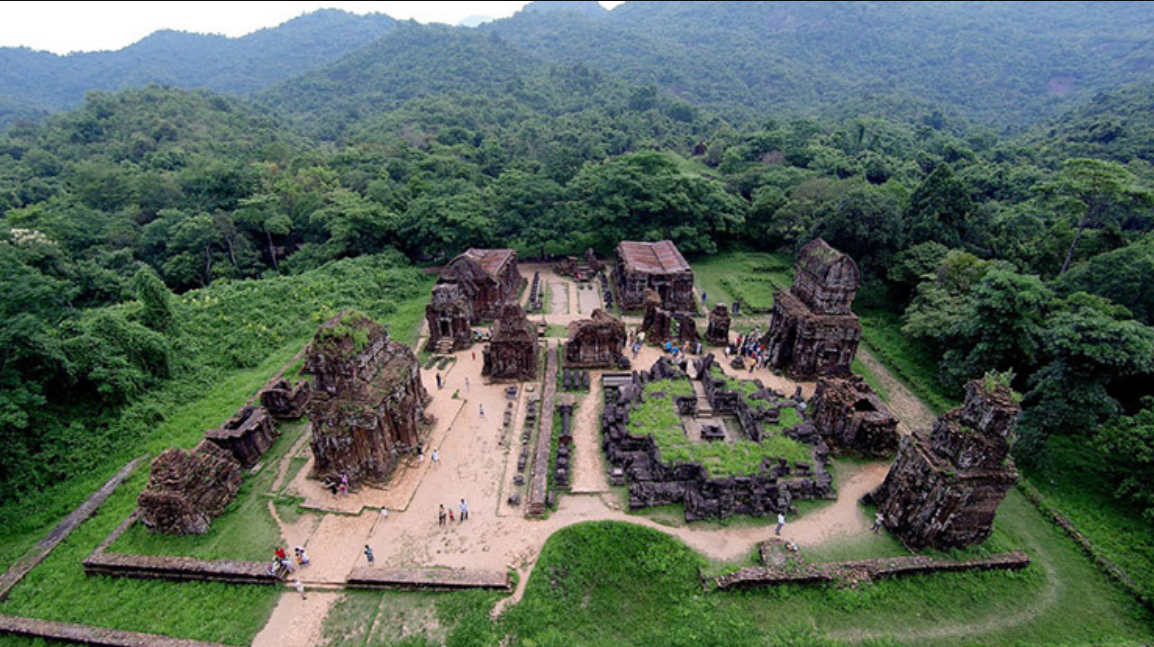
The property is located in the mountainous border Duy Xuyen District of Quang Nam Province, around 75km from Hoian, 69km southwest of Da Nang city and 150km from Hue. It is surrounded by a ring of mountains, which provides the watershed for the Thu Bon River of Hoi An. The location gives the sites its strategic importance as it is also easily defensible.

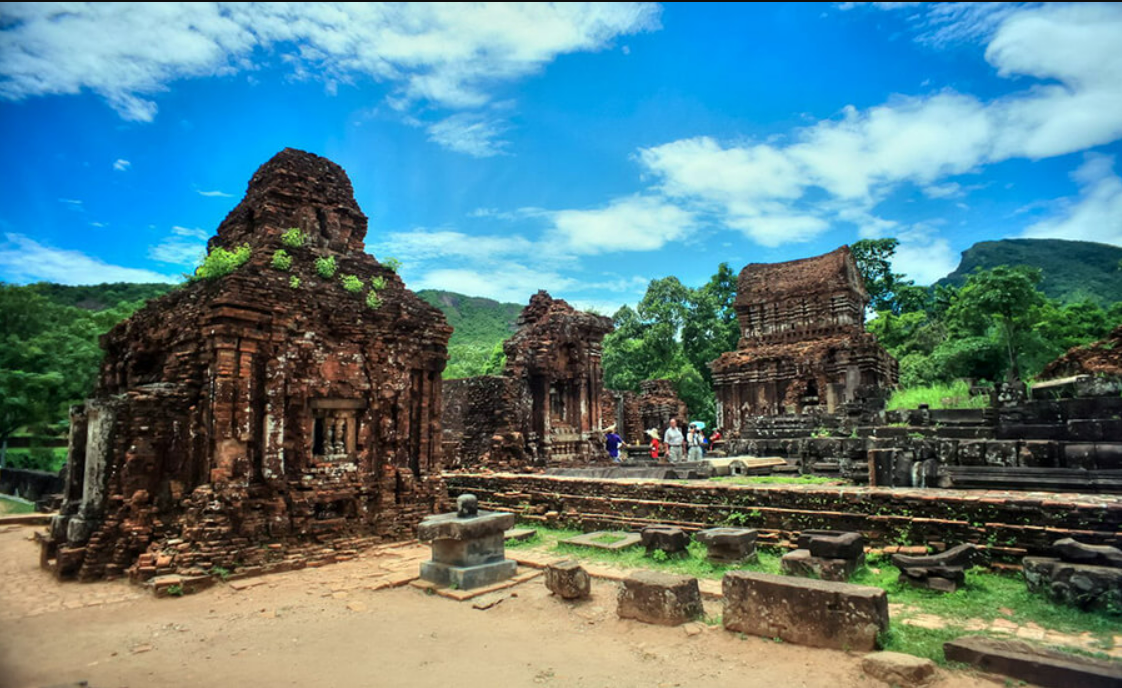
My Son used to be a group of more than 70 structures (mainly temples and towers) built by Cham Kings to commemorate important events during their reign. After the Champa Kingdom was defeated, the temples were abandoned among lush nature until 1903, when Henri Parmentier – a French archaeologist, and his team began an excavation of the site.

During the excavation, Henri organized the complex of My Son into 14 sections according to the alphabet. For better orientation, every temple has its own number within a group, for example A1, A2, B1, B2…. Currently, sections A – G are the easiest areas to access thanks to the walking paths.

Cultural Values Of My Son Holy land

In 1999, My Son was honorably recognized as a World Heritage Site by UNESCO with two criterions:

  • Criterion (ii): The My Son Sanctuary is an exceptional example of cultural interchange, with an indigenous society adapting to external cultural influences, notably the Hindu art and architecture of the Indian sub-continent.
  • Criterion (iii): The Champa Kingdom was an important phenomenon in the political and cultural history of South – East Asia, vividly illustrated by the ruins of My Son.

Religion

Situated inside the 2-kilometer-wide valley in Quang Nam province, the My Son Sanctuary temple complex used to be the central praying and worshiping ceremony place of Cham Pa reigns. It was considered as the tool to assist the reigns to contact with God and Saints. The land accordingly becomes the significant religious and cultural center of Cham Pa reigns.

The ruins of My Son are not as grand and impressive as those of Angkor Wat in Cambodia. However, the site was inhabited from the 4th to the 15th century AD, far longer than any of the other Indian-influenced sites in the region including the famous sites of Angkor Wat in Cambodia, Borobudur in Indonesia, Bagan in Myanmar, or Ayutthaya in Thailand.

Cham-style Architecture

According to records on the stone stele, the initial foundation of the ancient My Son architectural complex was a wooden temple to worship the Siva Bhadreshwara genie but this temple was destroyed by a big fire in the late 16th century. After that, the next structures were built with red bricks by the kings of the Champa Kingdom.

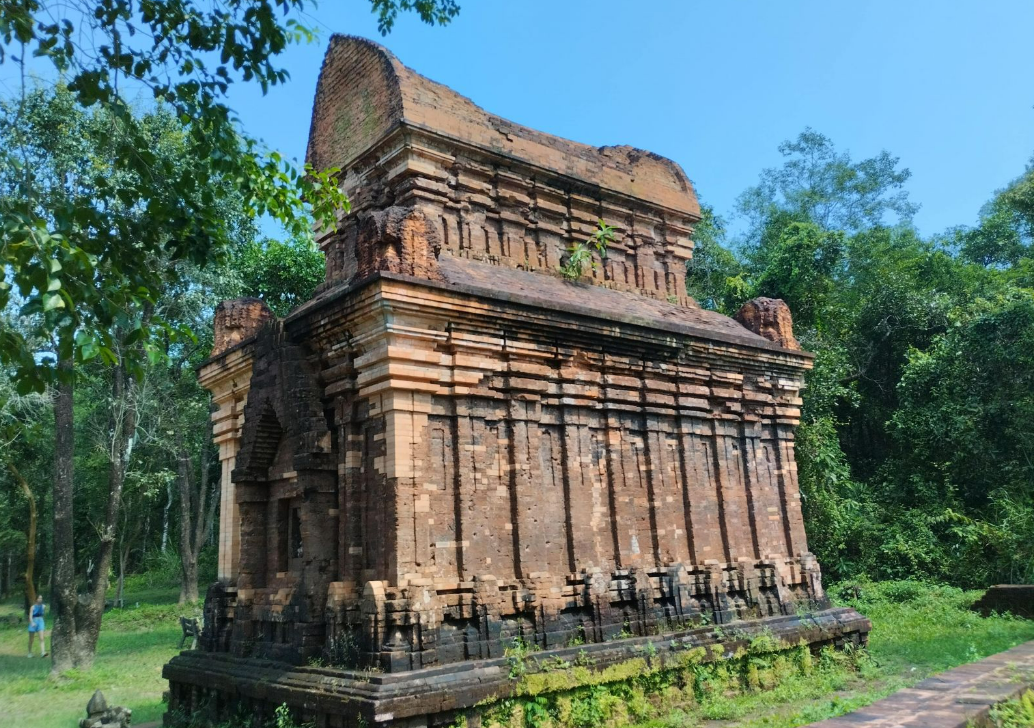
My Son used to be a group of more than 70 structures including temples and towers that connect to each other with complicated red brick designs. The main component of the Cham architectural design is the tower, built to reflect the divinity of the king. Bricks are main material for the construction of the Cham Towers. Each historical period has its own identity so that each temple worshiping a genie, or a king of a different dynasty has its own architectural style of different impressions. Most of the temples point to the East, the sun direction because Champa people believed that the East was the place where the gods lived.

All of the Cham towers were built on a quad-rate foundations and each comprises three parts: a solid tower base, representing the world of human beings, the mysterious and sacred tower body, representing the world of spirits, and the tower top built in the shape of a man offering flowers and fruits or of trees, birds, animals, etc., representing things that are close to the spirits and human beings. My Son sanctuary is truly a vivid proof reflecting Cham-style architecture which is much influenced by India style.

The architectural art of the Cham towers at My Son Sanctuary is the convergence of different styles, including the continuity of the ancient style in the 7th-8th centuries, the Hoa Lai style of the 8th-9th centuries, the Dong Duong style from the mid-9th century, My Son and My Son-Binh Dinh styles, etc.

However, it has yet been unable to figure out the reasonable explanation how and by what kind of substance Cham people could stick red baked bricks together to form such solid structures. High shrine towers with double pillars, solid walls, elaborate carvings and striking sculptures, all reflect the exclusive beauty of Cham culture.

Although many towers have been destroyed by the time and the wars, the remaining sculptural and architectural remnants still reflect the style and history of the art of the Cham people. Their masterpieces mark a glorious time for the architecture and culture of the Cham, as well as of Southeast Asia. They are also vivid proof, confirming the history of a nationality living within the Vietnamese community boasting of a rich cultural tradition.

How to Get to My Son Holy land?

Taxi

Taxi is the fastest transportation to go from Da Nang or Hoian to My Son but the taxi fare is quite expensive, ranging from 700,000 VND to 800,000 VND one-way. So, it may not suitable for those having a low budget.

Local Bus

In contrast with taxi, bus is the cheapest means of transportation. But the drawback is that the waiting time for a bus is quite long. Thus, you need to be very patient. The right bus leading you to My Son is bus number 06, which departs from Da Nang Central Bus Station directly to My Son. The price is between 8,000 VND to 30,000 VND.\

Motorbike

This means of transportation is suitable for adventurous persons loving to explore the roads in Vietnam. However, most of the road to My Son from Da Nang or Hoian was busy and dusty and not interesting. Only after reaching the point where is only 10 km left, the surroundings change a little and lead through a countryside, rice fields and nice views of the mountains.

Private Car/Van

This is the most comfortable way to discover My Son. Our driver & Local guide will wait for you at your hotel lobby, Pick you up at your convenient time and the most enjoyable visit. The private car/ Van of Vietnam Travel could stop along the way for your tea and photo opportunity.

If you want to save time and gain much experience, the best option is to book a day trip with escorted tour guide from Da Nang or Hoian to My Son with Vietnam Travel.

Tips on Visiting My Son Holy land

Best time to visit My Son?

You can visit My Son Sanctuary in the early morning, right after the gate is opened to avoid the extreme heat here, but please note that there are more and more people coming here for sunrise tours. Another option is to visit the site in the afternoon, around 2 pm, when all the tourists are gone.

  • Overview: Straight after the ticket check point you will find a small museum, where you can read some interesting facts about the discovery of My Son and its preservation and look at a few artifacts.
  • Weather: My Son is usually in very hot weather, so it’s better to use the free electric shuttle with 10-minute ride to save a ton of energy. The shuttle leaves every 15-25 minutes. It will take you to lush jungles, then drop you off close to the ruins, and from there it’s only a couple of minutes walking.
  • Safety: Walk only through the marked paths and don’t detour into the lush forest by yourself, since there is still a de-mining process going on in the area of My Son.
  • Show: Traditional Cham dance show takes place in a small performance hall 3 times a day: at 09:30, 10:30 and 2:30. You can enjoy watching the beautiful local dancers moving to the beat of the rhythmic music.

 Apply For Vietnam Visaapply Vietnam visaApply visa vietnamBook E-visa Vietnambook visa vietnamCheap Vietnam VisaE-visa Vietnamevisa VietnamEvisa Vietnam onlineexpedited e-visaexpedited E-visa to Vietnamexpedited Vietnam E-visaGet a Vietnam visaGet Vietnam Visaget vietnam visa onlineget visa to vietnamget visa Vietnammultiple entry visamy vietnam visaOrder Vietnam E-Visaquick vietnam evisarush vietnam visaUrgent Vietnam VisaVietnamVietnam E-visaVietnam EvisaVietnam touristVietnam travelVietnam vacationVietnam VisaVietnam visa costVietnam Visa ExemptionVietnam Visa for India citizensVietnam Visa For IndiansVietnam Visa for South Africa citizensVietnam Visa In IndiaVietnam visa in South AfricaVIetnam VIsa on arrivalVietnam VIsa onlineVietnam visa provisa for vietnam Visa On Arrivalvisa onlineVisa to VietnamVisa Vietnam
Posted on

The Traditional culture – Vietnamese water puppets

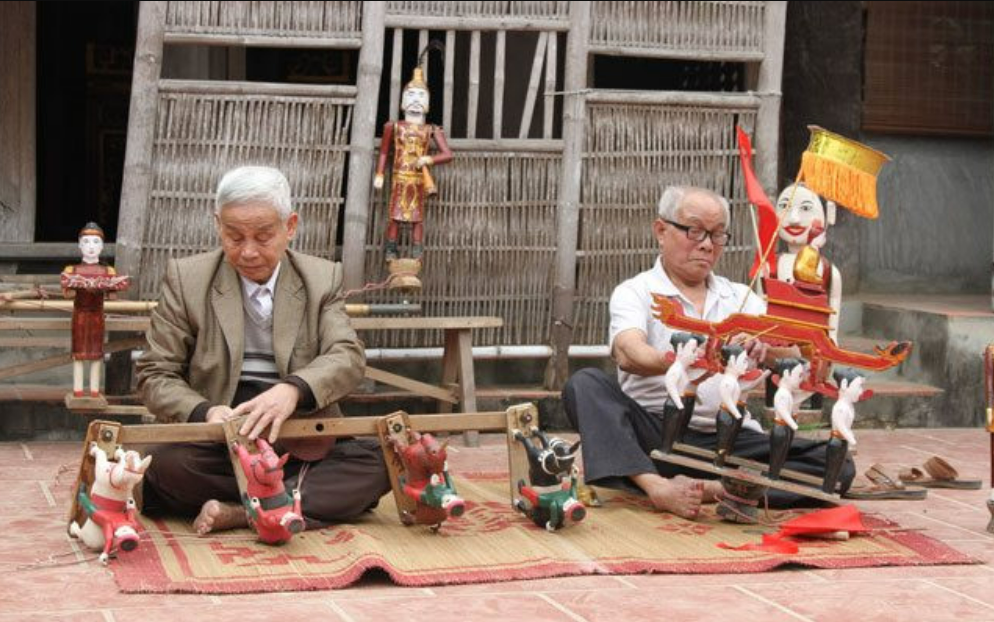
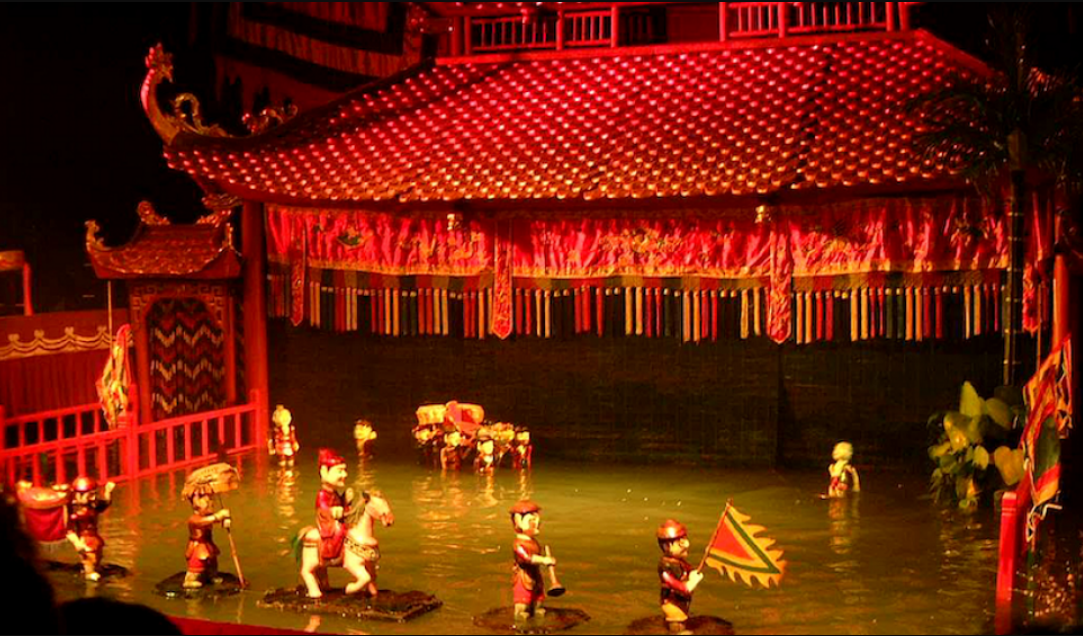
Vietnam Water Puppet goes along with history of over 4000 years. The traditional form of art was created when local working on the rice field, first it entertained the farmers then it was performed on the stages for guests during the festival. This performance was conserved through generations until today. Unlike the shadow puppetry found in other Asian countries such as Cambodia, Myanmar, Thailand, the puppet shows held throughout Vietnam take place over a waist-deep pool of water. A water puppet show will not only demonstrate for the outstanding performance but also the unique, long-established culture, customs of the S-shaped country. Considered as one of the most indigenous cultural traits of Vietnam, it would be a big miss if travellers do not watch the Vietnamese traditional puppet show in their Vietnam trip.

>>> Apply Visa to Vietnam <<<

>>> Order Fast Track Service <<<

  1. Overview of water puppetry & History

Water puppetry is a form of folk arts originating in the Red River Delta in the North of Vietnam, dating back in the 11th century. The wet rice civilization of Northern Vietnam was believed to be the cradle of nurturing this traditional art form. Being born as a communal entertainment performance during harvest time for farmers, the very first Vietnamese puppet shows weren’t just for the entertainment of villagers but were thought to keep the spirits amused enough to stay away from mischief.
Originally, simple stages were constructed around flooded rice paddies, which were available in most of ancient villages & towns. The easy formation enhanced the widespread development of the art form. The water puppet shows gradually progressed as an entertaining activity for the royals. That’s an intriguing adventure from the rice field to the citadel stages.
Until now, the water puppet shows haven’t changed significantly from the old days. Shows at this modern theatre are performed in a pool of water as the stage for the puppets.

  1. Characters:

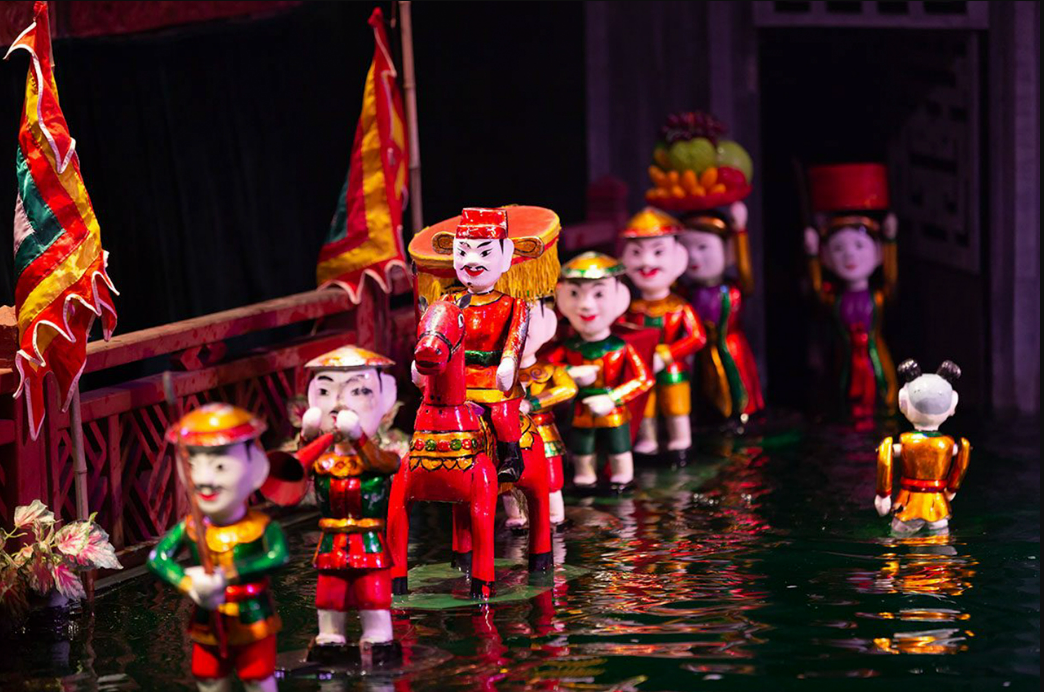
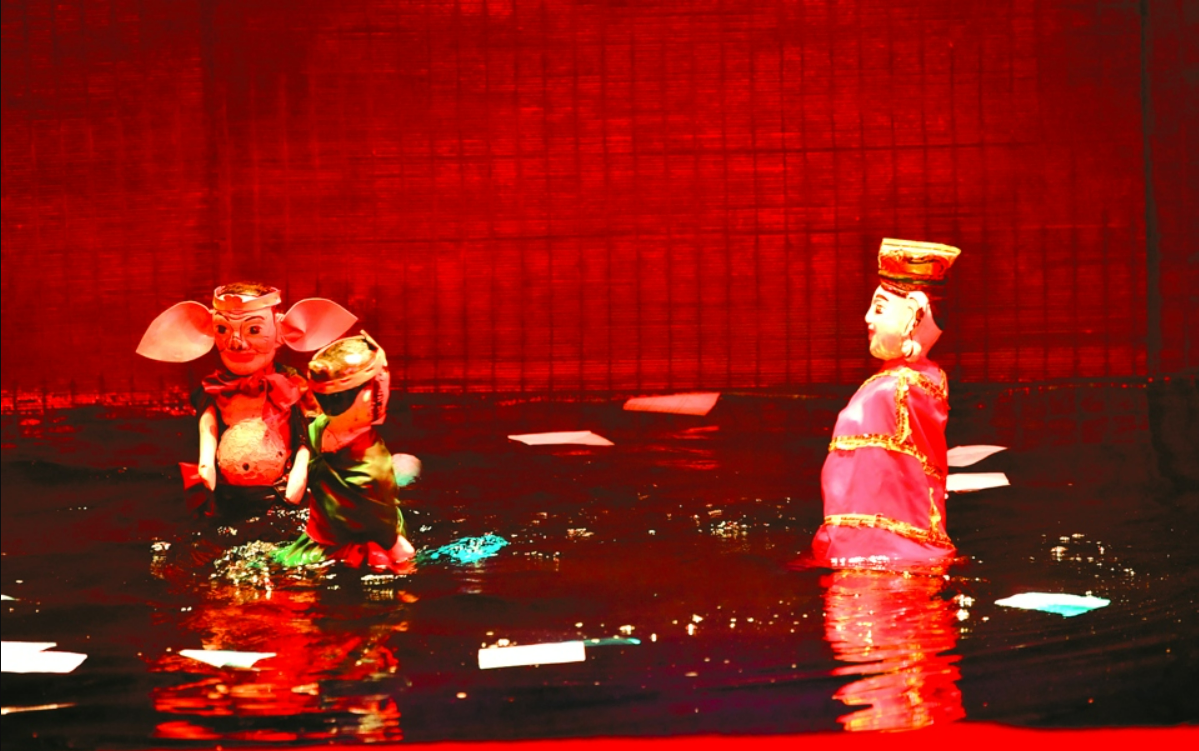
Please don’t expect realistic movements or intricate costumes found at puppet shows in other parts of Asia. The puppets are carved out of fig wood and then lacquered. Each puppet can weigh up to 15 kg. Most of the puppets look cheerful and awash in vivid colors to emphasize their own characters. For example, “Chú Tễu” is a recurrent and the most notable character in water puppetry. “Tễu” means “laugh” in ancient Vietnamese. His appearance is of a cheerful boy who often wears simple loincloth, sometimes accompanied by a simple open vest. He is very talkative and optimistic like any typical northern farmer. He sometimes acts as a narrator, sometimes as a commentator on social realities, politics, especially officials’ corruption.

  1. Performance & secrets of water puppetry

Performance today occurs on one of three venues: 1 – on traditional ponds in villages where a staging area can be set up, 2 – on portable tanks built for traveling performers, or 3 – in a specialized building where a pool stage can be constructed. This special stage requires a chest-deep pool of water. This water pavilion is called “Thủy đình” (“thủy” means nước, “đình” is a communal house) is where performance carries out. No more than eight puppeteers stand behind a split-bamboo screen decorated to resemble a temple facade, and control the puppets using long bamboo rods and string mechanism hidden beneath the water surface. Performances are accompanied by a Vietnamese orchestra playing traditional music using wooden bells, drums, bamboo flutes, horns, and cymbals.

Have you ever wondered how puppeteers can control the puppets behind the bamboo screen and still can coordinate smoothly to each other?
The secret of how water puppet shows work has been kept quiet for centuries. The puppeteers even forms their own dialect and codewords to prevent ones from overhearing talk of a particular technique.
Trying to figure out exactly how puppeteers can control the intricate movements blindly is part of the magic of each water puppet show. Great shows of skill include passing objects from puppet to puppet and other coordinated movements which have to be done by instinct rather than sight.
The musicians providing voices for the show – who, unlike the puppeteers, can see the puppets and their movements – sometimes shout codewords to warn the puppeteers when a puppet is not where it should be.
As tradition, it is adorable that Vietnamese water puppet shows are typically performed without English. The language makes little difference; the theatrics of the colorful puppets and the constant wonder of how the performers can hide beneath the water says everything best and keep puppet shows entertaining! At the end of each performance, the eight puppeteers typically come out of the water to take a dripping bow.
Some Typical Vietnamese Traditional Water Puppetry Scenes: Flag Raising, Dance of the Fairies, Water-spurting Dragon, Dance of the Four Sacred Creatures, Swinging, Thi Mau Returns her Baby, Wrestling, Planting & Pulling up Flags, Buffalo Fighting, Farming ect.

  1. Water Puppet Shows & Theaters

This tradition is unique to North Vietnam but has recently found fame on stages all over the world. It is not difficult to reserve a show ticket wherever tourists congregate in Vietnam. This popular culture show holds regular performances.

– In Saigon (Ho Chi Minh City)

The most popular water puppet venue is Golden Dragon Water Puppet Theatre, which is located inside of a giant sports complex between Tao Dan Park and the Reunification Palace.
The Golden Dragon Water Puppet Theatre in Saigon has three daily shows – 5pm, 6:30pm and 7:45pm. Tickets cost US$7.50/ show, lasting about 50 minutes each.
Address: 55B Nguyen Thi Minh Khai Street, Ben Thanh Ward, District 1, Ho Chi Minh City, Vietnam

– In Hanoi:

Thang Long Water Puppet Theatre: Conveniently located next to Hoan Kiem Lake and within walking distance of the Old Quarter, Thang Long Water Puppet Theatre is familiar place to enjoy for this traditional artform. This is only water puppet show running 365 days a year. You can’t miss it.
The Thang Long Water Puppet Theatre has four daily shows – 4:10pm, 5:20pm, 6:30pm, and 8pm, with the addition of a 3pm show during the busy winter season between October and April. Tickets cost VND 100,000 (about $4.40, read about money in Vietnam).
Address: 57B Dinh Tien Hoang, Hanoi, Vietnam
Site: thanglongwaterpuppet.org/en

Lotus Water Puppet Theater: located on the other side of Hoan Kiem Lake, this ancient theatre is a magnet for both locals and international tourists who want to see the legendary traditional Vietnamese form of art.

If you are looking for more exotic cultural spot, where you not only experience this comical water puppet performances but also meet the water puppetry’s professional craftsmen to hear their exceptional story,  Dao Thuc village is a perfect address. Nestled in Dong Anh district 20 km on the outskirts of Hanoi, the village is famous for its 300-year-old water puppetry. “Seeing is believing” is what people talk to each other when come to Dao Thuc and experience water puppetry that has been preserved down through many generations.

– Water Puppet Shows in Hue and Hoi An

The heritage town of Hoi An in Vietnam’s Central area – home to cuisine paradise, the Japanese bridge and a fantastic Old Town – has a water puppet show of its own.
The Hoi An Theater located a little outside of the Old Town operates on water puppet shows daily except Wednesdays and Sundays. The show begins at 6:30pm and at 7:15pm, lasting 45 minutes. Admission costs VND 80,000 (US$ 3.50) for adult viewers, VND 40,000 vnd (US$ 1.70) for children.
Address: Hoi An Theater, 548 Hai Ba Trung, Hoi An

In the ancient capital of Hue, the Co Do Hue Water Puppet Theatre occupies up to 160 seats, situated right in the heart of the city, and stages an impressive three shows per day, even during holidays. First show starts at the same time in any season, at 3:30pm. Summer evening shows take place at 7:30pm and 9pm, while winter evening shows take place at 6:30pm and 8:30pm.
Admission costs VND 50,000 (US$ 2.15) for adult viewers, VND 30,000 vnd (US$ 1.30) for children.
Address: 08 Le Loi, Hue, Vietnam

 Apply For Vietnam Visaapply Vietnam visaApply visa vietnamBook E-visa Vietnambook visa vietnamCheap Vietnam VisaE-visa Vietnamevisa VietnamEvisa Vietnam onlineexpedited e-visaexpedited E-visa to Vietnamexpedited Vietnam E-visaGet a Vietnam visaGet Vietnam Visaget vietnam visa onlineget visa to vietnamget visa Vietnammultiple entry visamy vietnam visaOrder Vietnam E-Visaquick vietnam evisarush vietnam visaUrgent Vietnam VisaVietnamVietnam E-visaVietnam EvisaVietnam touristVietnam travelVietnam vacationVietnam VisaVietnam visa costVietnam Visa ExemptionVietnam Visa for India citizensVietnam Visa For IndiansVietnam Visa for South Africa citizensVietnam Visa In IndiaVietnam visa in South AfricaVIetnam VIsa on arrivalVietnam VIsa onlineVietnam visa provisa for vietnam Visa On Arrivalvisa onlineVisa to VietnamVisa Vietnam

Posted on

The most famous local markets around Sapa

Northwest Vietnam is famous for its stunning natural landscapes, lush, terraced rice fields, diverse culture of different minority groups, especially unique bustling local markets. For those who love to explore the ethnic culture, learn more about the local daily life and enjoy nature beauty, visiting 8 best local markets around Sapa listed as below is a perfect way to do.

>>> Apply Visa to Vietnam <<<

>>> Order Fast Track Service <<<

  1. Sapa Market

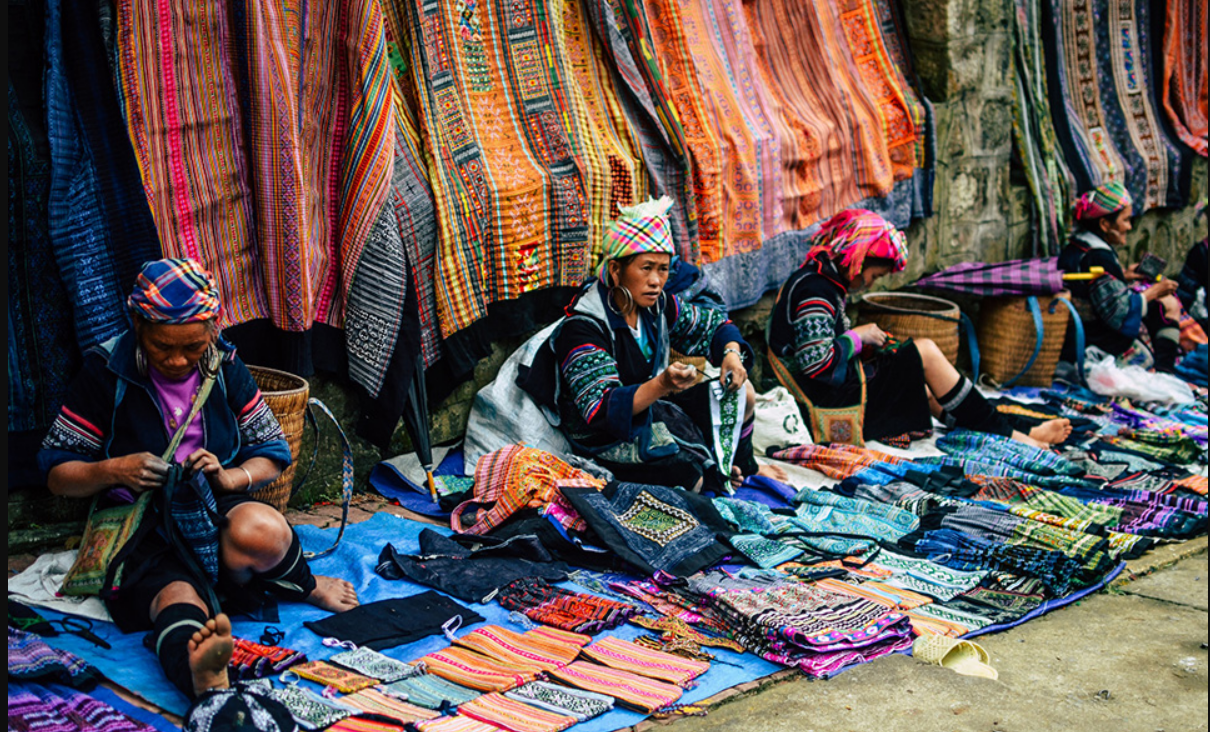
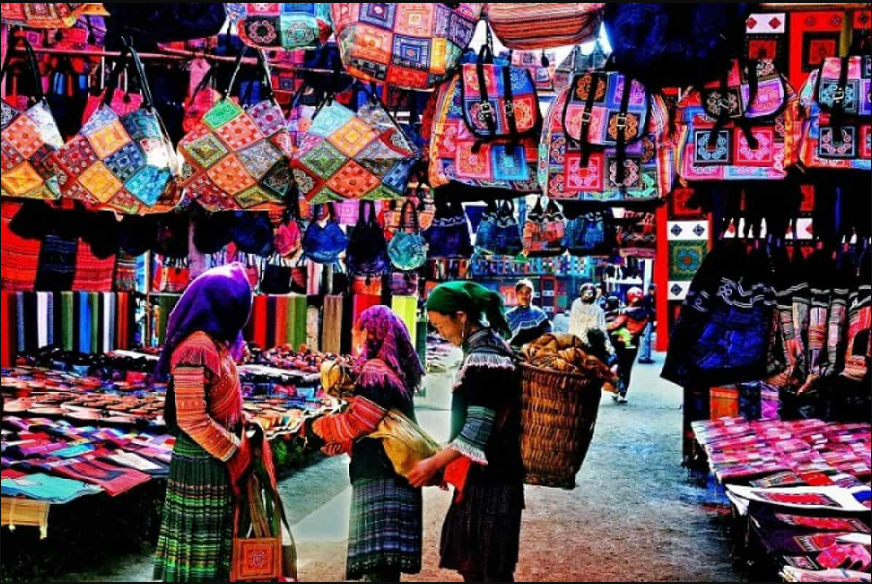
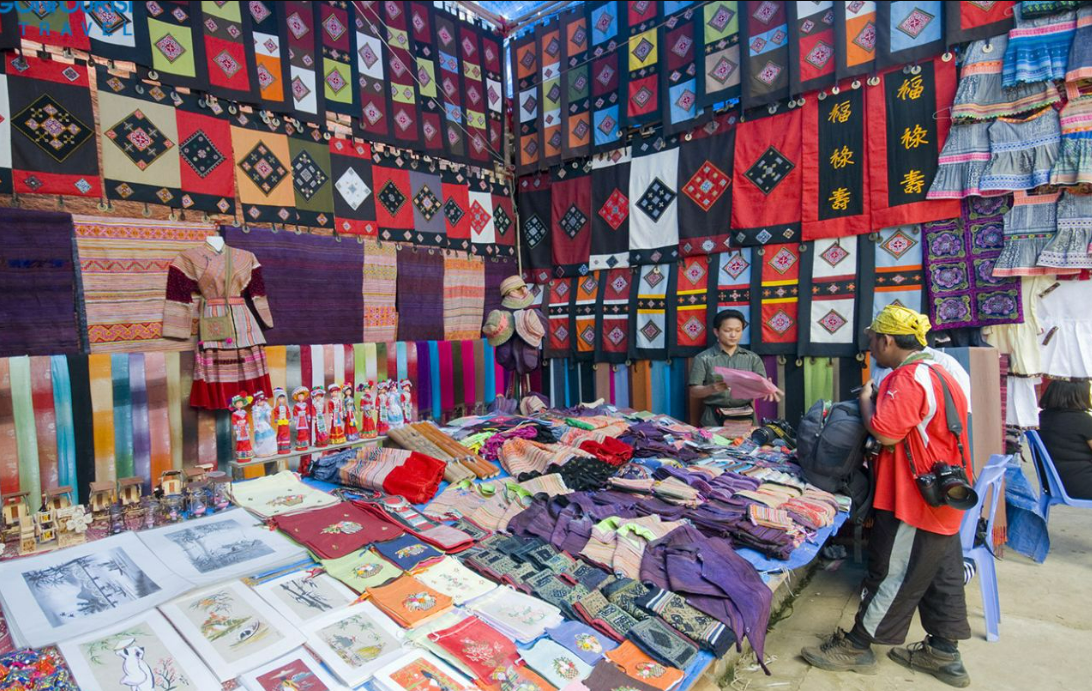
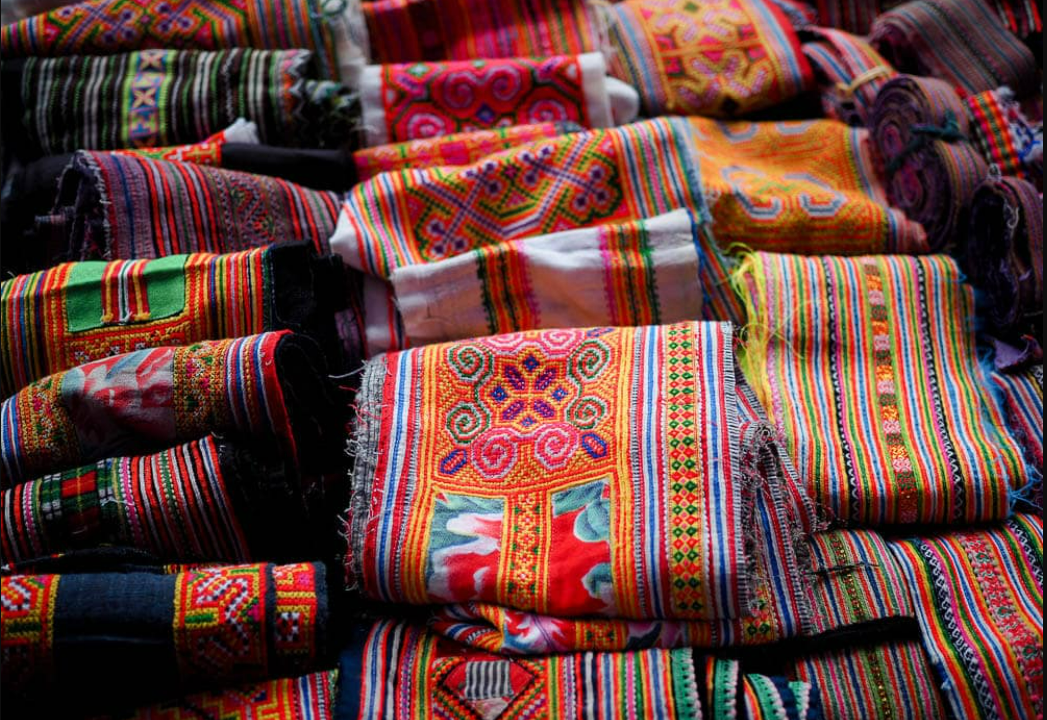
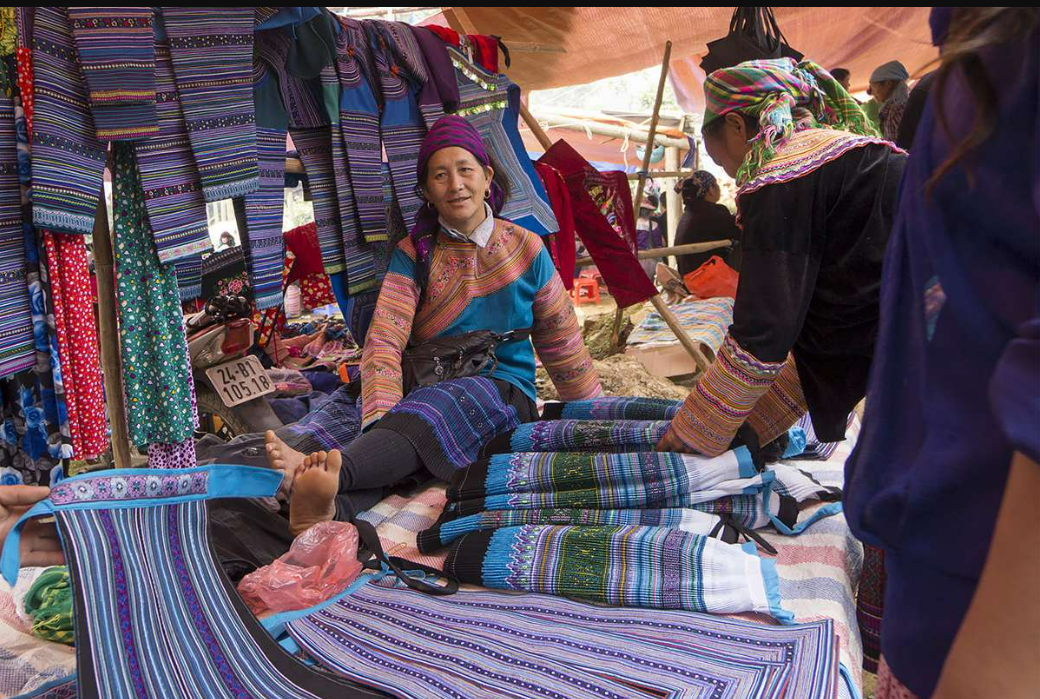
Sapa market is right in Sapa town, about 1,5km from Stone Church. Opening every day for people to buy and sell products, it is the most popular and touristic market. The most impressive feature of Sapa market is its unique brocade products in vibrant colors, and subtle patterns of the H’Mong, Dao Do, and Giay. On the other hand, such products as fruits, vegetables, and spices are also favorite goods of tourists.

Every Saturday night, Sapa Love Market would be operated, a place for young men and women from other villages come find partners. They show up sentiments and loving gestures through playing leaf-horns, traditional games, singing and dancing basing on special melodies, and if luckily, they might become husband and wife. However, due to the influence of the tourism industry, it is no longer a place to find true love; however, you can find something special here.

Time: Every morning (*Sapa Love market opens on Saturday night only)

  1. Coc Ly Market

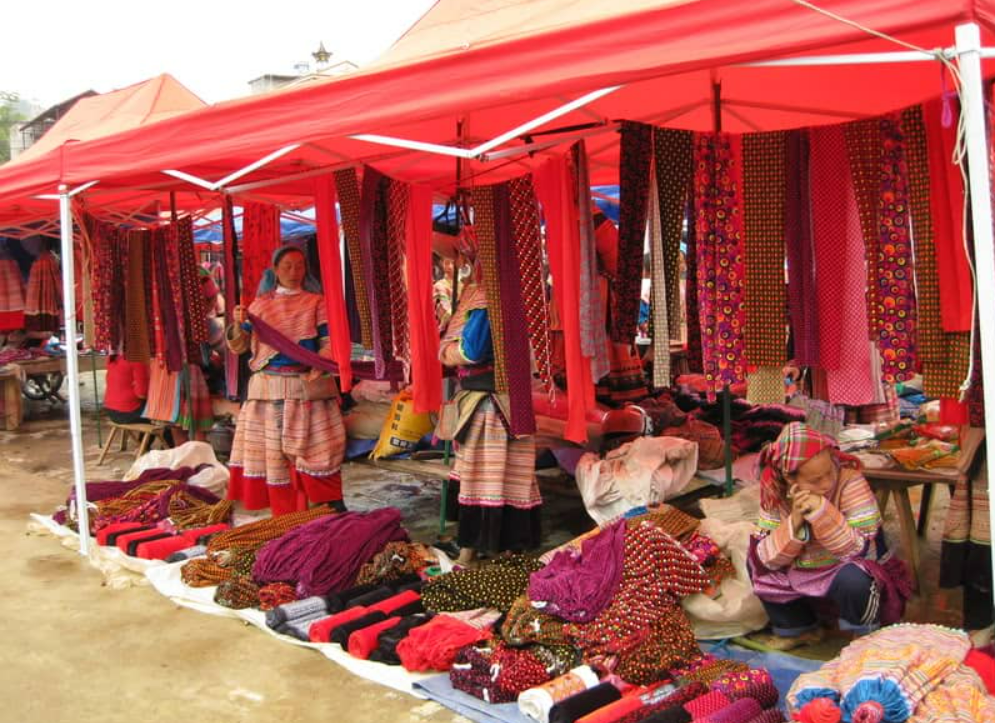
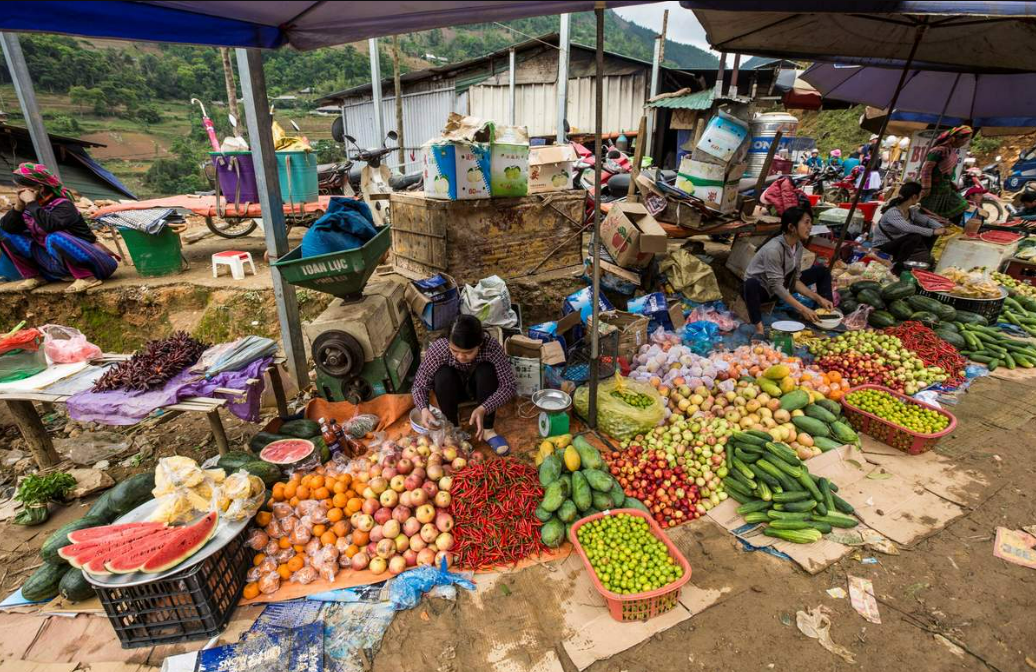
Coc Ly is a colorful market in a mountainous area where the Nung, Tay, Black Zao and H’mong ethnic minorities frequently gather every Tuesday. Here you will find a variety of goods from local fruits, vegetables, honey and corn wine to colorful fabrics, clothes and embroidered items, horses, cows and buffalos. For ethnic locals, going to market is an interesting activity which is an important chance for them to sell and buy products, to meet friends and exchange information, to date and find partners.

Time: Every Tuesday morning
Distance from Sapa
: 80 km

  1. Sin Cheng Market

On every Wednesday, Sin Cheng market (100 km from Lao Cai Railways Station, or nearly 40km from Bac Ha Town) offers the opportunity to discover a colorful gathering point of many local minorities such as the Flower H’mong, Tay, Nung and Thu Lao.

This market is not only a place for people trading local products like buffalos, horses, vegetables, herbs, clothes…. but it is also a socialized place for the young people to meet and find partners, for the old to get away from life’s struggles, and for men to enjoy the traditional corn whiskey with their old buddy.

Time: Wednesday morning
Distance from Sapa
: 130 km

  1. Cao Son Market

Cao Son is a small market of 4 ethnic minorities of Mong, Phu La, Dao and Black Han living in Muong Khuong district. Opened every Wednesday, this colorful market is set among majestic rolling mountains, terraced rice fields and mighty Chay river. Coming here, you will have opportunity to interact with local people, see how they exchange local goods and learn about their cultures. Like other local markets, the main products in Cao son include vegetables, herbs, honey, corn wine, household items, jewelry, brocade fabric, etc.

Time: Wednesday morning
Distance from Sapa
: 90 km

  1. Lung Khau Nhin Market

Located close to the border with China, about 80km from Sapa, Lung Khau Nhin market is operated every Thursday, starting around 7.30am and closing in the early afternoon. Compared to the other local markets, Lung Khau Nhin is smaller but older. This market is a place for Black Dao, Giay, Tay and Flower H’Mong groups to exchange agricultural products such as corn, rice, soybean, peanut, vegetables, handicrafts and livestocks.

Time: Thursday morning
Distance from Sapa
: 80 km

  1. Can Cau Market

Can Cau Market is one of the most attractive outdoor markets in Sapa, specializing in cattle trade, or known as the largest buffalo market in the Northwest. This market is only 7km from the Chinese border, so do not be surprised when you see a large number of Chinese traders here. Organized every Saturday, Can Cau attracts many people from several ethnic groups surrounding like Flower H’mong, Black Dao, Red Dao, Tay… come to this market to sell and buy their products from vegetables, honey, rice, herbs, brocade fabrics to several of livestock like pigs, dogs, chickens, horses, etc.

Time: Saturday morning
Distance from Sapa
: 120 km

  1. Bac Ha Market

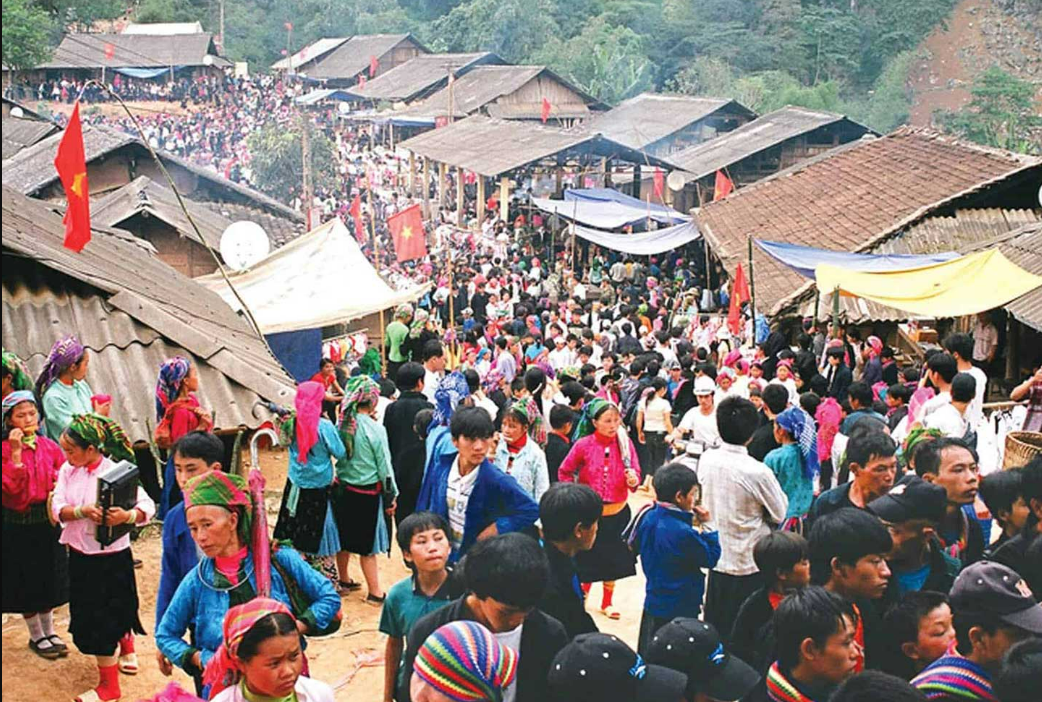
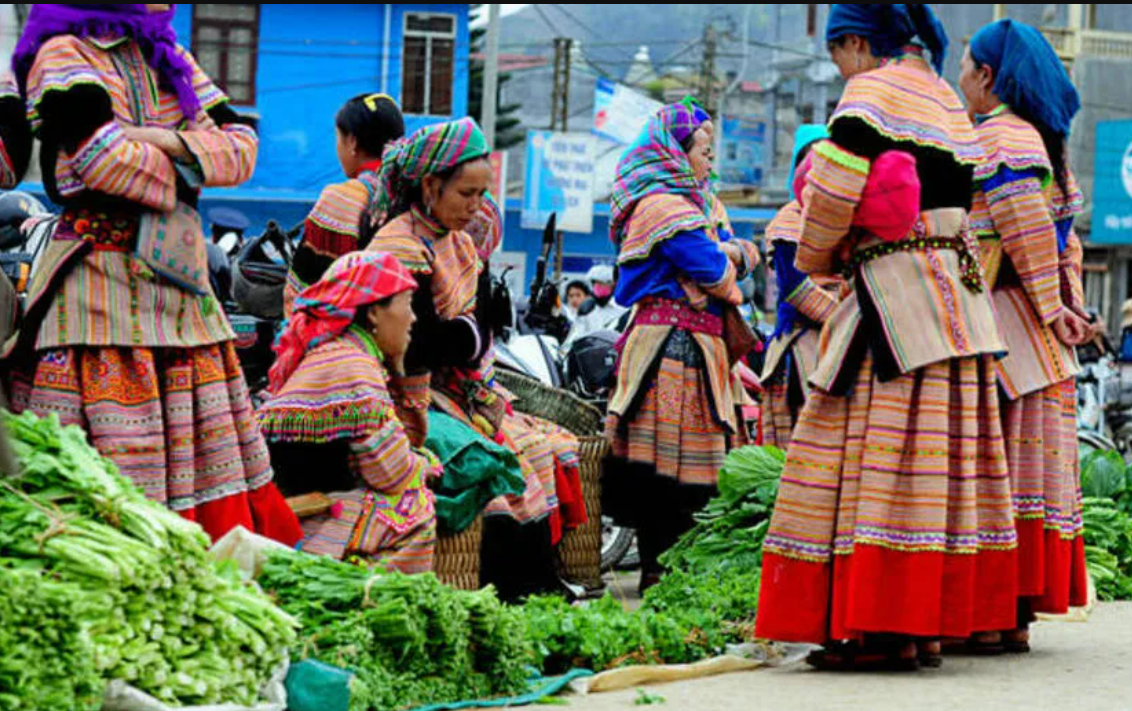
Bac Ha Market is typically assumed to be the largest and most famous market in Northwest region. The market takes place every Sunday, from 6.00am to 2.00pm but the best time to visit the market is in the early morning. It is so crowded with several ethnic groups such as Flower Hmong, Black Dao, Nung, Tay, Phu La, Xa Fang… They come from the surrounding hills and valleys and have to walk for some hours to take part in the market. Here you can see the local women in their beautiful handmade traditional clothing and colorful scarves focusing on selling and buying their local products such as fresh fruits, vegetables, brocade, homemade wine, etc.

Time: Sunday morning
Distance from Sapa
: 100 km.

  1. Muong Hum Market

Muong Hum market is located in a small valley in Bat Xat district, next to lovely stream and surrounded by majestic mountains. Taking place every Sunday morning, this is a place for Hmong, Dao, Ha Nhi and Giay ethnic people to gather, meet, communicate each other and trade local communities in a very traditional and intimate village setting. Muong Hum is not as famous and touristic as Sunday Bac Ha market so it offers you the authenticity and bring you the true experience of mountainous hill tribe cultures.

Time: Sunday morning
Distance from Sapa
: 45 km.

 Apply For Vietnam Visaapply Vietnam visaApply visa vietnamBook E-visa Vietnambook visa vietnamCheap Vietnam VisaE-visa Vietnamevisa VietnamEvisa Vietnam onlineexpedited e-visaexpedited E-visa to Vietnamexpedited Vietnam E-visaGet a Vietnam visaGet Vietnam Visaget vietnam visa onlineget visa to vietnamget visa Vietnammultiple entry visamy vietnam visaOrder Vietnam E-Visaquick vietnam evisarush vietnam visaUrgent Vietnam VisaVietnamVietnam E-visaVietnam EvisaVietnam touristVietnam travelVietnam vacationVietnam VisaVietnam visa costVietnam Visa ExemptionVietnam Visa for India citizensVietnam Visa For IndiansVietnam Visa for South Africa citizensVietnam Visa In IndiaVietnam visa in South AfricaVIetnam VIsa on arrivalVietnam VIsa onlineVietnam visa provisa for vietnam Visa On Arrivalvisa onlineVisa to VietnamVisa Vietnam
Posted on

Discovery Nam Du Island

Discovery Nam Du Island

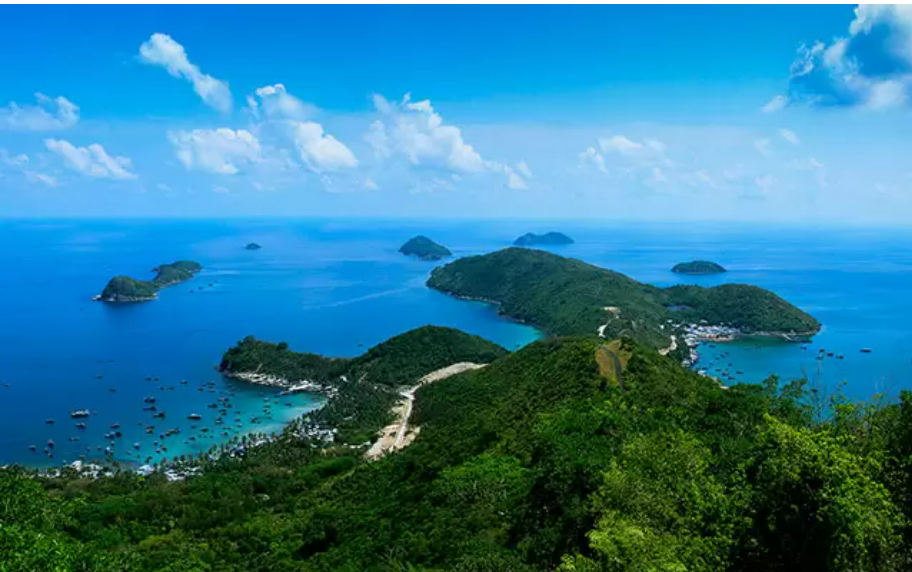
Nam Du Island, around 40 kilometers away from Phu Quoc, is becoming an attractive destination for backpackers heading to the Mekong Delta province of Kien Giang. This pristine island has 21 islets, 11 islets of which are inhabited, while the others remain completely untouched.

>>> Apply Visa to enter to Vietnam <<<

>>> Order Fast Track Service <<<

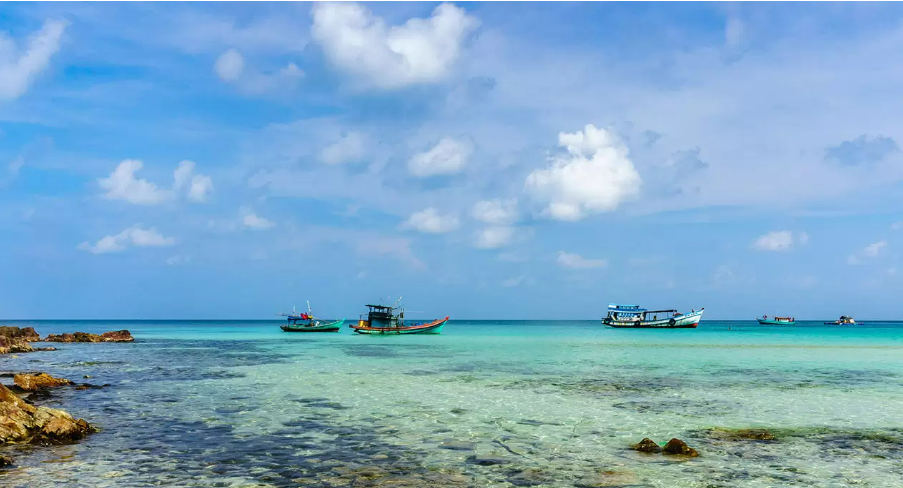
The immense blue sea and sky, imposing mountains erupting amidst the ocean, endless evergreen primeval forests, long stunning beaches and splendid rock cliffs of Nam Du Archipelago (Quan dao Nam Du – in Vietnamese) in Kien Giang Province have seen it compared to the “New Wonder of the World” – Halong Bay in Quang Ninh Province.

The archipelago stretches over two communes of An Son and Nam Du with a population of 10,000 people working in fishing and sea-related services. Formed from a volcano, it has numerous six-meter creeks which are advantageous for transportation. As it is endowed with high mountains, Nam Du also is suggested as a great spot for offshore fishermen to flee rough storms.

There are two main seasons in Nam Du: dry season (from November to May) and rainy season (from May to October). The rainy season is characterized by rain, and during the peak of this season from July to September, it may have a lot more rain and rough seas. Hence, the best time to visit Nam Du Island is from December to April when the sea is peaceful and turquoise, the temperature is comfortable, and the weather is consistent and sunny.

HOW TO GET TO NAM DU ISLAND

By Plane
You can take a flight from Ho Chi Minh City or Phu Quoc to Rach Gia Airport (Kien Giang Province) and then take a bus or taxi from the airport to Rach Gia wharf to catch a ferry to Nam Du.

Ferry to Nam Du Island from Rach Gia
At the Rach Gia ferry wharf, you can take Phu Quoc Express Boat, Superdong Speed-boat or Ngoc Thanh Ferry to Nam Du Island. The Phu Quoc Express Boat and Superdong Speed-boat are efficient, orderly, air-con and comfortable. Seating is assigned and you get a bottle of water, a refresher towel and entertainment on flat-screen TVs.

FerryRouteDepartureArrivalAdultChild
Phu Quoc Express
VIP Catamaran
Rach Gia – Nam Du6:30
——-
11:45
8:30
——-
13:45
250,000 VND200,000 VND
Nam Du – Rach Gia9:00
——-
14:30
11:00
——-
17:30
Ngoc ThanhRach Gia – Nam Du7:309:45205,000 VND145,000 VND
Nam Du – Rach Gia12:1514:30
SuperdongRach Gia – Nam Du7:209:50210,000 VND150,000 VND
8:4511:15
Nam Du – Rach Gia11:0013:30
11:5015:20

GETTING AROUND NAM DU ISLAND
By Boat
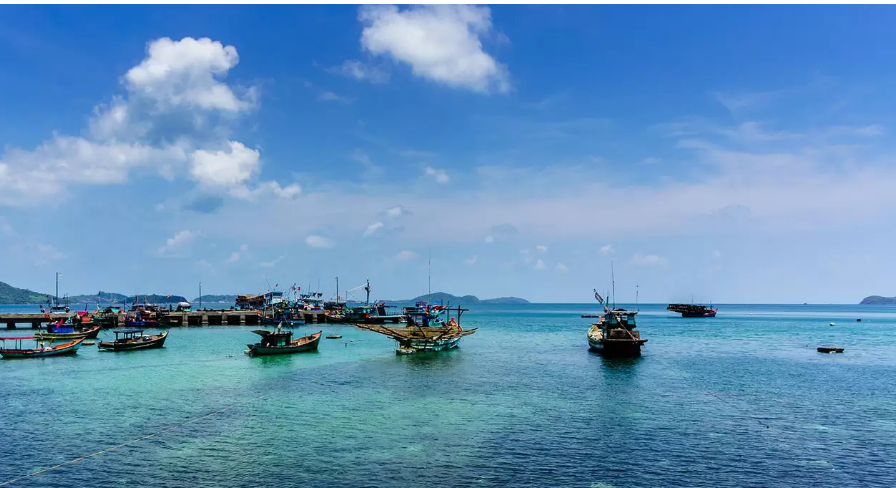
: To explore the surrounding islands like Hon Lon and visit some beautiful places, you can rent a private boat or join in a group. Find a boat of the local people at the main pier on Hon Lon Island.

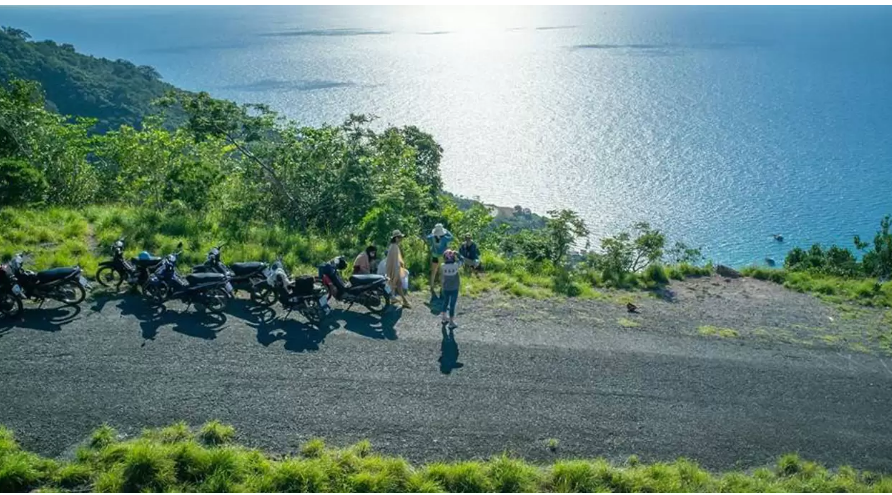
By Motorbike: The main road to Hon Lon Island is paved and you can rent a motorbike from your motel/guesthouse for about 150,000 VND – 200,000 VND per day. One of the most memorable things to do in Nam Du Island is to ride around the coast at sunset. The scenery is so stunning, and the ocean sunset is absolutely gorgeous.

By “Xe om”: You can also hire a motorbike taxi driver to visit some of the popular sites on Hon Lon. Sometimes, they will be a tour guide showing what and where you should visit on Nam Du Island.

ACCOMMODATIONS ON NAM DU
Almost hotels, guesthouses in Nam Du Island are motel and they are still basic. There are two ways to spend your night on Nam Du Island, rent a hotel’s room or choose homestay with the locals. For those who like experience, you can rent a tent in beach to spend your night.

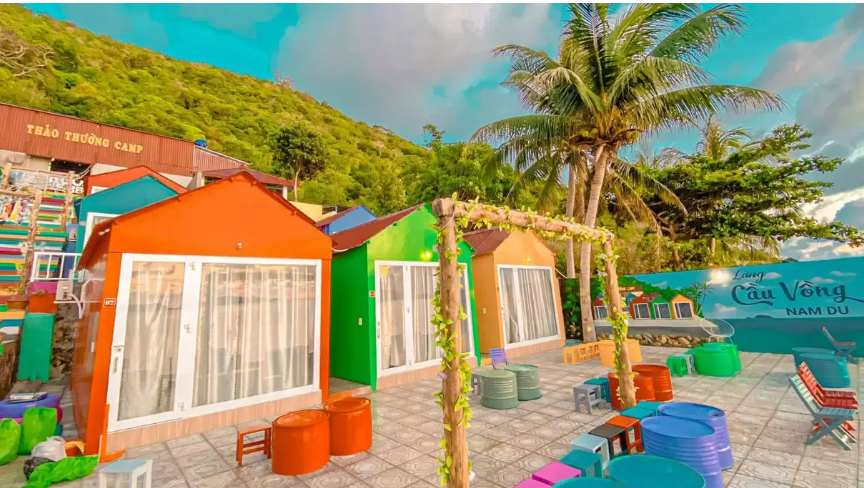
The majority of the accommodation options in Nam Du are available on Hon Lon Island. They range from simple guesthouse to motels and price vary from 100,000 VND to 500,000 VND per night. You should check and book a room in advance, especially on the weekends. To enjoy the sound of sea waves with an ocean view, you can book a room in Phuong Vu Hotel (outside of Cu Tron Town), Humiso Resort, Thao Thuong Camp, Kim Yen Motel, Thuy Diep Motel and Sau Co Motel in Hon Lon Island.

Camping on Nam Du Island is also popular for tourists who want to have a special experience. Hon Dau Island is the most suitable beach for overnight cause of coconuts and long sandy beach, price for rent beach is 30,000VND and 40,000VND per night for rent a tent.

KEY SITES
Hon Lon Island
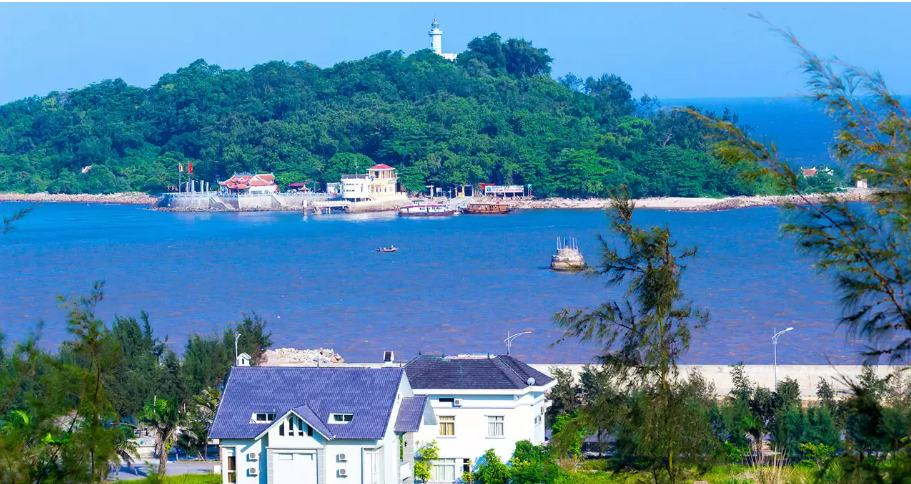
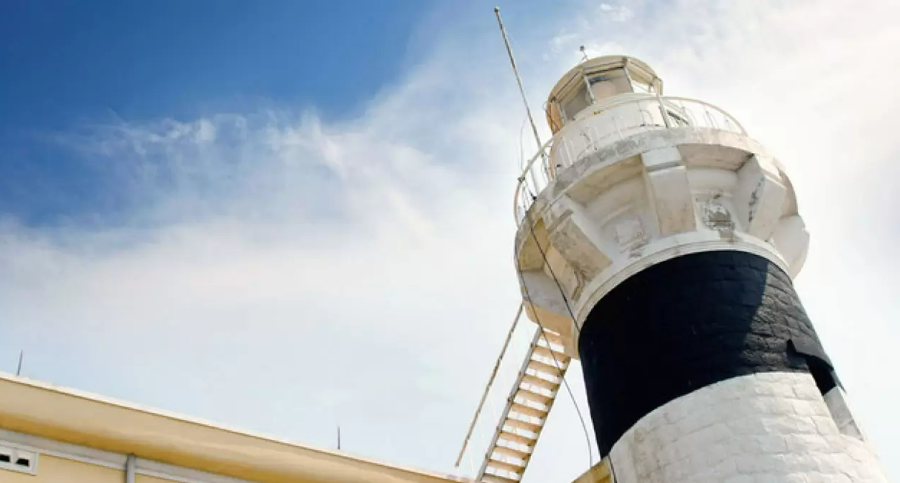
Hon Lon, also known as Big Island, locally called Cu Tron islet, is Nam Du’s largest island on Nam Du, where you can find most accommodations, restaurants and the ferry dock. Hon Lon Island is famous for its lighthouse, a restricted military zone and has some stunning beaches: Dat Do Beach, Nhun Beach, Men Beach and Mam Beach. And Men Beach is the most beautiful one of Nam Du Archipelago with green row of coconut, white sands and blue sea.

Hon Dau Island
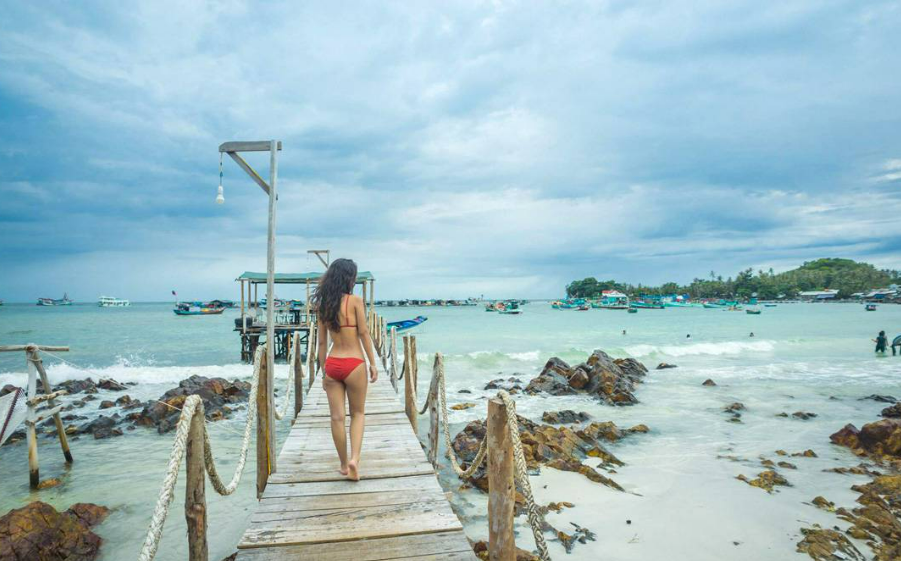
A must-see location is Dau Islet, which is 95 percent forest and also boasts shady, picturesque coconut gardens, simple yellow sand beach. Tourists should take a boat trip around the whole archipelago, cruising along Nom Ngoai, Dam, Hang, Moc, and Tre islands’ beautiful rocky beaches.

Hon Ngang Island
Hon Ngang is the center island of Nam Du, where most of the people live. It takes 30 minutes to get here from Hon Lon by boat. There is no means of transport on this island, you have to walk around to explore the island, visit the pier to see a sea inundated with fishing boats and fish farms for a photo opportunity. Tourists can also rent a room in the local’s guesthouse for an overnight stay.

Hon Mau Island
Mau Island is about 2 square kilometers and has a small fishing village with a hundred households. This is famous for beautiful beaches lined with coconut trees and Chuong beach is the best because it is the only real white sand beach. Other beaches are Nam beach, Nom beach, Da Den beach and Da Trang beach. Hon Mau is rapidly expanding to accommodate the tourist surge and there is now a sizable community found on the island that cater to the growing tourism sector.

Hai Bo Dap Island
Hai Bo Dap is an uninhabited island that is surrounded by coral. Most island hopping tours stop here for camping, swimming, snorkeling and fishing. One of the unique features of this island is its natural bridge that connects two islands together to form Hai Bo Dap. This natural sea bridge can only be seen at low tide.

WHAT TO EXPLORE ON NAM DU ISLAND ARCHIPELAGO
Trekking and Hiking

For people who love some sport activities, trekking to Nhum Beach is a great experience, you need to hike along a small trail, pass the towns fresh water supply source, and down through a densely forested area teeming with wildlife. The trail eventually leads to a rocky beach and the best time to hike this trail is before sunrise.

Snorkelling
Nam Du Archipelago is plentiful marine life and coral reefs, and Hon Dau Island is a perfect destination for diving, snorkelling that offers you a discovery of the colorful world of wonderful coral reefs. You can snorkel from shore, join a tour, or charter your own boat and don’t forget to bring your swimsuit and your swimming goggles.

Sunrises and sunsets
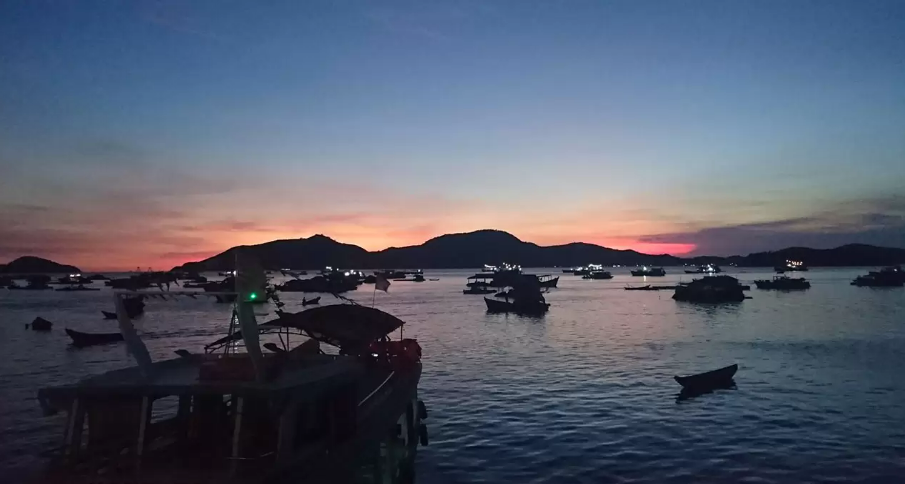
Nam Du’s Ocean sunrises and sunsets are some of the best you will ever see in Vietnam and since the island is so small you can actually watch from a single location. The pier at Hon Lon Island is a perfect spot to watch the sunrise right behind Hon Dau Island. Be sure to keep an eye out above to spot the few hawks in the area. Meanwhile, sunset along the coastal road on Hon Lon Island is breathtaking. Stop anywhere along this road and watch an amazing ocean sunset.

Fishing and foraging on Nam Du
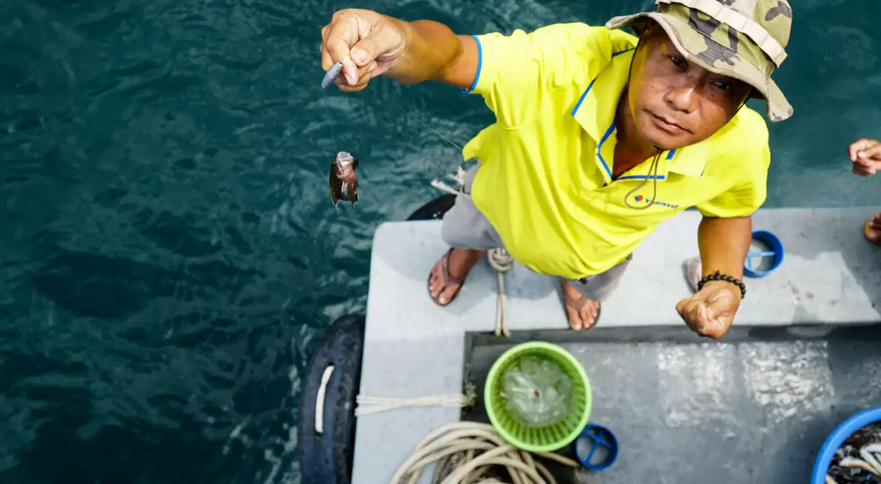
You can either fish from the main pier, commission a small boat, or rent a boat. There are also night squid and baby octopus fishing excursions that may be of interest to you. You can also forage for your own food as all the Nam Du Island are blessed with many wild edibles and seafood such as sea snails, oysters, clams and sea urchins.

Nam Du Lighthouse
Nam Du Lighthouse is located on the top of Hon Lon Island, 300 meters above the sea level and it is considered to be the highest lighthouse in all of Vietnam. With this height, tourists can see the most beautiful panorama of Nam Du island. However, it is a restricted military zone and most visitors to Nam Du will not be able to visit it without “tipping” someone or being invited by the military.

Temples and pagodas
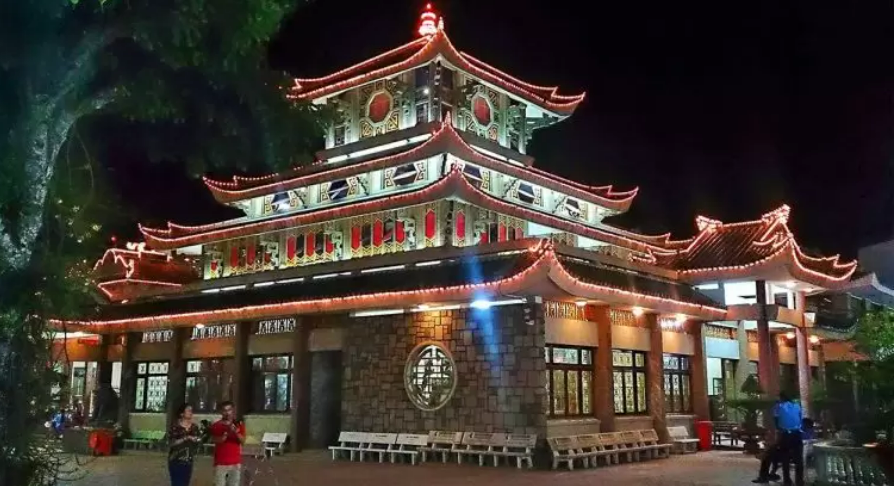
There are two colorful temples called Mieu Ba Chua Xu and Ngu Thanh Mieu. Mieu Ba Chua Xu is near Tret Beach having a beautiful statue of Ba. Ngu Thanh Mieu is near Bai Ngu, worships whales and you can see their bones on display.

Nam Du Island discovery tour
Discover the Nam Du Archipelago by joining a full or half day tour of the Nam Du Islands. The itinerary for these tours consists of visiting the popular islands, swimming at calm bays, snorkeling in areas that have good coral, and visiting Nam Du’s best beaches. There are 2 tours available, a full day tour or half day tour so you should consider with your schedule.

SPECIAL FOODS ON NAM DU ISLAND
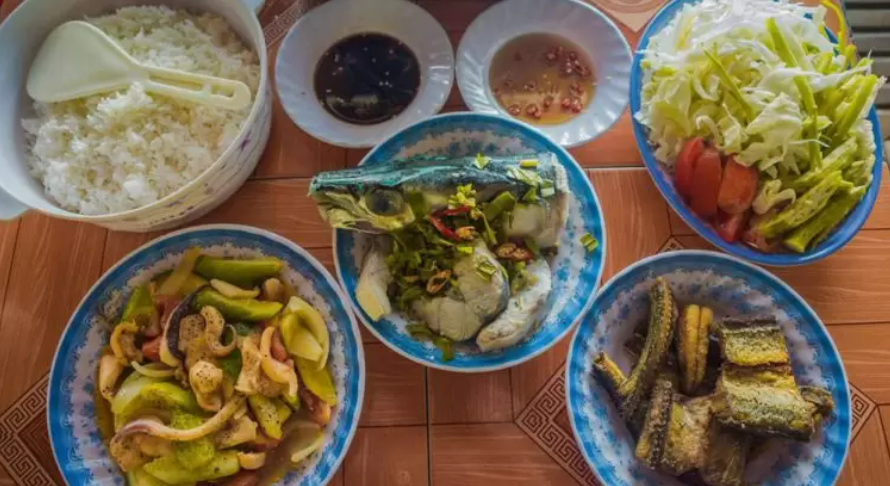
Nam Du Island specialty dish is Blue bonefish or “Xuong Xanh”, as this green colored fish is quite abundant in and around the Gulf of Thailand. It is of served grilled or a dried version is fried.

Grilled scallop with fat and onion
Scallops are a popular seafood with delicious ivory flesh without toughness, suitable for both fried and roasted, and is one of the materials to be processed into a variety of delicious and nutritious dishes such as: fried scallop with salt and pepper, grilled scallop with fat and union.

Steamed squid with ginger
During the breeding season, squids contain many eggs, for more than 70% of a squid. With Squid eggs, you can make many a tasty dish like: fried squid eggs with chili fried ruffled squid, but the most striking is still steamed squid with ginger.

PERMITS FOR FOREIGNERS
Nam Du is a popular tourist attraction among Vietnamese people. Foreigners are only allowed on the island with a permit. Foreigners need a valid passport, visa, residence papers and “permits for entry into maritime boundary areas issued by provincial-level public security departments” to go to Nam Du Island. However, Nam Du is off limits to foreigners because Nam Du businesses cater to mainly “package tourists and tour group”, please check for foreigner’s permission information to travel to Nam Du, which is best worth to spend your beach holiday when you want to extend your trip.

 Apply For Vietnam Visaapply Vietnam visaApply visa vietnamBook E-visa Vietnambook visa vietnamCheap Vietnam VisaE-visa Vietnamevisa VietnamEvisa Vietnam onlineexpedited e-visaexpedited E-visa to Vietnamexpedited Vietnam E-visaGet a Vietnam visaGet Vietnam Visaget vietnam visa onlineget visa to vietnamget visa Vietnammultiple entry visamy vietnam visaOrder Vietnam E-Visaquick vietnam evisarush vietnam visaUrgent Vietnam VisaVietnamVietnam E-visaVietnam EvisaVietnam touristVietnam travelVietnam vacationVietnam VisaVietnam visa costVietnam Visa ExemptionVietnam Visa for India citizensVietnam Visa For IndiansVietnam Visa for South Africa citizensVietnam Visa In IndiaVietnam visa in South AfricaVIetnam VIsa on arrivalVietnam VIsa onlineVietnam visa provisa for vietnam Visa On Arrivalvisa onlineVisa to VietnamVisa Vietnam
Posted on

Perfume River in Hue, Vietnam

A visitor to Hue once remarked after his vacation here: “A visit to Hue would not be complete without a boat excursion on the gentle Perfume River, or else you cannot feel the romance of Hue”. The Perfume River (Vietnamese: Sông Hương or Hương Giang) is a river that crosses the capital city of Hue, in the central Vietnamese province of Thua Thien Hue. Perfume River or Huong River is around 80 kilometers long, and owes its name to the fact that it flows through many forests of aromatic plants before reaching Hue, bringing with it a pure and fresh aroma.

The Origin of Perfume River

The Perfume River has two sources, both of which begin in the Truong Son Mountain range and meet at Bang Lang Fork. The Ta Trach (Left Tributary) originates in the Truong Dong mountains and flows northwest towards Bang Lang Fork. The shorter Huu Trach (Right Tributary) flows through the Tuan ferry, landing towards Bang Lang Fork.

Then it flows in south-north direction passing the temples of Hon Chen and Ngoc Tran, and  turns north-west, meandering through the Nguyet Bieu and Luong Quan plains. From this, the River then continuously flows int the north-east direction to Hue city, only an echo of Truong Son mountain, and passes the rest place of the Nguyen Emperors. The river of green water continues its itinerary, passing Hen Islet and various villages, crossing the Sinh junction, which is known as the capital of ancient Chau Hoa, before emptying into the Tam Giang Lagoon.

From Bang Lang to Thuan An estuary, the Perfume River is 30 km long and runs very slowly (as the river level is not much above sea level). The Perfume River darkens as it winds along the foot of Ngoc Tran Mountain – home of the Jade Cup Temple – where there is a very deep abyss.

Artist Inspiration of Huong River

The poetic romantic Perfume River is the deep inspirations to numerous artists, poets, and composers;

                                             “Who turns to Hue

                                                  Who comes back to Ngu Mount

                                                  Who comes back to Huong River

                                                  The river water never sinks

                                                  Ngu Mount birds fly back to friends

                                                  Whoever are children of Hue remember to return…”

are the beautiful lyrics of a famous song, “Who comes to Hue”, written by Duy Khanh. In the autumn, flowers from orchards upriver from Hue fall into the water, giving the river a perfume-like aroma, and a beautiful poetic view. I have asked several artists about the reason for their inspiring love for Perfume River, and received nearly the same answer: “Well, my inspiration derives from the pure water, the fascinating landscape, and the gentle bridge over the river”.

What to Do at Perfume River?

1.Boat along the River

Today, travellers coming to Hue could not miss a while of boating along the river. Most of them admit that this is one of the most beautiful and extremely splendid riverside landscape (especially at night when lights are on) that they have ever visited!

2.Visit Some Nearby Hue Attractions

As mentioned, the river flows through a series of beauty-spots, taking visitors to every corner of the ancient citadel when you travel by boat. Along the river, you can visit Da Vien, Phu Xuan, and Truong Tien Bridge, come to the Tomb of Minh Mang, Hon Chen Shrine, Thien Mu Pagoda, and finally to bathe in the sea. Upstream, at the Tomb of Thien Tho, you can hear the rustling of the pine tree, which may help you become a… poet!

When the night comes, the surface of the river glistens under the moonlight, and the songs of the boat rowers can be heard breaking the silence. Just come here and you will feel the pure atmosphere of romance and beauty!

As one of the most popular attractions in Hue, a boat ride or cruise on the Huong River in Hue is included in a lot of classic Hue city tours or day trips. Pick the most suitable itinerary for you and start exploring the beauty of this poetic river and city today!

Make your plan to Vietnam right now by apply a Vietnam visa at vietnamvisapro.net. We, a reputable and reliable Visa service, will assist you turn your plan into reality at the very first step

Posted on

Top 7 Best Markets in Ho Chi Minh City

For the shopping enthusiasts and first-time visitors, the best markets in Ho Chi Minh are must-visits place. Mostly located in District 1, these markets bring you a brand new shopping experience, totally different from the supermarkets and commercial malls you have visited. So what market in Ho Chi Minh should you visit? Let’s take a look at this list of 7 best markets in Ho Chi Minh City, Vietnam.

1. Ben Thanh  Market

Why go: Ben Thanh market is the most popular name when mentioning about shopping. As the biggest market in HCMC, you can find all the stuff you need right here in District 1. It’s a great place to buy branded goods, handicrafts, Vietnamese art, and souvenirs. It is so big that you may find it difficult to navigate at times but worth your visiting. If you are not going to buy anything and tired of bargaining too much, let’s find eating stalls inside the market. You can simply cool off with a cold drink or get a taste of hawker-style Vietnamese cuisine. Especially, the market becomes more vibrant when night falls. All the restaurants around the market open their doors welcome the guests with the mouth-watering scents of fried noodles, barbecued fish and meats. It is totally on top 1 market for enjoying the authentically Vietnamese market.
Insider tip

  • If you go in the early morning, you can get a better price as some traders offer “morning price” to bring them luck.
  • If you are not a local, the price is often inflated up 2 or 3 times than normal. So, you can try to bargain and just haggle your way down.
  • If you don’t want to buy anything, then just look for a moment and walk along. Do not touch the items and put it down. The vendors don’t like it.

Location: Ben Thanh, District 1, Ho Chi Minh City
Opening hours: Daily 6:00 am – 00:00 pm

2. Ben Thanh Street Food Market

Why go: Ben Thanh street food market is a highlight in Ho Chi Minh City as a food heaven. For food lovers, it is a must-visit place to enjoy a wonderful dining experience with tasty specialties from many countries as well as tasty dishes from all regions of Vietnam. Also, the guests can discover the hustle and bustle of nightlife in the heart of Saigon at the same time. Some traditional Vietnamese dishes you should try: bun ca Long Xuyen (noodles with fish), bun mam (noodles with broth made of fermented fish), com tam la sen (Vietnamese broken rice wrapped in lotus leaf), chao tom (grilled shrimp mousse on a sugarcane stick), and grilled seafood. The price is very cheap, starts at VND 25.000. The Thai, Japanese, Korean, and Indian dishes are also easy to find in this street food market.

Insider tip: At high times, the market usually lack sufficient seating. So, it is better to avoid the lunchtime and dinner time.

Location: 26-28-30 Thu Khoa Huan Street, District 1, Ho Chi Minh City
Opening hours: 10:00 am – 09:00 pm

3. Binh Tay Market

Why go: Binh Tay market is located in the center of the largest Chinatown district in Vietnam. Constructed by the French in the 1880s, it is a great example of French architecture. Unlike Ben Thanh Market, this market mainly provides the Saigoners with its wide range of fresh fruits, poultry, vegetables, meat and seafood from all regions of Vietnam. Also known as Cho Lon Chinatown Market, it is a two-storey building along Thap Muoi Street. Though the goods are not as various as other markets in downtown Hanoi, you can find an assortment of handicrafts, textiles, and lacquerware here. Apart from the interesting cultural and historical aspects, Binh Tay market also attracts the customers for experiencing the local lifestyle and sampling delicious unique Vietnamese-Chinese delicacies.

Insider tip

  • While you are walking around Binh Tay market, be careful of your belongings. Especially when you are taking photos, be cautious and don’t be too attached to anything you take with you.
  • It’s better to visit the market in the early morning to buy the fresh food such as meat and seafood in outdoor wet market. The fresh food is the best to create a delicious meal.
  • Significantly influenced by Chinese culture, some popular dishes you should try include: Chinese-style roast duck, black chicken braised with Chinese medicine, Pha Lau (pig’s organs), and fish curry.

Location: 57 Thap Muoi, District 6, Ho Chi Minh City
Opening hours: Daily 07:00 am – 06:00 pm

4. An Dong Market

Why go: Compared to other markets, An Dong Market has its reputation for the variety of fashion wholesalers and handicraft stalls. Located in District 5, An Dong Market occupies a four-storey indoor market and it only takes around 10 minutes to drive from downtown Ho Chi Minh City. The market is an ideal place for fashion enthusiasts because you can find a huge collection of textiles, apparel, handbags, and accessories on the first two floors and quality knitwear, trinkets, and woodwork in the top floor. The ground floor also has several stalls where you can enjoy traditional snacks, desserts, and bulk food for less than USD 1. Some recommended food to enjoy here: pho, banh xeo, goi cuon, and mi quang.
Insider tip: For an interesting contrast, let’s check out An Dong Plaza which is just next door to An Dong Market. It’s a modern and convenient shopping center. If you can’t find something in the market, you probably can find it in the Plaza but at a higher price.

Location: An Duong Vuong Street, District 5, Ho Chi Minh City
Opening hours: Daily 08:00 am – 02:00 pm

5. Tan Dinh Market

Why go: Built in 1926, Tan DInh market serves as a historical monument and also a well-known shopping location for both local people and newcomers. If you want to have a look at the Vietnamese food heaven, Tan Dinh should be on your itinerary. You can taste many different kind of food, really good food. We especially recommend “bun rieu”- one of Saigon’s signature dishes and sea snails. Besides, you can also immerse in colorful local silks in sophisticated patterns as you walk into the main area of the building. Although fabrics and food are Tan Dinh market’s specialties, the market contains a lot more commodities to make your routine much better: clothing, footwear, fresh produce, household items, accessories,… Many products has good quality but there are other ordinary products as well that you can buy at an affordable price.
Insider tip: 

  • Since the market is surrounded by some bustling streets such as Tran Quoc Toan, Nguyen Huu Cau, and Hai Ba Trung, the traffic jam could get extremely bad especially in the peak hours, so please choose your time wisely.
  • Check out the Tan Dinh Church nearby. The unique building is fully painted pink will probably give you the most memorable snapshots when in Saigon.

Location: 300 Hai Ba Trung Street, District 1, Ho Chi Minh City 
Opening hours: Daily 05:00 am – 05:00 pm

6. Russian Market

Why go: Located next to Sunland Hotel Ho Chi Minh City, the Russian Market attracts a steady following of expats and tourists from the north of Eurasia. The market is like a miniature of Russia in the center of Ho Chi Minh City. There are a lot of reasons that it becomes a must for you to pay a visit. It offers you a totally different aspect of the city. Much like its name, it brings the Russian atmosphere from the exterior decoration to the inside. The market has 3 floors for trading and packaging. With approximately 2.000 square meters and about 100 booths, the market offers various goods from clothes, shoes to unique souvenirs. The price is so reasonable that you may not need to bargain. And, another interesting thing you can find in this market is that most of the sellers used to study and work in Russia. They can speak several languages like Vietnamese, English, and Russian. They sometimes share their own stories to the customers who they like. 
Insider tip: The sellers in this market know that it’s difficult to make the customers pay, so the price is just a little higher than normal price. So please don’t bargain too much that causes sellers angry.

Location: 328 Vo Van Kiet, District 1, Ho Chi Minh City
Opening hours: 09:00 am – 07:00 pm

7. Dan Sinh Market

Why go: Dan Sinh Market is so called War Surplus Market. You just need a short five-minute walk from backpacking street to arrive here. The most common goods in this market are related to the Vietnam War from both infantries (the Vietnamese and the Americans). You can buy old zippo lighters, M-17 gas masks, the helmets of fighter pilots, army uniforms, and dog tags. There are also countless stalls selling different types of building materials, household hardware, plumbing pipes, and industrial machinery. And, if you are planning for a camping, this is the place to go to buy useful camping gear like water-resistant clothing, combat tents, rain boots, sleeping bags, and mosquito nets.
Insider tip: Vietnam War has ended since 41 years ago, therefore, it is very challenging to find authentic items. If you are a serious collector, it may be disheartening because more and more sellers admit that the goods are copies or reproductions. The price is always negotiable, so remember to bargain for the best prices.

Location: 104 Yersin, District 1, Ho Chi Minh City 
Opening hours: Daly 07:00 am – 06:00 pm

The above markets are the most popular markets in Saigon. They play a central role in the daily lives of locals, so it will be truly a shopping experience you won’t forget quickly to visit these markets. Make your plan to Vietnam right now by apply a Vietnam visa at vietnamvisapro.net. We, a reputable and reliable Visa service, will assist you turn your plan into reality at the very first step

Posted on

Van Phuc Silk Village Hanoi

Listed as one of more than 1,000 traditional villages in Vietnam, Van Phuc is a silk weaving village with a long history of development. The village captivates visitors not only with its unique embroidery lines and patterns, but also with its most beautiful cultural and historical tradition of the country.

>>> Apply Visa to Vietnam <<<

  1. Overview

Vietnam has a long history of silk production and Hanoi is one of the best places in the country to discover the ancient handicraft. Van Phuc Village, located 10km far from the Hanoi Old Quarter, is renowned for its traditional weaving and premium quality silk products. Like other so called “craft villages”, there’s not a strong sense of tradition here and most of the village has been turned over to modern shops selling silk wares of varying quality and appeal. Shoppers or visitors just need to spend a half-day trip or less to Van Phuc Silk Village that reveals the secrets of traditional silk weaving and offers plenty of opportunities to purchase quality silk products.

  1. History

Some documents & relics say that the weaving of Van Phuc village originated in the 9th century. It was rumored that a local girl gave birth to the rough silk weave with simple, ordinary silk products and the tradition didn’t become flourished until the 16th century, when a lot of premium items had been created with vivid, subtle patterns.

Van Phuc Silk Village once used to select as the tailor taking responsibility for making royal outfit under Nguyen Dynasty in Hue. Between 1931 and 1932 during French colonial, Van Phuc Silk, for the first time, was introduced worldwide in international exhibitions in Marseille and Paris. Since then, French clients have paid special interest in Van Phuc Silk. From 1958 to 1988, Van Phuc Silk mostly was exported to Eastern European market, and it has been popular product worldwide since 1990.

  1. Special features of Van Phuc Village’s Silk

With long tradition and well conservation by the locals, weaving has been passed from generation to generation, contributing to create unique cultural features on costumes of Vietnamese people.

All the patterns are made elaborately and sophisticatedly, each sheet of silk is a masterpiece bearing the enthusiasm and soul of each artisan. Moreover, all the processes are done by the oldest techniques that can only be achieved by Van Phuc villagers. Each stage follows strict regulations.

Van Phuc Silk has been known for its smooth, soft, and elegant appearance. Especially, a traditional kind of silk called Van Silk made in Van Phuc make the wearers feel cool in summer and warm in winter. Today, to satisfy various demand for silk of the market, Van Phuc handicraftsmen have expanded their silk and garment goods like embroidered silk, wrinkled silk, double layers and more colors for silk products.

  1. What to explore at Van Phuc Silk Village?

Many families in Van Phuc open their own shops in a convenient location in the village; create a “town of silk” that sell eye-catching and high-quality silk products. You may buy items available in the shop, or favorite fabric to get customized products. Most of the sellers are very friendly and can speak a basic English and French to serve foreign tourists.

Silk products of Van Phuc could vary differently from clothes to accessories like handbags or purses. Price is incredibly reasonable (the price for the meter of silk usually depends on the material, about 10 USD in average), some of the models you could bargain for a lower price even. Additionally, you could also drop in spiritual spots like Van Phuc Pagoda, or Natural Silk Protected area to understand more about the tradition of Van Phuc Village.

A highlight of a visit to Van Phuc will be an opportunity to see the old looms in operation. While some basic technology has been introduced to the process in recent years, there is still plenty of manual labour in Van Phuc’s silk production processes.

Additionally, a 100 meter-street decorated with colorful umbrellas that look no less than the art of Agueda in Portugal. Don’t skip to wander along it and snap some photos!

  1. How to get there

In a short distance to Hanoi Old Quarter, it is very convenient to access Van Phuc Silk Village.

You can easily rent a motorbike, take a taxi or catch a local bus number 02 or 21 before going on foot 500m to reach the village gate. You should travel Southwest out of Hanoi center on Nguyen Trai Road until reach the border of Ha Dong District, then turn right and drive about 3km to reach the village.

Apply For Vietnam Visaapply Vietnam visaApply visa vietnamBook E-visa Vietnambook visa vietnamCheap Vietnam VisaE-visa Vietnamevisa VietnamEvisa Vietnam onlineexpedited e-visaexpedited E-visa to Vietnamexpedited Vietnam E-visaGet a Vietnam visaGet Vietnam Visaget vietnam visa onlineget visa to vietnamget visa Vietnammultiple entry visamy vietnam visaOrder Vietnam E-Visaquick vietnam evisarush vietnam visaUrgent Vietnam VisaVietnamVietnam E-visaVietnam EvisaVietnam touristVietnam travelVietnam vacationVietnam VisaVietnam visa costVietnam Visa ExemptionVietnam Visa for India citizensVietnam Visa For IndiansVietnam Visa for South Africa citizensVietnam Visa In IndiaVietnam visa in South AfricaVIetnam VIsa on arrivalVietnam VIsa onlineVietnam visa provisa for vietnam Visa On Arrivalvisa onlineVisa to VietnamVisa Vietnam